

Whilst researching for my English Civil War armies, I came across the blog Tales from a Wargaming Shed. It’s author, Tim, had some rules and army lists for using For King & Parliament to fight pike and shot battles in 17th Century Eastern Europe as opposed to just the UK’s green and pleasant land.
This, combined with the comprehensive miniatures for the theatre available from Wargamer.pl, inspired me to start a collection of Zaphorogian Cossacks to face friend Bevan’s Polish Lithuanians and then, as my collection expanded to include Muscovites, Transylvanians and others, to build on Tim’s work and the information provided in the By Fire & Sword rules by Wargamer.pl, to create more detailed rules and army lists for For King & Parliament for the theatre covering the period 1600-1690.
Below, therefore, you will find pdfs of the army lists I have created so far. These are, I hasten to say again, hugely based on Tim’s work and the information provided in the By Fire & Sword rules by Wargamer.pl. All I have done is build upon their work, adding information taken from other sources (for example, the Steven’s Balagan blog) to put together enough information to get as many different eastern front '“pike and shot” armies as possible on the tabletop.
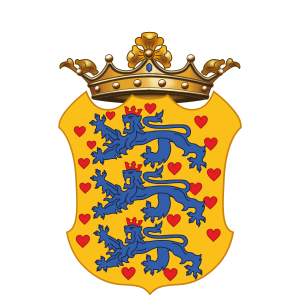
I’ve also now added some lists for armies for the Thirty Years War (1618-48): namely the Danish and the German Imperialists which include some information from the beta lists for the period produced for the Baroque rules.
Any mistakes are my own, and I welcome corrections or suggestions (send to admin@vislardica.com).
Last updated: 27th October 2026





Some History
And here are some of the conflicts that can serve as background to your 17th Century “Eastern Front” tabletop battles.
The Polish–Swedish War (1600–1611)
The Polish–Swedish War (1600–1611) was a significant early conflict in a series of wars between the Polish–Lithuanian Commonwealth and the Swedish Empire, driven by dynastic claims and control over the Baltic region. The war began when King Sigismund III Vasa of Poland, who had been deposed from the Swedish throne in 1599, sought to reclaim it and assert dominance over Swedish-controlled territories in Livonia. The conflict primarily took place in present-day Estonia and Latvia, with both sides launching campaigns marked by sieges, skirmishes, and shifting territorial control. Despite initial Polish successes under commanders like Jan Karol Chodkiewicz, the war ended inconclusively in 1611, with Sweden retaining control over most of its Baltic territories. The unresolved tensions and dynastic rivalry would fuel future conflicts between the two powers throughout the 17th century.
Polish–Muscovite War (1605–1618)
The Polish–Muscovite War (1605–1618), also known as the Dimitriads, was a protracted and complex conflict between the Polish–Lithuanian Commonwealth and the Tsardom of Russia during Russia’s Time of Troubles. The war was sparked by Polish support for False Dmitry I, a pretender to the Russian throne claiming to be the son of Ivan the Terrible. After False Dmitry’s brief rule, Polish forces continued to intervene in Russia's chaotic internal affairs, often under the pretext of supporting rival claimants or restoring order. The conflict escalated into a full-scale war, with Polish troops even capturing Moscow in 1610 and placing Prince Władysław, son of King Sigismund III, as a nominal tsar. However, Russian resistance grew, culminating in a national uprising that expelled Polish forces from Moscow in 1612. The war formally ended with the Truce of Deulino in 1618, which granted the Commonwealth significant territorial gains, including Smolensk and Chernihiv. Despite these successes, the war failed to secure lasting Polish dominance over Russia and left both states exhausted and wary.
The Ingrian War (1610-1617)
The Ingrian War (1610–1617) was a conflict between the Swedish Empire and the Tsardom of Russia, taking place during a time of great turmoil in Russia known as the Time of Troubles. As Russia was weakened by internal strife, dynastic disputes, and Polish intervention, Sweden sought to expand its influence in the eastern Baltic region. The war was marked by a series of sieges and battles, most notably the Swedish capture of key fortresses like Novgorod. Despite initial Swedish successes, the war ended with the Treaty of Stolbovo in 1617. The treaty forced Russia to cede Ingria and Kexholm to Sweden, cutting off Russian access to the Baltic Sea and solidifying Swedish control in the region. This war played a significant role in shaping the balance of power in Northern Europe during the early 17th century.
The Thirty Years War (1618-1648)
The Thirty Years’ War (1618–1648) was a major European conflict that began in the Holy Roman Empire and eventually involved many of the major powers of Europe. It started largely because of tensions between Protestants and Catholics, as well as disputes over political power within the Holy Roman Empire. The war began with the Defenestration of Prague in 1618, when Protestant nobles rebelled against the Catholic Habsburg emperor. Although religion was an important cause, the conflict increasingly became a struggle for political and territorial influence, with countries such as Denmark, Sweden and France becoming involved against the Habsburgs.
The war caused enormous destruction, particularly in the German states, where battles, famine and disease killed millions of people. Sweden became heavily involved under Gustavus Adolphus, while France entered the war directly in 1635 to weaken the Habsburgs despite being a Catholic country. The conflict eventually ended with the Peace of Westphalia in 1648, which recognised the independence of the Dutch Republic and Switzerland and strengthened the authority of individual German states. It also confirmed the principle that rulers could determine the religion of their territories and helped establish a new balance of power in Europe.
The Polish-Ottoman War (1620-1621)
The Polish–Ottoman War (commonly referring to the conflict of 1620–1621) was a brief but intense confrontation between the Polish–Lithuanian Commonwealth and the Ottoman Empire, driven by competing interests in Moldavia, a vassal state of the Ottomans. Tensions escalated when the Commonwealth attempted to assert influence over the region, leading to an Ottoman campaign against Polish forces.
In 1620, the Polish army suffered a major defeat at the Battle of Cecora, where Hetman Stanisław Żółkiewski was killed. However, in 1621, a massive Ottoman force advanced into Polish territory and faced stiff resistance at the Battle of Khotyn (Chocim). Despite being outnumbered, the Commonwealth army, supported by Cossack allies and commanded by Grand Hetman Jan Karol Chodkiewicz (who died during the siege), successfully defended their position. The war concluded with the Treaty of Khotyn, which restored the pre-war status quo. While the Ottomans failed to gain new territory, the war reaffirmed the balance of power between the two empires and highlighted the military resilience of the Commonwealth.
The Polish-Swedish War (1626-1629)
The Polish–Swedish War of 1626–1629 was a critical phase in the long-standing struggle between the Polish–Lithuanian Commonwealth and the Swedish Empire over dominance in the Baltic region, particularly in Royal Prussia (northern Poland). The conflict was largely driven by Swedish King Gustavus Adolphus, who sought to control key Baltic ports and trade routes, while King Sigismund III Vasa of Poland continued to press his dynastic claim to the Swedish throne.
The war saw a series of sieges and battles, with Sweden capturing several important coastal cities, including Elbląg (Elbing) and Pillau. The Polish forces, led by commanders like Hetman Stanisław Koniecpolski, mounted effective resistance and even achieved several tactical victories, such as at the Battle of Trzciana (Honigfelde) in 1629, where Polish cavalry famously routed Swedish forces.
Despite Polish efforts, Sweden retained control over most of its conquests, and the war ended with the Truce of Altmark in 1629. The truce heavily favored Sweden, granting it control of key Baltic ports and the right to collect customs duties, significantly boosting Swedish finances ahead of its intervention in the Thirty Years' War. The conflict further weakened the Commonwealth’s hold over the Baltic and marked Sweden's emergence as a dominant power in Northern Europe.
The Smolensk War (1632-1634 )
The Smolensk War (1632–1634) was a conflict between the Polish–Lithuanian Commonwealth and the Tsardom of Russia, sparked by Russia's attempt to recapture the strategically vital city of Smolensk, lost to the Commonwealth in earlier wars. Taking advantage of the death of King Sigismund III, Russian forces besieged Smolensk in 1632, but the newly elected King Władysław IV Vasa led a successful counteroffensive, breaking the siege in 1633 and forcing the Russians to retreat. The war concluded with the Treaty of Polyanovka in 1634, which reaffirmed Commonwealth control over Smolensk and saw Władysław formally renounce his claim to the Russian throne. The war ended in a clear Polish–Lithuanian victory and temporarily secured peace on the eastern frontier.
The Russians had reacted to previous defeats and in this new war large numbers of ‘Western style’ units would be fielded in their army. Although the new army had little success this war marked Russia’s progress towards modernising their army.
The Invasion of Abaza Pasha (1633-1634)
The invasion of Abaza Pasha in 1633–34 was part of a wider conflict between the Ottoman Empire and the Safavid Empire over control of eastern Anatolia and the Caucasus. Abaza Pasha, an Ottoman governor and rebel leader who had previously challenged the central government, became involved in renewed fighting with the Safavids. His forces attacked Ottoman-held territories, causing instability and threatening Ottoman control of the region. The Ottoman Sultan Murad IV responded by launching military campaigns to restore order and strengthen Ottoman authority. The conflict demonstrated the continuing rivalry between the Ottomans and Safavids and the difficulties the Ottoman Empire faced in controlling its eastern provinces during the early seventeenth century.
The Cossack Uprisings (1637-1638)
The Cossack uprisings of 1637–38 were a series of rebellions by Cossacks against Ottoman and Polish-Lithuanian authority in the region around the Dnieper River and Black Sea. The Cossacks were semi-independent military communities, many of whom lived in what is now Ukraine. In 1637, Cossack forces captured the important Ottoman fortress of Azov, which threatened Ottoman control of the Black Sea region. The Ottomans demanded that the Cossacks abandon the fortress, and after the Cossacks refused, Ottoman and allied forces eventually forced them to surrender in 1638. The uprisings demonstrated the growing military power of the Cossacks and their importance in Ottoman-Russian and Polish-Lithuanian relations.
The Khmelnytsky Revolt (1648-1657)
The Khmelnytsky Revolt (1648–1657) was a massive Cossack-led uprising against the Polish–Lithuanian Commonwealth, driven by deep social, religious, and political tensions. Led by Bohdan Khmelnytsky, the revolt began as a rebellion of Cossacks and Ukrainian peasants against Polish nobility, Catholic clergy, and oppressive feudal policies. Early Cossack victories, such as at Zhovti Vody and Korsun, shocked the Commonwealth and sparked a broader war across the Ukrainian lands. The conflict saw brutal fighting, shifting alliances—including a pivotal 1654 alliance between the Cossacks and Tsardom of Russia—and widespread devastation. The revolt fundamentally altered the region’s power dynamics, leading to the weakening of Polish control in Ukraine and eventually contributing to the Deluge, a series of wars that plunged the Commonwealth into crisis. The uprising ended with Khmelnytsky’s death in 1657, but its consequences echoed for decades, reshaping Eastern Europe politically and demographically.
The Second Northern War/The Deluge (1655-1660)
The Second Northern War (1655–1660), also known in Polish history as The Deluge, was a devastating conflict that saw the Polish–Lithuanian Commonwealth invaded by Sweden, along with other regional powers including Russia, Brandenburg-Prussia, Transylvania, and later even the Crimean Khanate. The war began when Sweden, under King Charles X Gustav, launched a surprise invasion, quickly capturing large swaths of Polish territory, including Warsaw and Kraków, taking advantage of the Commonwealth’s weakened state following the Khmelnytsky Uprising and ongoing wars with Russia. Many nobles initially submitted to Swedish rule, but resistance eventually coalesced under King John II Casimir, bolstered by loyalist forces, Tatar allies, and a resurgent Polish army. The war ended with the Treaty of Oliwa in 1660, which restored most borders to their pre-war lines but left the Commonwealth economically and demographically shattered. The Deluge marked a turning point in the decline of the Commonwealth, exposing its military vulnerabilities and contributing to its eventual fall as a major European power.
The Russo-Polish War (1654–1667)
The Russo-Polish War (1654–1667), also known as the Thirteen Years' War, was a major conflict between the Tsardom of Russia and the Polish–Lithuanian Commonwealth, sparked by Russia’s desire to reclaim territories lost during earlier wars and to support the Cossacks under Bohdan Khmelnytsky, who had allied with Moscow in the Treaty of Pereyaslav (1654). Taking advantage of the Commonwealth’s internal chaos and ongoing wars with Sweden (The Deluge), Russian forces swiftly captured key eastern territories, including Smolensk and much of Ukraine. The war dragged on for over a decade, marked by brutal sieges, shifting alliances, and widespread devastation. It ended with the Truce of Andrusovo in 1667, which granted Russia control over Left-bank Ukraine, Kiev, and Smolensk, representing a major territorial loss for the Commonwealth. This war significantly shifted the balance of power in Eastern Europe, marking the rise of Russia as a dominant regional force and accelerating the decline of the Polish–Lithuanian Commonwealth.
Denmark vs Sweden (1657–1658 and 1658–1660)
The Dano-Swedish Wars of 1657–1658 and 1658–1660 were two consecutive conflicts between the kingdoms of Denmark-Norway and Sweden, driven by Denmark’s attempts to curb Swedish power in the Baltic region during a period when Sweden was heavily engaged in wars elsewhere. In the first war (1657–1658), Denmark declared war on Sweden but suffered a swift and crushing defeat, culminating in the Treaty of Roskilde, which forced Denmark to cede significant territories including Skåne, Blekinge, Halland, and Bornholm to Sweden. However, hostilities resumed in 1658 when Denmark tried to regain lost lands, leading to the second war (1658–1660). This conflict ended with the Treaty of Copenhagen, which confirmed most Swedish gains but returned Bornholm to Denmark. These wars solidified Sweden’s position as a major Baltic power while severely weakening Denmark’s influence in the region.
Habsburg–Ottoman War (1663–1664)
The Habsburg–Ottoman War of 1663–1664 was a compact but strategically significant clash featuring classic siege warfare and a decisive field battle. The Ottomans launched a major offensive targeting the fortress of Érsekújvár, putting their superior numbers and siege tactics to the test against Habsburg defenders. The Habsburgs, under Count Raimondo Montecuccoli, skillfully mobilized a relief army and expertly utilized terrain and disciplined infantry to blunt the Ottoman advance. The pivotal Battle of Saint Gotthard showcased tactical maneuvering, with Habsburg forces executing a well-timed counterattack that broke the Ottoman lines despite being numerically challenged. The war ended with the Peace of Vasvár, a politically frustrating but tactically intriguing conclusion, as the Habsburgs, though victorious on the battlefield, accepted a truce that left many Ottoman gains intact—highlighting the interplay between battlefield success and broader strategic diplomacy common in early modern warfare.
Polish-Ottoman War (1672-1676)
The Polish–Ottoman War of 1672–76 was fought between the Polish–Lithuanian Commonwealth and the Ottoman Empire, mainly over control of Podolia and Ukrainian territories. In 1672, Sultan Mehmed IV invaded Poland and captured the important fortress of Kamianets-Podilskyi, forcing the Commonwealth to sign the Treaty of Buczacz, which gave Podolia to the Ottomans and required Poland to pay an annual tribute. However, the Polish parliament rejected the treaty, and the war continued. In 1673, the Polish army under Jan Sobieski defeated the Ottomans at the Battle of Khotyn, weakening the Ottoman position. Fighting continued until 1676, when the Treaty of Żurawno ended the conflict. Poland was allowed to retain part of Ukraine, while the Ottomans kept Podolia and part of the Ukrainian territories.
The Scanian War (1675–1679)
The Scanian War (1675–1679) was a conflict primarily between Sweden and a coalition of Denmark-Norway, Brandenburg-Prussia, and the Dutch Republic, fought over control of the southern Swedish provinces of Scania, Blekinge, and Halland. The war was part of the larger struggle for dominance in Northern Europe following Sweden’s expansion during the Thirty Years’ War and its aftermath. Denmark sought to regain territories lost to Sweden in earlier wars, particularly the lands ceded in the Treaty of Roskilde (1658). The conflict featured fierce battles and sieges across the Baltic coast, including the notable Battle of Lund (1676), one of the bloodiest battles in Scandinavian history. Although the war ended without major territorial changes, with the Treaty of Lund (1679) restoring the status quo, it marked the beginning of the gradual decline of Swedish power and the resurgence of Denmark as a regional player.
The Great Turkish War (1683–1699)
The Great Turkish War (1683–1699) was a large-scale conflict between the Ottoman Empire and a coalition of European powers known as the Holy League, which included the Habsburg Monarchy (Austria), the Polish–Lithuanian Commonwealth, and the Republic of Venice, among others. The war began with the Ottoman siege of Vienna in 1683, which was famously lifted by a combined force led by the Polish King Jan III Sobieski. This victory marked a turning point, initiating a series of campaigns that pushed Ottoman forces back across Central and Eastern Europe. Over the following years, the Holy League captured key territories, including large parts of Hungary, Transylvania, and the Balkans. The war ended with the Treaty of Karlowitz (1699), which significantly curtailed Ottoman influence in Europe and shifted the balance of power, marking the beginning of the Ottoman Empire’s long decline and the rise of Habsburg dominance in the region.
Other Conflicts of the 17th Century that would suit For King & Parliament
Pan-European and Multi-Theatre Conflicts
Eighty Years War (Dutch Revolt) 1568-1648
Dutch Republic vs Spain
Franco-Spanish War 1635-1659
France vs Spain
War of the Grand Alliance 1688-1697
France vs the Grand Alliance (England, Holy Roman Empire, Dutch Republic, Spain, and Savoy)
Conflicts with the British Isles
Bishops' Wars 1639–1640
England vs. Scotland over Presbyterianism
Wars of the Three Kingdoms 1639–1651
English Civil War (1642–1651)
Irish Confederate Wars (1641–1653)
Scottish Civil War (1644–1651)
Third Anglo-Dutch War 1672–1674
England and France vs. Dutch Republic (part of the Franco-Dutch War)
Williamite War in Ireland 1689–1691
– Supporters of James II vs. William III
Jacobite Rising of 1689 (Scotland)
Attempt to restore James II
Iberian Peninsula
War of the Portuguese Restoration 1640–1668
Portugal regained independence from Spain
Catalan Revolt (Reapers' War) 1640–1659
Catalonia (with French support) vs. Spain
Italy
War of the Mantuan Succession 1628–1631
Succession crisis in northern Italy; France and Habsburgs involved
Piedmontese Civil War 1639–1642
Internal conflict in the Duchy of Savoy
France
Huguenot Rebellions 1620–1629
Protestant uprisings against Louis XIII
Fronde (Civil Wars) 1648–1653
Nobility and Parlement vs. royal absolutism under Mazarin and the young Louis XIV
Germany & Central Europe
Bohemian Revolt 1618–1620
Start of Thirty Years' War; Protestants vs. Habsburgs
Upper Austrian Peasant War 1626
Peasant uprising against Bavarian rule