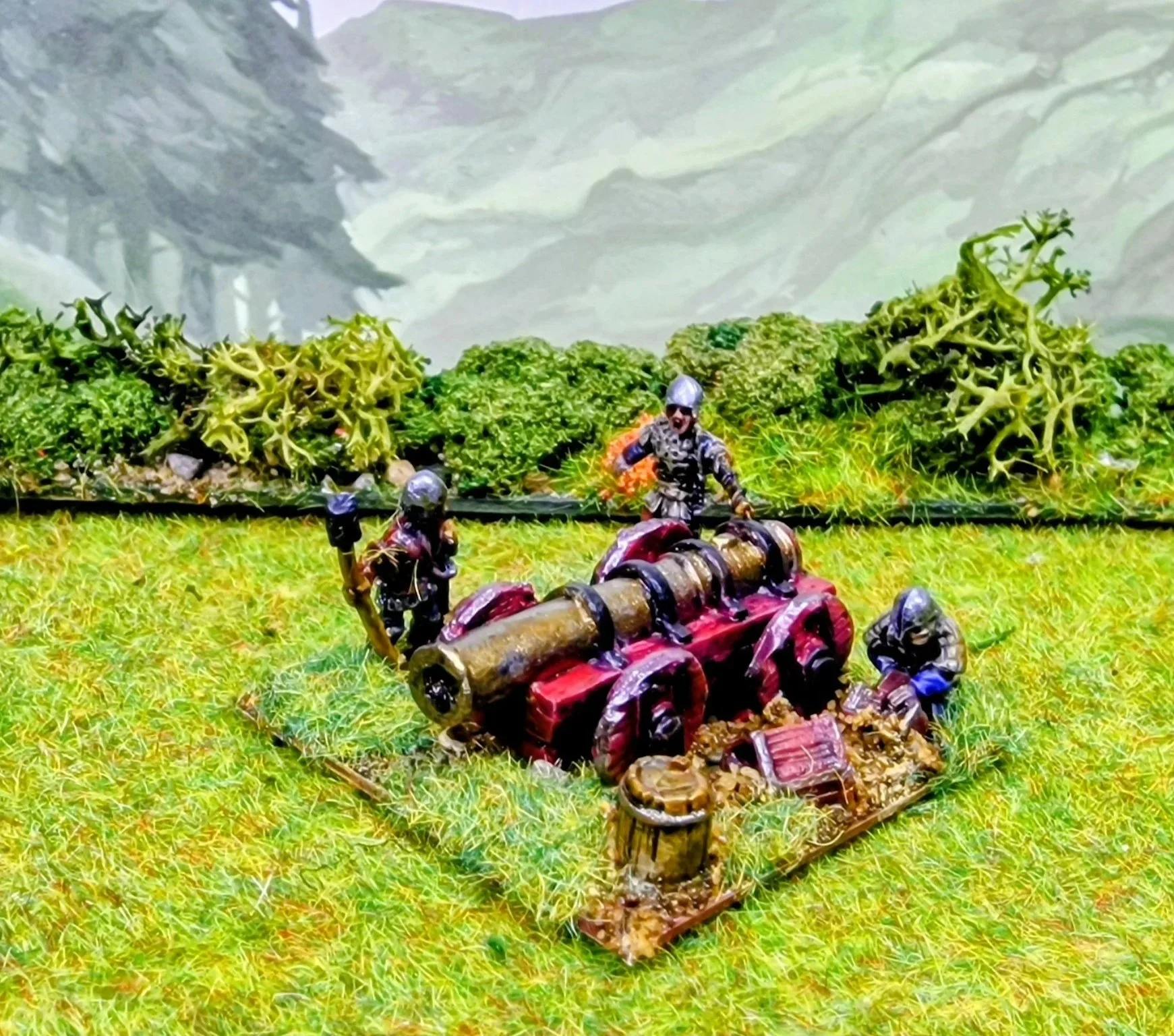
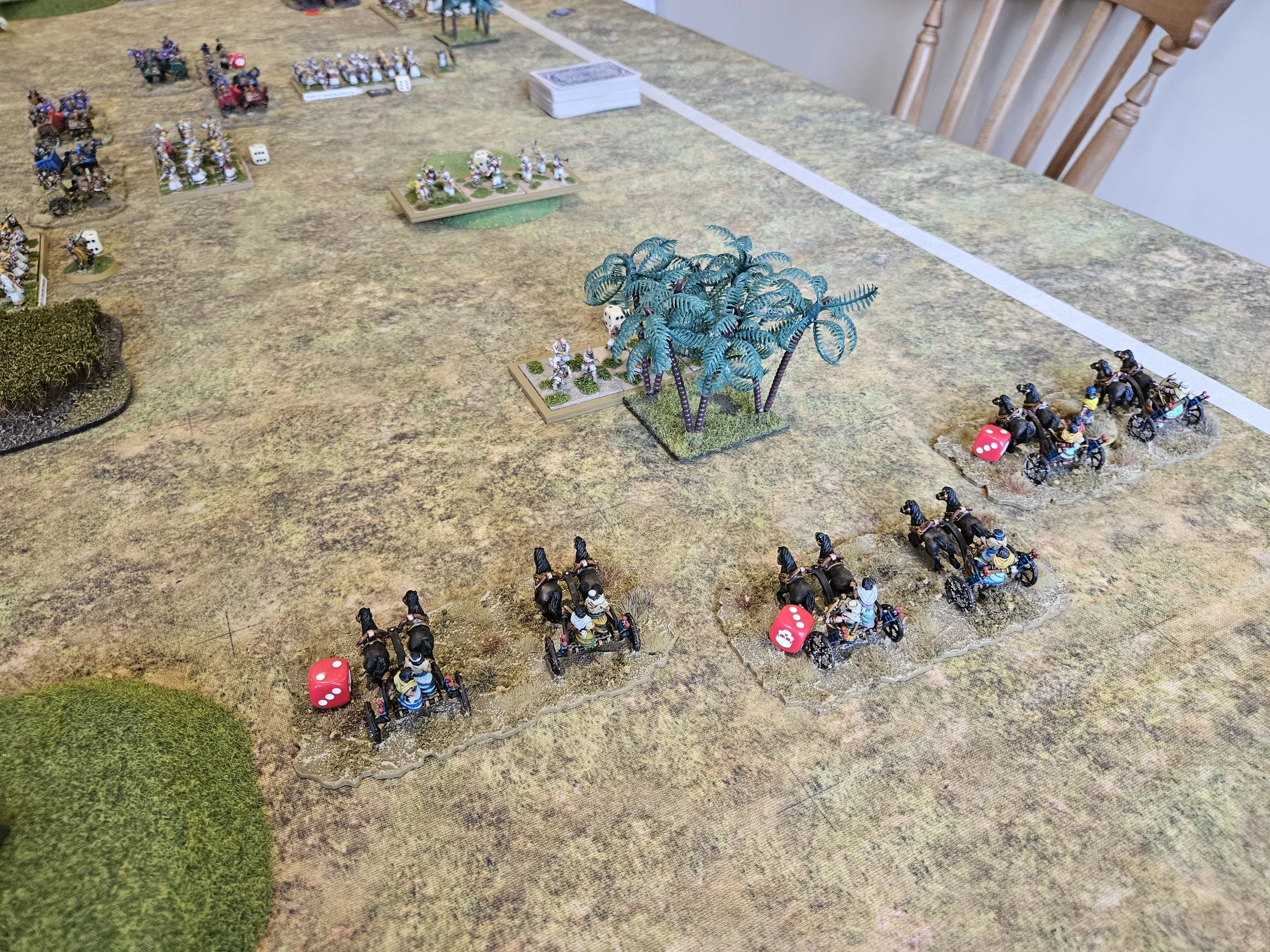
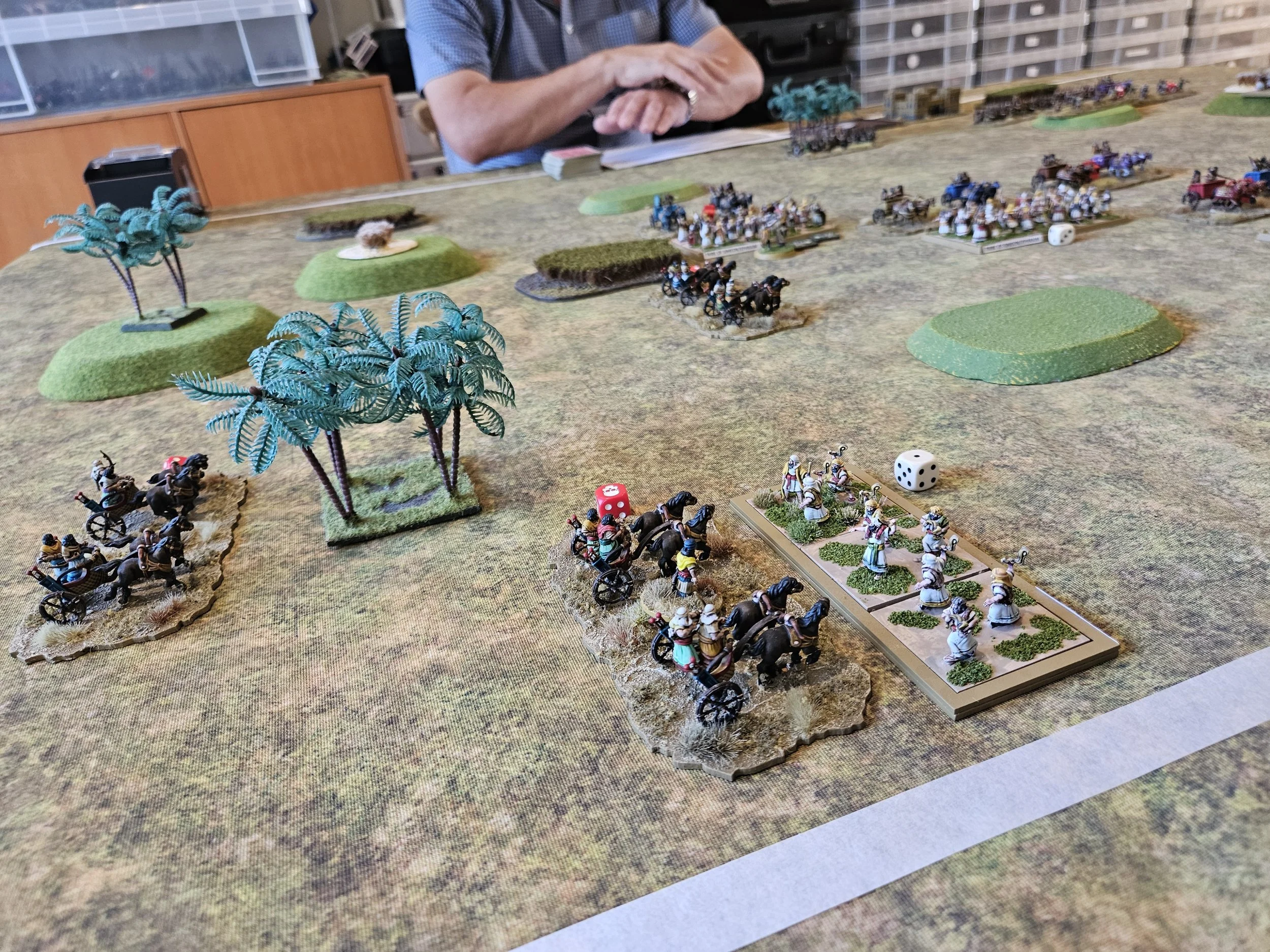
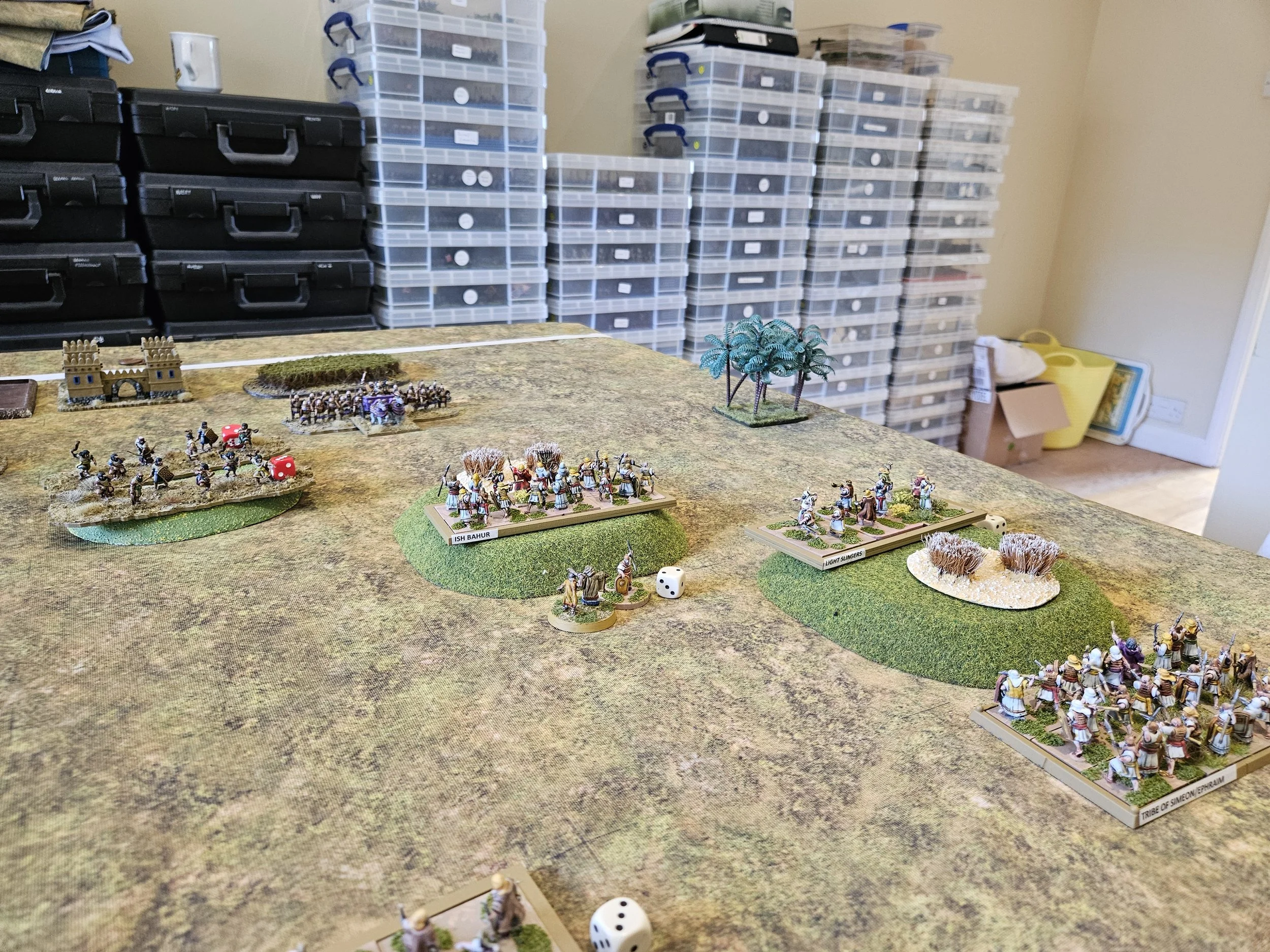
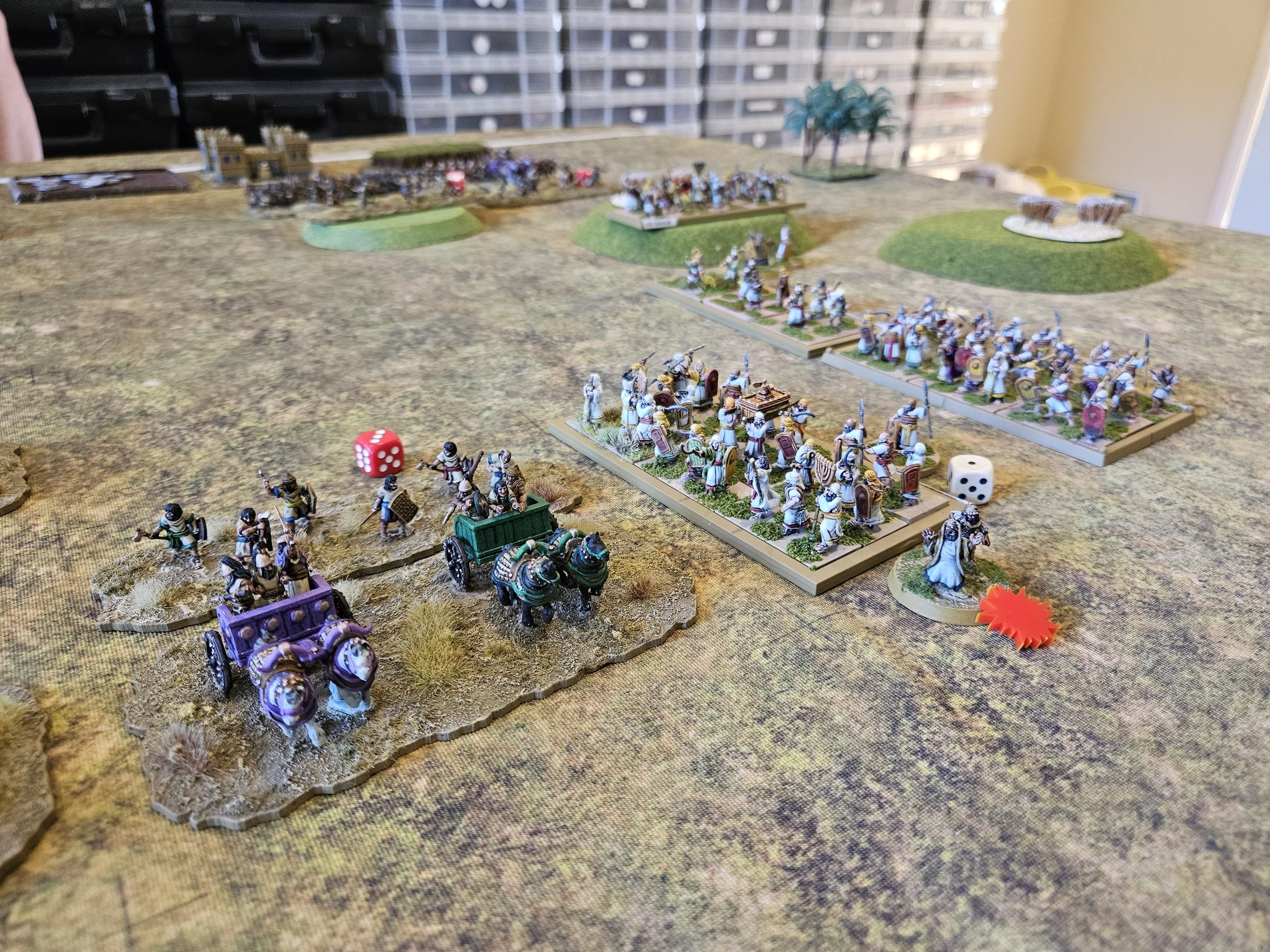
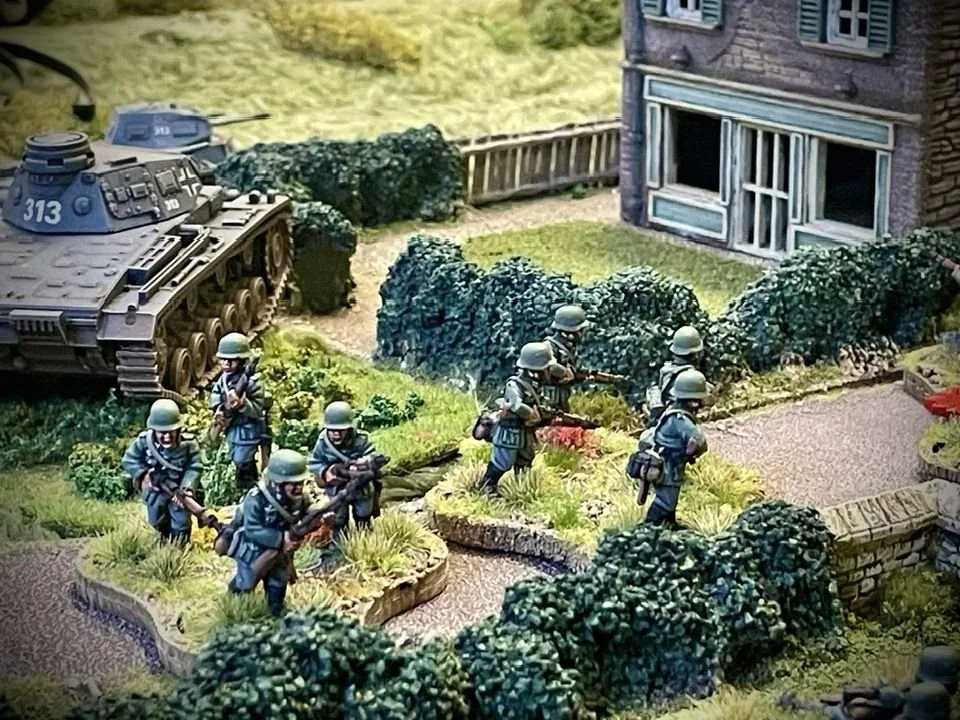
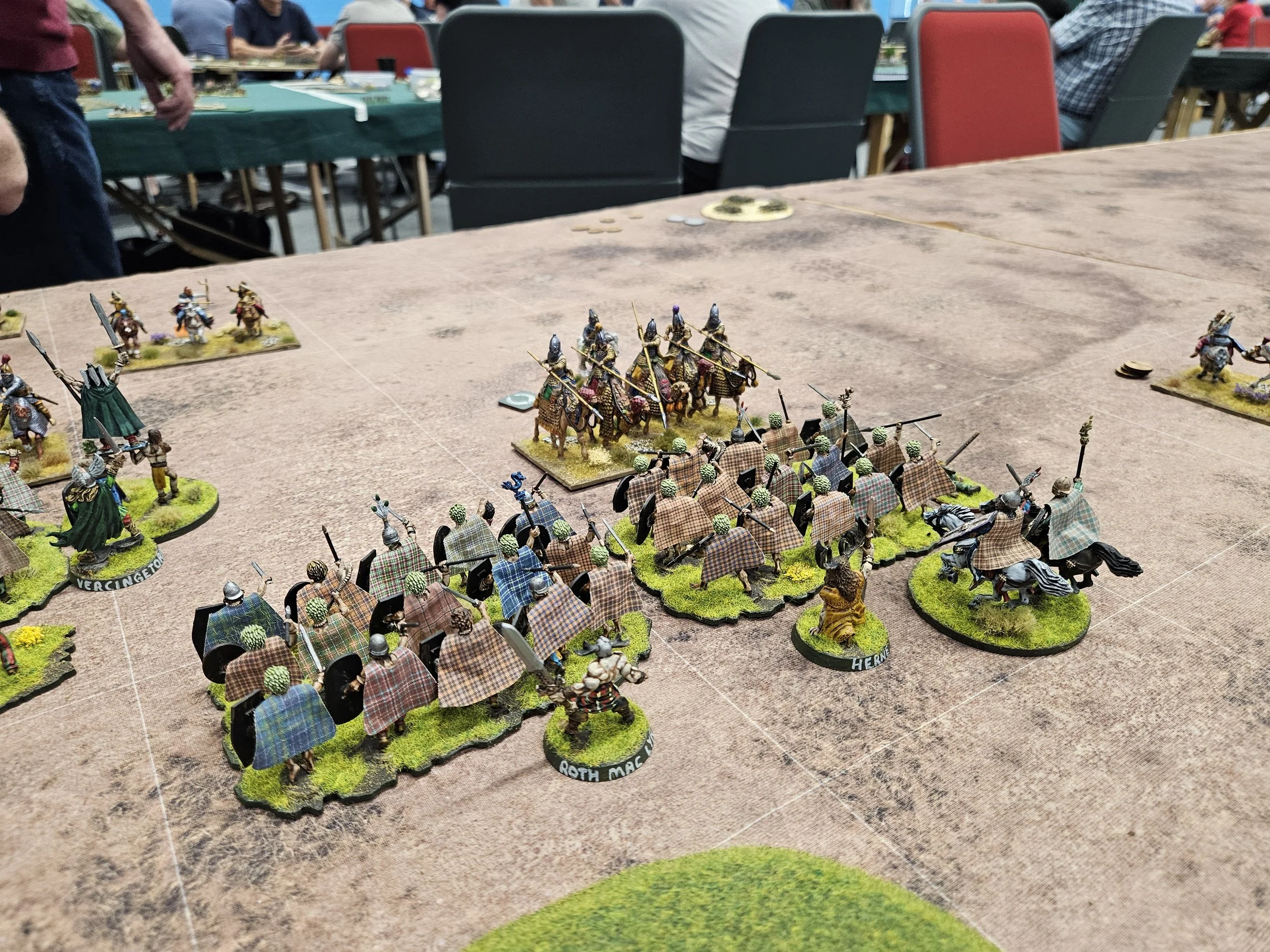
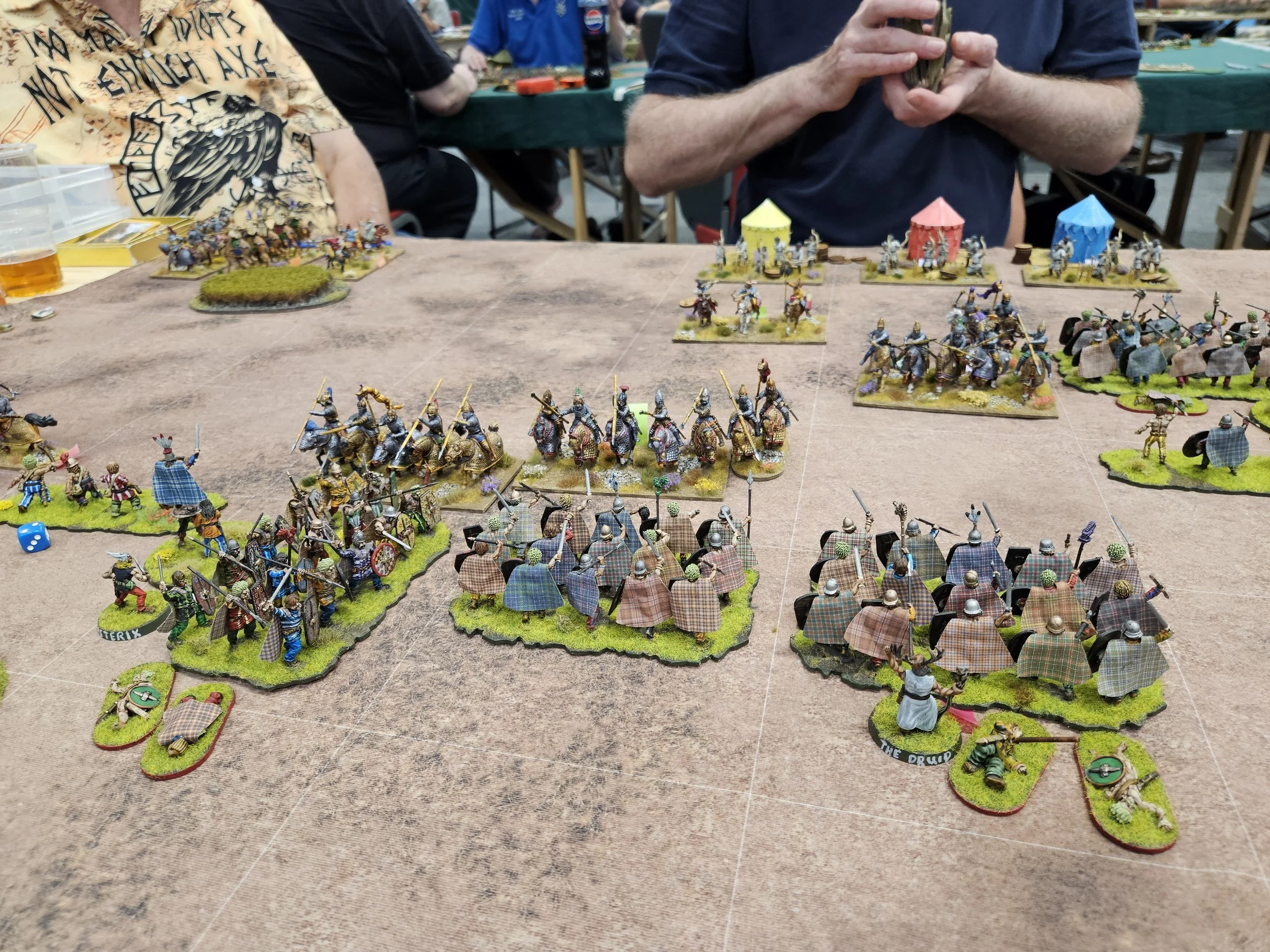
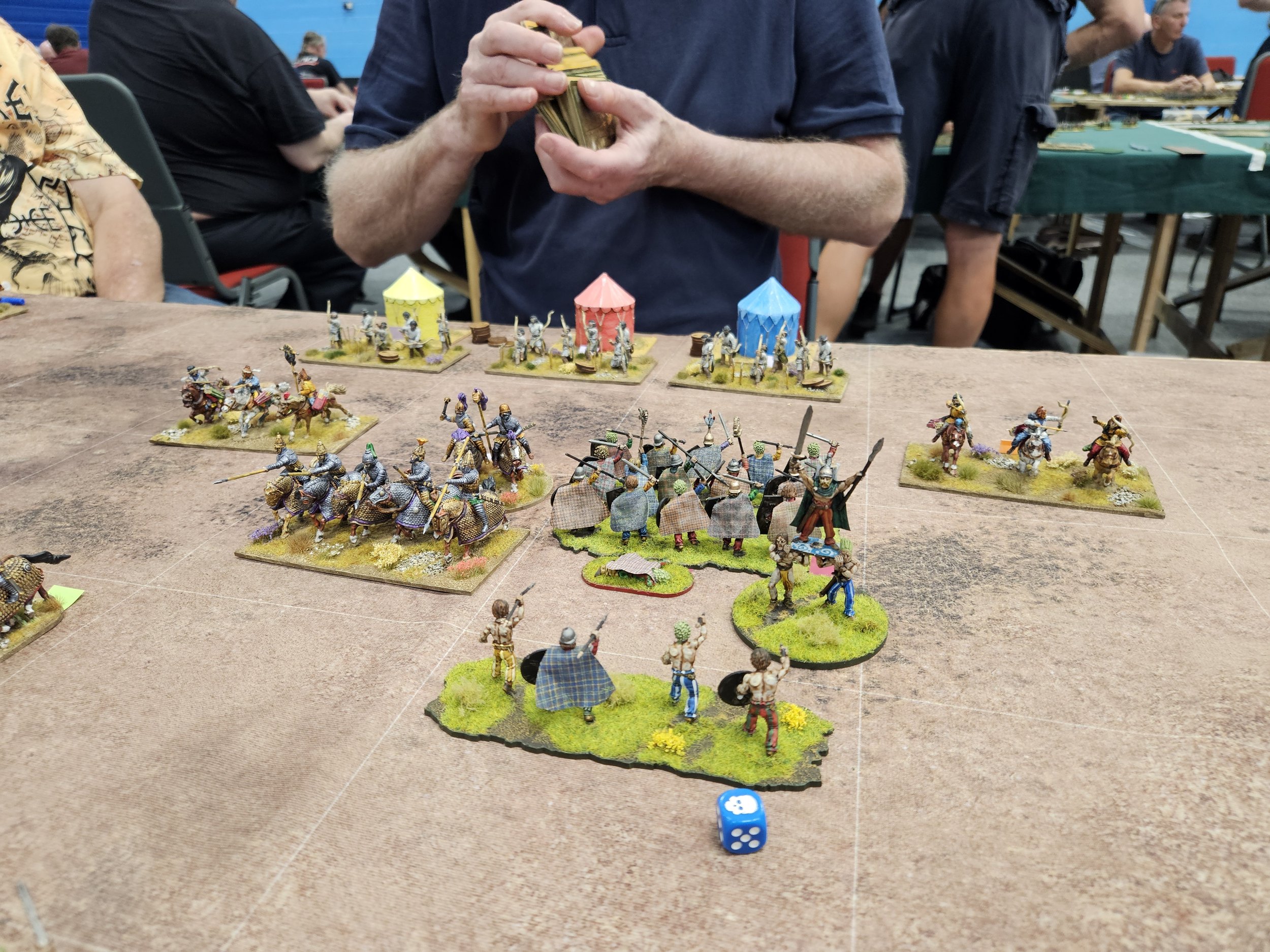
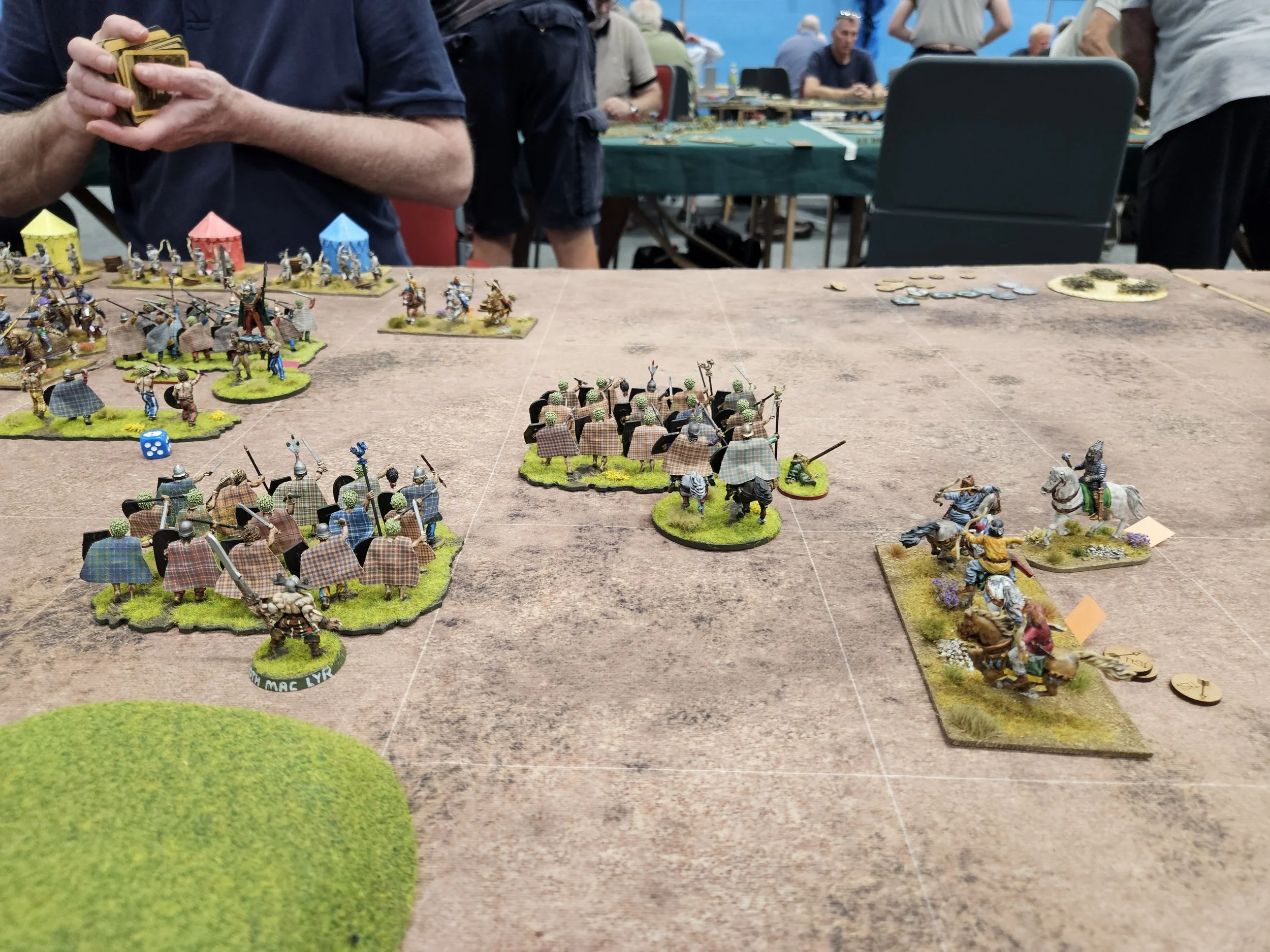
WW2 Belgian Armour in 15mm: the Renault ACG-1

My favourite era for WW2 gaming is the early war period: anything from Poland in 1939, through to France and the Low Countries in 1940, through to the Soviet Union in 1941.

I was therefore very pleased to see that Bayonets & Brushes had launched a range of 15mm 3D-printed tanks and armoured cars for the Belgian army’s eighteen day resistance to the German invasion: especially as many of the vehicles are gloriously unique. I bought everything I needed to field a Belgian force (don’t tell anyone, but I’ll proxie the Belgian footsloggers with French infantry - very similar at a distance!) and have finally got around to painting them.

Renault ACG-1

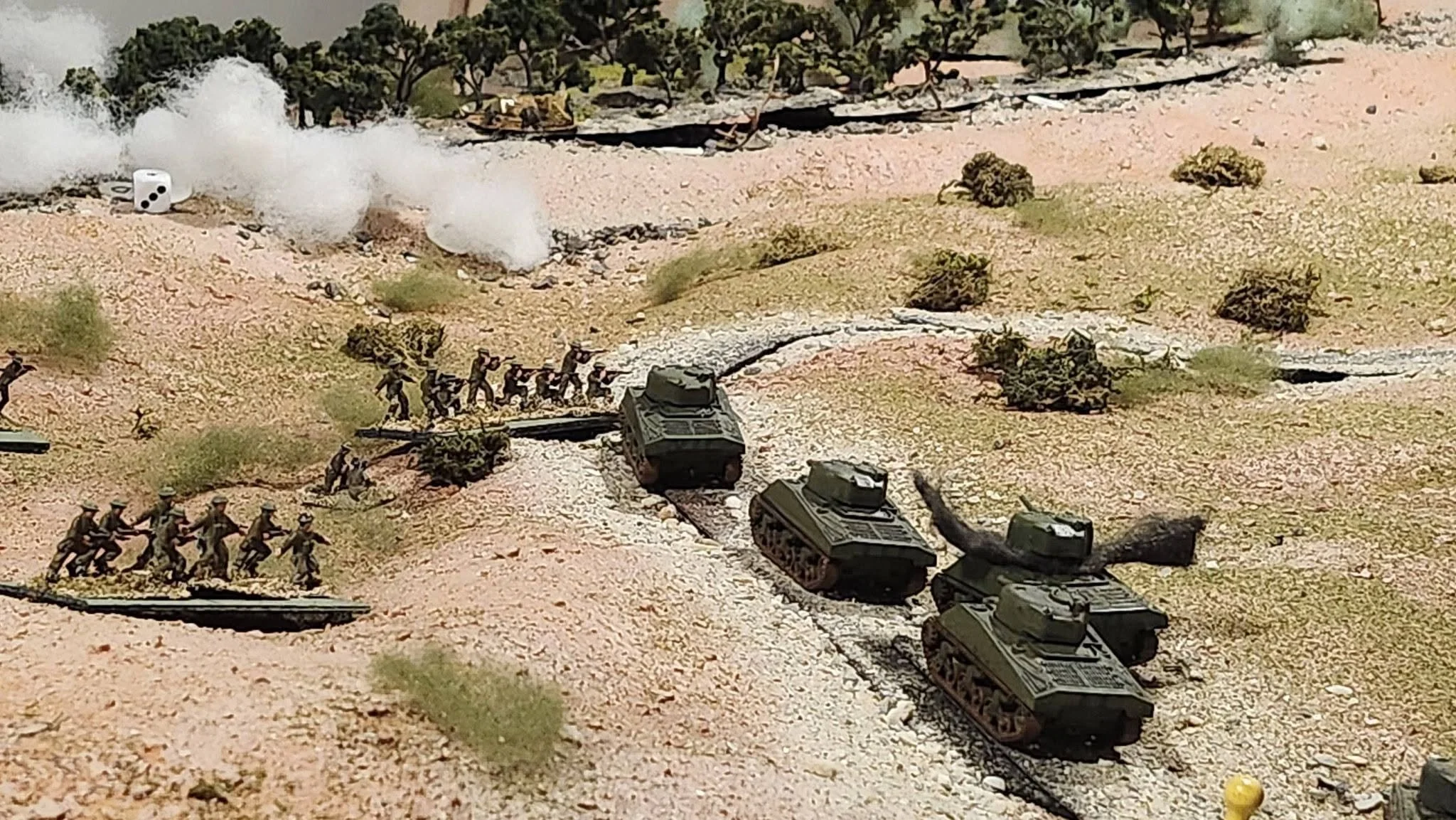
First up is a platoon of Renault ACG-1 tanks, known to the French as the AMC-35. These are lovely little models of what was considered a medium cavalry tank. Unusually for French armour, it had a two-man turret (total crew 3), and packed quite a punch with its 47mm SA35 gun.

Unfortunately for the Belgians, they deployed the ten tanks that they had in penny packets. From tank-hunter.com:

However, on 21 April 1938, the Belgium Army signed a new agreement and paid for the supply of ten tanks. This included the cost of the previously delivered tank number 803. Production was resumed in November 1938 and over the course of the next year, the remaining nine vehicles were delivered. AMC 35 tanks number 806, 814 and 817 arrived on the 30th March 1939, tanks numbered 807, 823 and 829 in May 1939 and tanks numbered 831, 831 and 833 on 7 August 1939. In August 803 was also sent back to Renault for a revamp. They were officially called 'armored cars' instead of 'tanks' in all official documents so as not to provoke the Germans.

The men of the new tank squadron were entered on the books on 1st September 1939 at Watermael-Boitsfort but soon moved to Ghent to pick up its vehicles and to start training. The Director of the seaport of Ghent offered the Army access to a nearby large area of wasteland. It was soon converted into a tank training ground.

At the end of October the tank crews and their vehicles were moved to Camp Beverlo. They under went tactical exercises with the 5th Infantry Division following the new military guidelines written by Belgium Captain Hullebroeck for the cooperation of tanks with the infantry.

On 24th December 1939 the squadron moved to Brussels. The unit was organised into two platoons of four tanks each time. The last two vehicles were held in reserve. The Belgium tank crews were drawn from two different cavalry regiments, the 2nd Lancers Regiment and the 1st Guides.

Each regiment provided four tank crews plus part of the platoon support staff. Most of these cavalrymen belonged to the class of 1935 and had been trained on horseback not tanks. The men of the 1st Guides were under the command of Lieutenant Gailly and had the following tanks in their platoon 807 (Lt H. Gailly), 817 (Wm Plissart), 829 (Adjt K.R.OLt.Pulings) and 832 (Wm Frankinet). The tank crews of the 2nd Lancers were under command of Lieutenant Schreiber and were equipped with AMC 35 tanks number 803 (Wm M. Verboven), 814 (OLt W. Schreiber), 831 (Wm Dumortier) and 833 (Wm Dumoulin). The two reserve vehicles, 806 and 823, had various defects, so Captain Hullebroeck made a decision to dismantle the tanks and use them for spare parts.

When the Army received the notification to be ready for war following the German invasion of Luxembourg and Holland in 10th May 1940, the squadron moved to the Walemstraat depot in Schaerbeek, near Brussels. The tank crews were told to hold themselves ready to intervene in case of air landings. They therefore began patrolling in and around the capital looking for paratroops.

On 16th May 1940 the Squadron was ordered to redeploy to Humbeek. They were now under the operational command of the 1st Light Regiment (1LR). The tanks were positioned to defend the canal and bridges between Willebroek and Vilvoorde. Their task was to act as a mobile anti-tank weapons.

The Belgium ACG-1 tanks first saw action on 17th May 1940. The first enemy scouts were spotted near the rail and road bridge of Kapelle-op-den-Bos. The ACG-1 tanks commanded by Adjutant Pullings in tank number 829 and Adjutant W Dumoulin in tank number 833 opened fire.

In the battle that followed, Tank 829 was hit at the front by an armour piercing shell from a German PaK 37 anti-tank gun. Tank driver Camille was killed and Gunner Lutin injured. After giving first aid to the gunner, the tank commander, Pullings, climbed back into the turret and continued to fire on the Germans alone. However, the situation soon became untenable. The remaining tank crew had to abandon the tank. Pulling continued to fire at the enemy: this time from a nearby house, using a machine gun fighting alongside a sergeant of the Border Bicycle Regiment. Pulling eventually escaped in the side car of a Border Police motorbike.

Tank 833, under the command of Adjutant W Dumoulin, remained in action until the general retreat order was given at 9pm. He constantly maneuvered the tank to enable the gunner to fire on targets without being hit. The rest of the Tank Squadron was used on the 17th May 1940 as part of the rear guard to protect the retreat of the Belgium infantry towards Dendermonde. They caused some losses amongst the attacking Germans.

On the 18th May 1940 part of the ACG-1 tank squadron arrived in Dendermonde just after dawn. It consisted of Captain Hullebroeck and his staff, and three tanks of Lieutenant Schreiber, 2nd Lancer's, platoon. Hullebroeck wanted to remain in place spot and fight, but was ordered to take what remained of his Squadron to Lotenhulle, to the west of Ghent. They arrived at 4pm.

Lieutenant Gailly's remaining three tanks of the 1st Guides Platoon disengaged with the enemy and followed orders to regroup near Dendermonde. They managed to cross the canal bridge just before the engineers blew it up. The Lieutenant visited the headquarters of the 6th Infantry Division to find out where Captain Hullebroeck and the other Squadron tanks were located, but no one could help him. Gailly's platoon of three tanks drive to the Cavalry HQ command post at Destelbergen. They arrive at 6pm and are ordered to support the 2nd Cavalry Division at Tereken near Sint-Niklaas on the road between Antwerp and Ghent. The two platoons are now separated and are many miles apart.

Captain Hullebroecks platoon was then sent to defend the Dender River, now under the overall command of the 1st Division, Ardennes Jagers. In the east, Lieutenant Gailly's tanks are on the left bank of the Scheldt River to try and stop the German advance near Antwerp. At 11am, along with infantry and some 2nd Cavalry Division Armoured cars, they are sent forward towards Zwijndrecht. The tanks are not fitted with radios so they are assigned soldiers on bikes to facilitate communication.

This advance takes them via Kettermuit and the river road as they prepare to head towards Kruibeke on the outskirts of Antwerp. En route, Tank 833 by commanded by W Denis ran out of fuel. As the two remaining tanks entered the village, around 6pm along Burchtstraat, they made contact with the advance units of the German Army.

Tank 807 commanded by Lieutenant Gailly is in the front, followed about 100 metres behind by Tank 832 commanded by W Frankinet. The lead tank is hit by an armour piercing shell from a German PaK 37 anti-tank gun. Tank driver Sansen is wounded but manages to get out of the tank. Lieutenant Gailly is burnt but manages to climb out of his turret. The Gunner does not make it. The two survivors crawl back to Belgium army lines through houses, fields and canals. The platoon is now temporarily down to one tank.

That night the 2nd Cavalry Division then retreated west to Moervaart, using a water inlet to the Ghent-Terneuzen Canal as a defensive moat. They broke contact with the enemy at around 9pm near the town of Zwijndrecht. Meanwhile supplies arrived and the crew managed to refuel tank 833 so it could join tank number 832.

On the 20th the Germans continued with their advance and reached the eastern edge of the Ghent Bridgehead. There was fierce fighting near the riverside village of Kwatrecht, south west of Ghent. That night the Lieutenant Schreiber's tanks were ordered to advance towards the fighting at Kwatrecht.

In the morning of the 21st May 1940, tank 814 commanded by Lieutenant Schreiber is hit and the whole crew were killed. Tank 803 is also disabled by a number of hits from German PaK 37 anti-tank guns. The tank commander, W Verboven, and gunner Delens are instantly killed. The driver Goossens manages to survive the incident. On the 22nd May 1940 the remaining tanks are withdrawn behind the River Leie at Zwevezele for a short rest.

At 12 noon on 24th May 1940 the remaining three tanks were ordered to advance to Moorslede along with other armoured vehicles and infantry units, as the German advance into France had now reached the coast and threatened the south of Belgium. By dawn of the 25th they had reached the town of Sint-Eloois-Winkel, where they were used for patrol work.

On the 26th the tanks are fired upon by a Belgium 75mm Cannon as they are mistaken for German panzers. After that close call the ACG-1 tanks continue patrol work but fly the Belgium flag to prevent anymore friendly fire incidents.

The Squadron tanks are reinforced during the night with some Carden Lloyd T13 B2 tank destroyers. They are dispatched to different defensive locations to keep an eye out for German infiltration. Tank number 832 along with some T13s was sent to patrol the area between Moorslede and Tuimelaars. Tank 833 and more T13s were sent to Koekuithoek and Tank 833 along with their allotted T13s are sent to look after the area around Vierkavenhoek. They are part of a mobile reserve.

On the last day of the battle for Belgium, the tanks are pulled back to Roeselare near Hooglede. Only two of the ACG-1 tanks remain operational. German anti tank guns knocked out a number of the T13 tanks. Others had to be abandoned because of lack of fuel. When the surrender order was received the remains of the Squadron was told to stop fighting and await further orders.

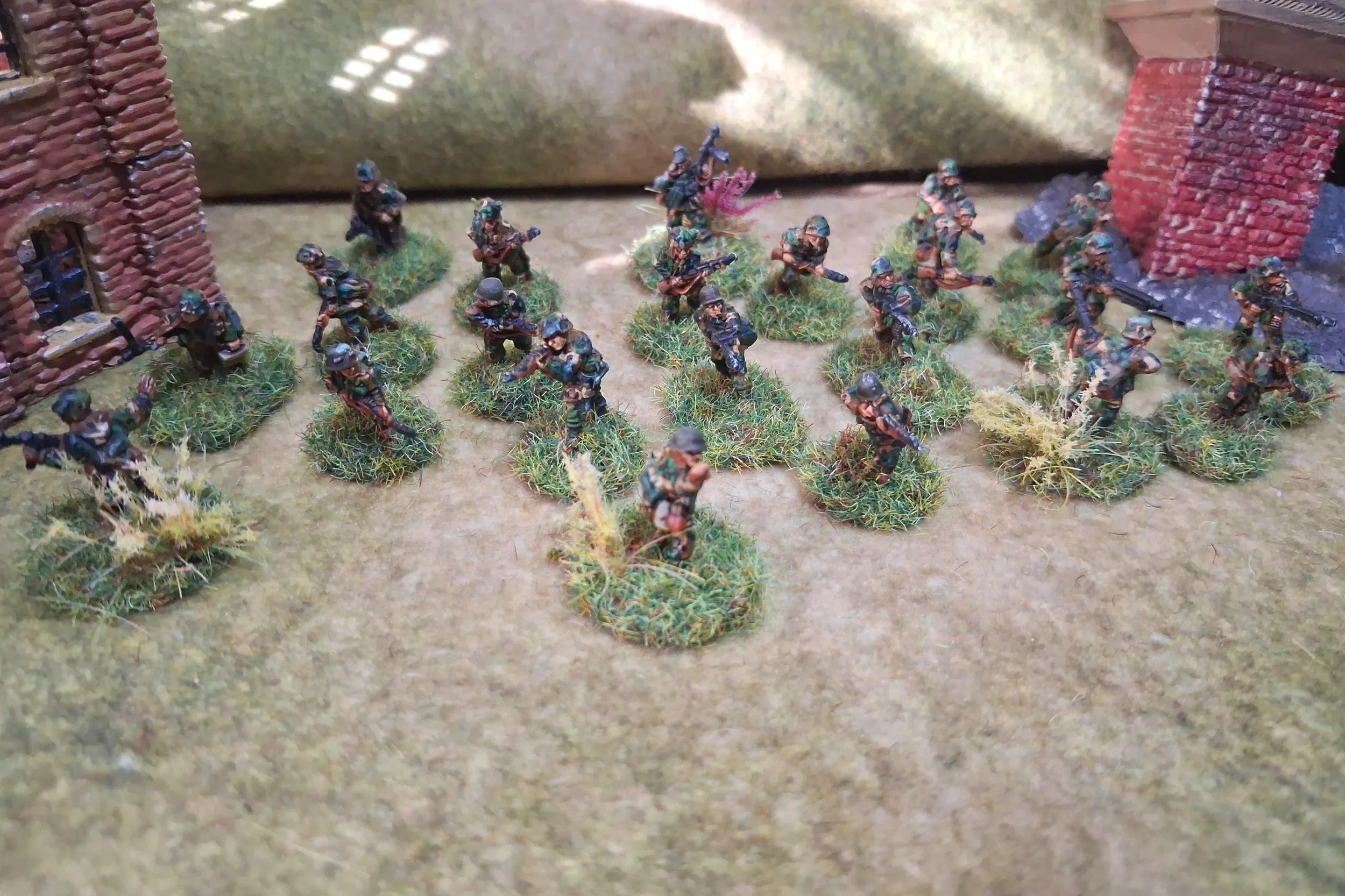
Note that none of the four tanks pictured have any markings. Apparently the ACG-1s didn’t have any (at least not until they started flying a Belgian flag after 26th May) and only have their serial number written onto the left-side mudguard at the front…but that’s too small for me to attempt!

I highly recommend a visit to bayonetsandbrushes.co.uk to anyone interested in gaming the early war period.

These were painted by a sprayed undercoat of Vallejo English Uniform, washed with GW Agrax Earthshade, then drybrushed and highlighted with Vallejo Khaki Grey.

Two the Strongest Game Three: Northern Dynasties Chinese versus Polybian Romans & New Kingdom Egyptians

Our third game at the Doubles was against Geoff and Nate using Polybian Romans and New Kingdom Egyptians respectively. This was a crucial game as the way in which the points system worked meant that three pairings were still in with a very good chance of winning the tournament overall: not only, therefore, did we have to beat Geoff and Nate, but also beat them by more than Si and Dave beat their opponents. Exciting stuff!

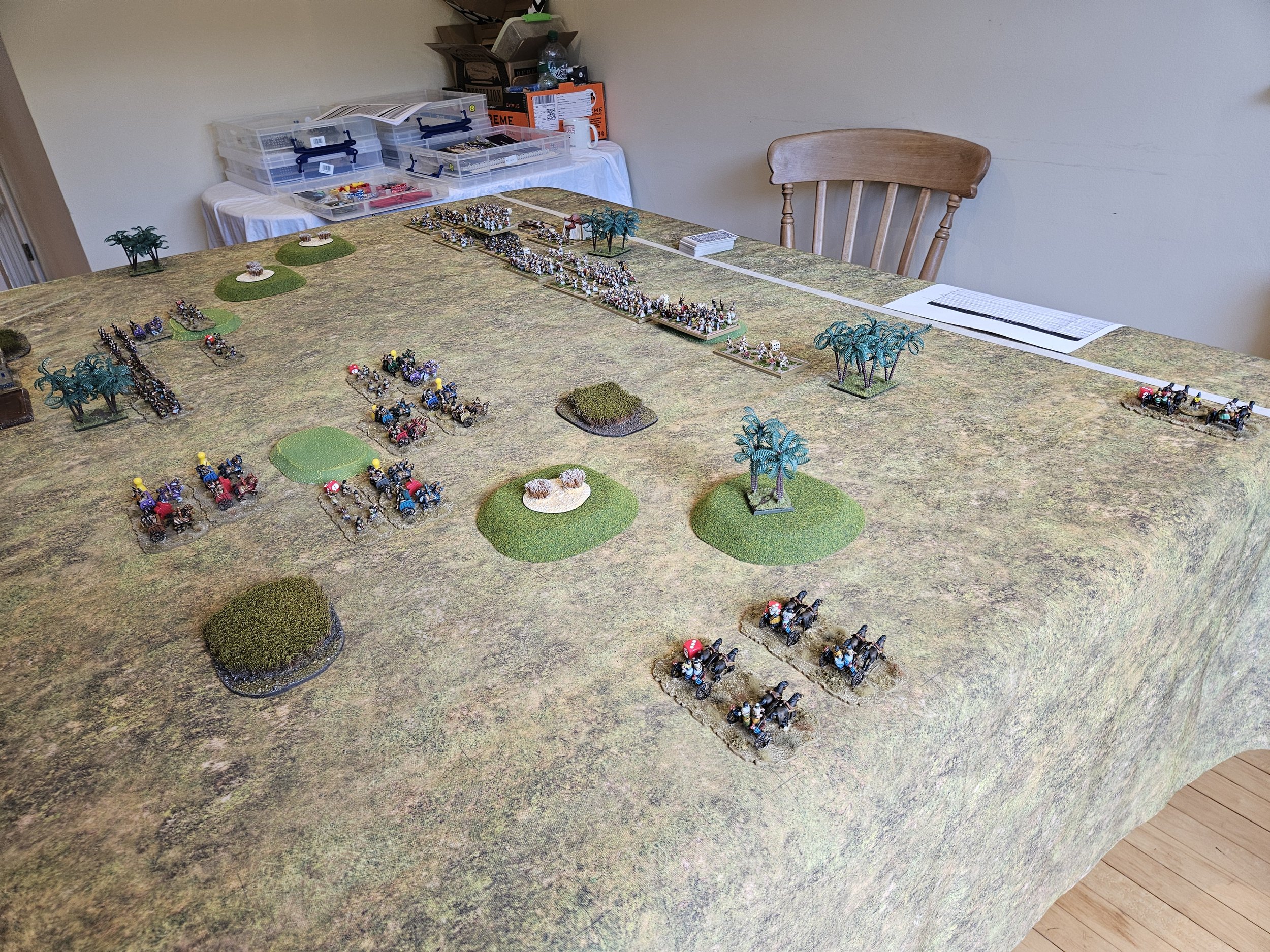
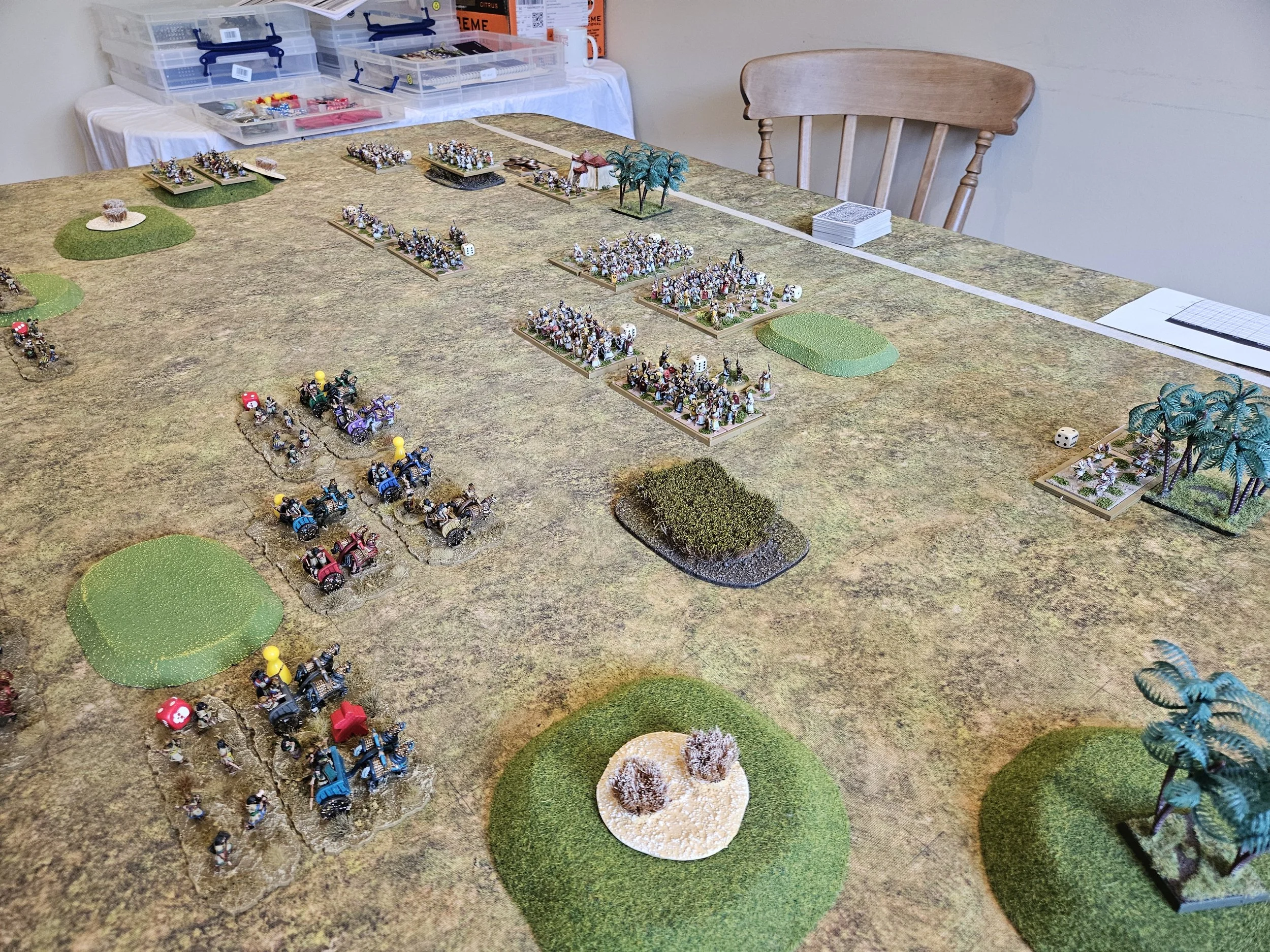
I have a New Kingdom Egyptian army myself, so I know something of its strengths and weaknesses. My plan was therefore very simple: charge forward with my heavies and steamroller the enemy before they had a chance to use their superior shooting to pincushion me to death!

So that’s what I did: straight forward and to hell with the consequences!

Crude tactics, but they worked like a charm. The Egyptians crumpled under the onslaught of my heavy cavalry and were dismissed from the field after only the second turn!

This was very unfortunate for Geoff, who now found himself facing Peter’s army from the front and my army from the flank.

This turned out to be no foregone conclusion, as the Polybian quincunx proved incredibly difficult to break.

Peter did manage to get his cavalry past the main Roman line and capture the enemy camp, but then had to spend his time trying to keep the camp (and the three coins it represented) and trying not be killed by superior numbers of Roman cavalry, all the while watching the three quincunxes marching inexhorably forward.

Time was also ticking on, and in the very last turn of the game I finally managed to get enough of my own heavy horse across and into the flank of the Romans to finish them off, but it was a near run thing and the Latin infantry resisted charge after charge before finally giving way. A tremendous, if untimately unsuccessful, defence of a very difficult position by Geoff!

All that was left was to wait for the final scores to be added up…Peter and I were overall winners again, but only by the very narrowest of margins: 102 points versus Si and Dave on 99 points!

My thanks to Nate and colleagues for organising, to all my opponents and, of course, to my doubles partner, Peter. Perhaps I can have a rest now before next year’s competition!

Painting Challenge: First March Update

Huge amounts submitted, must be time to do a Challenge update!

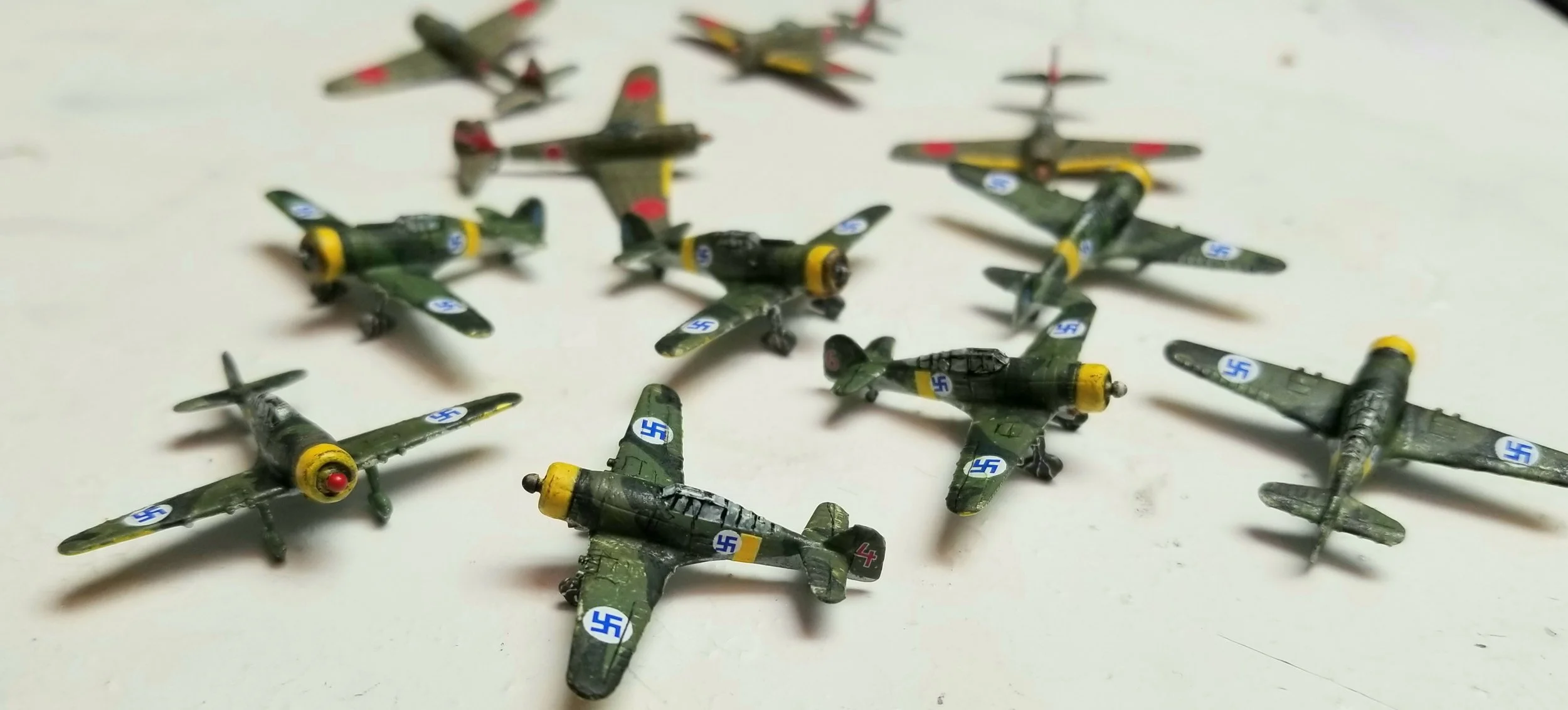
First up is the return of Mr Luther, who has sent in at least a couple of squadrons worth of little aircraft for WW2 aerial gaming. Here’s a selection:

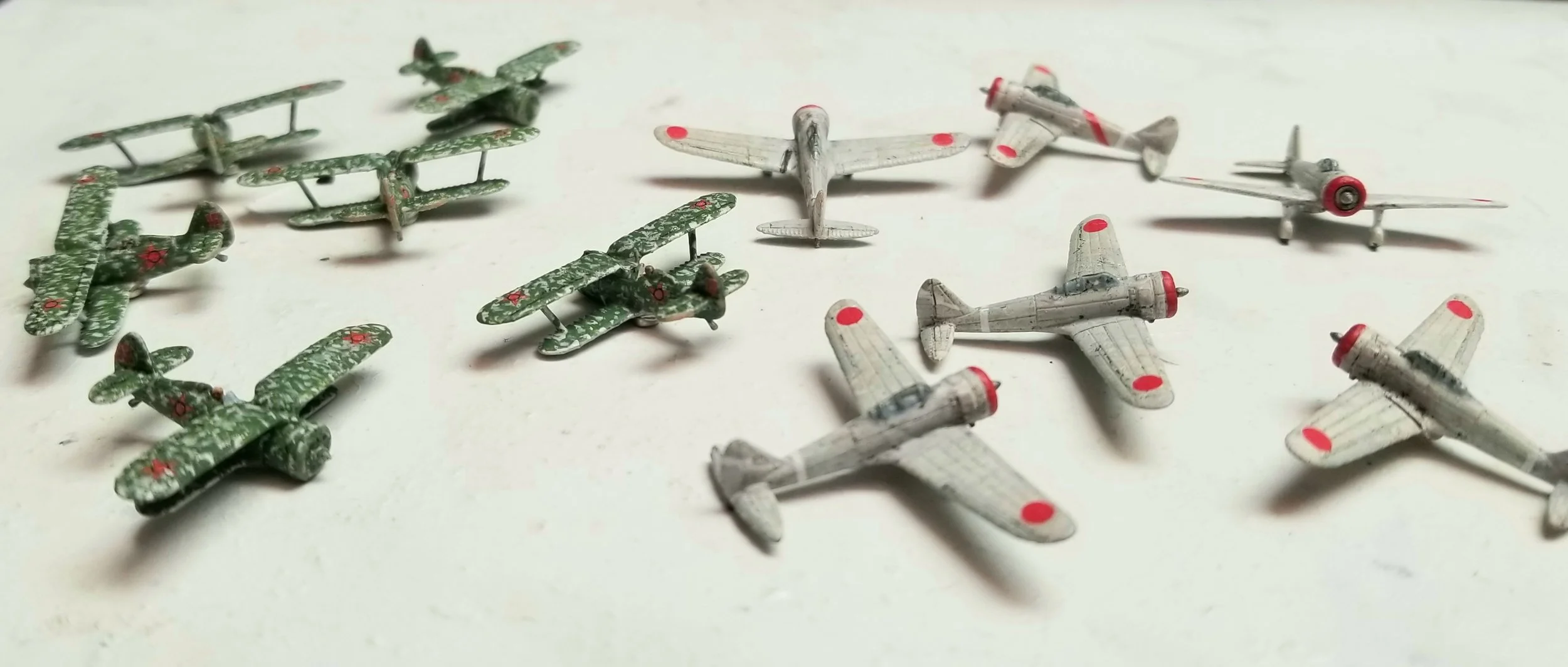
More tiny aircraft, one of two themes of this week’s update, this time from Mervyn. Today’s submission is one to be sued for Algy Pulls It Off, the Lardies rules for WW1 warfare in the ait:

The second theme of this week’s update is buildings, lots of buildings. Let’s start with Carole, who has sent in ten! Here’s a selection: see the rest in her gallery, available through the Navbar, above.

And Mr Helliwell has also sent in loads of buildings. Some troops, yes, but definitely loads of buildings! Again, here’s a selection:

No buildings, but here’s a huge entry from Dex…two platoons (plus supports) of WW2 US Marines. Here’s some of them:

And finally, lst but by no means least, here’s Stumpy with some more figures for Test of Honour:

That’s it for this time, but do keep them coming! Next update towards the end of the month.
Two the Strongest Game Two: Northern Dynasties Chinese versus Principate Romans & Armenians

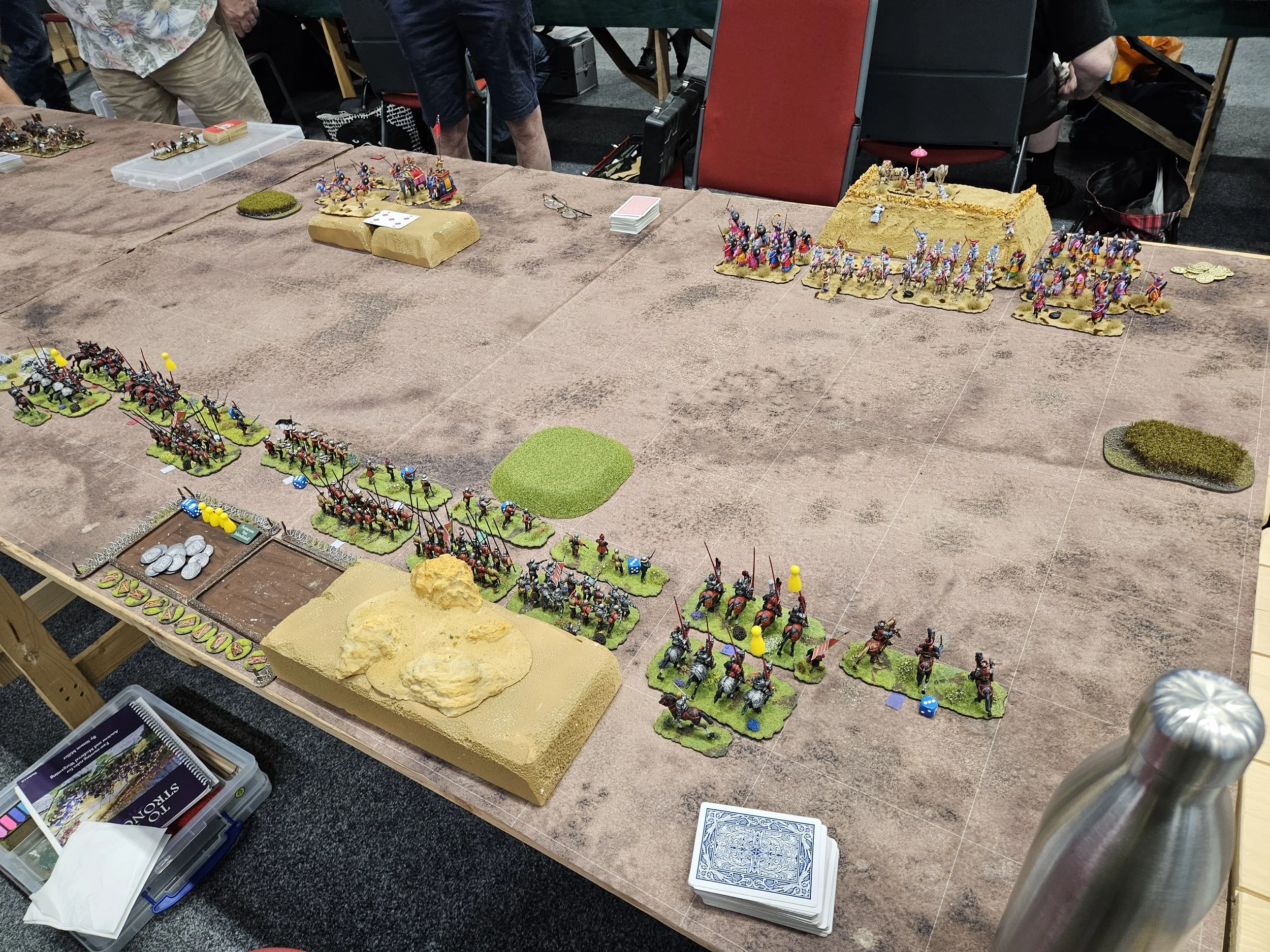
The second game that Peter and I fought at last year’s Doubles (actually held in January this year due to scheduling problems) was against the powerful combination of Principate Romans and Armenians, ably generalled by Matt and Tim respectively.

The Chinese won the scouting and we both immediately advanced strongly against our opponents.

On my side of the table, things went wrong very quickly, with two units of my heavy cavalry disordered in the first charge, and my lights on the wing, who were supposed to be outflanking the enemy line, driven backwards and right off the table!

The Armenian cavalry who had driven my lights back then turned around and headed towards the rear of my horse, who were still very much under pressure from the enemy in front of them.

This had disaster written all over it, but somehow my cavalry threatened by the Armenians in the rear survived the next couple of turns: once because Tim drew Aces and failed to charge them, and then because they managed to make their saves when hit from behind.

A very narrow escape!

And, in fact, a narrow escape that allowed me to charge and disorder an Armenian unit further into the centre of the battlefield, and then assault it with more lights, finally doing enough damage to break them and give me enough coins to win the game.

This was very lucky, as I only had two coins left myslf, and Tim’s other cavalry were about to hit the rear of my other horse again!

So that was my side of the battlefield, what of what Peter was doing on his. Here’s his report:

Peter writes

My CinC , Mulan (of Disney fame), led some brave but nervous LC facing the veteran Lance and javelin armed heavy Roman cavalry. Mulan advanced and sure enough the Romans took the bait and galloped forwards to kill or capture the apparently weak and defenceless girl. But of course she withdrew.

Meanwhile the solid line of Lorica segmenta clad legionaries trundled forward with no gaps across six boxes!

But this was a trap! My nearby command of cavalry and supporting light cav on the other side of the river shot forward. My veteran cav Lance bow, blocked the advancing legions and started shooting although scoring no hits. They then sat there with lowered lance, threatening to countercharge any further advance by the Romans.

Meanwhile, the bow armed cavalry surprised my opponent Mat by turning and offering their flank to the pilum armed pesky praetorians! Why? Because They then charged across the deadly river, at the Ford smashing into the flank of the Roman cavalry! Missing once and hitting the second, which Mat failed to save! The supporting light cavalry followed and again missed and then hit but frutatingly the vet cavalry saved!

So it was up to Mulans squadron of bow armed light cav to pour 6 volleys into the same unit and on the last arrow they failed to save and died!

This left just one unit of Roman cav facing a swarm of formed Chinese cav and Mulans light cav and they very wisely began withdrawing back to their base edge.

Meanwhile my veteran heavy Lance armed cav blocking the menacing Roman mincing machine, activated - and withdrew! This surprised Mat but also delighted him as he wanted to advance to take my camp.

So he blew his cornicens and the whole line of locked red scuta came forward in a rush.

But again this was a cunning trap!

By now the Final Roman cavalry unit had been pursued to their base edge and shot to pieces by the swarm.

This allowed Mulan and one unit of LC to turn and charge across the same Ford that the heavy cavalry had charged across the other way just two turns previoulsy.

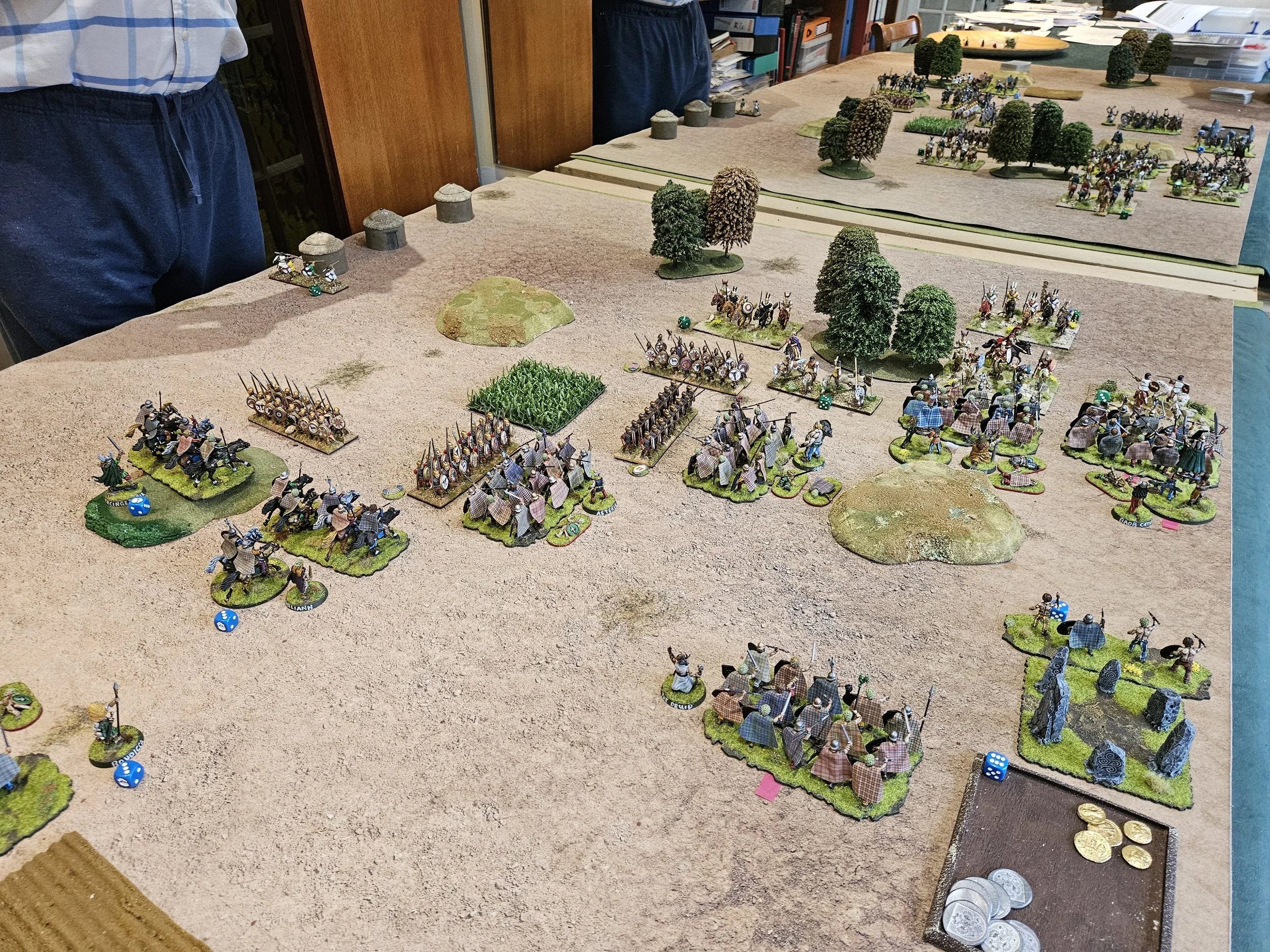
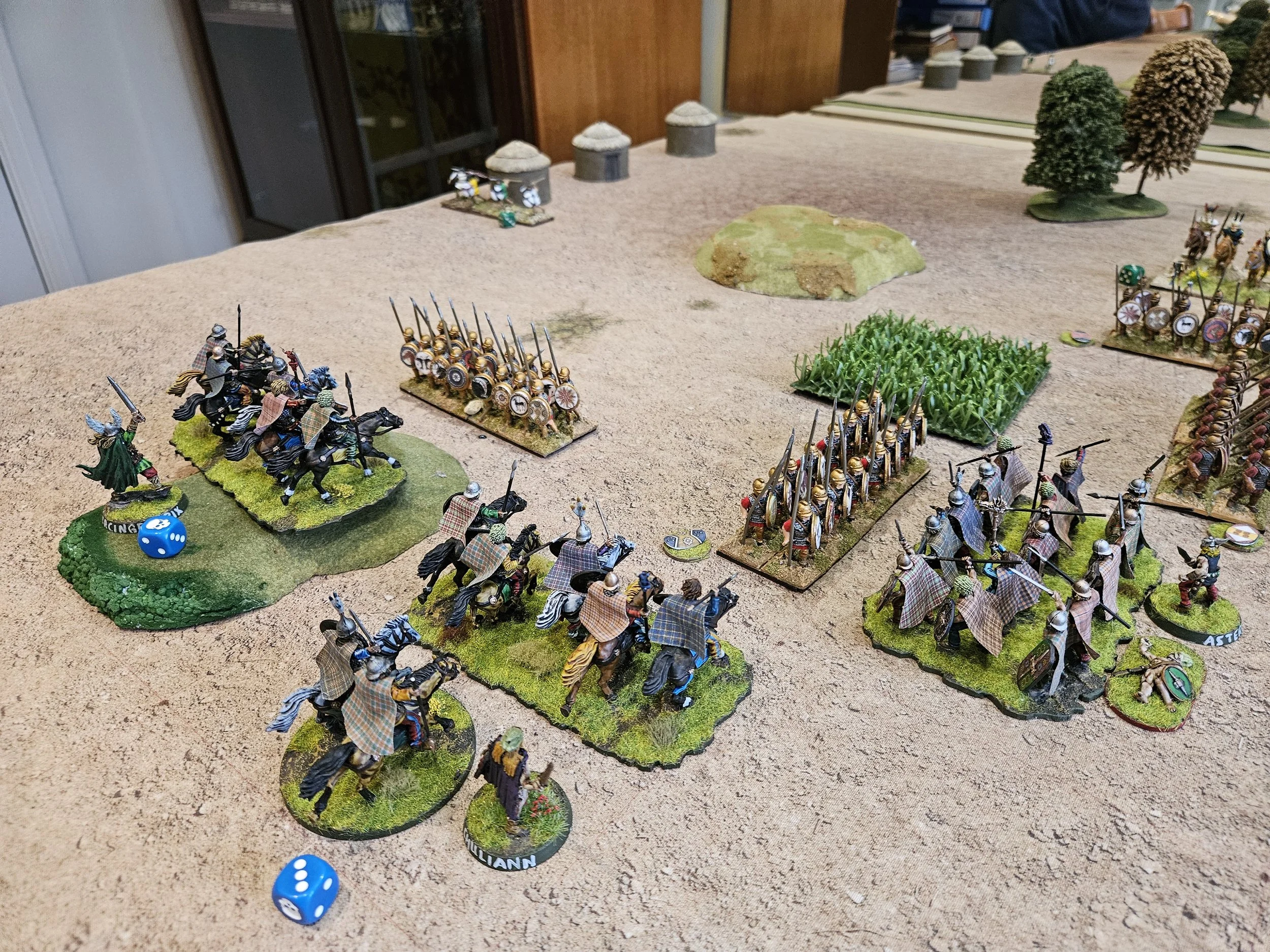
You can see the moment in the photo above, where, just like in the AI video based on this very figure that I posted yesterday, the koi carp leapt into the air as Mulans tiger splashed through the water in Hollywood slow motion, before smashing into the flank of the already disordered legion!

The first card missed, the second card hit and the legion, obviously completely surprised by this unexpected attack across what it had assumed was a protective turbulent river, drew a 4 and failed its save!

These were the last two medals that the entire double army had left and the remaining Romans turned tail and ran!

I couldn’t have choreographed such a Hollywood moment any better…

  • A turbulent and deadly river.

  • One surprise charge across the Ford with heavy cav to take out Roman vet cav to close one trap.

  • Then another charge the other way to close the Second trap led by Mulan and her tiger to destroy a legion.

  • Winning the final medals for a total wipeout victory!


So another big win and on to the final game…

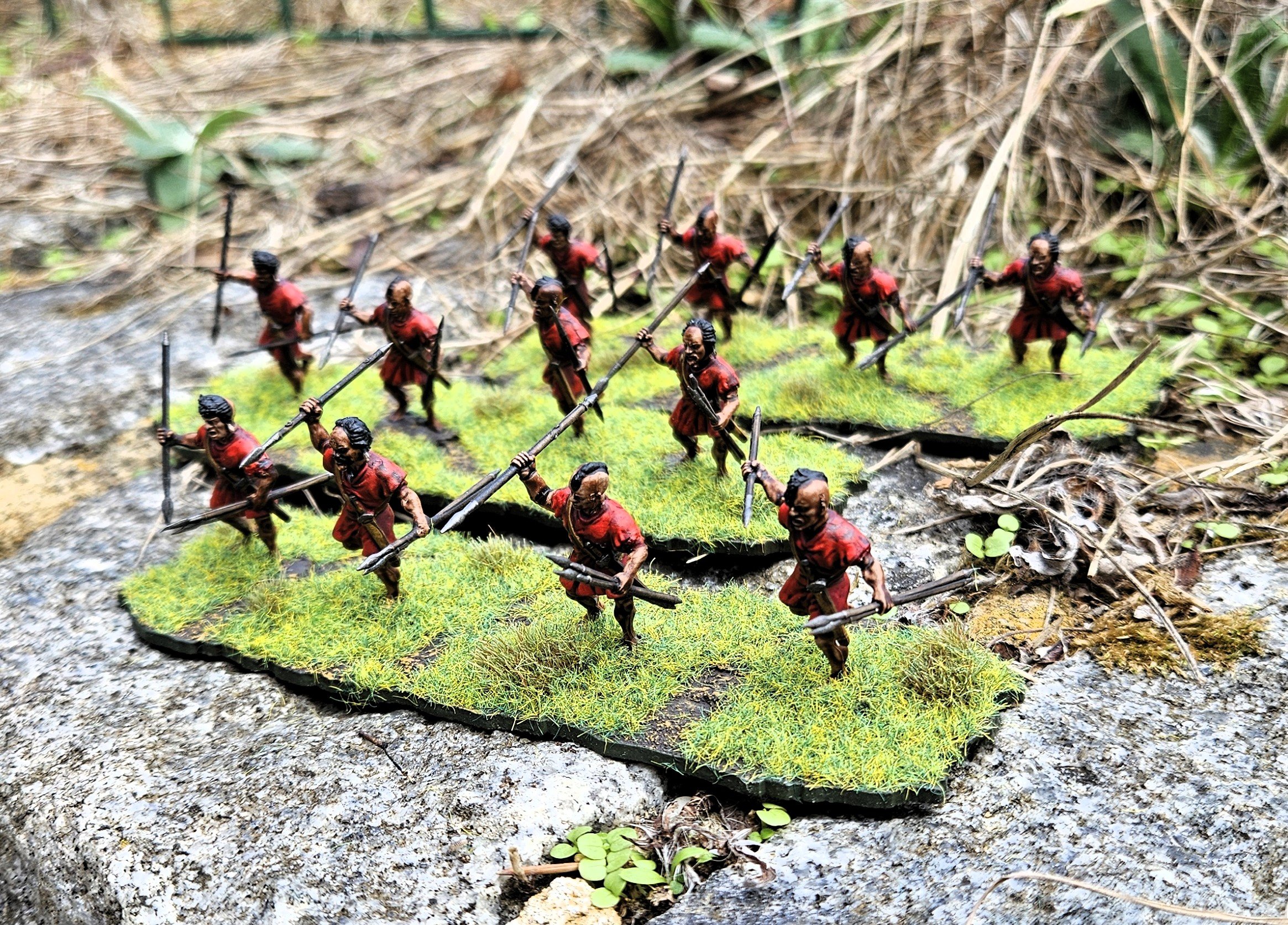
Pythorex Assault Infantry

Here’s the last of my big order from Trench Coast Miniatures’ Trilaterum range of 15mm scifi: Pythorex Assault Infantry.

Cracking figures that paint up really easily. Undercoat with Grey Seer, then paint the belly with Contrast Skeleton Horde. Main skin is Contrast Creed Camo, with the mouth, tongue and eyes then picked out. Exoskeleton is a metallic acrylic picked up from a hobby shop.

As I said, I like these, but I do have a couple of points to make.

Firstly, why do half of them come with two blades i.e. no distance weapons or hands. Are we really saying that there is a need for melee specialists on the sci-fi battlefield of the future. Even today the saying goes that it’s pointless officers practising with a handgun as if the enemy are that close you’ve lost the battle already! I’m not saying don’t have one blade, but put a decent distance weapon in the other please…or, and here’s an idea, why don’t the guns come with bayonets?

Secondly, it’s the old story of scale creep. It’s not a very good photo, but here’s a quick size comparison:

Pythorex Assault, Pythorex Reaver, Astagar Trooper, Norman Infantryman

The original Astagar from Critical Mass were tall (just under 7ft when sat up on their tails) but they were slim, and didn’t look that disproportionate when compared to a 15mm human. The Reavers were taller, and much chunkier, but the Pythorex Assault Infantry are even larger. Does this once again prove that humans are the smallest race in the galaxy, or do I need to start playing in 28mm? Perhaps I could play 40k…but no, using non-GW figures would probably get me executed, and I really am too young and pretty to die.

So lovely figures, but big, very big…possibly the biggest!

Thirdly, there were again a few breakages in transit. About five of thirty-two arms had snapped off: that’s a 15% casualty rate. In the past, I haven’t really had a problem with the supposed brittleness of 3D printed miniatures…but all six of the army boxes I bought from Trilaterum had significant damage done to the figures inside in transit…but they did do a lot of travelling (across the States, then across the Pond) so perhaps they would have survived a shorter, less arduous journey more intact.

To finish, a quick note on costs. I bought Pythorex two army boxes for $30 each (we’ll ignore P&P) so a total of about £44, and received a total of six walkers and sixteen infantry. I’ll call that as fair value: if you say each infantryman cost £1, then the walkers each cost £4.50 or so.

So that’s the end of my sci-fi painting for the moment: no new armies created, but significant reinforcements for the Astagar, Chuhuac, Aphids and Avians. I’ll update the sample army lists sometime soon so that you can field these fun units as well.

Postscript

I posted shots of my Trilaterum figures on the Lead Adventure Forum, making the same points about size and breakages as above. Tim, from Trench Coat Miniatures, answered as follows:

Trialterum was designed as a heroic 15mm closer to 18 or 20mm so you might find some of the minis on the larger size, though some of our regular humans are much closer to what you would expect from 15mm. 

On the breakage front, we are sorry to hear that.  We typically do not ship overseas at all due to the shipping costs, tariffs, duties etc.  .  I believe you had me ship them to someone here in the States, and they shipped them off for you.  We have switched to a new resin that is helping with breakage issues, so hoping that helps in the future.  Reach out to me directly and we will do our best to make it right for the unusable figures.

So that’s some good news about the new resin.

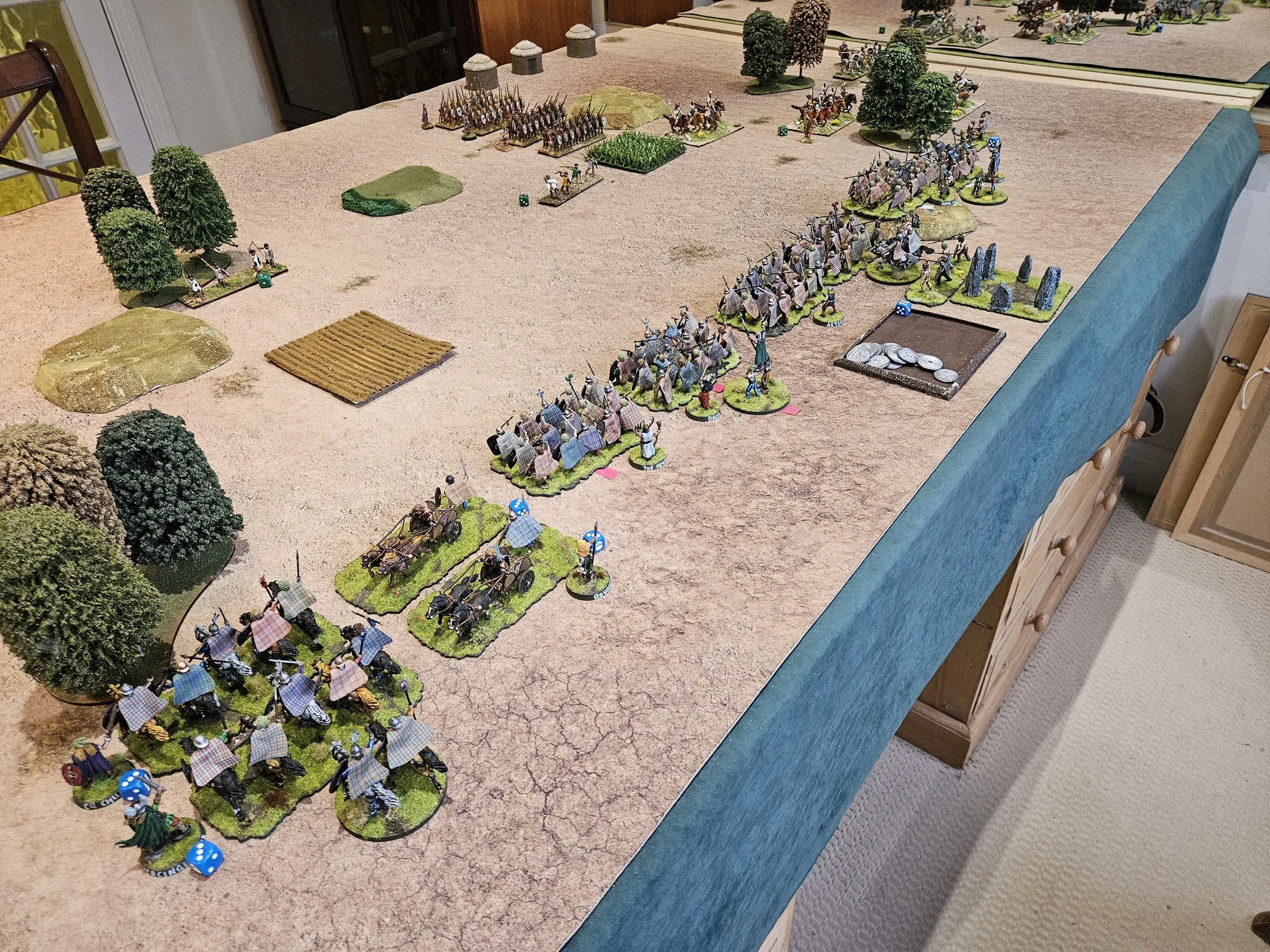
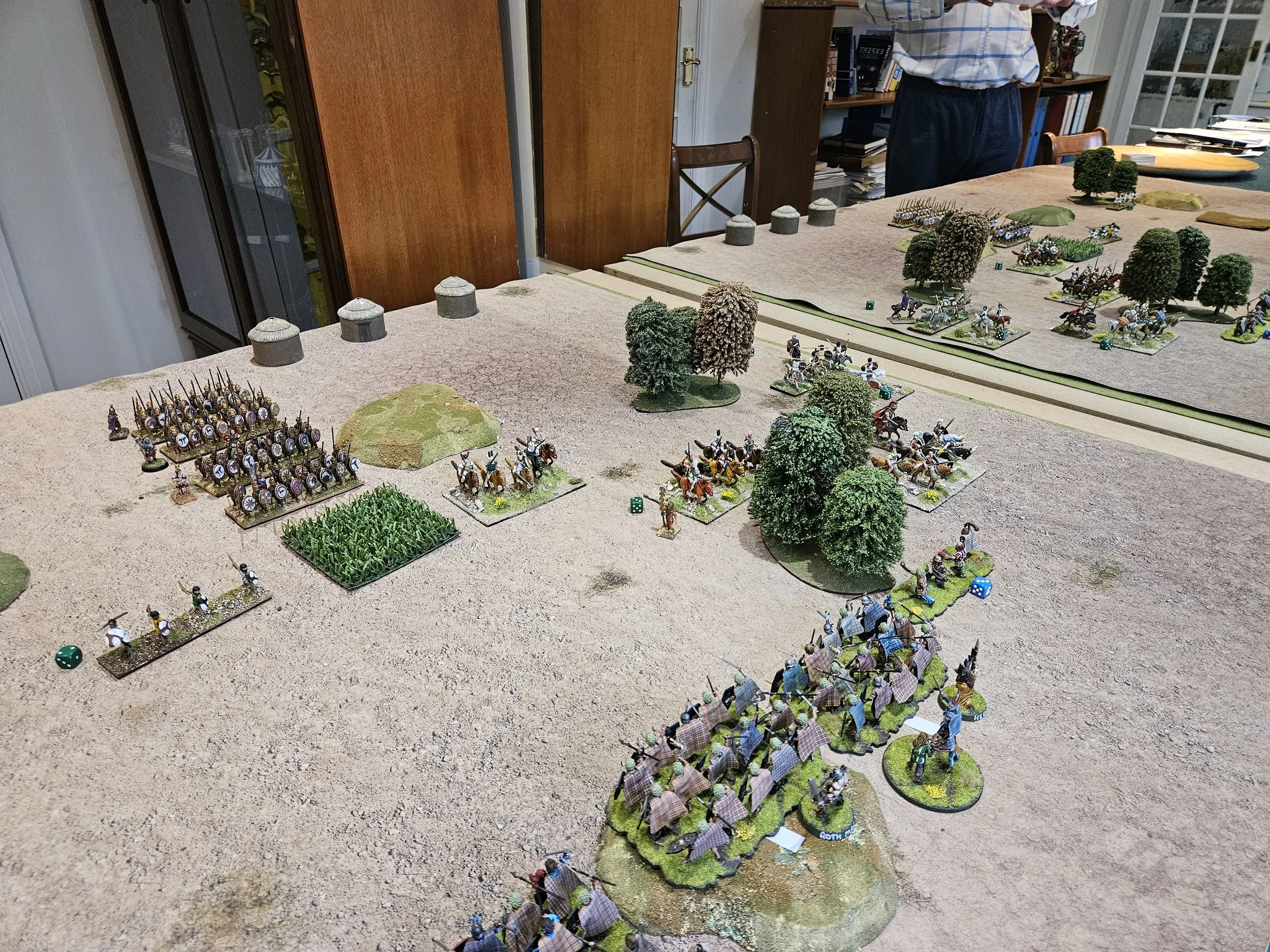
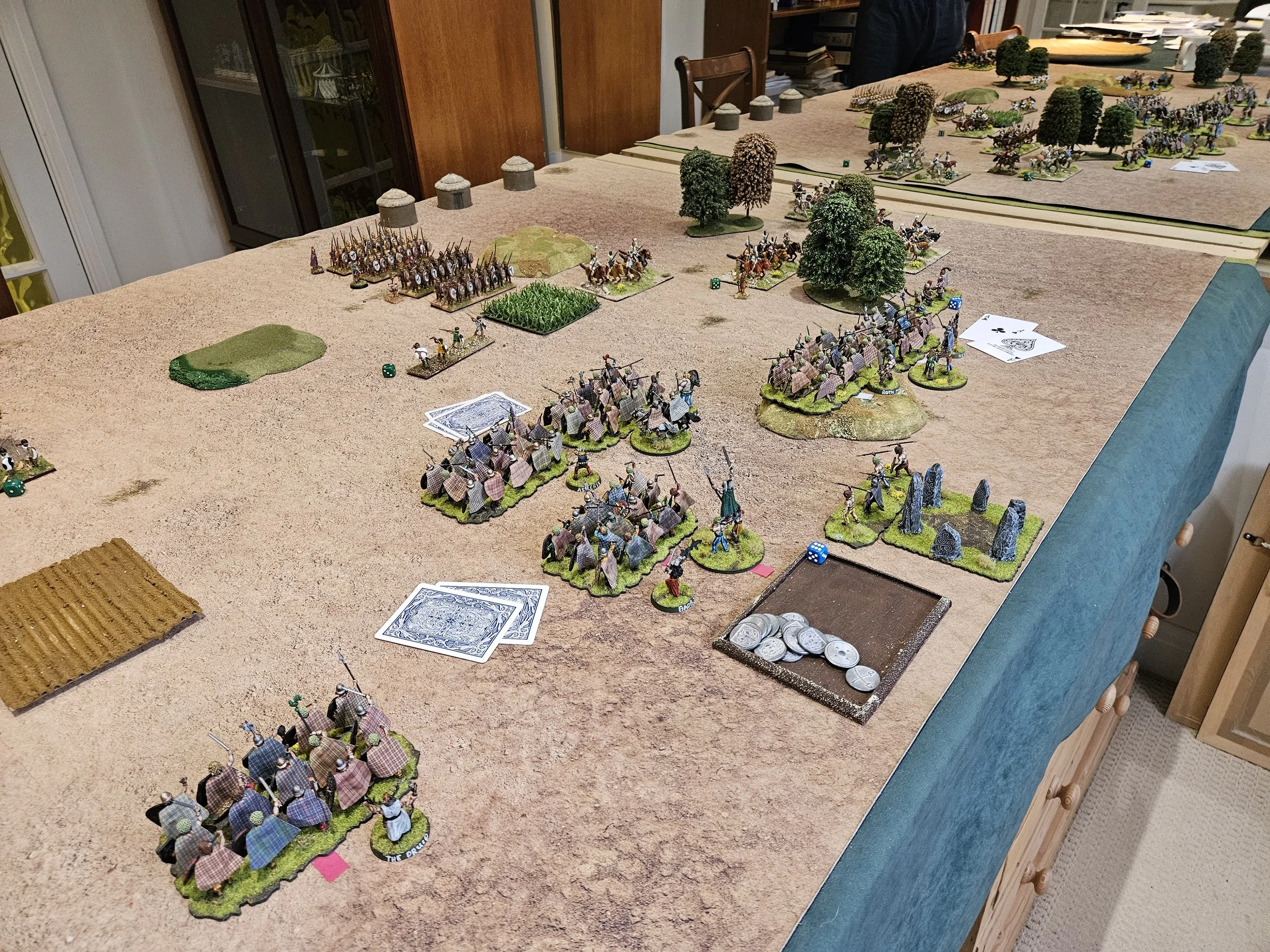
Two the Strongest Game One: Northern Dynasties Chinese versus Middle Sassanids

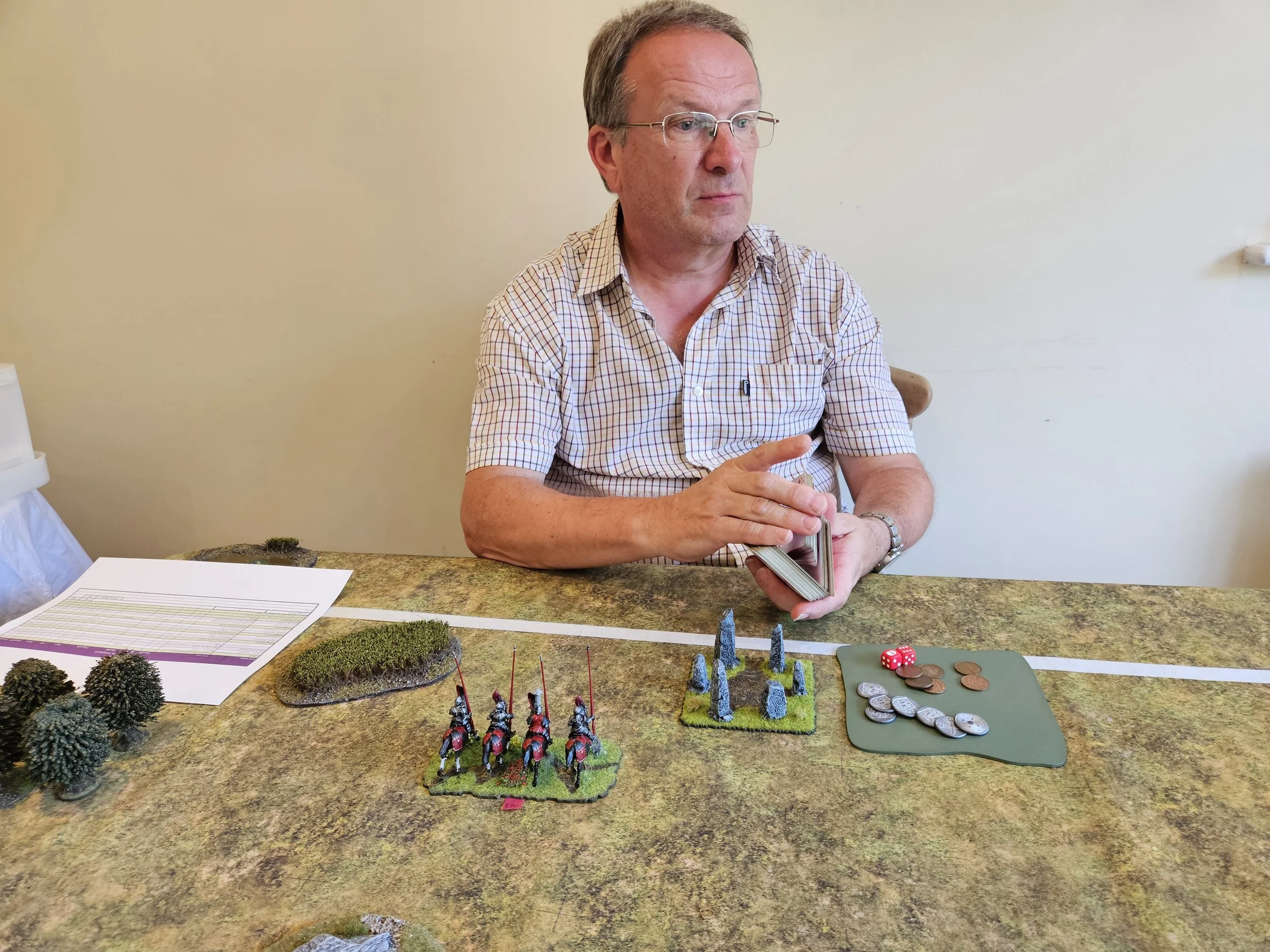
Peter’s and my first game of the 2025 Two the Strongest Doubles Competition (actually taking place at the end of January 2026 due to scheduling problems) was against the formidable pairing of Simon Miller (writer of To the Strongest) and Ian Notter (who does the photography for the rulebooks), commanding a force of Middle Sassanids.

The tournament took place at the Seven Dials club in central London: a very cool venue for a wargaming competition!

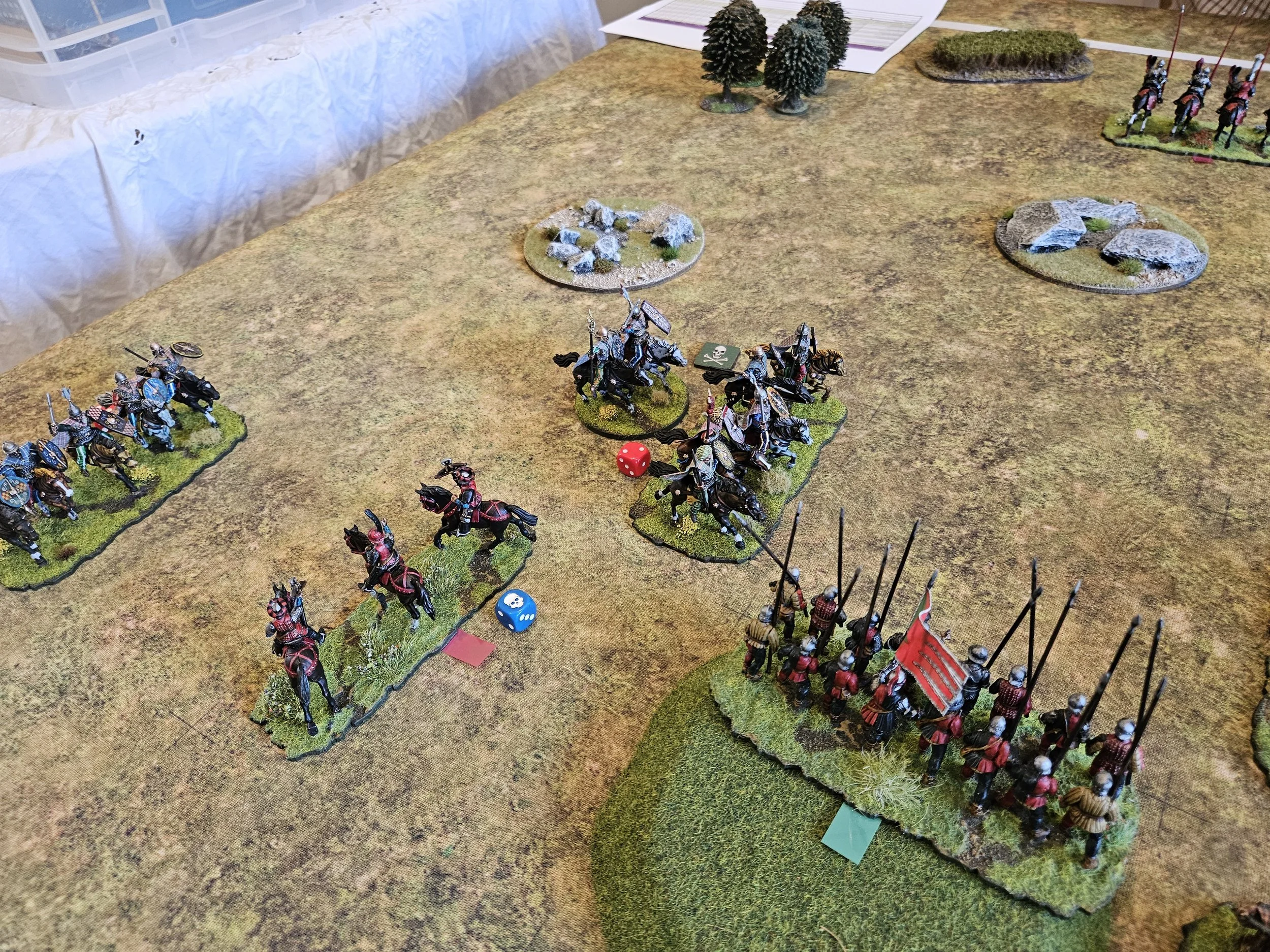
Peter and I won the scouting and, with some very lucky cards, I managed to get one of my commands down onto the baseline behind Ian’s left flank.

Things went from bad to worse for Ian, who soon found himself fighting on two fronts—and before long, very much due to the fact that his cards had it in for him (I don’t think he made a single save all game), I had taken enough victory medals to drive his entire army off the table.

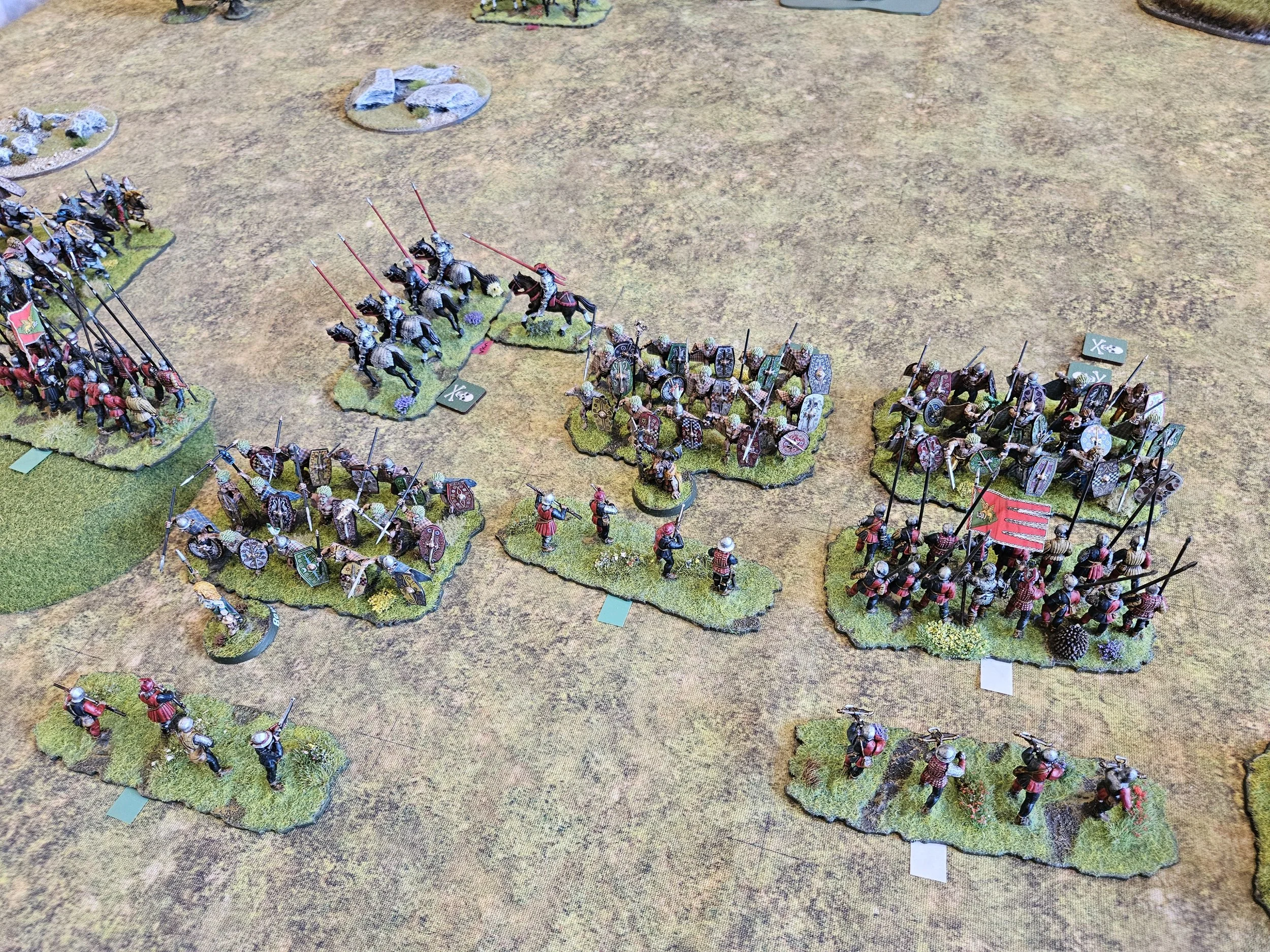
Simon, meanwhile, was doing his best to close with Peter’s troops, sensibly trying to stay as far away from my men, who were now heading over towards his side of the table, as fast as possible.

Most worrying for Peter was the unit of Savaran that almost managed to take the Chinese camp (gallery below: top right) something only avoided by the fact that I just managed to get some light infantry into the camp (to join the light cavalry there) in time.

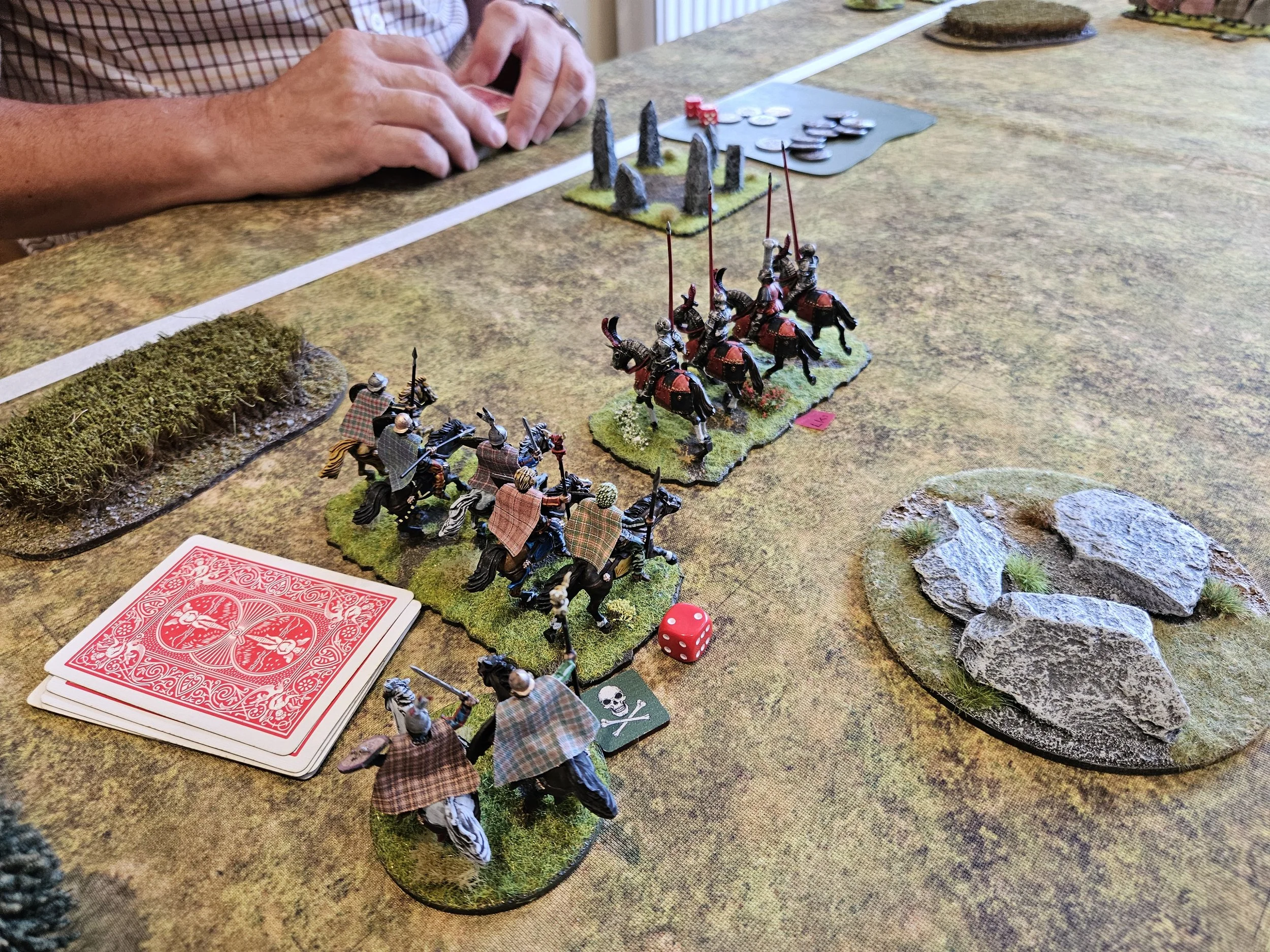
There was also a general melee in the far left corner of the table (gallery below, bottom right) where various units of cavalry from both sides clashed over the small stream there.

All this fighting had weakened Simon’s army, especially as he was now fighting both of us at once, and eventually his force also collapsed, the coup de grace being delivered by more of our heavy cavalry, led by Mulan herself!

A great start to our campaign with a 16-5 victory.

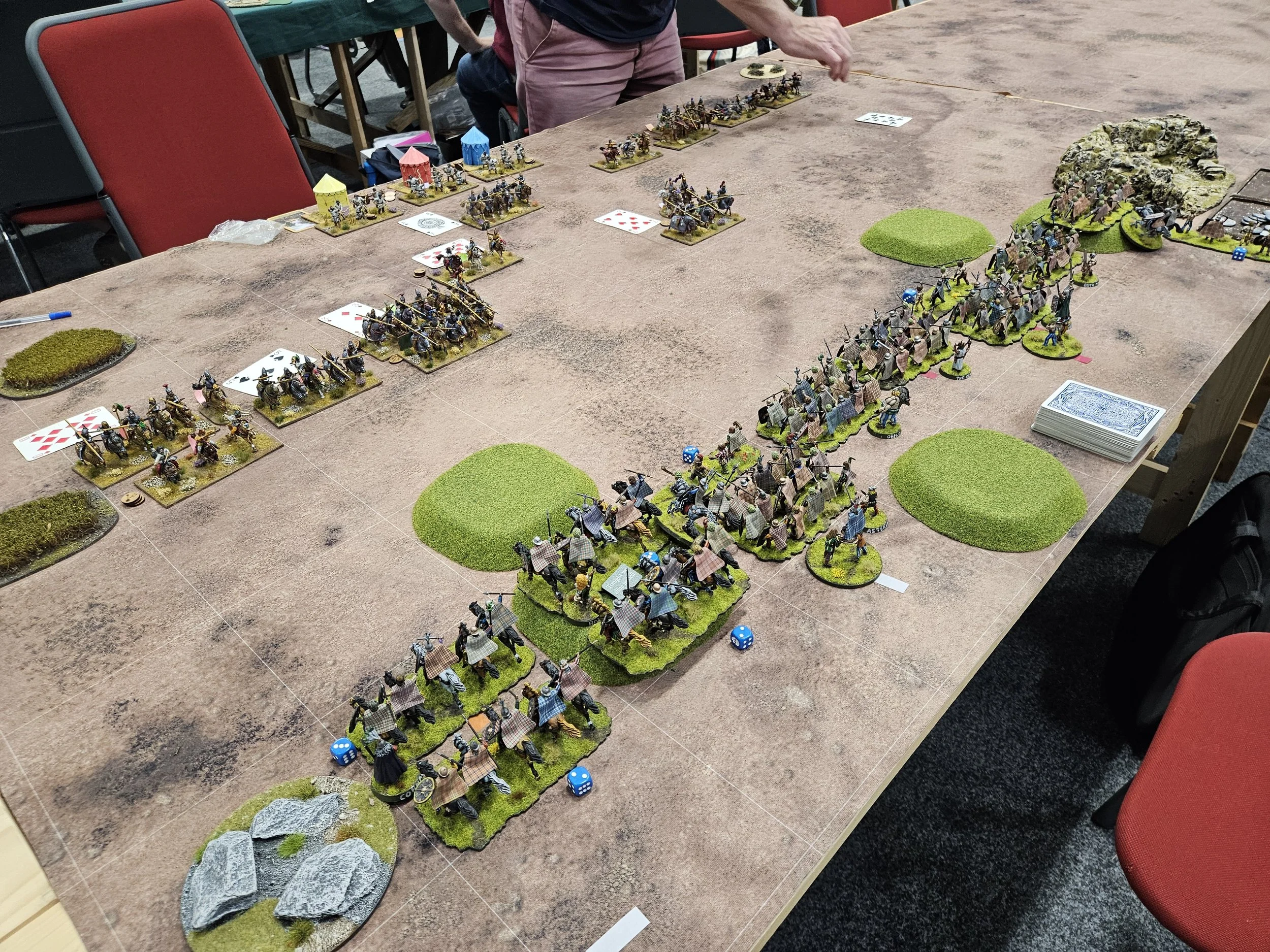
First of the Celts

I’m a 15mm gamer who plays To The Strongest competitions in 28mm…so although I have some 17 different Ancients/Medieval armies in 15mm, I only have two in 28mm: my 40-year-old, Minifigs Early Imperial Romans, and my two-year-old, Perry-medieval-plastic Venetians.

I’ve used the Romans a lot, and the Venetians even more, so have been thinking for some time that it’s now the moment to add another army to the roster…but which one?

It’s a big investment of both time and money, so it’s got to be an army that means something. There’s a tale behind the Romans (I won’t repeat it now as many of you know it already) and the Venetians began from a box-set I won at the Doubles a couple of years ago…so what was going to spark my interest for number three.

Well, my very first army ever was an Airfix Ancient Briton army that I used at school and university (when the lessons were taught in the original Latin!), and a couple of units of Celtic foot could be the starting point for any number of Gallic-style armies (Galatian, Gallic, Ancient British) or form a command for even more (e.g. Carthaginian or any other army in which the Celts served as mercenaries).

One problem: I didn’t fancy painting six deep units of warriors wearing checks, tartans or stripes, and whose shields were too intricate to be hand-painted and would thus require a whole load of transfers to have the bit for the bosses cut out with a ‘sharp craft knife’. Fortunately, Victrix have come to the rescue on that last one - now producing pre-punched transfers that make using them so much easier - and Weave of War, my new favourite wargames supplier, sell miniature, real-cloth cloaks that can be glued to the back of a figure and obviate the need for 360° painting: it’s always the join between the back and front of a stripey or chequered figure that cause the issues.

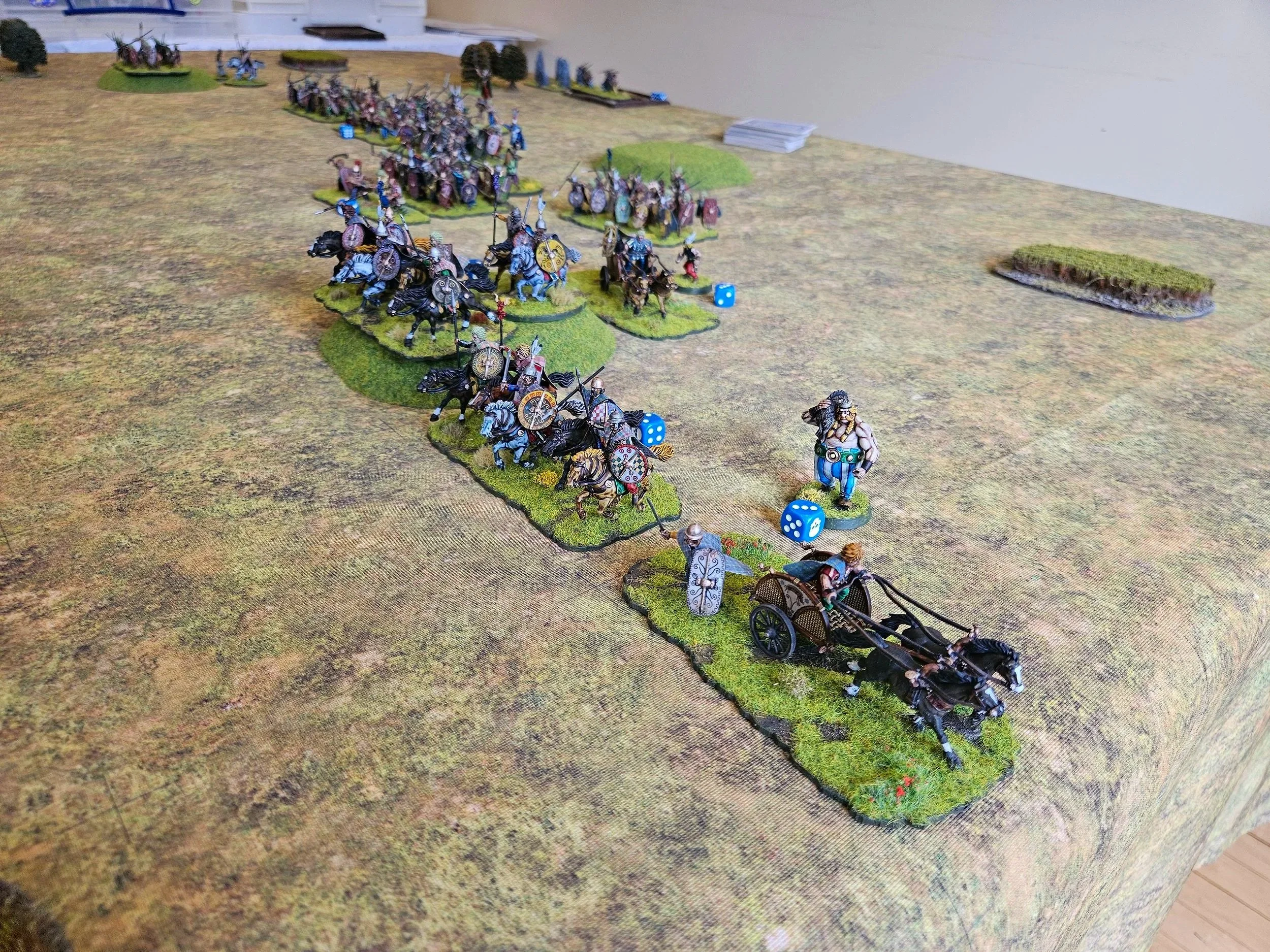
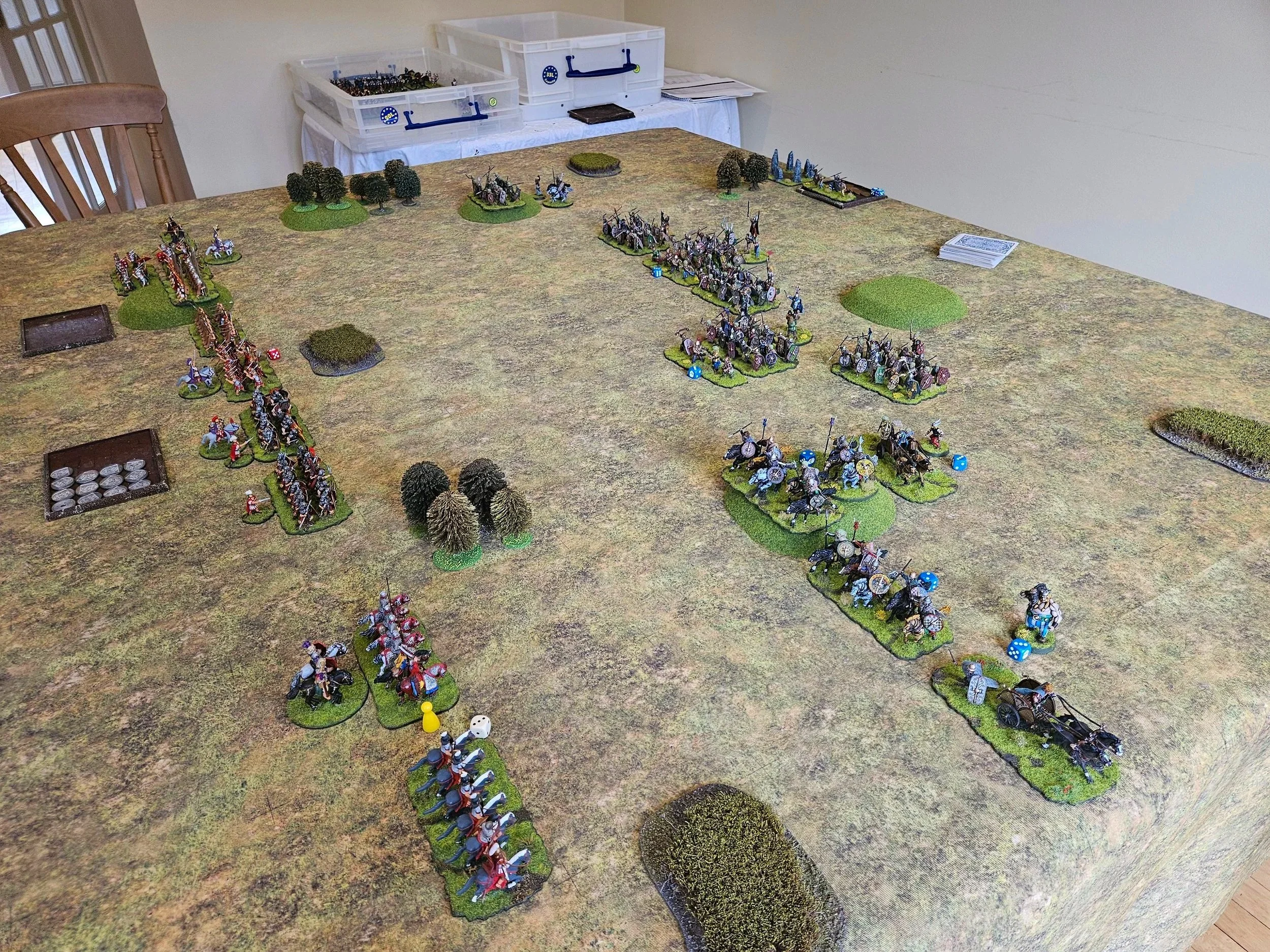
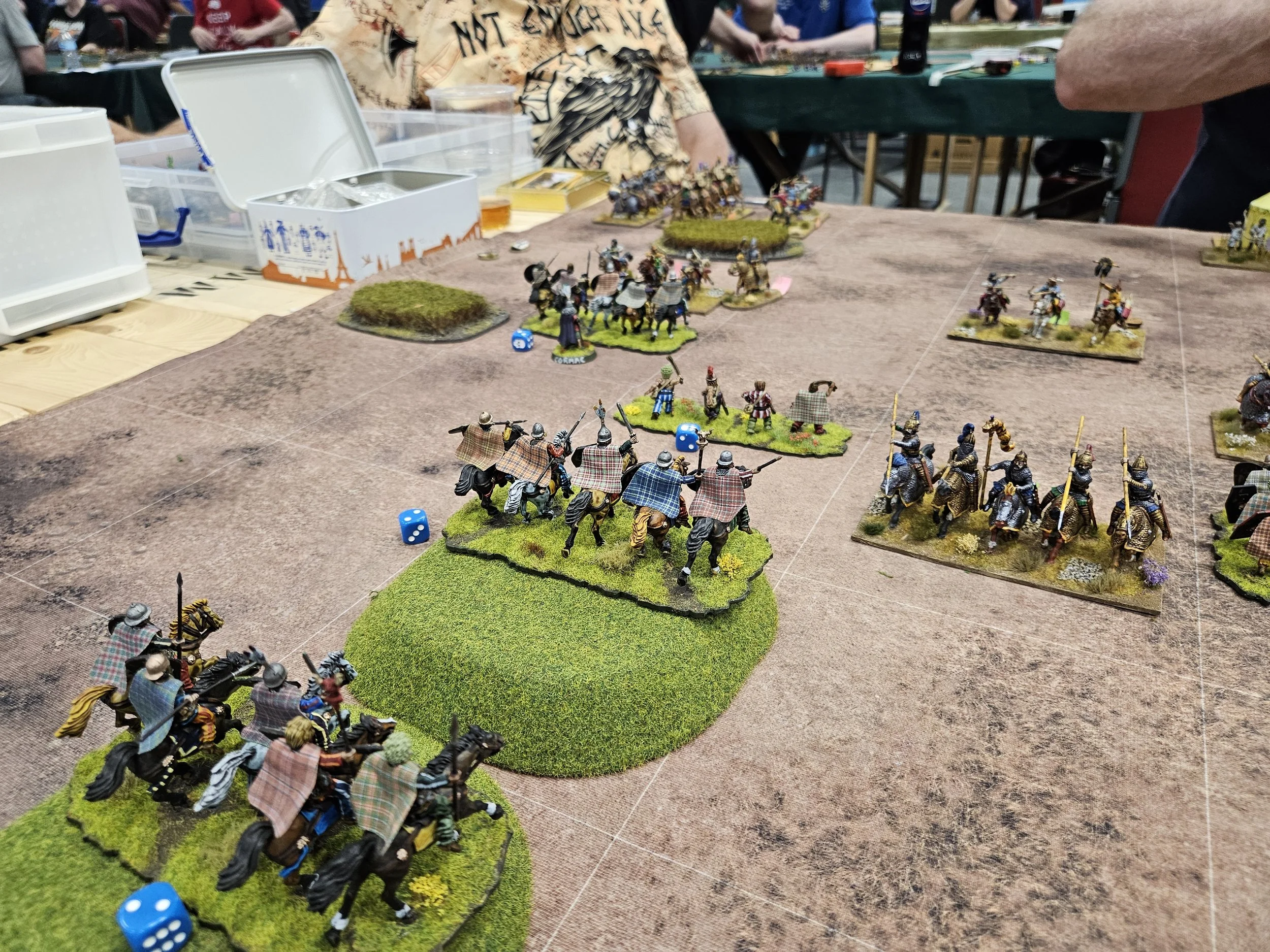
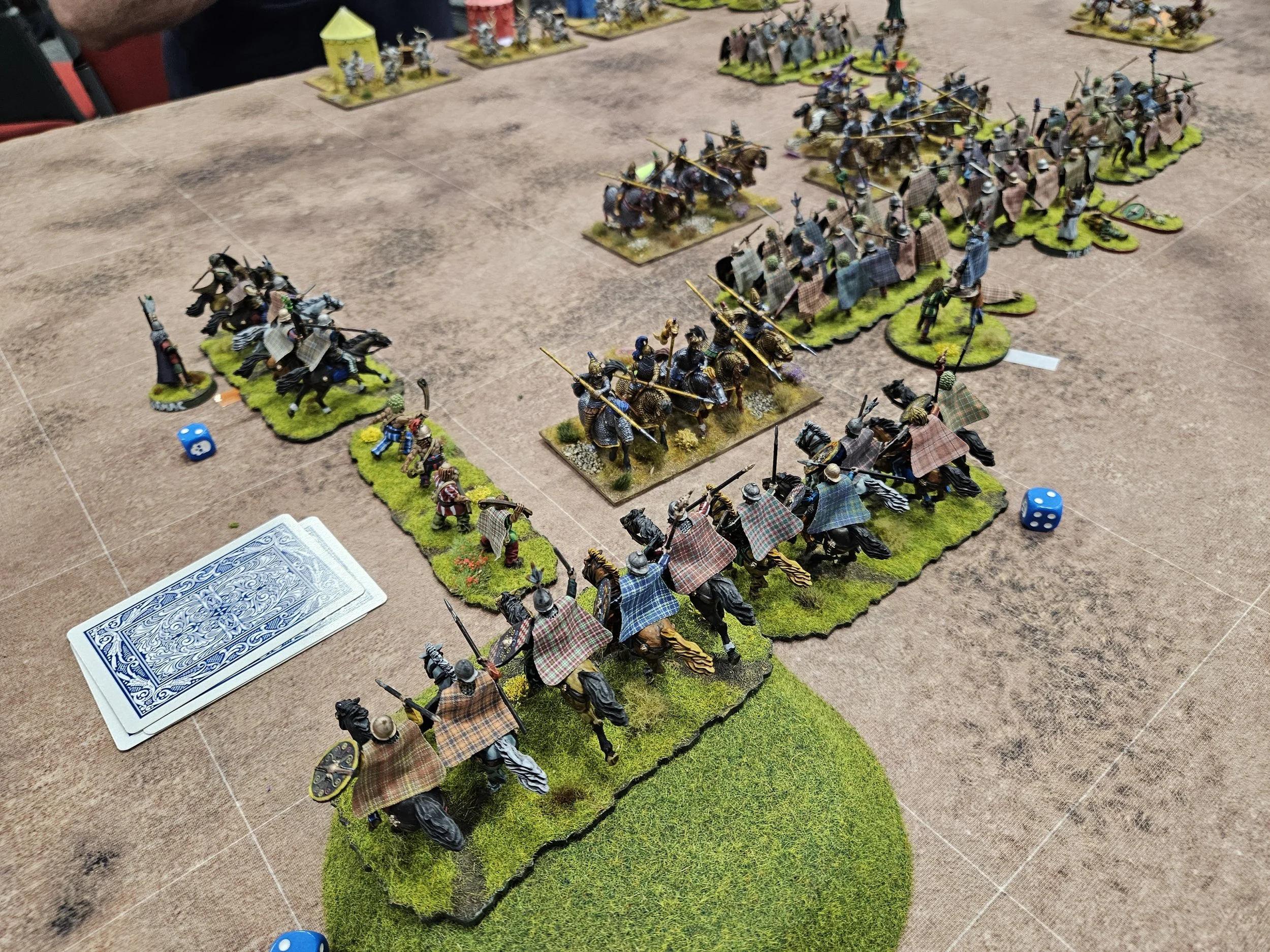
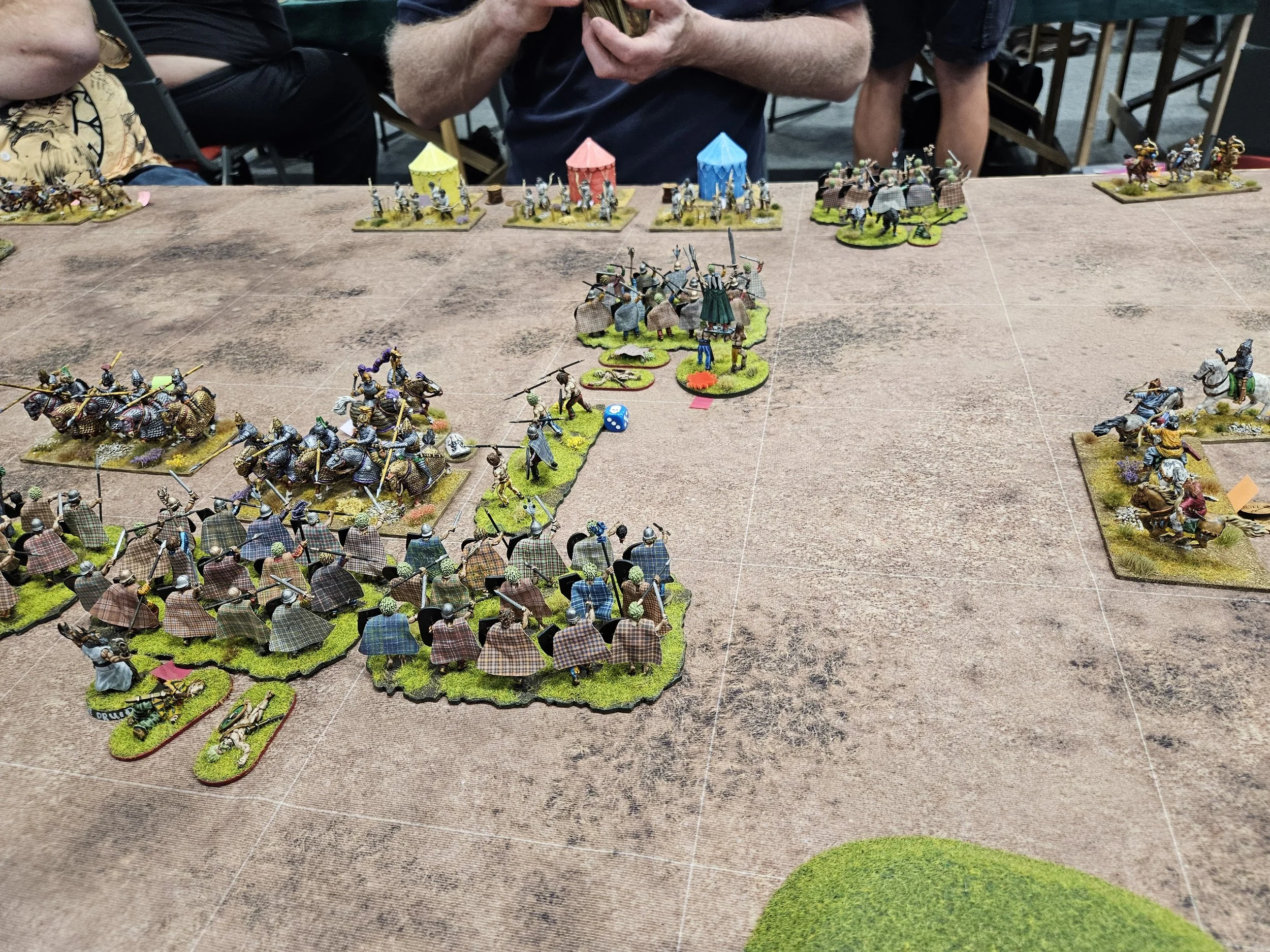
So Ancient British/generic Celts it was. Here’s the first unit, both a front and back view:

Victrix

The Victrix figures are absolutely lovely: highly, highly recommended. Yes, you have to build them, and that can be a bit fiddly, but once you get the knack of it, they go together very easily. I am a heathen and use superglue to fix, with either water or PVA applied just before pressing the two surfaces together to activate the glue (when I say water, I dip the surface to be glued into a small dish of the stuff; ditto with PVA).

Note that I didn’t bother to add any additional paraphernalia to the figures - no scabbards for example (confess, you didn’t notice, did you!) - as that’s just extra work for things that will be totally overshadowed by the shields and cloaks. I also made the decision to build the first unit from fully-clothed figures: I’ll save the topless and naked versions for veteran and fanatic units respectively.

They paint up beautifully, with the sculpts doing all the work of bringing out my rudimentary skills. I used Contrast paints for the base coats, and standard GQ acrylics for the highlights. I block painted the figures, then carefully drew stripes on their fronts and sides with a thin brush (with the cloaks, there was no need to do the stripes etc on the sides).

No need for too much accuracy on the stripes etc: there is so much going on with the figures in the unit (figure, cloak, shield) that just the impression of the stripes etc is enough. I didn’t both with stripes etc on the trousers for the same reason, although I will stripe the trousers on the topless lot when I come to do them.

LittleBigMan/Victrix Transfers

Shields ready for the transfers to be applied

The shields were painted and had the transfers attached before being attached to the figures. The method used was to cut the plastic sprues they came on so you can prepare the shields on the sprue; spray them white; paint the boss black and then bronze; touch up with white; apply the transfer; paint any non-transfer areas (the rim, the back) a wood colour. Very simple.

As for the transfers themselves, just follow the instructions that come in the packet. Now that they are pre-punched, the only annoying bit is having to carefully cut out each transfer…but this is ten thousand million times easier than doing the boss hole!

Weave of War Cloaks

Now available from Deadanddread Miniatures, the Weave of War cloaks are fantastic. They literally are little cut-out fabric cloaks that come all ready for attaching to your painted figures.

The cloaks come in three different sizes - in order, smallest to largest: battle, campaign, command - and there’s also a rolled up version as well. Loads of different colours, and can bought either in packets of eight in single designs (for that one-clan look) or mixed designs (what I used).

There are videos demonstrating how to attach the cloaks but, really, all you do is put a bit of glue on the straps that go over the shoulders, a blob of glue on the inside back just under the collar; leave to get tacky (do this: I found life a lot easier once I’d curbed my impatience and let the glue get properly tacky); and then pop the cloak on the figure, fold the straps over and done!

Once the glue is dry, you can then scrunch the cloak to get a bit of shaping, knowing that when you varnish the figure (I used a matt spray) the cloak will harden to being pleasingly stiff: like paper or cloth flags that have been covered in PVA, shaped and then left to dry.

One thing to note: when varnishing the unit, above, I got very careless and over-varnished the rear view. Nothing to do with the cloaks themselves, it was all me getting the spray can too close and for too long. It was dark, I was tired, Officer!

This left a clouded residue on the cloaks that I thought had ruined them, but then I remembered the advice I’d been given when a can of GW varnish (never buying GW varnish again: never) did the same thing even though I’d used it correctly: vinegar.

“Vinegar? Are you George Bernard?” you might exclaim but, yes, the cloaks in back rank of the picture above were cloudy to the point of being opaque until brushed with vinegar from the kitchen cupboard (expensive Apple Cider Vinegar, according to the wife, rather than the cheap stuff for chips but, I mean, “because you’re worth it” and all that!) which neatly brought the colours back out again. Phew!

In Conclusion…

I’m very happy with this unit and am actually looking forward to painting more. The products detailed above (the Victrix figures, Contract paints, LBMS transfers, the Weave of War cloaks) really do all the heavy lifting. I am not an artist, only an average painter, but can follow a set of instructions!

All highly recommended.

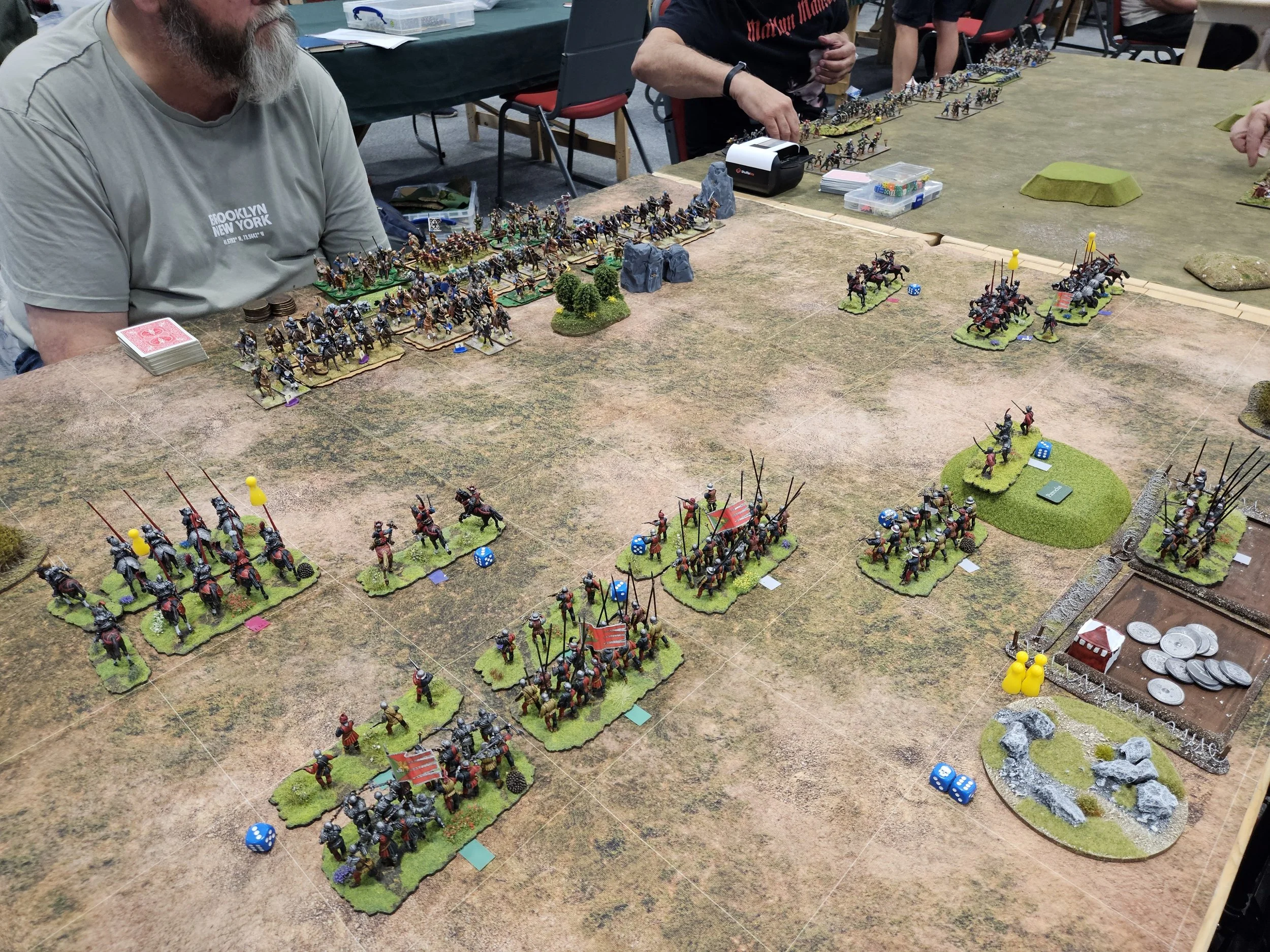
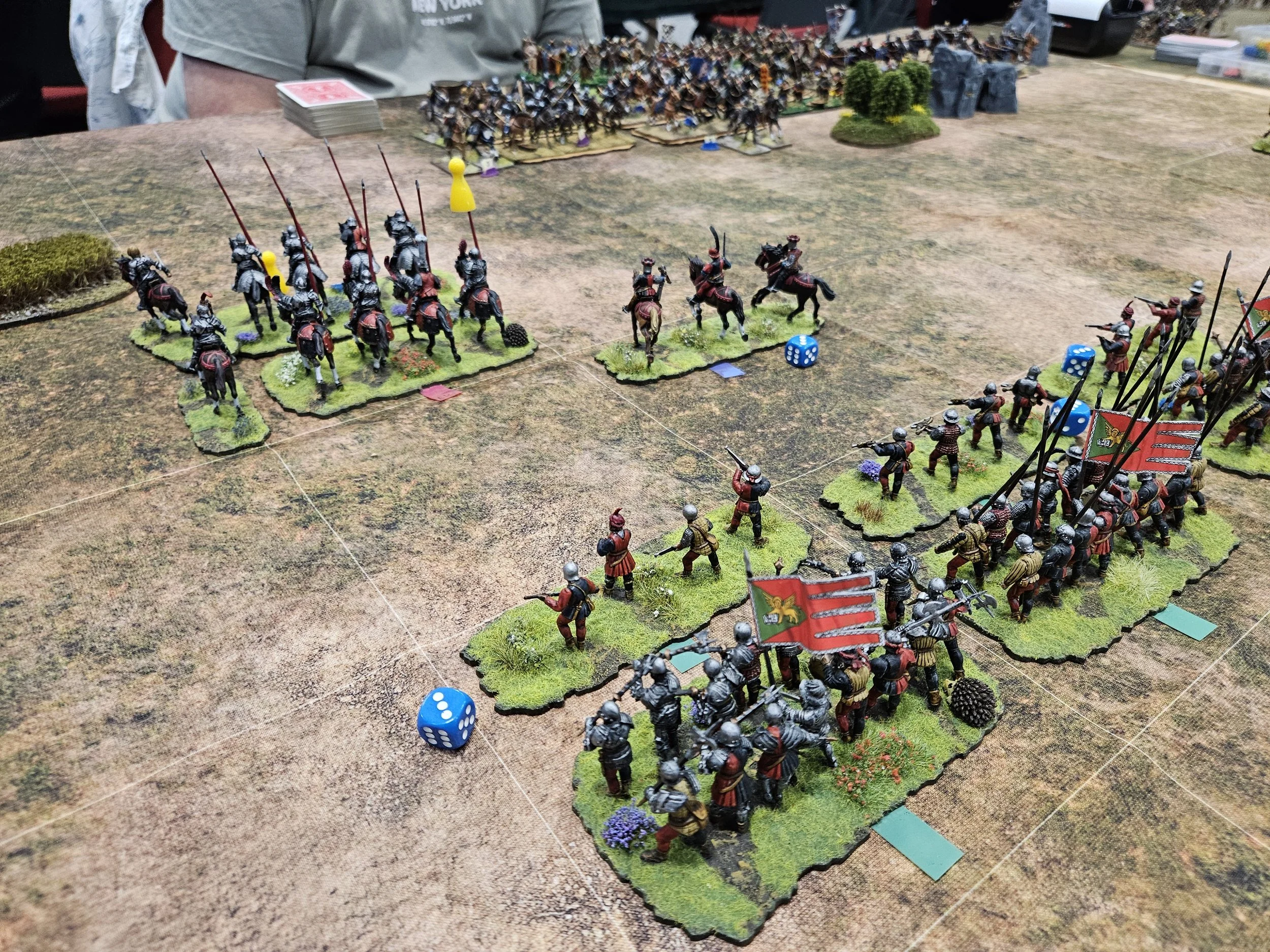
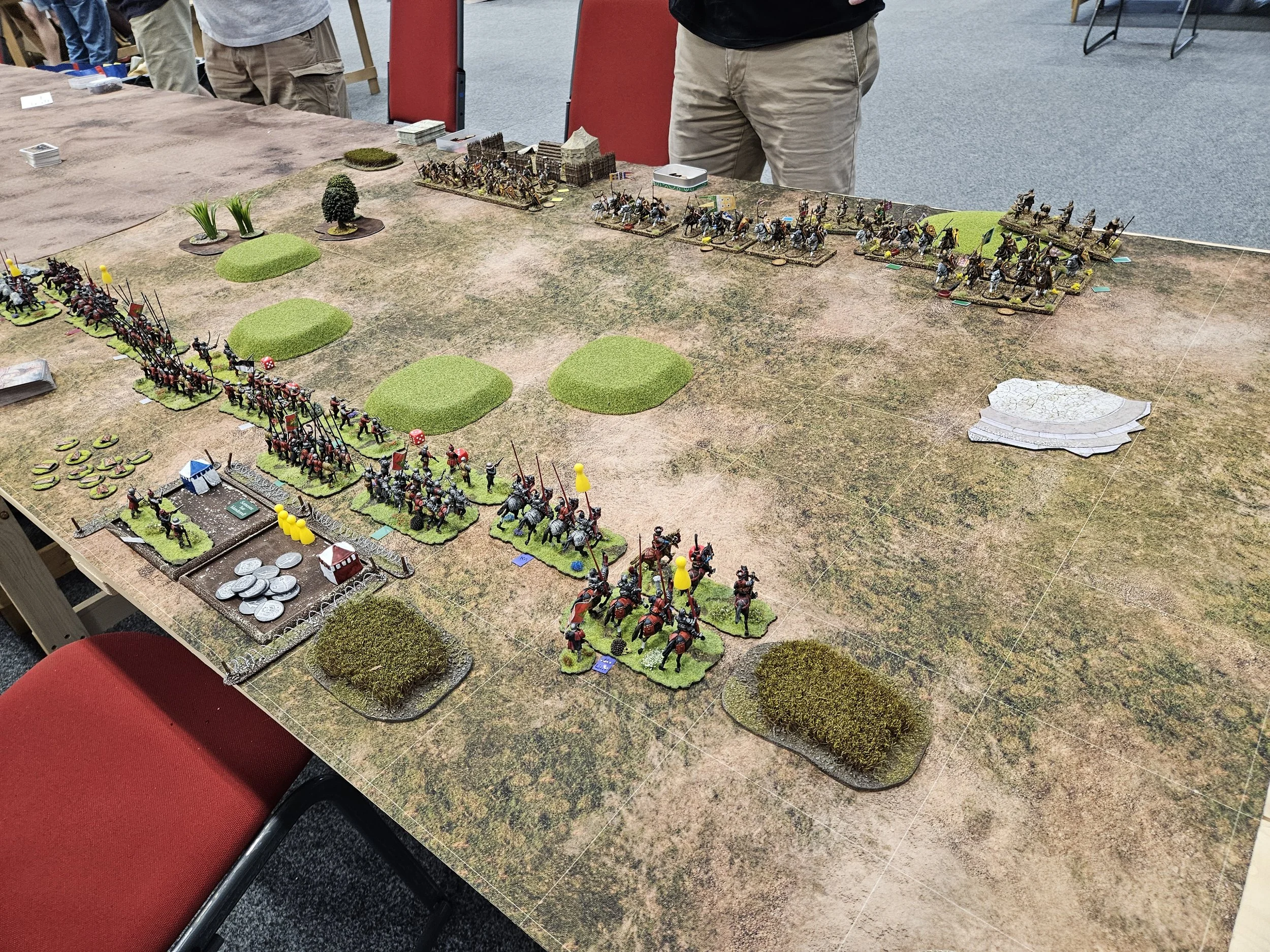
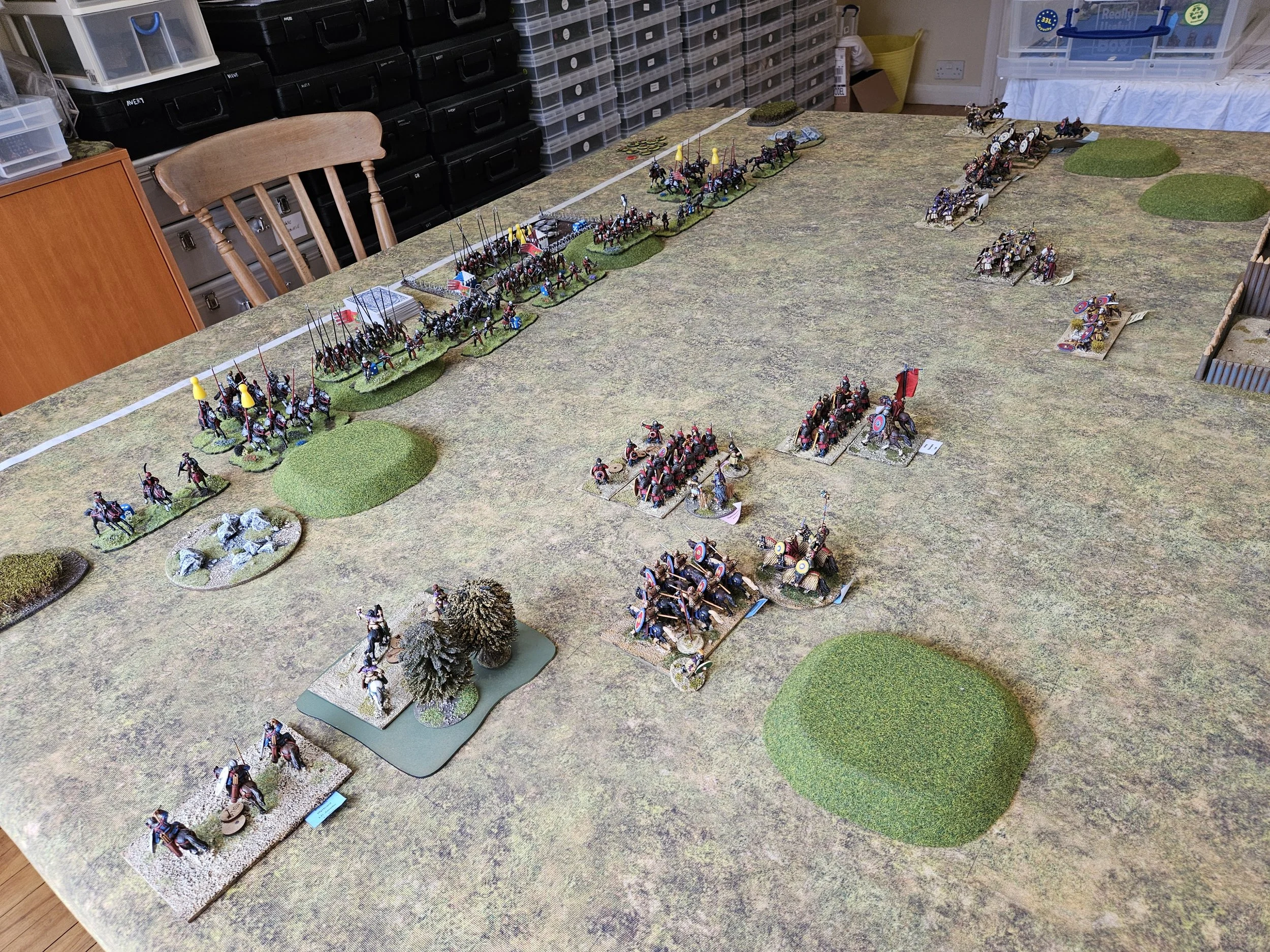
TTS AAR: Burgundian Ordnance vs Sassanid Persians - Take Two

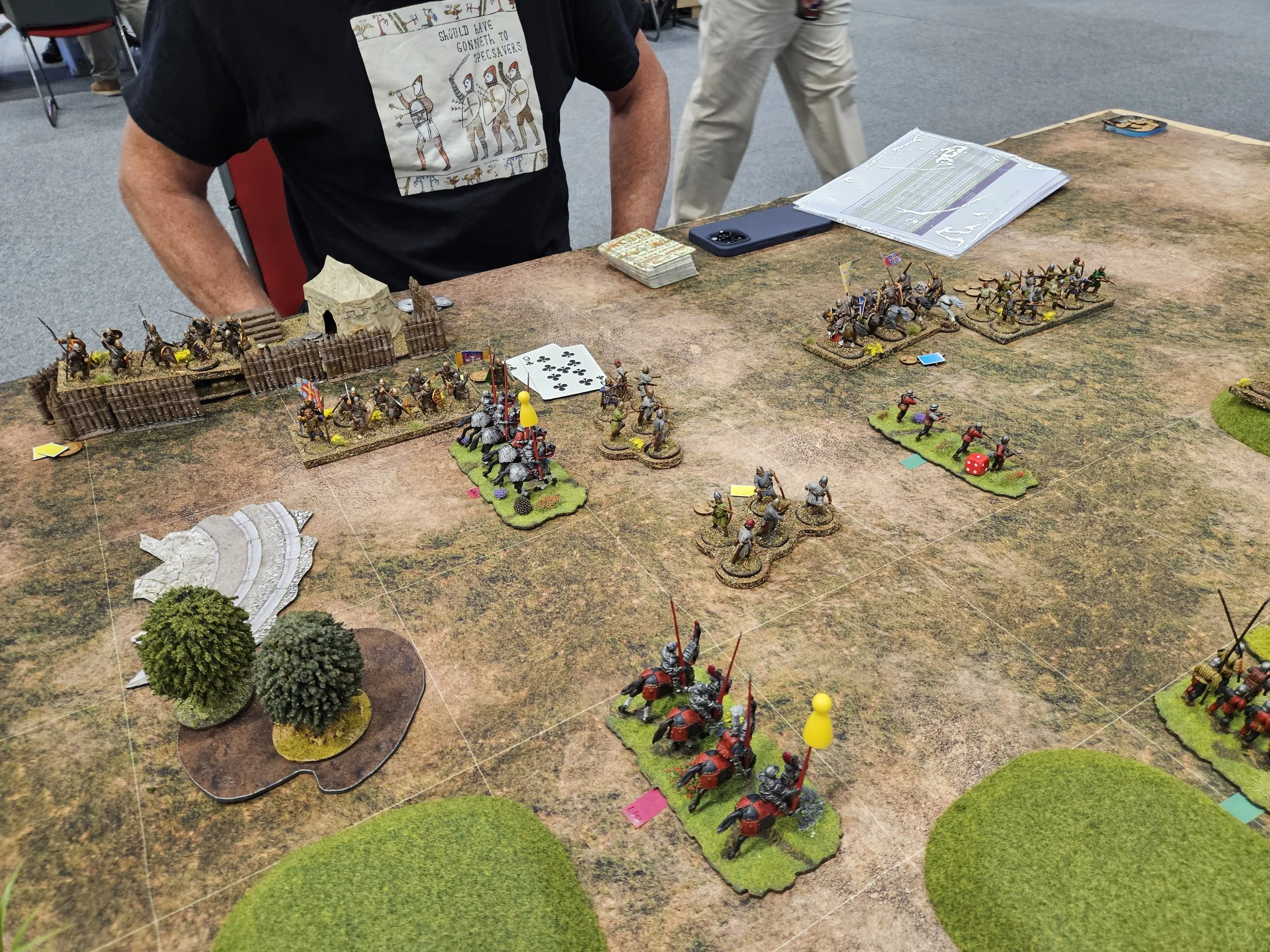
With the first game over so quickly, Neil and I had time for another…so we kept the sides the same and started again.

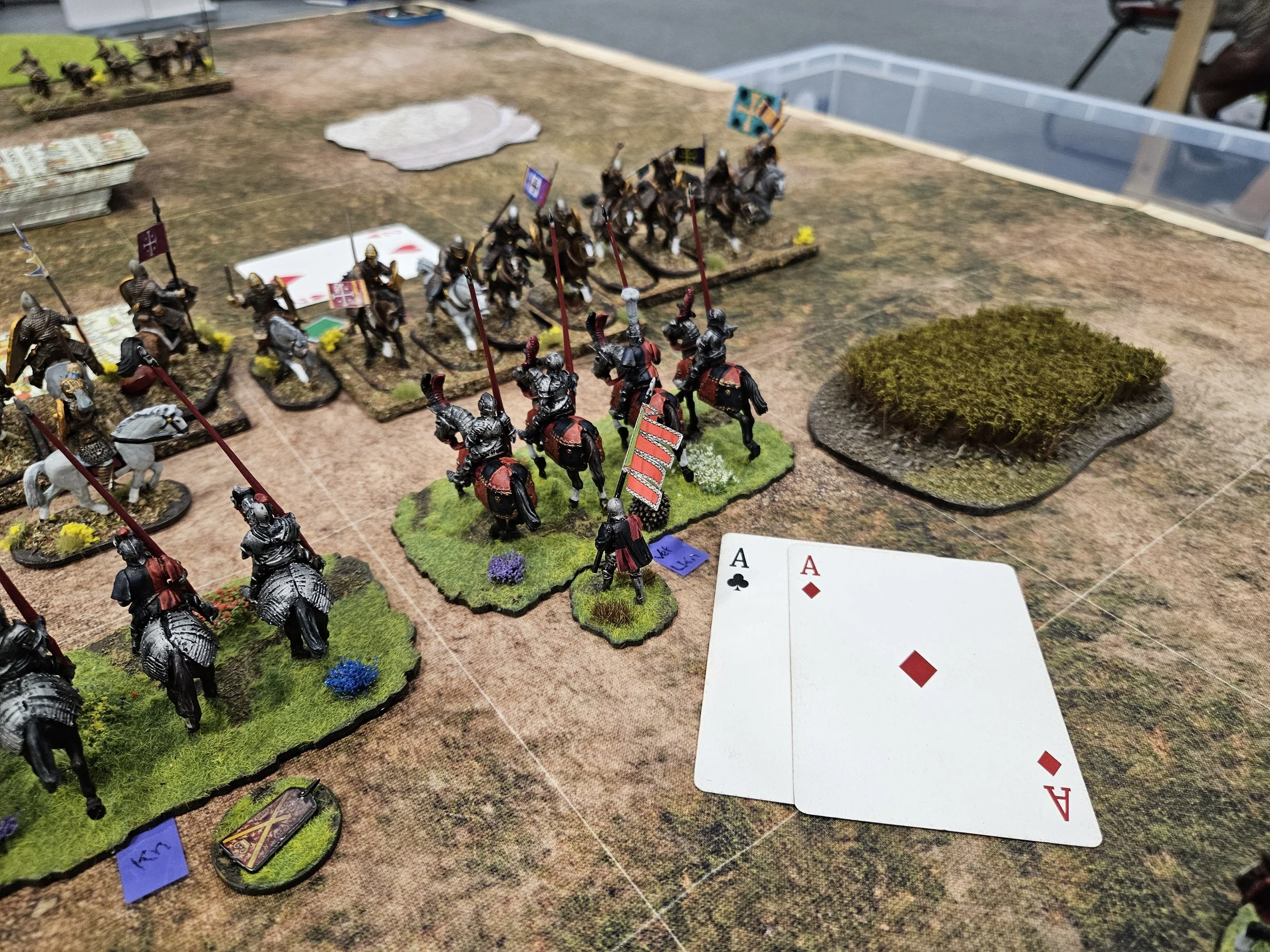
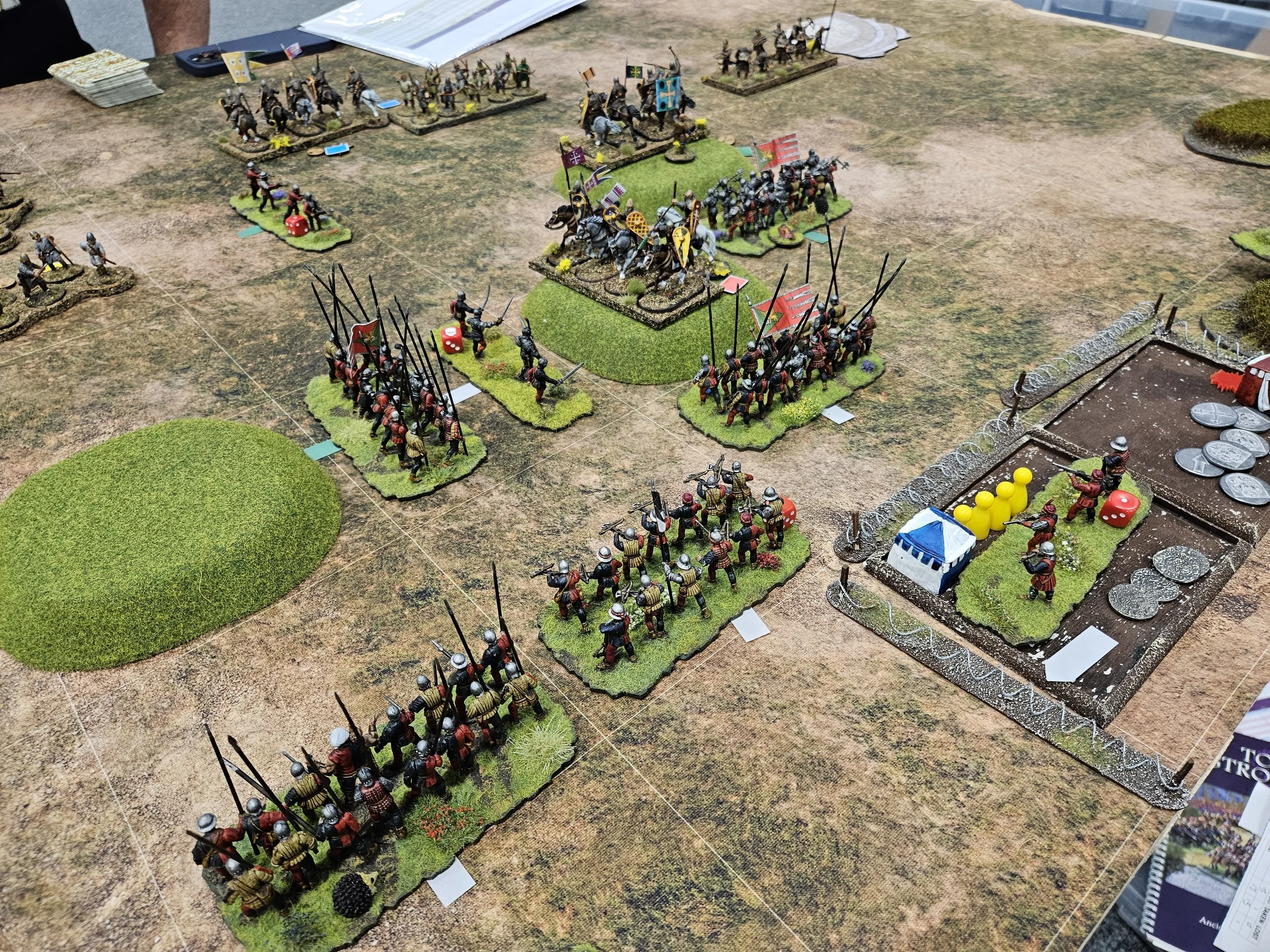
As you’ll see from the pictures below, I decided to weight all my forces onto one flank in an attempt to win there before turning to wipe out the enemy elsewhere.

The Sassanids, wise to the tactic, came forward as fast as they could, and prepared to counterattack from the other flank:

My troops duly charged in but, shock, horror, failed to do more than just push the Sassanid foot backwards.

Things just weren’t happening fast enough, especially as the Sassanid heavy cavalry was almost in a position to counterattack: good moves by Neil!

It was all over very quickly!

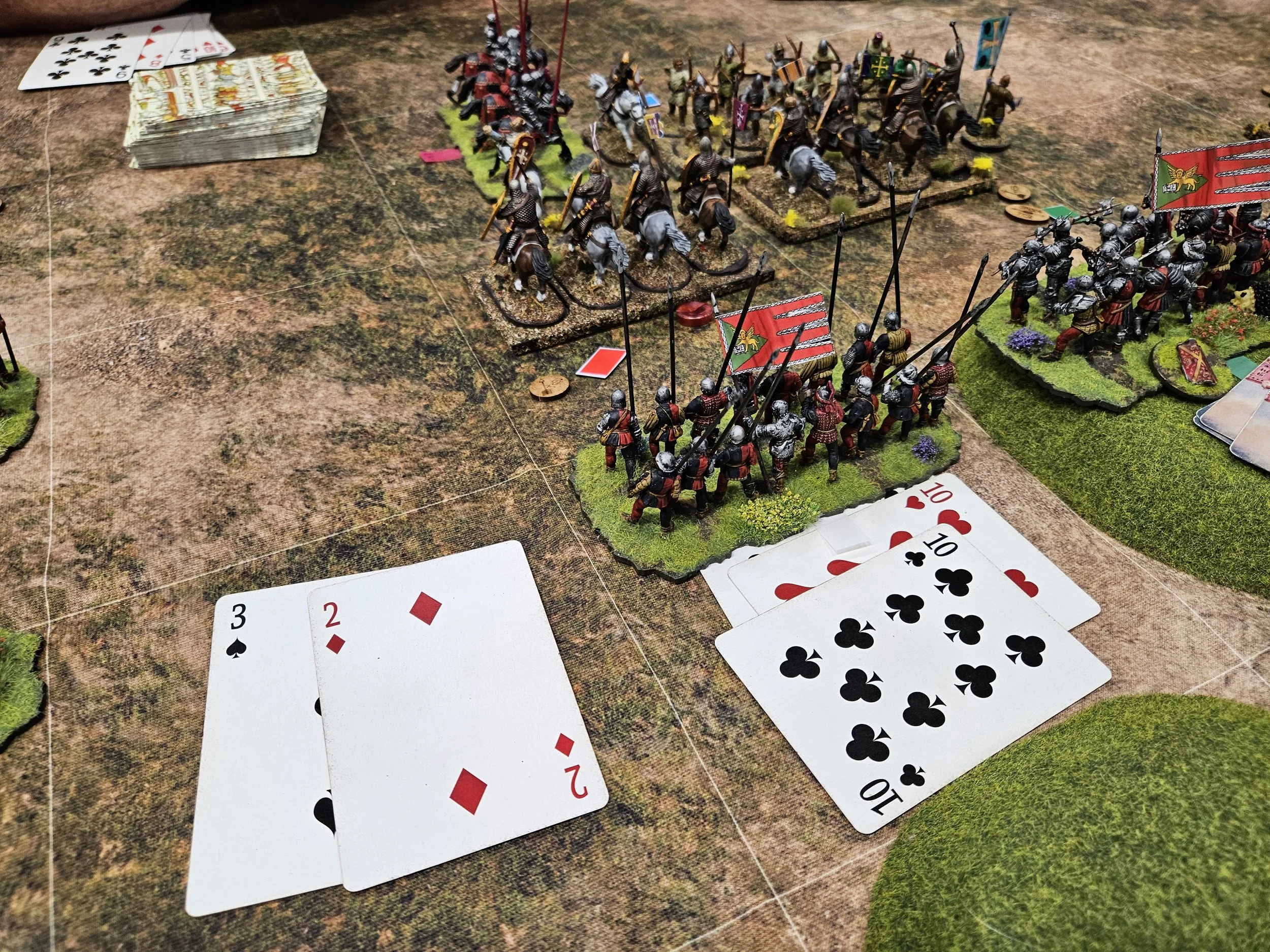
My stacked troops on the left still failed to inflict the death blow on the Sassanids in front of them, which meant that Neil was free to launch a massive counter-attack of his own.

Yes, the unit of Burgundian Knights guarding my right flank did dispose of some of the Sassanids, but not enough to make a difference.

In the end, it was actually the troops on the Sassanid left, the one’s I was supposed to be overwhelming at the start of the game, who won the battle: taking full advantage of the ‘distraction’ posed by the Sassanid counterattack:

A disappointing loss for the Burgundians!

I worked out afterwards that the problem was that I didn’t commit enough to the main thrust on the left: I kept too much back defending my camp and in the centre protecting the thrust. That meant that Neil, keeping an excellently cool head, was able to absorb my main hit and then calmly counterattack with his overwhelming numbers of horse…but it was the troops that were hit by my main thrust that won the game even before those horse properly arrived!

A great game.

Kraitari Battlesuits from Trilaterum

On to the last contingent of my massive order from Trilaterum: the Pythorex, or scifi snakes!

First off the painting table are the Kraitari battlesuits: standing about 8cm tall, these are the Pythorex equivalent of walkers, with each housing a Pythorex inside a humanoid battlesuit (you can see their heads poking out of the middle of the battlesuit).

Although I’m not quite sure why snakes would have chosen a humanoid shape for their battlesuits (help with stairs perhaps?), these were good fun to paint although, again, quite a few of the arms and/or scythe blades were snapped off in transit. It took one session to repair them all, and only time will tell how robust the models are.

Easy to paint: spray a green of your choice, wash, drybrush a lighter green, and then a very lighter green, touch up any interesting bits (the missiles, the blades, inside of gun barrel, the heads of the snakes) and done.

Even more fun were the two ‘Crotaliaum’ variants you can see in the front row of the photo above. These have more blades than the four ‘usual’ battlesuits and, best of all, are shown using their rockets to jump up over some obstacle or other.

I decided to paint the exhaust as simply as possible (you don’t want to make yourself too obvious on the battlefield!) so used a base coat of very dark grey, then three highlights: a light grey, a lighter grey then white. I’m pretty happy with the look and well done to Trilaterum for producing such a fun model.

Only the Pythorex assault infantry to do now, and then it’s back to historicals!

TTS AAR: Welsh Open Game Four: Venice Abroad versus WOTR Yorkists

My fourth and last game at the Welsh Open To The Strongest tournament was against Steve’s Wars of the Roses Yorkists: a difficult army to face, packed full of longbows and with infantry armed with two-handed cutting weapons!

Attacking an enemy like that with a frontal advance is suicide: you walk right into a hail of longbow fire. The only way to do it is to attack its flanks and/or wings. I therefore sent the Knights forward, with the infantry pausing just outside longbow range, waiting for their own opportunity to go in.

Unfortunately, on the right, my Knights were wearing their ceremonial cardboard armour, and were soon fleeing the field. The intervention of my Light Mounted Crossbowmen, who had started the game off table and Lost, didn’t achieve anything and, despite huge opportunities for success on that flank, my attack petered out into nothing, with Steve able to bring the infantry that had disposed of my Knights back to counter the strength of my Later Knights.

I did have an opportunity to take the Yorkist camp there, but chose to try and improve the situation overall by sending the Lights into the rear of a Yorkist unit, but that didn’t work, leaving me to regret a potential three coins squandered.

Meanwhile, on the left, my Knights had broken onto the enemy flank, but the units they wer facing were veteran and proving very tough to actually evict from the tabletop, and I had to content myself with killing their general. I also just couldn’t quite get my Knights into the enemy camp: the cards weren’t quite falling for me.

I was now slightly ahead in terms of coins captured, but I needed an outright victory if I was going to make up for the crashing defeat I’d suffered against Peter in the last game. I therefore then made my second mistake of the battle: with the wings tied up but with the potential for my cavalry on either to head in to the centre, I sent my infantry forward to pin the Yorkist troops in place.

This was a mistake, as my poor spearmen and even the Alabardiers promply got cut to pieces by enemy Billmen!

This gave Steve enough coins to draw level and, with the game absolutely in the balance, astutely break through my line with his foot and attack my weakest line unit, the crossbowmen, sending them and my last two coins fleeing from the table for a 10-12 close fought loss!

A great game of To The Strongest despite the result, and very well played by Steve.

Overall, I was surprised to end up in 5th place, a good deal better than I was expecting and probably down to the size of my first two wins. Steve ended up second…which is presumably where I would have been if I’d beaten him!

Cracking tournament: my thanks to Ty for organising and for all four of my opponents on the day.

It’s now on to the delayed 2025 Doubles next weekend…

First go with Command & Colours

Friend Neil wanted me to try Command & Colours, a board-wargame featuring wooden blocks representing units moving around a hex battlefield, with activation being card-driven and combat being resolved through throws of custom dice.

We played the Napoleonic version (there are versions that cover other periods in history), specifically the battle of Eggmuhl between the French and the Austrians.

So, what did I think? Firstly, let me say that this is definitely a wargame and not a boardgame. Put this onto a big table with a hexed mat (i.e. no different from To The Strongest’s grid) and substitute the wooden blocks for figures, and it plays exactly the same as a tabletop system. In fact, my first thought when I saw the game set up, was “oh look, it’s kriegspiel”.

We played two games, swapping sides for the second. I lost the first one, then we started another game but I made a critical mistake in my first turn and got heavily punished immediately, so we stopped that game and started again (consigning that encounter to the forgotten history file) and then won the second.

The system was easy to learn, although there are nuances that you need experience to exploit. For example, the cards drive what units you can activate…which means that to launch a game-winning attack, you have to make sure you have enough cards in your hand to allow you to push that attack forward for at least three turns, otherwise you will find yourself unable to exploit any success you might have had with your first card.

It also takes a little time to adjust your play for how brutal the combat can be. You definitely don’t want to be infantry caught out of square by cavalry, and using your artillery effectively (and without getting them killed!) is tricky.

All in all, I really enjoyed the two games we had. I’d always choose to play a figures-on-the-table game over a wooden-blocks game, but Command & Colours would certainly provide a great alternative if no full wargame was available.

I’m also tempted to get a huge hex mat on a suitably sized table and see what it would be like to fight a slightly later game with my 15mm collection: perhaps an 1859 Franco-Austrian encounter as I don’t really have any Napoleonics…

TTS AAR: Welsh Open Game Three: Venice Abroad versus Pradithra Indians

With two big wins under my belt it, it was inevitable that my next game was against Peter and his Pradithran Indians: lots of heavy cavalry, lance and bow, supported by horse archers…sounds very familar…

I lost the scouting and, despite my best efforts, managed to deploy with half my army facing thin air. It’s a familiar story when playing Peter, and one that usually ends in disaster!

Turn one and forward came the Indians, their pooping camels straight down into the corner!

I counter-advanced whilst frantically rushing my troops over to the right.

The Indian cavalry charged my veteran Later Knights (saving on 4+) and disaster struck: I drew five Aces in the first eight cards and promptly lost the Later Knights and therefore my army standard!

No matter: these things happen and I had more Knights that I could use to recover on the left whilst still trying to shift my army over to the right.

Then disaster struck again: I pulled three consecutive Aces and lost both those Knights and some Handgunners that were in the area!

Words fail me! I had drawn eight Aces in about thirteen cards. At this point even Peter was telling me that he had never seen such appalling luck!

With my left flank now vaporised and my back firmly against the wall, I fought on, desperate to recover the situation.

As you’ll also see in the right hand picture, above, I managed to get my troops that has started the game on the left over into the centre, and began an heroic defence of my position, managing to stretch the game out (playing normally, I hasten to add: no long pauses to deliberate!) until there was only five minutes to go.

At this point I was still on something like six coins, so a losing draw would have been okay. Keen to keep hopes of a good placing alive, I did get a bit gamey (translation: act like an arse!) and tried to claim that we had no time to play another turn - in competition, the organiser can’t afford to let the time spent on a round go too much over the allocated time or you could end up giving out the prizes in the Donmar Warehouse (if you know, you know!) - but Ty consulted the competition pack and declared that even though there were only minutes to go, and any resultant turn could take the game considerably over the limit, the rules said that if a player wanted to start a new turn they could do.

Unsurprisingly, Peter did…and, with some very skillful manoeuvring, managed to infiltrate some light cavalry through the gaping holes in my left flank (which I had denuded to prop up the centre) and take two of my three camps. Game over and a 2-12 loss to the master!

So another shoe-ing from Peter…but I could take some comfort from the fact that this one was down much more to the cards - eight pooping Aces in thirteen pooping cards - than to lack of skill or error on my part.

On to the last game…

Painting Challenge: a Second February Update

The entries for this year’s Challenge have been coming in thick and fast, so let’s get straight down to the latest submissions…

Nick Cooper sends in his first batch of the year: more assorted fantasy figures for his collection.

I particularly like the Giant’s lightning and, of course, the Guinea Pig with the huge gun (from Bad Squiddo).

Next up is Stumpy, with some kit for CoC in the Ardennes and for Test of Honour. Loving the sumo doyo and, if the snowman wasn’t enough, you can see the rest of the Ardennes submission in Stumpy’s gallery, accessed via the NavBar, above.

Let’s look at what Andrew Helliwell has sent in next. As per usual, a huge entry featuring a range of Napoleonics and a few other bits and pieces…

Carole has been dabbling in the Eldritch, sending in some nicely painted scenery from Bad Squiddo and Fenris. There’s also a warrior queen and commitatus in there too. And a dragon, don’t forget the dragon!

And last, but by no means least, Mervyn has been building terrain and re-basing some 15mm troops:

That’s all for now, but do keep them coming!
Enter the Gekta from Trilaterum

I’m still working my way through the big order I received from Trilaterum just after Christmas. Next up were some reinforcements for my Aphids (scifi frogs): the Gekta (scifi toads). These were the first additions to my Aphid force since 2016, and I bought the standard army box set for $30.

I had better luck with the breakages this time. The leg infantry were all undamaged, and only one of the walkers was seriously battered, losing a leg in transit, which was easily glued back on, leaving only minor damage elsewhere to be sorted. Still annoying, I hasten to add, but much better than the Avians.

Also better was the lack of scale creep: the leg infantry are only just over 15mm high and pleasingly chunky. They have plenty of character, although too many of them carry swords and pistols for my liking. What is this? Dune? The best bit, of course, is the eyes on the helmets: very Mr Toad.

Along with 14 leg infantry, there’s a very cute APC, pictured above, and two different walkers, pictured below. I’m loving these: they fit right in with the rest of the Aphids. And they paint up beautifully as well: spray a lightish green, wash, highlight various bits.

So 14 infantry, one smallish vehicle and two walkers for the equivalent of £22…nice figures, and not too bad value if you discount any postage from the States. Recommended.

You can see the rest of my Aphid army here.

TTS AAR: Welsh Open Game Two: Venice Abroad versus Later Romans

After dispatching Colin’s Ikko-Ikki in Game One, my opponent in Game Two was friend Si and his Later Romans: in effect, a repeat of my third battle at last year’s Warfare tournament. I’d won that one (beating Si for the first time in competition ever) so settled down to try and do so again.

Things didn’t start very well, as I lost the scouting and had to watch as significant numbers of Roman heavy cavalry thundered towards my left wing!
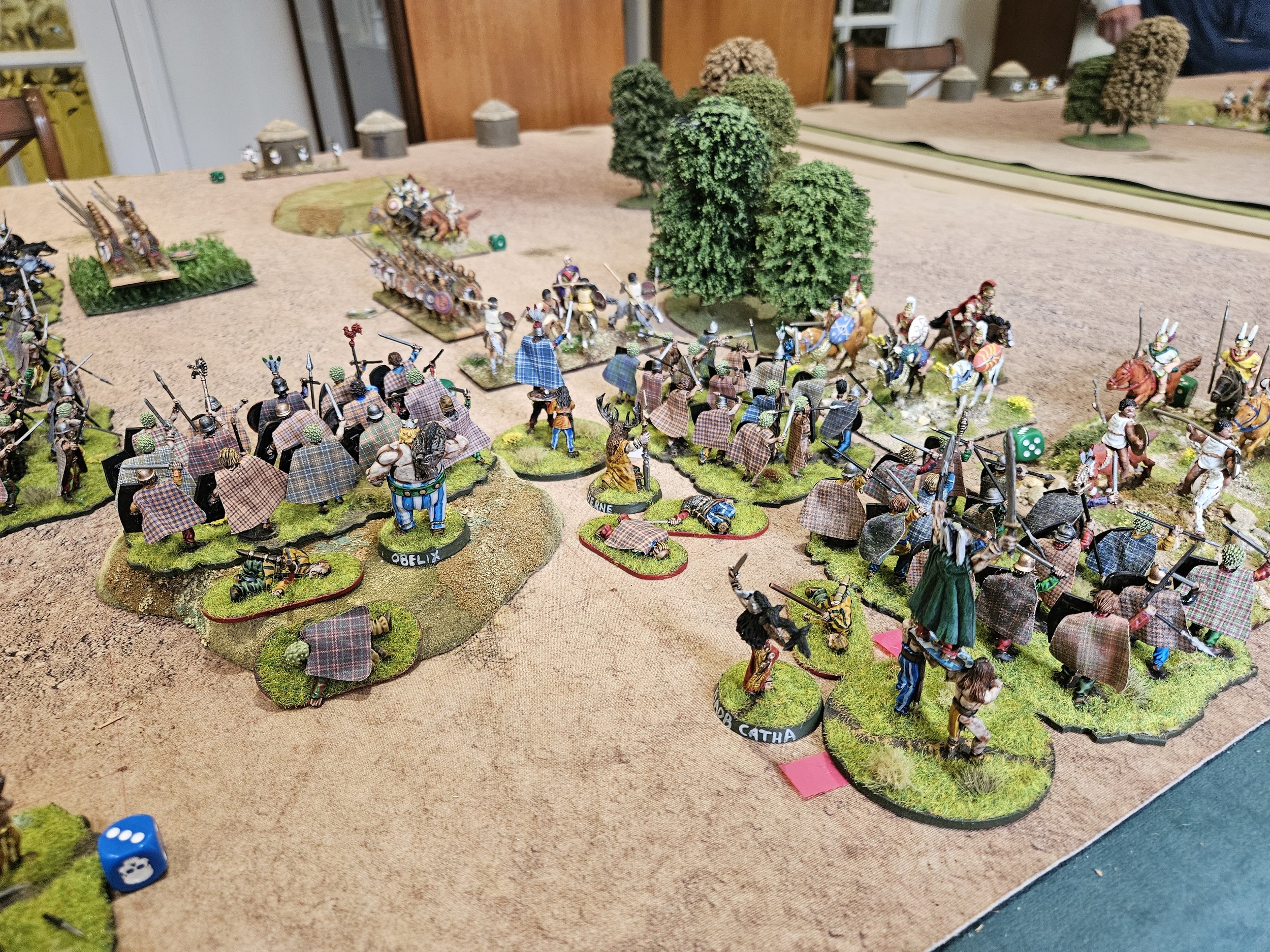
At this point I managed to muck up the settings on my camera, so some of the photos are weirdly focused: which is absolutely gutting as this was the key moment of the battle!

I advanced my Knights towards the Roman horse and managed to get the first charge in. Incredibly, a fortuitous run of the cards saw me knock out one of the Roman cavalry units along with their General, with their accompanying lights also fleeing the field in shock. That’s five coins won (about half the Roman total) in one hit!

It was now very much the case of not throwing away this advantage, so I calmed myself down (no easy feat after that bit of good luck) and took stock. A plan quickly evolved: the Knights to finish off his Roman cavalry on the left then advance on his camp; send everything else in against the so-far-untouched Romans on the right.

Romans are really hard to kill, especially when commanded by an experienced general like Si. I threw everything I had available at the enemy on the right, and despite having a considerable numerical advantage and Knights, at the end of the game I still hadn’t fully broken them there!

So it would all be down to what happened on the left.

First task was to polish off the rest of the Roman cavalry…

Again, this took much longer than it should have done, particularly once some Roman infantry got involved…but eventually the last enemy cavalryman fled the field and it was time to break the foot.

Stubborn? That word doesn’t properly encompass how difficult it was to finish them off!

In particular, the Roman legionaries on the hill at the back survived charge after charge in the rear from my light horse, and weren’t even much bothered by my Knights coming in from the front, disordering them the first time they tried it!

In the end, however, the Later Knights managed to break the infantry unit caught out in the open, and the game was mine.

This was another big win (12-2) but, I emphasise, solely down to the luck I had in the first turn in knocking five coins worth of veteran Roman cavalry and their general off the table with my first charge. Without that bit of extreme good fortune, things would have been very different indeed!

Another Lust for Glory Playtest

Lust for Glory is the chronological successor to For King & Parliament i.e. the same basic game structure, but covering the period from the late-17th to mid-18th centuries.

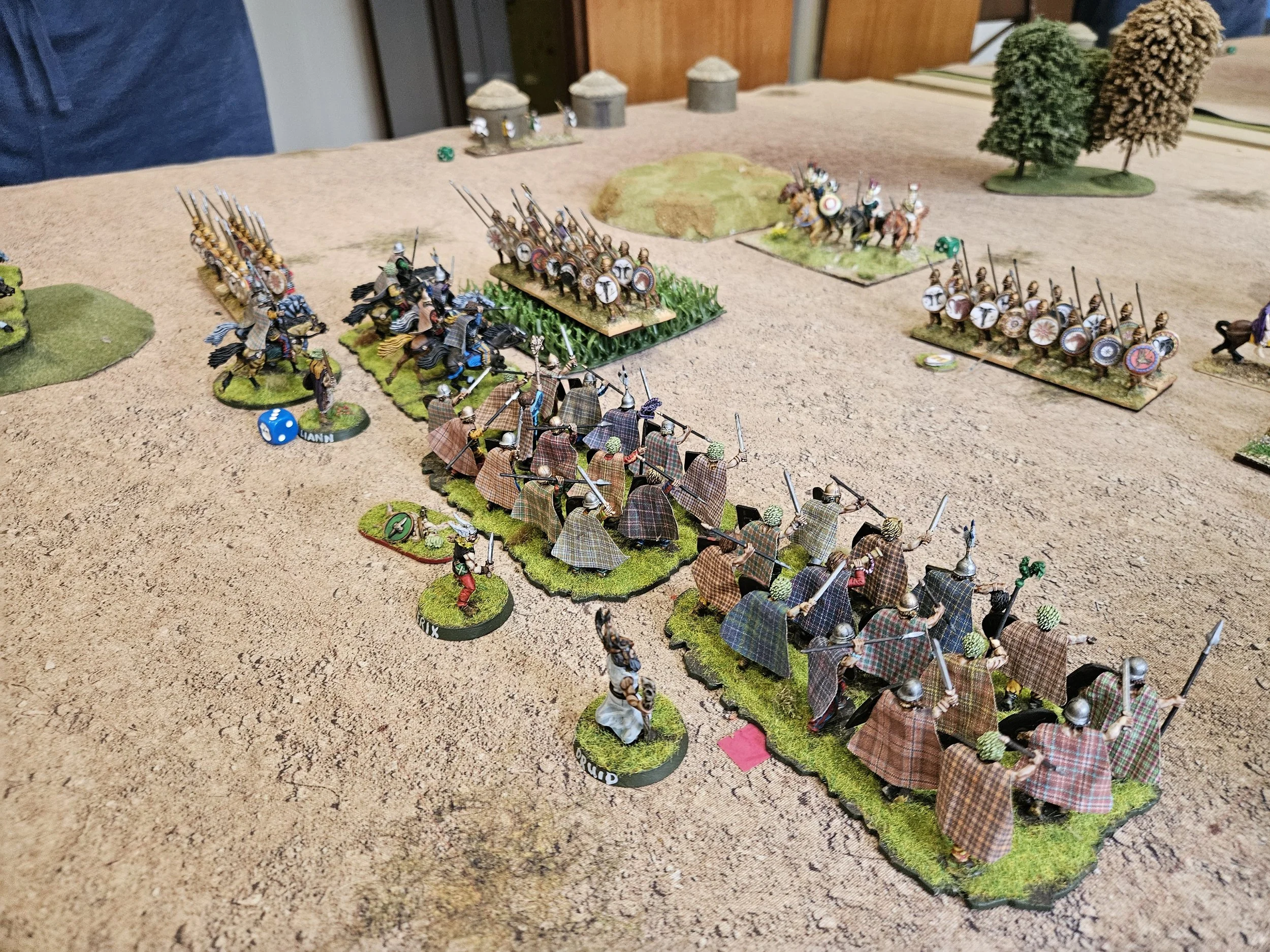
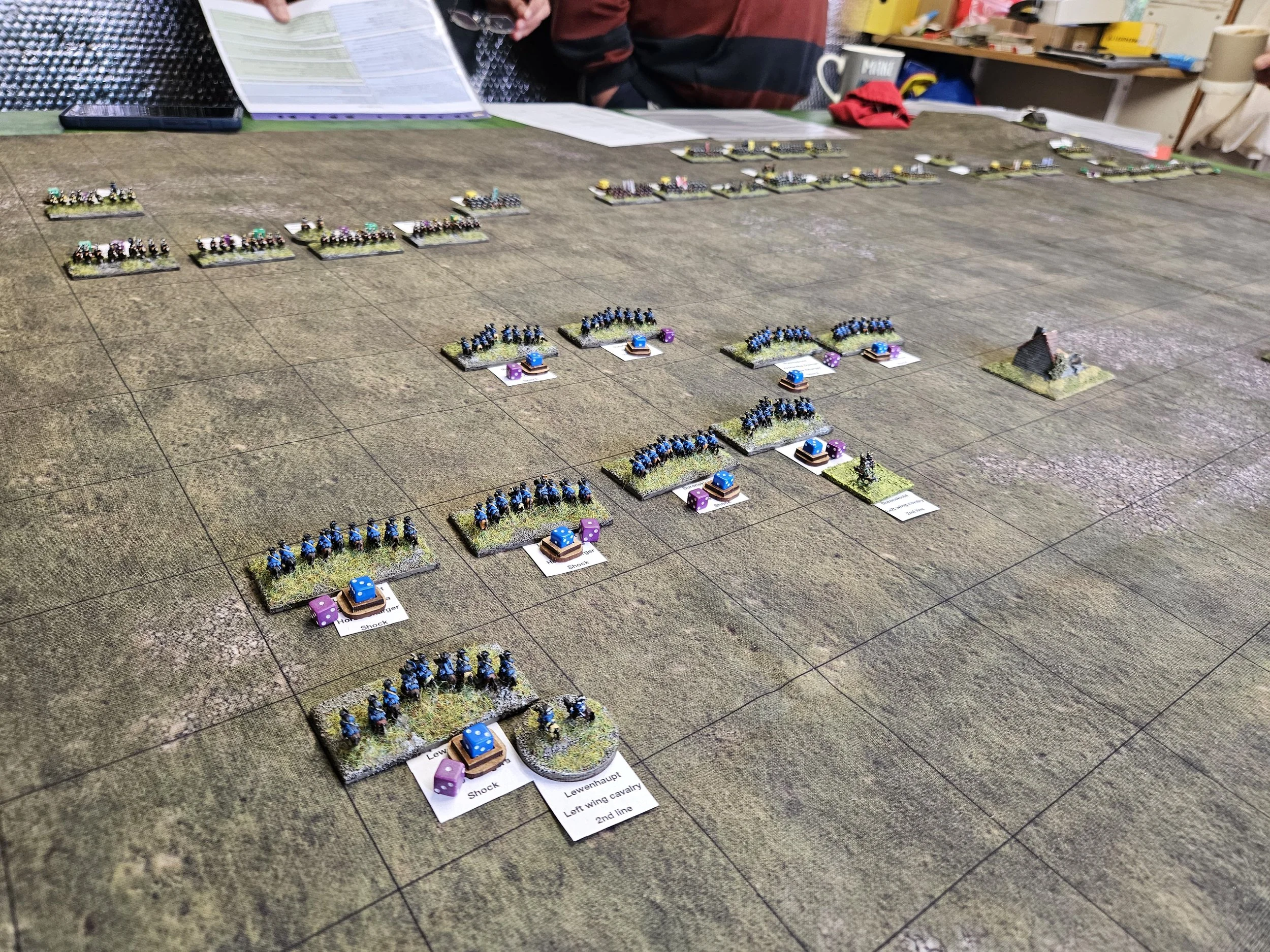
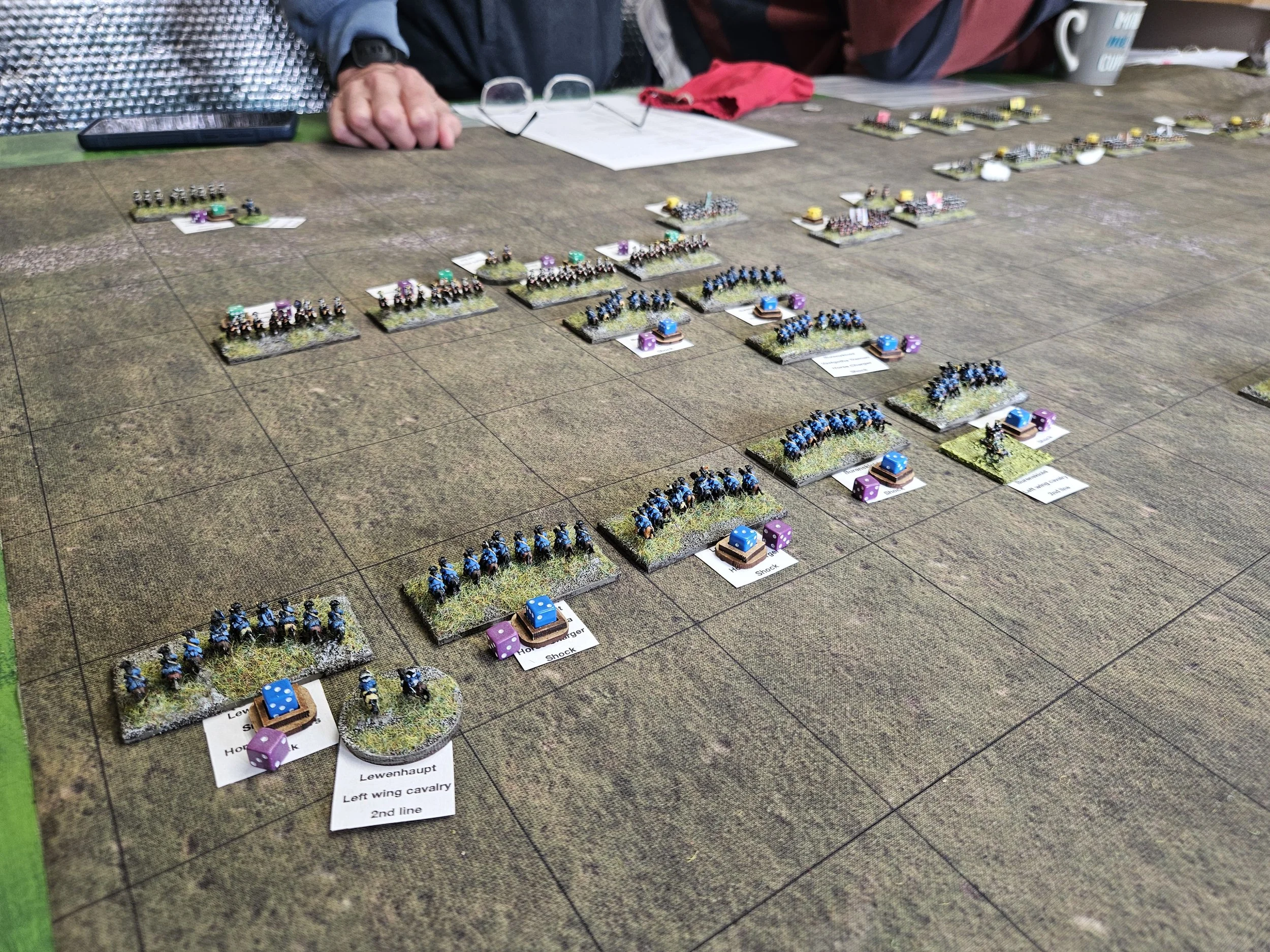
Today’s playtest would be a huge, 300-point battle between the Austrians and the Danish fought in 6mm on 10mm squares.

Before we get to the report, a brief confession. I must admit that I’ve never really got on with figures smaller than 10mm. In fact, 15mm (or perhaps Epic scale at roughly 12mm) is about as tiny as I care to go. I do, of course, recognise the many virtues of these smaller scales: the splendid god’s-eye view of the battlefield, the ability to refight vast historical encounters and so on, and all at a pleasingly modest cost.

Unfortunately, there is one insurmountable problem—I can’t actually see the blighters. At any sort of distance, unit identification becomes guesswork, my strategic acumen evaporates, and the whole affair starts to feel less like generalship and more like shuffling around a collection of indistinct Kriegsspiel blocks and hoping for the best.

This is no slight on the figures we used themselves, which were beautifully painted given their diminutive proportions. Still, they failed to stir my soul in the way larger miniatures do. I felt no emotional bond, no heroic attachment, nothing. I won’t let this stop me playing games when offered, but 15-28mm is really my thing!
Now, with that off my chest, on with the report…

Commanding the Austrians, I thought I saw an opportunity on the left flank, where I had superior numbers of cavalry that I could back up with infantry and artillery. I therefore sent my horse forward, but was somewhat dismayed when they were roundly beaten by the outnumbered Danish cavalry, who then followed up their success with their own infantry and put my whole left flank at risk!

Meanwhile, on the right of the battlefield, the reverse was occurring, as the Danes led their superior numbers of cavalry forward, supported by infantry.

Equally similar to what happened on the left flank, my horse, despite the fact they were outnumbered, pushed the Danish cavalry back, but foundered against the wall of Danish infantry that followed.

I advanced my foot to support, but had little success: the initiative was firmly with the enemy and, despite my best efforts, I was soon being pushed back.

Fierce fighting took place as both sides fed units into the melee, but it was unfortunately the Danes that prevailed again and, now under overwhelming pressure on both flanks, my troops crumbled and fled!

A defeat, but at least I know what I did wrong! Firstly, I need to support my horse more closely with infantry: combined arms is definitely the way to win. Secondly, I let me desire to keep the area in front of my guns clear so that they could shoot at the enemy interfere with my tactical thinking far too much: I should have moved infantry to the left sooner than I did and taken a turn’s worth of not firing the guns as the cost of improving my position. I shall do better next time!
The real good news, however, is that overall the game played very smoothly, with the need to look things up gradually disappearing as the morning went on. We had a couple more questions and suggestions which were sent on to Mr Miller, but it looks as if Lust! is coming along nicely, and we will hopefully see them ready for publication soon.

TTS AAR: Welsh Open Game One: Venice Abroad versus Ikko-Ikki

My first game proper at this year’s Welsh Open (held at the ever-excellent Firestorm Games in Cardiff) was against Colin’s beautifully-painted Ikko-Ikki.

This is an unusual army consisting of a mix of raw and veteran fanatics wielding naginatas and other polearms, supported by a small contingent of fanatical cavalry and the odd unit of bowmen and handgunners.

I won the scouting, and was pleased to see Colin set up in one corner of the table, ripe for some kind of outflanking manouevre with my Knights on the left!

I knew the Ikko-Ikki would come straight at me - that’s what fanatical monks with big choppers do - but I also knew that they would all be very vulnerable to missile fire. I therefore determined to get forward into missile range, then wait for them to come to me as I pelted them with crossbow bolts and fire from my handgunners.

There was also the matter of their cavalry on my right: that was job for my other command of Knights!

The shooting was also going very well on the right, with a couple of units of raw fanatics neutralised, so I thought it was safe to send the infantry forward to distract Colin’s main line whilst I developed my flank attack on the left.

This worked surprisingly well: with last of the Ikko-Ikki disposed of by the Knights on the right, an attack by Lancieri Spearmen on the side of one unit that had swivelled to face my flank attack was enough to knock their target off the table and give me a 14-2 victory without my left-hand flank attack even going in.

All in all, a succesful start to the tournament. It has to be said that Colin was unlucky with his saves against my missile fire and, as you can probably deduce from the pictures above, did manage to kill my one unit of Later Knights on the right.

Facing a solid wall of polearm-wielding, fanatical infantry and cavalry is terrifying, by the way, and I was pleased I never had to properly close with them throughout!

Welsh Warm-Up: Venice Abroad vs Graeco-Bactrians

It’s late afternoon the Friday before the Welsh Open To The Strongest tournament at Firestorm Games in Cardiff. There’s beer to be drunk and a curry to be eaten later, but now there’s just time for a warm-up game between my Venetians and Mike’s Graeco-Bactrian (GB) successors.

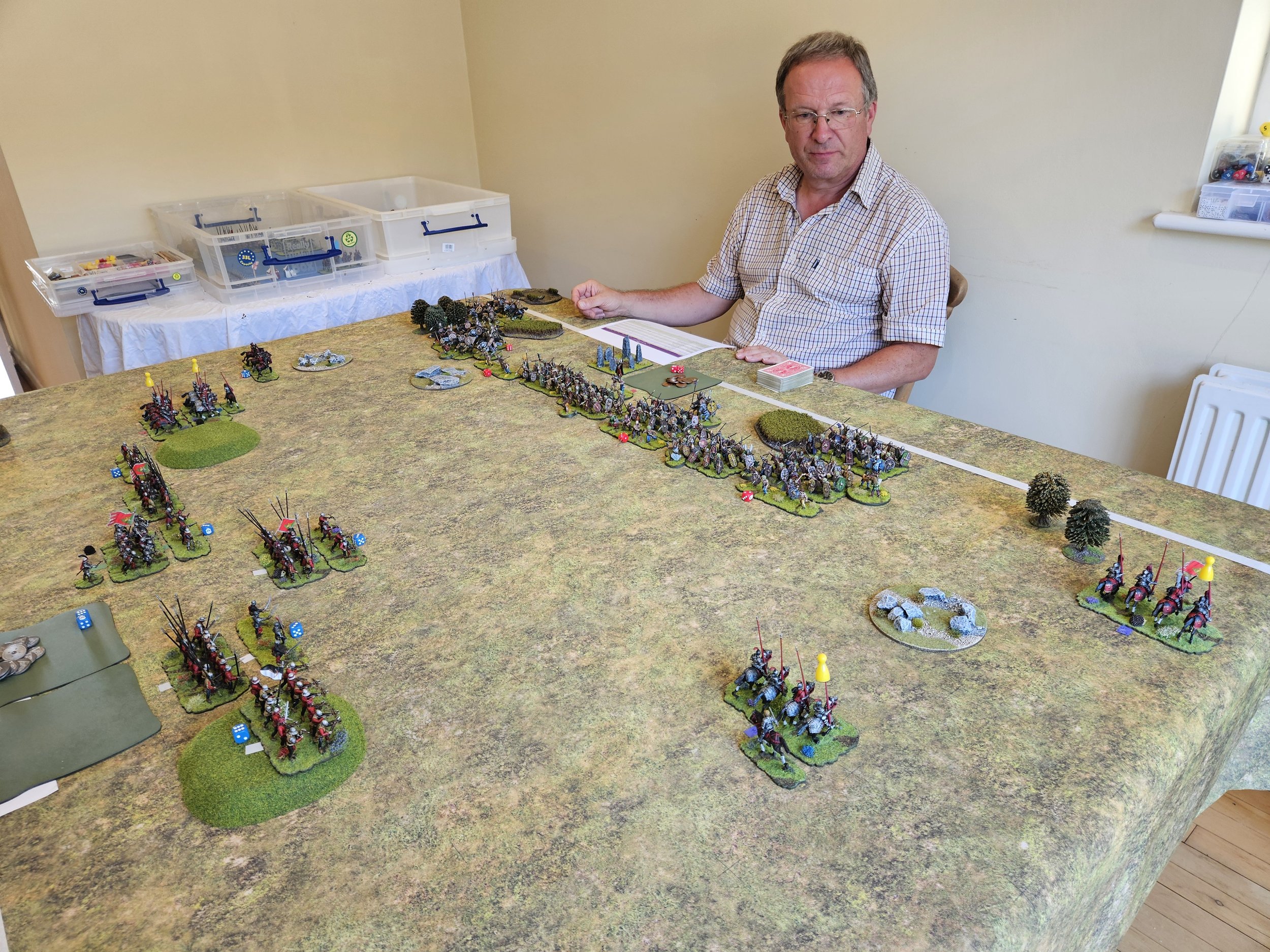
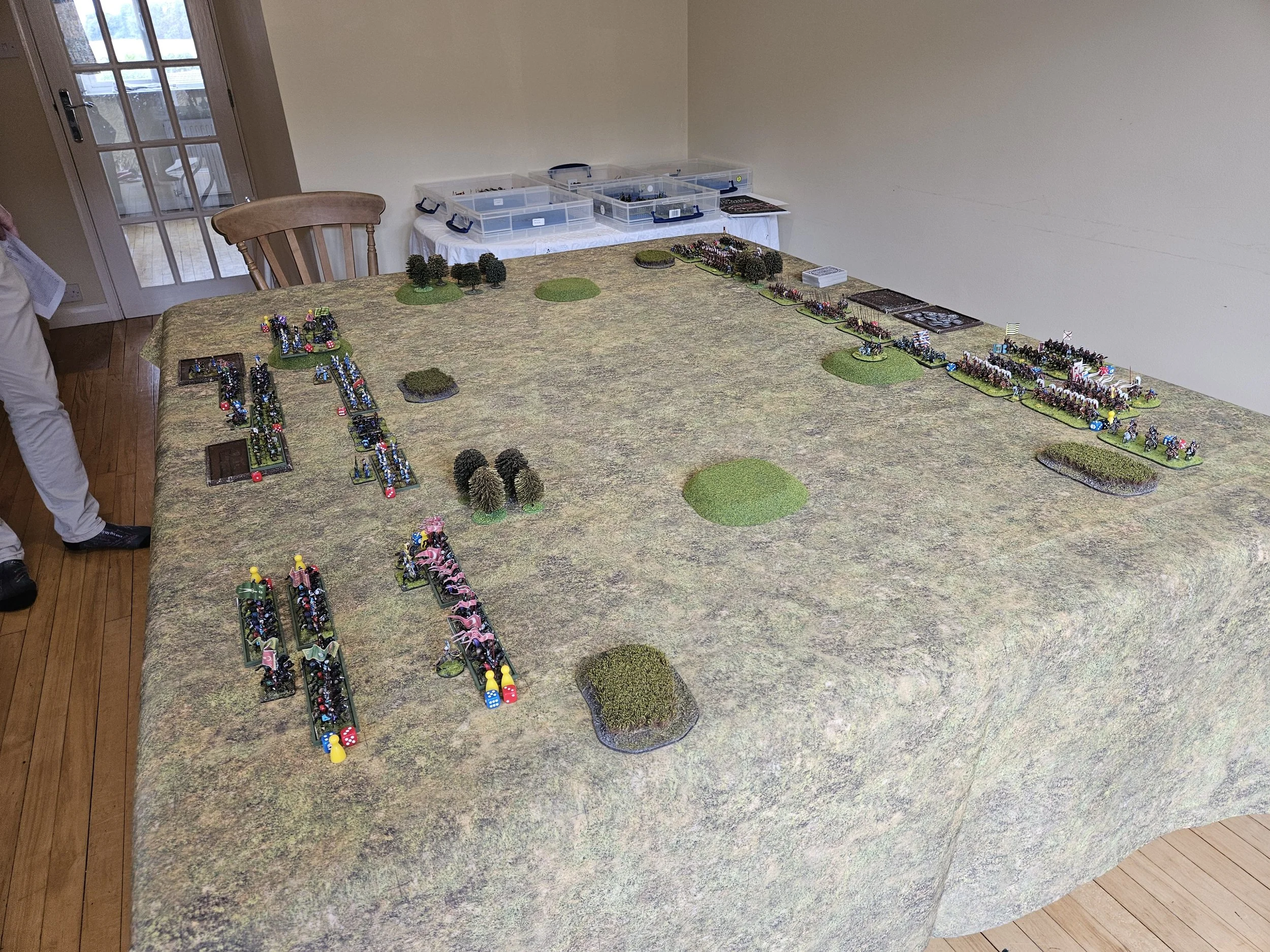
[Mike had obviously heard that I was a VIP player as he had taken the trouble to dress very formally for the occasion. Although not featured in many of the photographs (it’s all about the figures, man) you may note his very natty suit and tie in the background of some of them. My thanks to him for making the effort: much appreciated!]

As the GB’s two pike blocks made the centre of their line a pretty dangerous place to be, my plan was to hold back my infantry there but attack strongly on both wings.

However, as the two armies advanced towards each other, it seemed as if the GB pikemen had decided to do the same thing: his wings advanced towards me whilst his centre stayed put.

This suited me down to the ground and, moments later, my left wing knights were charging into the GB veteran ‘Companion’ cavalry, ably supported by handgunners and the Alabardiers - free to intervene here as the enemy pike were still stationery.

Likewise on the right…although, as now seems customary, the later knights there seemed to have put on their ceremonial cardboard armour rather than the real thing!
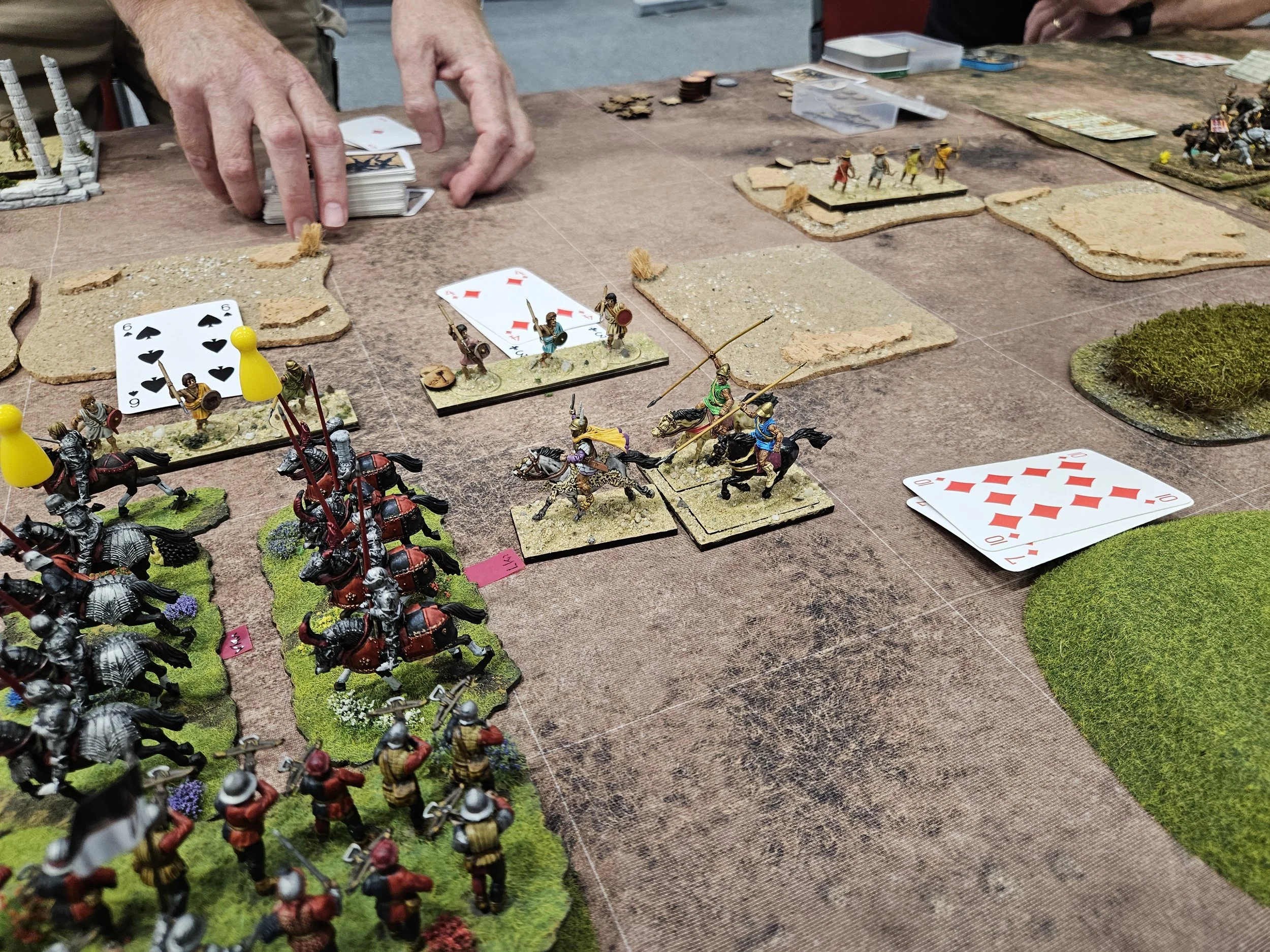
My lights were meanwhile clearing the other GB troops from the field with missile fire (Mike was being very unlucky with his cards) and although of the left the knights were now making heavy weather of things, on the right they had recovered and were driving forward nicely.

As for the GBs, they had started to bring their pike forward…gulp!
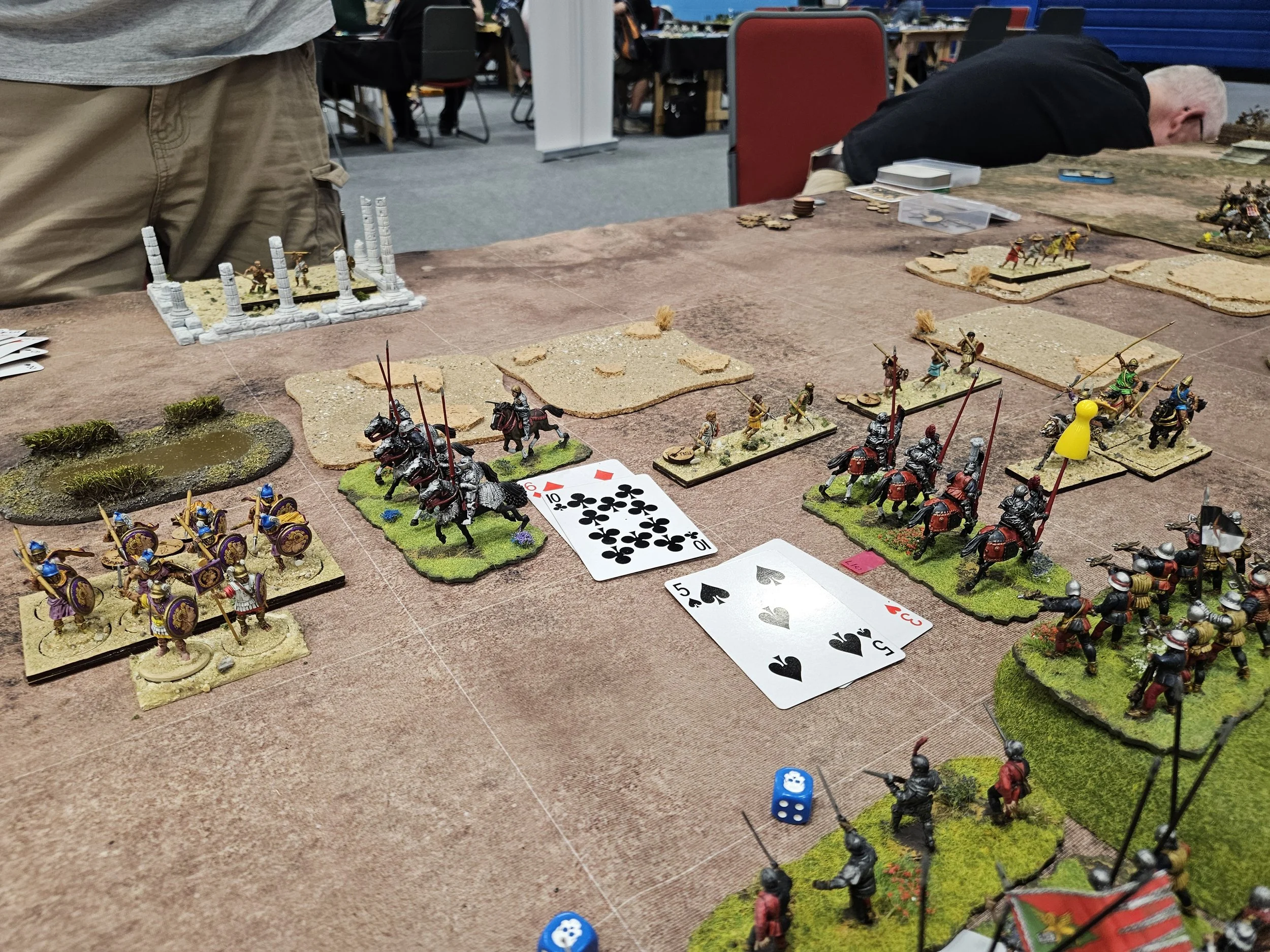
My veteran later knights on the left (my best unit) were able to rout the companion types in front of them and then, with a glorious charge, sweep sideways and take one of the GB pike phalanxes in the flank, double-disordering them in one go: I told you Mike was being very unlucky with his cards!

At the same time, the advance of the other GB pike block and the fact that missile fire had stripped them of their accompanying/protecting lights meant that it’s flank was vulnerable as well: proving to be a very lovely target for my other unit of later knights, now dressed in proper metal armour rather than the nonsense they had started the game with.

It was all going a bit horribly wrong for the brave (but doomed) GBs, and it wasn’t long before one of the pike blocks gave way giving me Mike’s last three coins and the game!

So a big win for the Venetians in their warm-up game: my thanks to Mike for being such a fun sparring partner even in the face of some appalling cards.

Onwards and outwards for the promised beer and curry, and then the tournament proper tomorrow…

Postscript

Michael Lane reminded me of another incident in the game:

In the practice game that Douglas Baldwin and his Bactrians fought with Robert Avery’s Venetians Abroad on the Friday evening before Godendag, Mike (Douglas - don’t ask!) had the Patroclus Stratagem and he too forgot to use it when his General was turned into a pin cushion by Rob’s Crossbowmen. He didn’t even have the chance to save another General unlike me! It was Rob who reminded him of the lost opportunity when the game ended!

The Rest of the Avians from Trilaterum

With the lookalike Hauk cavalry finished, it was time to start on the infantry.

Again the figures had not survived the journey from the States very well: almost all the pistols were snapped off, and quite a few legs and arms too. Not sure what the solution is here: the boxes the figures arrived in were intact, the figures (in their plastic bags) were enclosed in polystyrene packaging peanuts, and the whole lot were in a bigger box clearly marked as fragile. Anyhow, worth noting that one painting session was almsot solely devoted to repairs, with only two figures remaining unusable…and, as you’ll see below, I even found a use for one of those.

The Avians from Trilaterum divide into three different races. First up, we’ve seen the lookalike Hauk on warbirds, here are the infantry versions, who really are remarkably like Khurasan’s Hauk, albeit a lot larger. Next we have the Corus (I’ve renamed them Corvids in my lists) who look like crows. Finally, the Virginianus (should that be Virginianii?) who are best described as giant owlmen! There’s also a sky sled: some kind of hover or antigrav vehicle.

The infantry are really nice figures: very crisply formed and with clear definition between each type. They paint up very easily, and it is a very much appreciated happy coincidence that their equipment also very closely ressembles Khurasan’s Hauk range.

I used a sky sled with a broken figure as a casualty, and painted one Corvid as a medic (Avian medics are in blue: my Harook have one too).

The sky sleds are, by the way, a bit silly for me: I quite like the concept, but why put all the spikes on the back? What’s next? Skullz?

I had bought two boxes worth at $30 a box, so $60: getting an 8-man Hauk cavalry squad that you’ve already seen, two 8-man squads of mixed infantry, one commander and one medic, and two sky sleds. Counting the cavalry mounts as a separate figure, that’s 34 figures and the two sledges. Seems a bit steeply priced for me, but they are fun and will look good on the tabletop.

In addition to the price, the other catch is their size. Here’s a little comparison shot for you:

Virgianus, Khurasan Hauk, lookalike hauk, harook, corvid, battlefront infantryman

These are big birds: the Virgianus models are a good 28mm high, the two others a good 20mm high.

Now I can rationalise the difference between the Hauk and lookalike Hauk by saying that the airmobile Hauk are deliberately chosen for their diminutive size compared to the lookalike Hauk, who aren’t that bigger than a Harook anyway, but this is a very good example of 15mm scale creep. A very good example.

So there you have it: reinforcements for my Avians now complete.