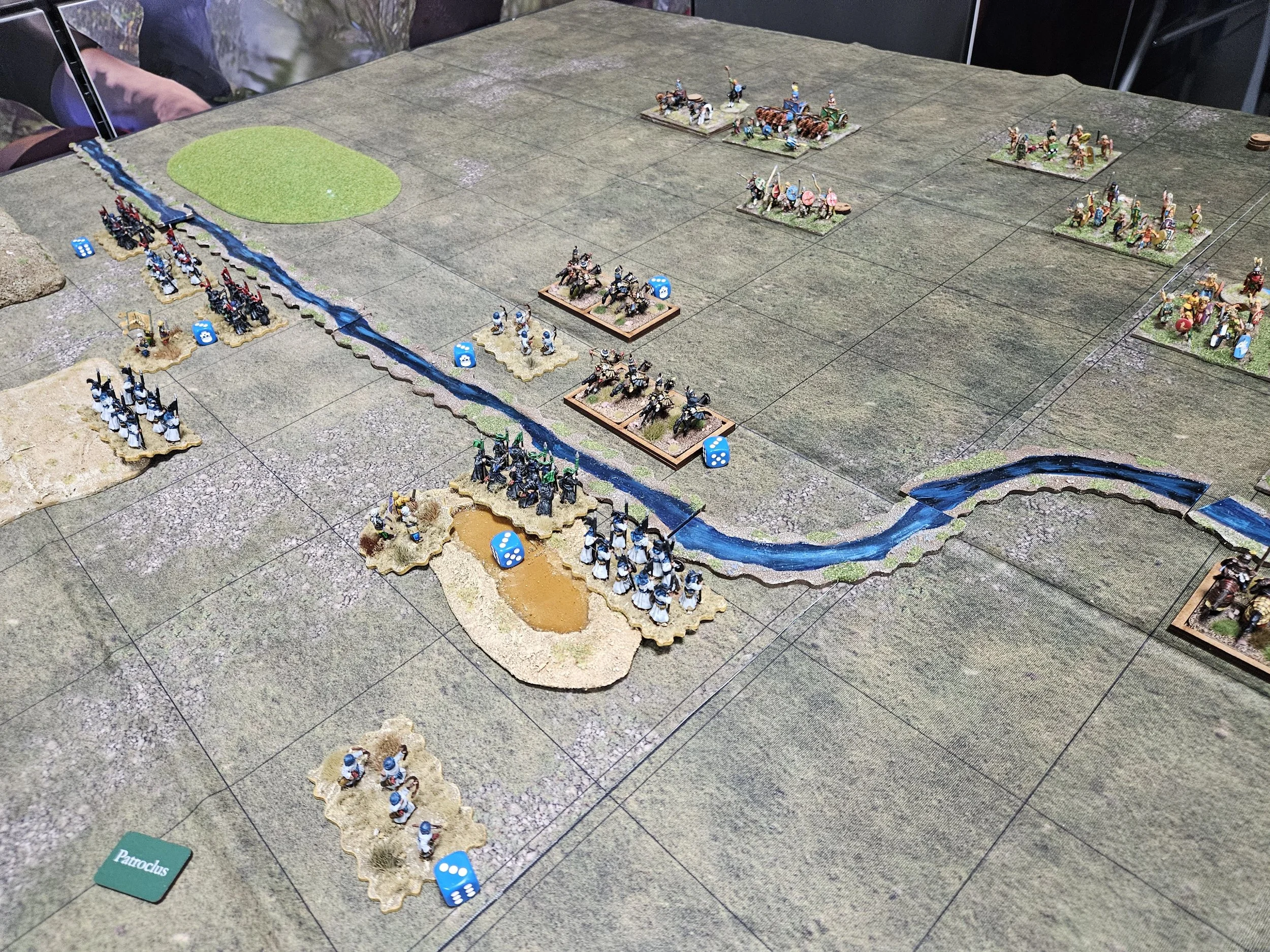
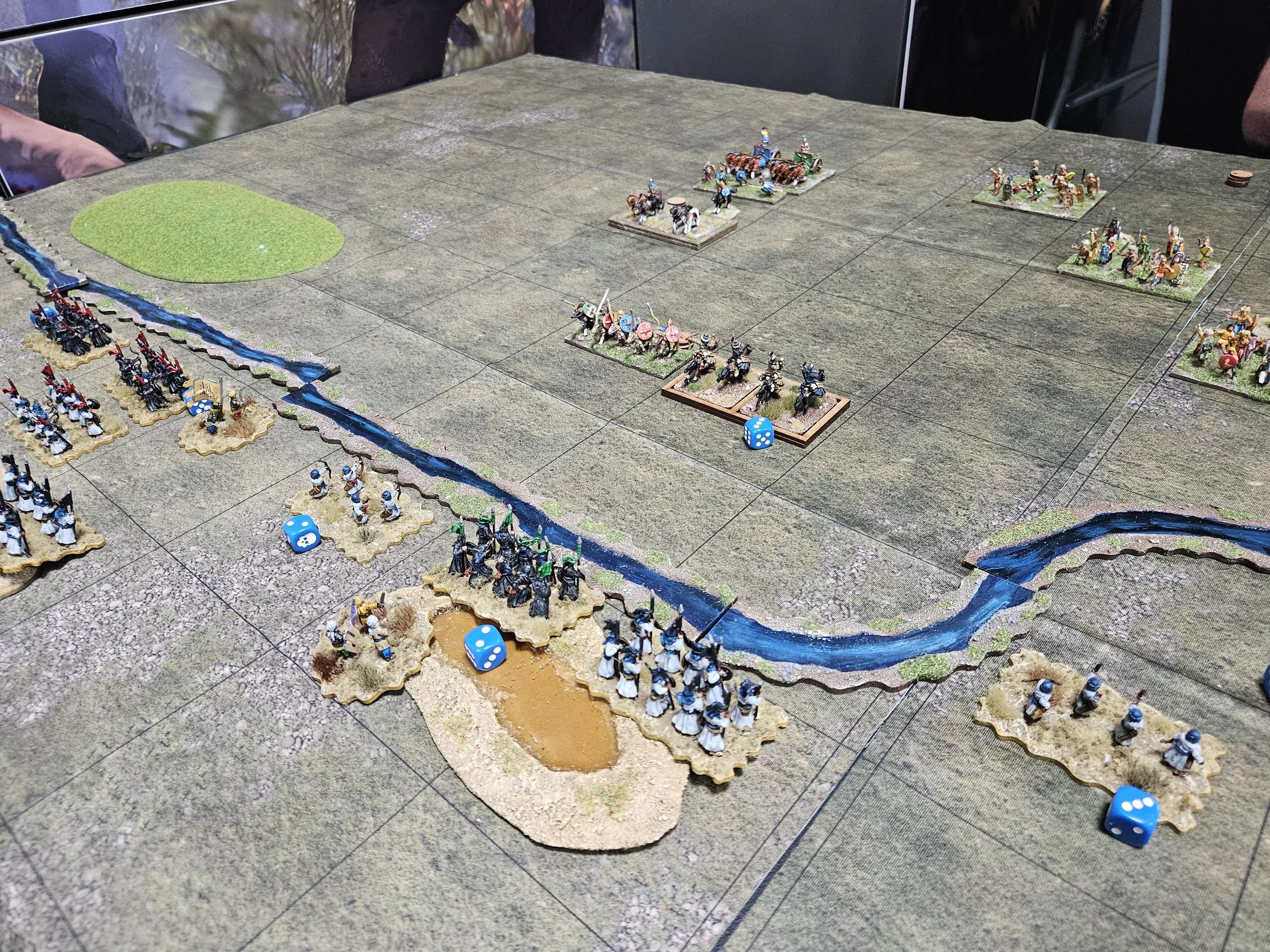
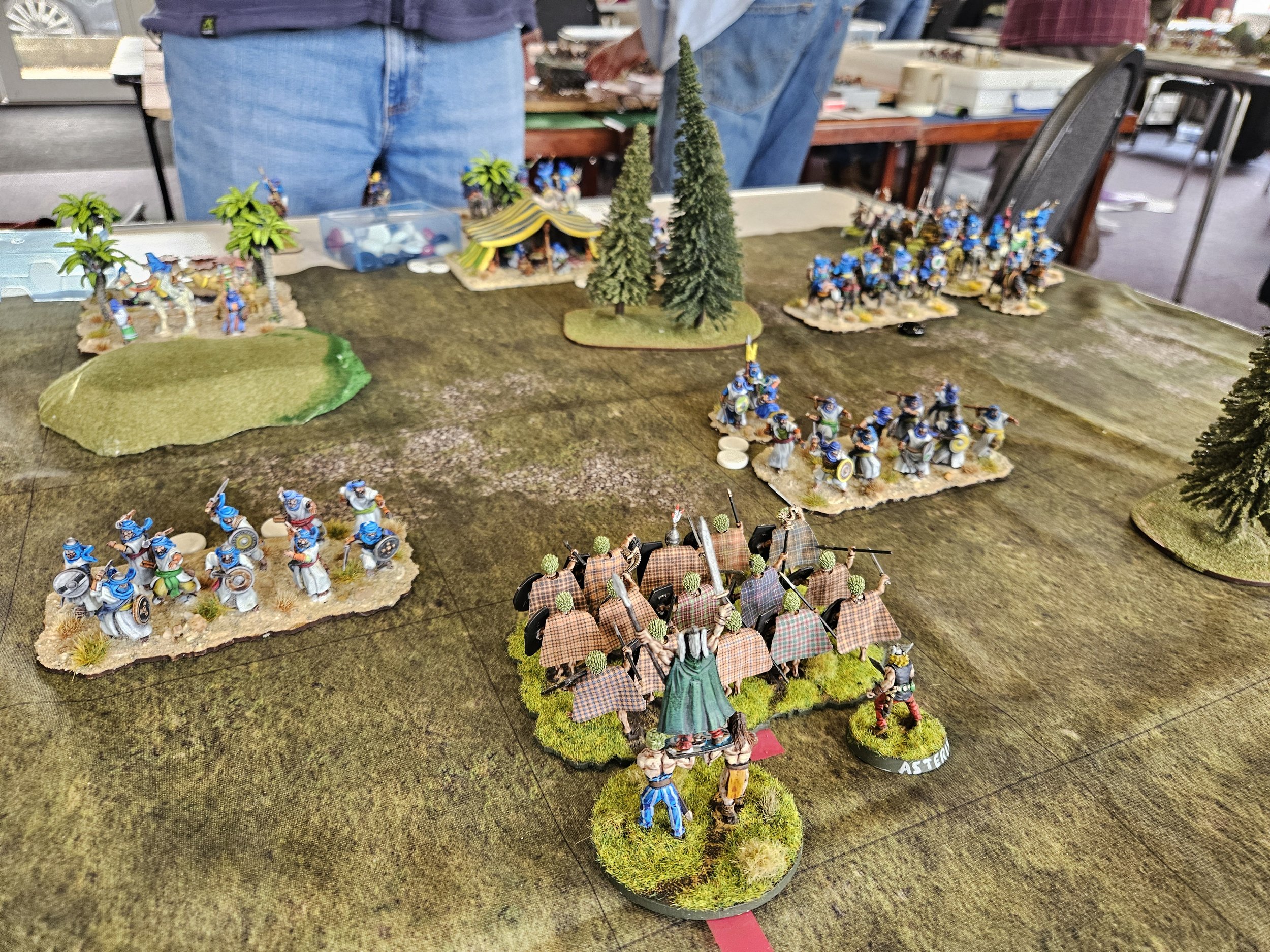
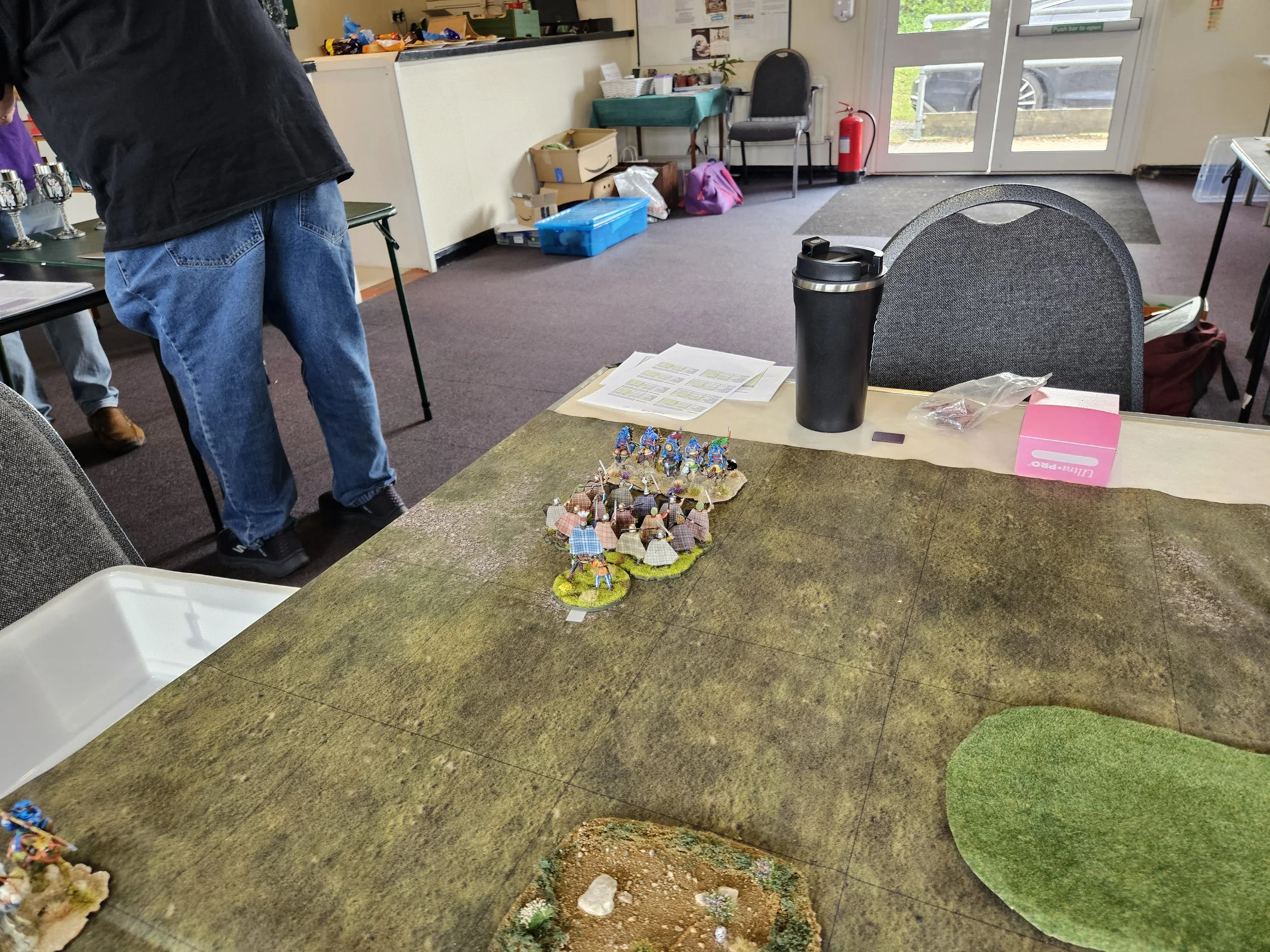
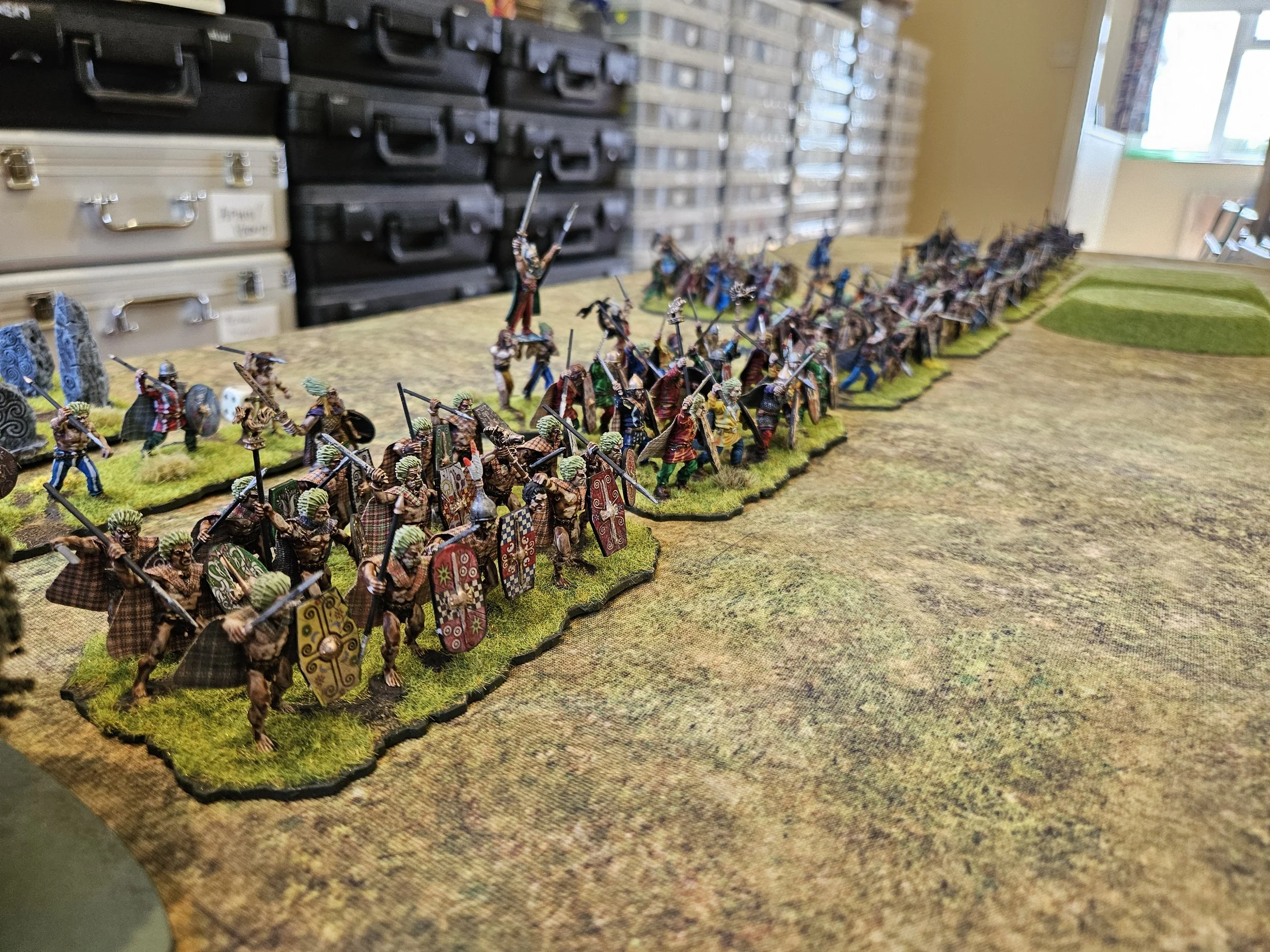
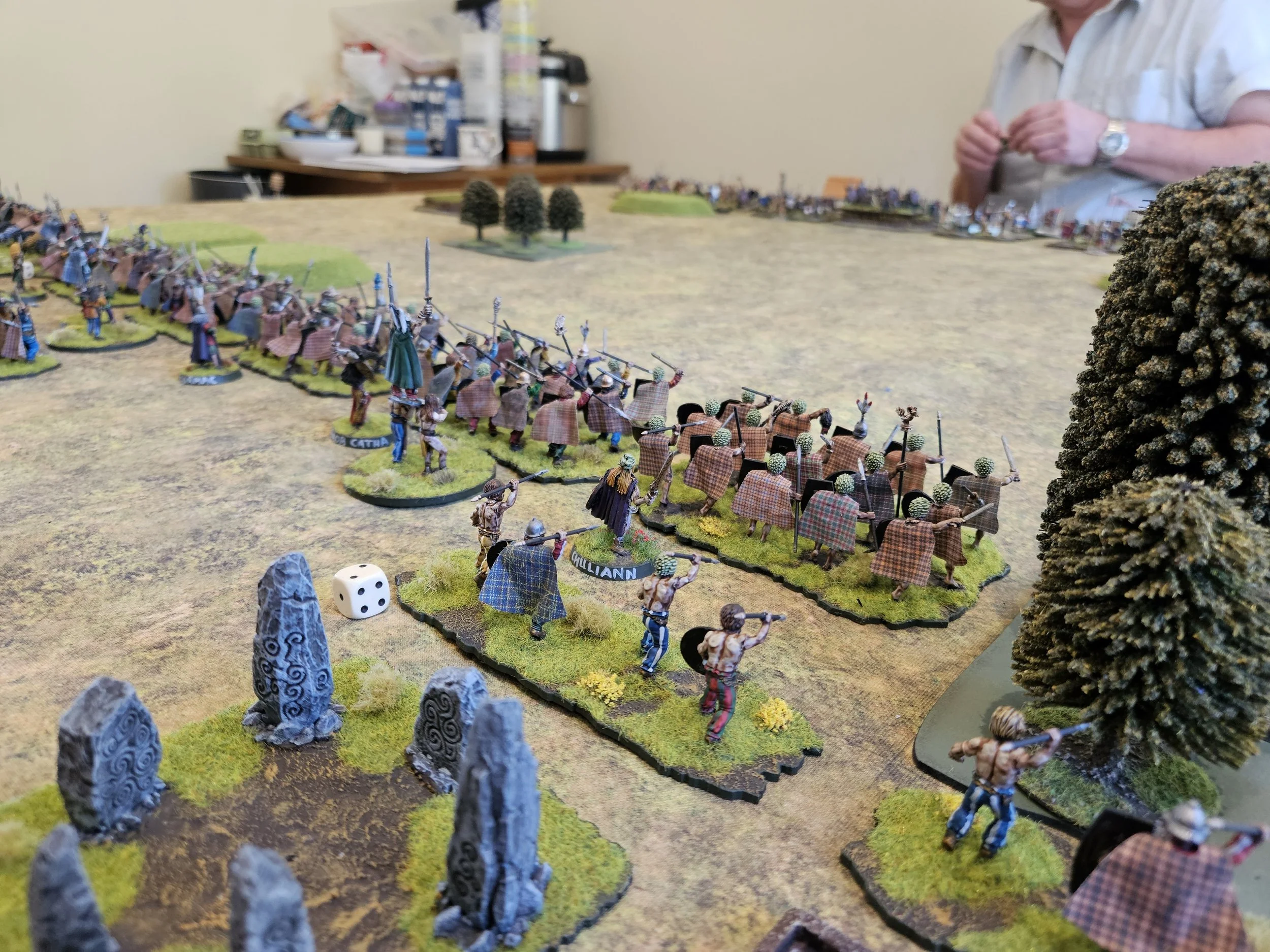
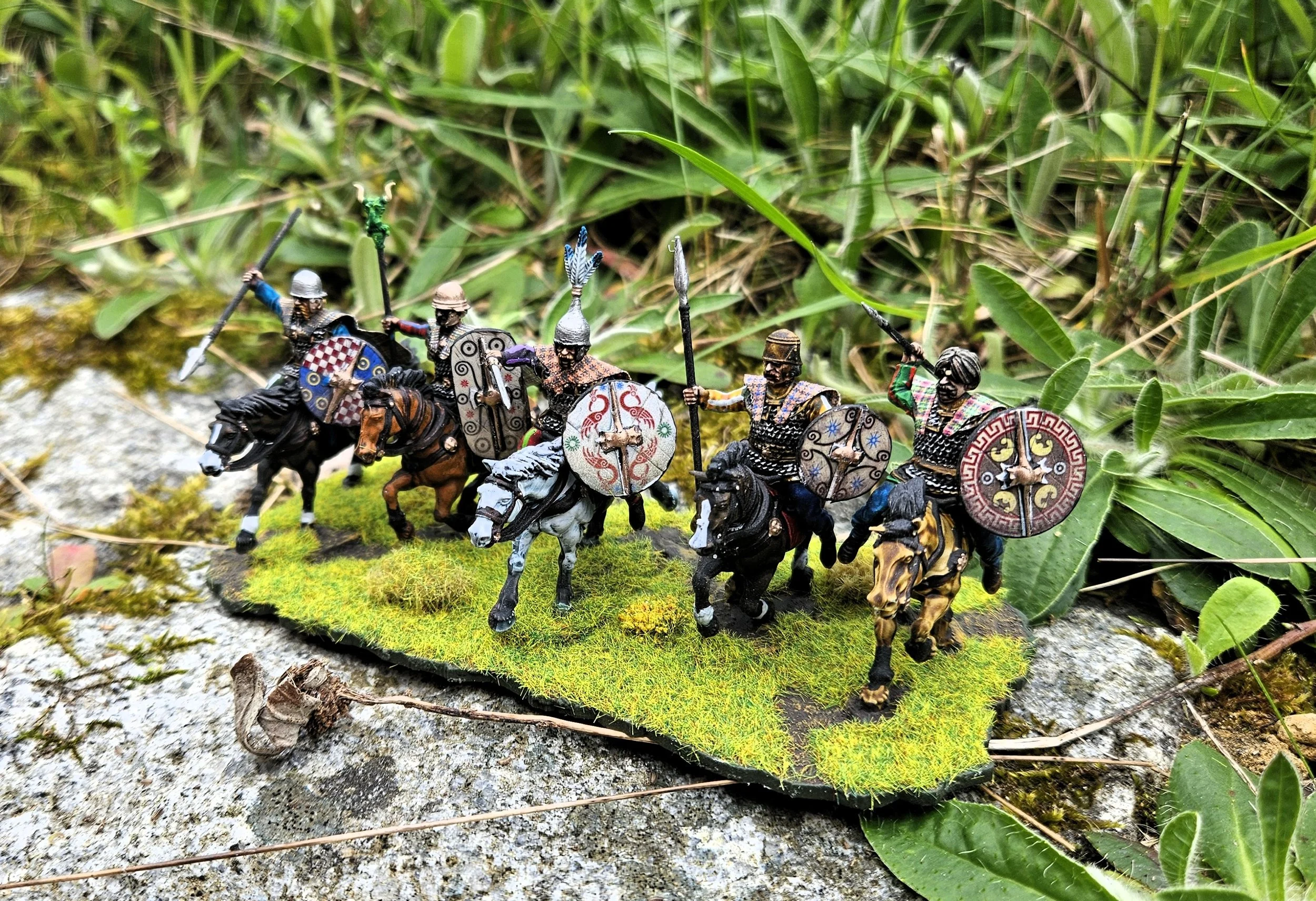
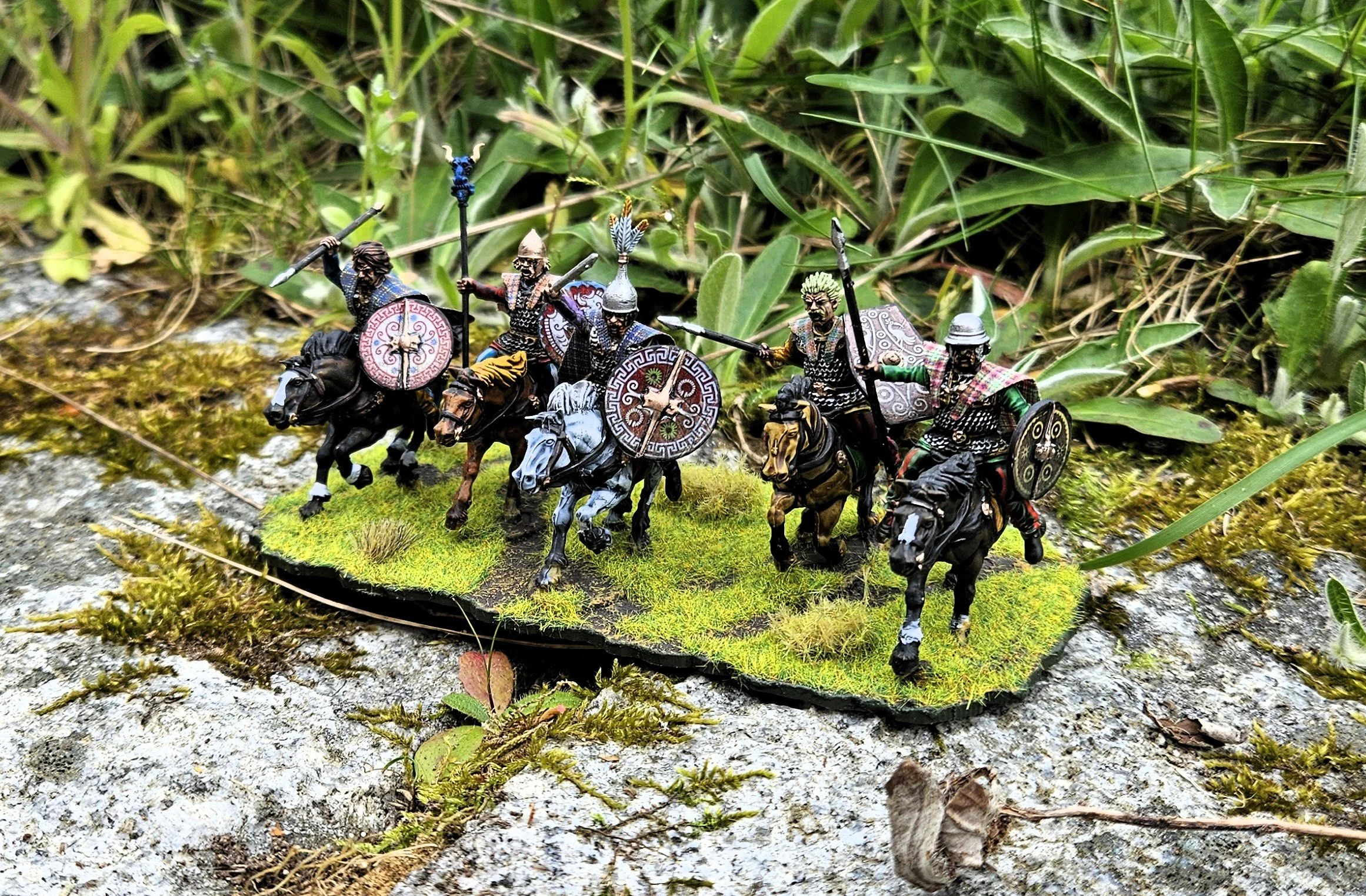
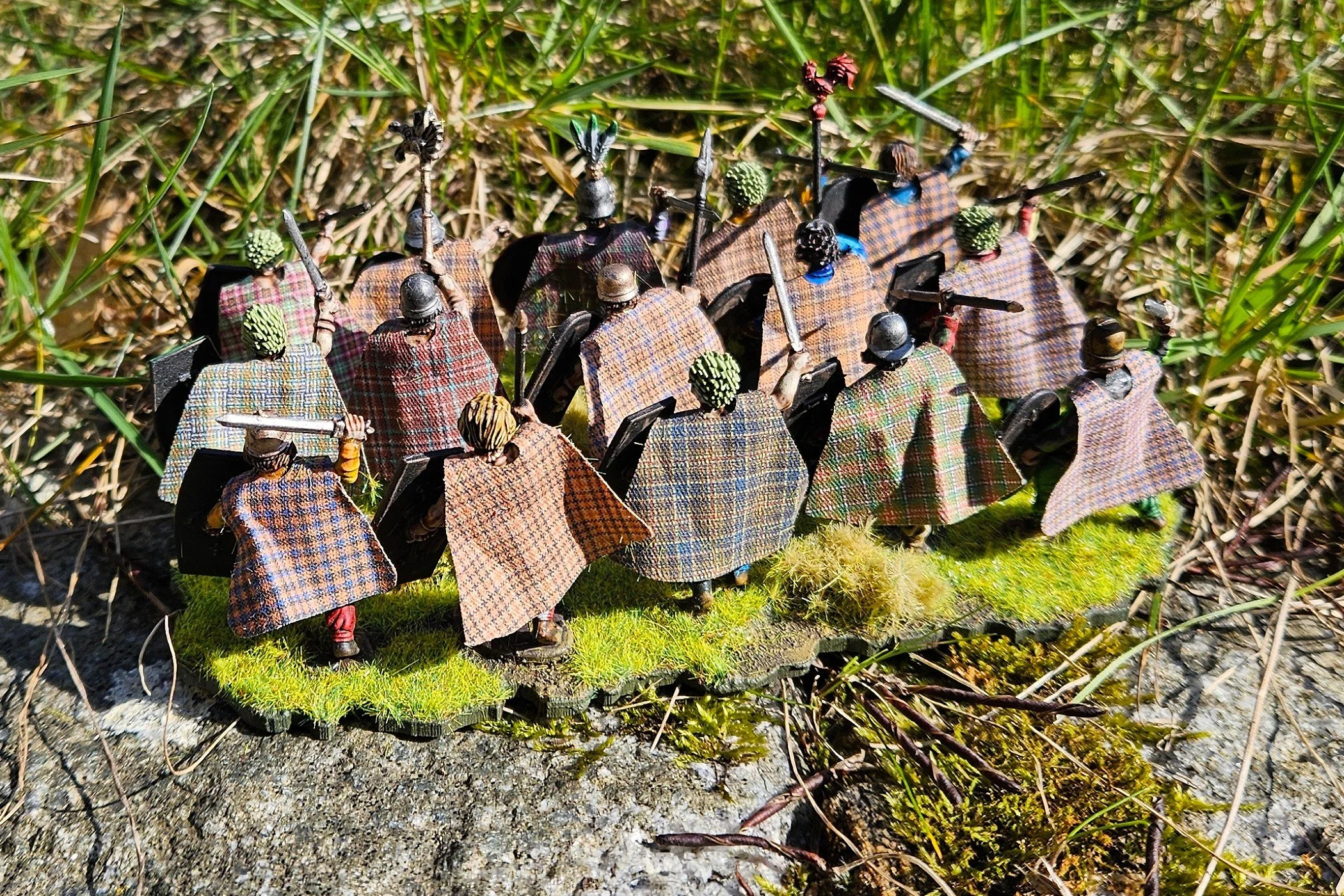
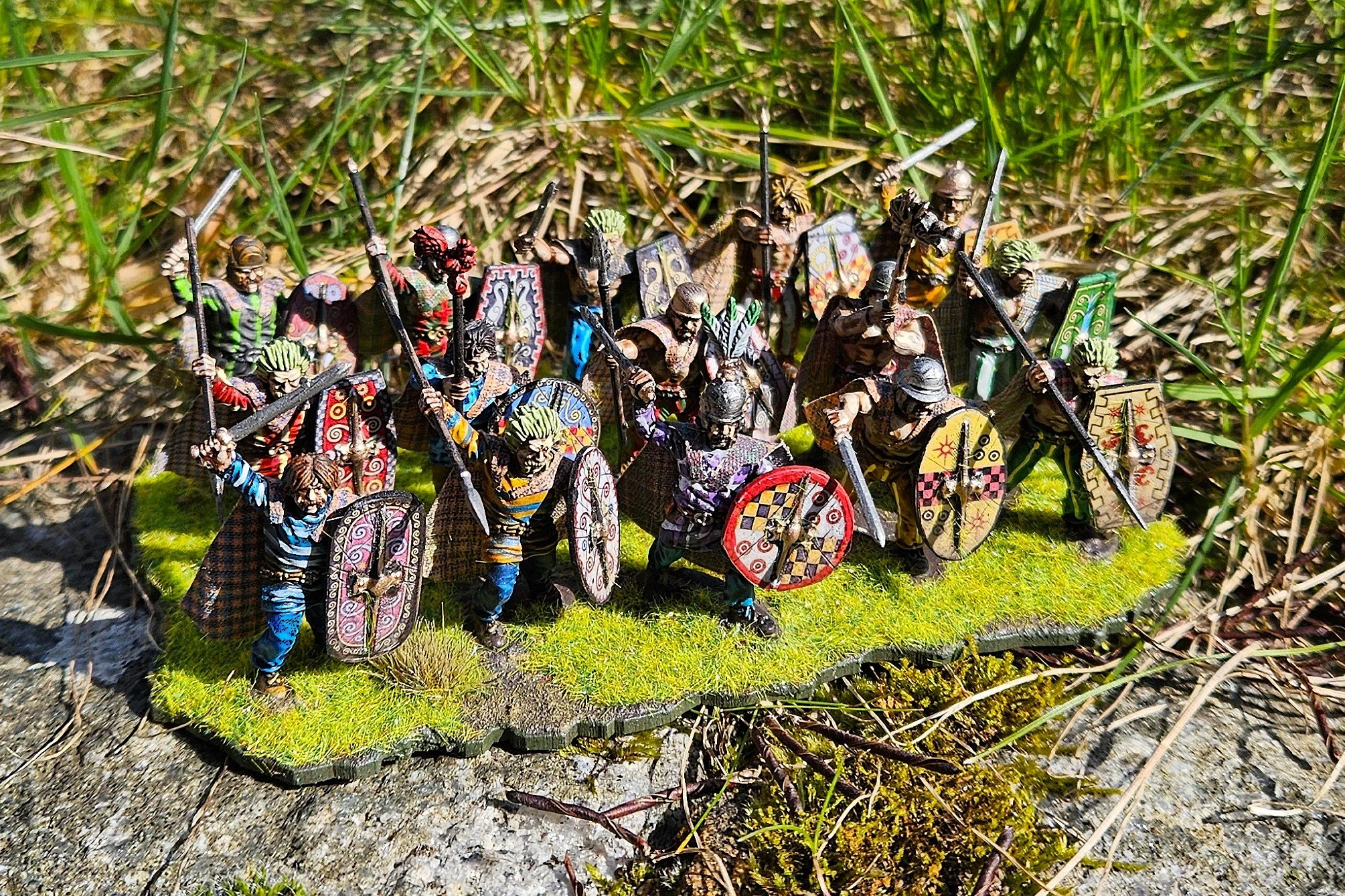
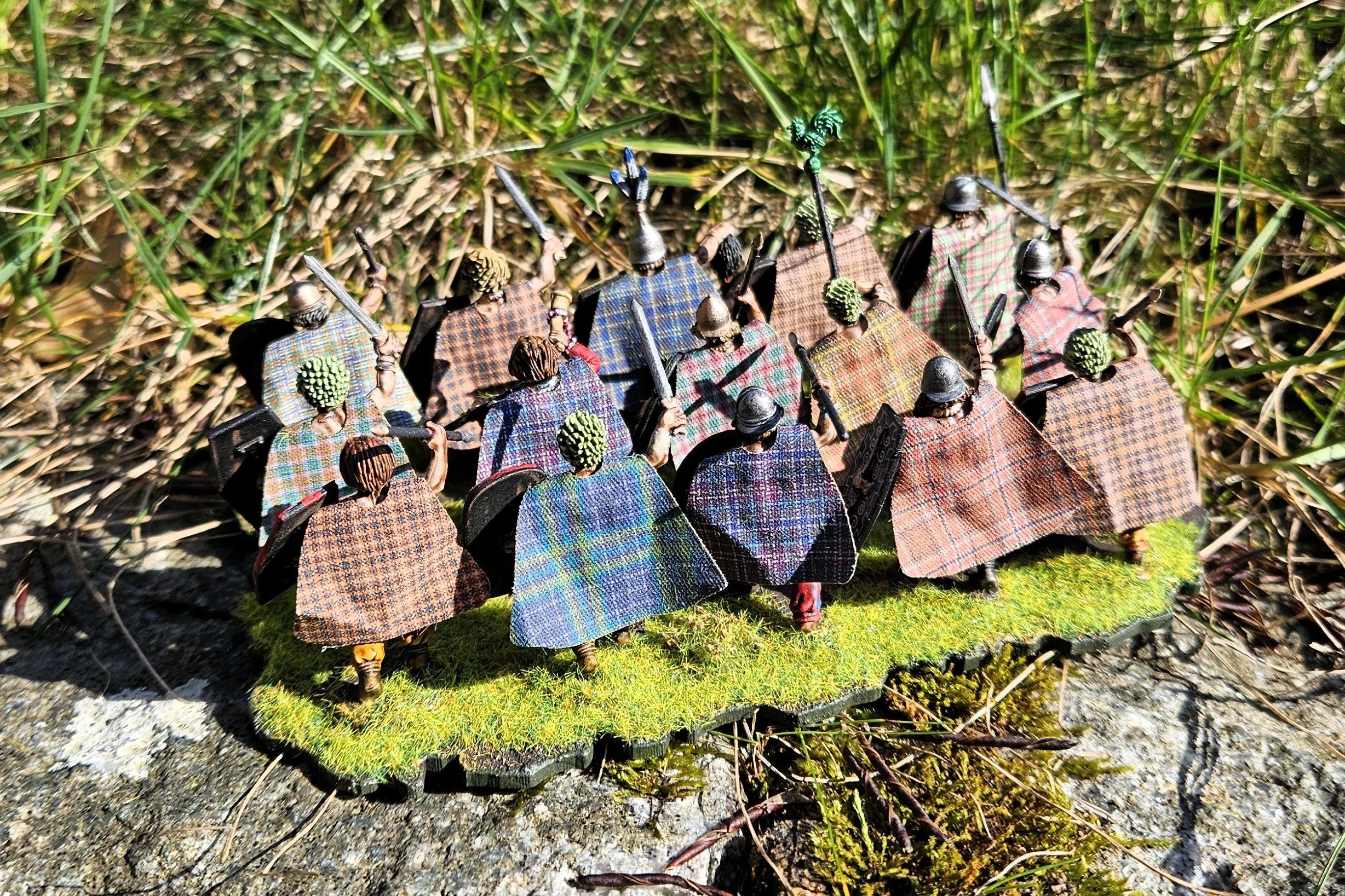
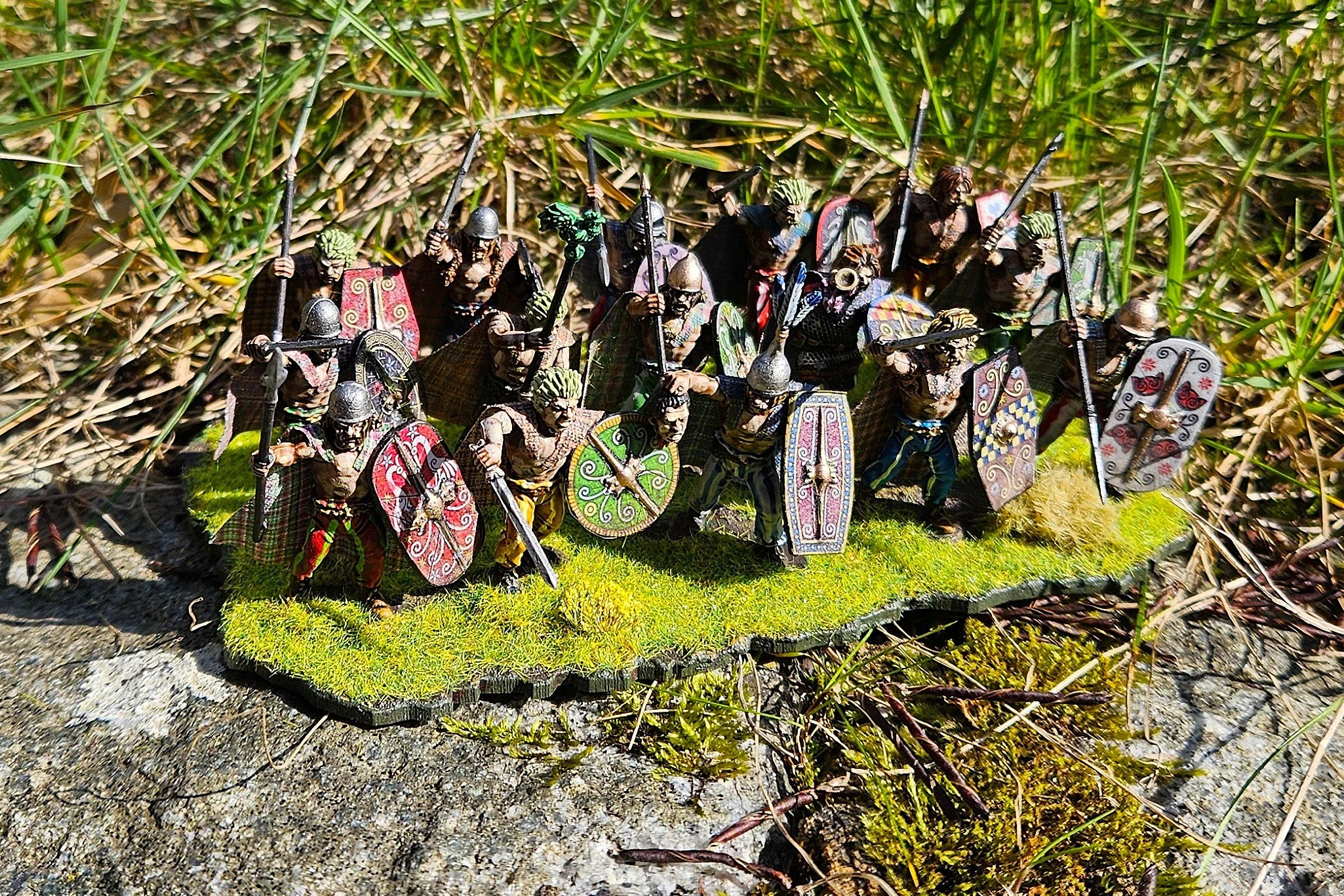
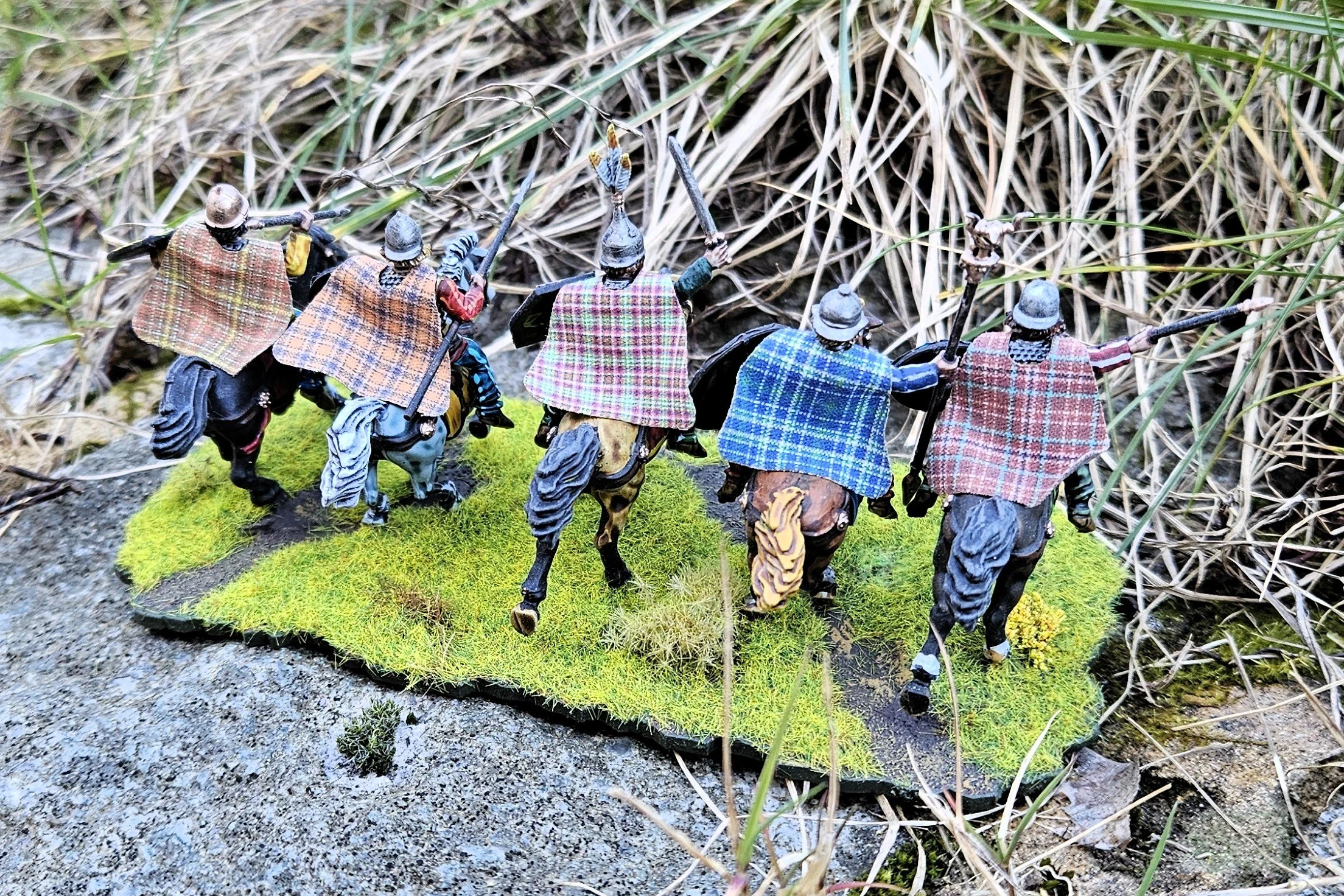
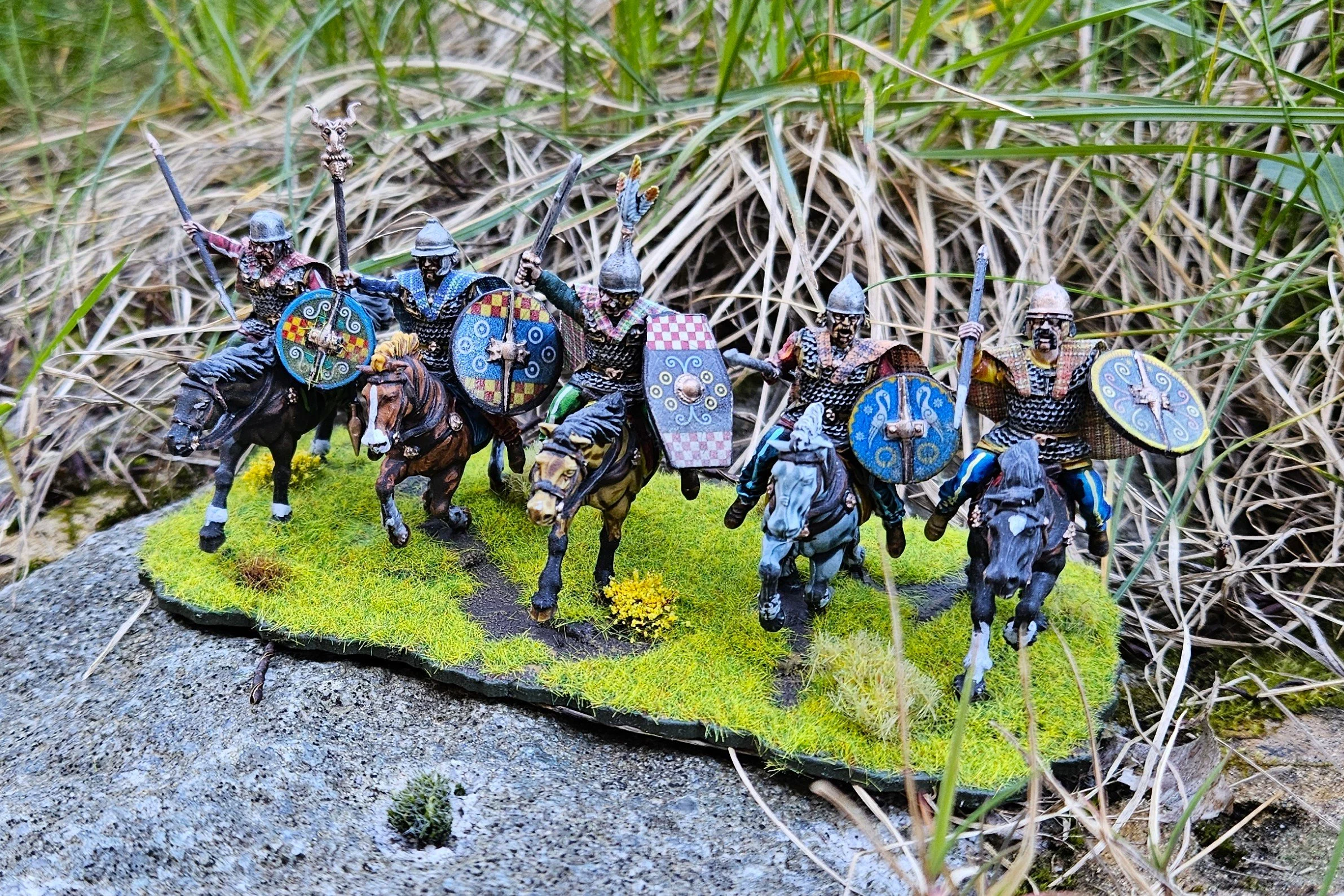
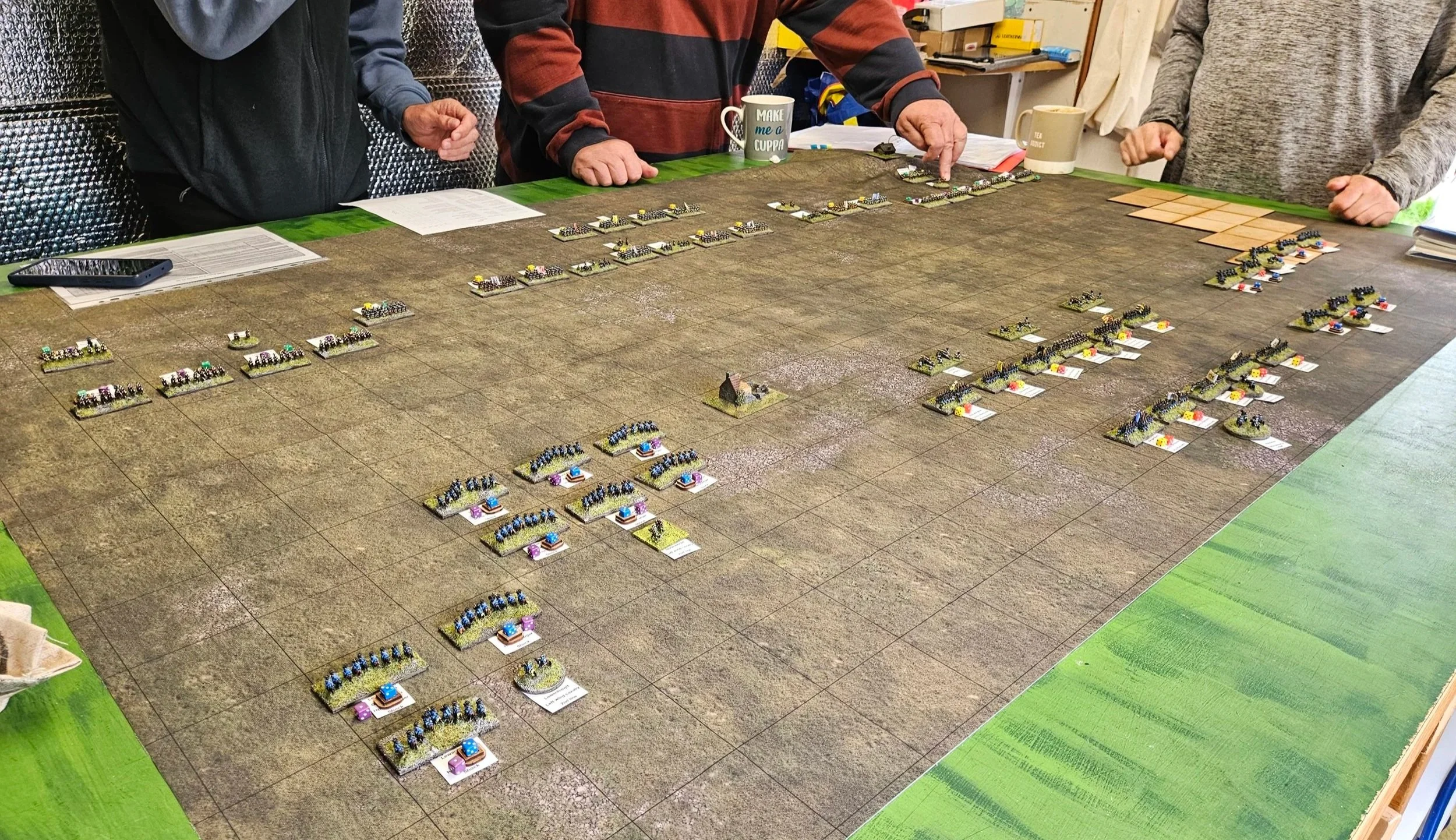
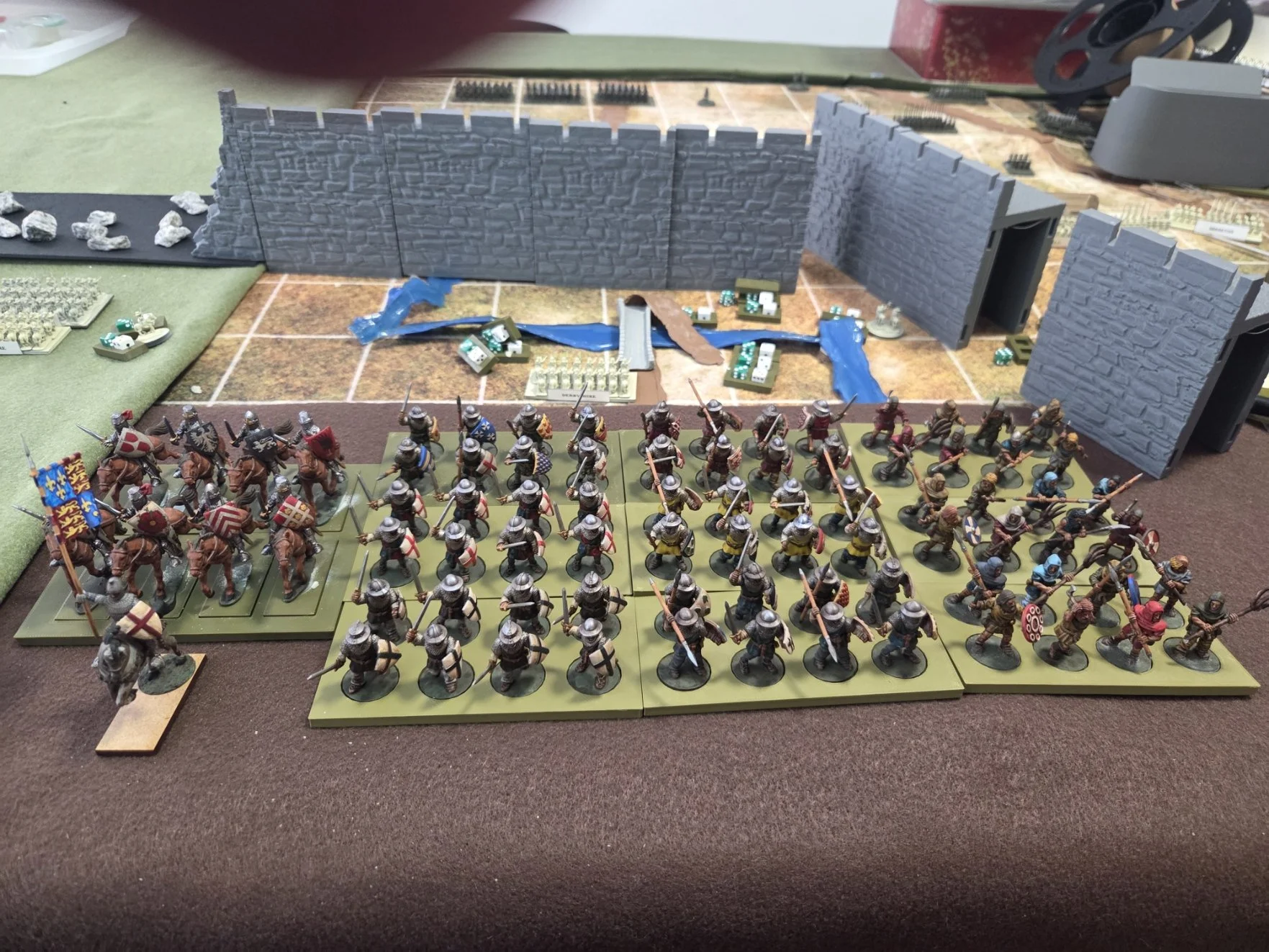
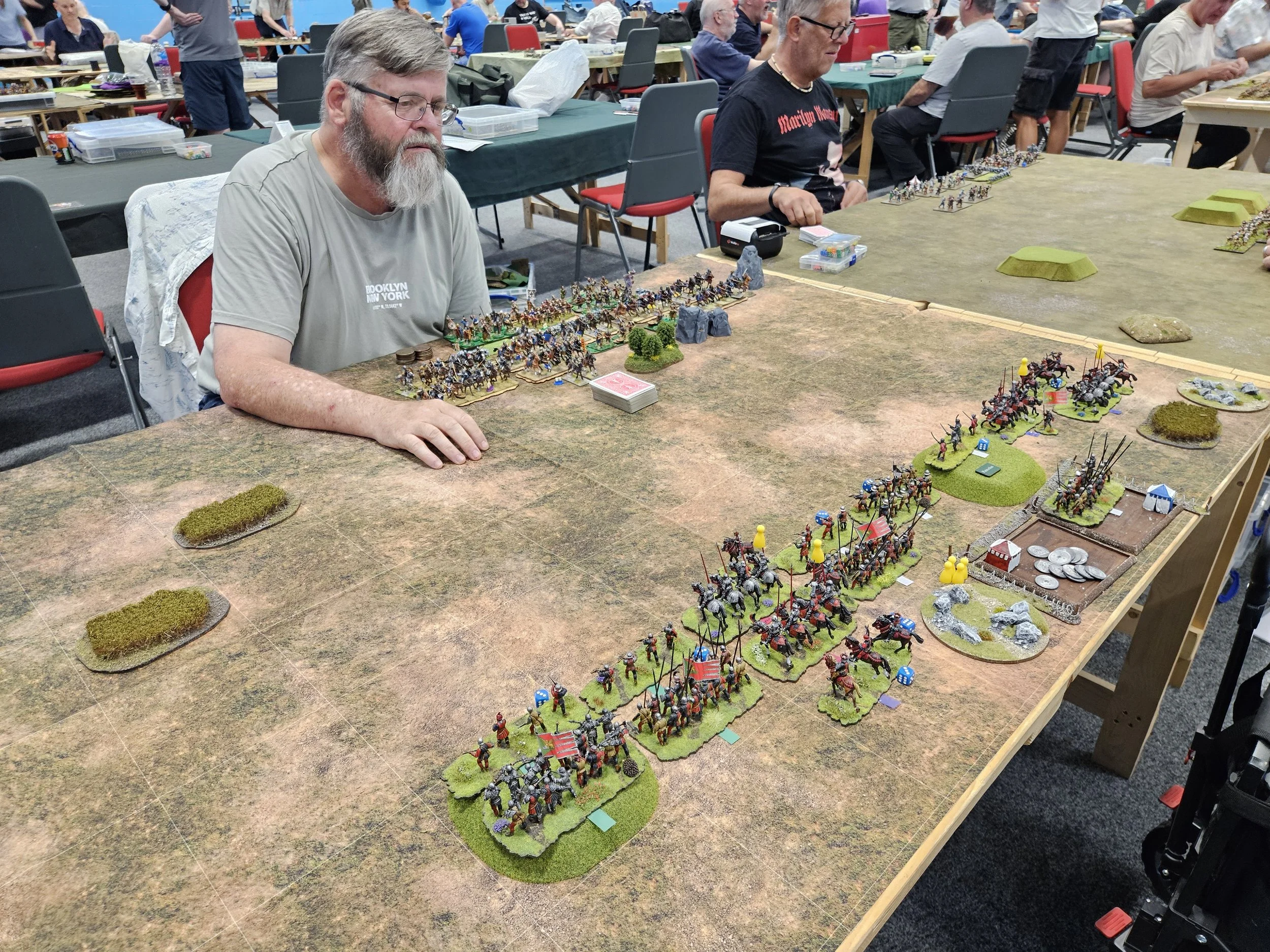
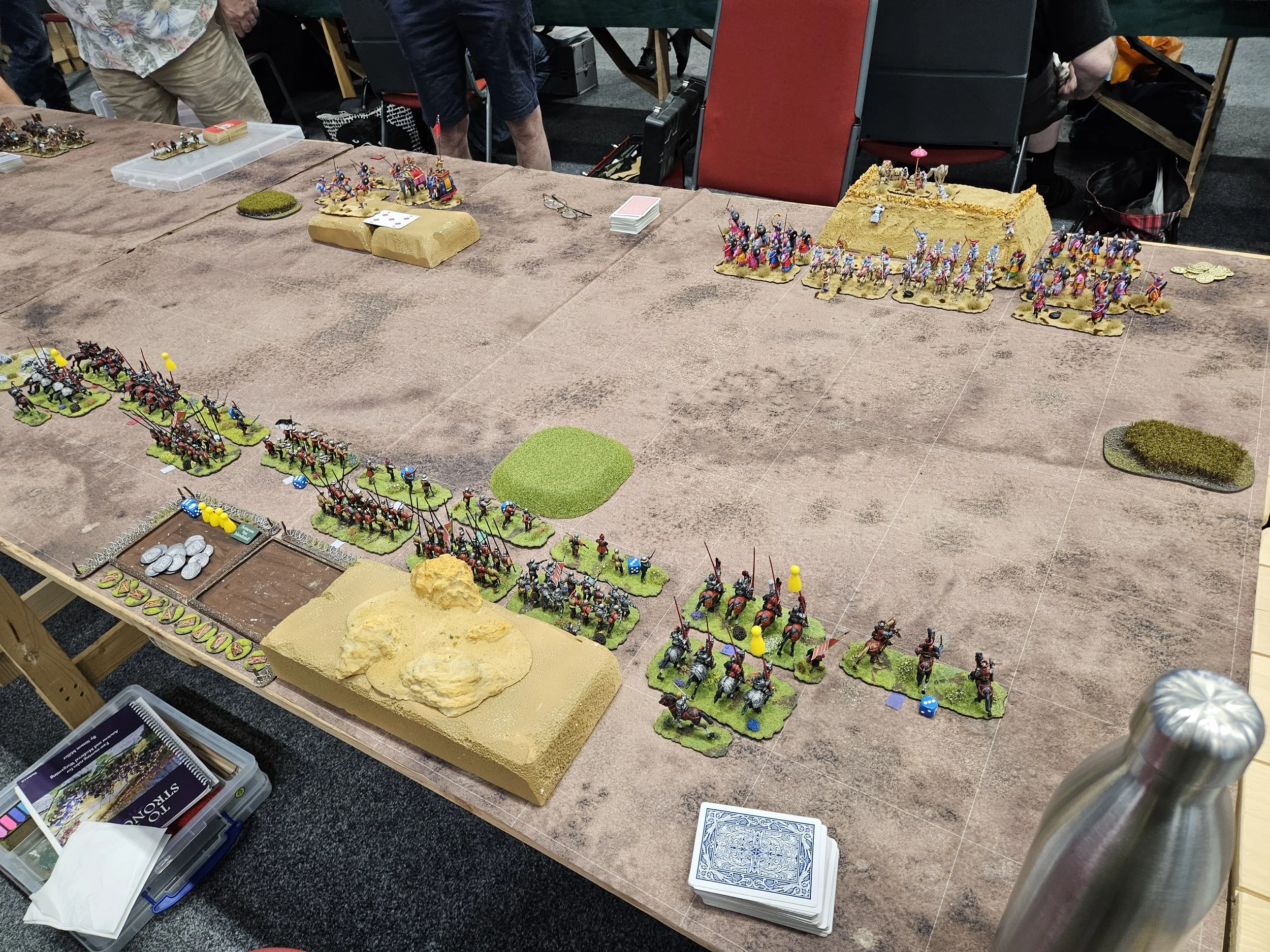
Britcon 26: The Warm-Up Game: Gauls vs Parthians

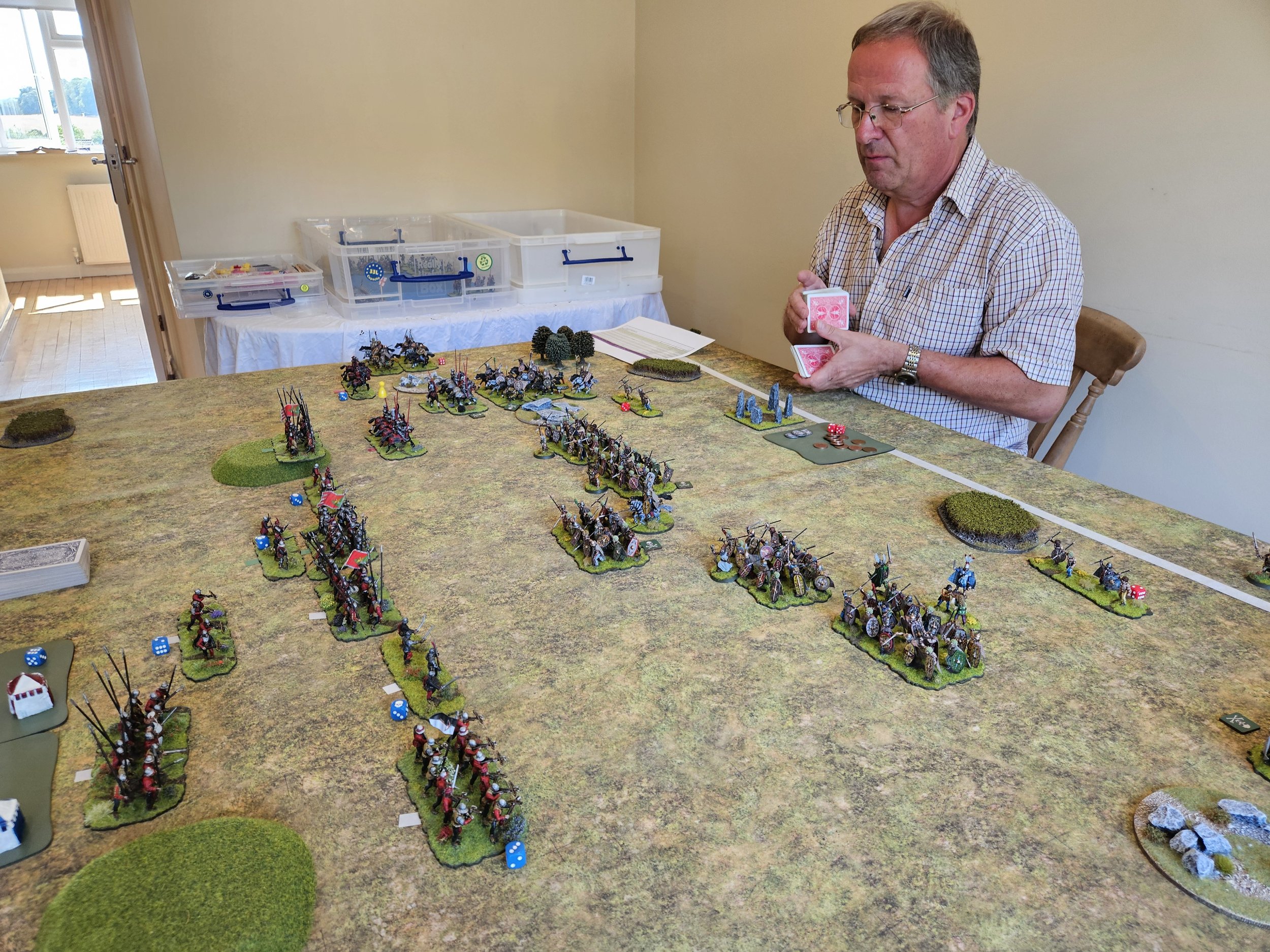
This year’s Britcon To The Smallest Tournament (five 140-point games over two days, with a practice session if you wanted on the Friday) was once again held at De Montfort University in Leicester.

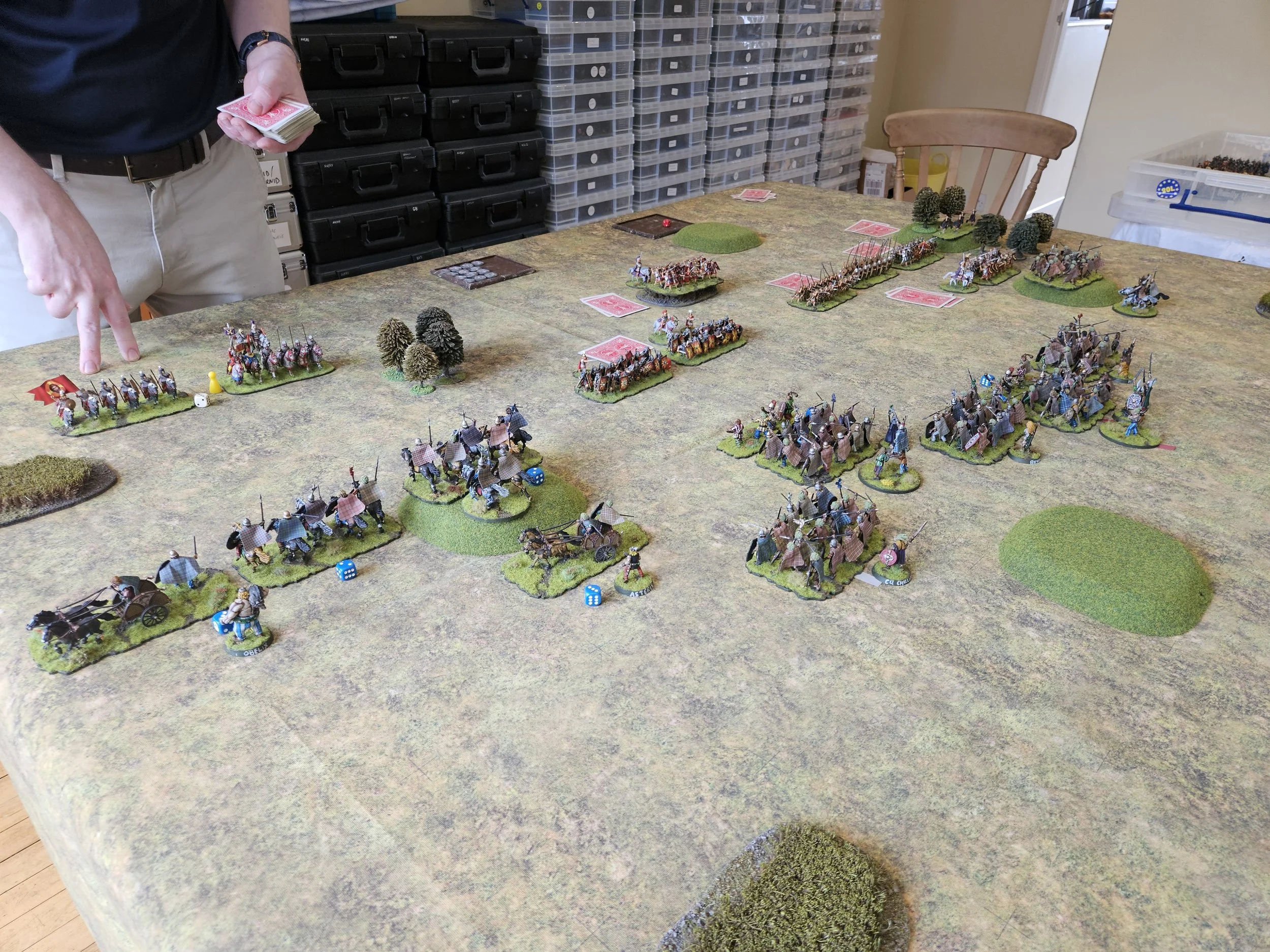
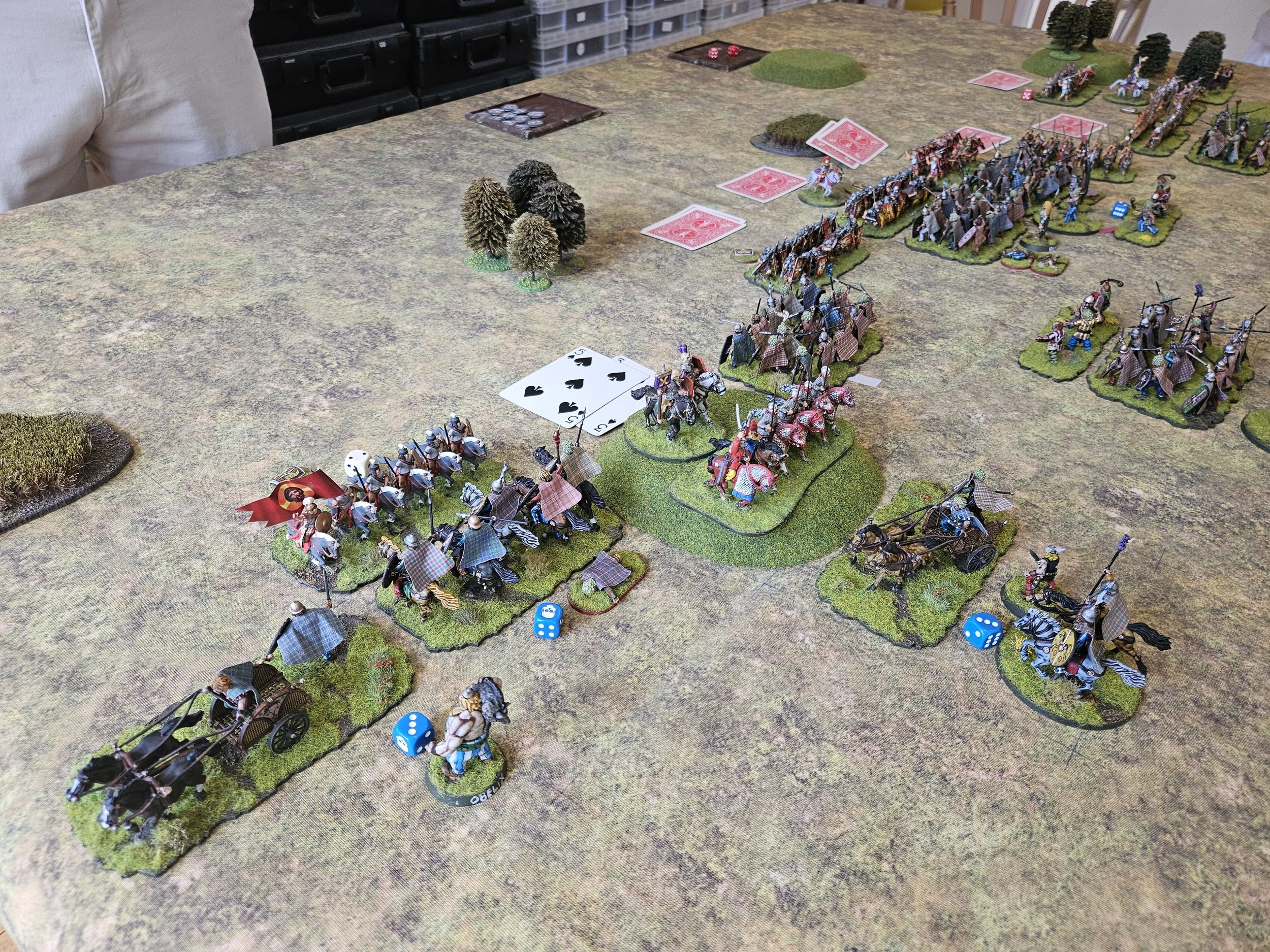
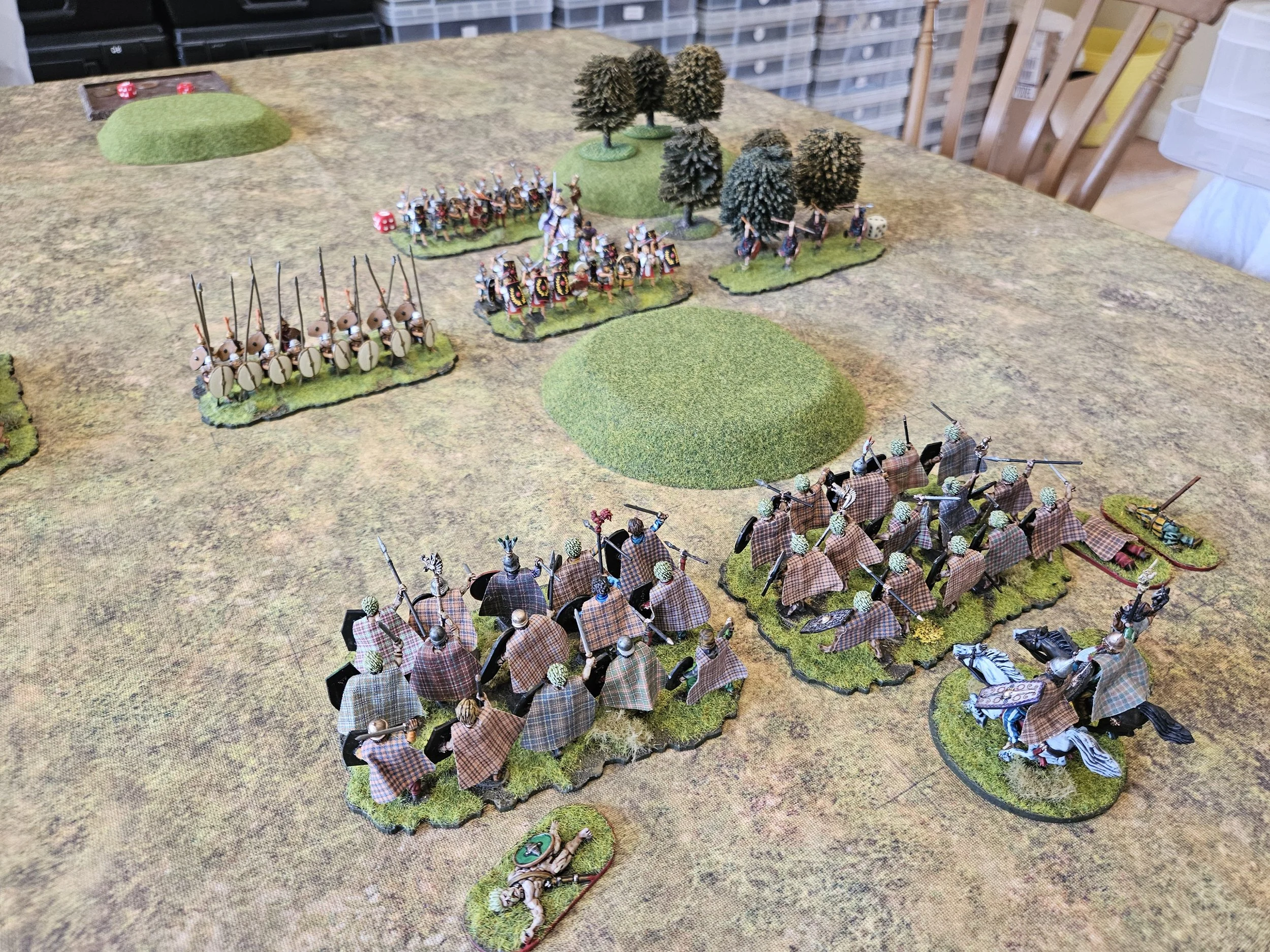
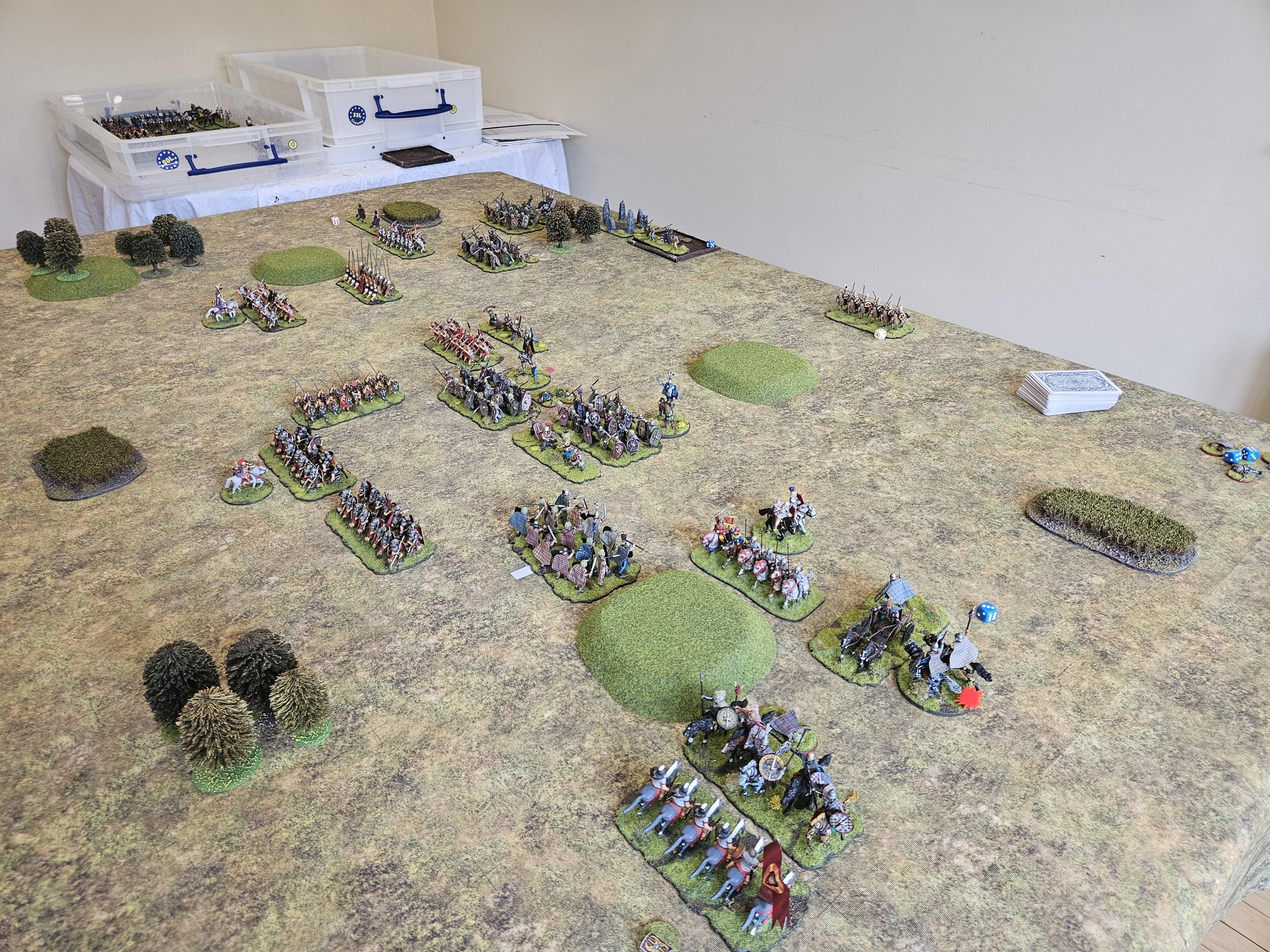
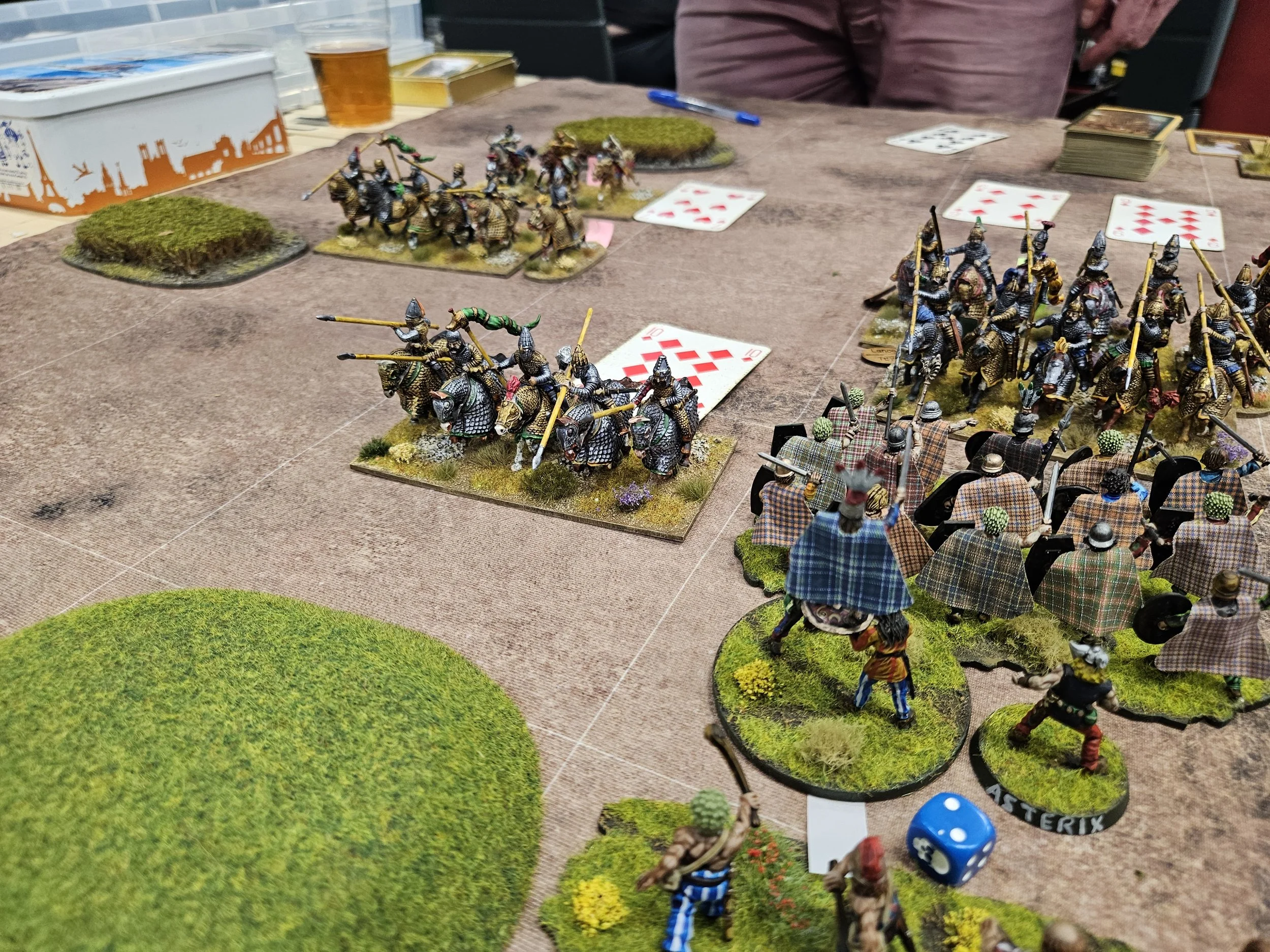
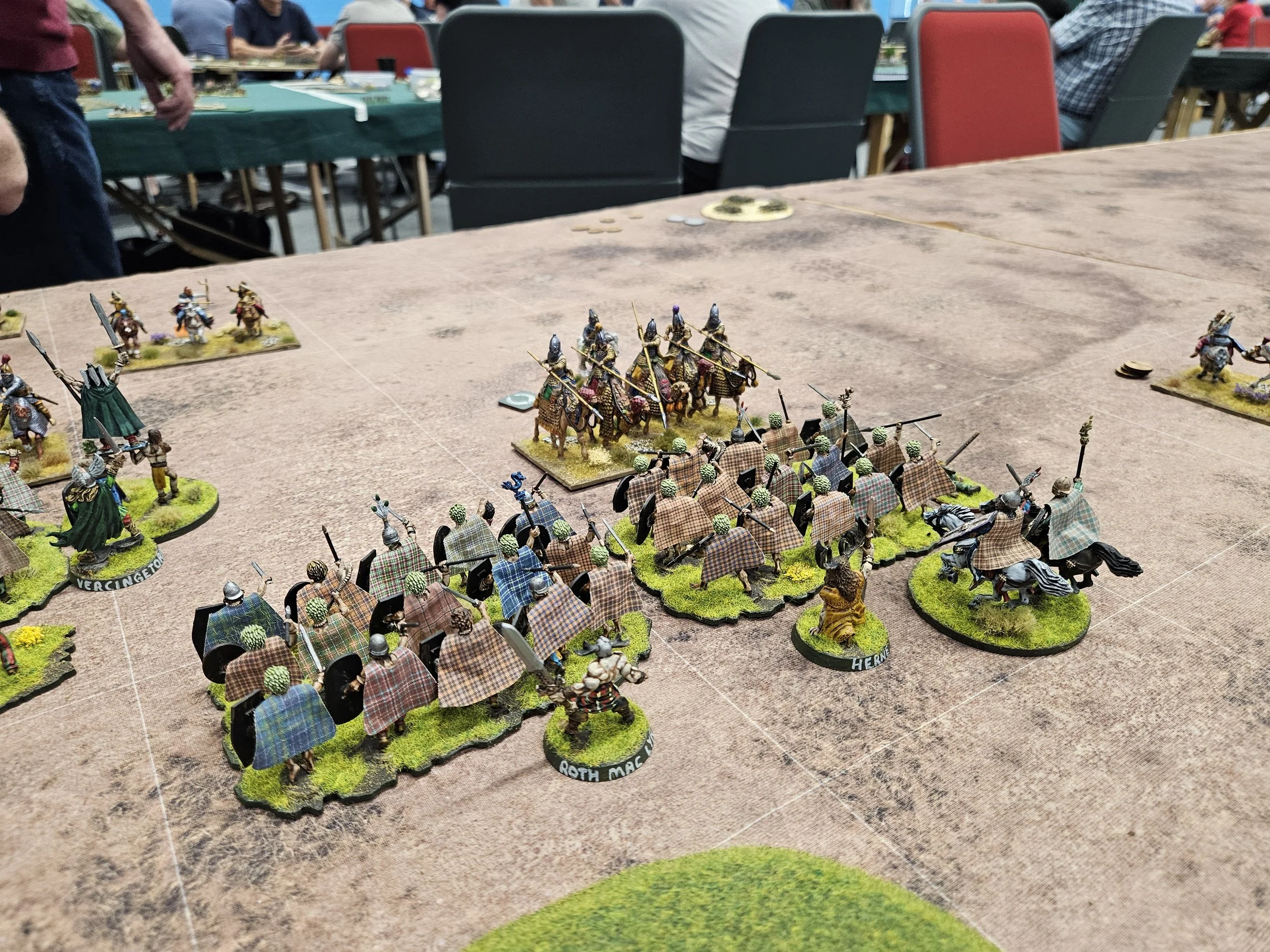
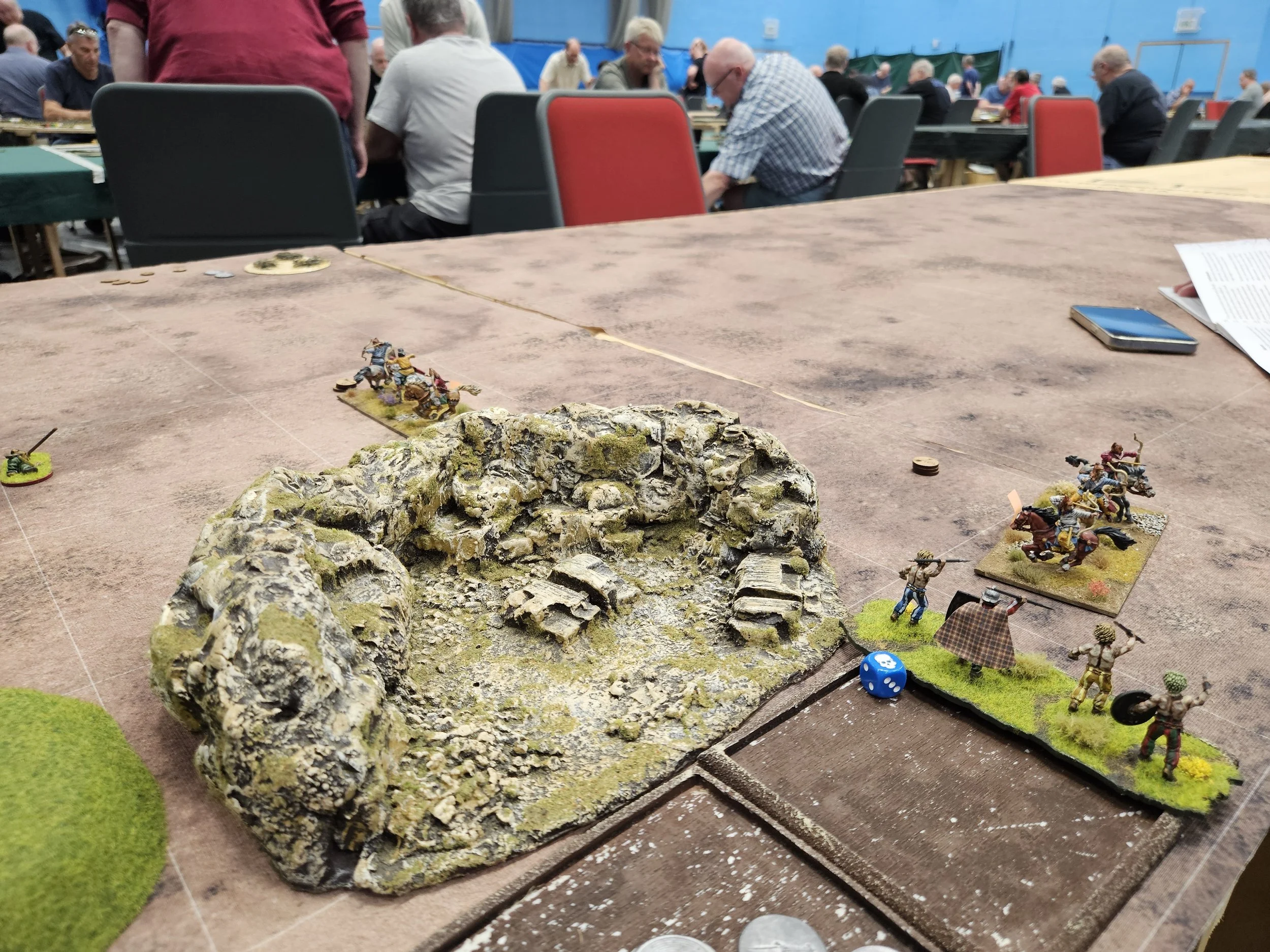
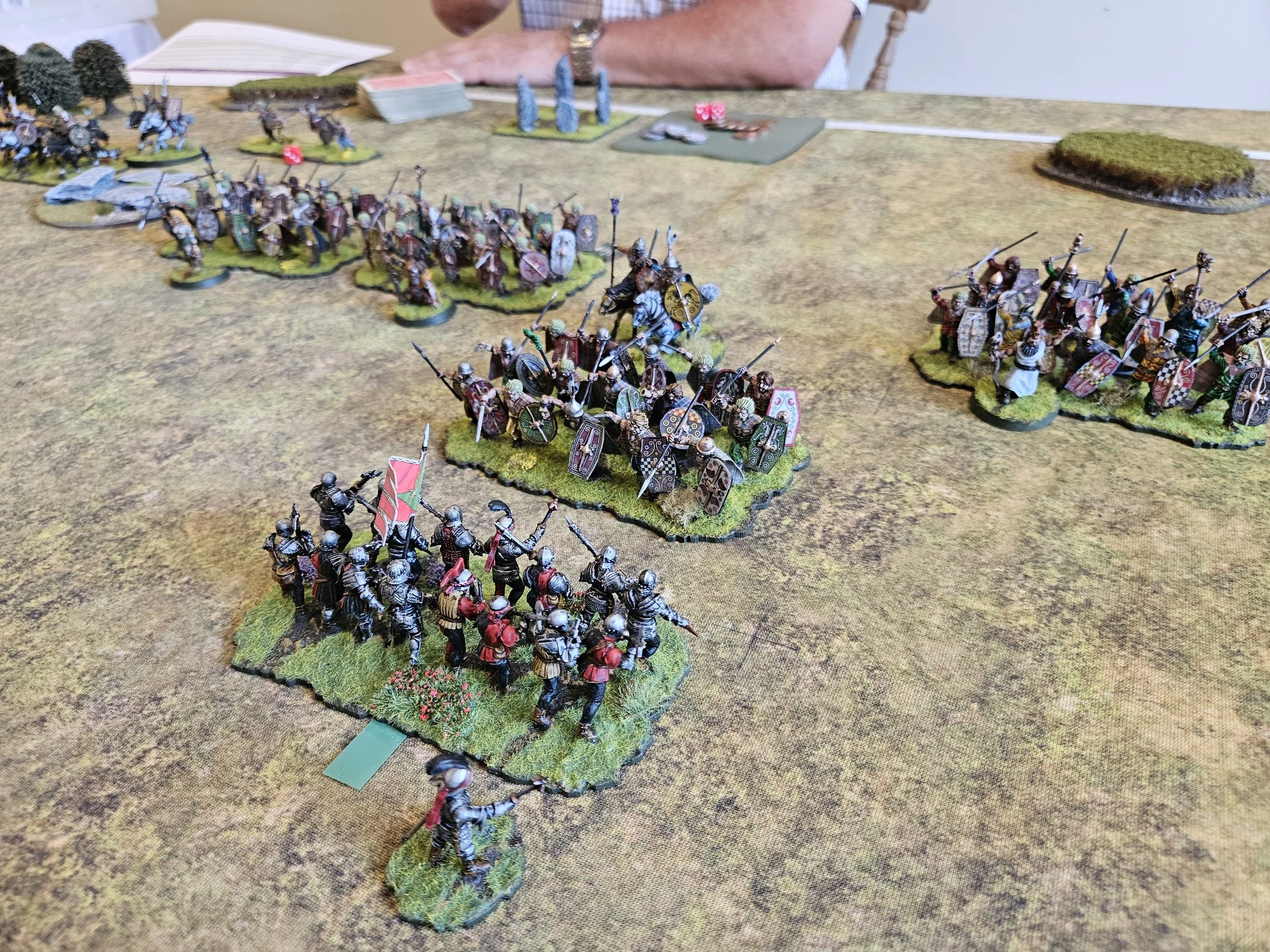
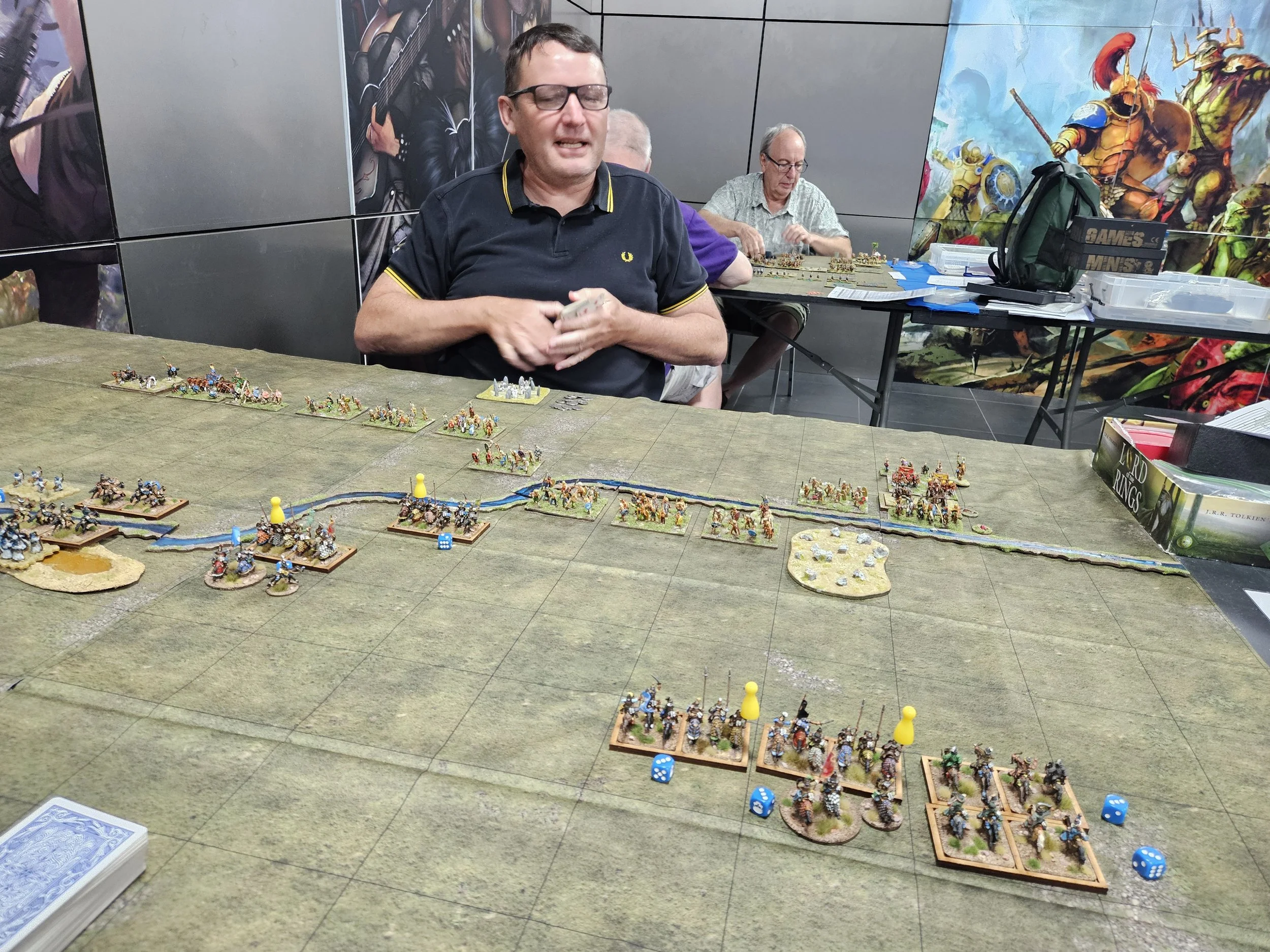
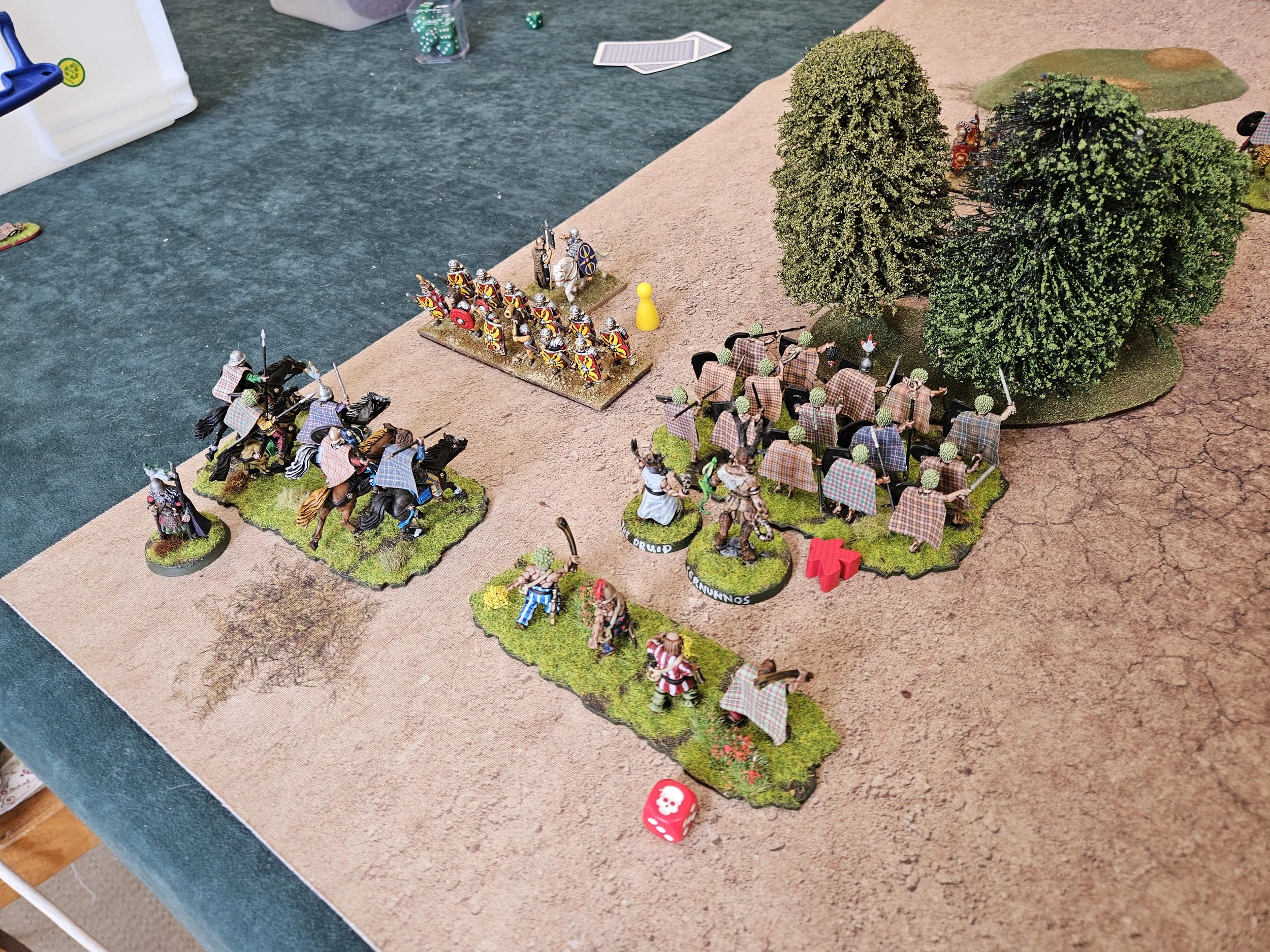
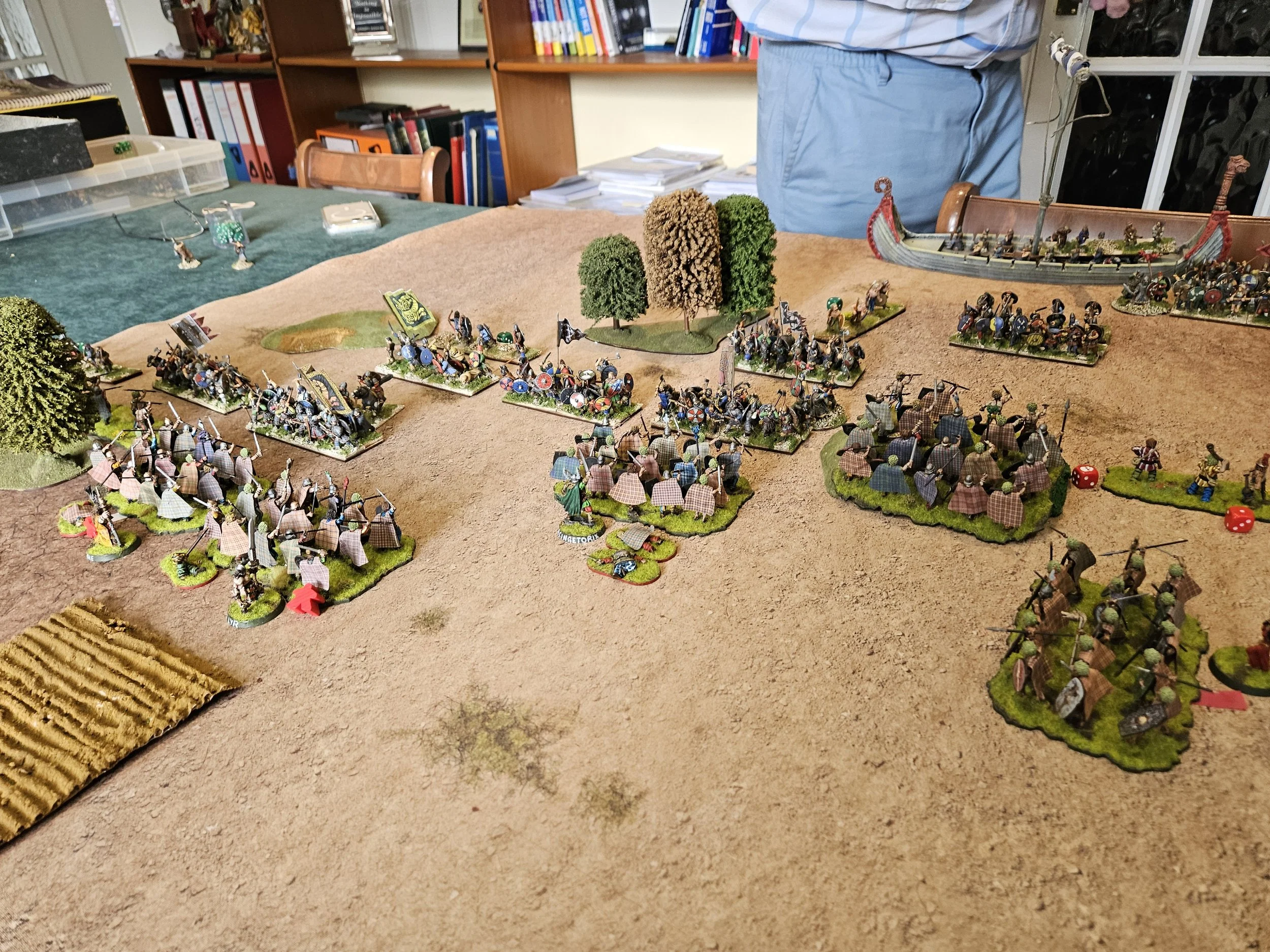
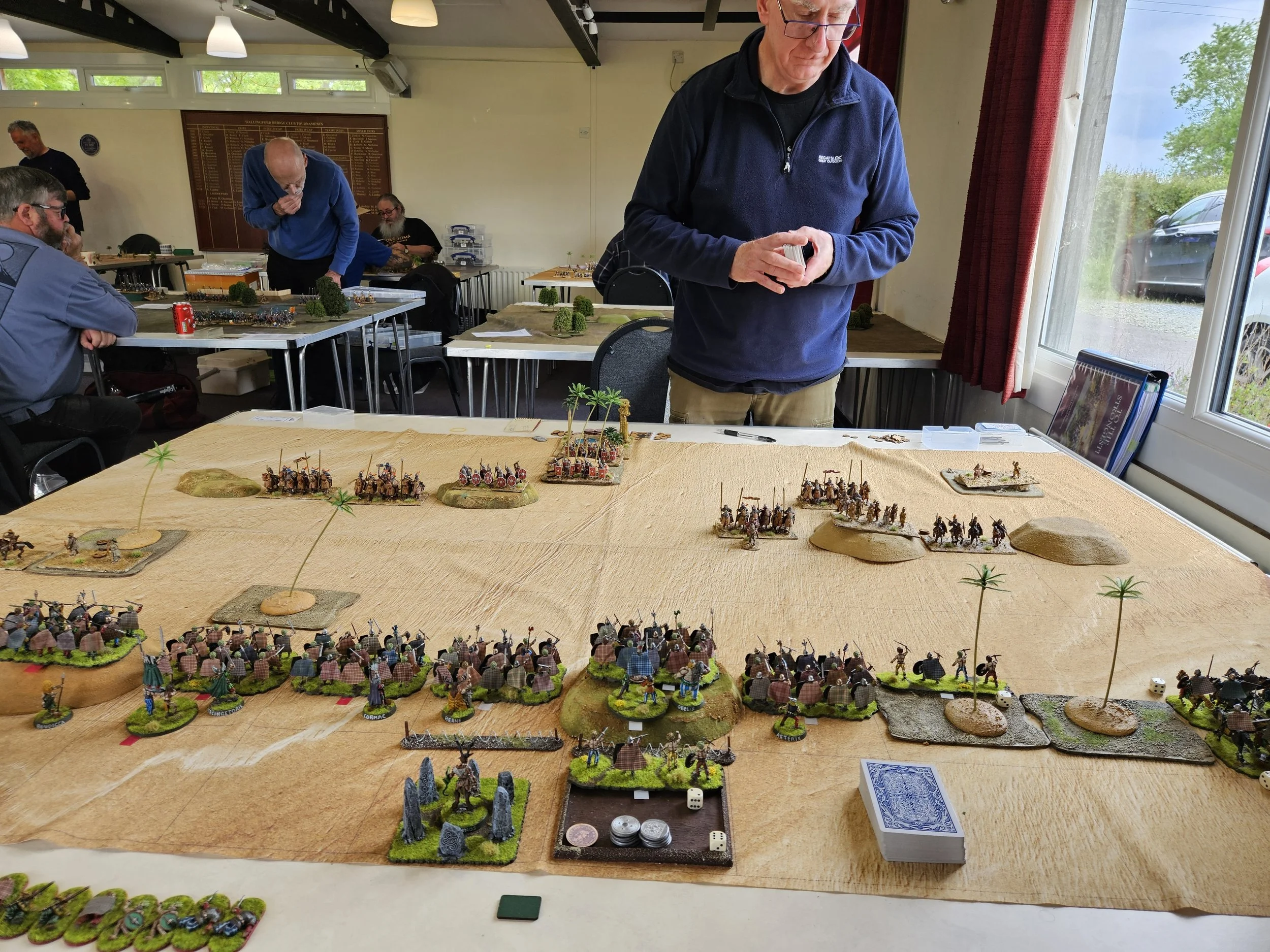
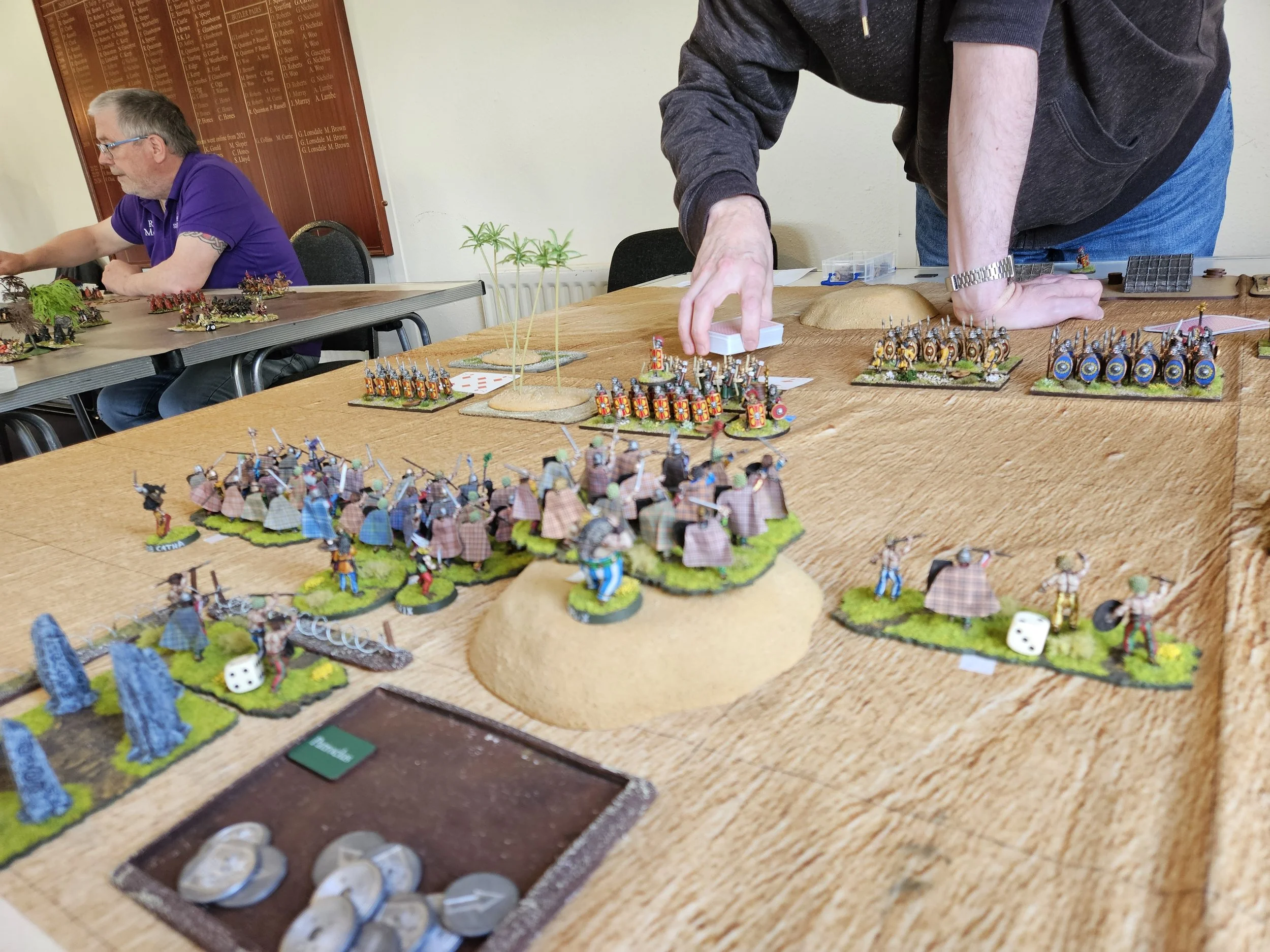
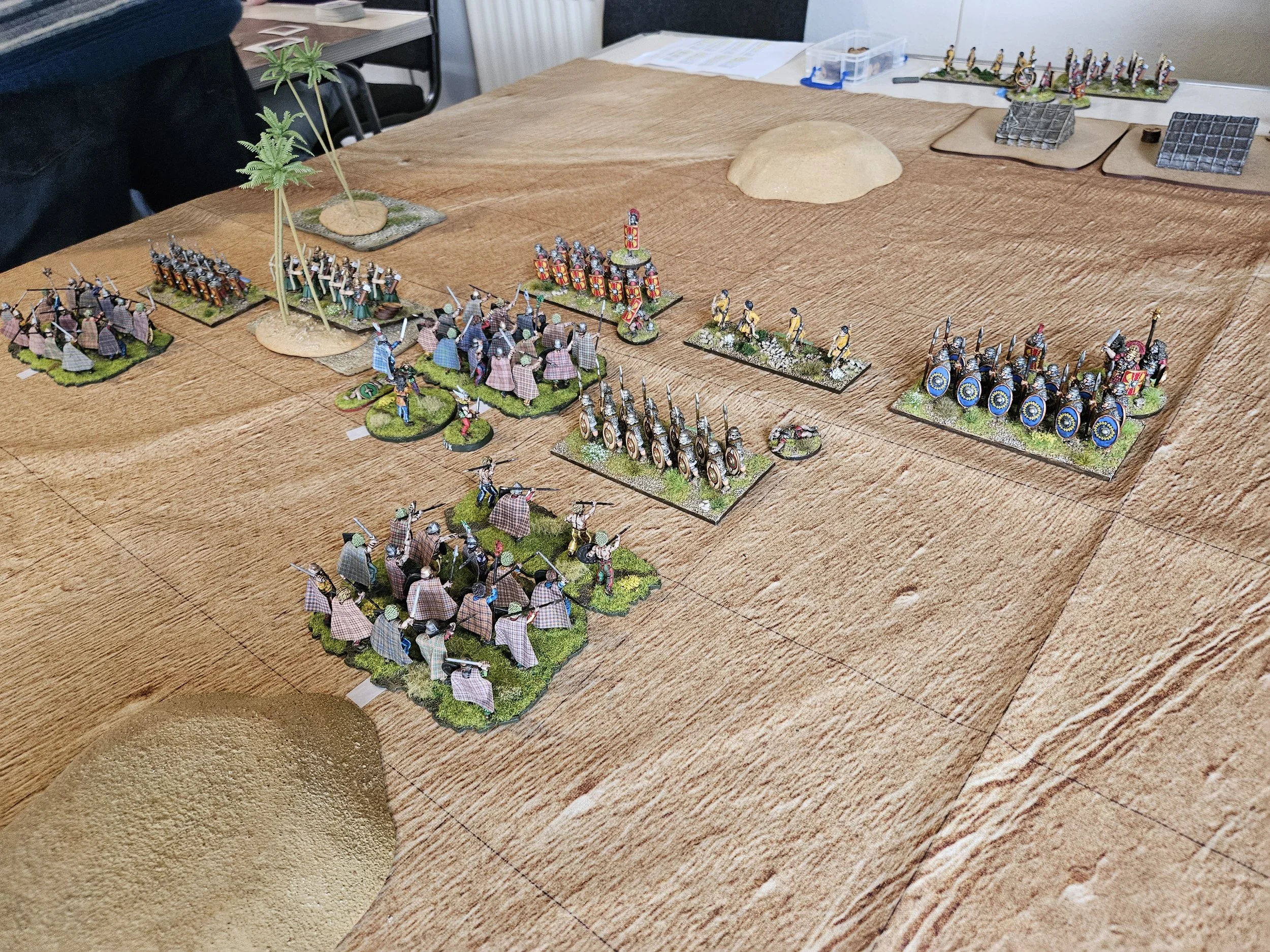
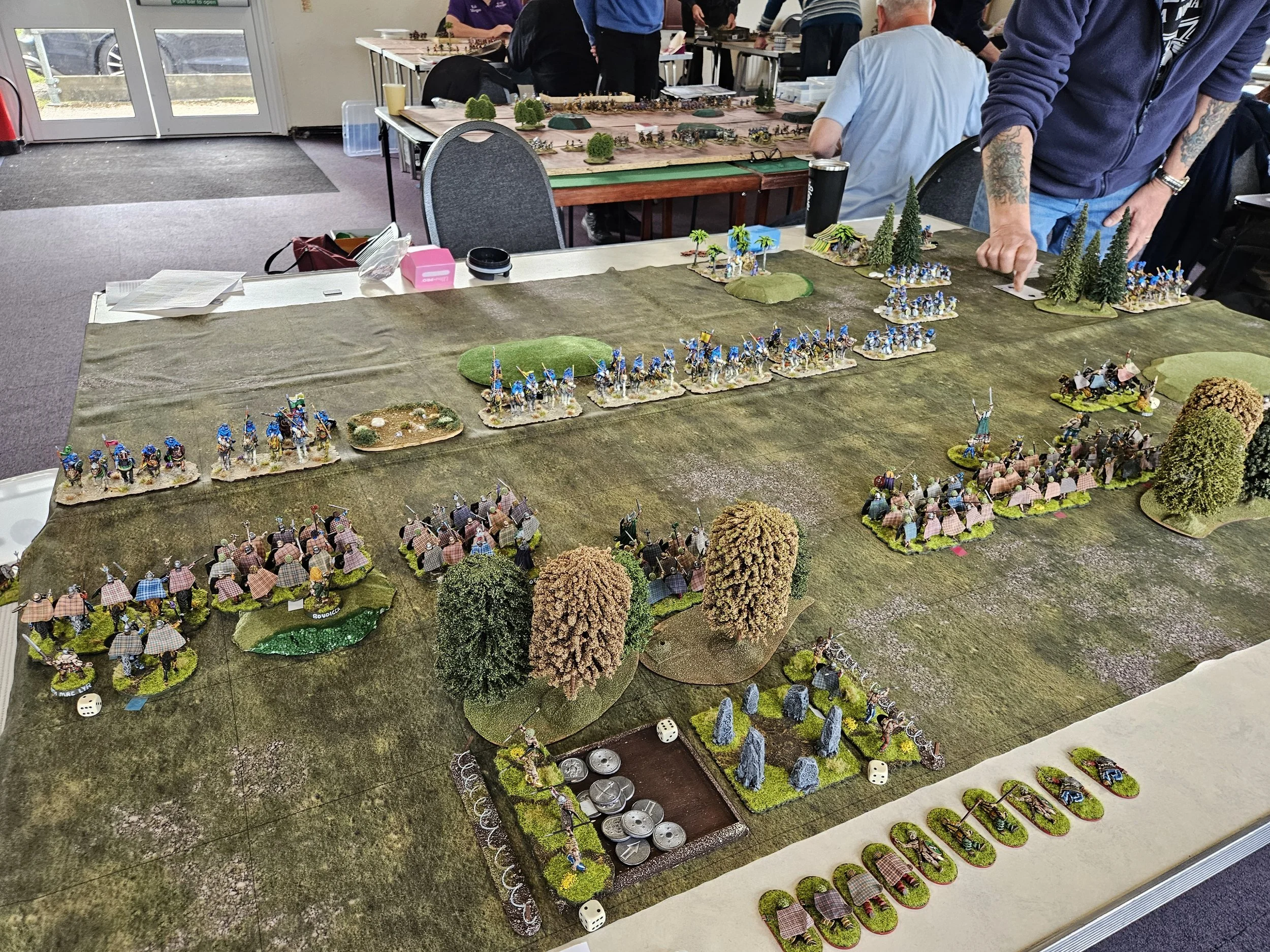
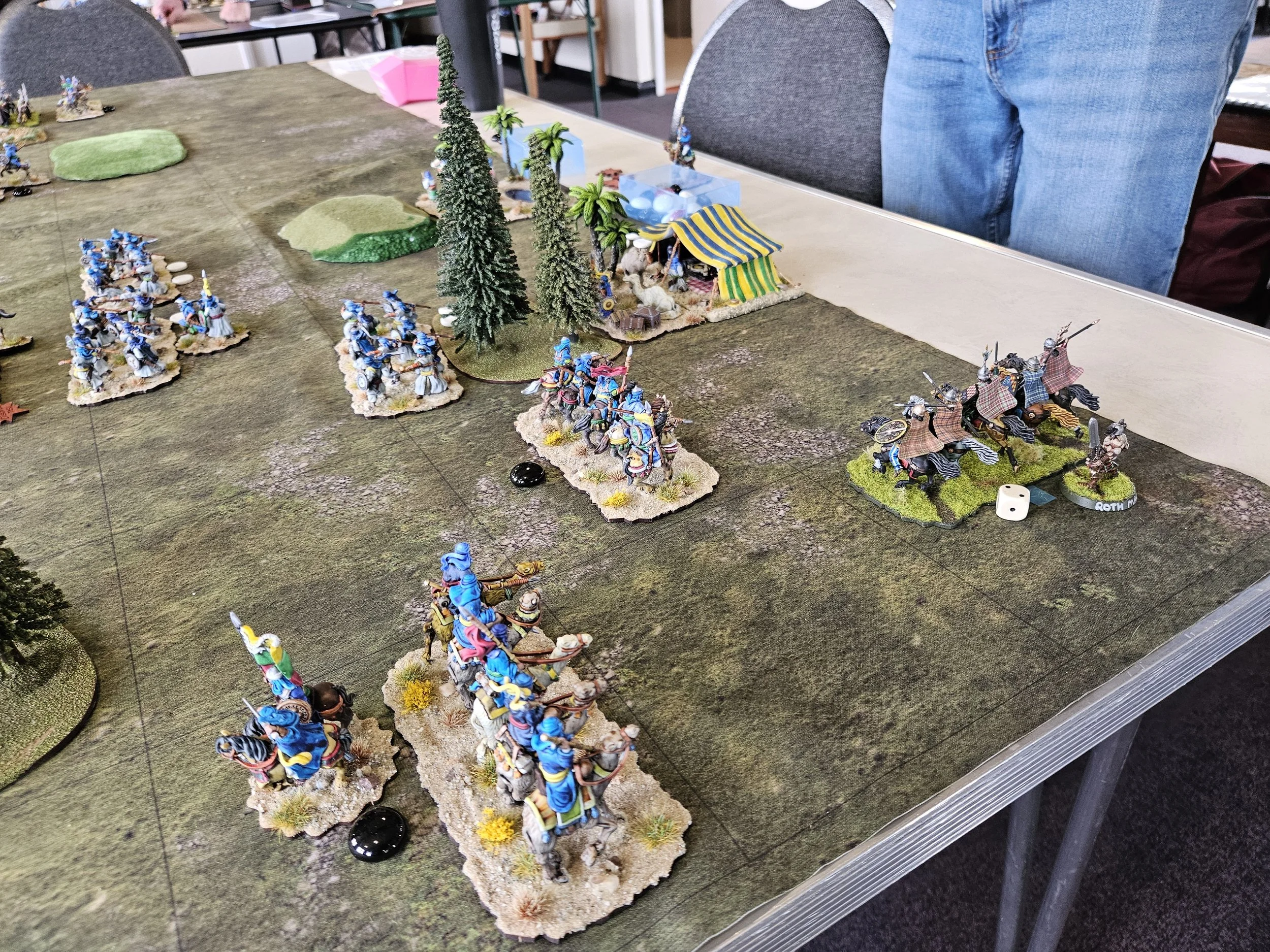
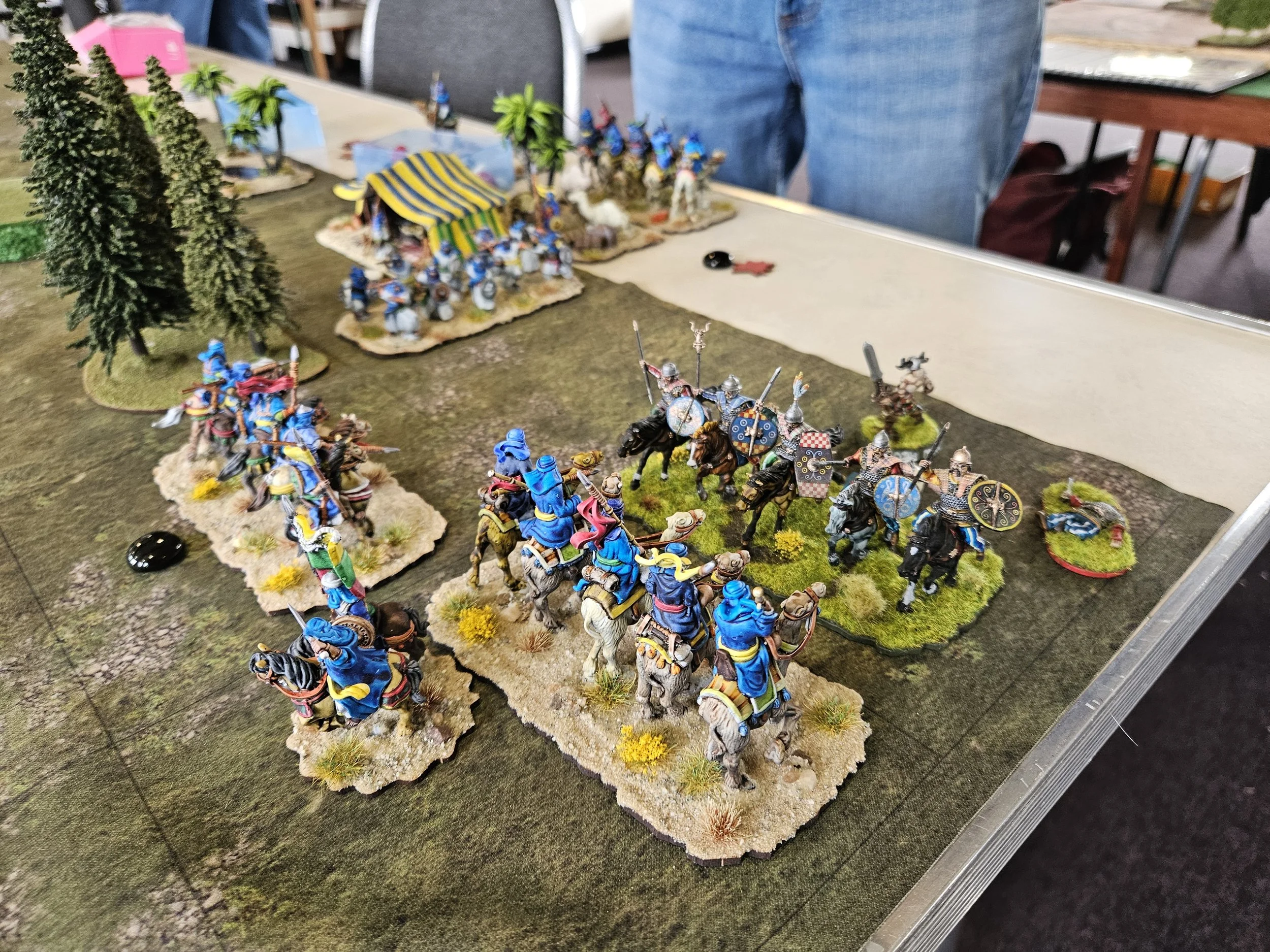
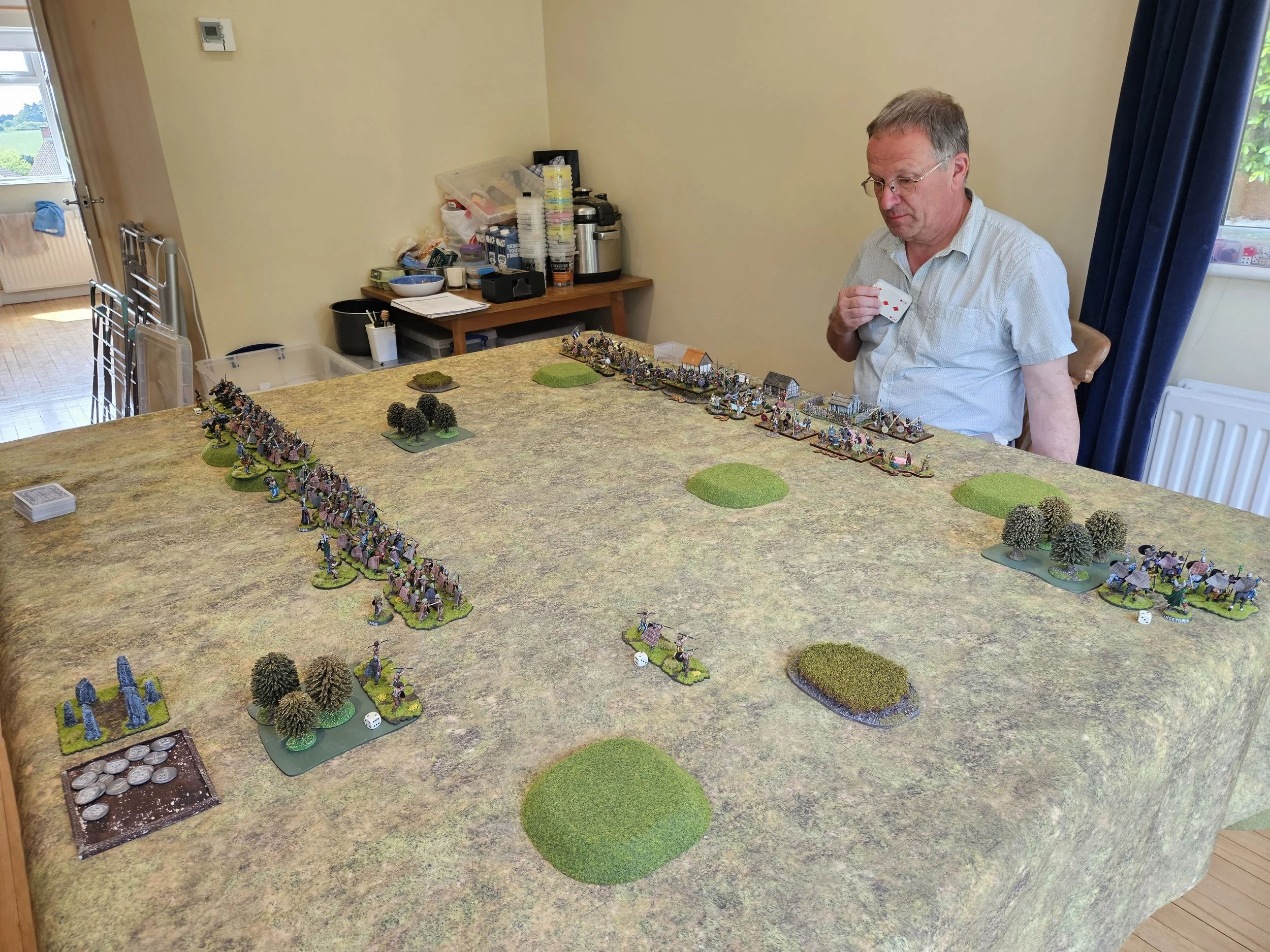
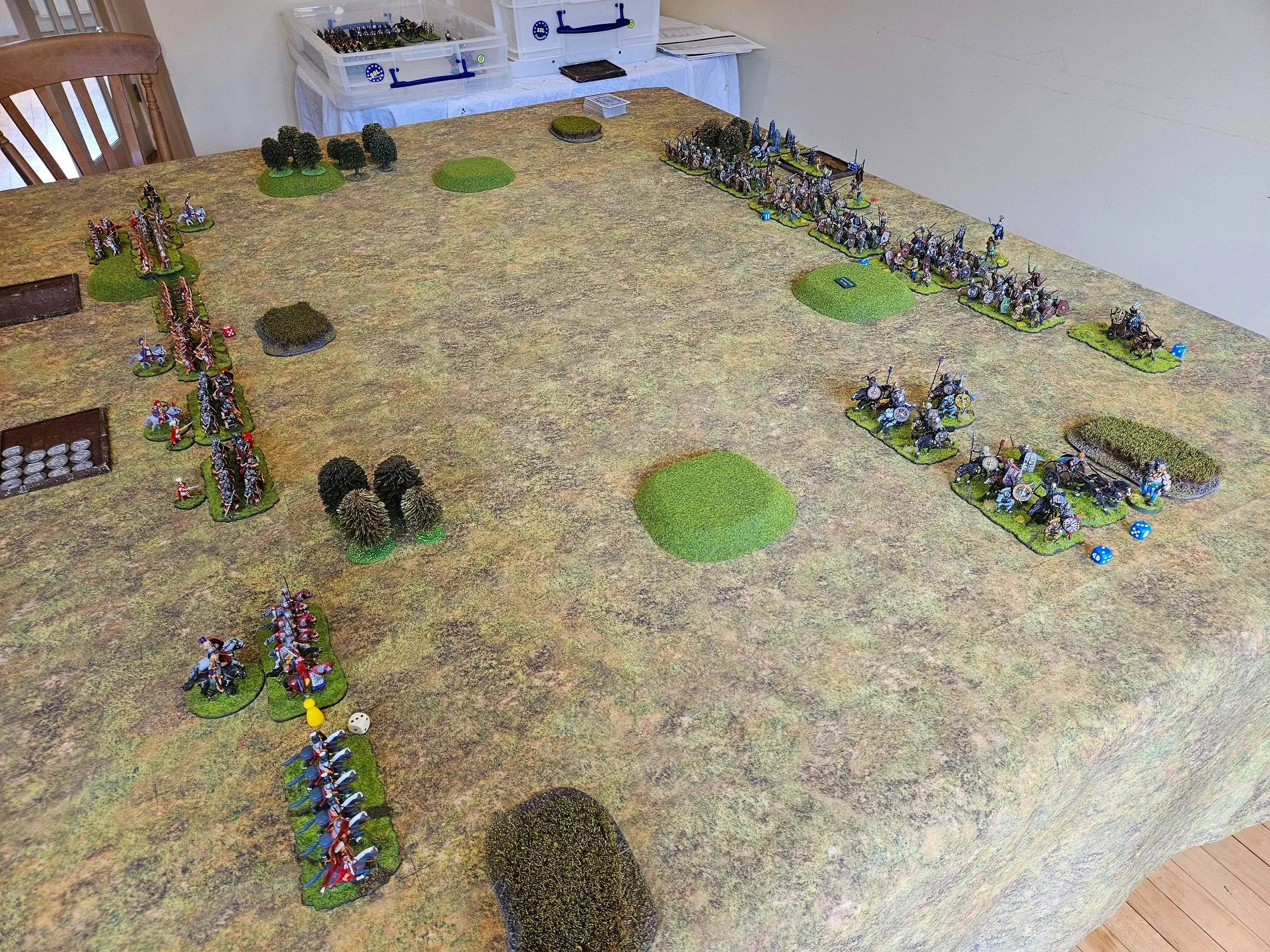
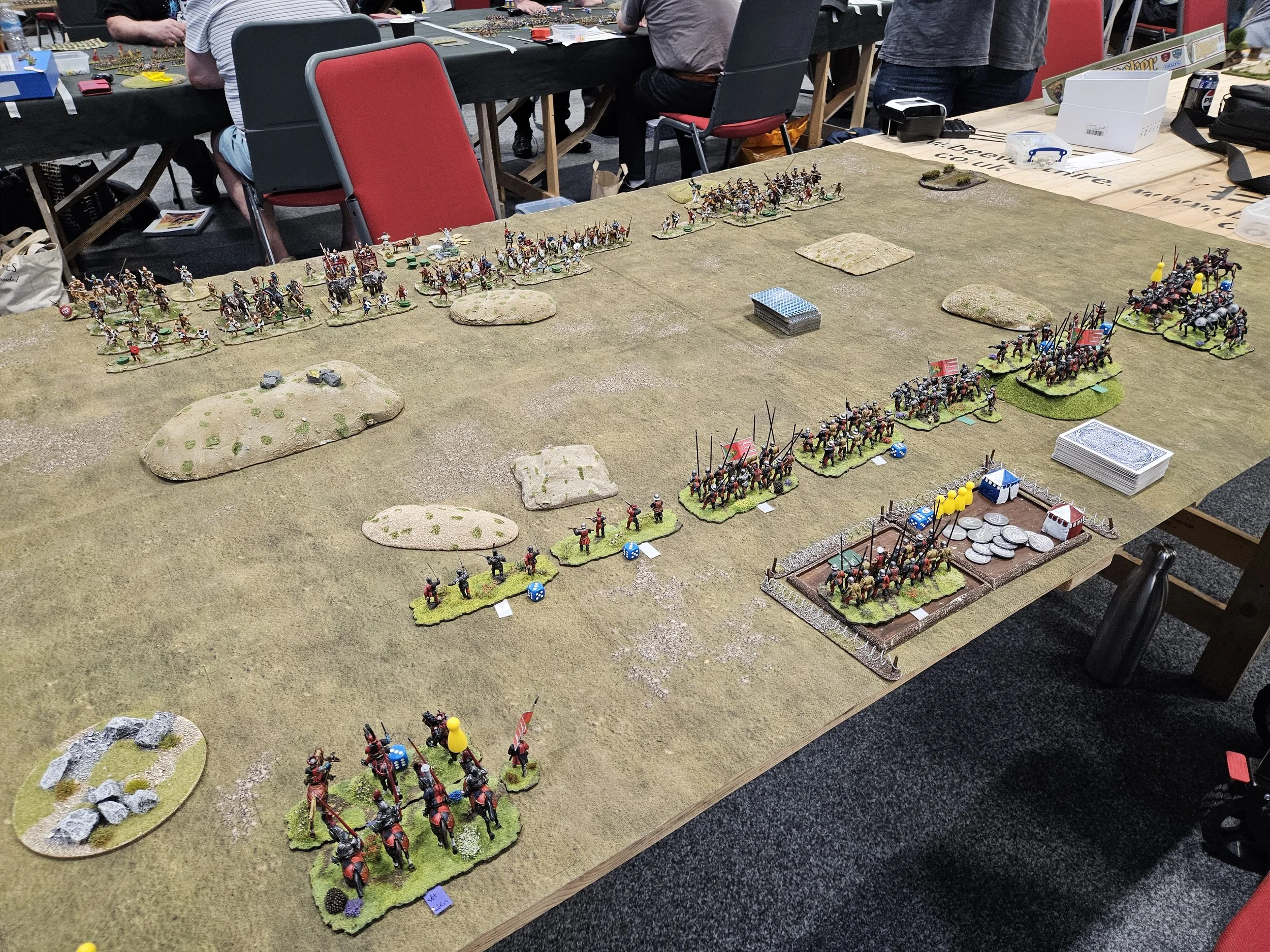
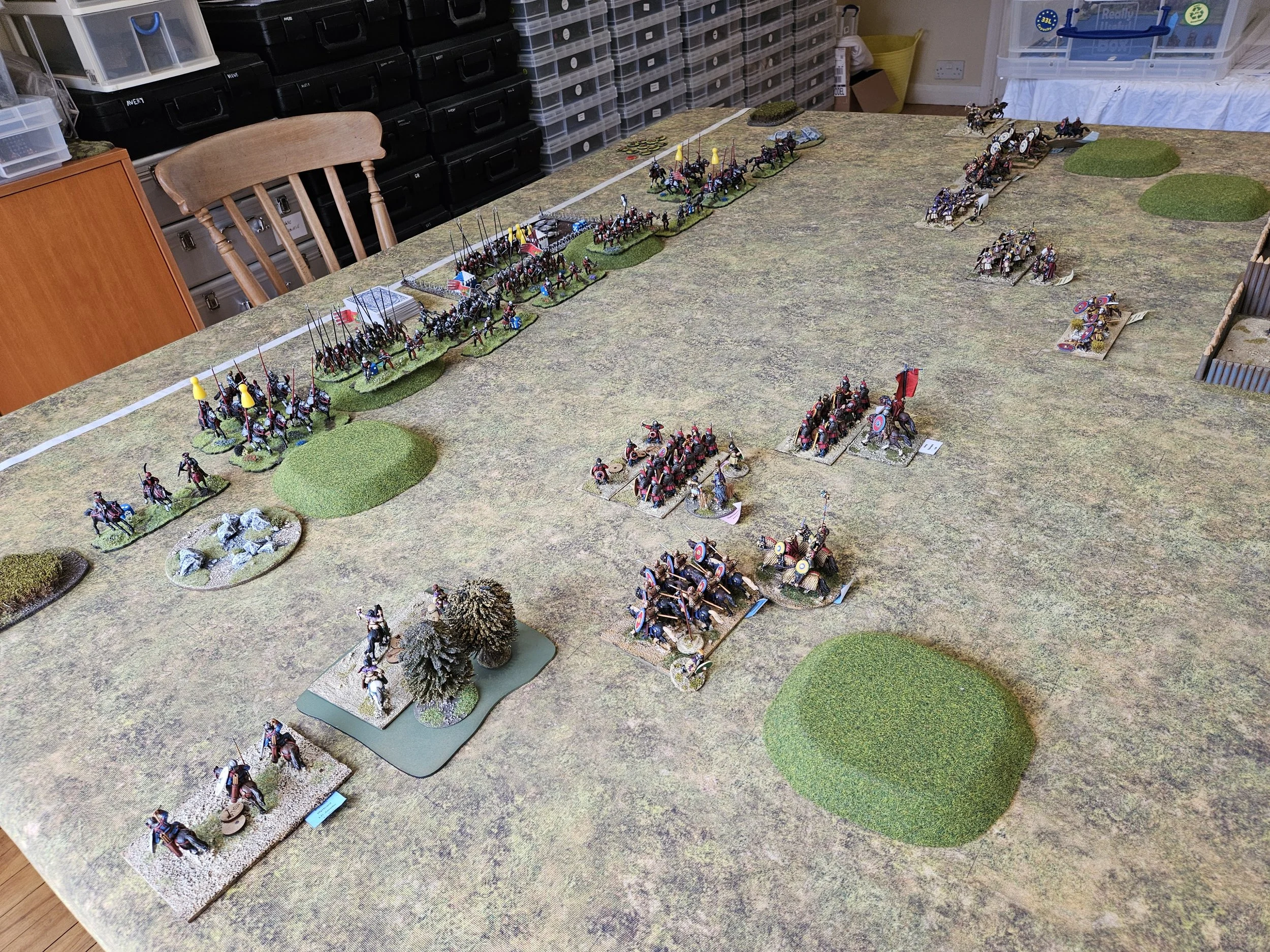
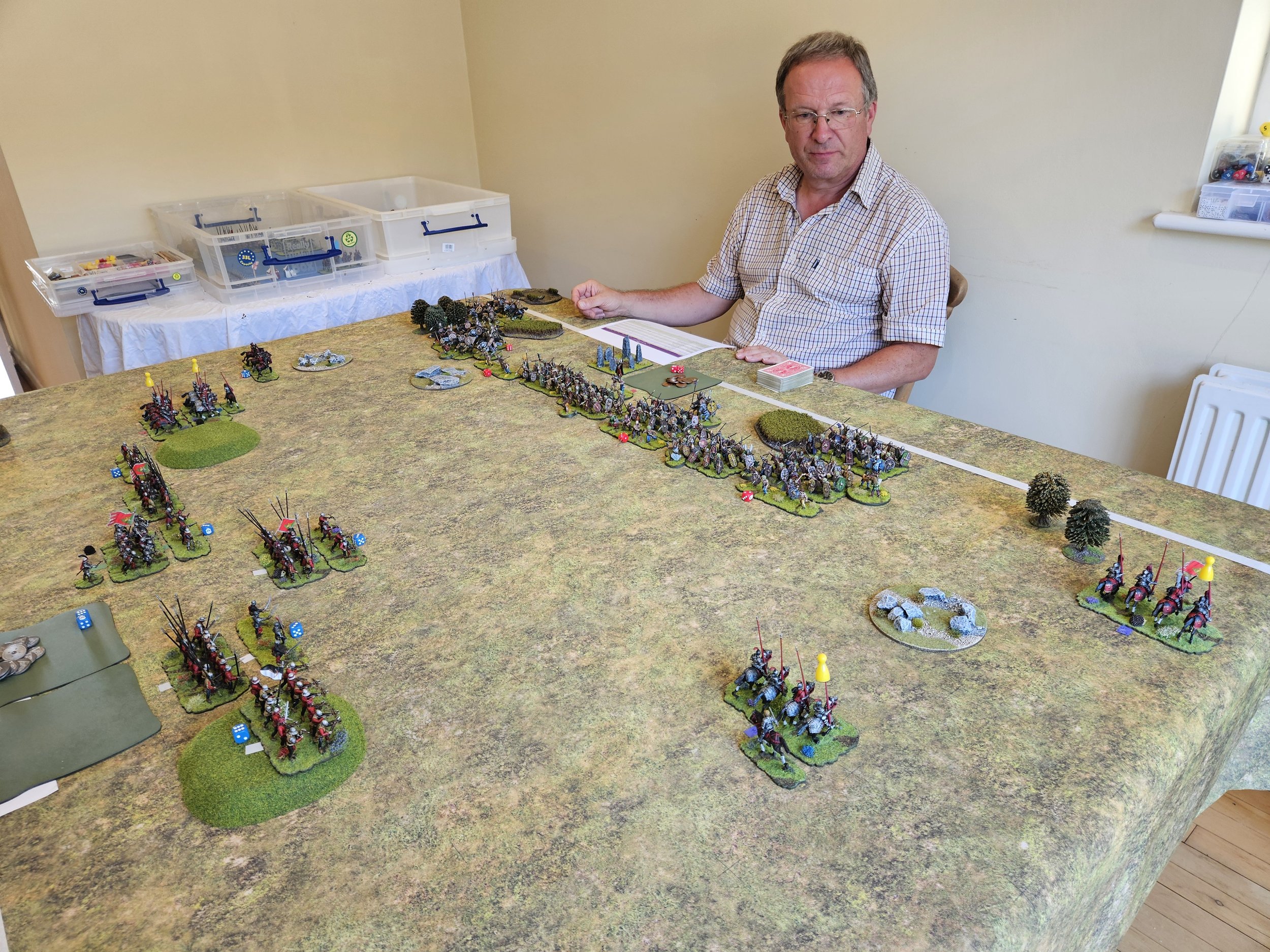
Again the traffic was awful, so my expected two hour journey up actually took me more like 3½ hours, with the result that all the early birds had already started their practice games, leaving me no-one to play with. Fortunately Tim took pity on me and volunteered to play a second practice game, so it was time for my Gauls to face off against his Parthians.

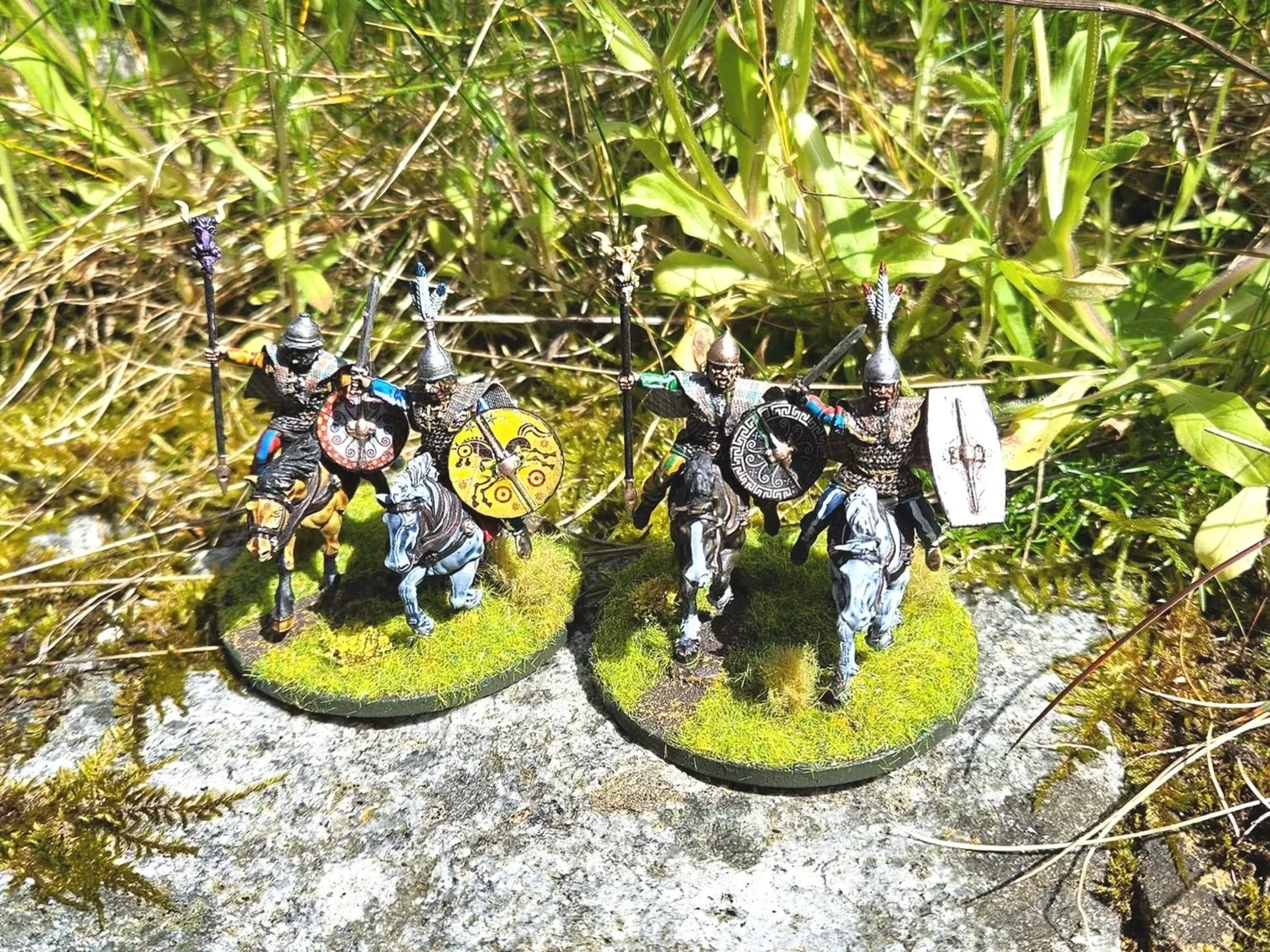
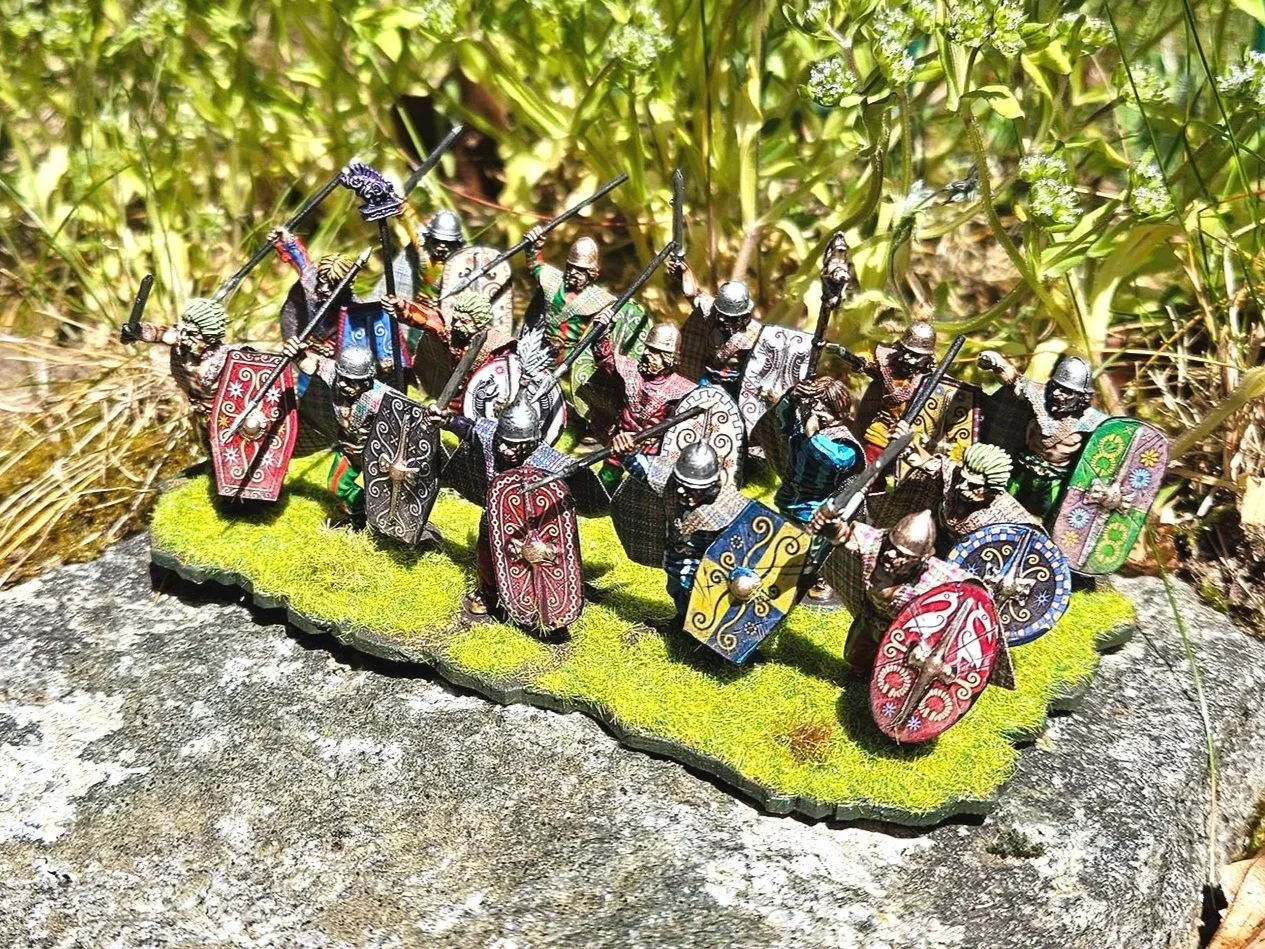
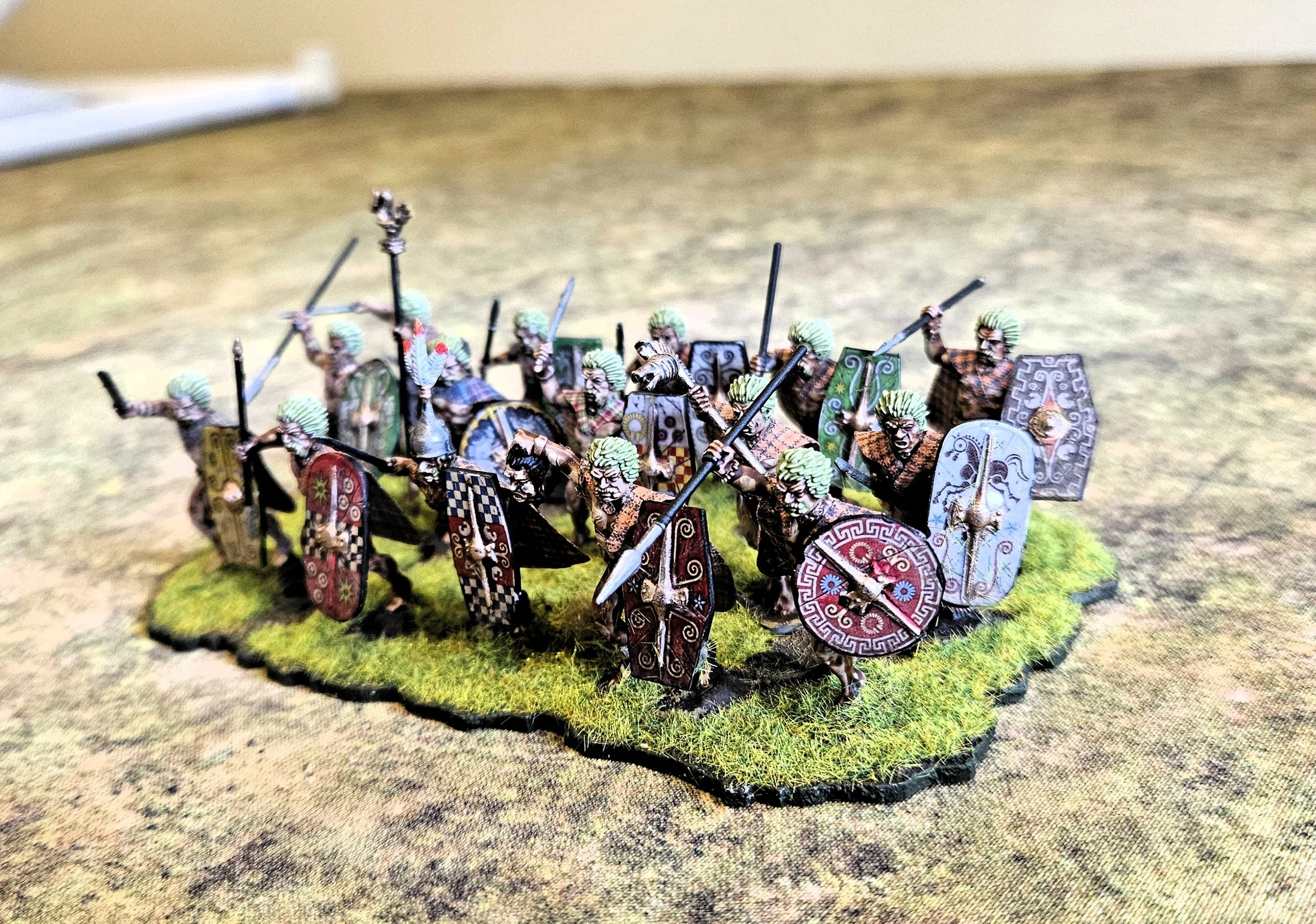
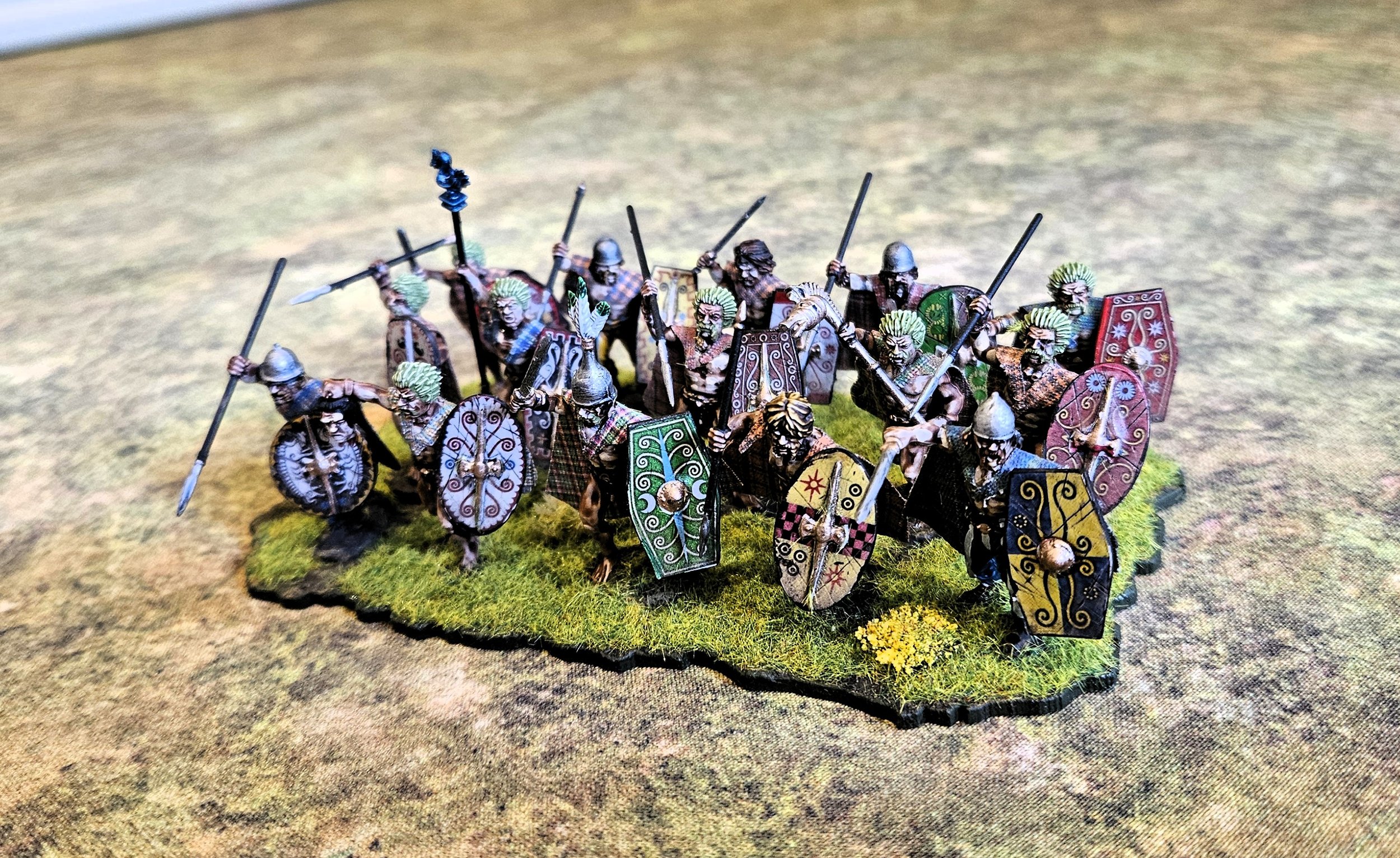
Why the Gauls, you ask, as I was due to field my usualy Venetians? Well, I had organised for a reserve player to be there on the Saturday in case any of the main entrants had to drop out, and brought the Gauls up for them to use if necessary…and I didn’t want to have taken all the trouble to bring Asterix and friends up without using them, so using the Gauls in the practice game seemed like the thing to do!

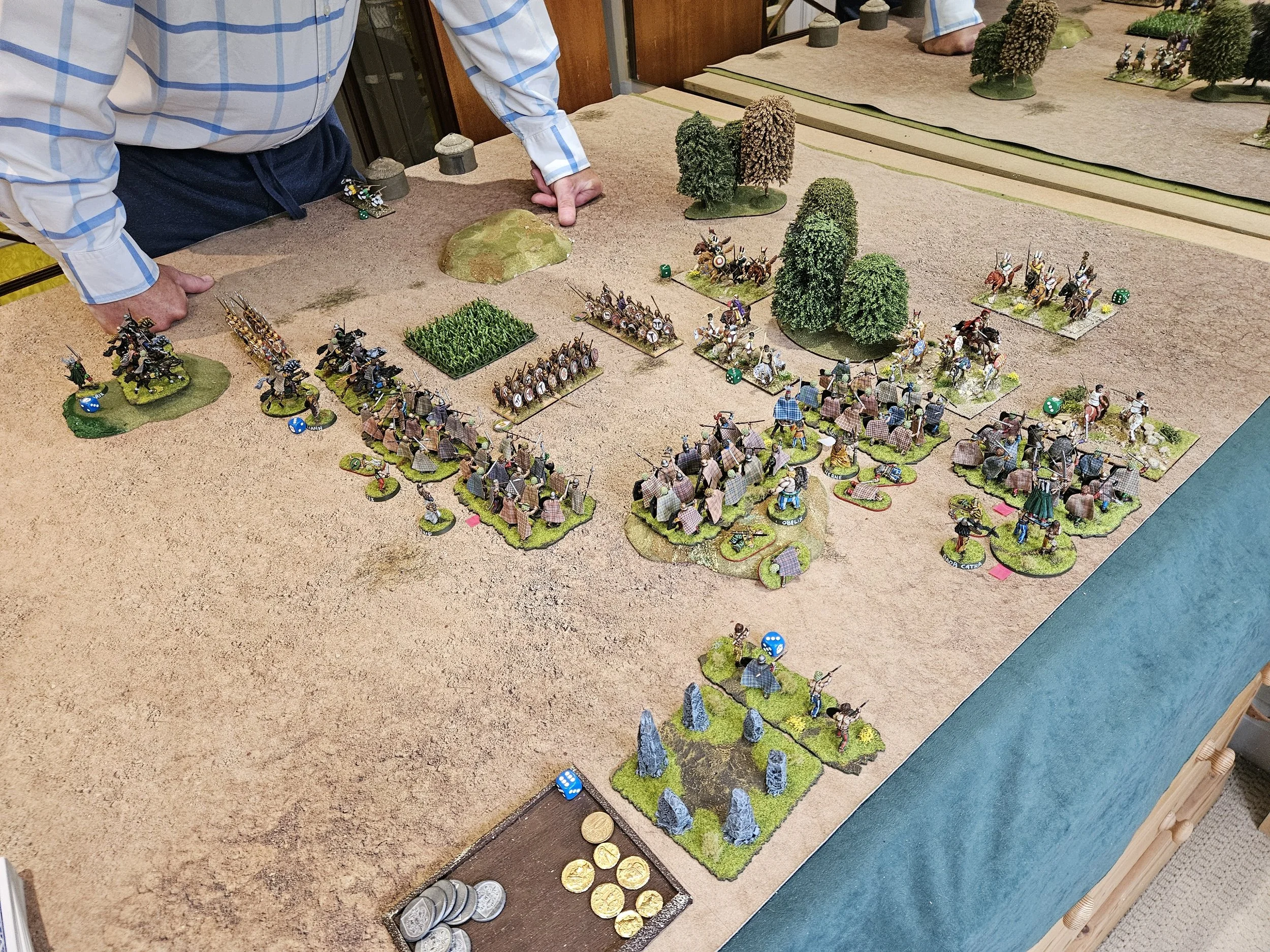
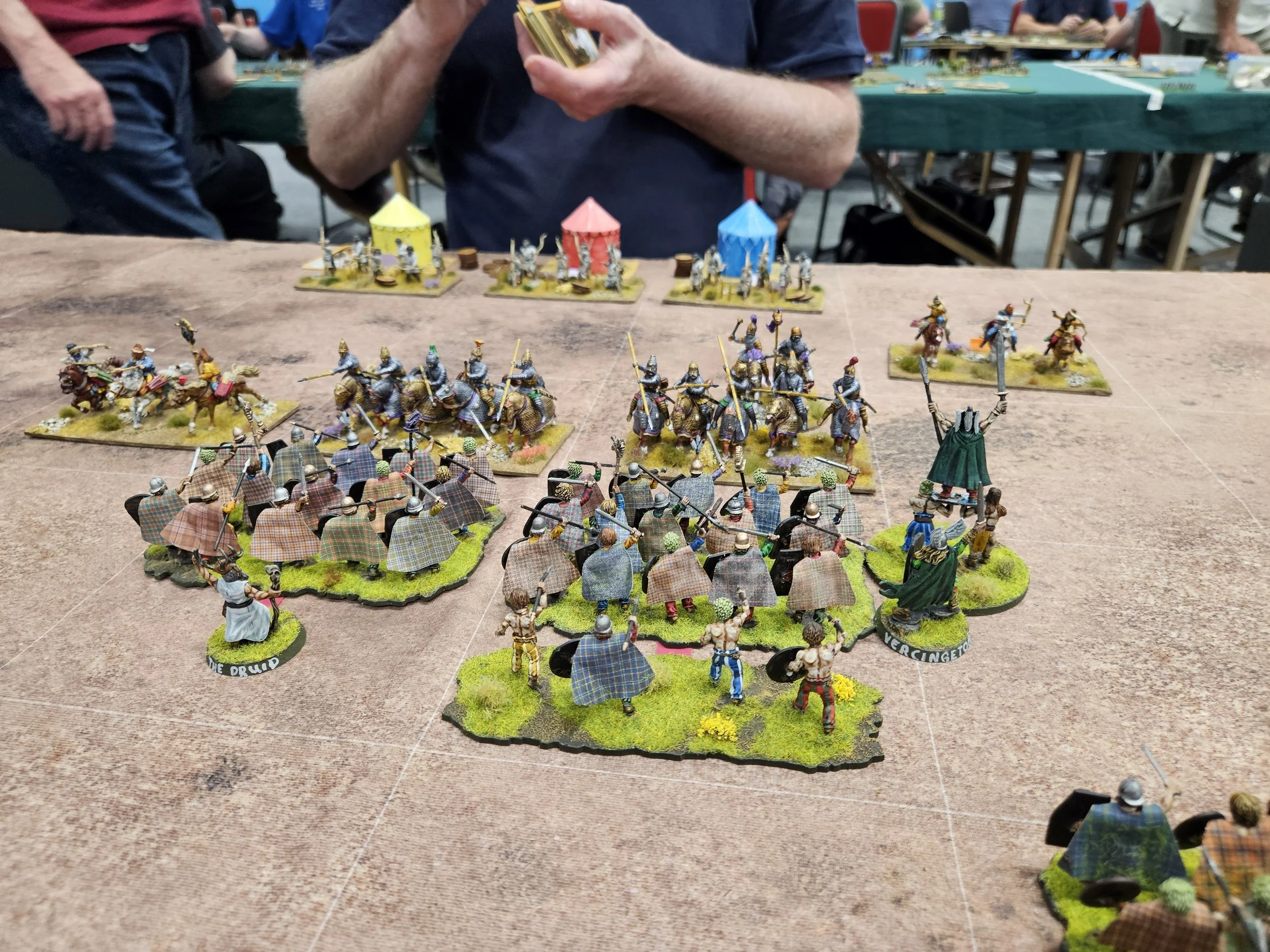
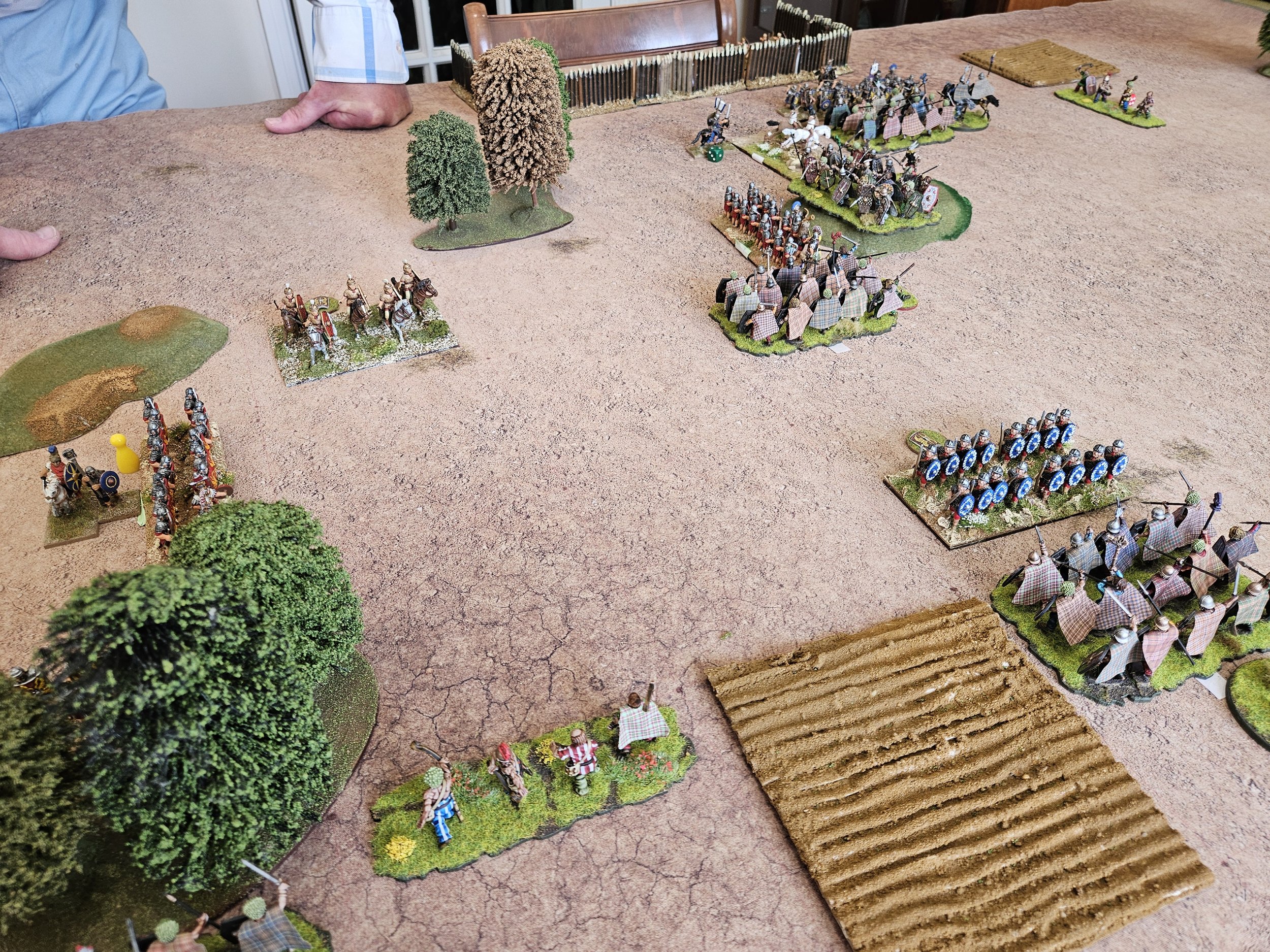
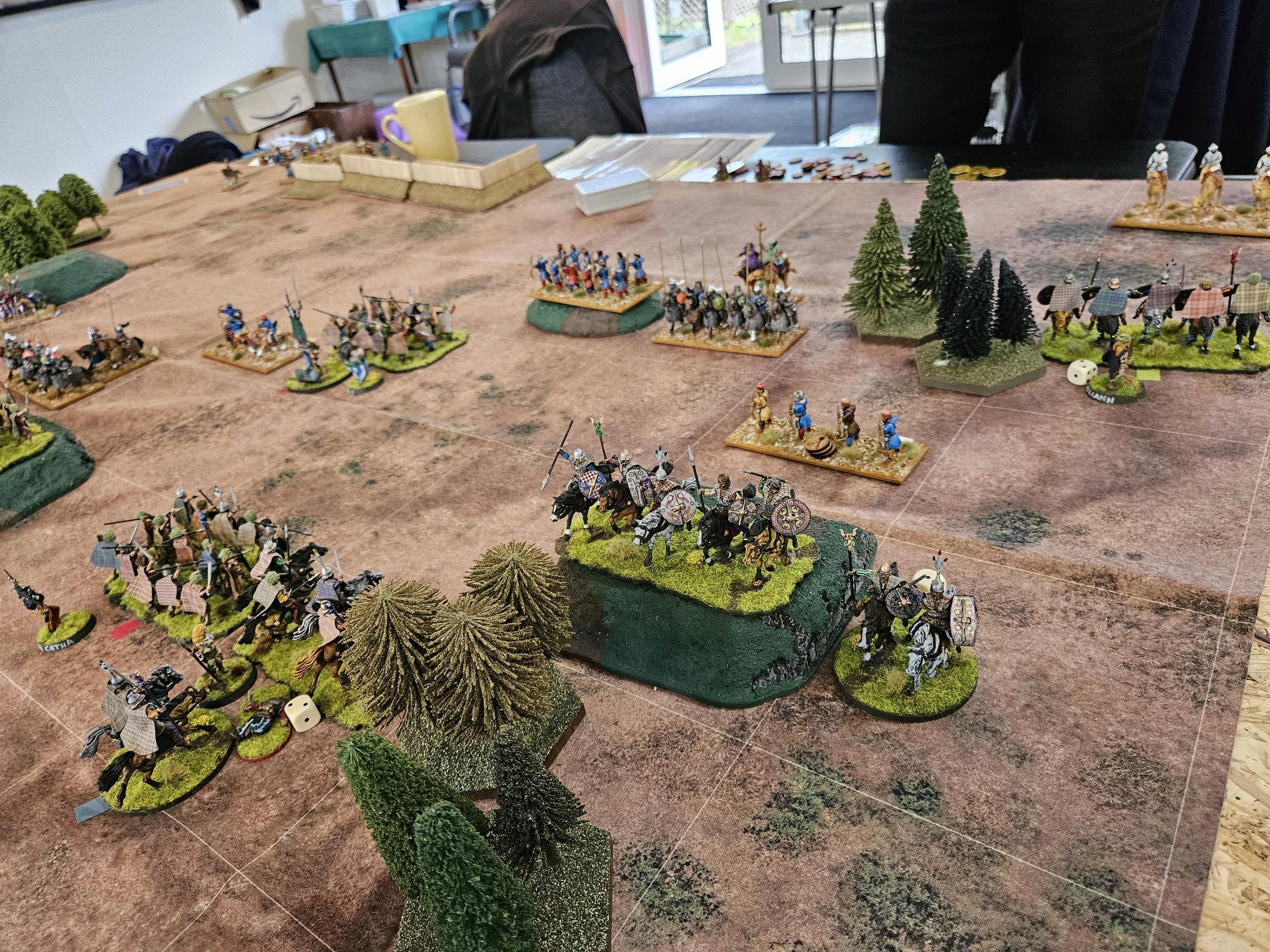
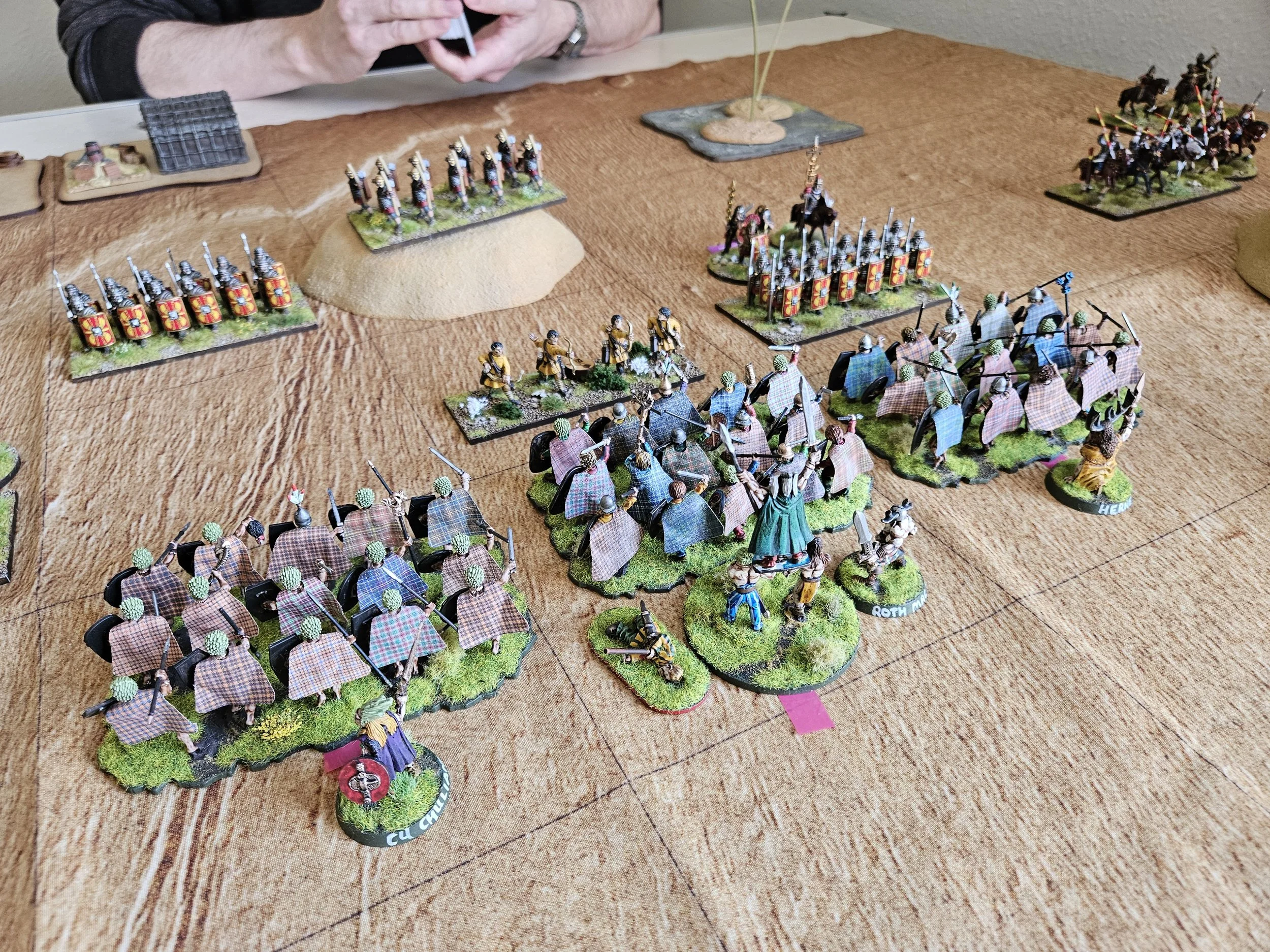
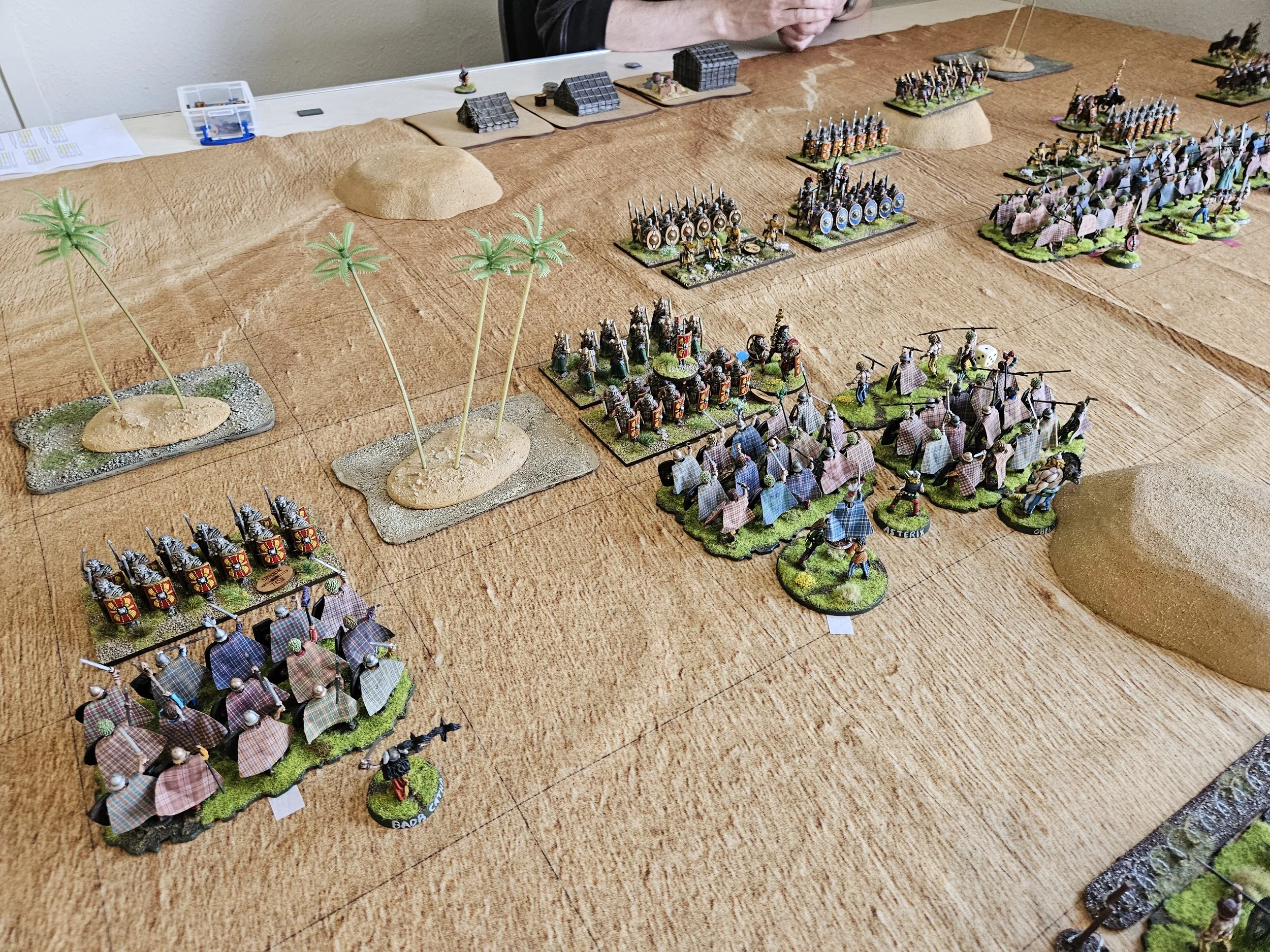
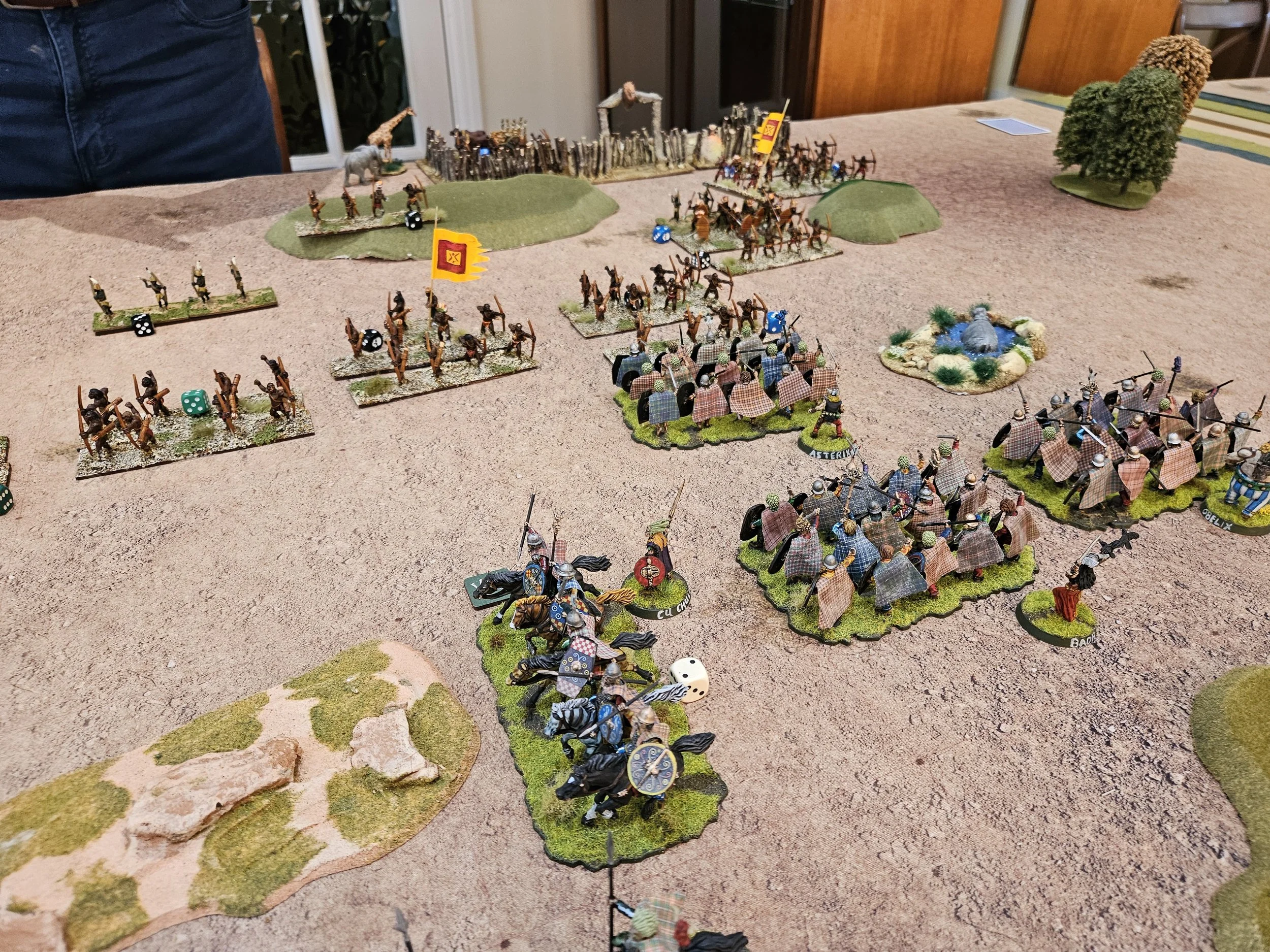
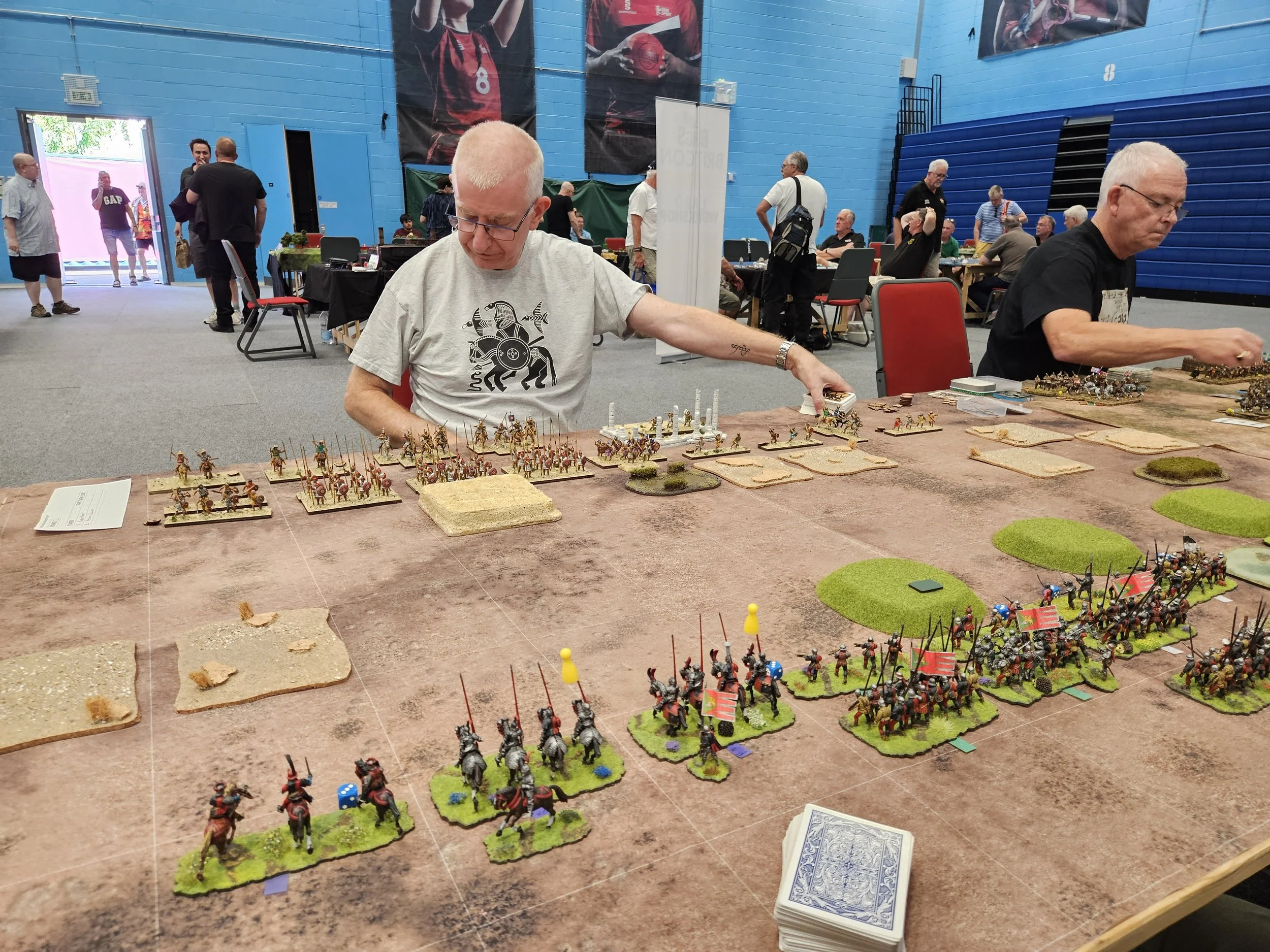
Now the Parthians are nasty to fight - all thsoe cataphracts and horse archers - so I decided that the only way to win was to get right up in their faces and see how they liked a gross bit of melee with a load of deep warbands chock full of heroes.

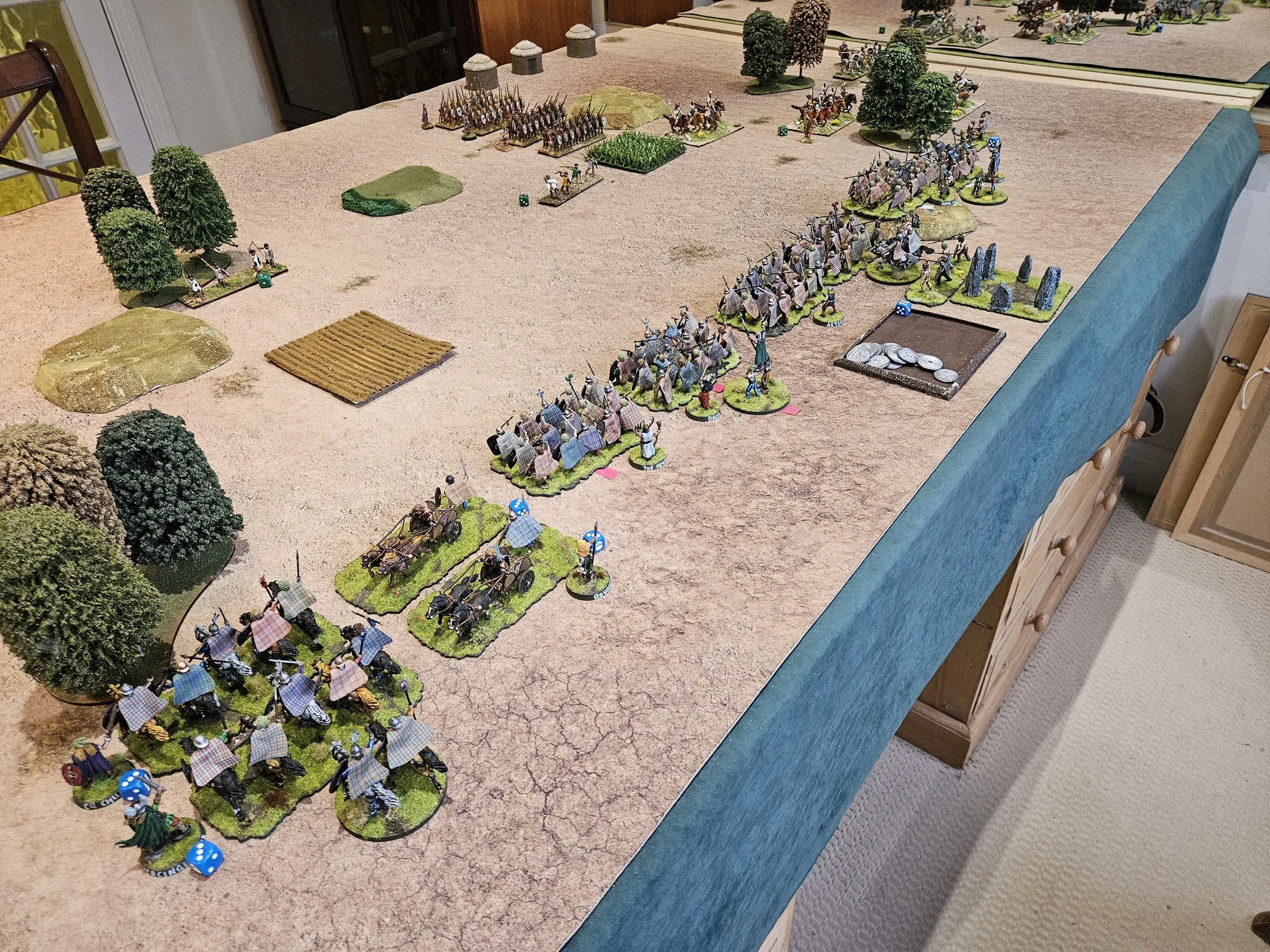
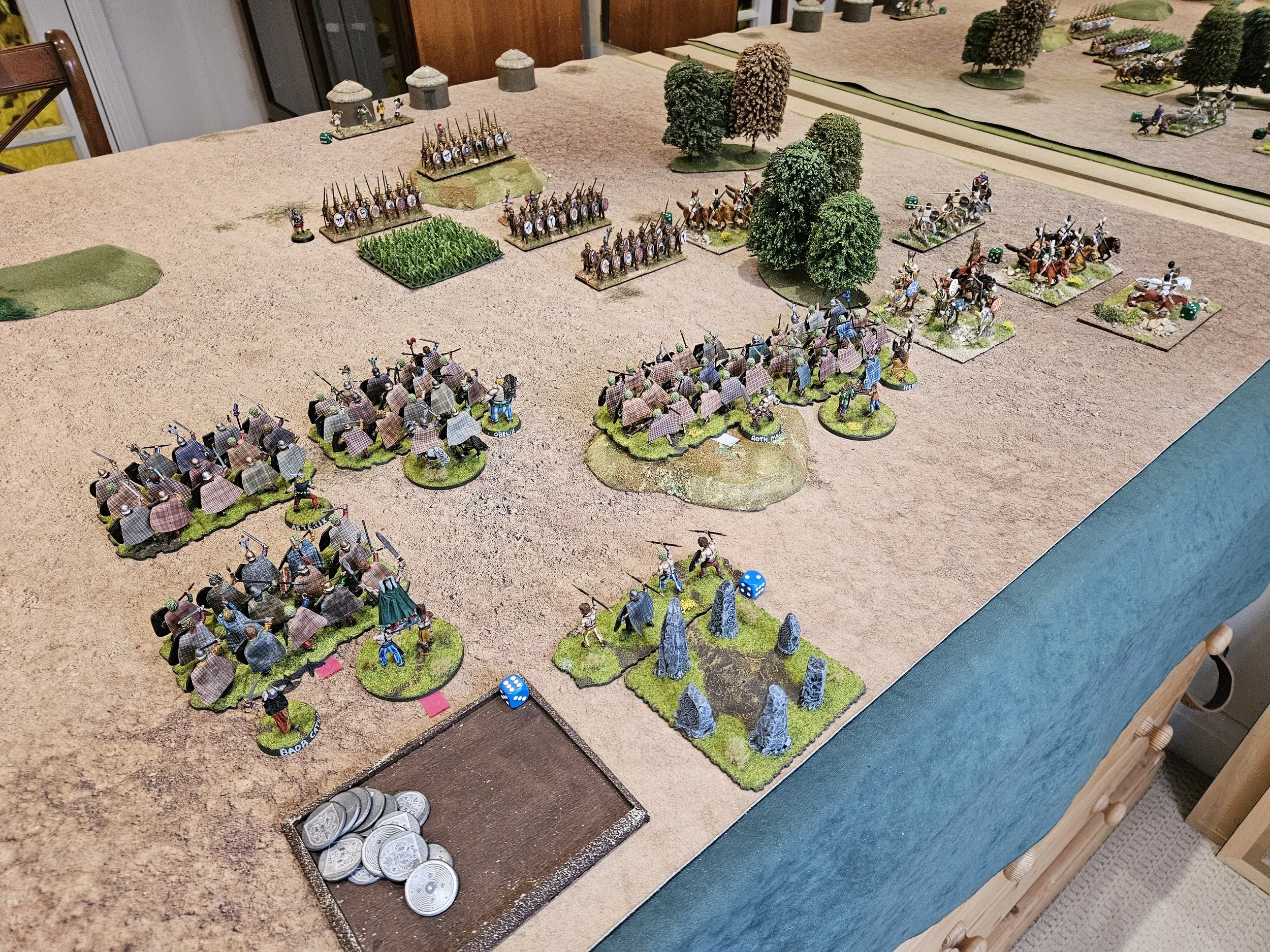
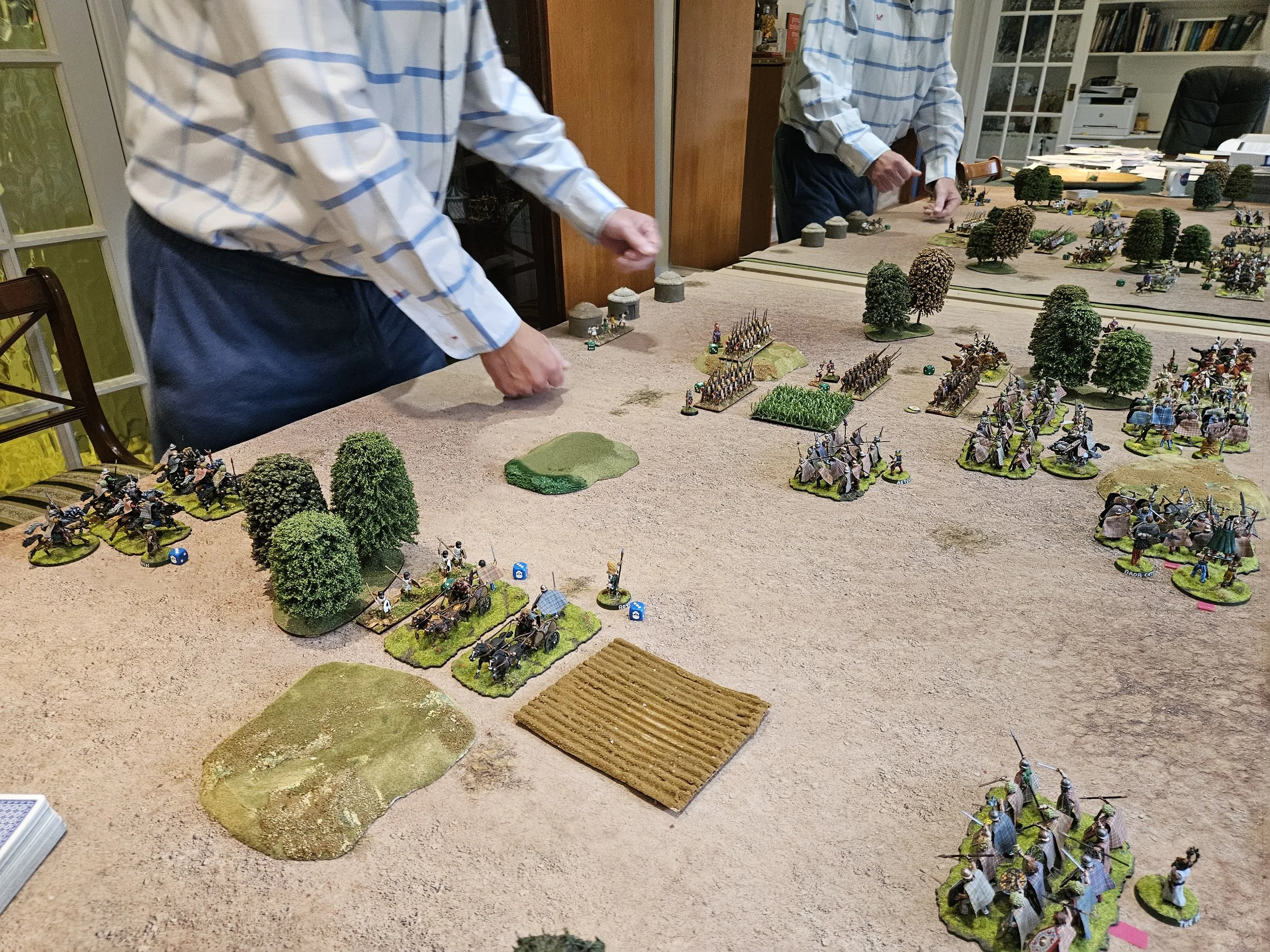
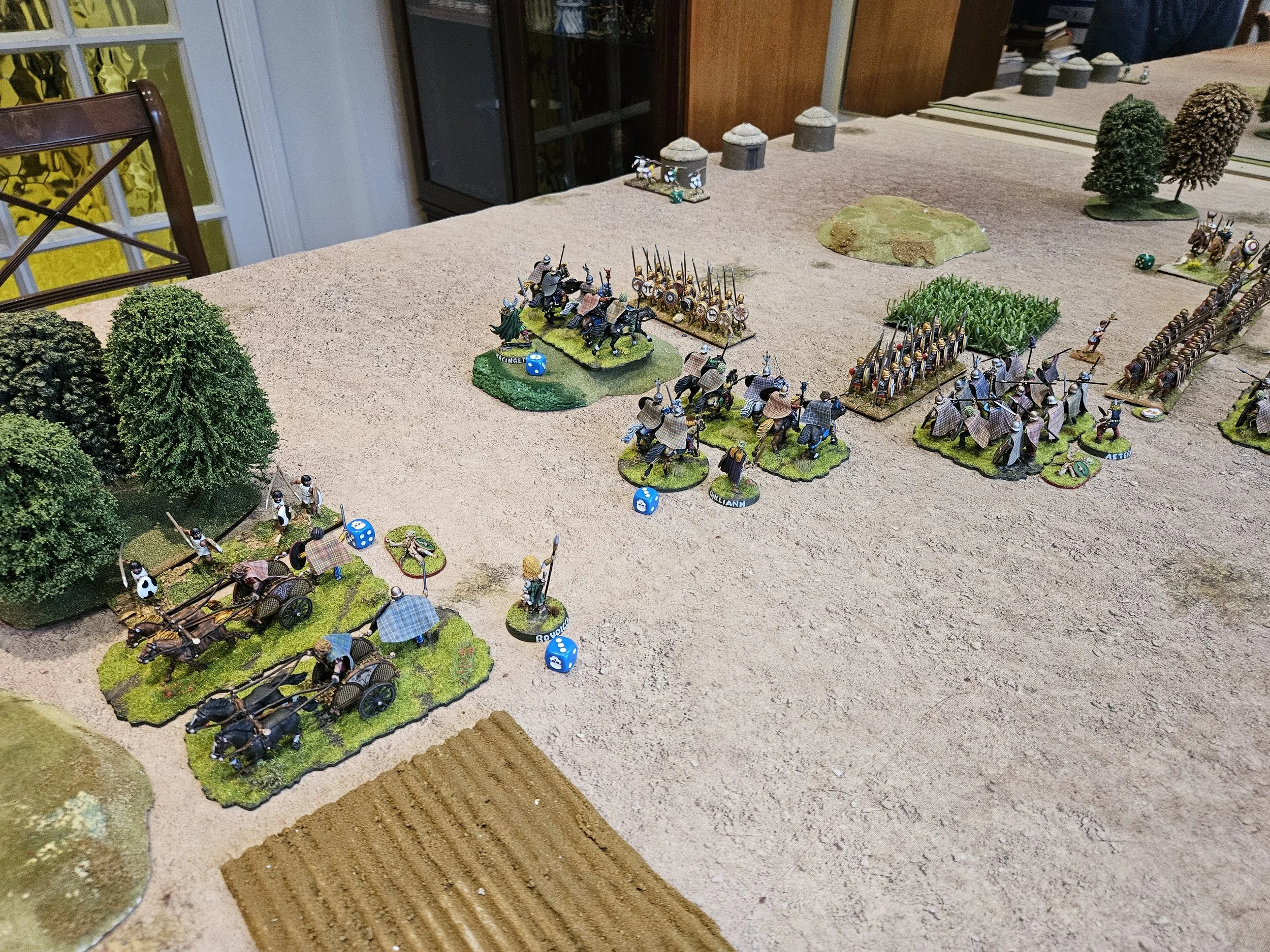
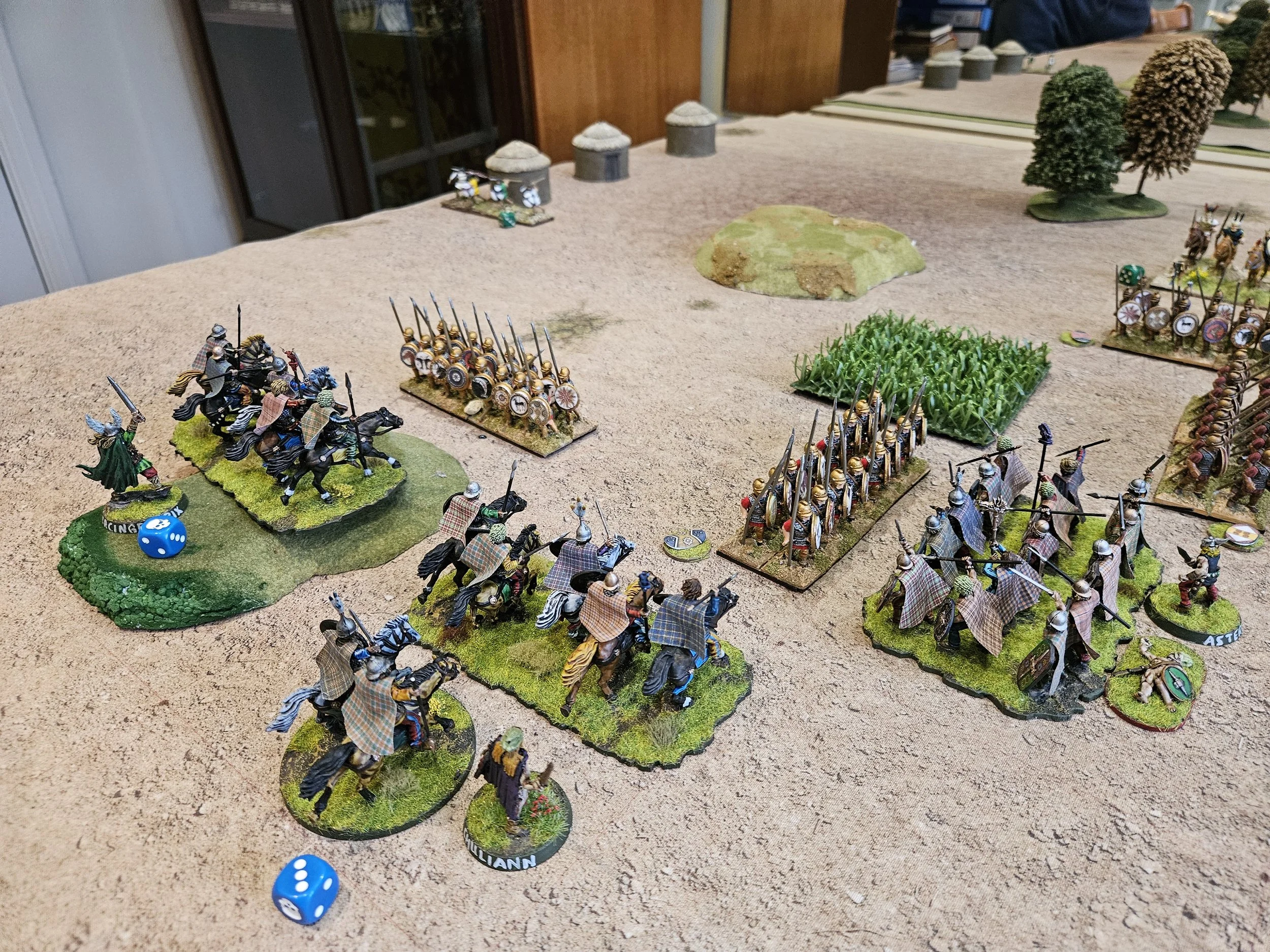
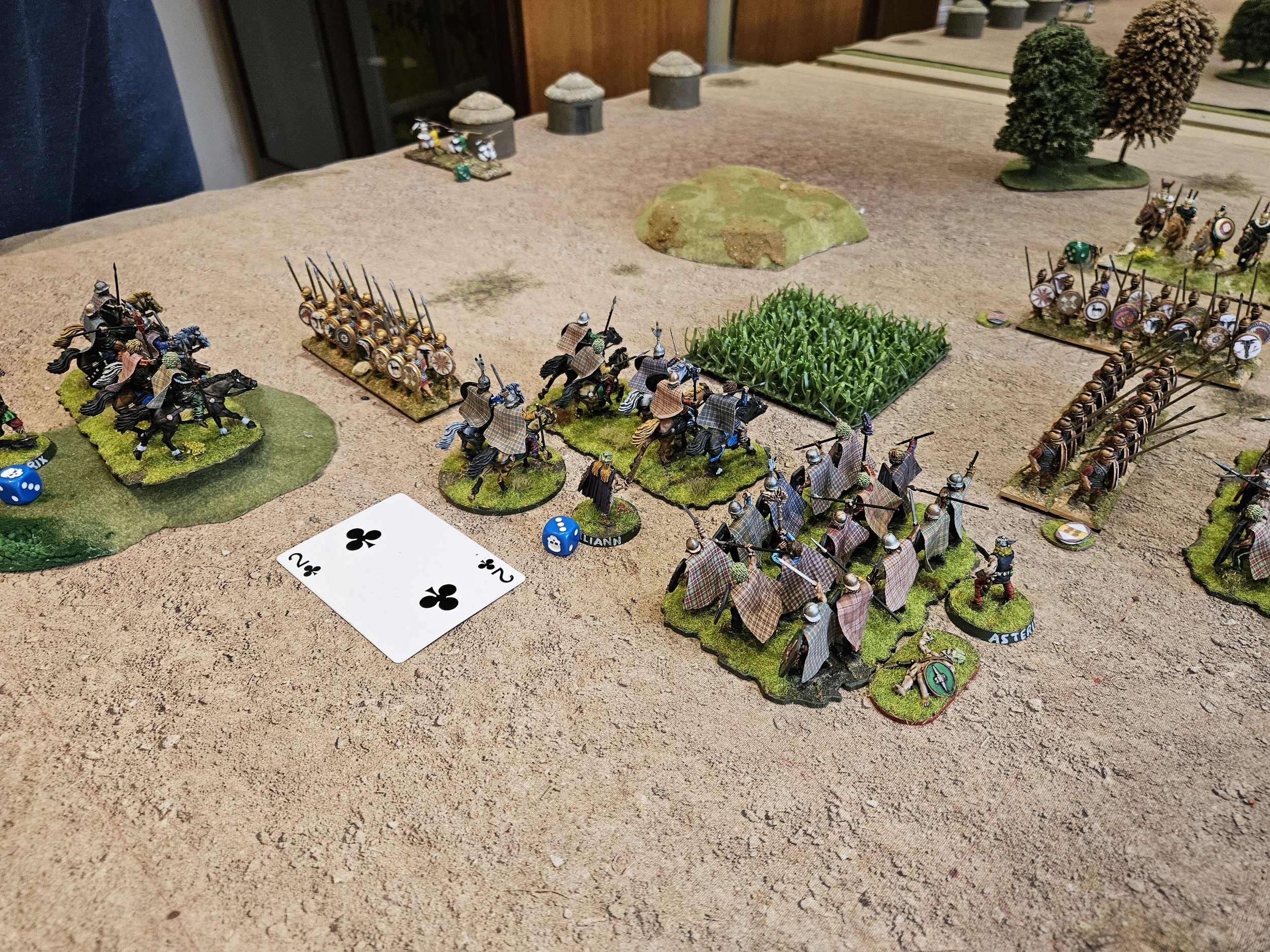
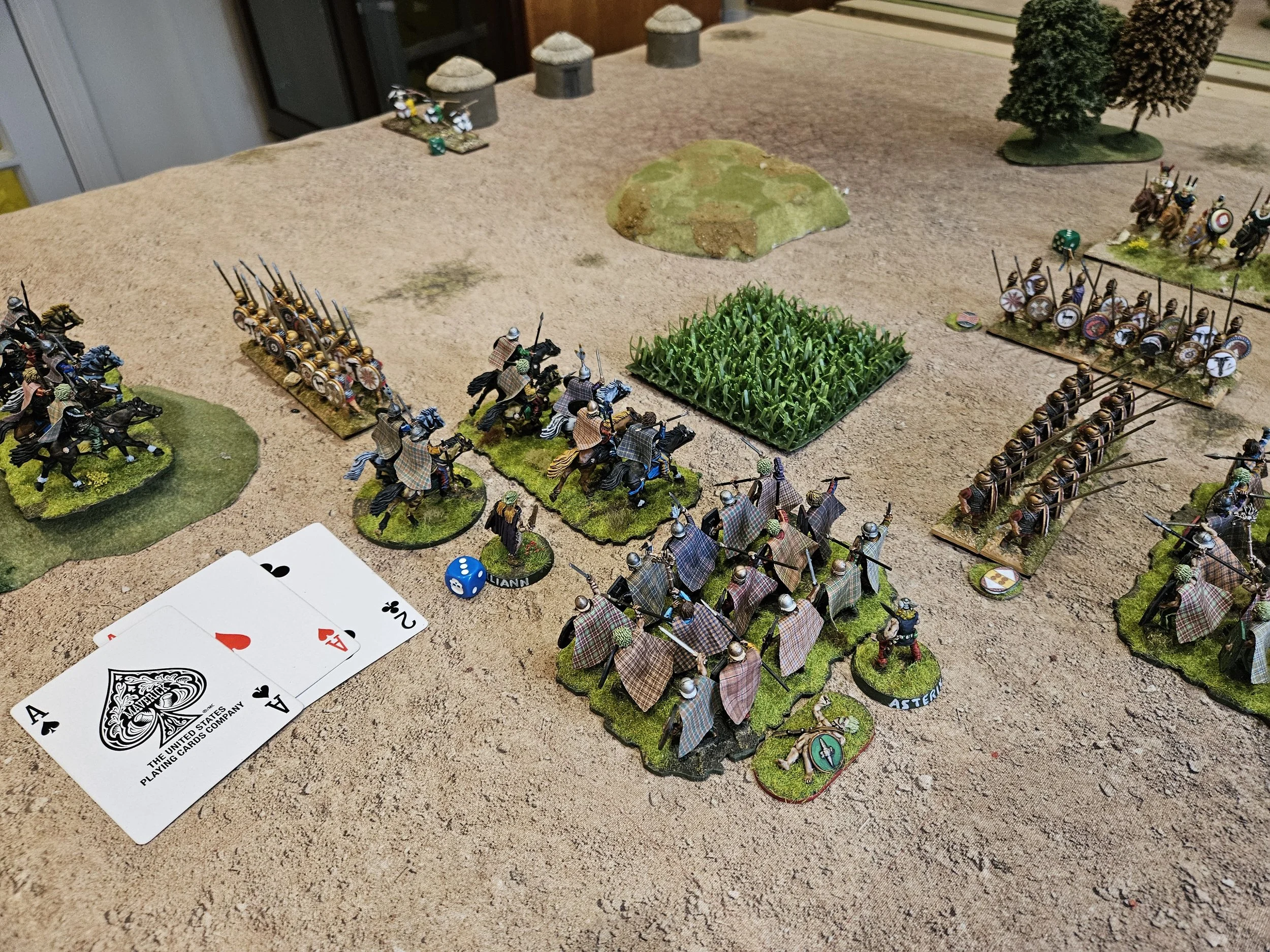
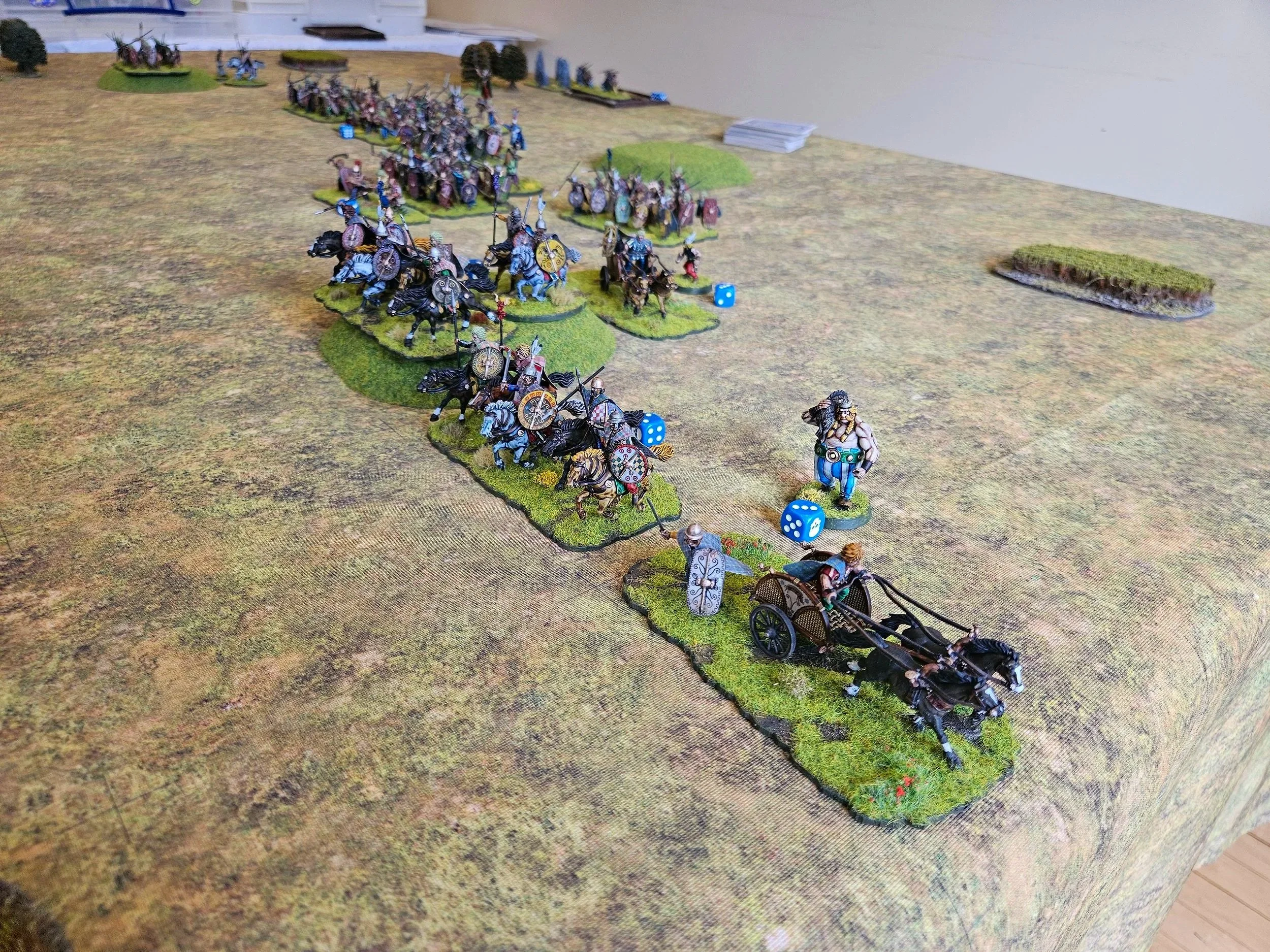
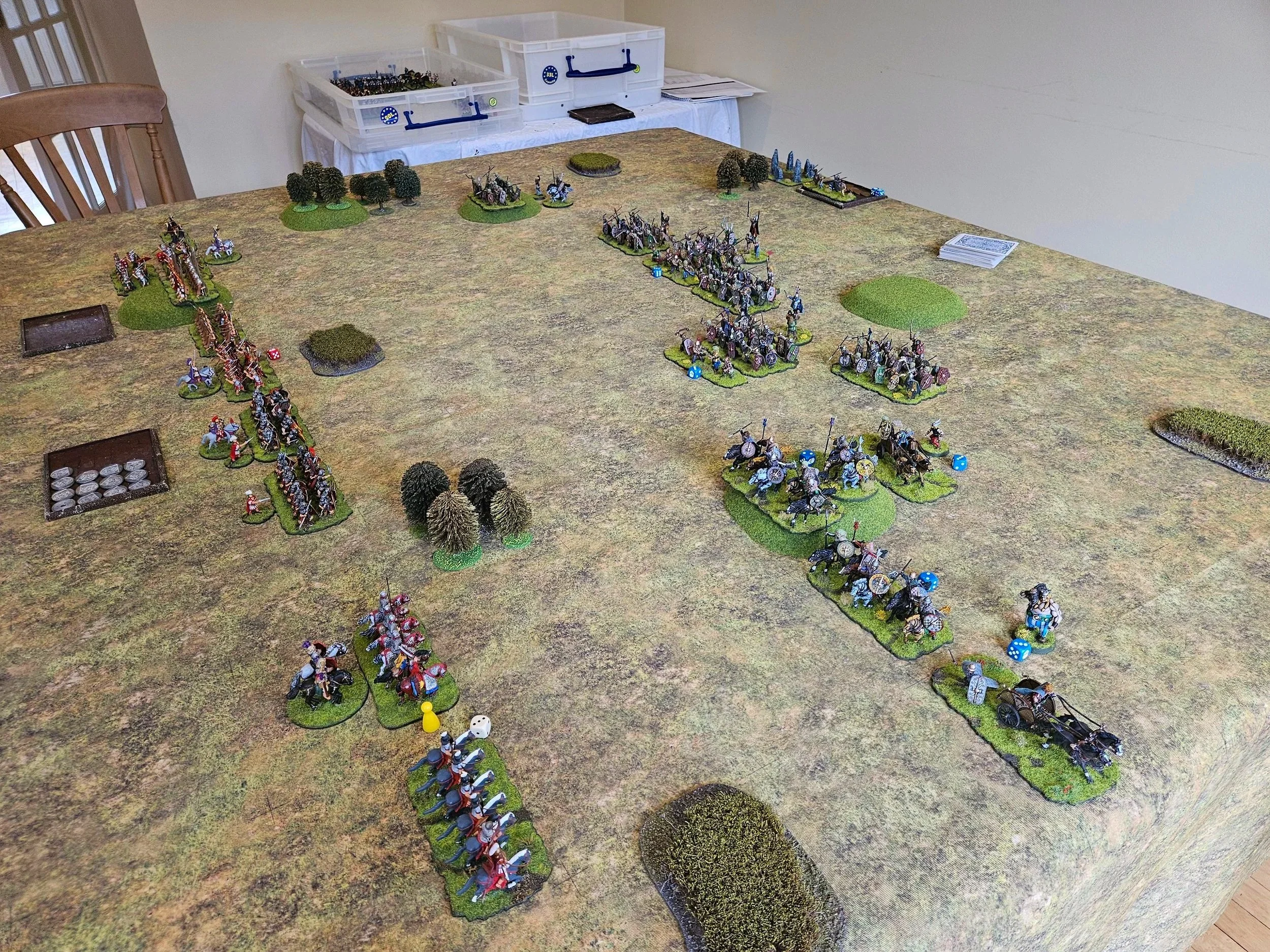
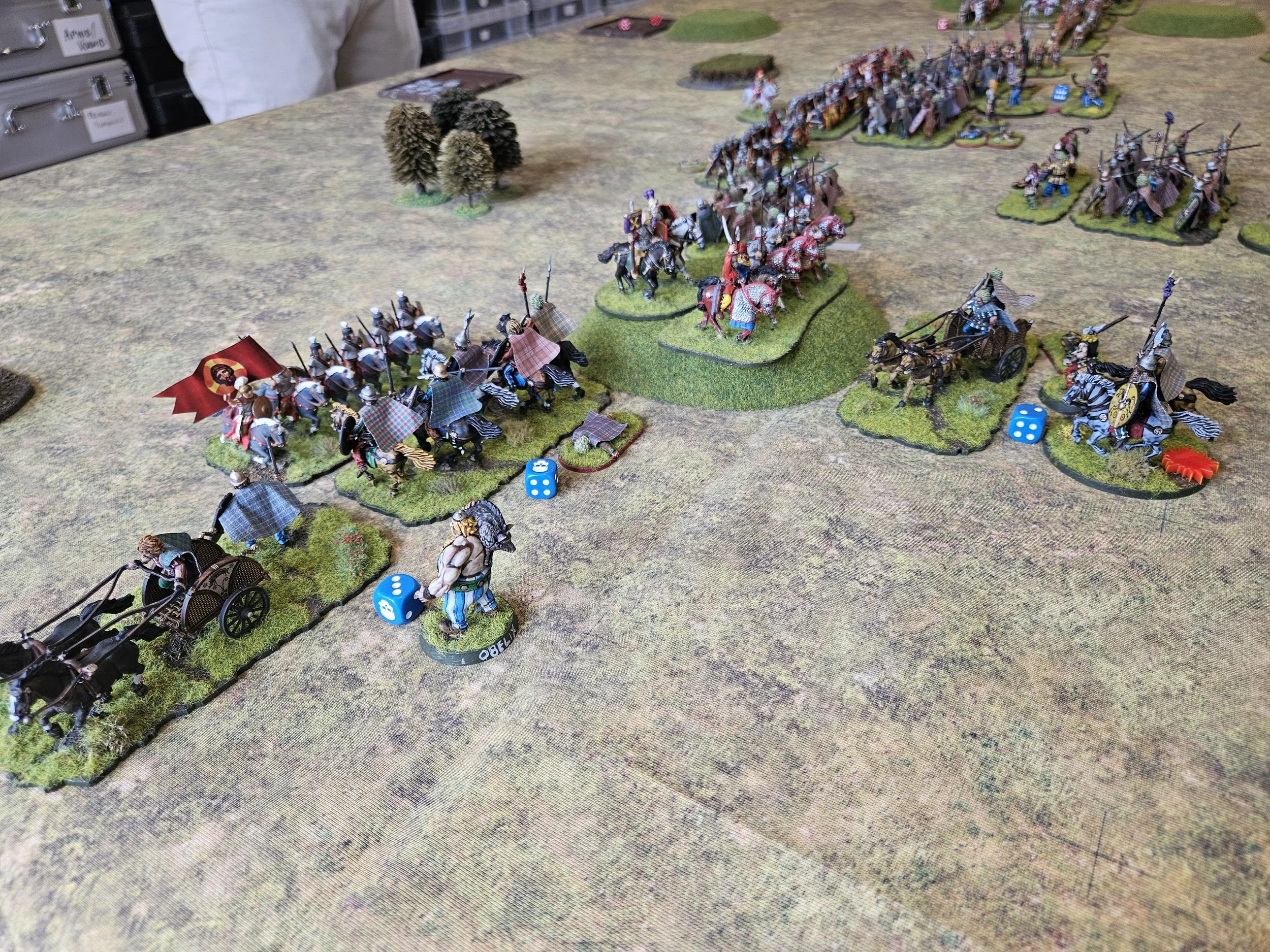
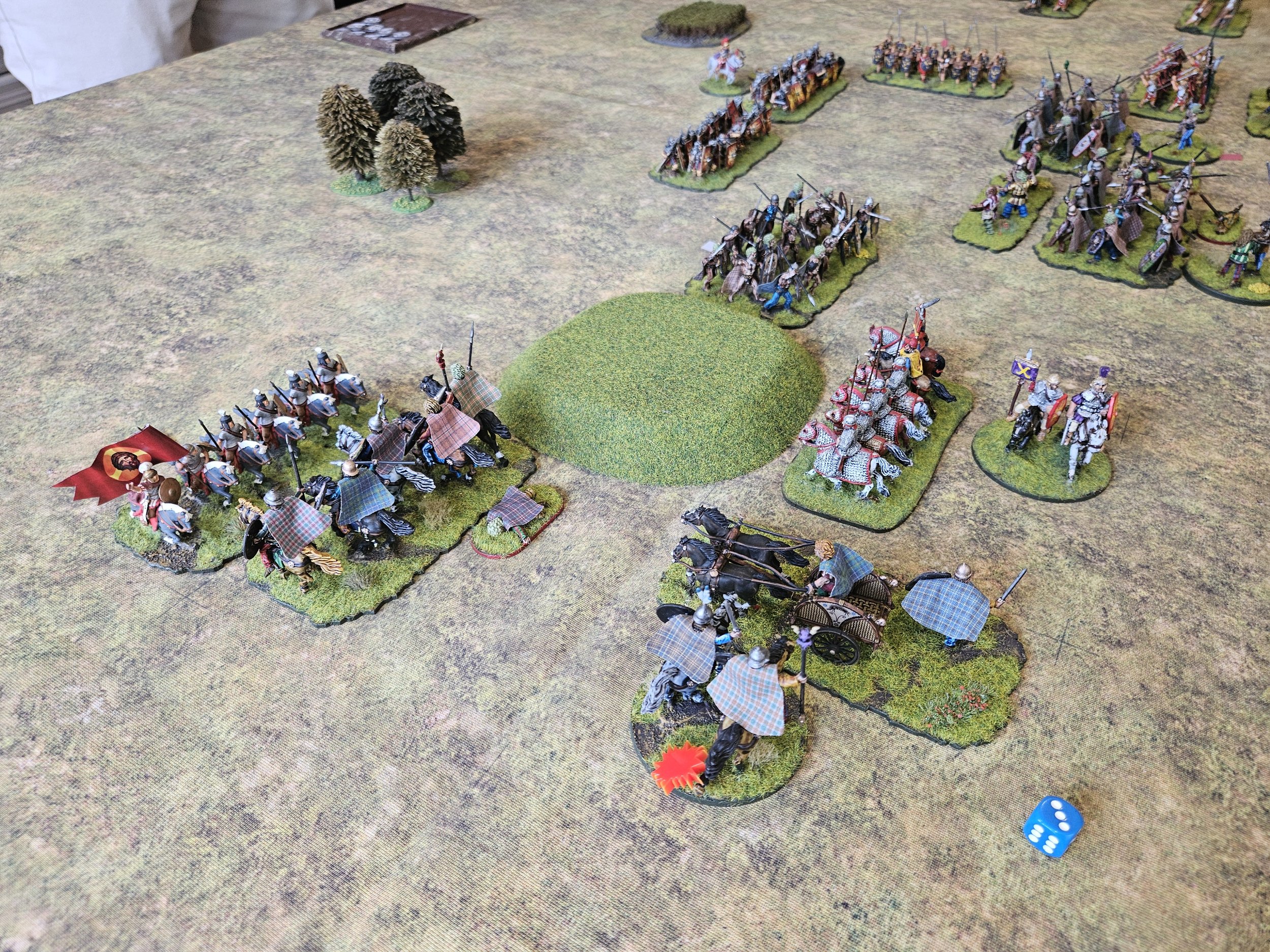
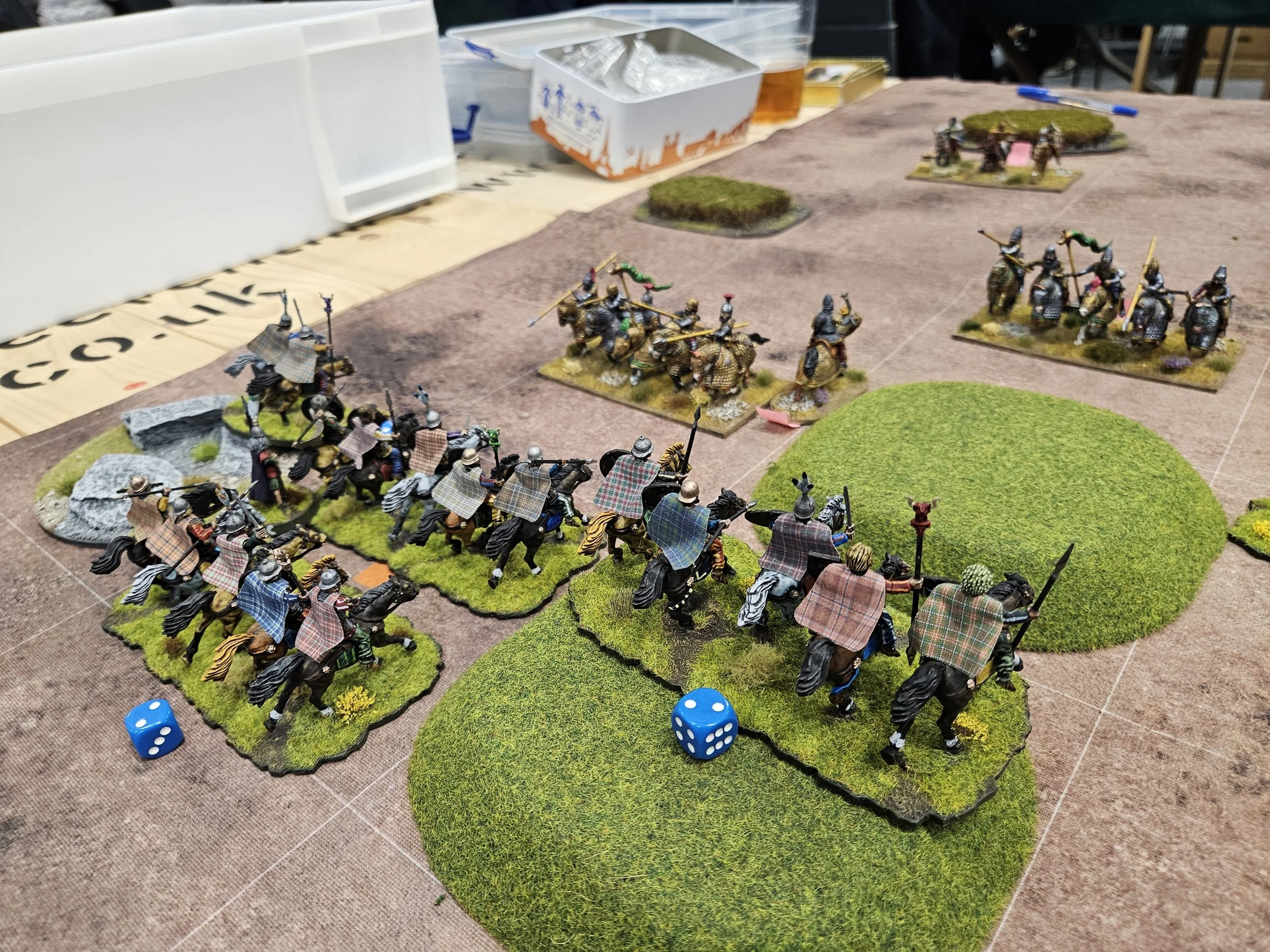
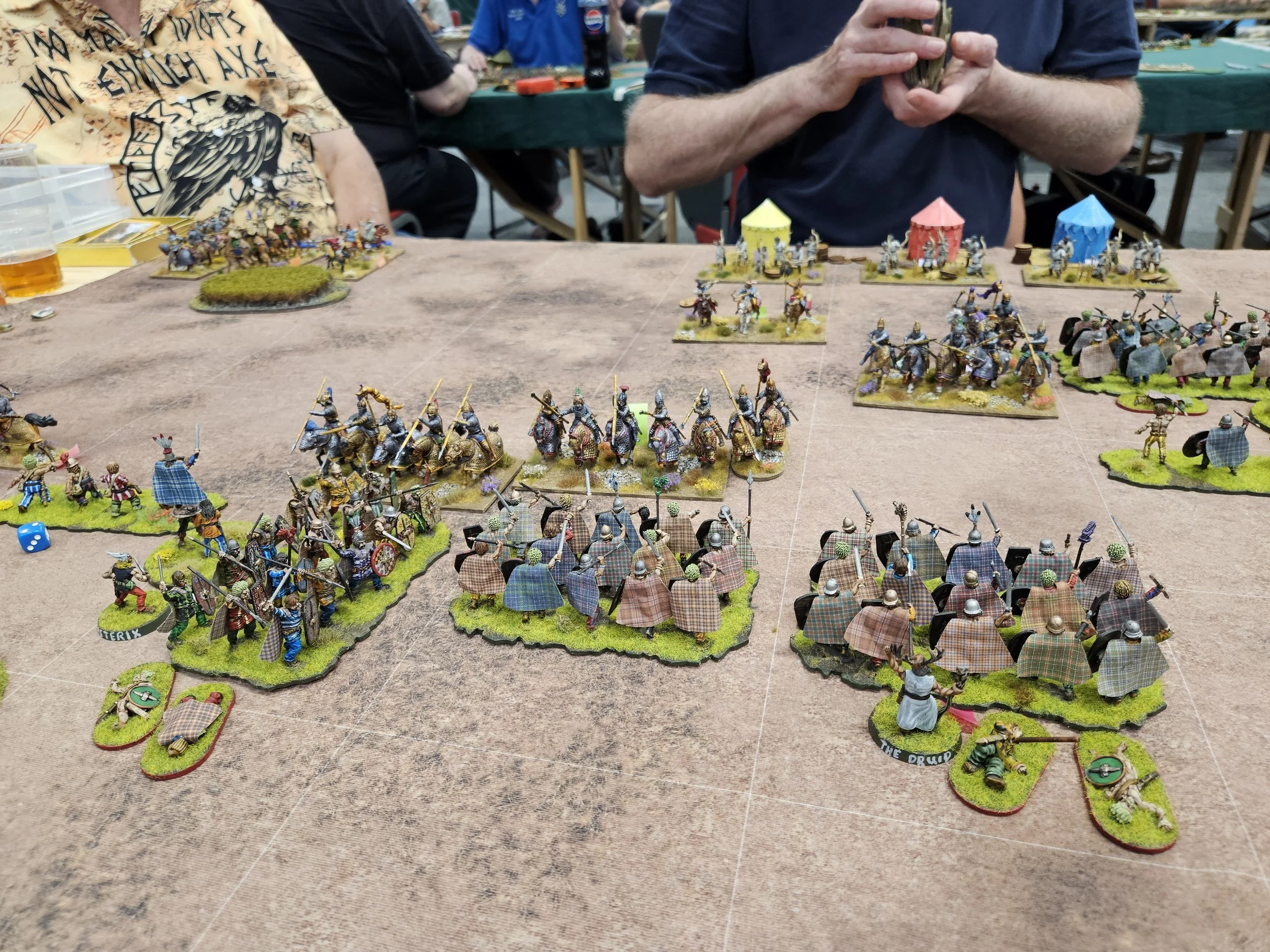
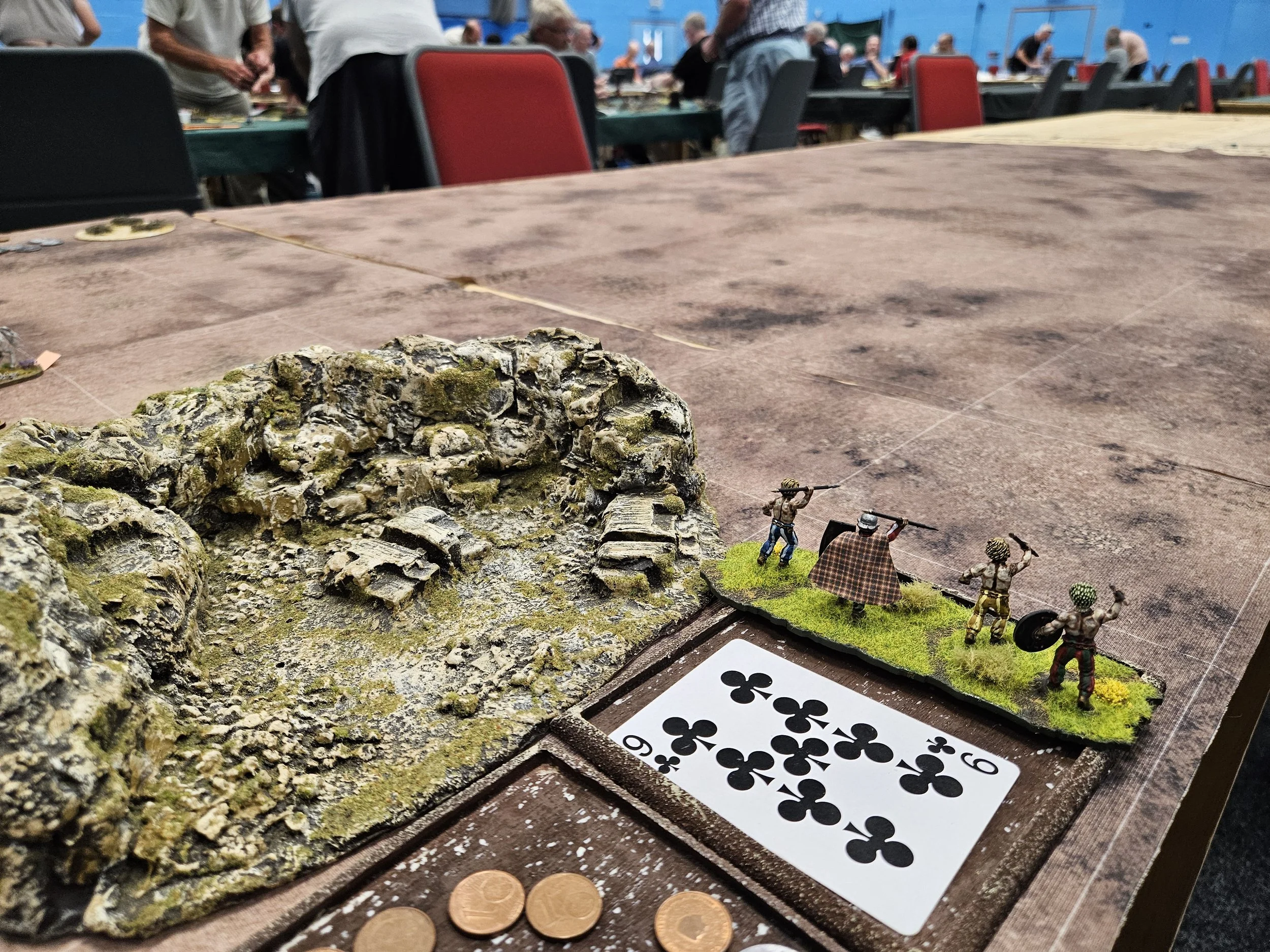
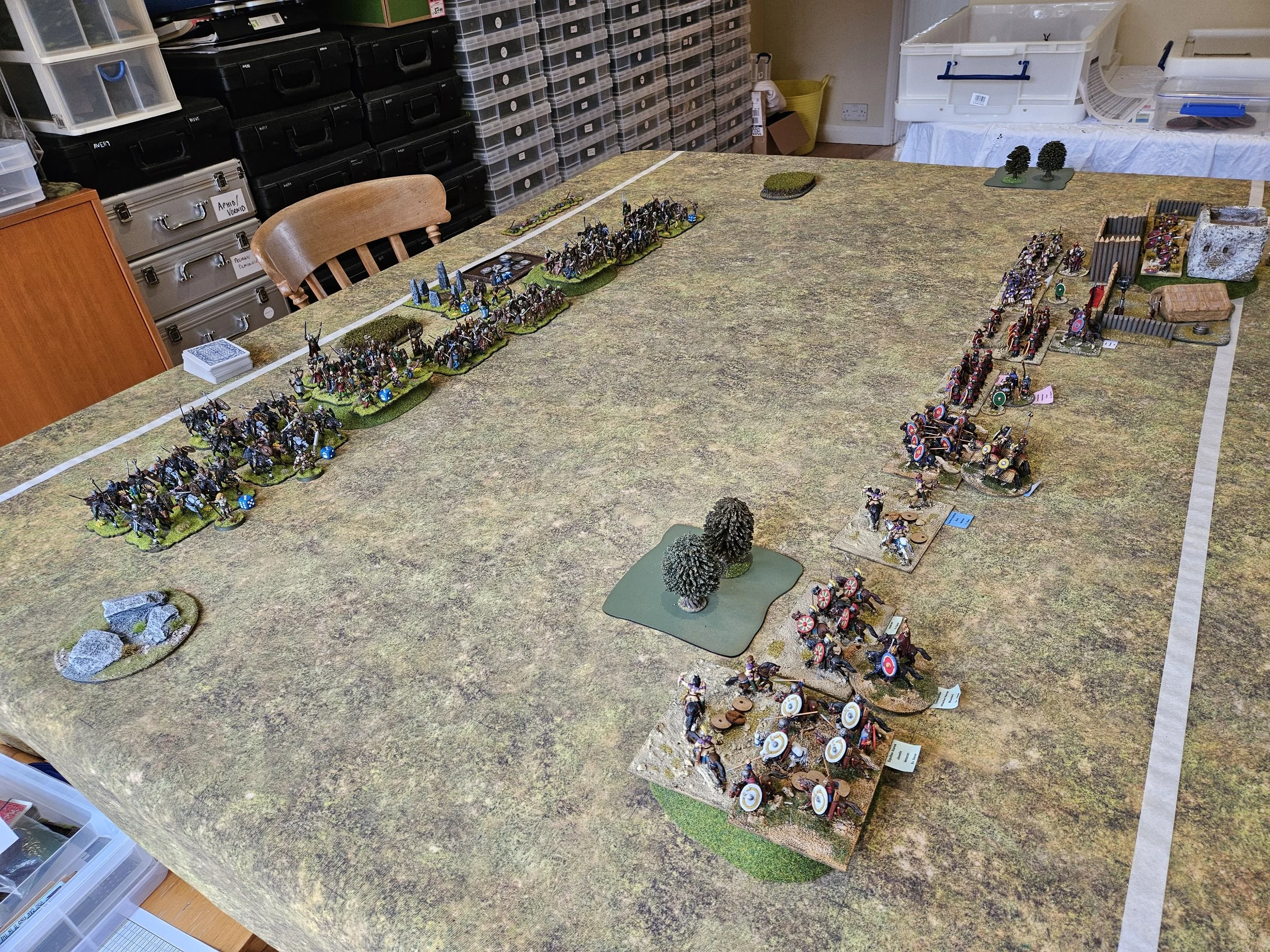
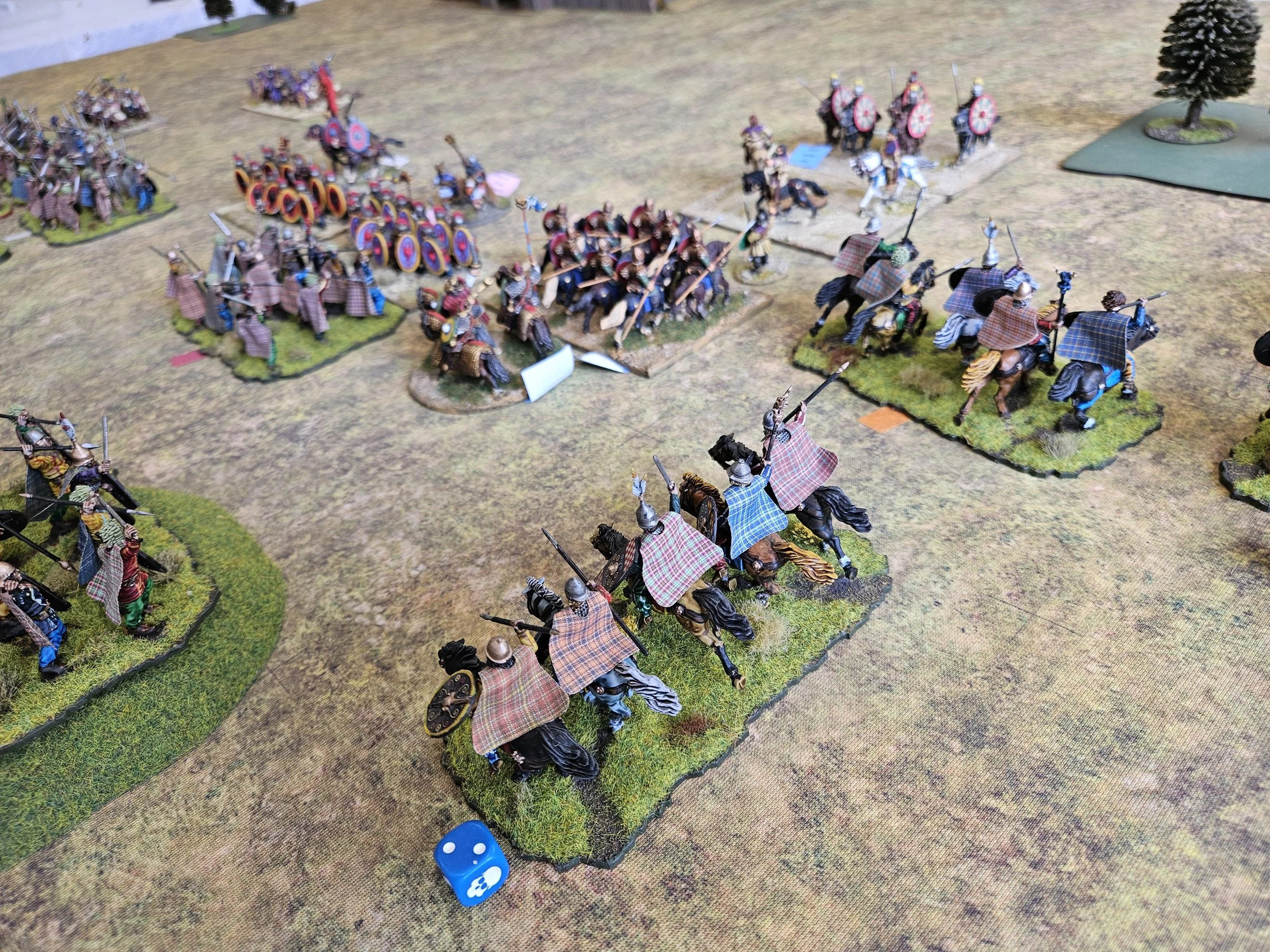
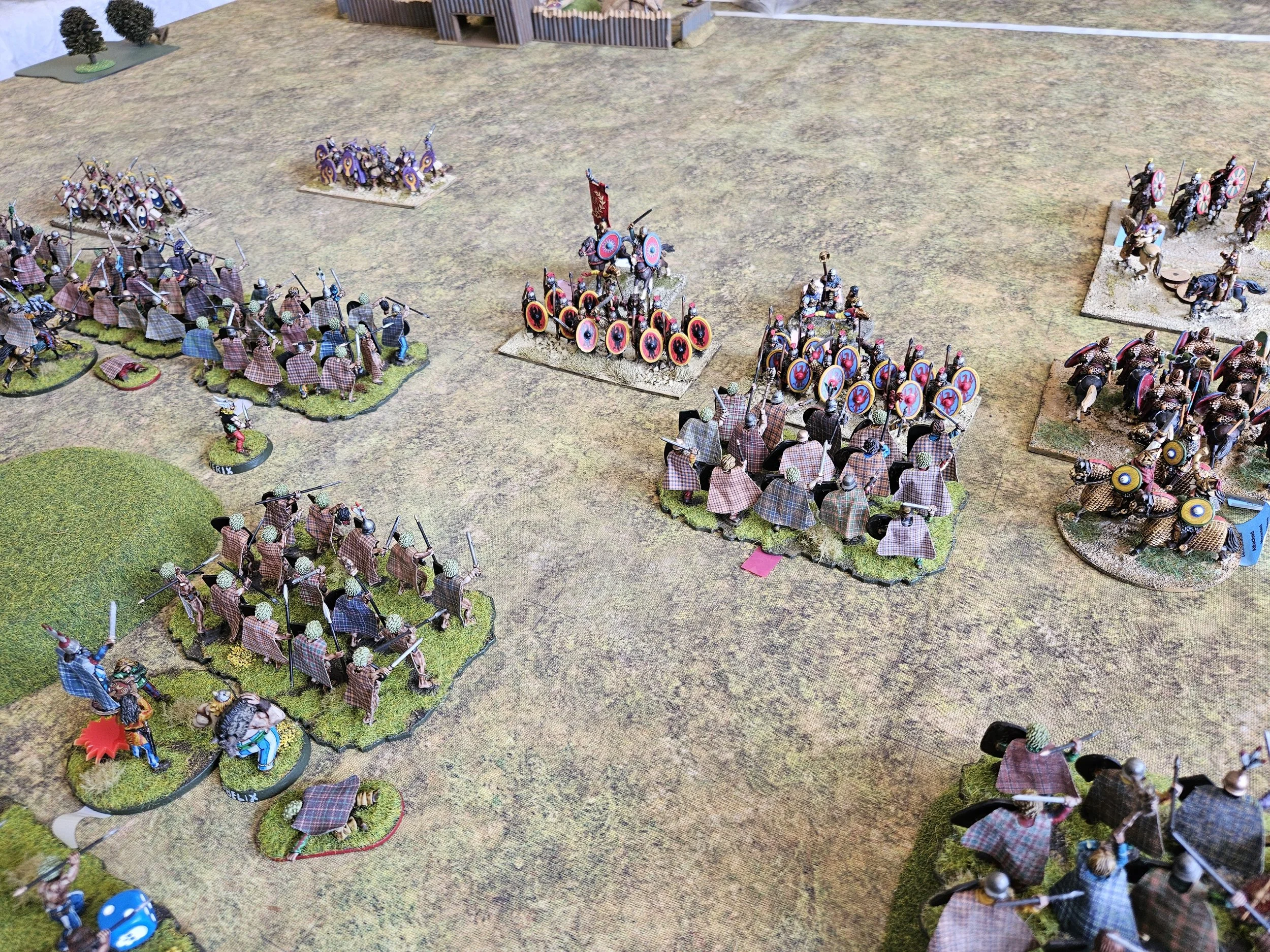
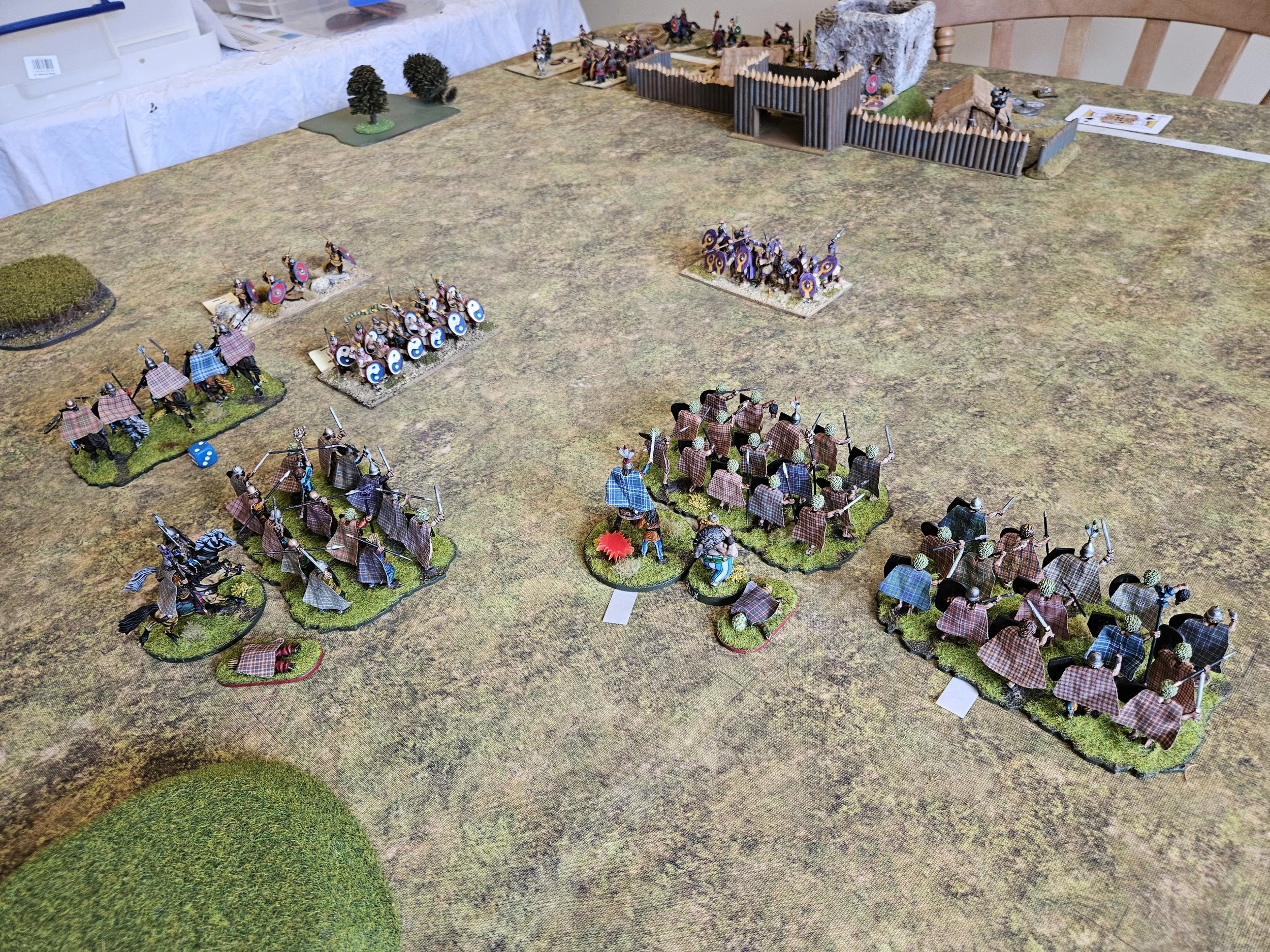
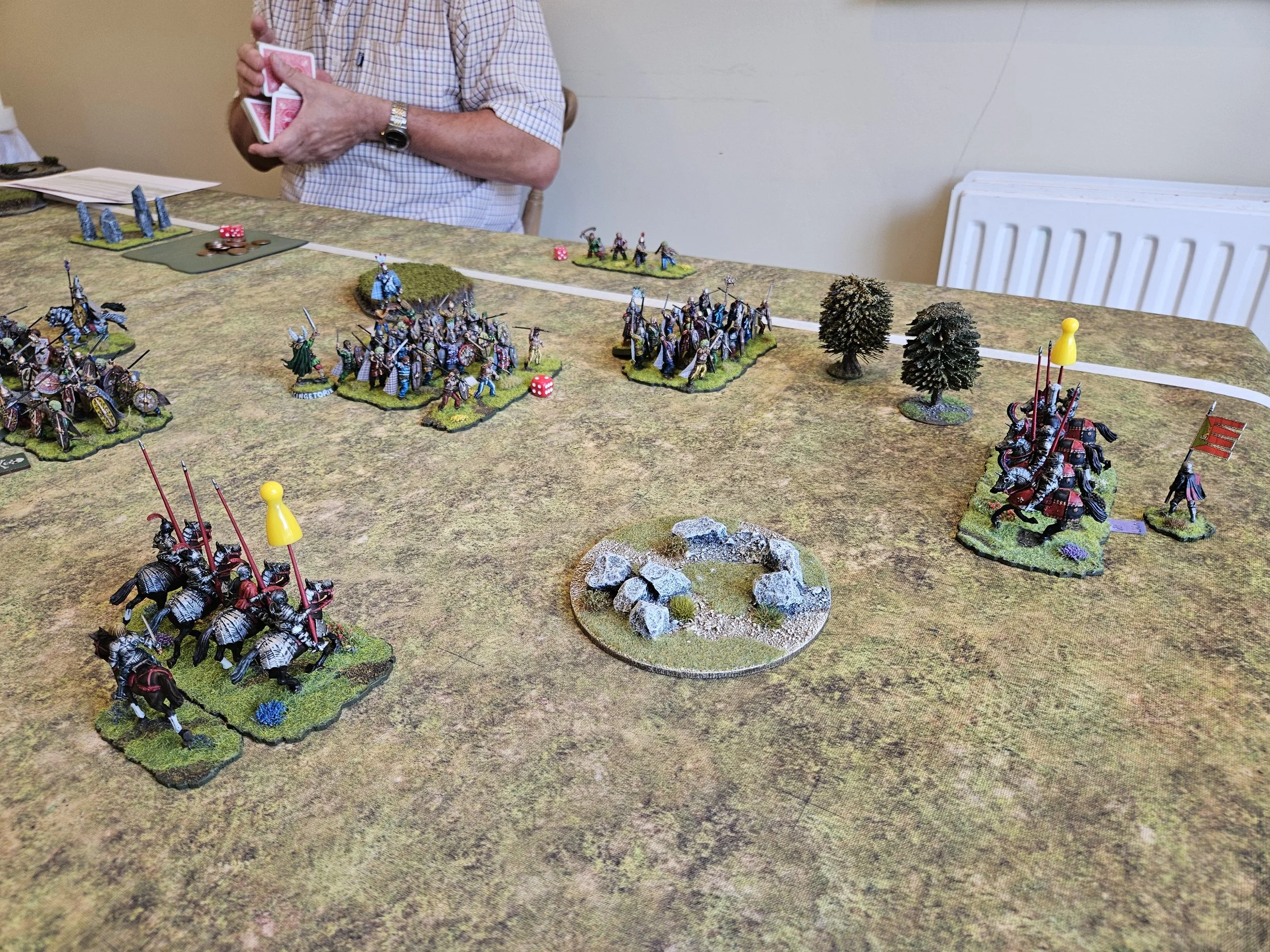
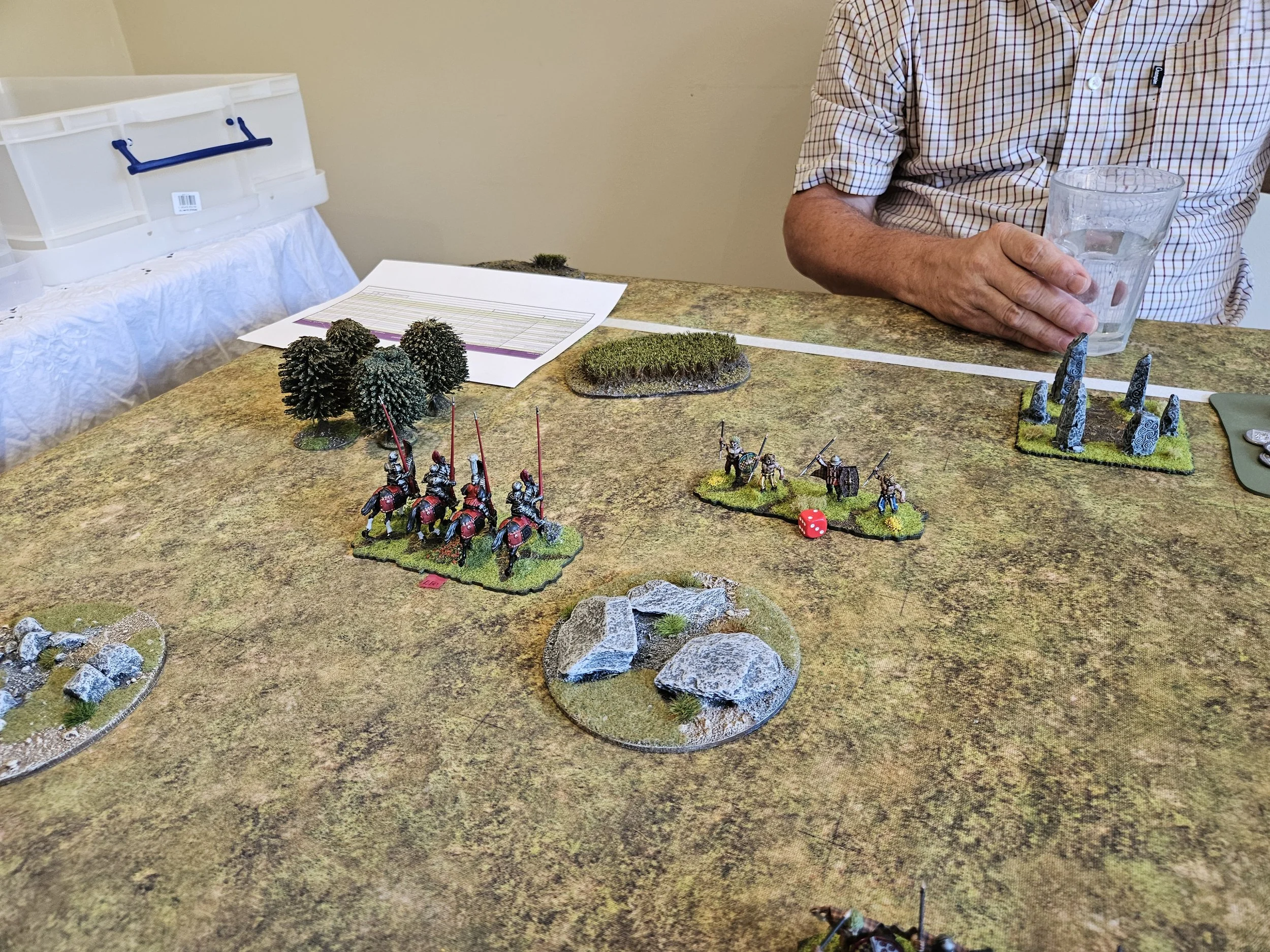
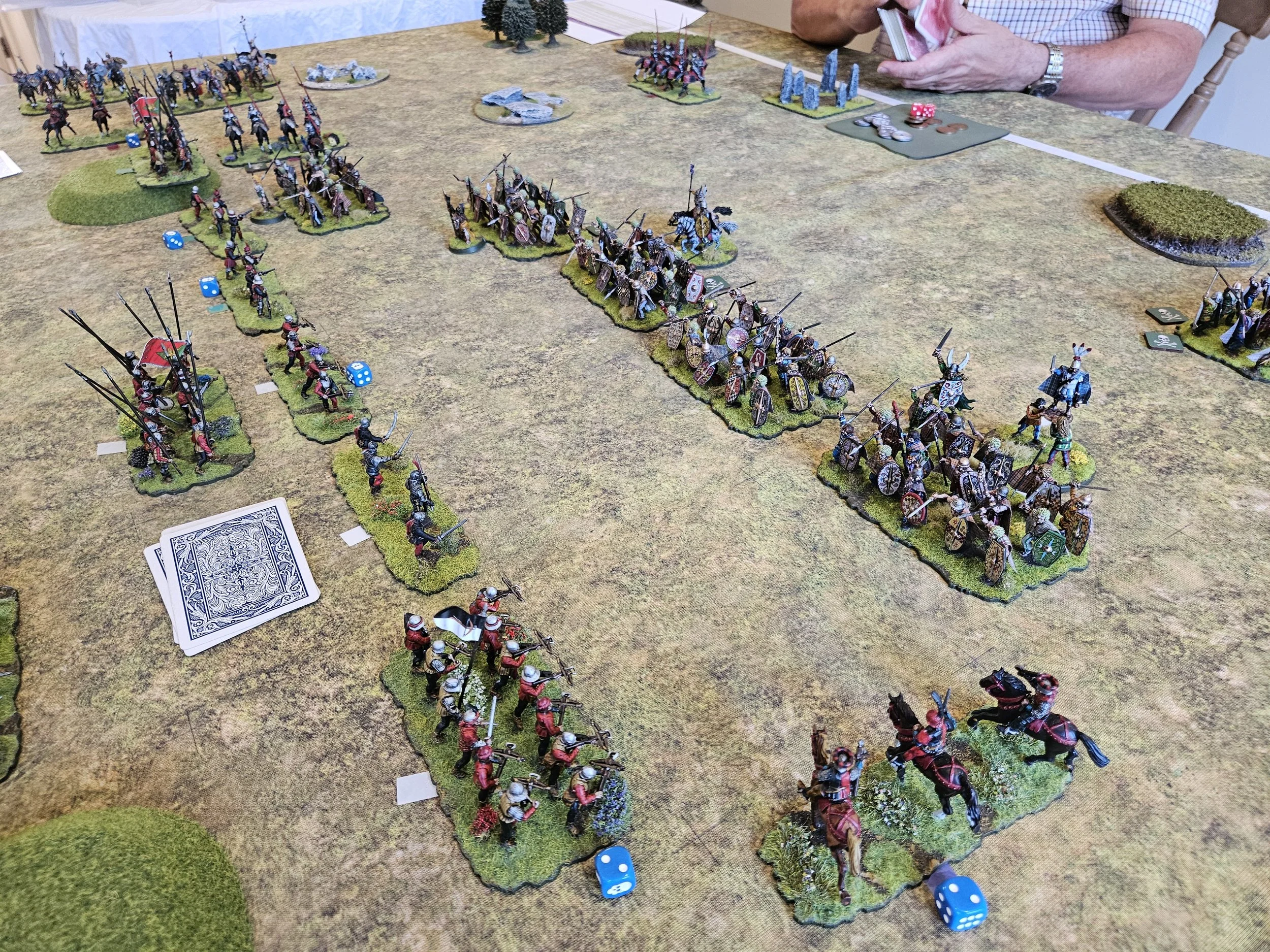
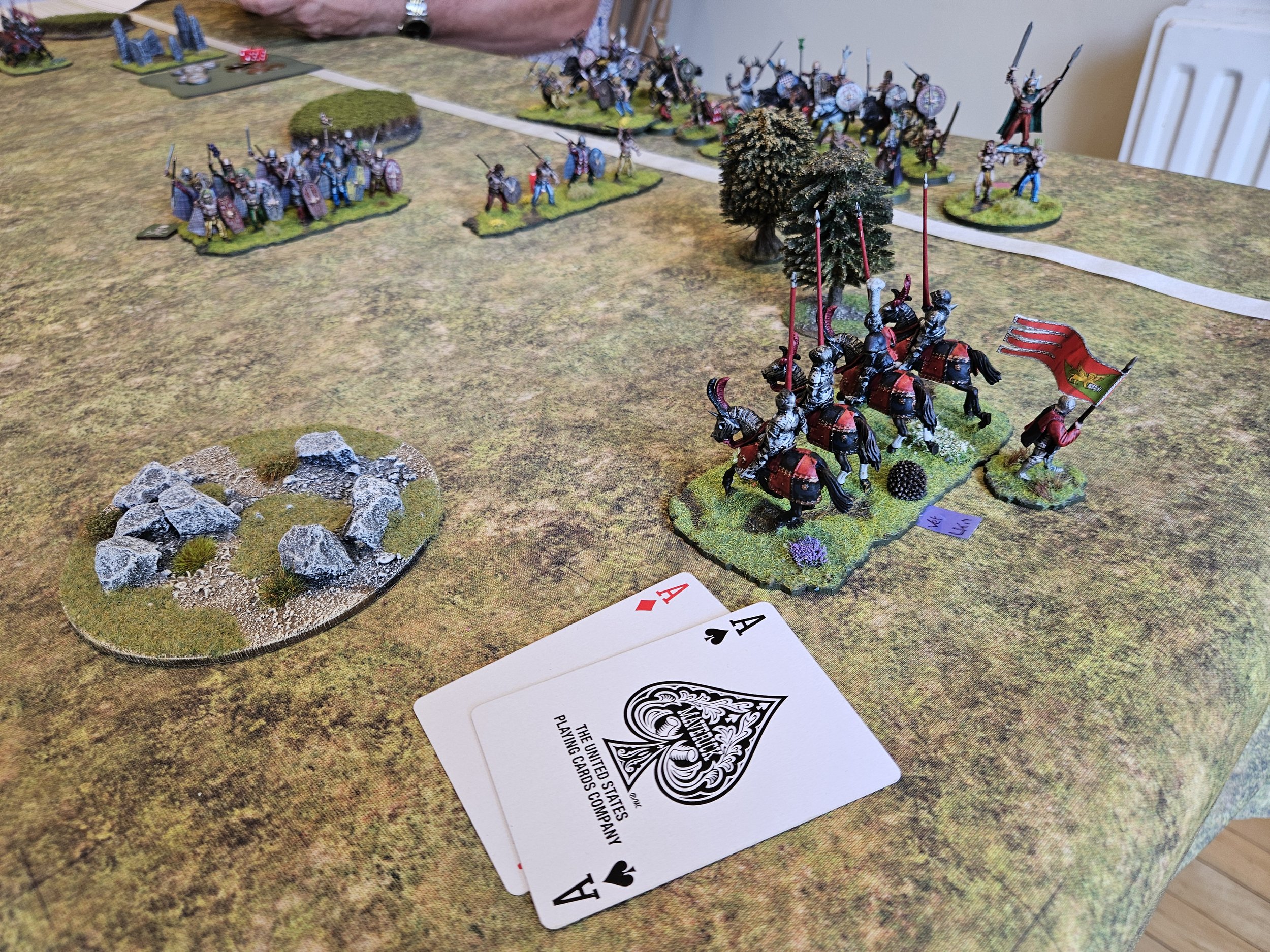
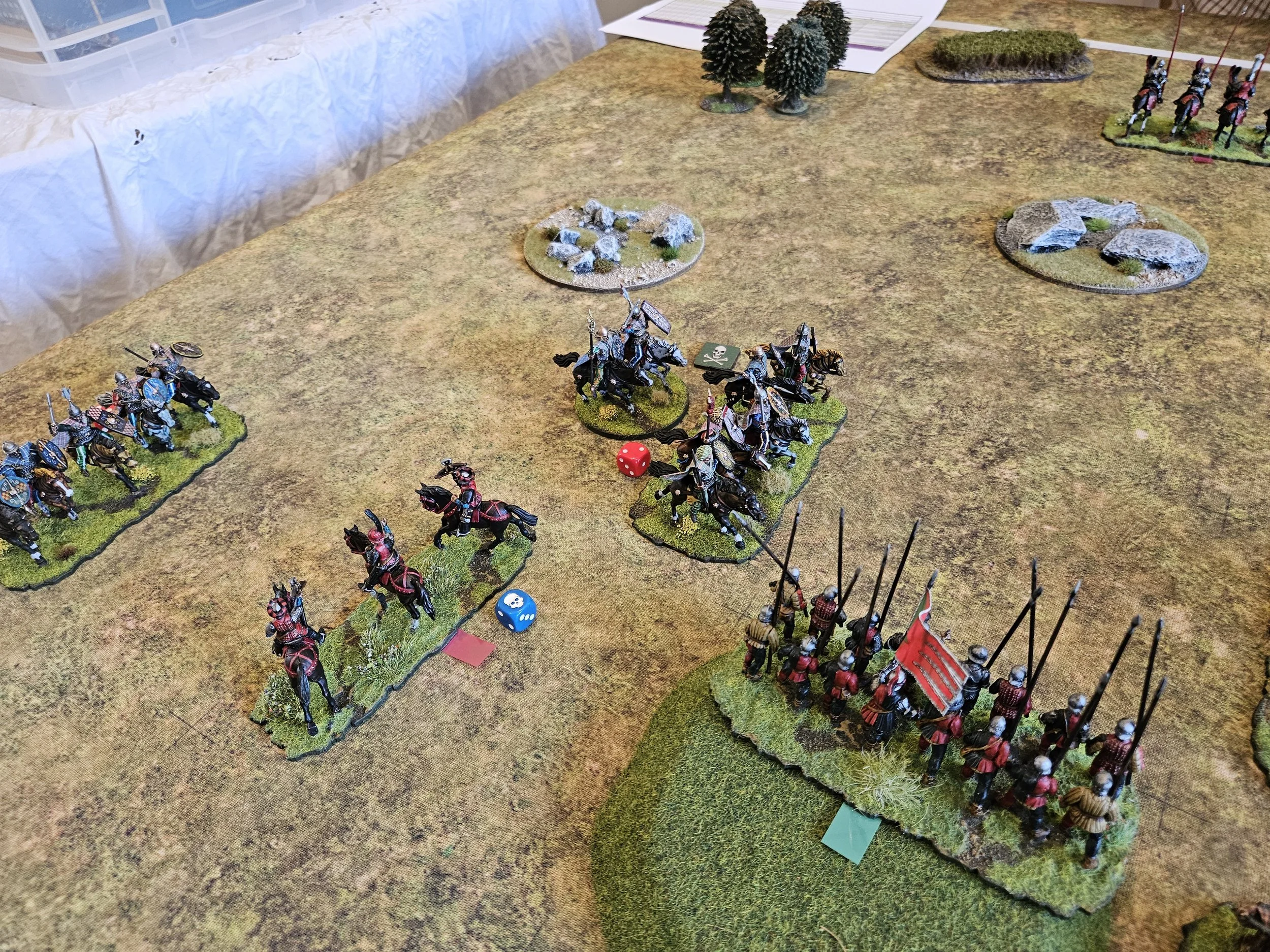
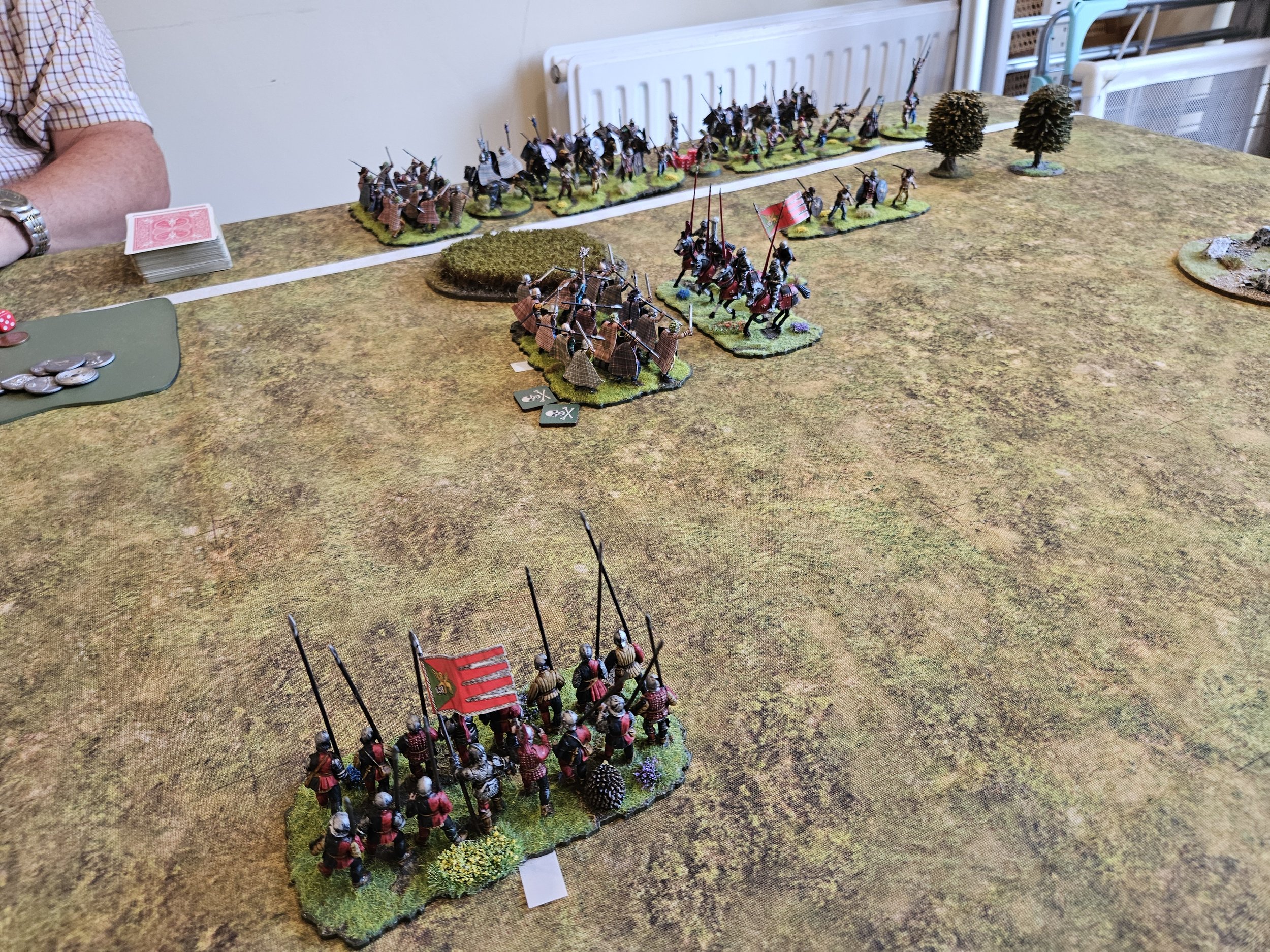
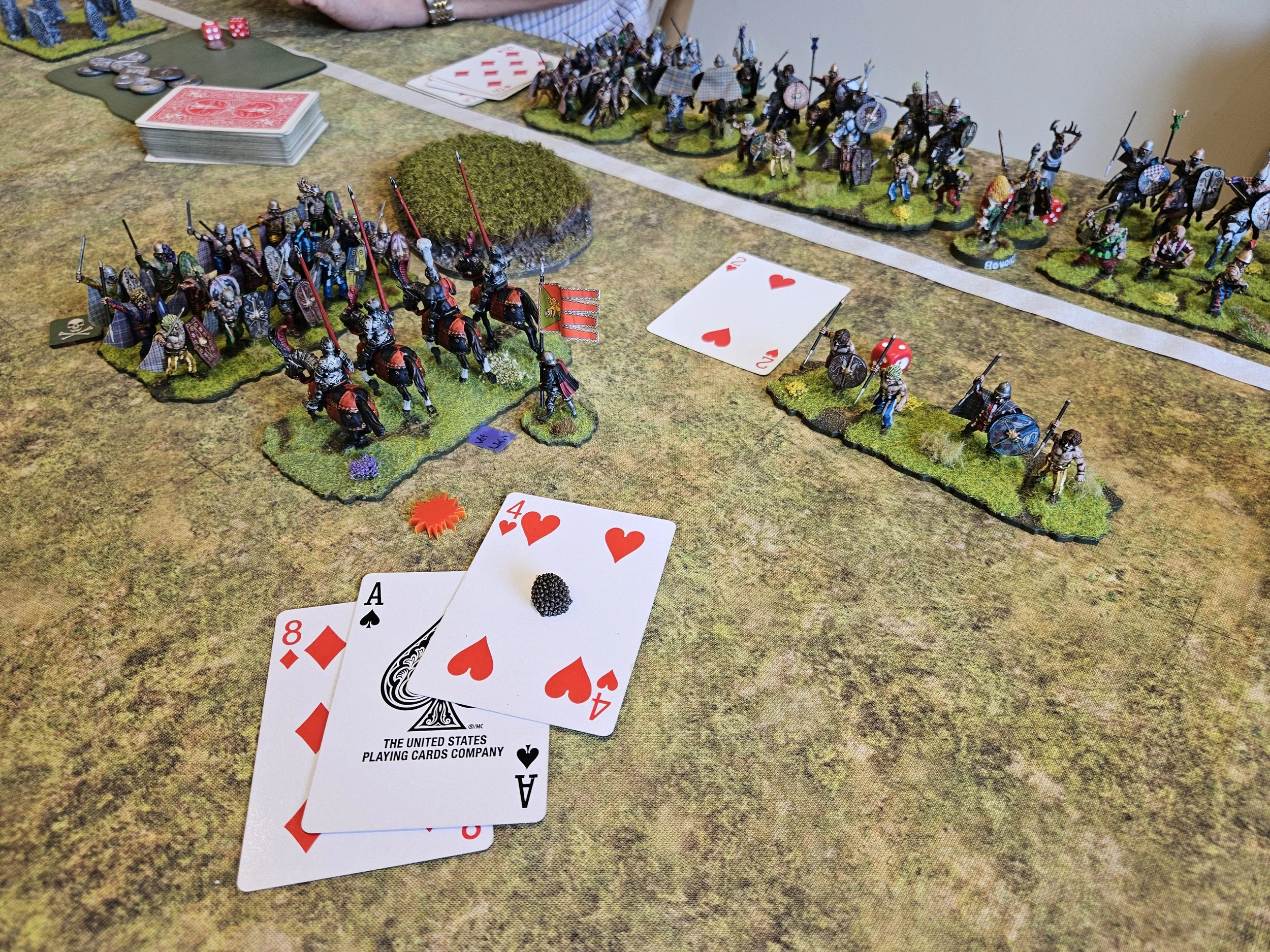
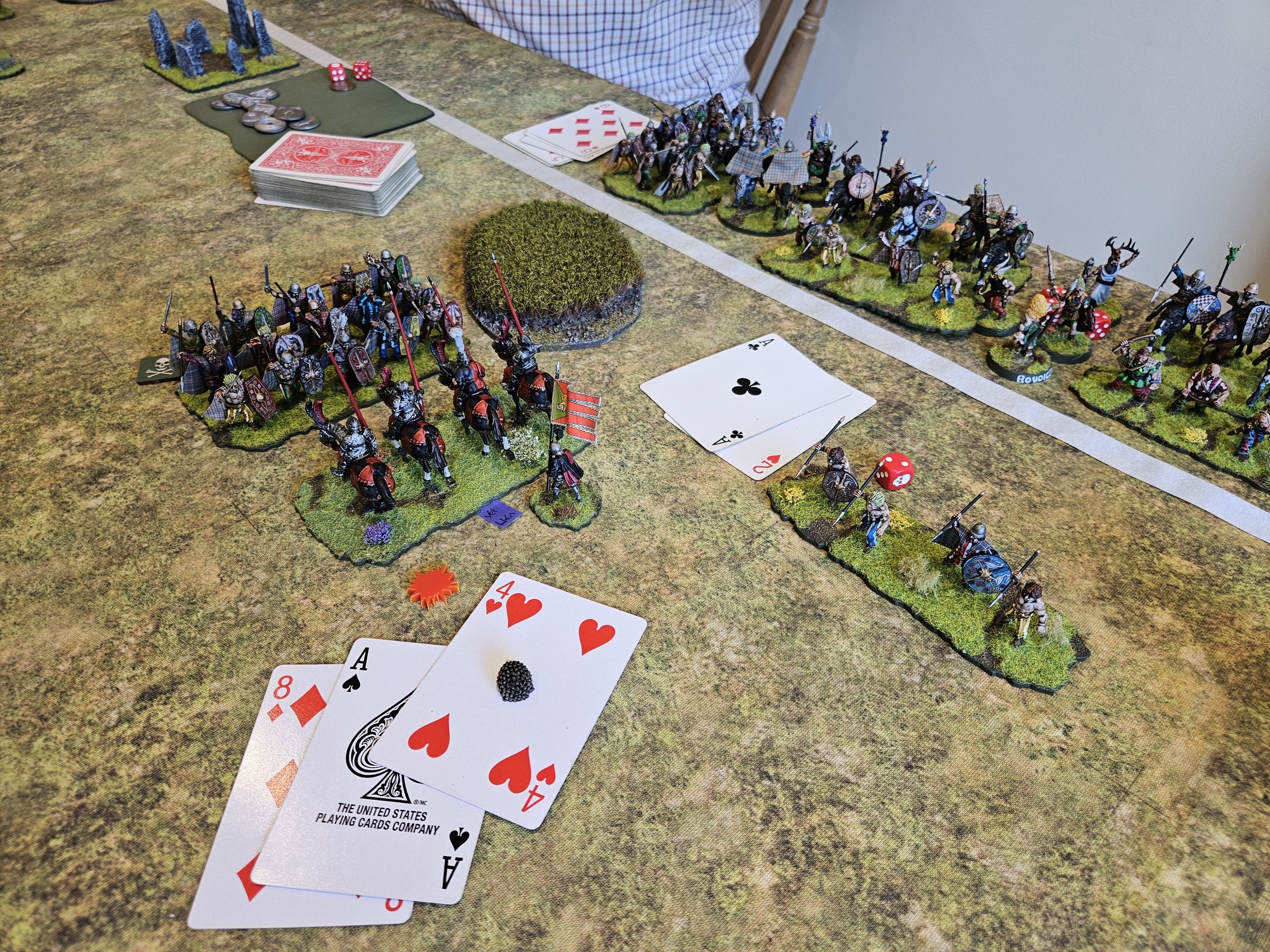
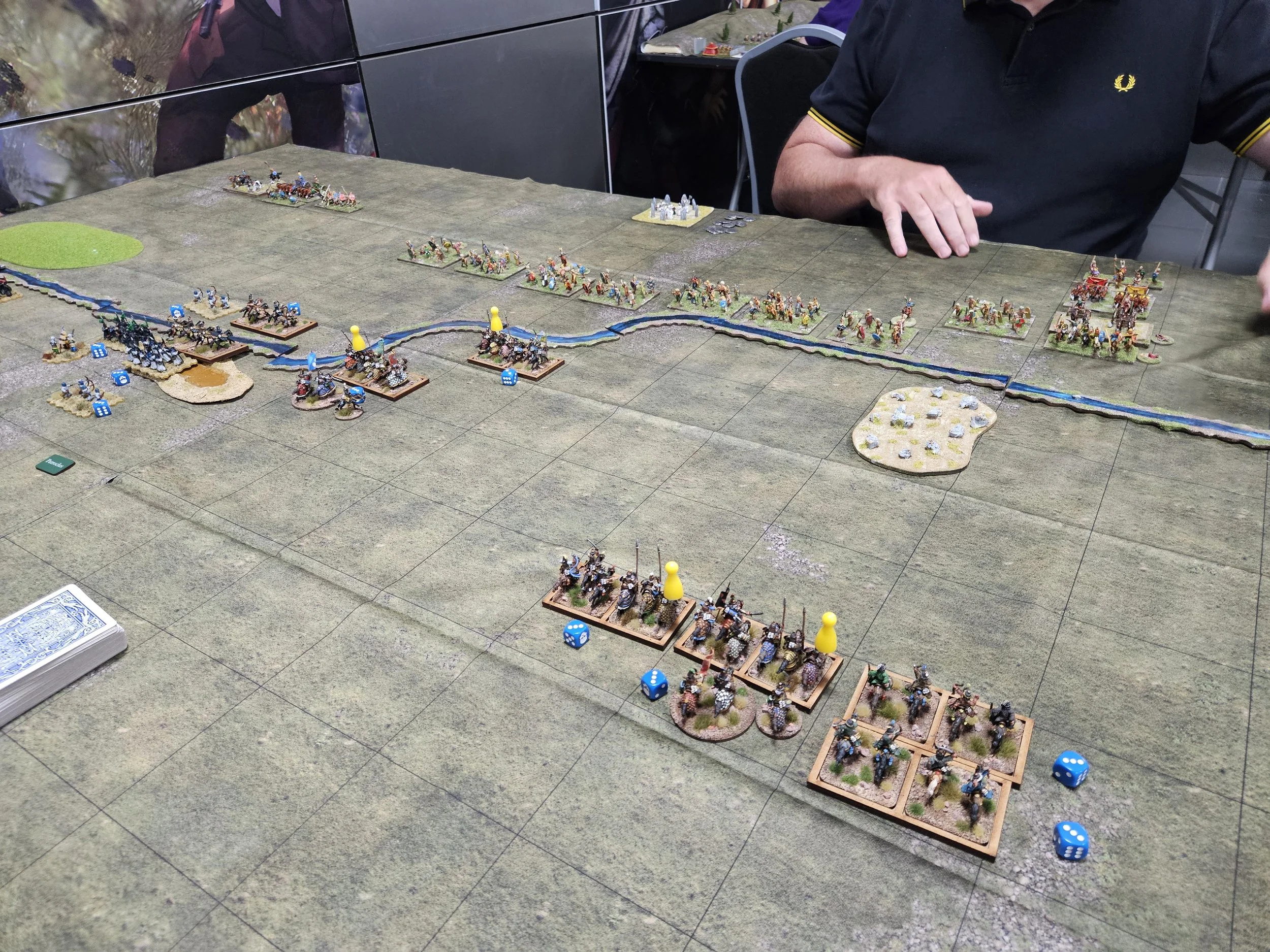
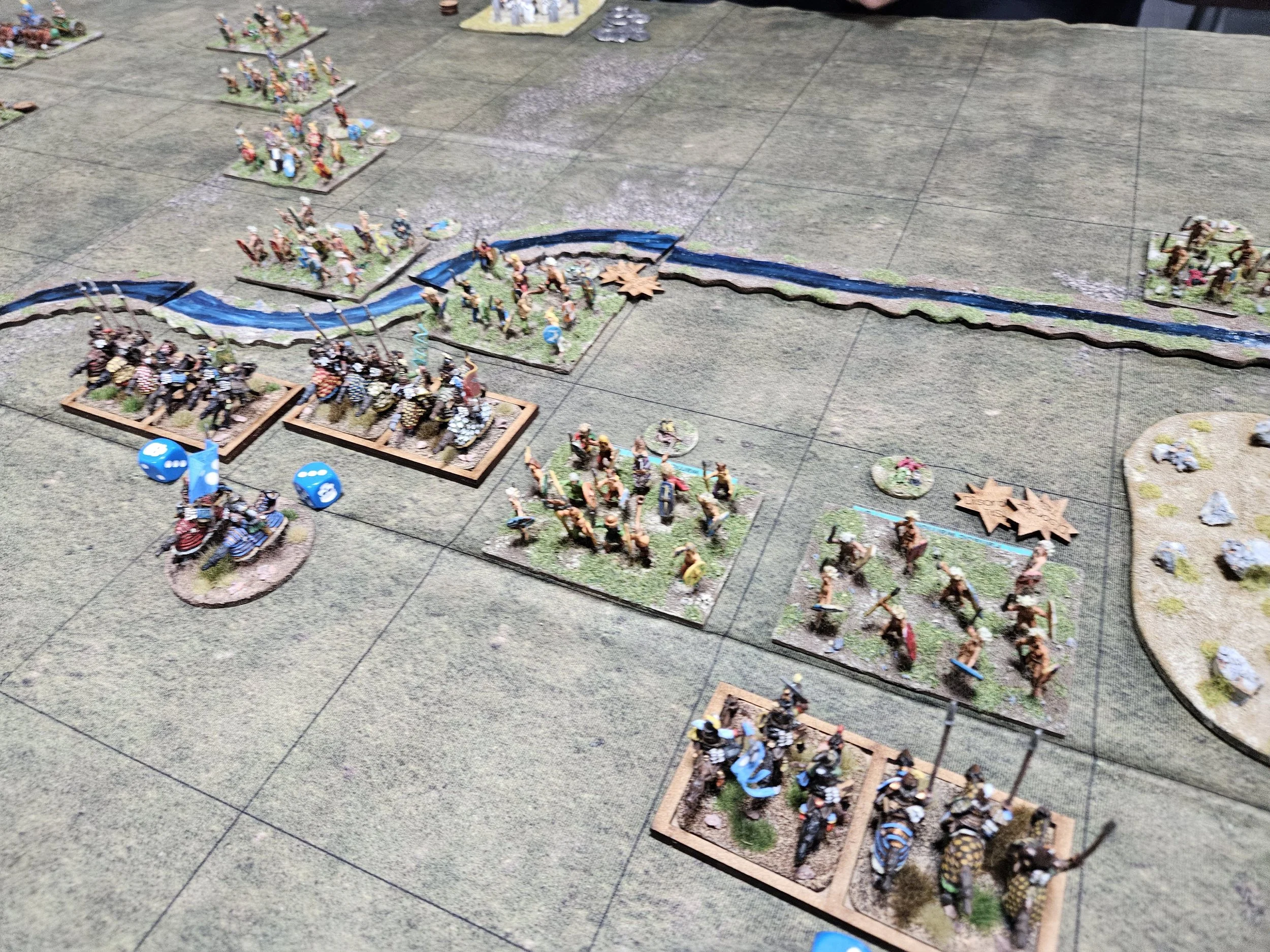
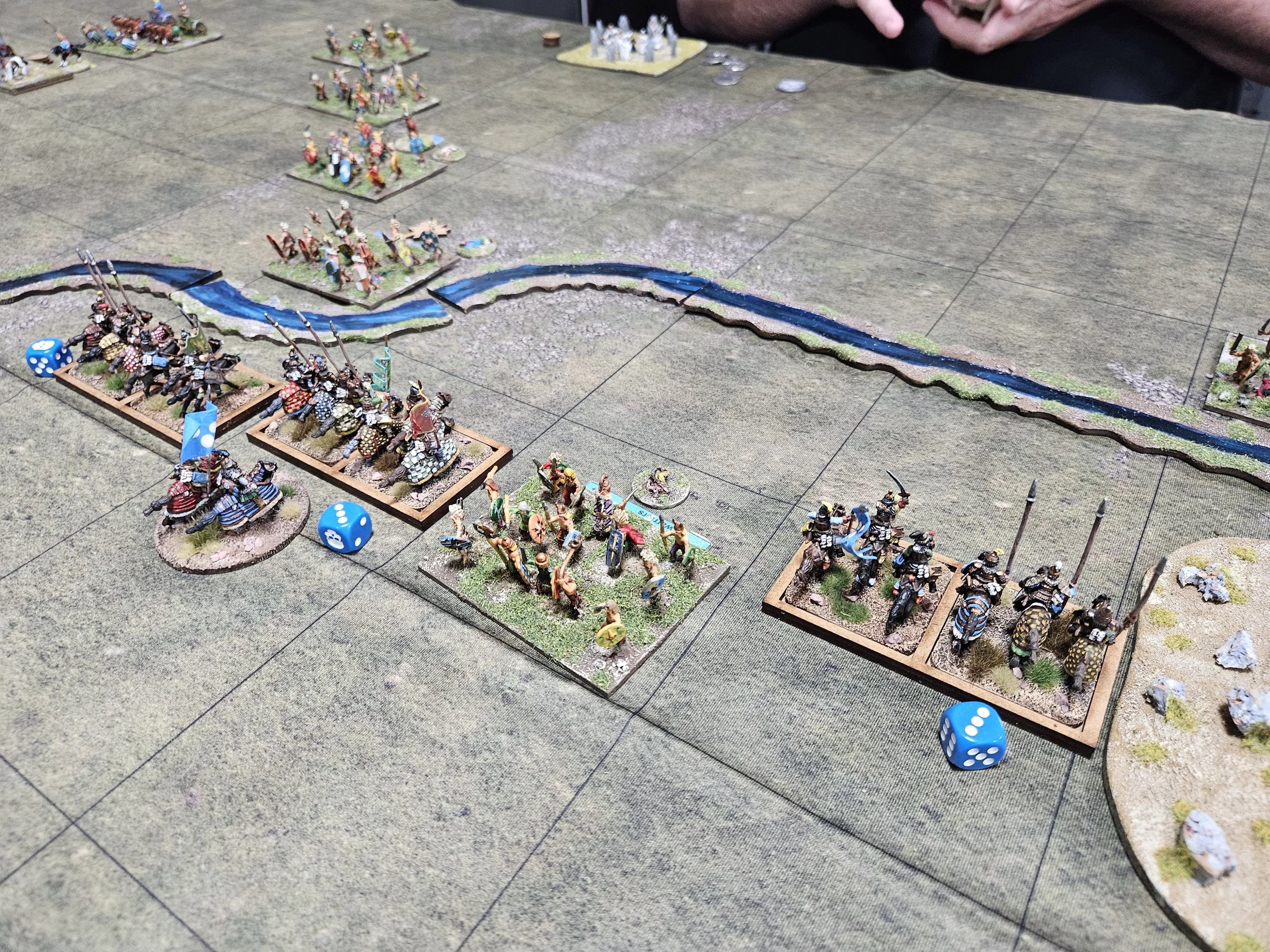
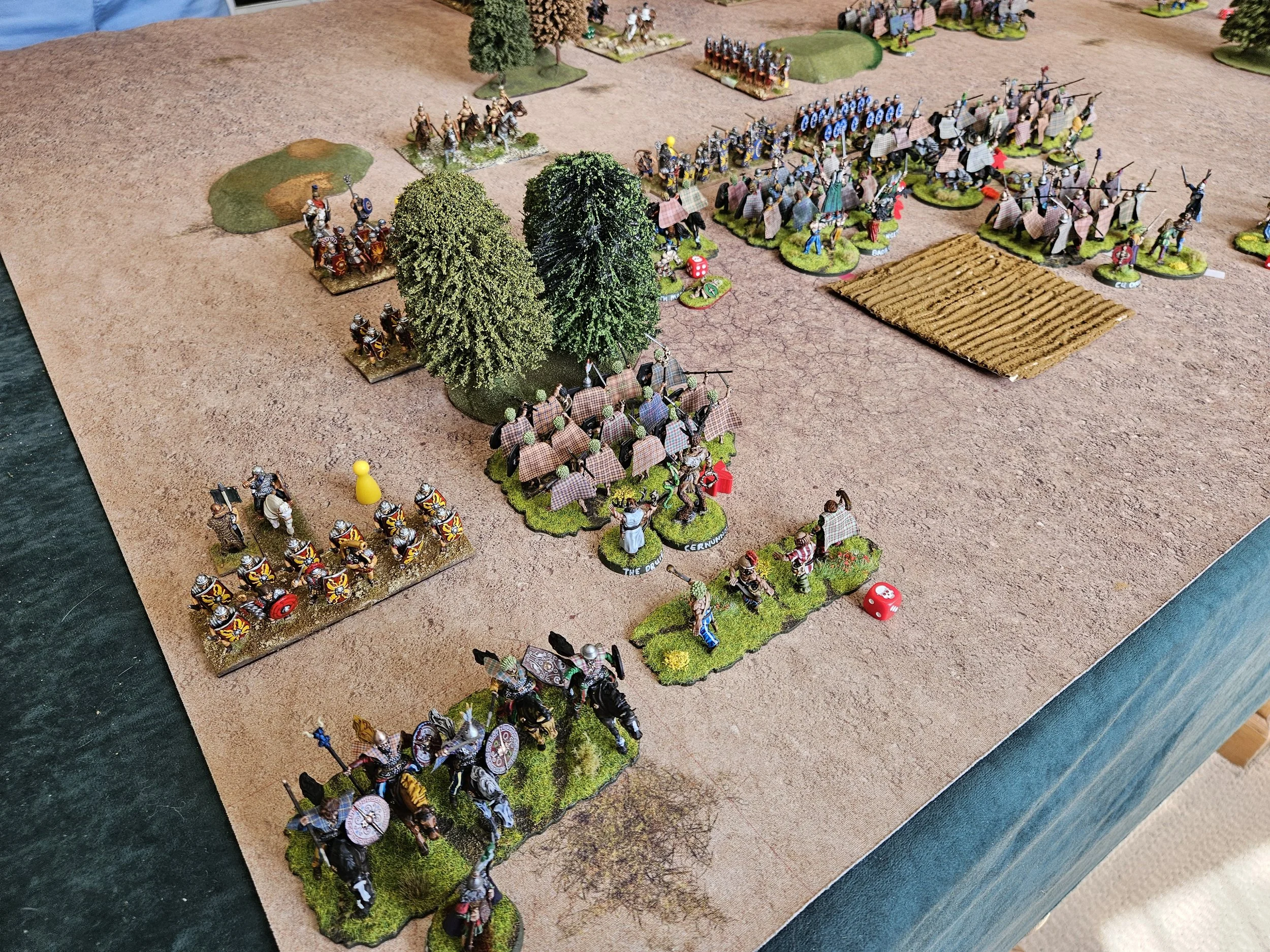
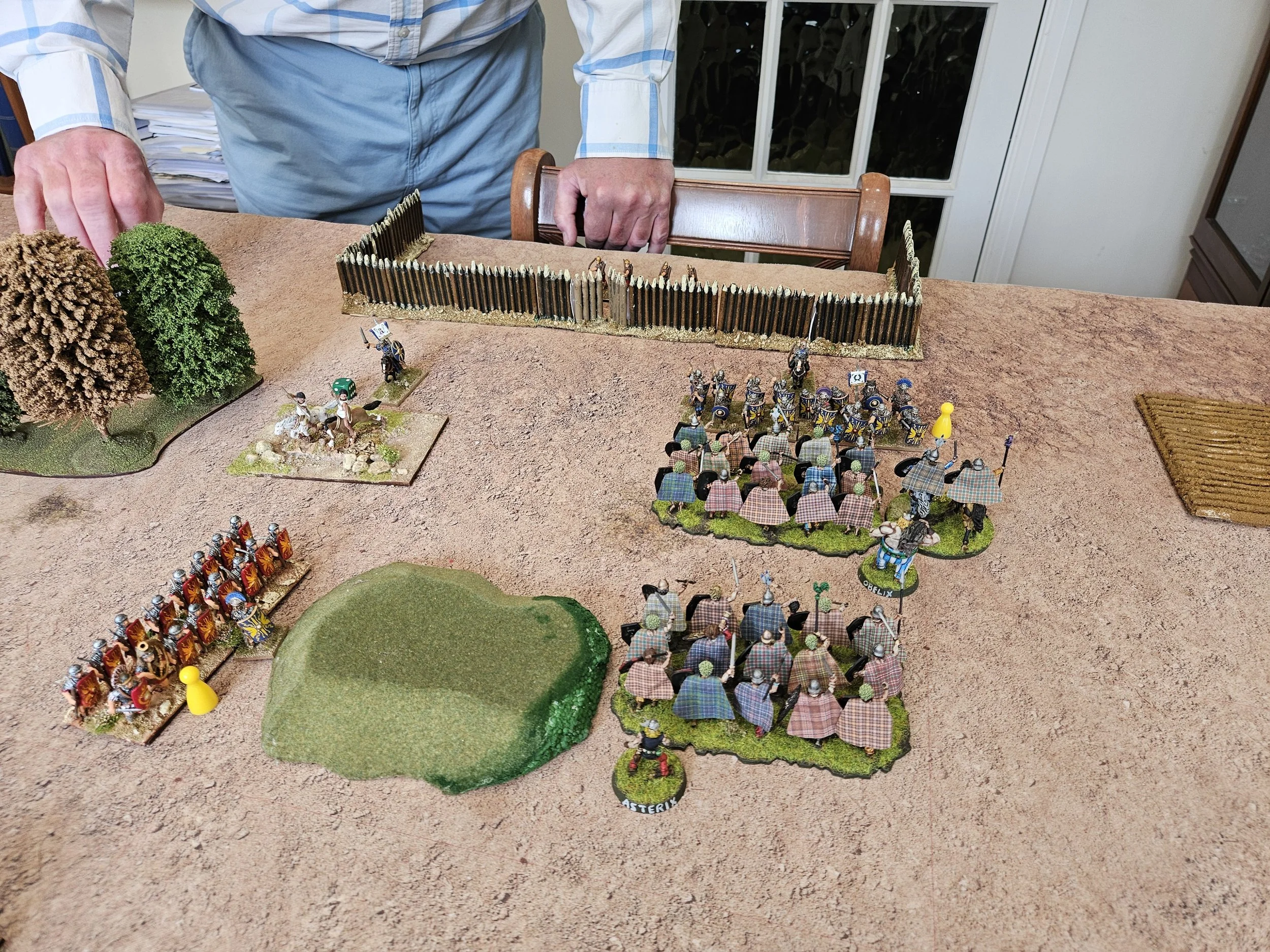
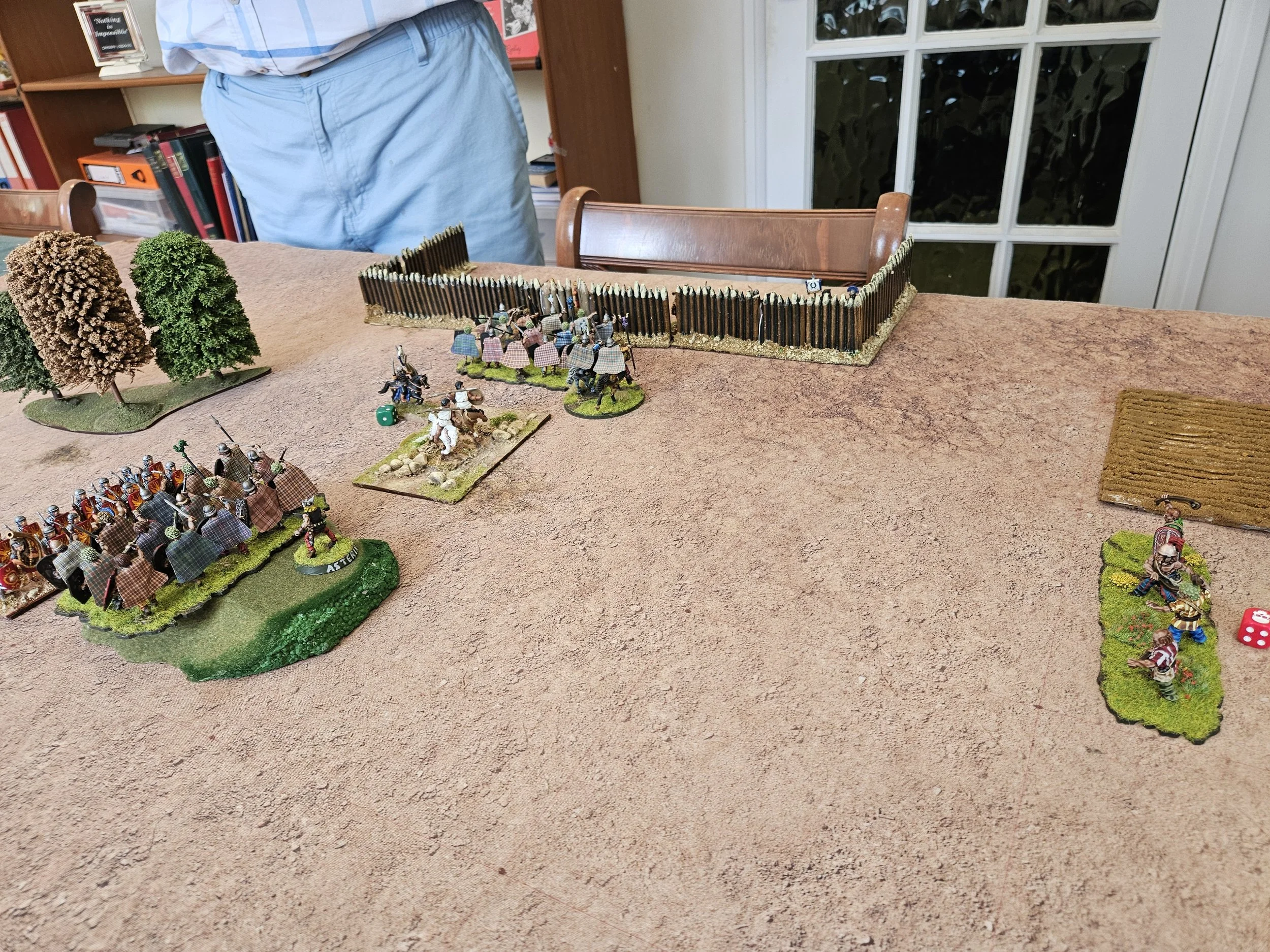
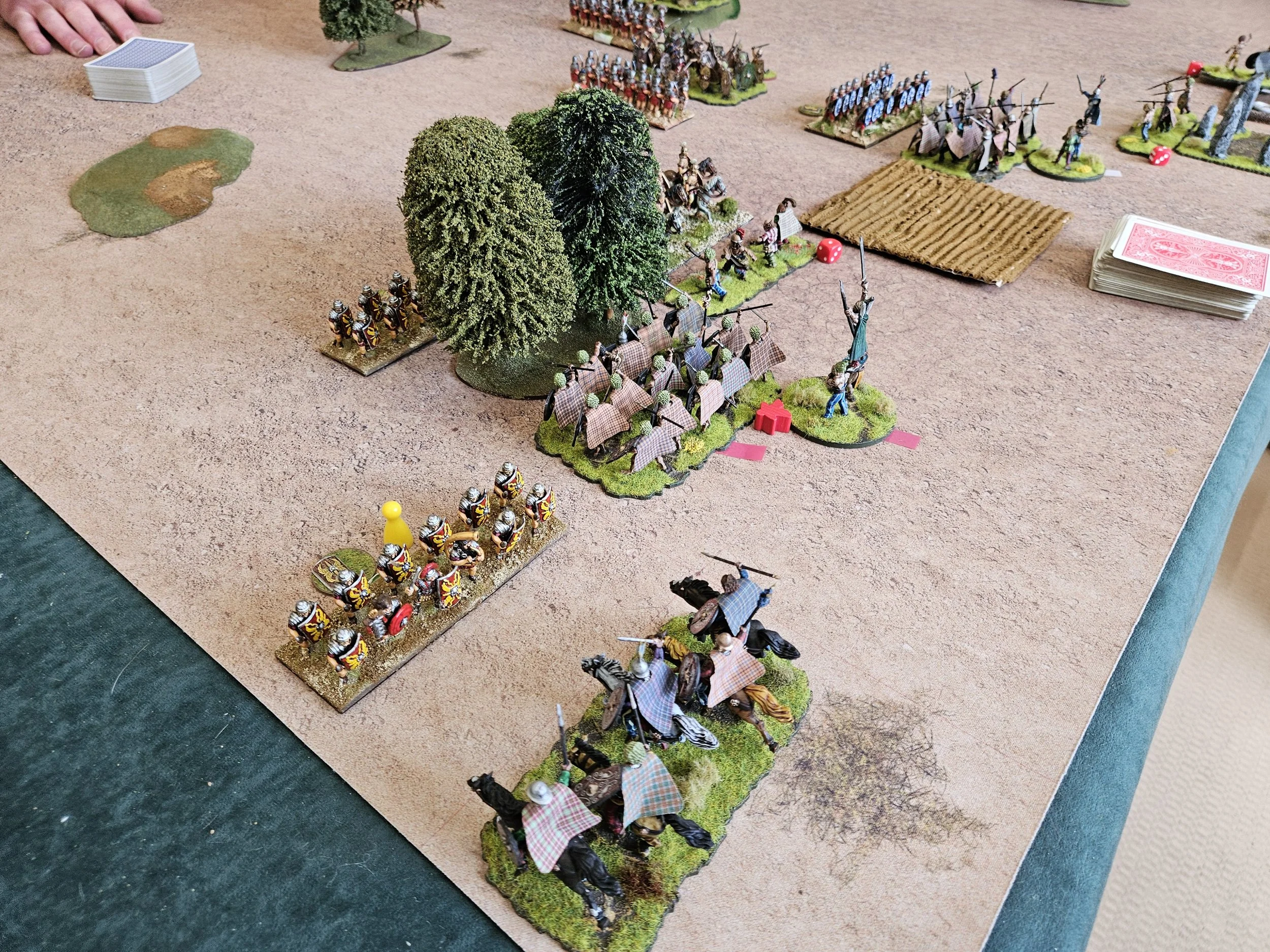
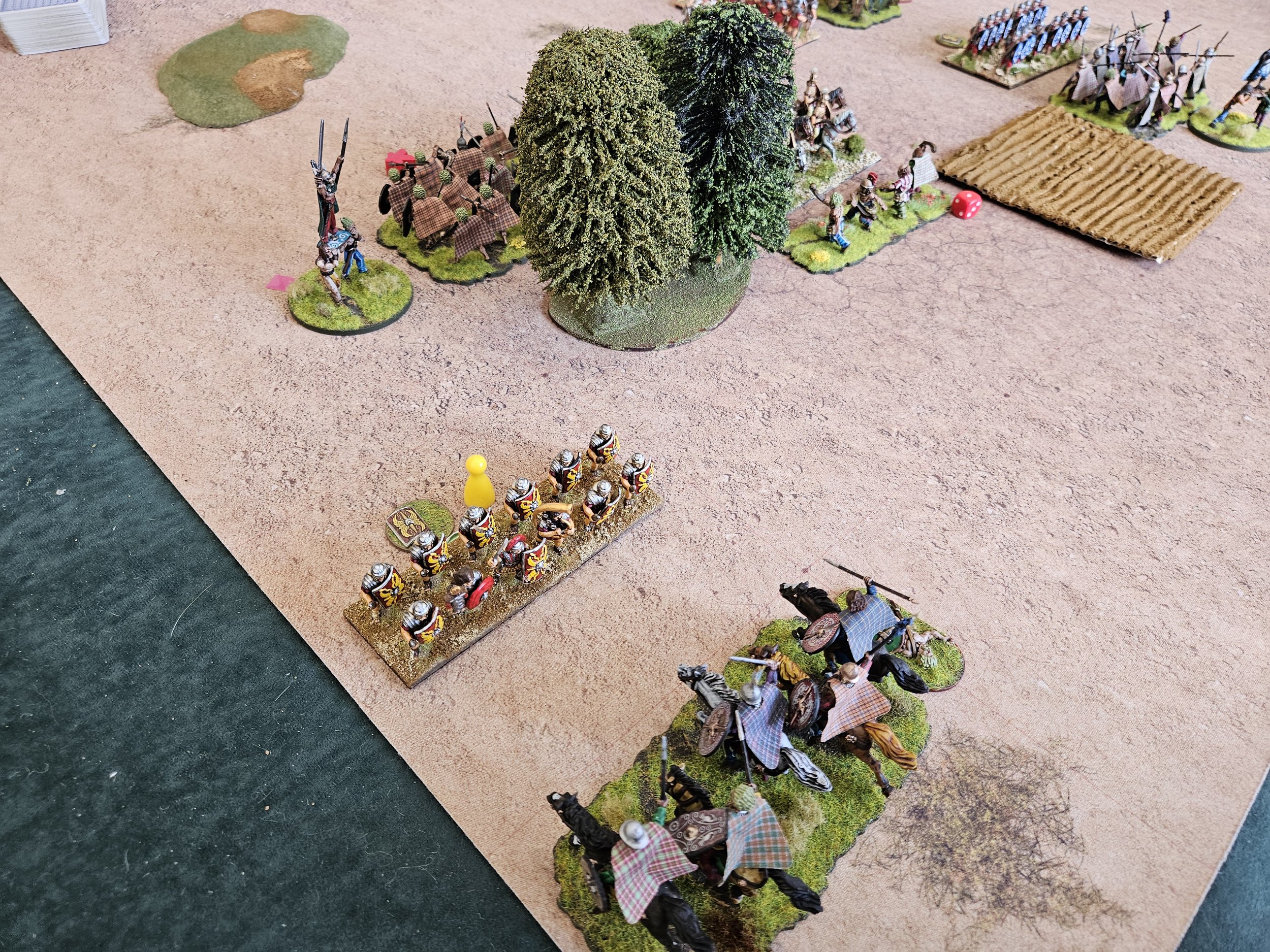
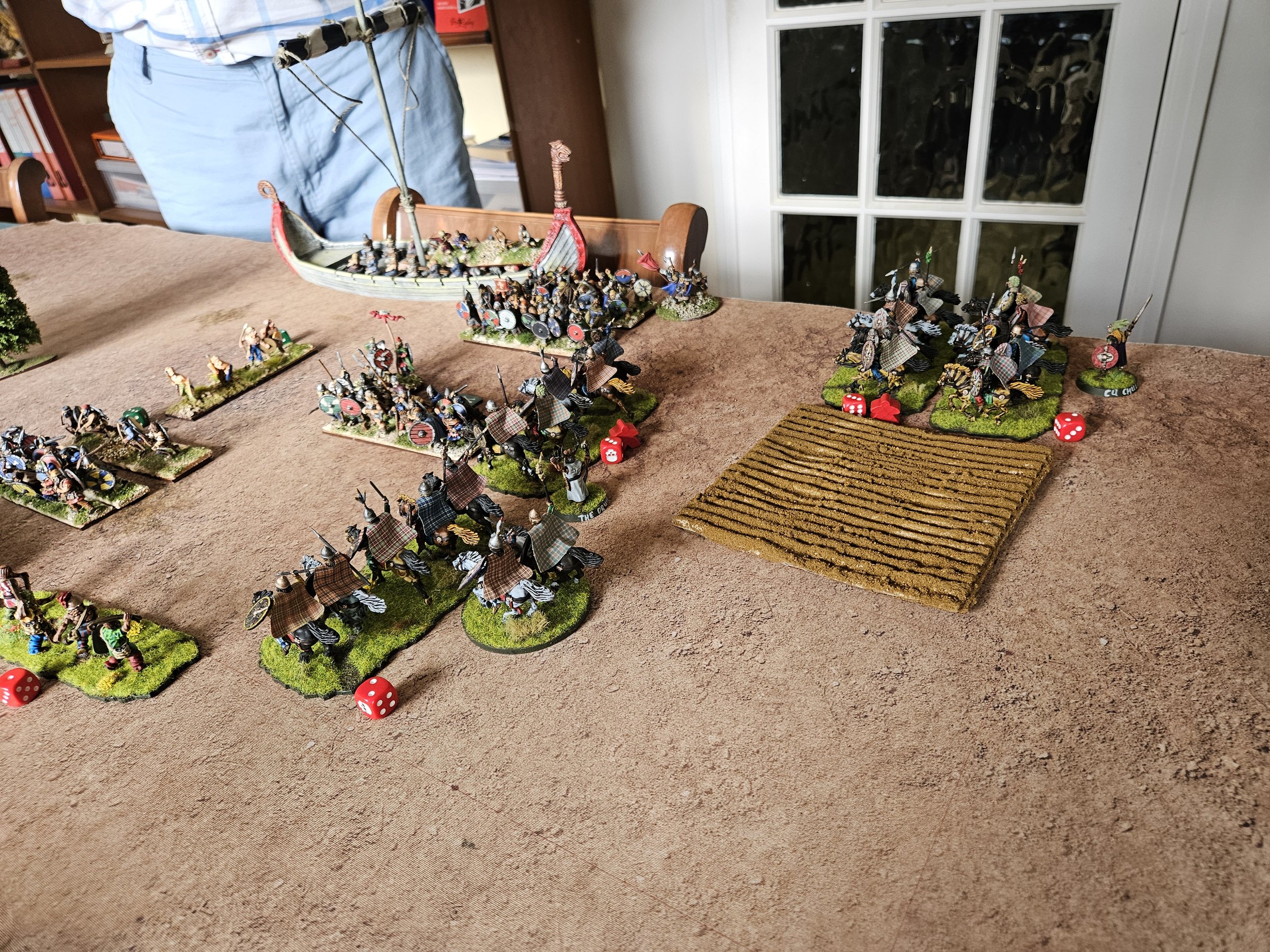
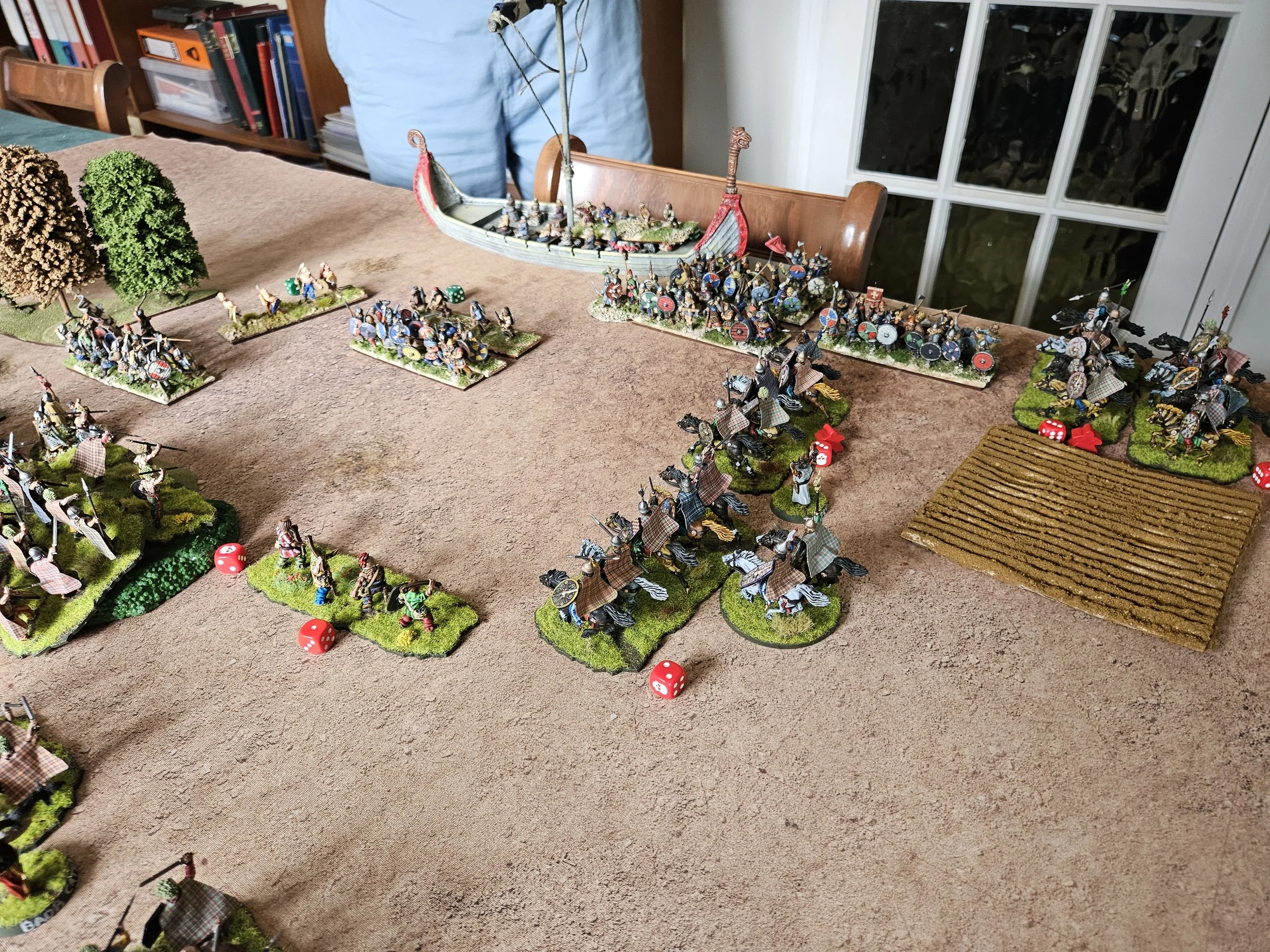
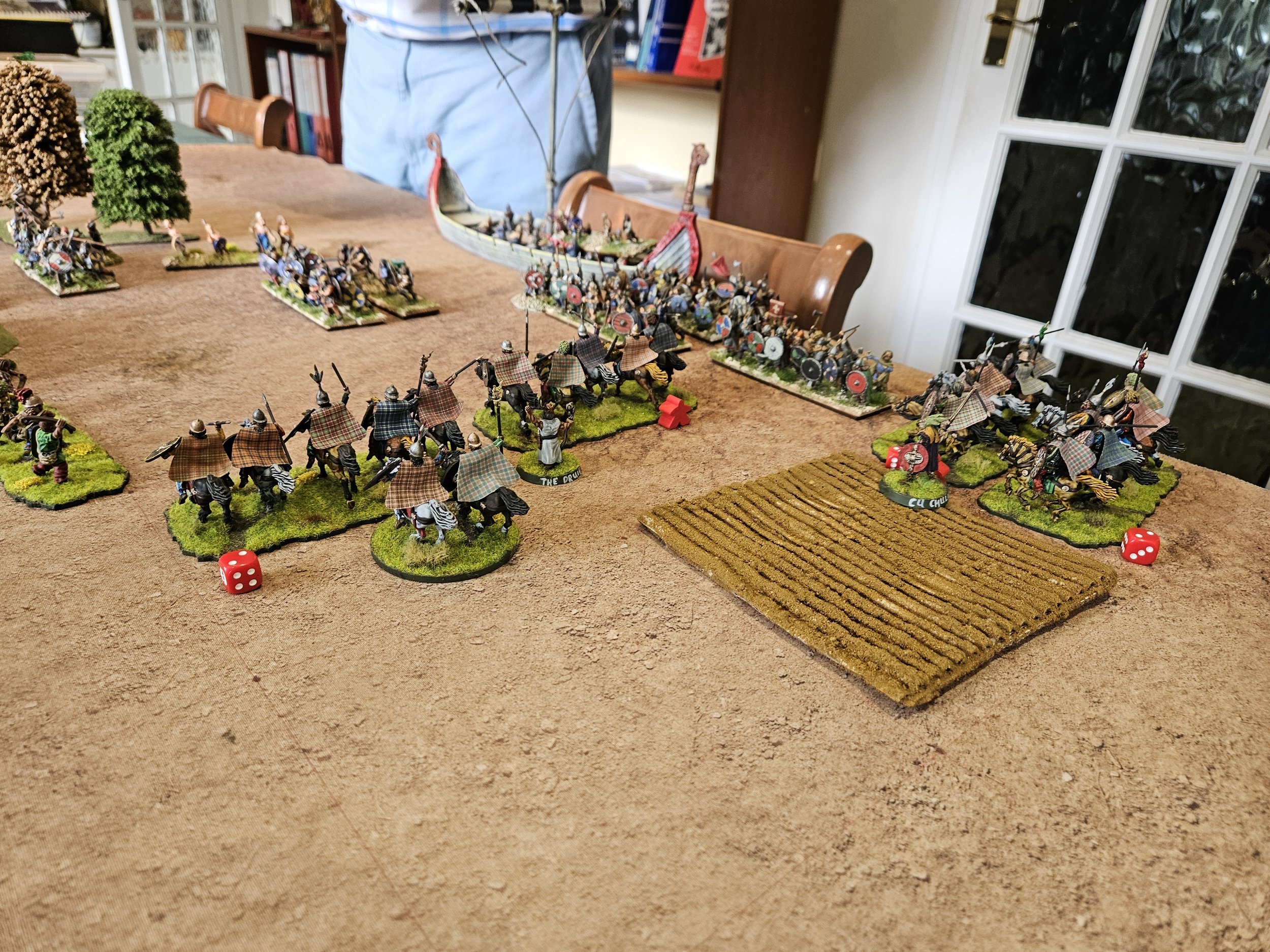
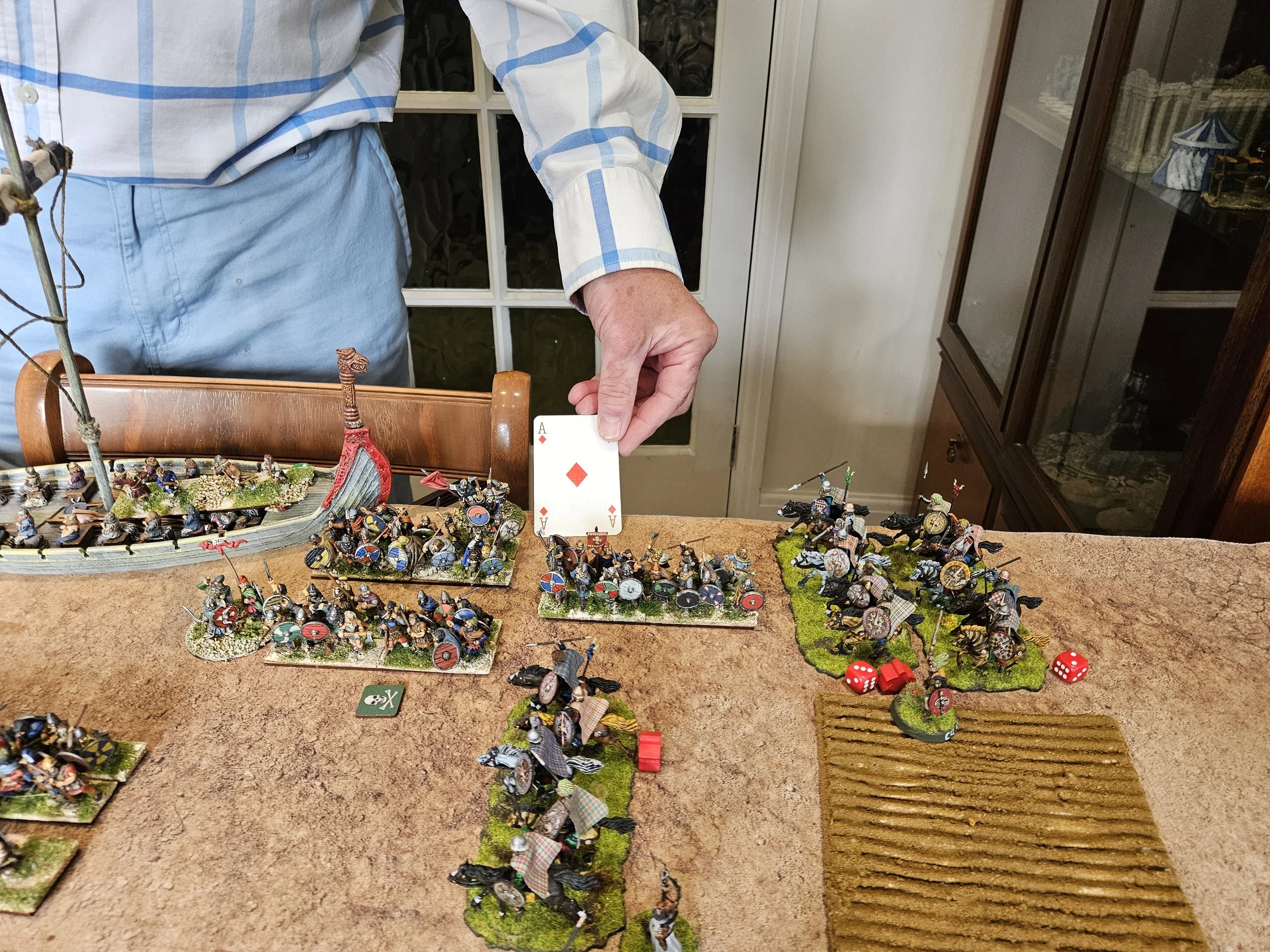
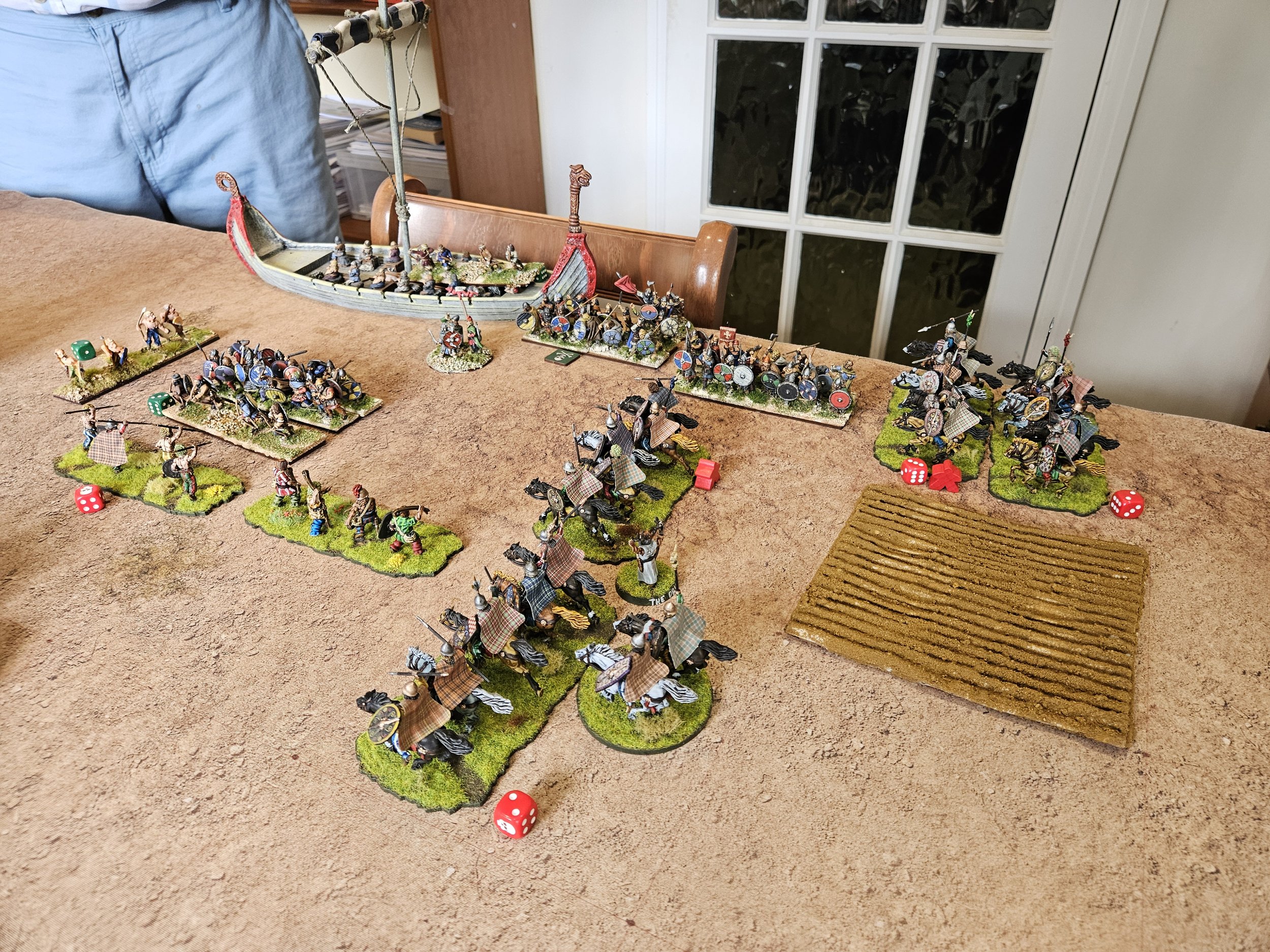
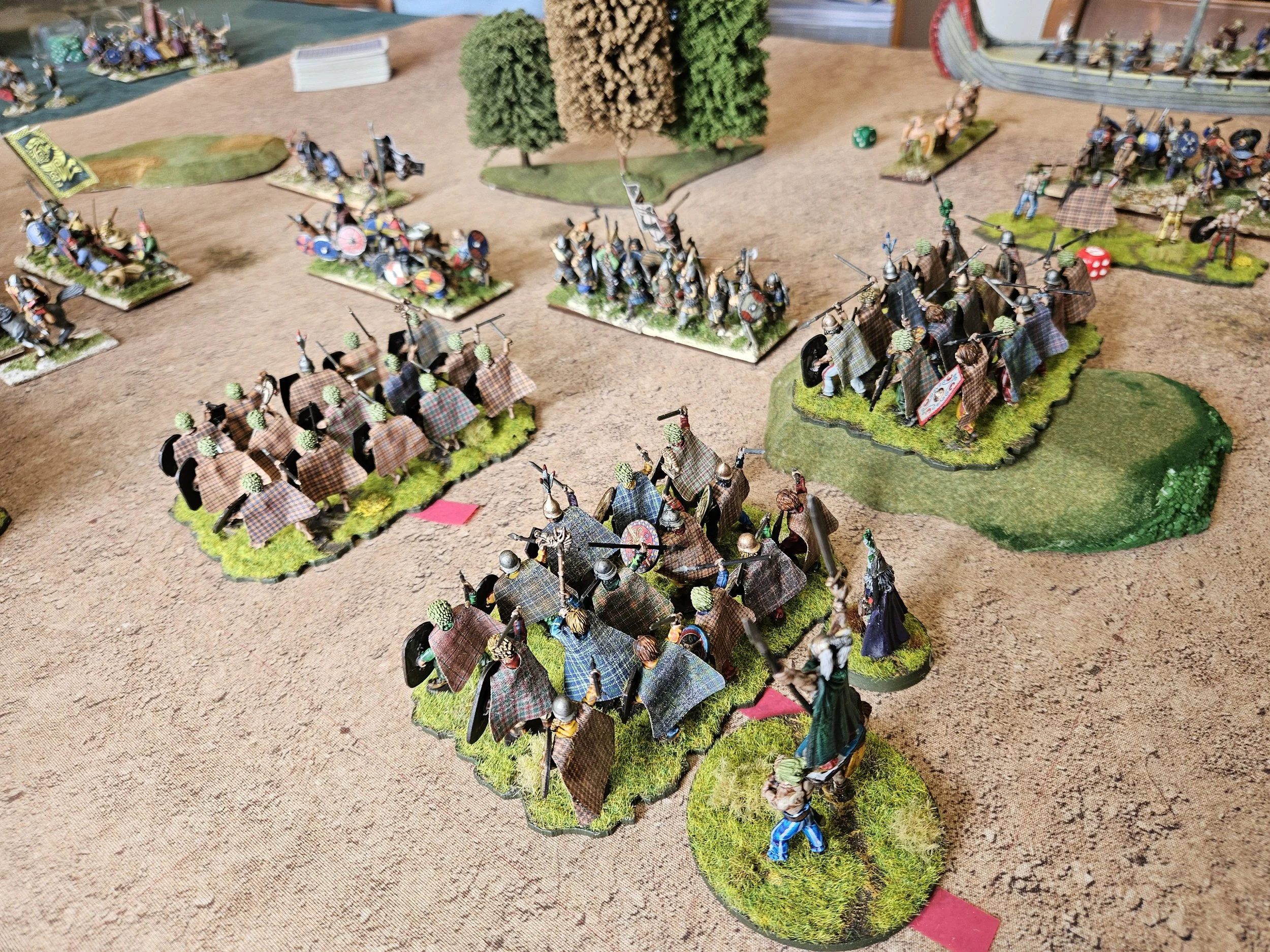
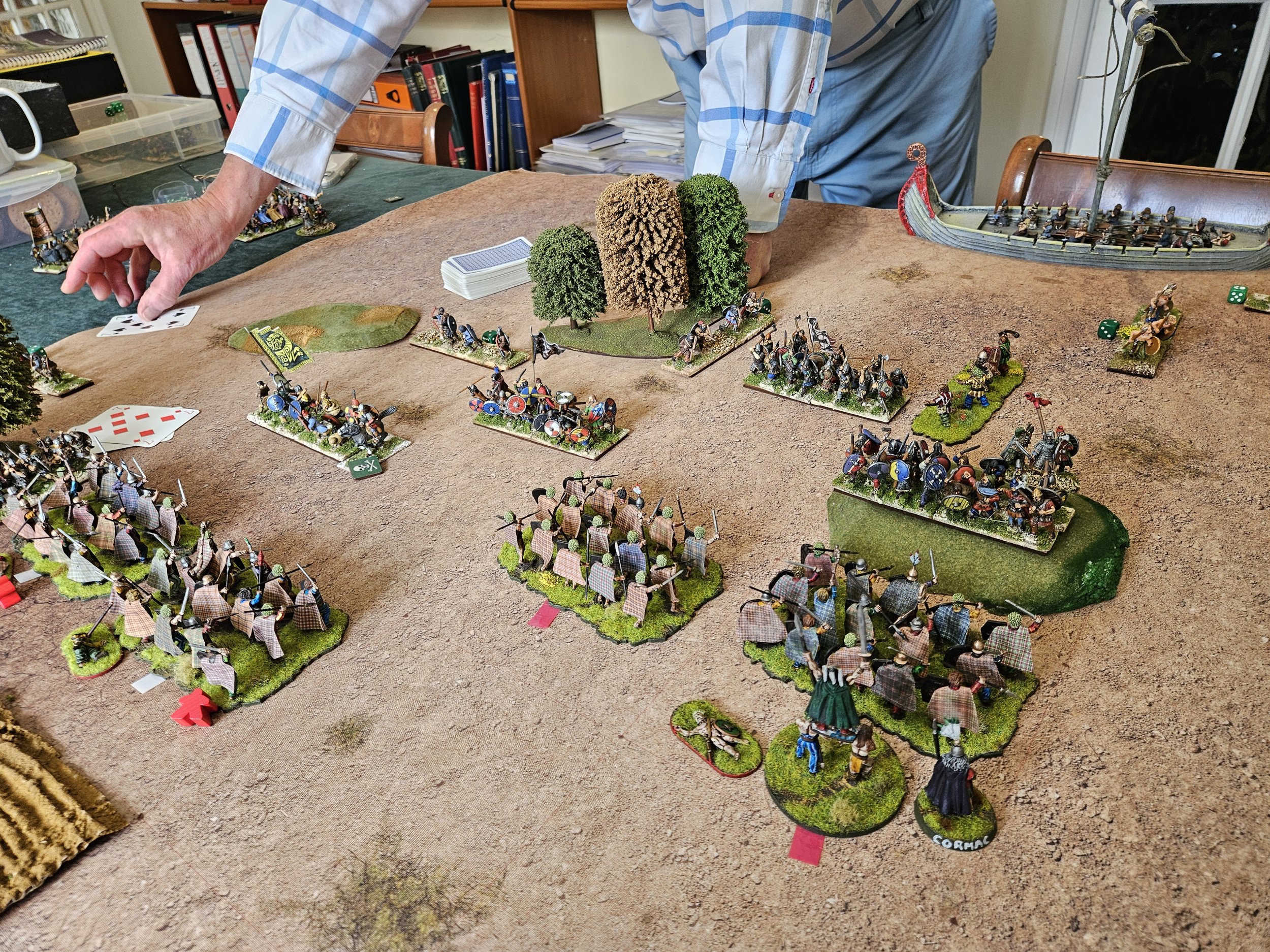
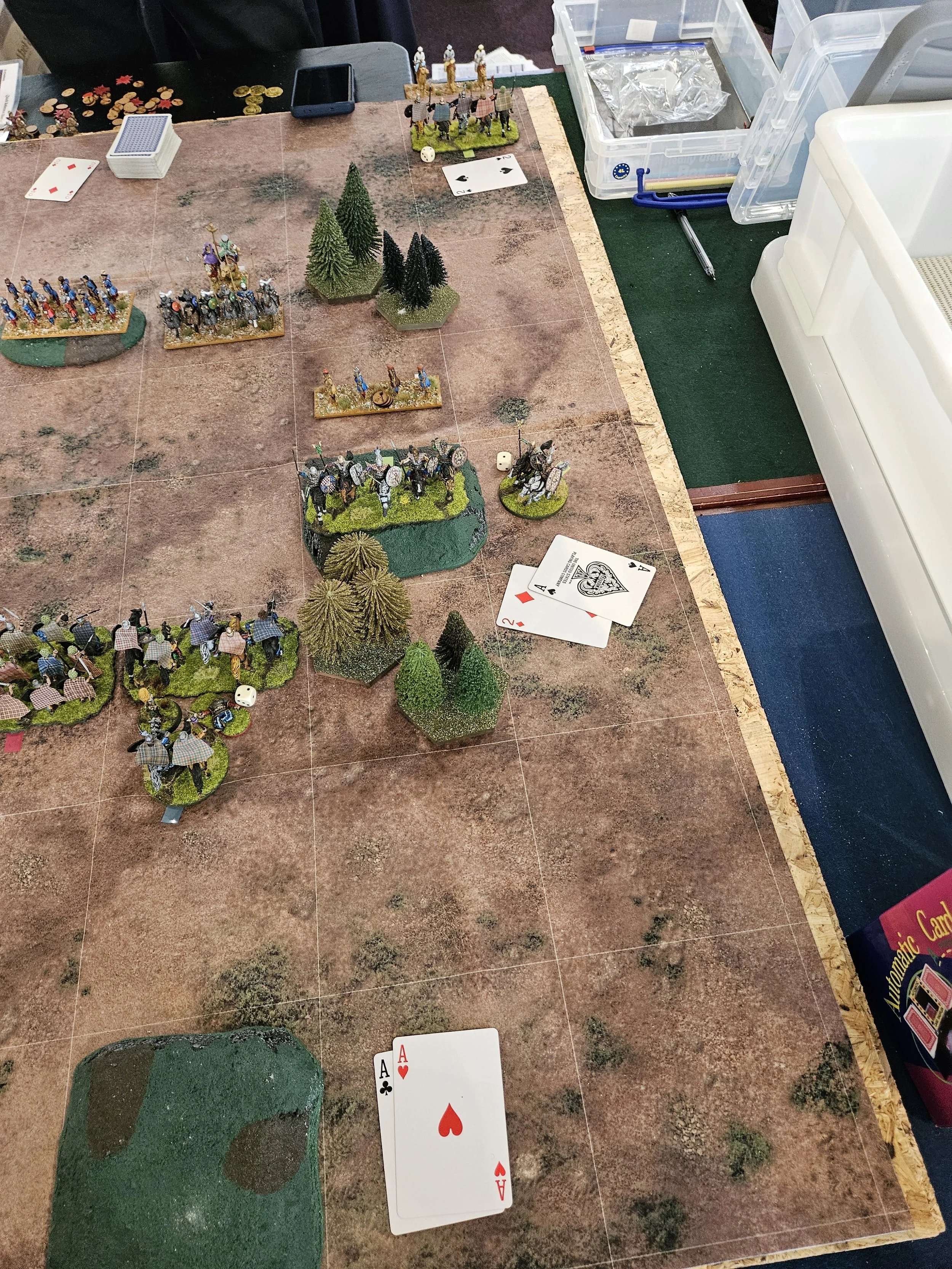
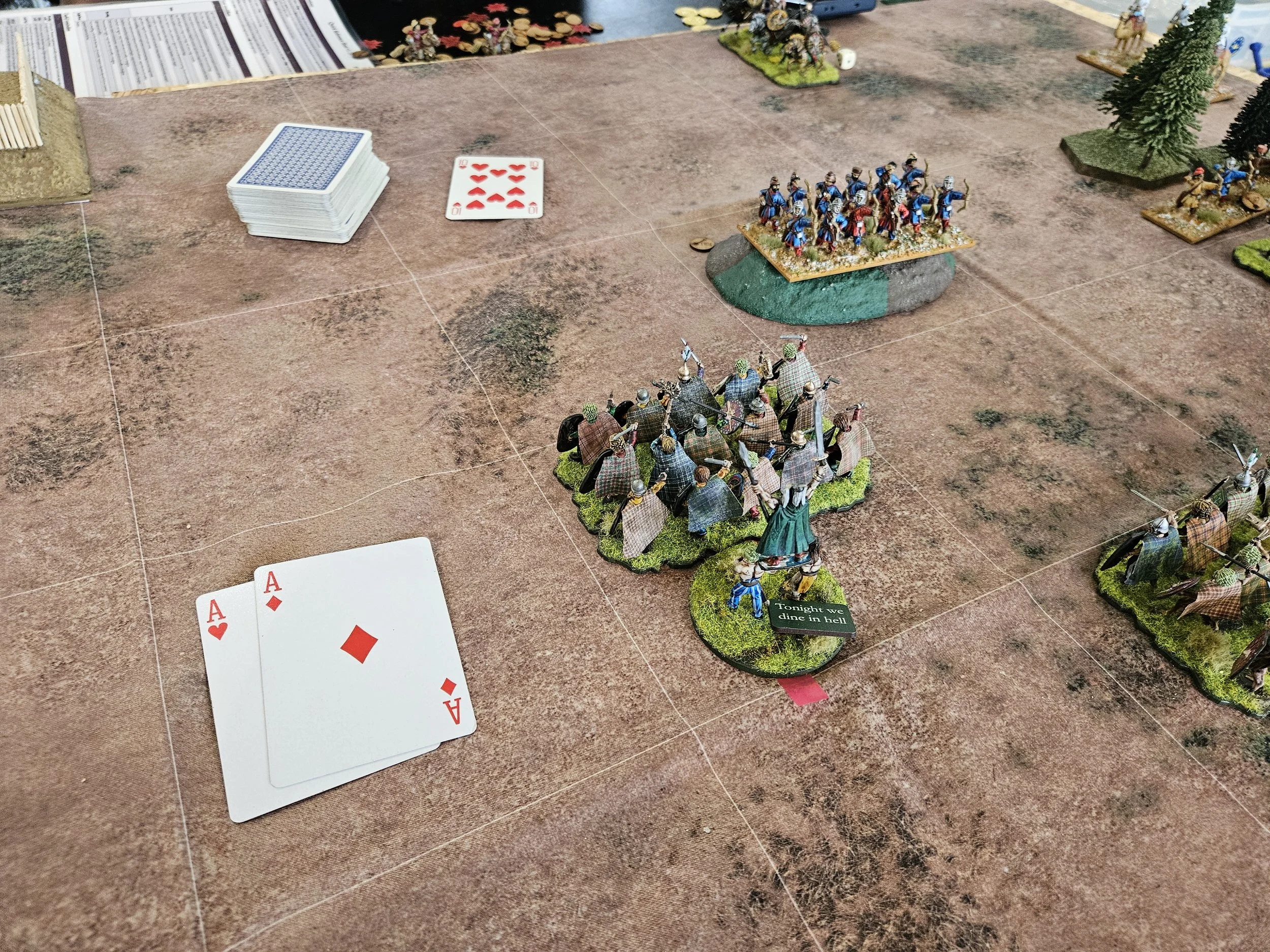
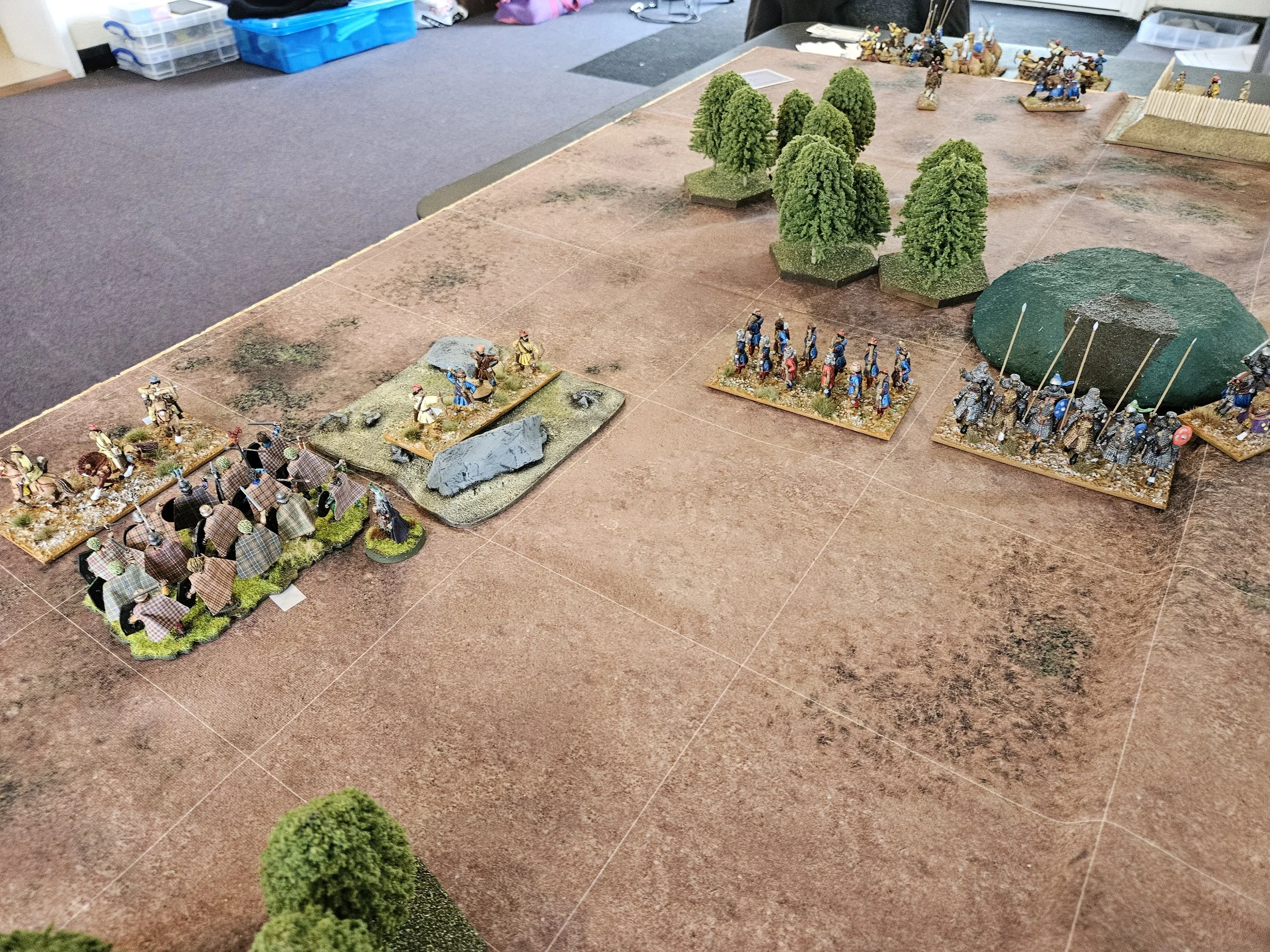
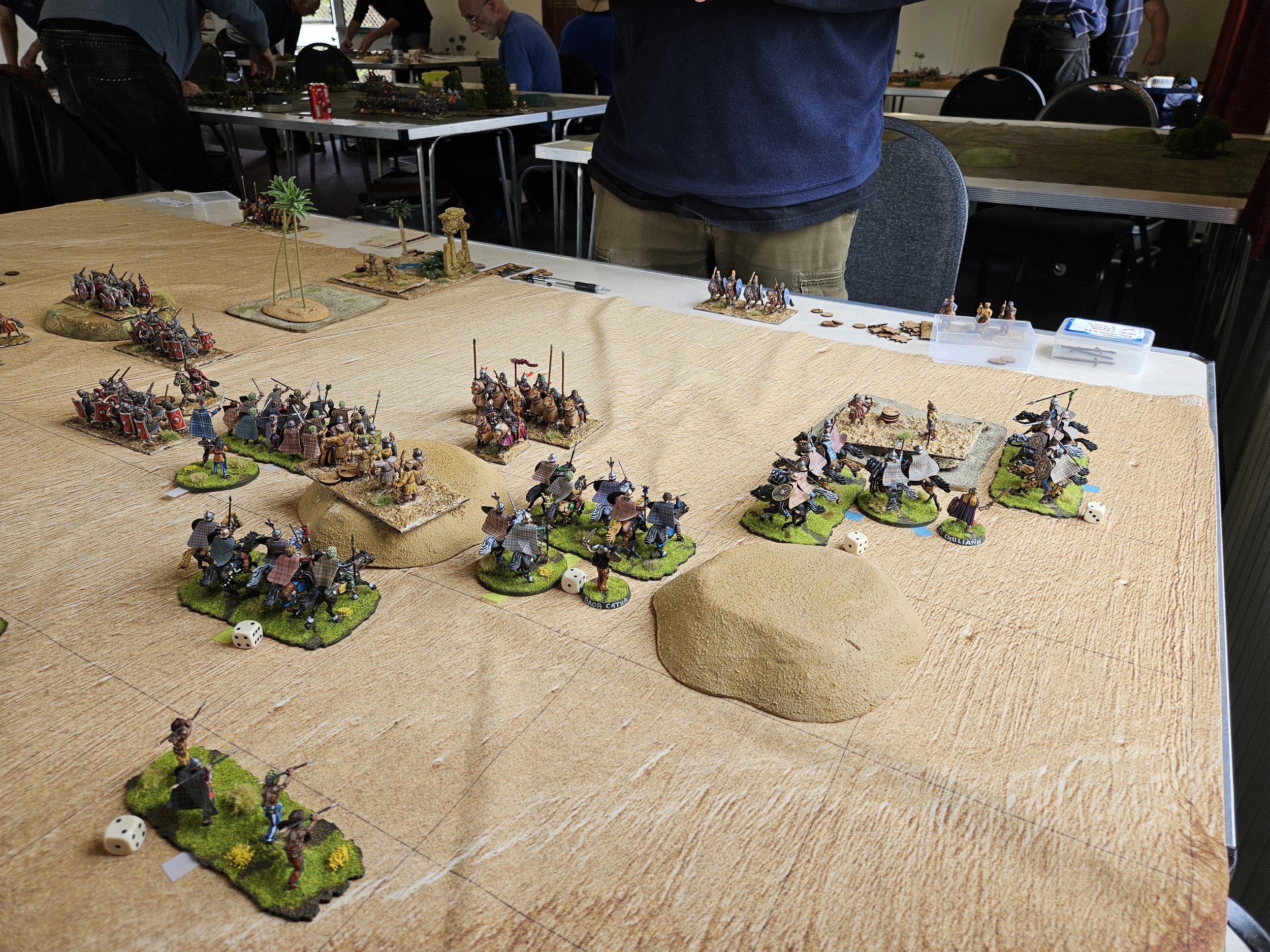
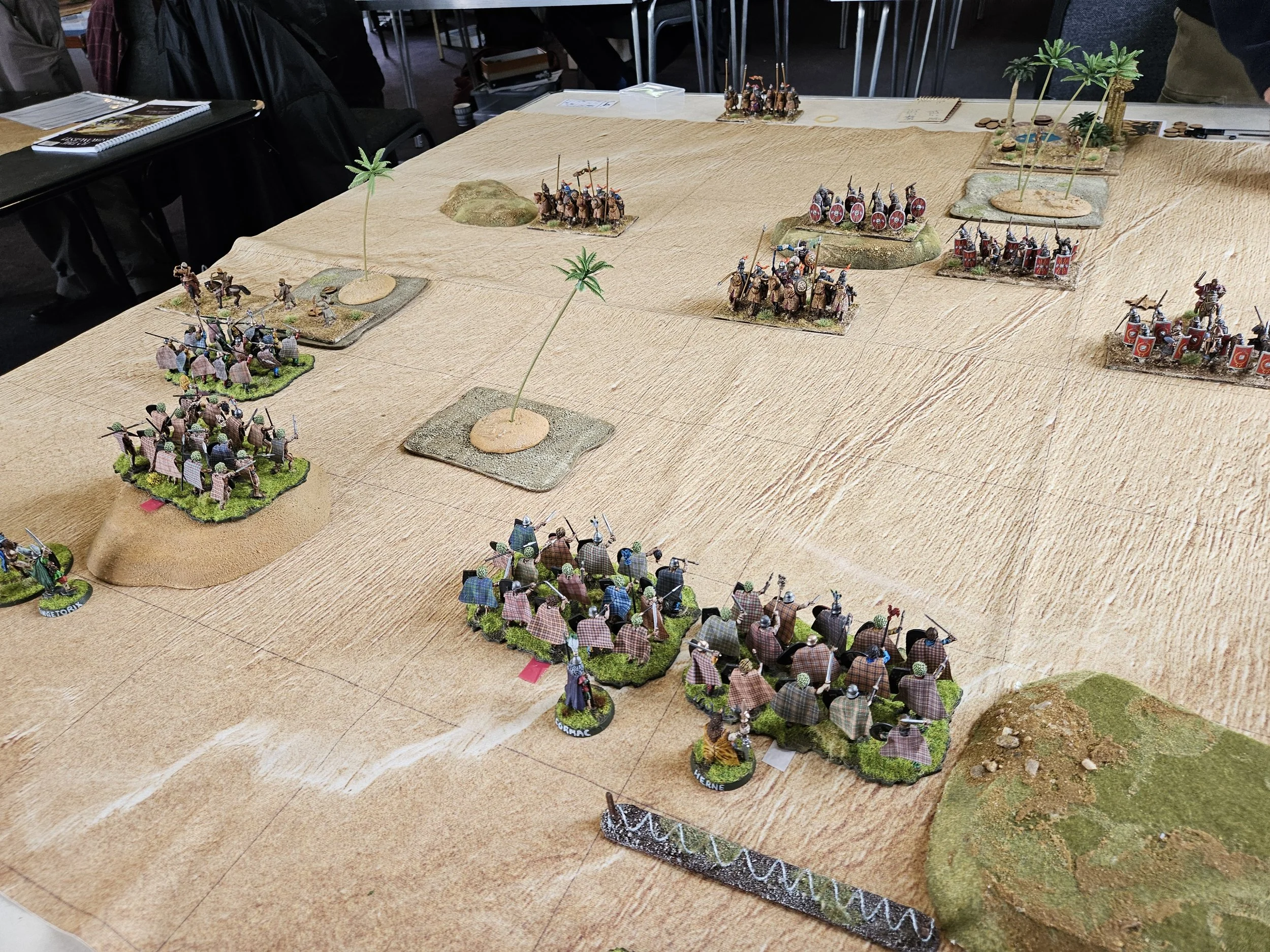
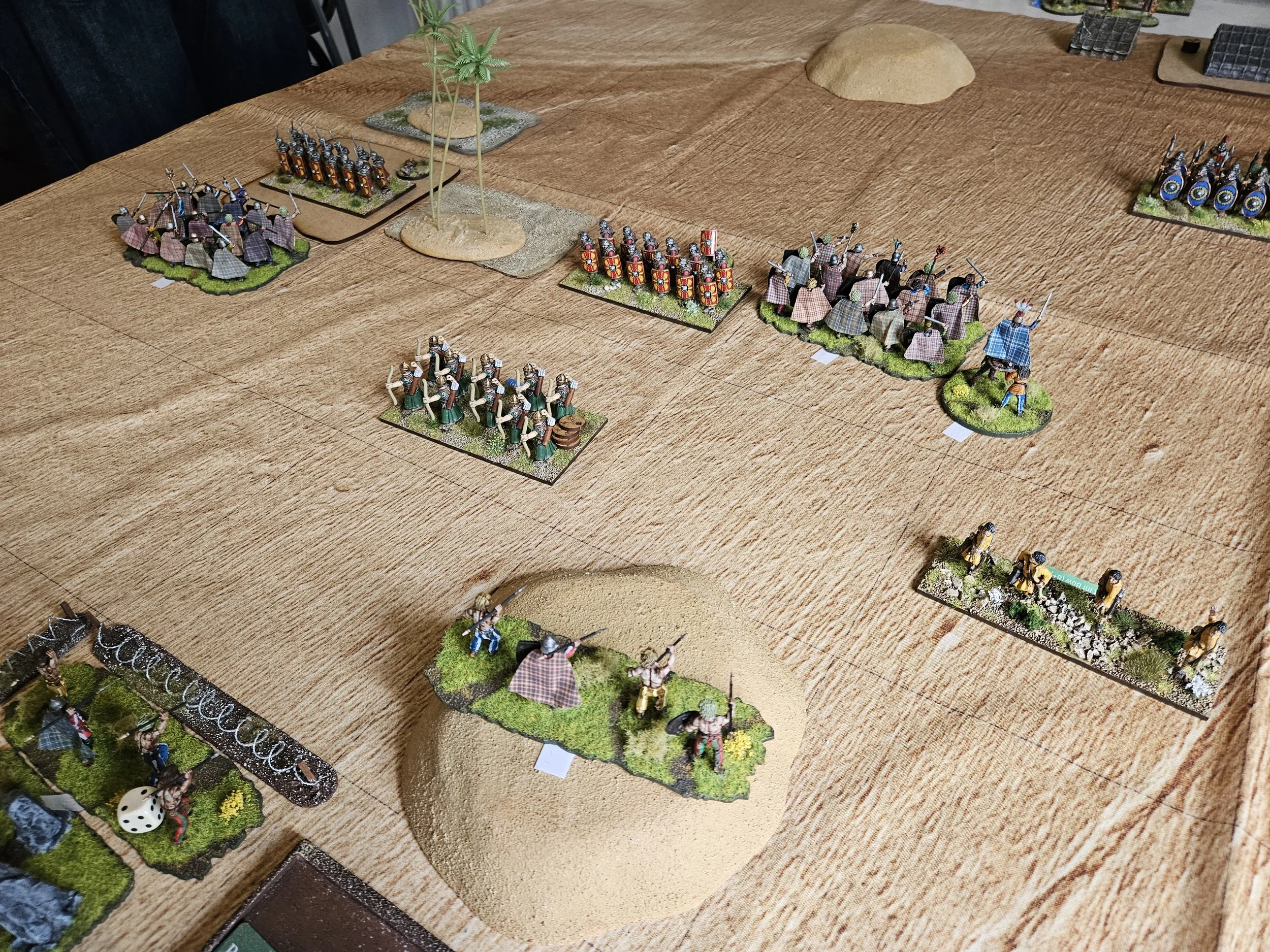
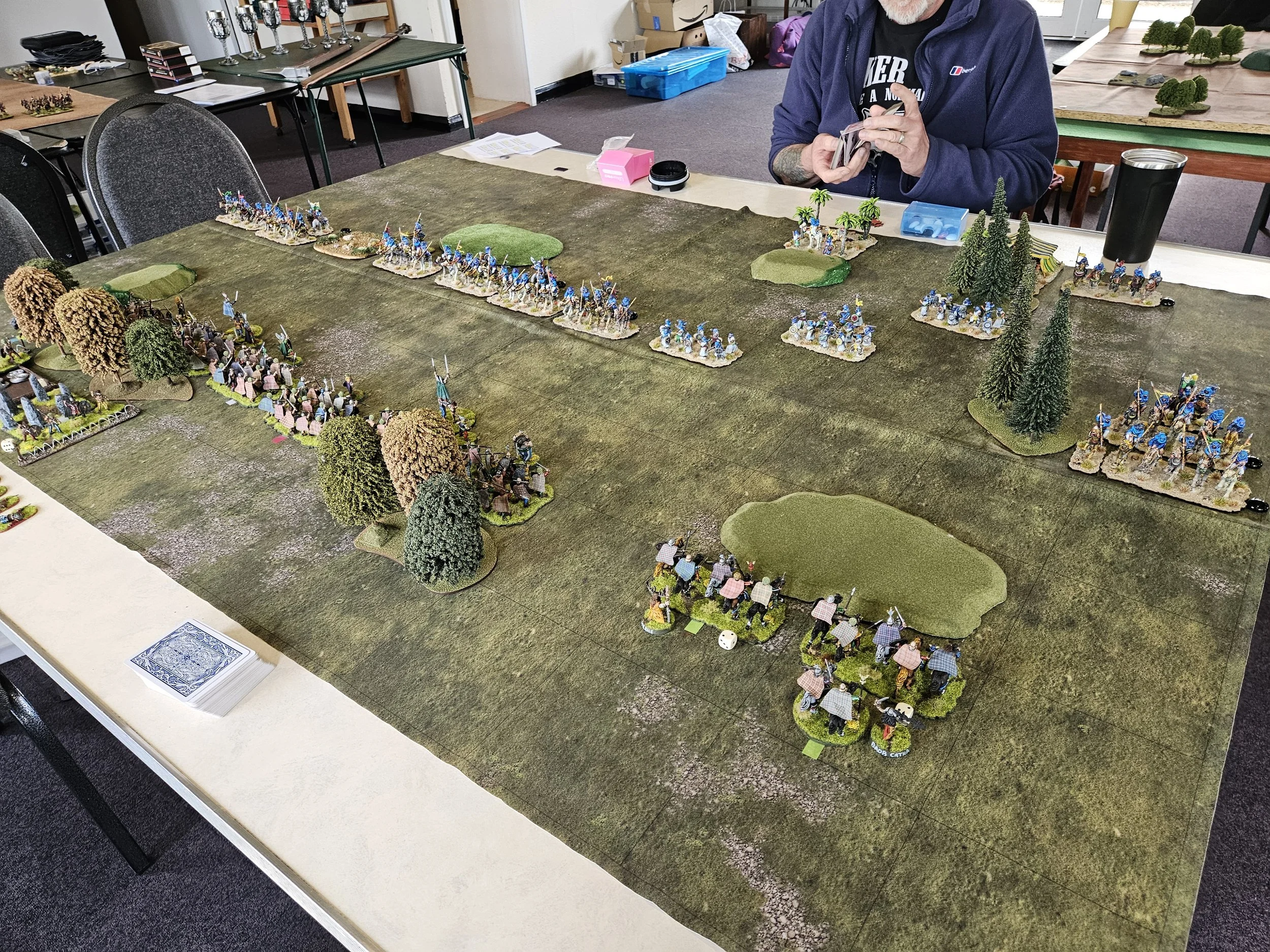
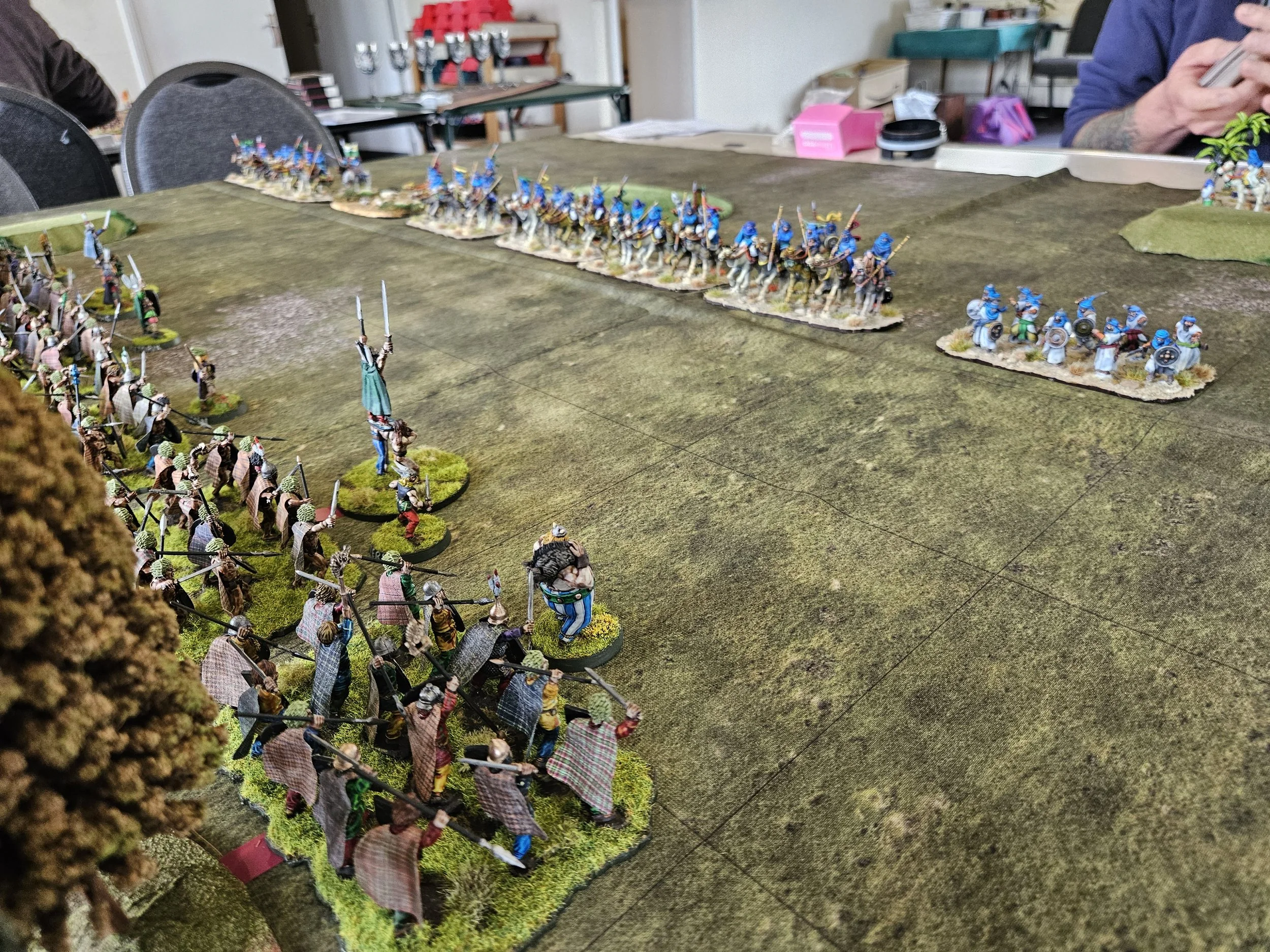
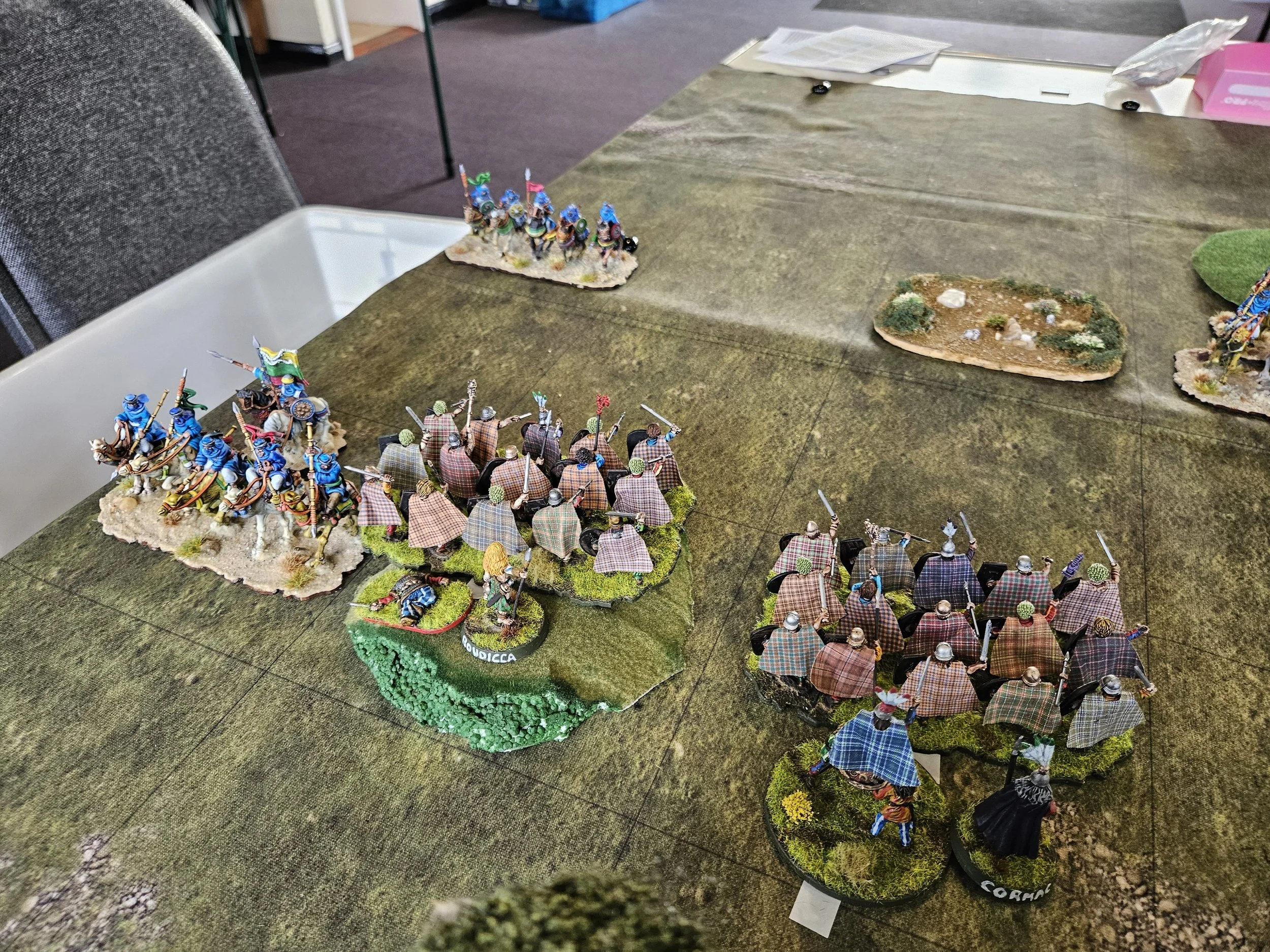
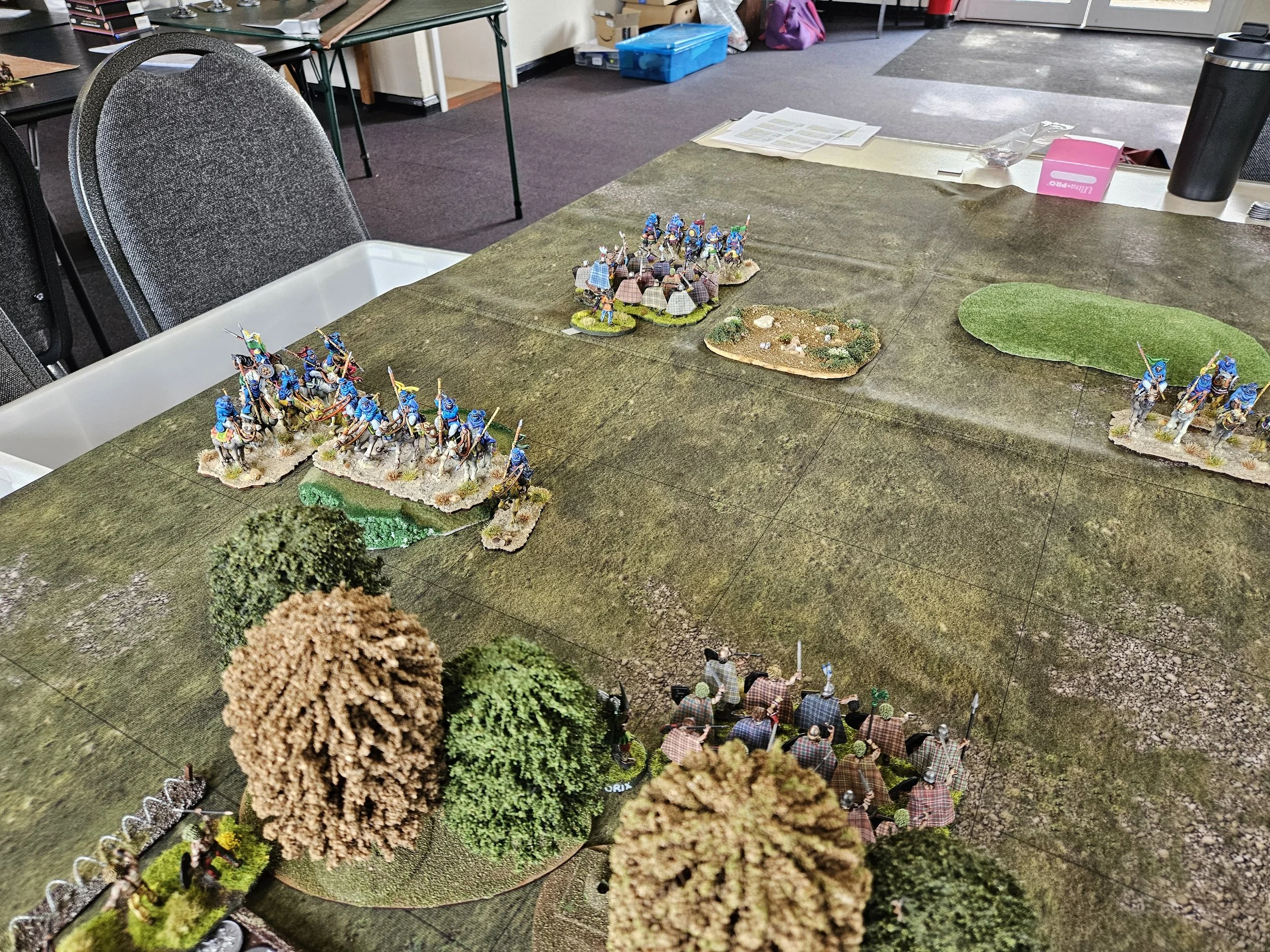
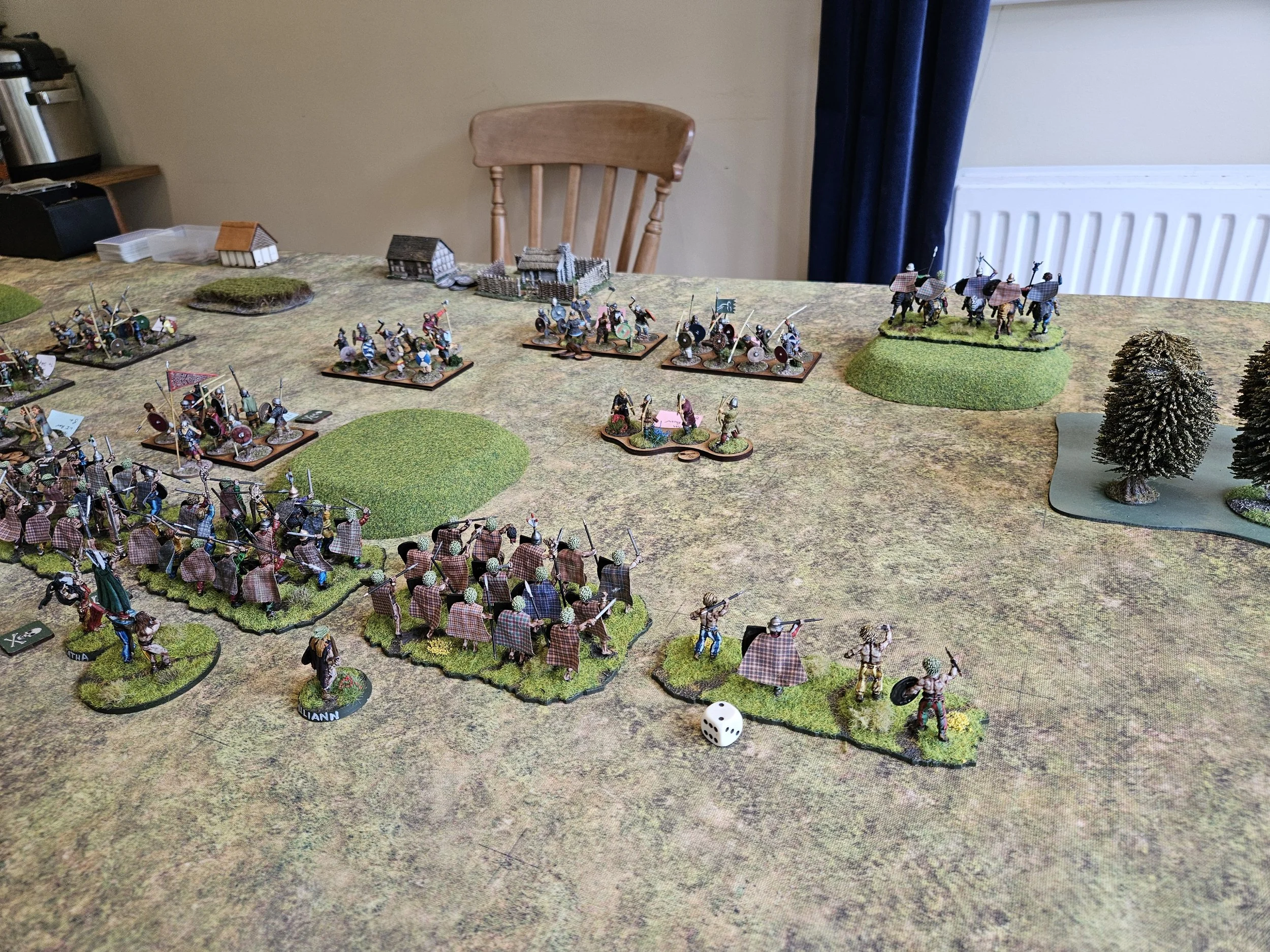
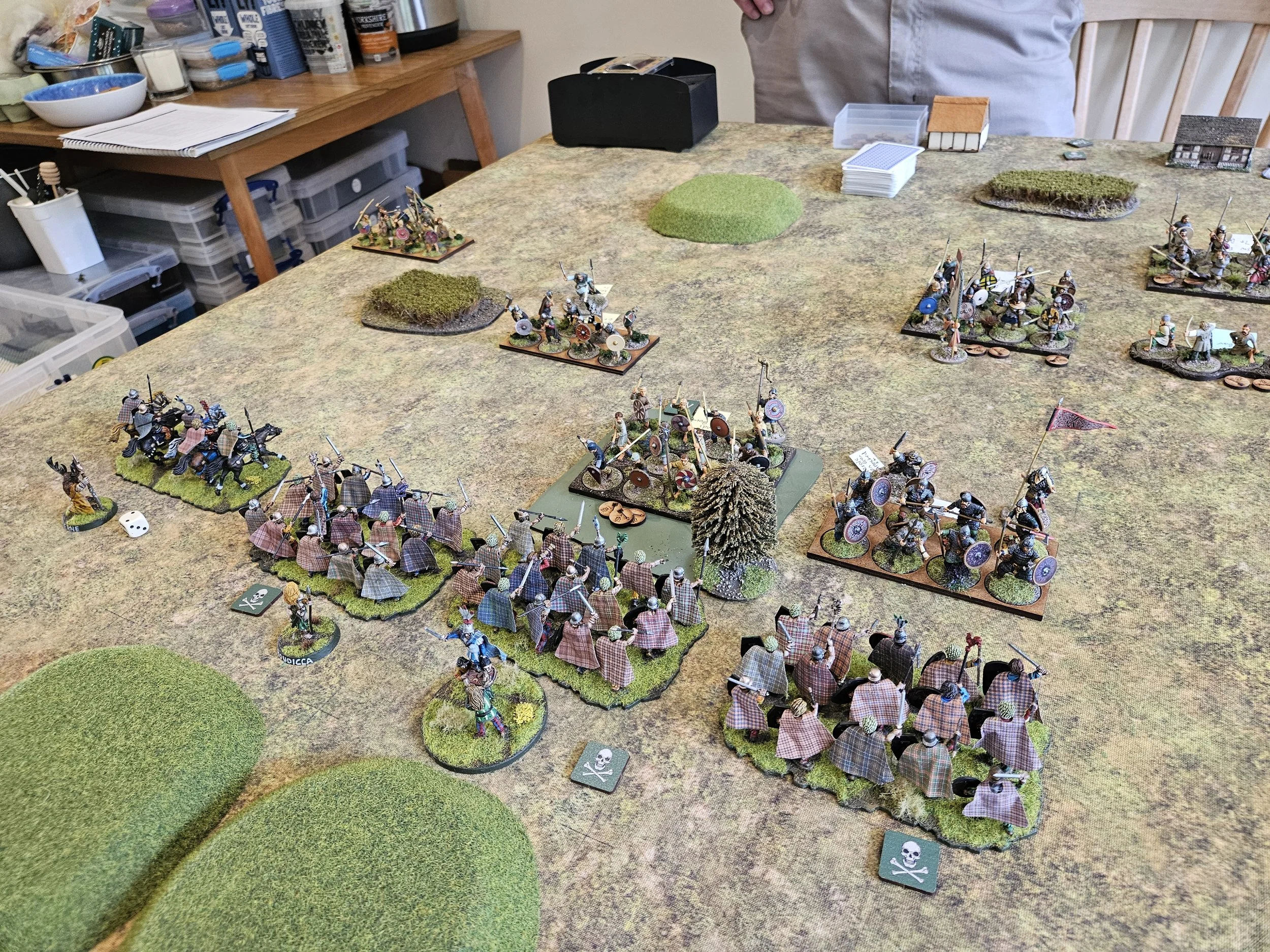
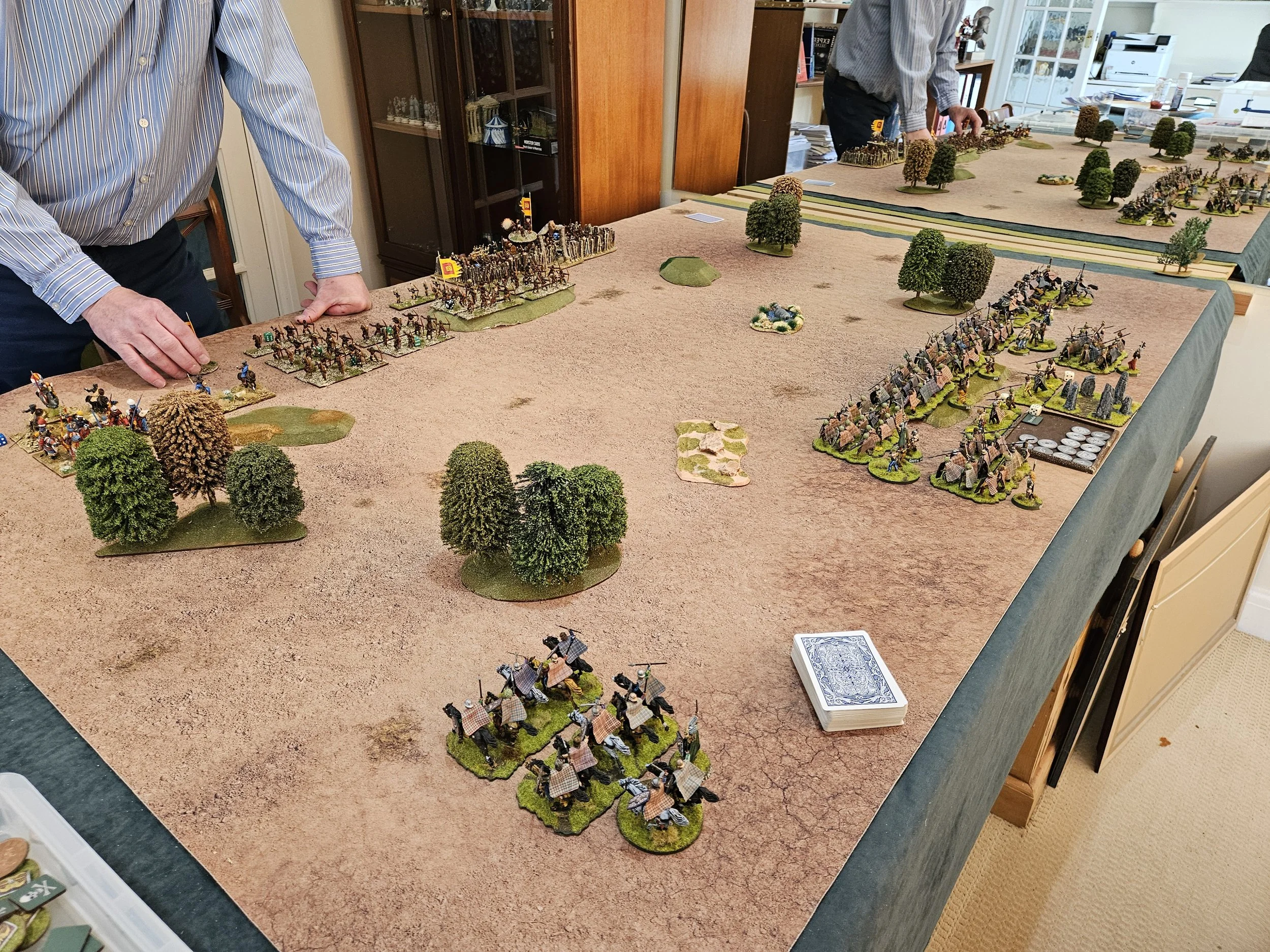
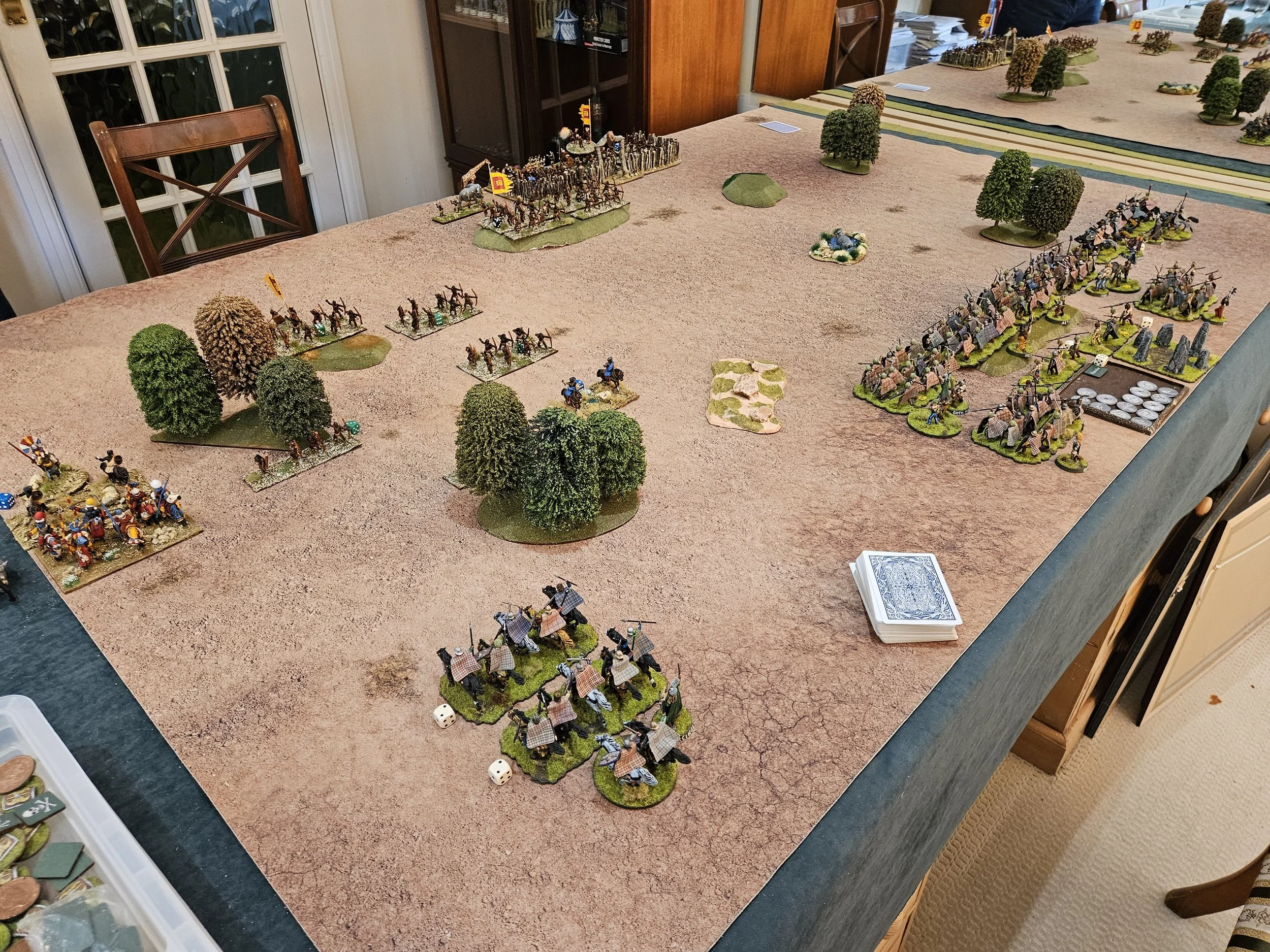
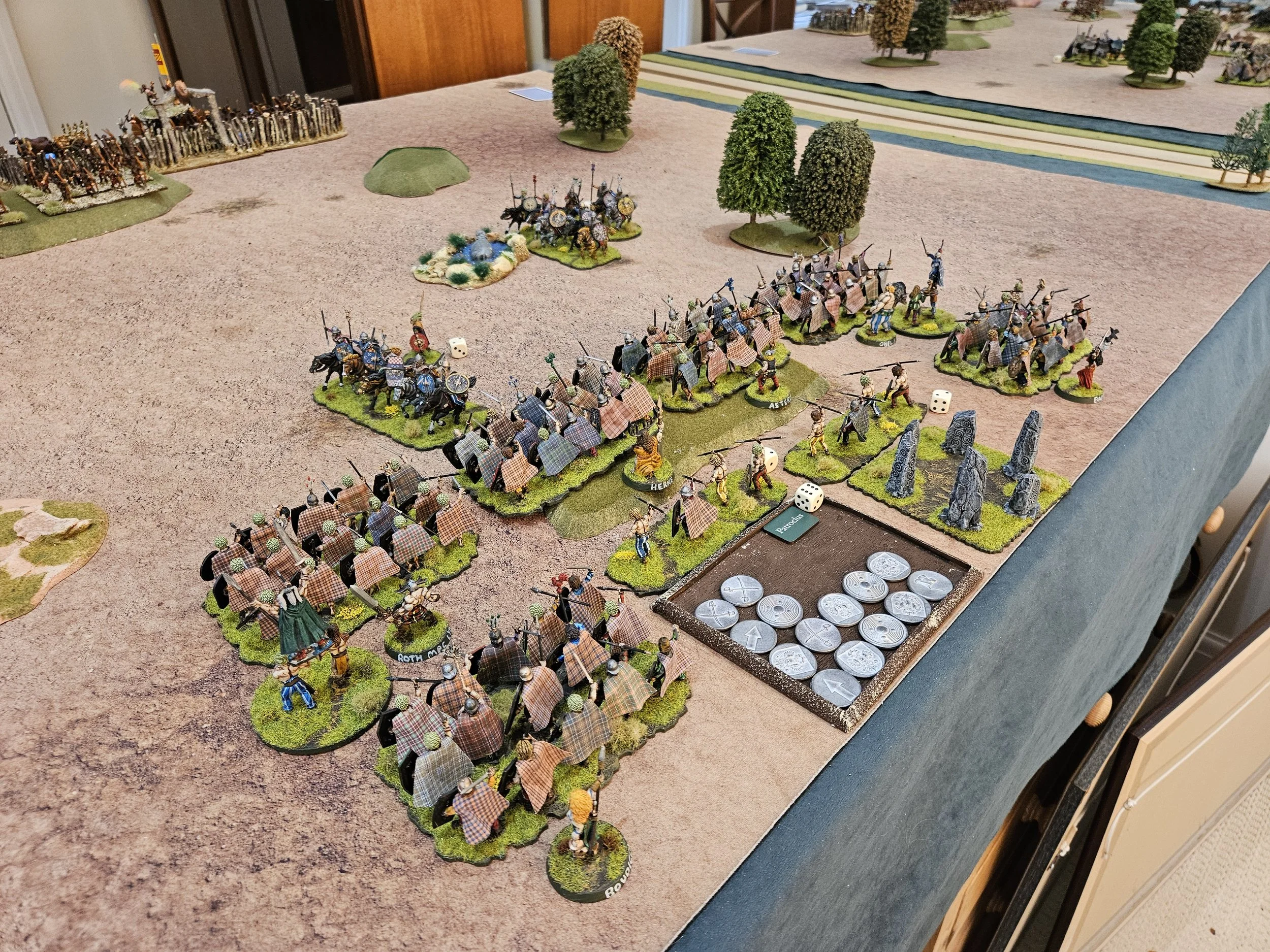
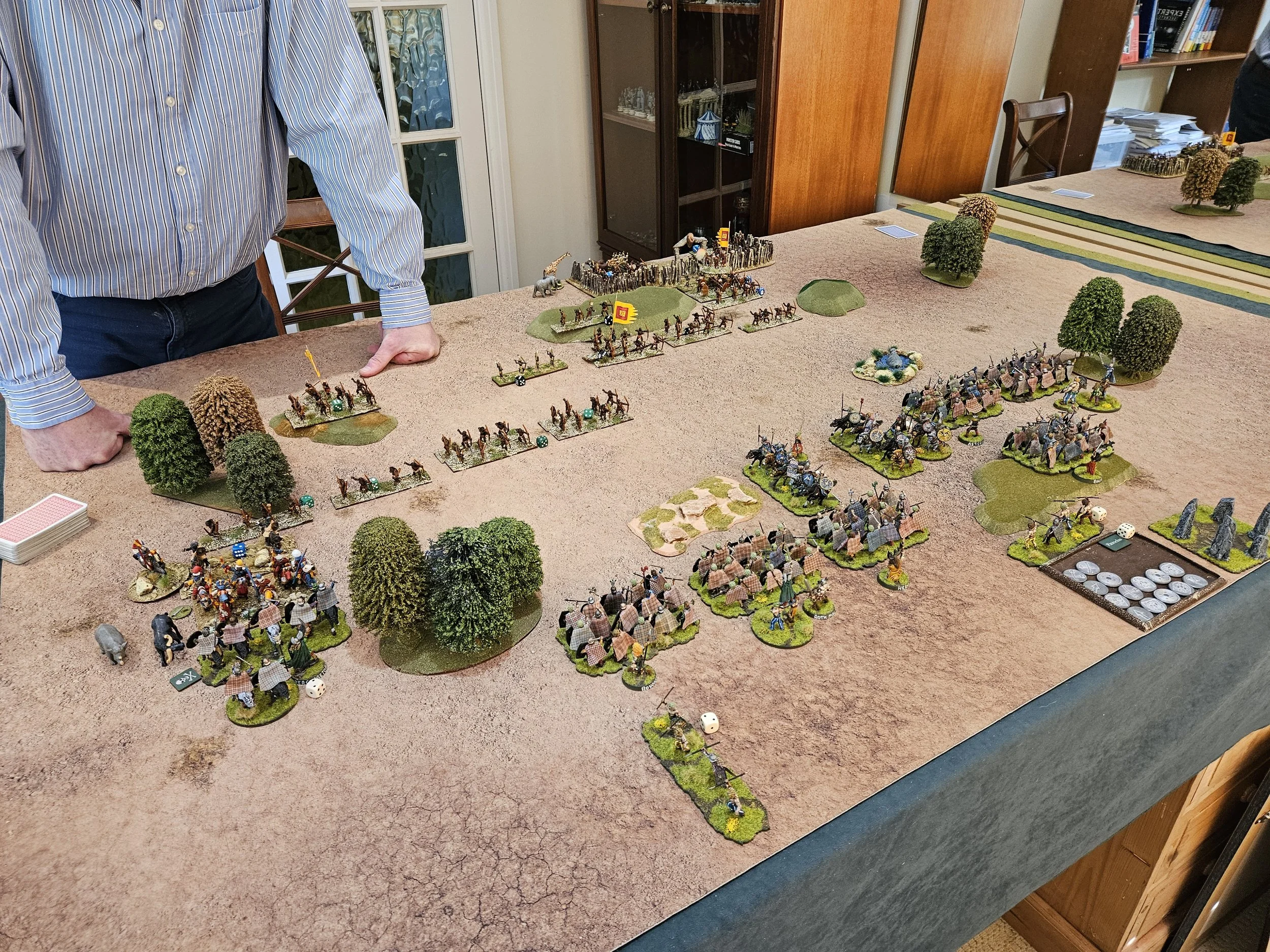
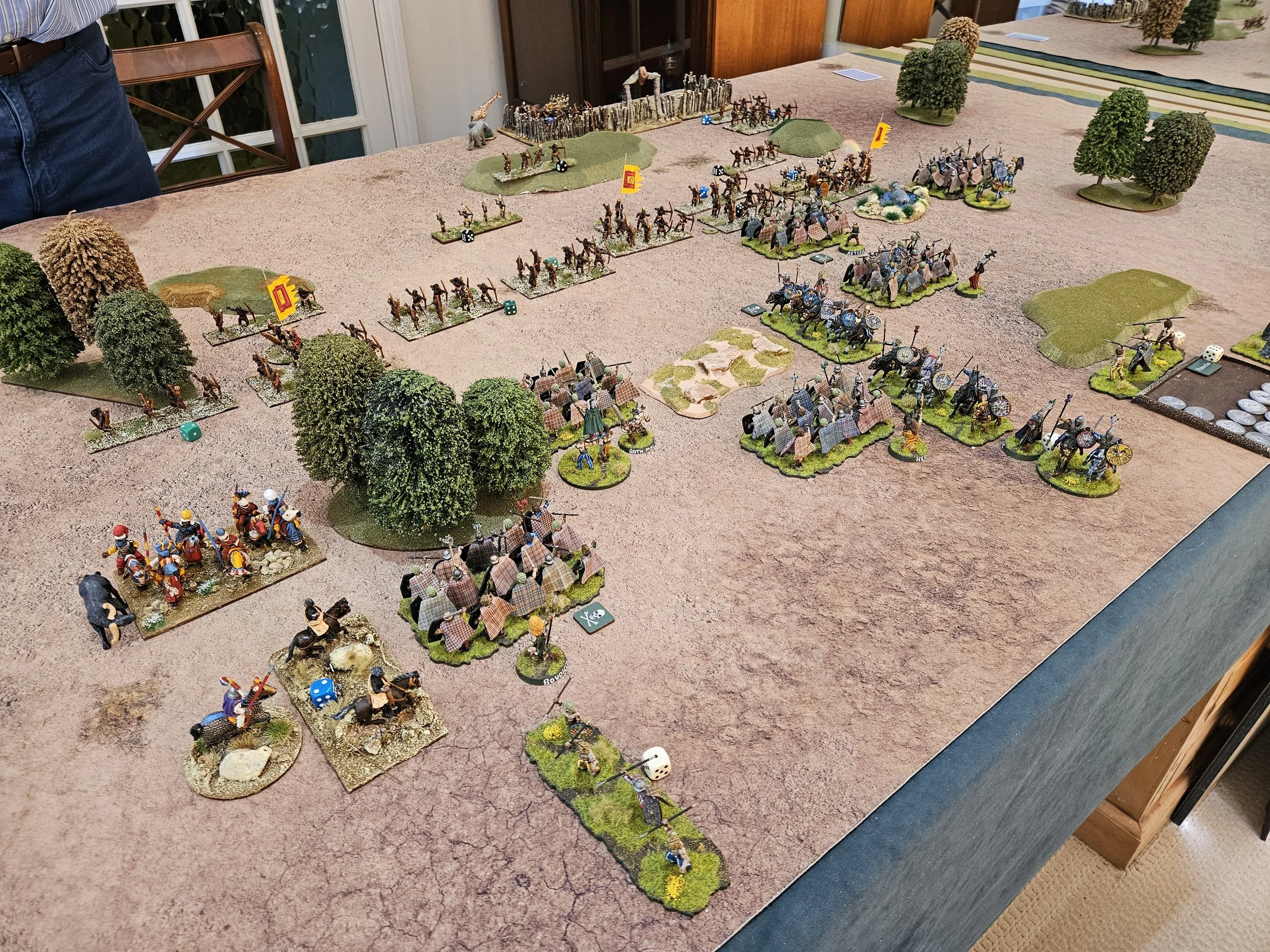
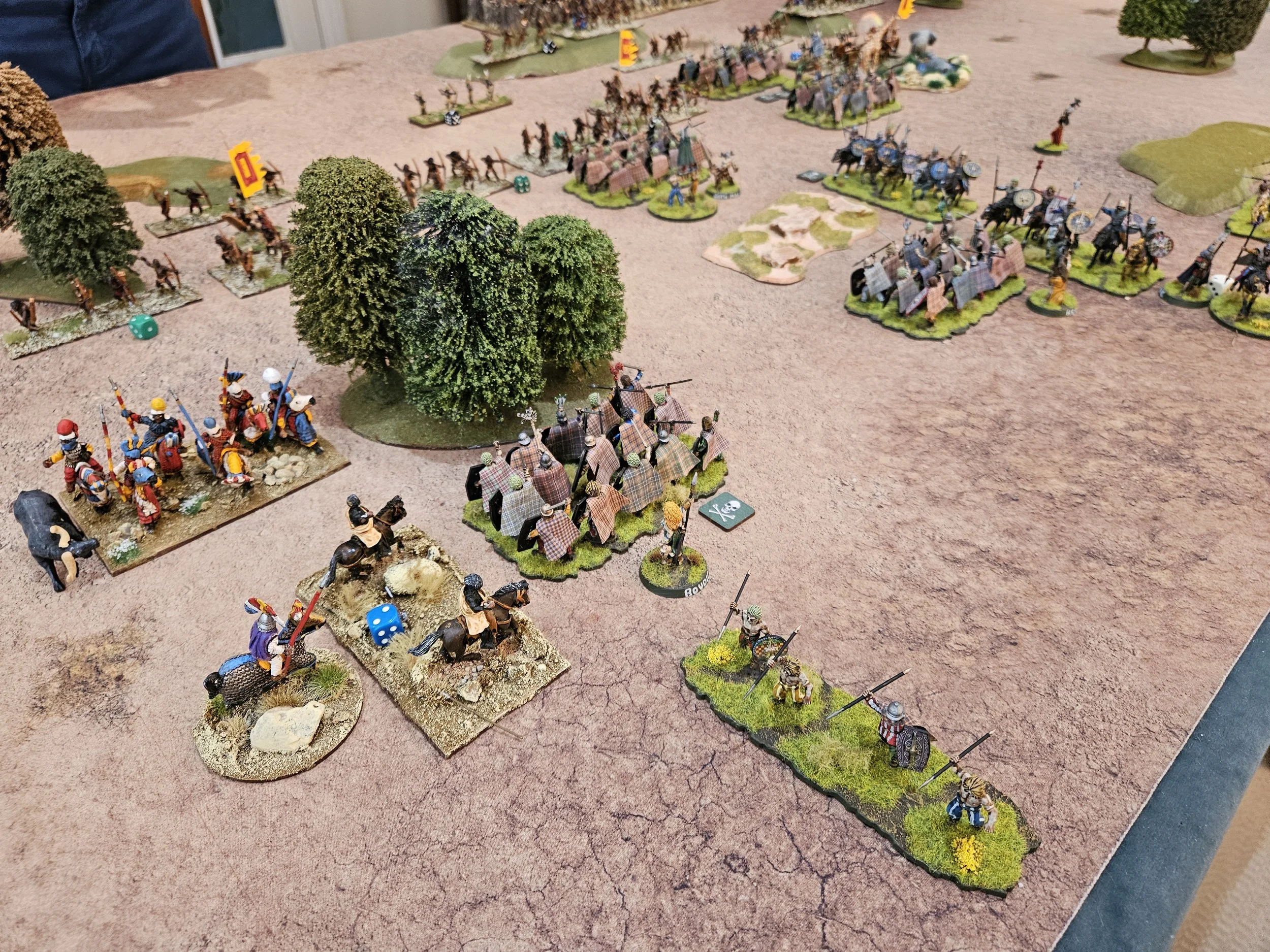
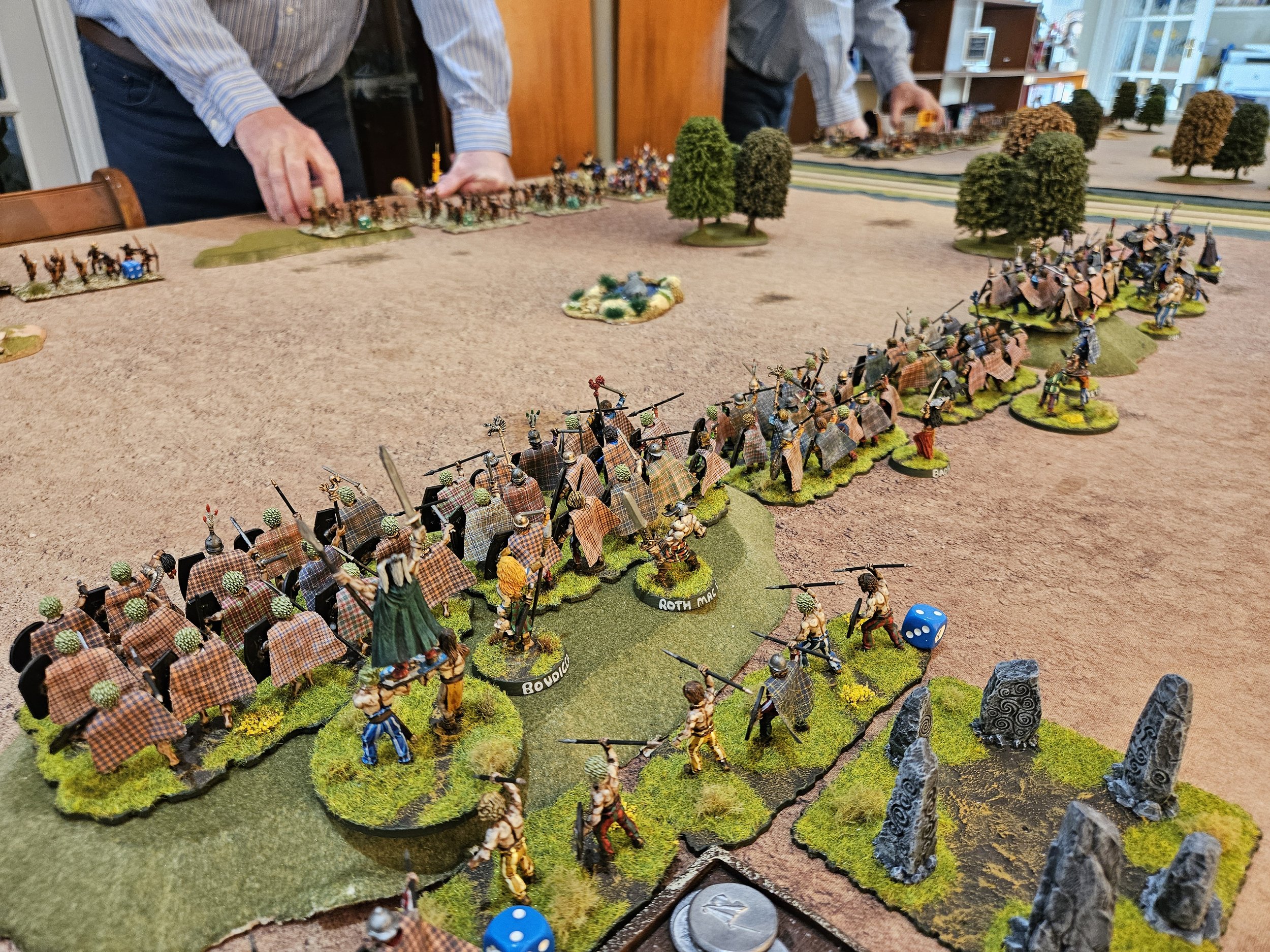
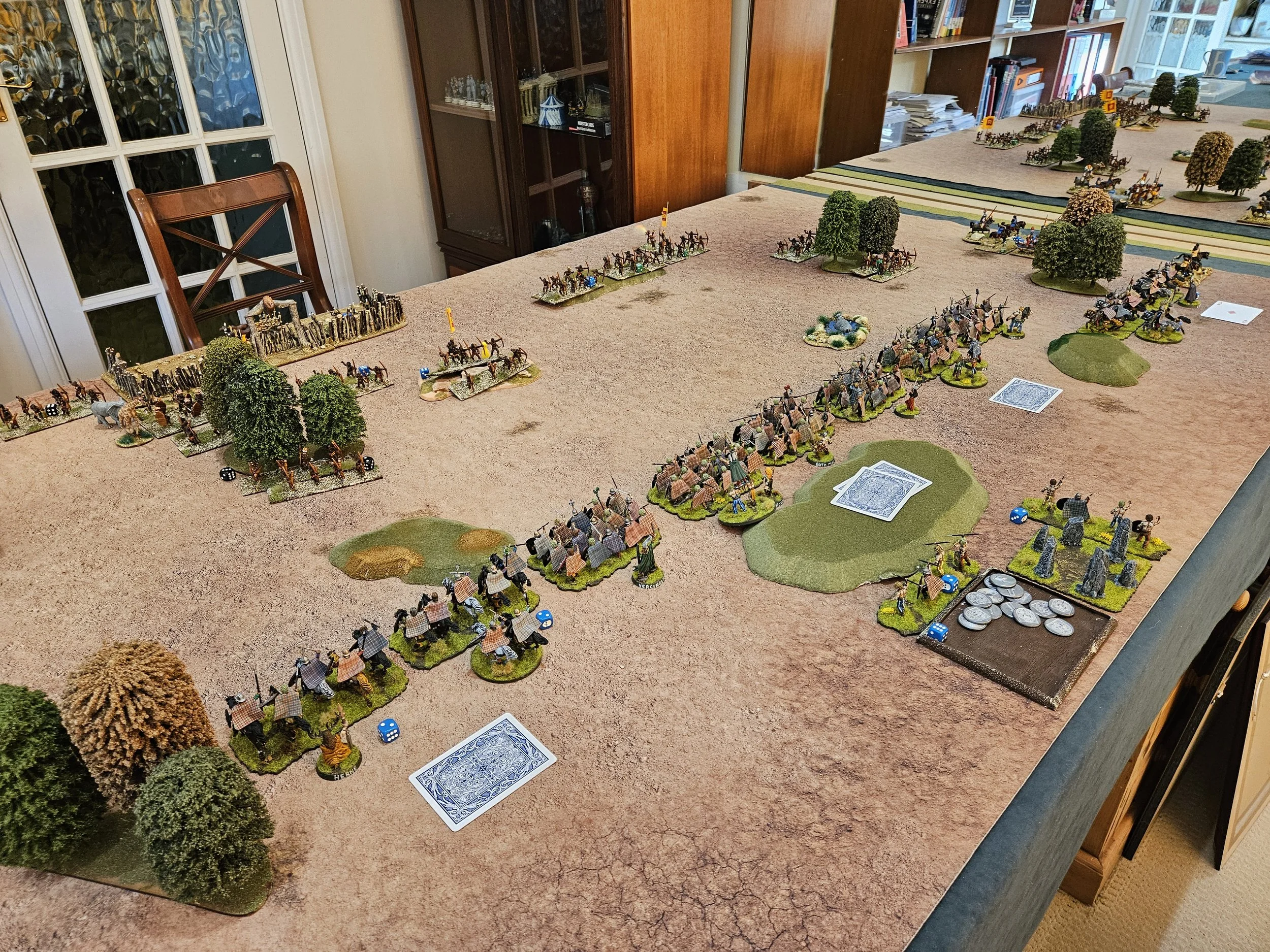
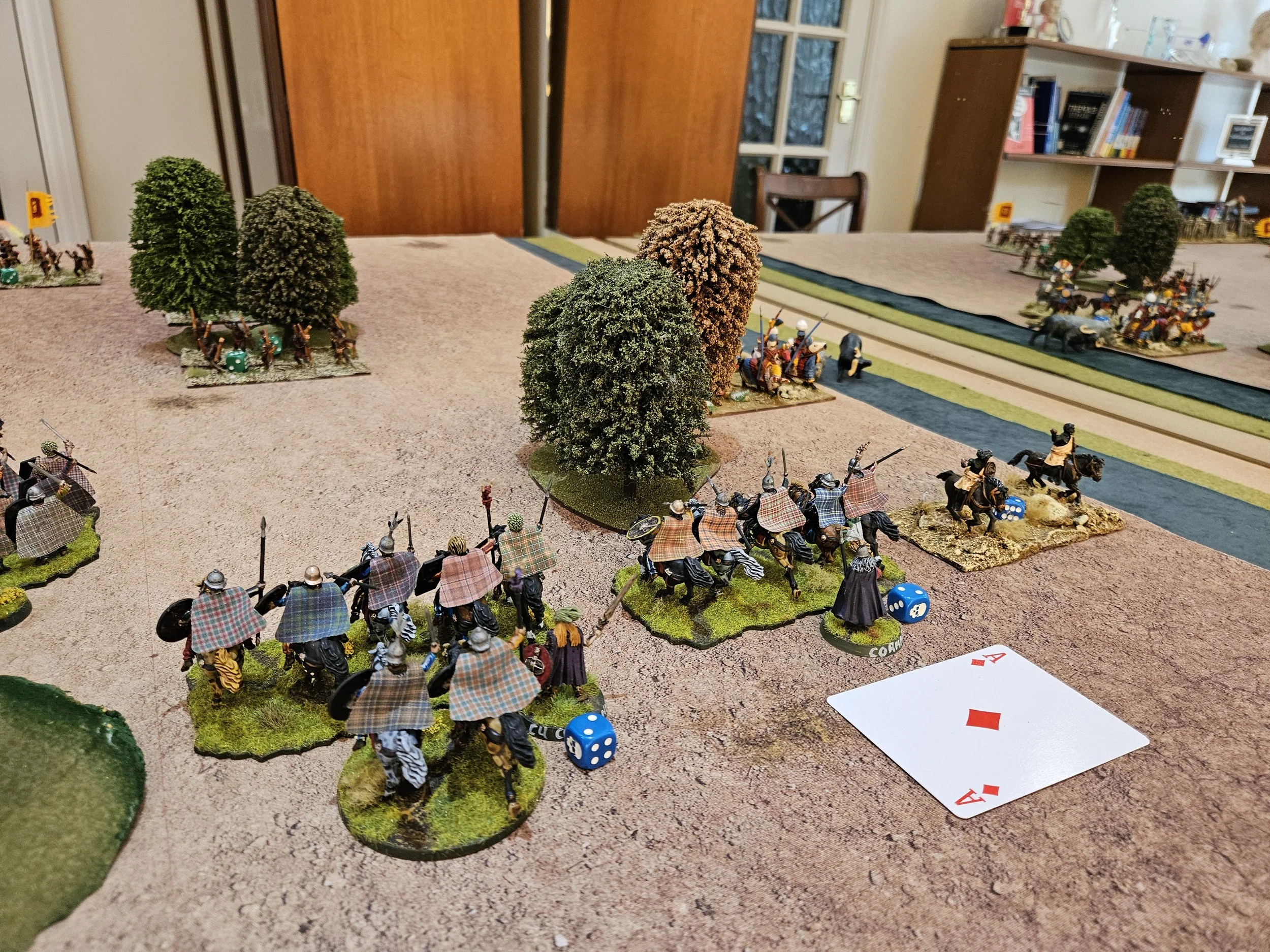
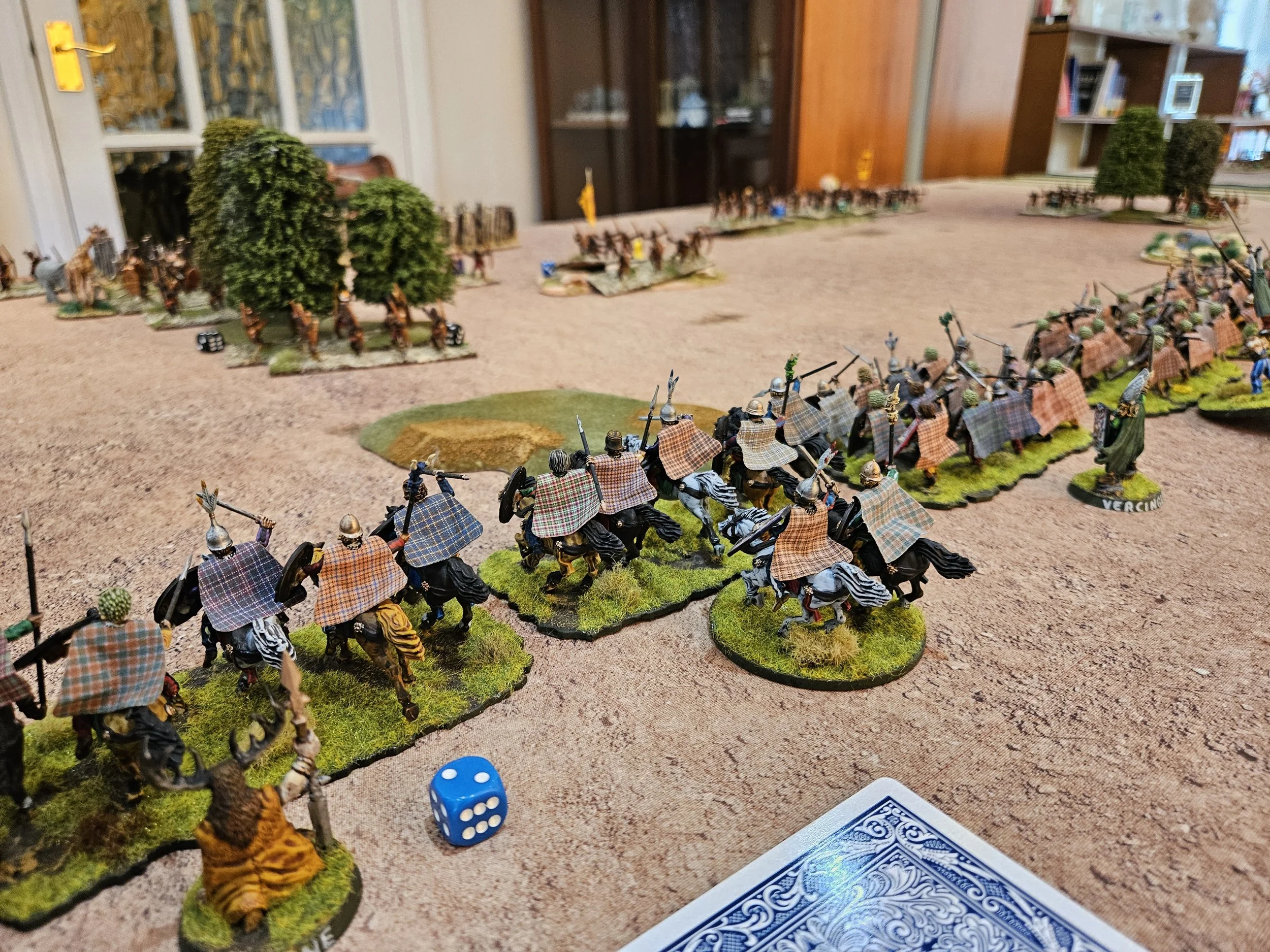
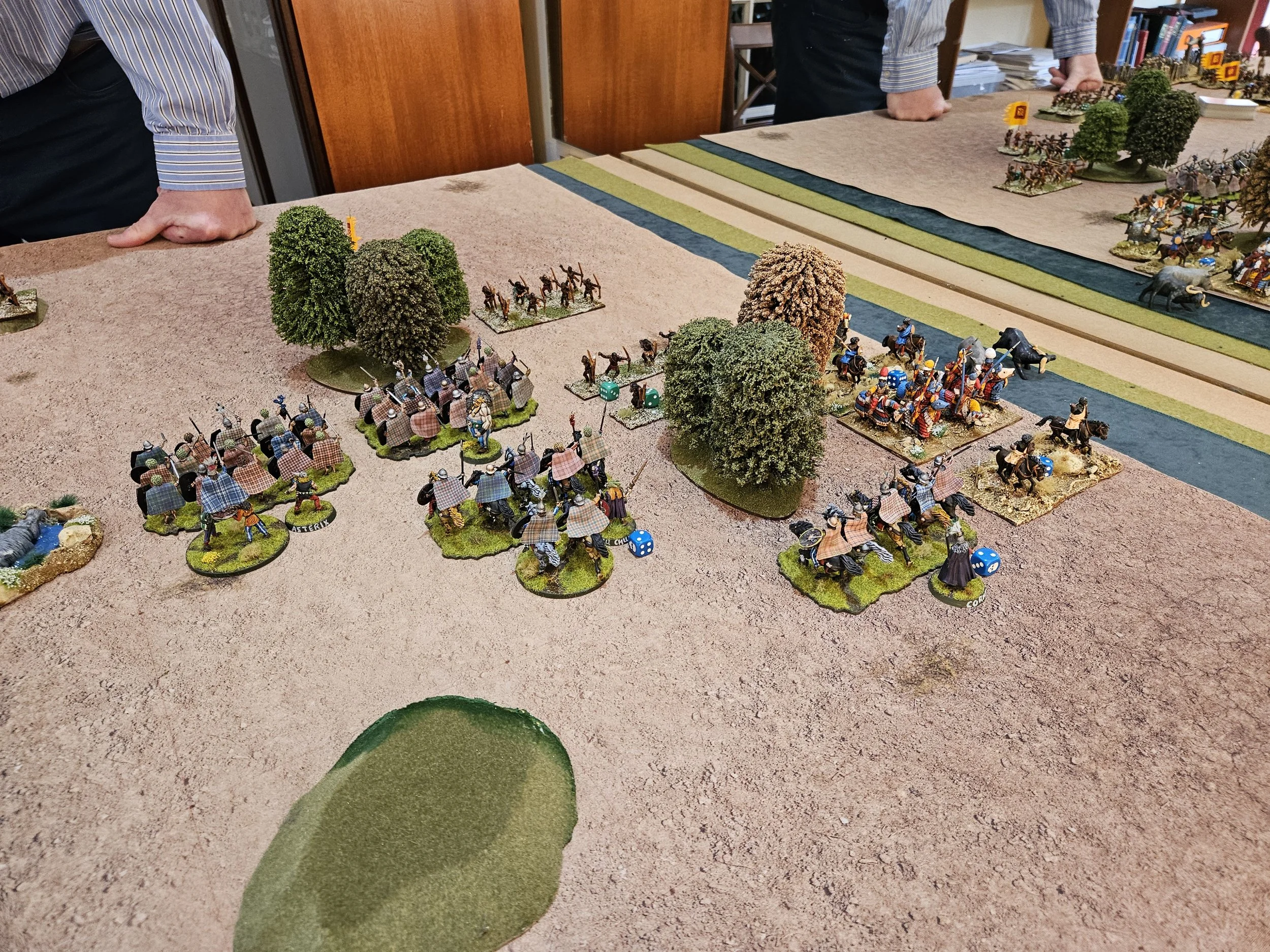
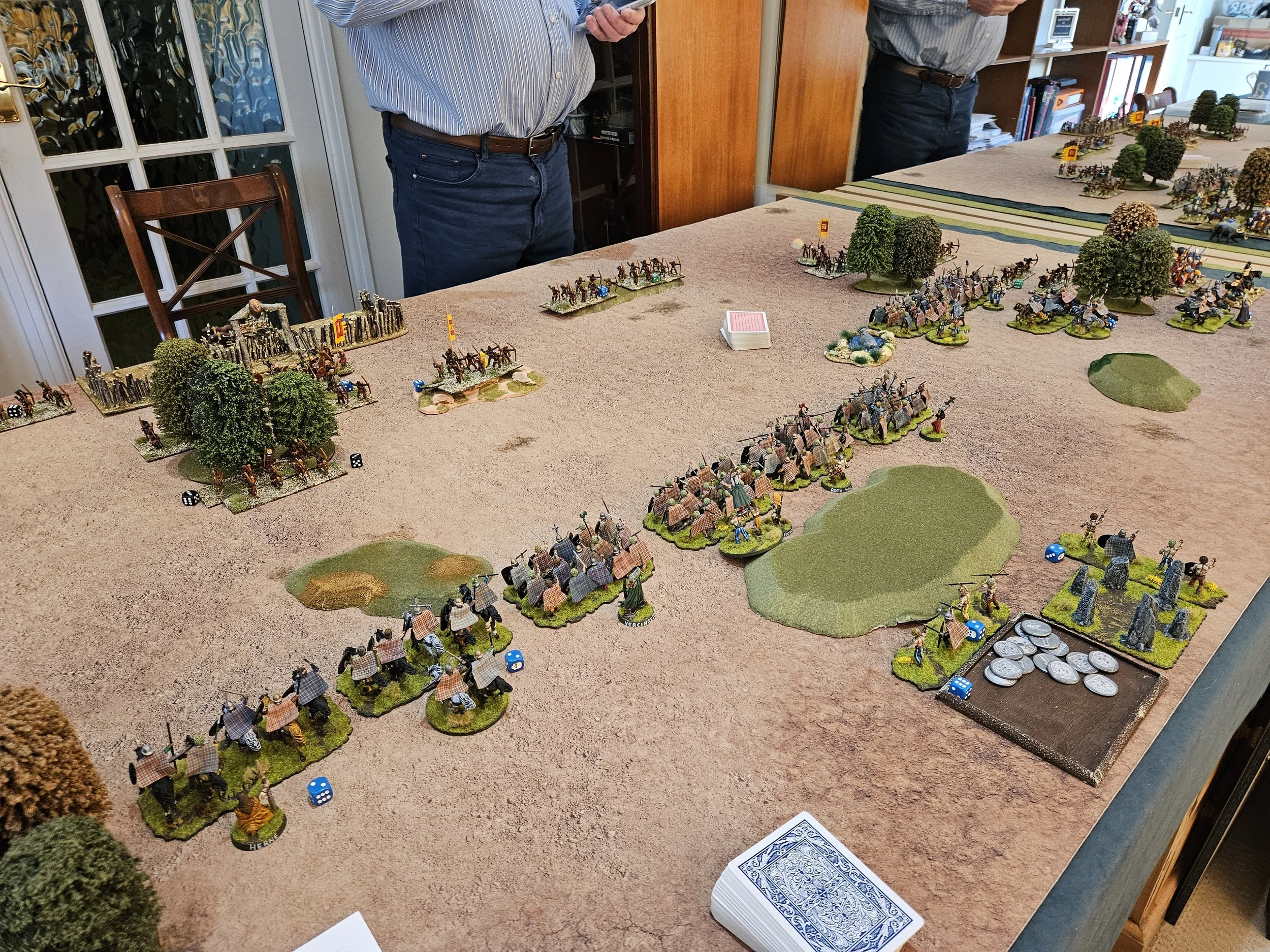
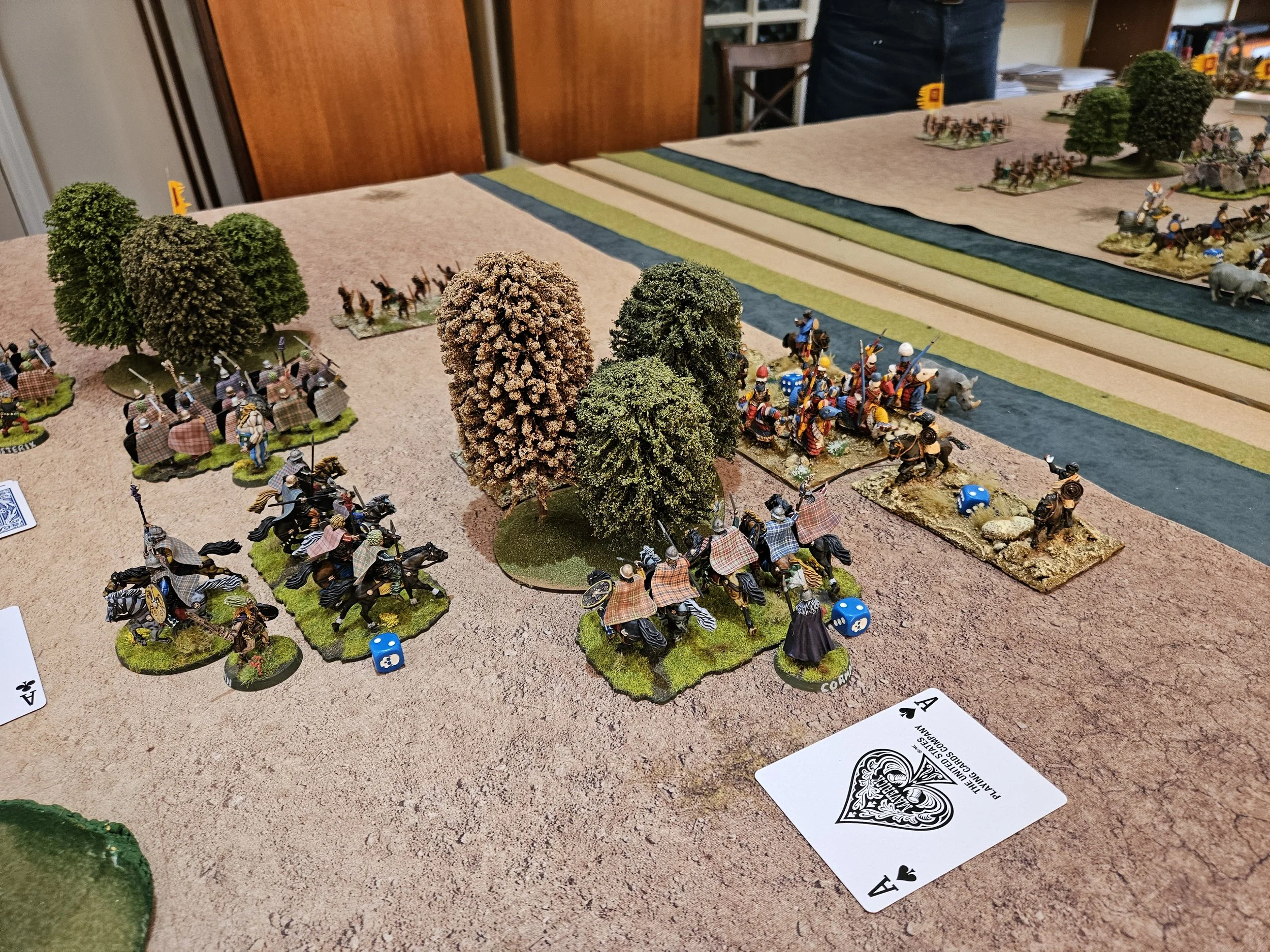
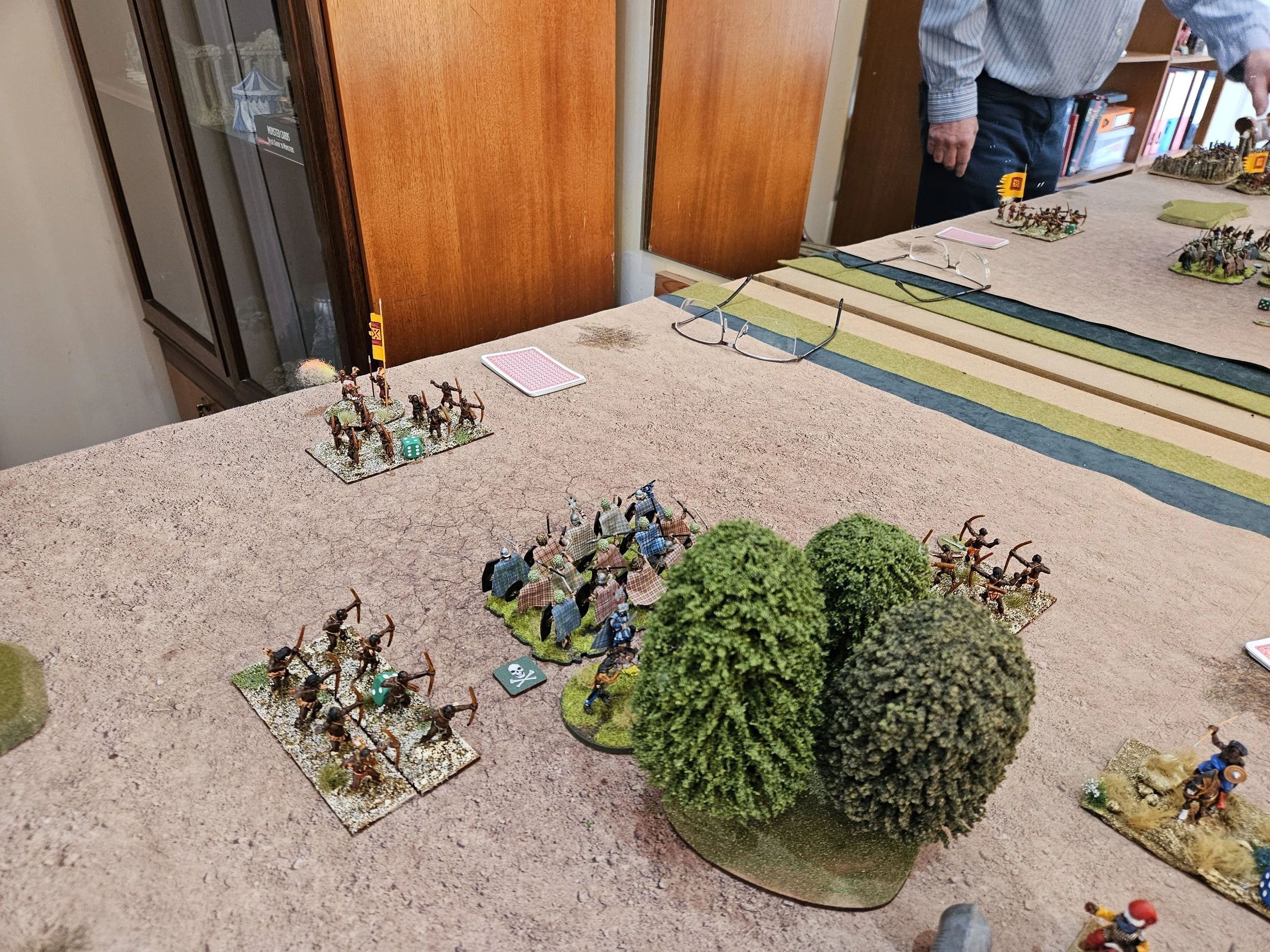
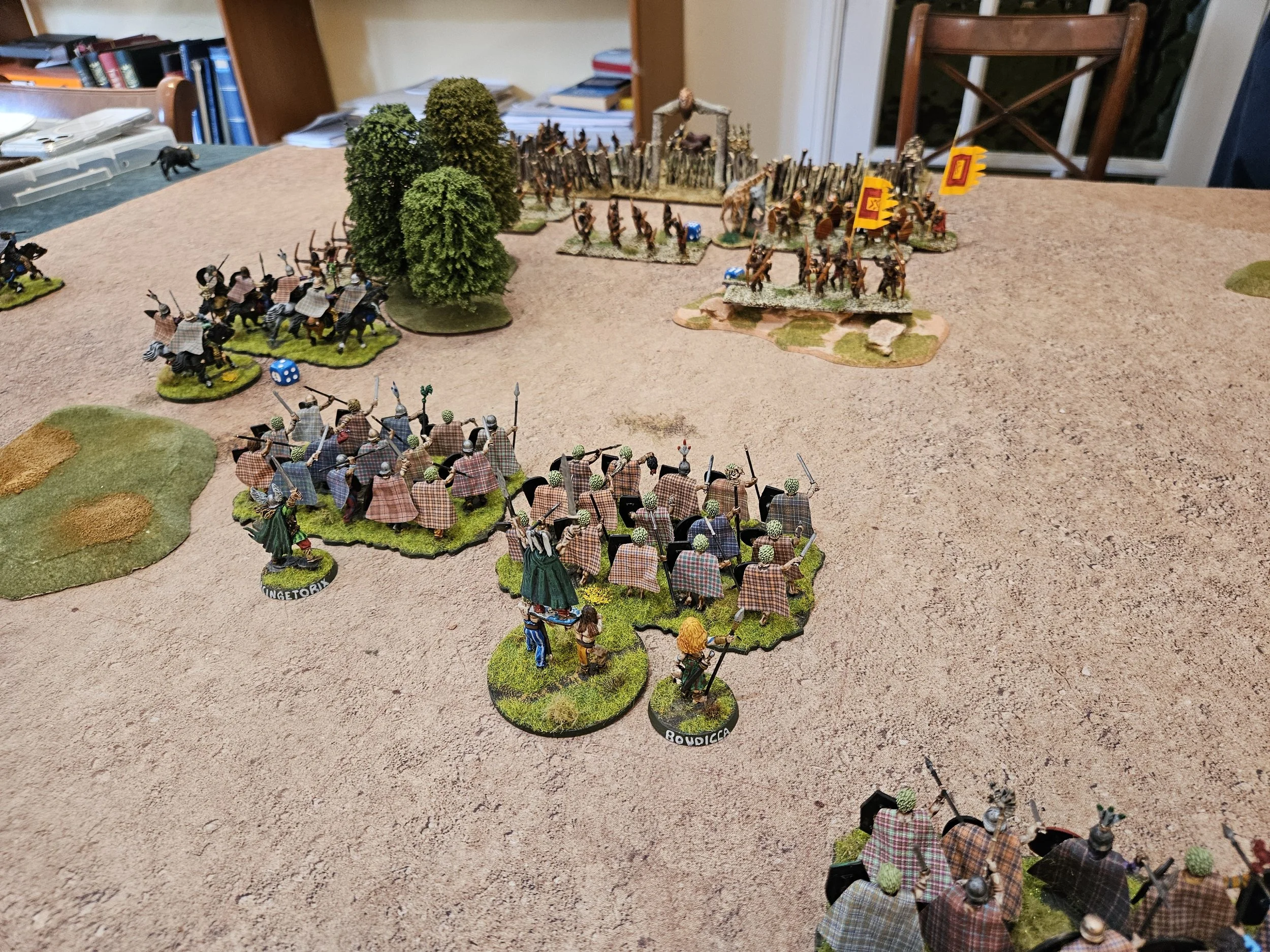
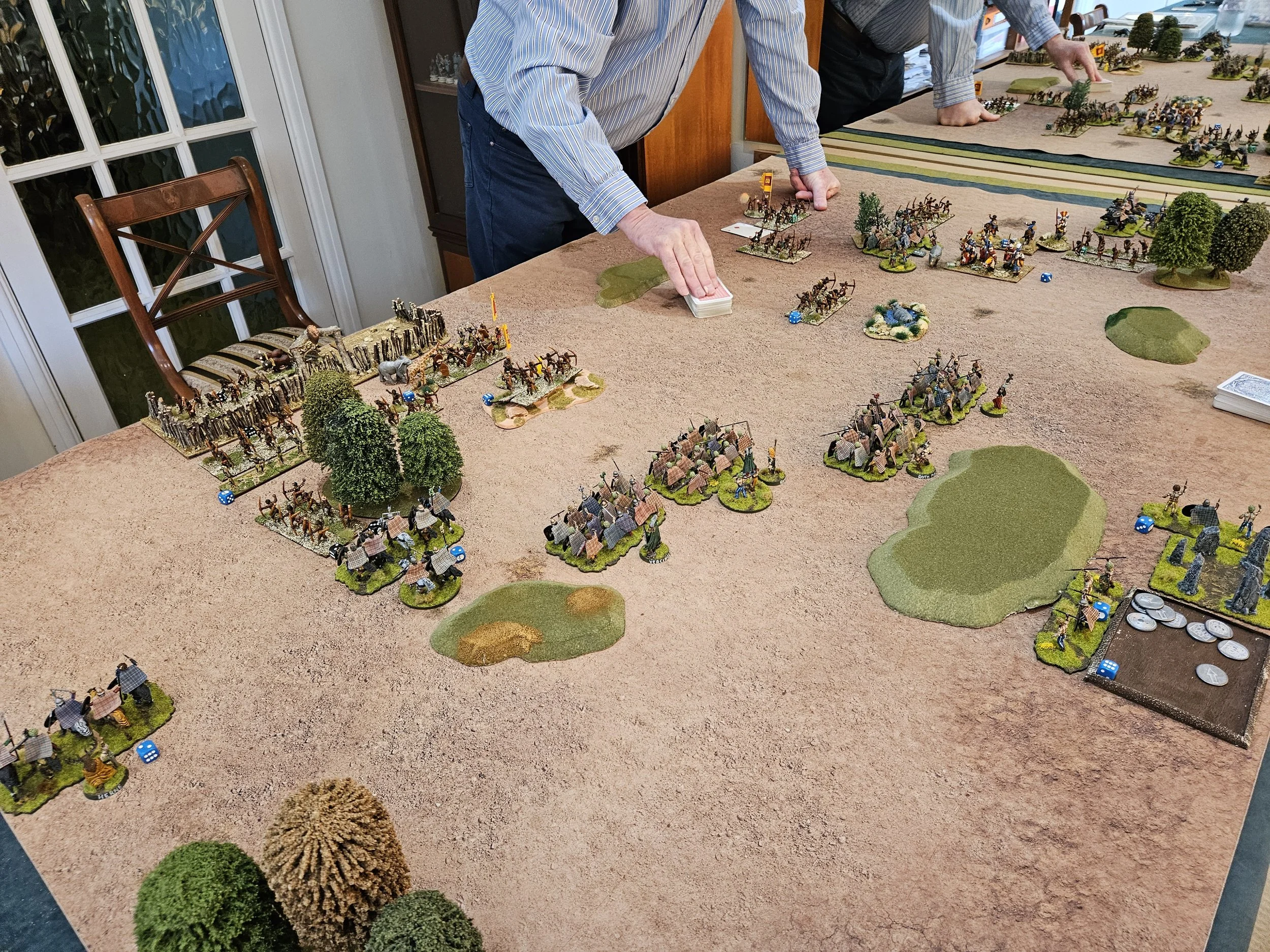
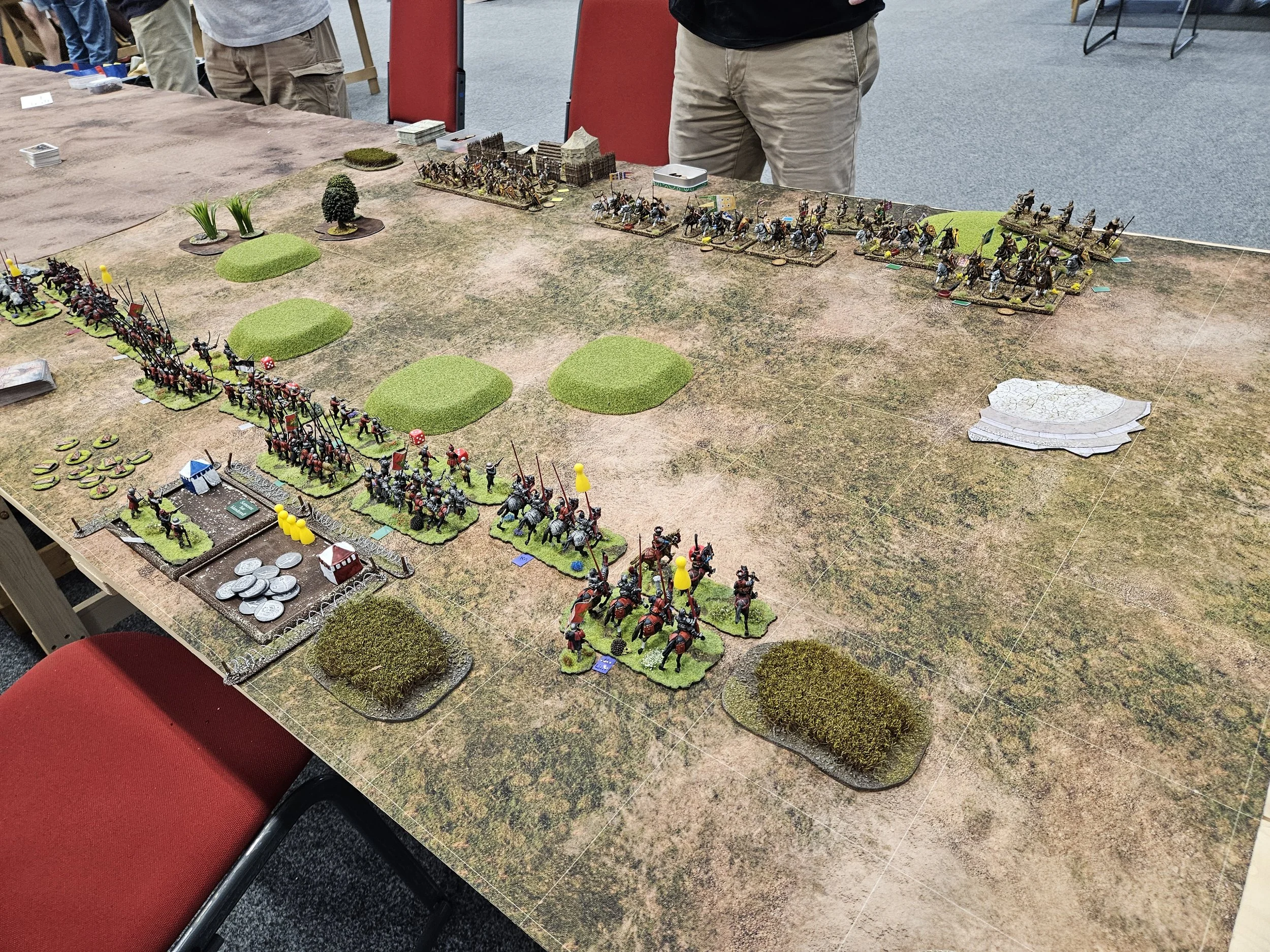
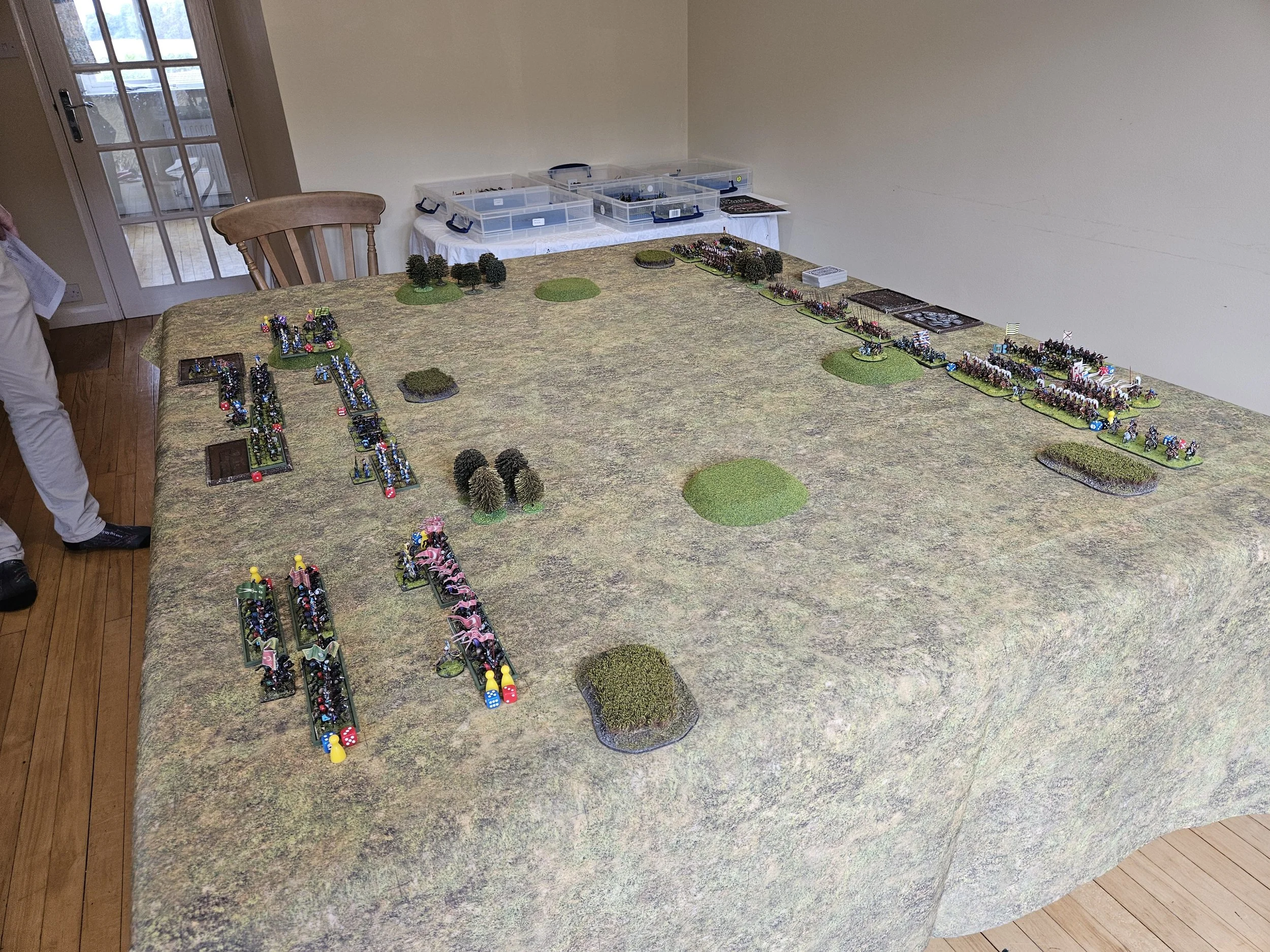
I duly used my first turn to advance forward as fast as possible, with the only problem being on the left, where the Gallic horse pulled an Ace after the first unit had moved and so left a bit of a gap at the left end of my line.

This allowed the Parthians there to potentially get a two-on-one advantage on my left hand warband, but the cards were harsh to Tim, and the situation was soon remedied.

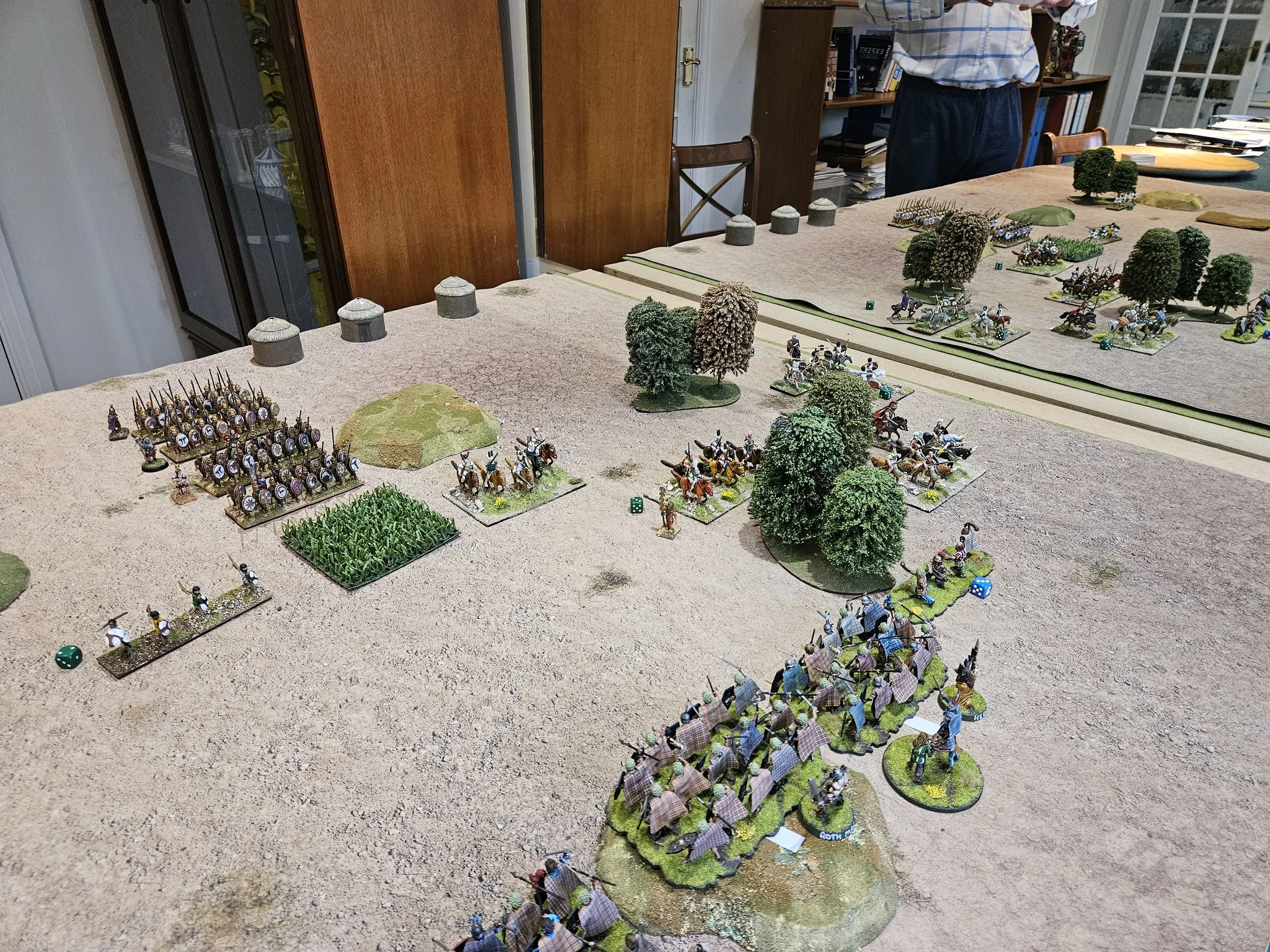
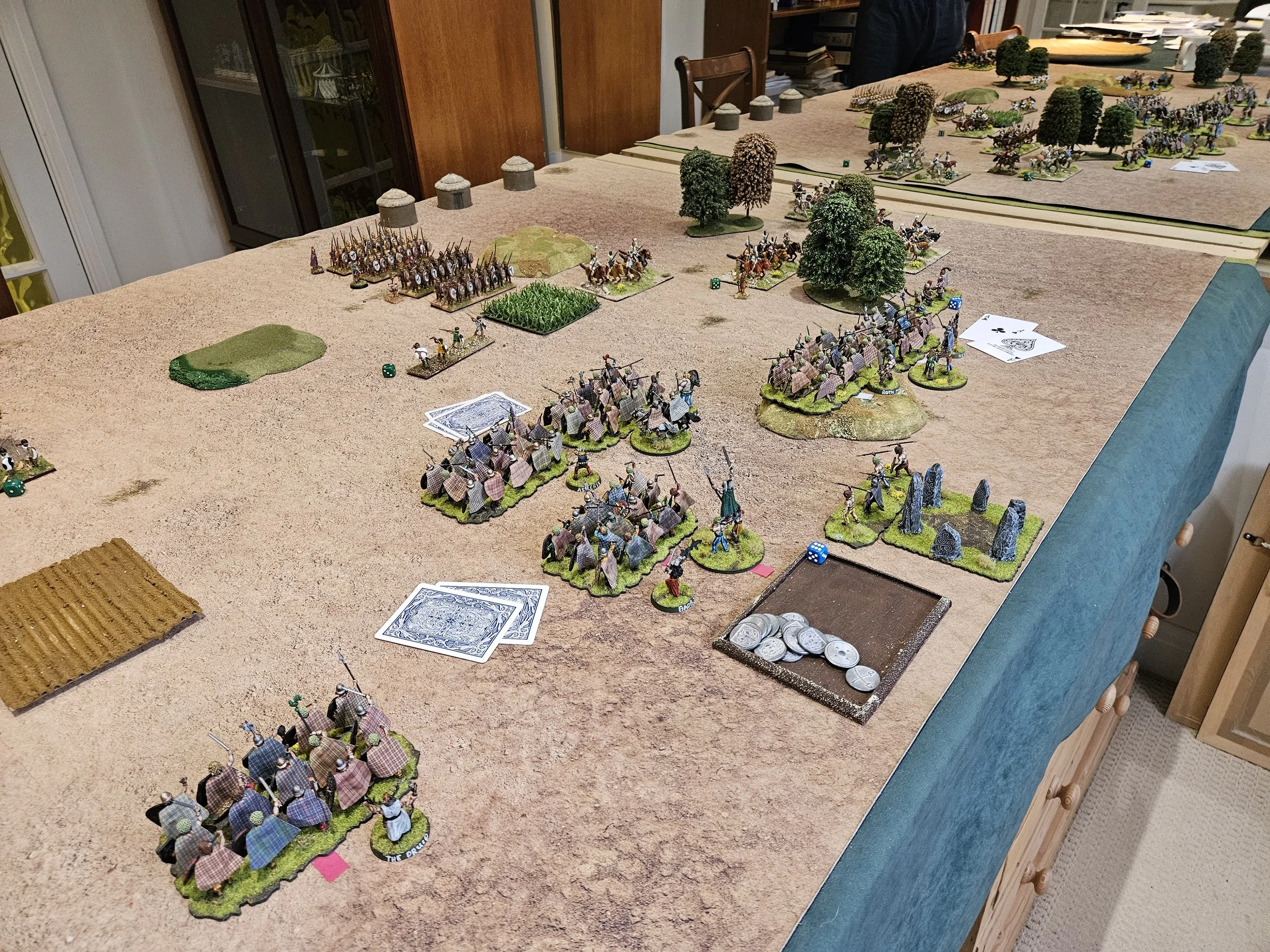
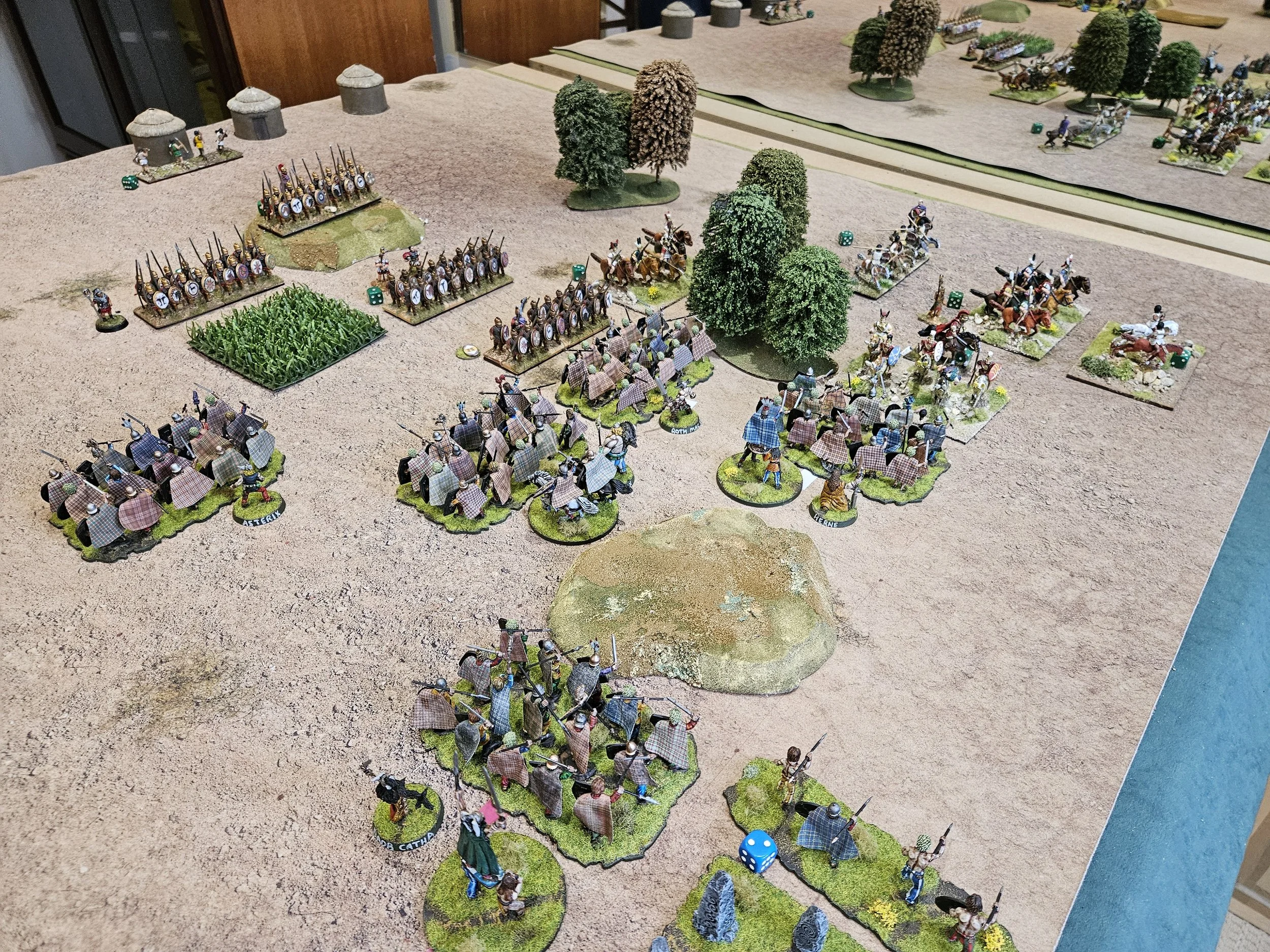
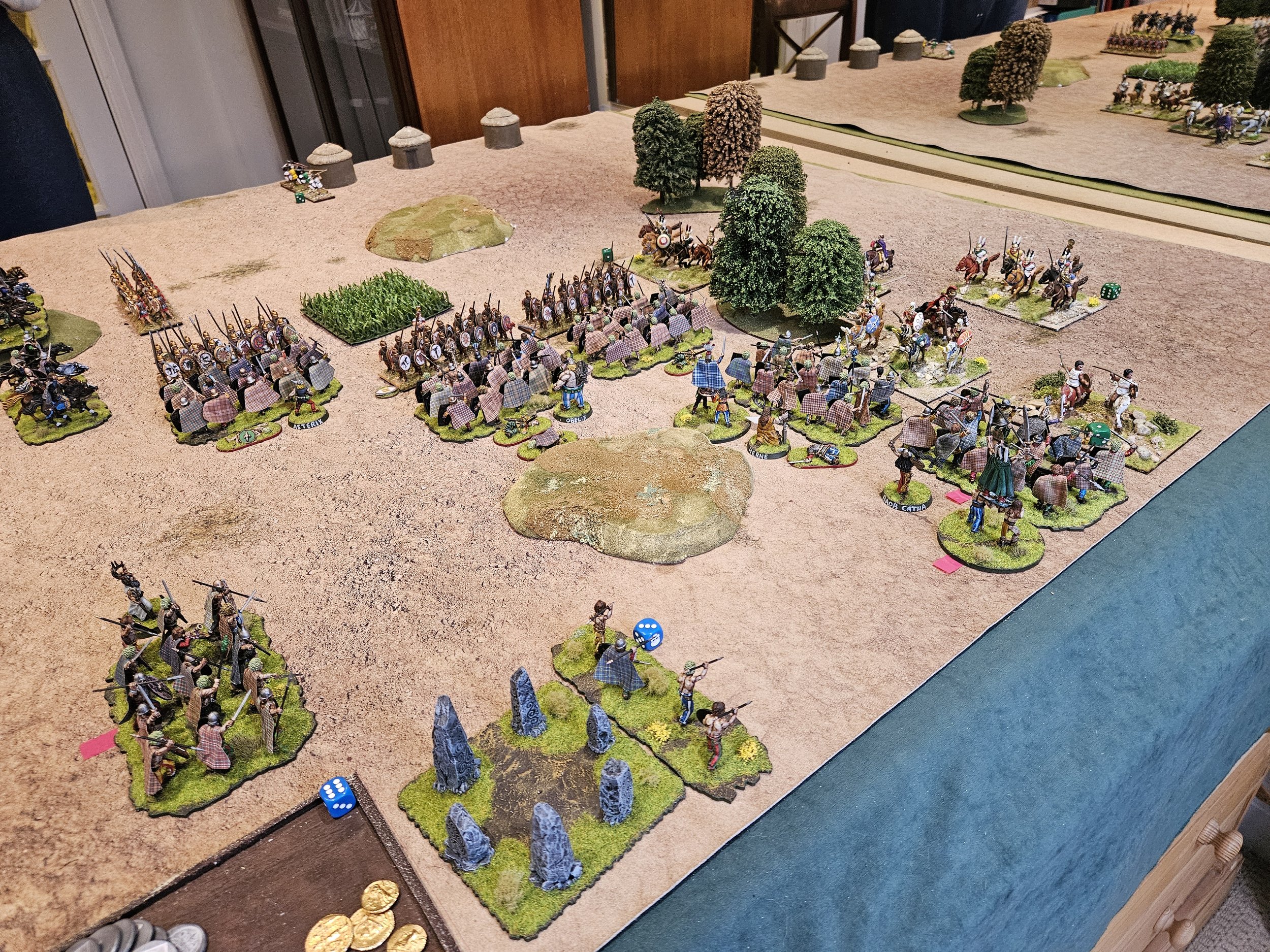
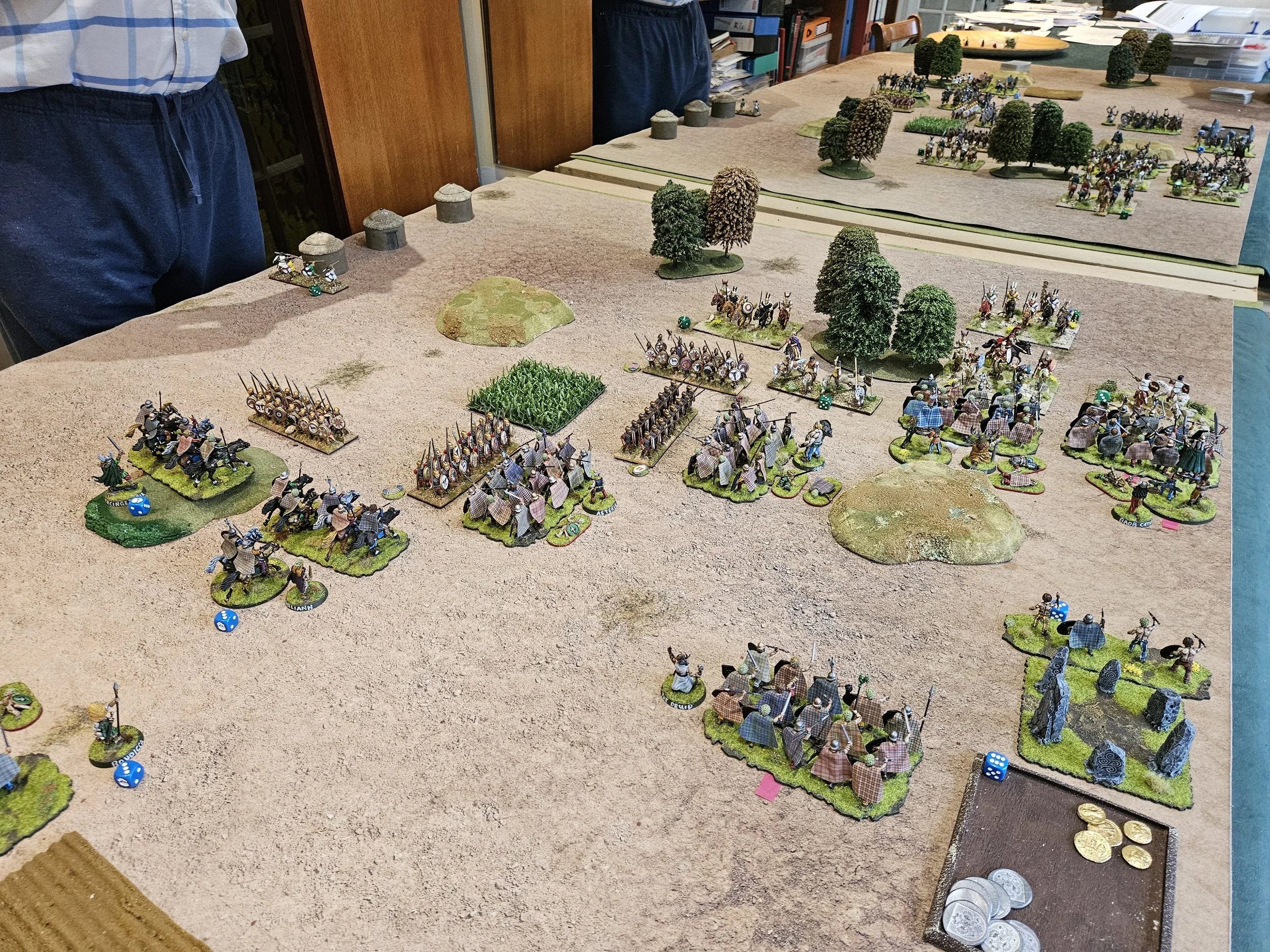
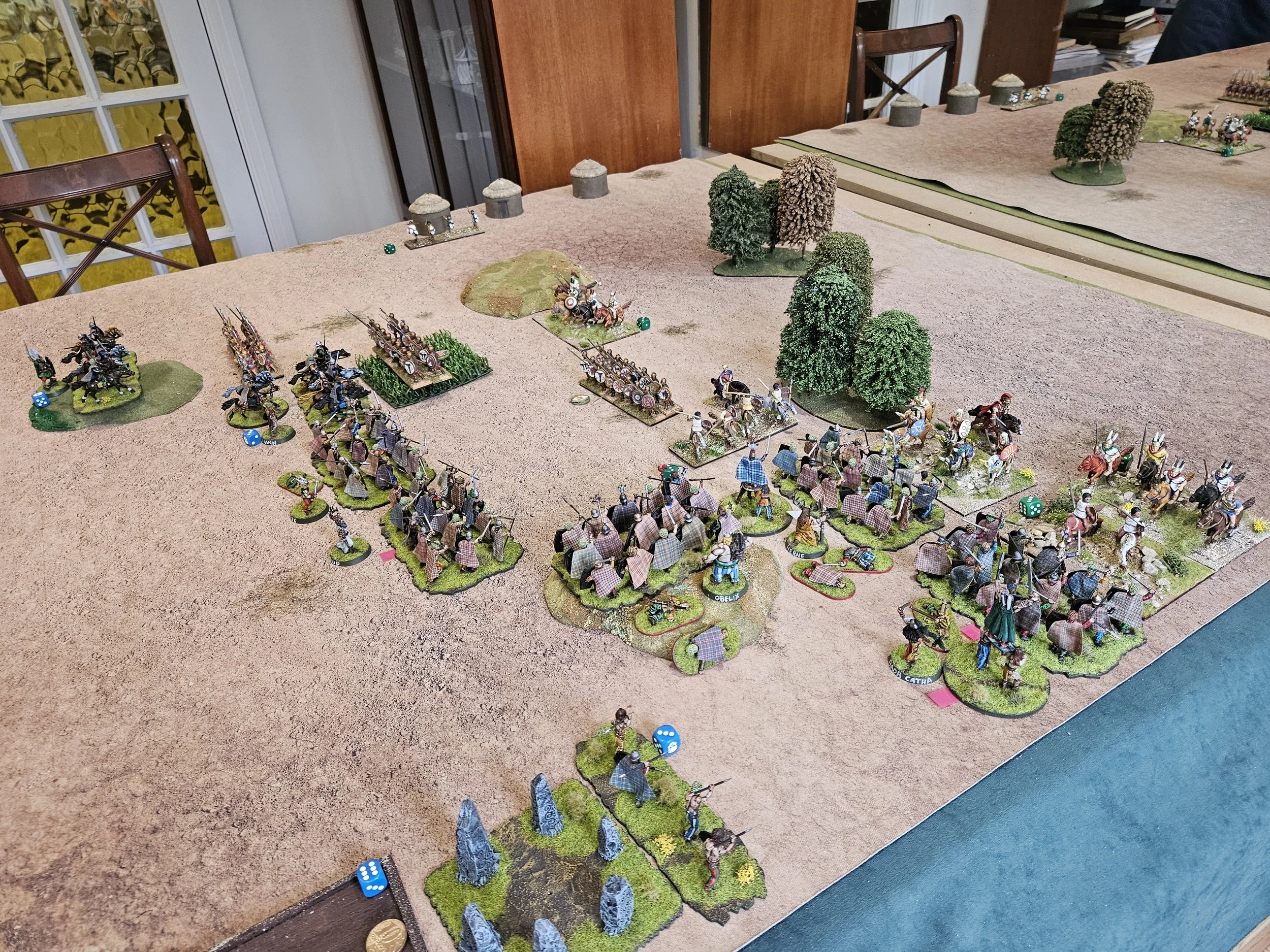
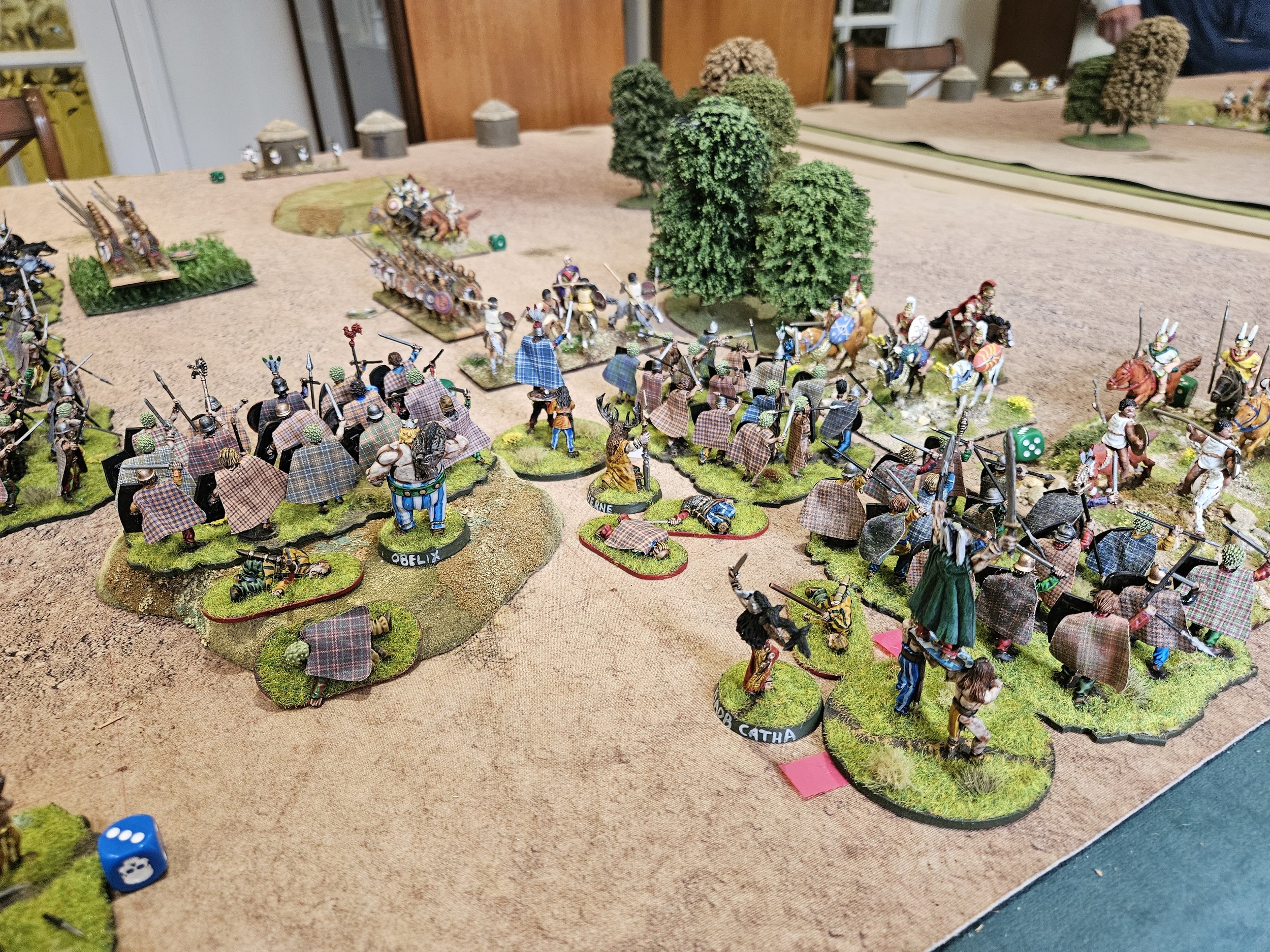
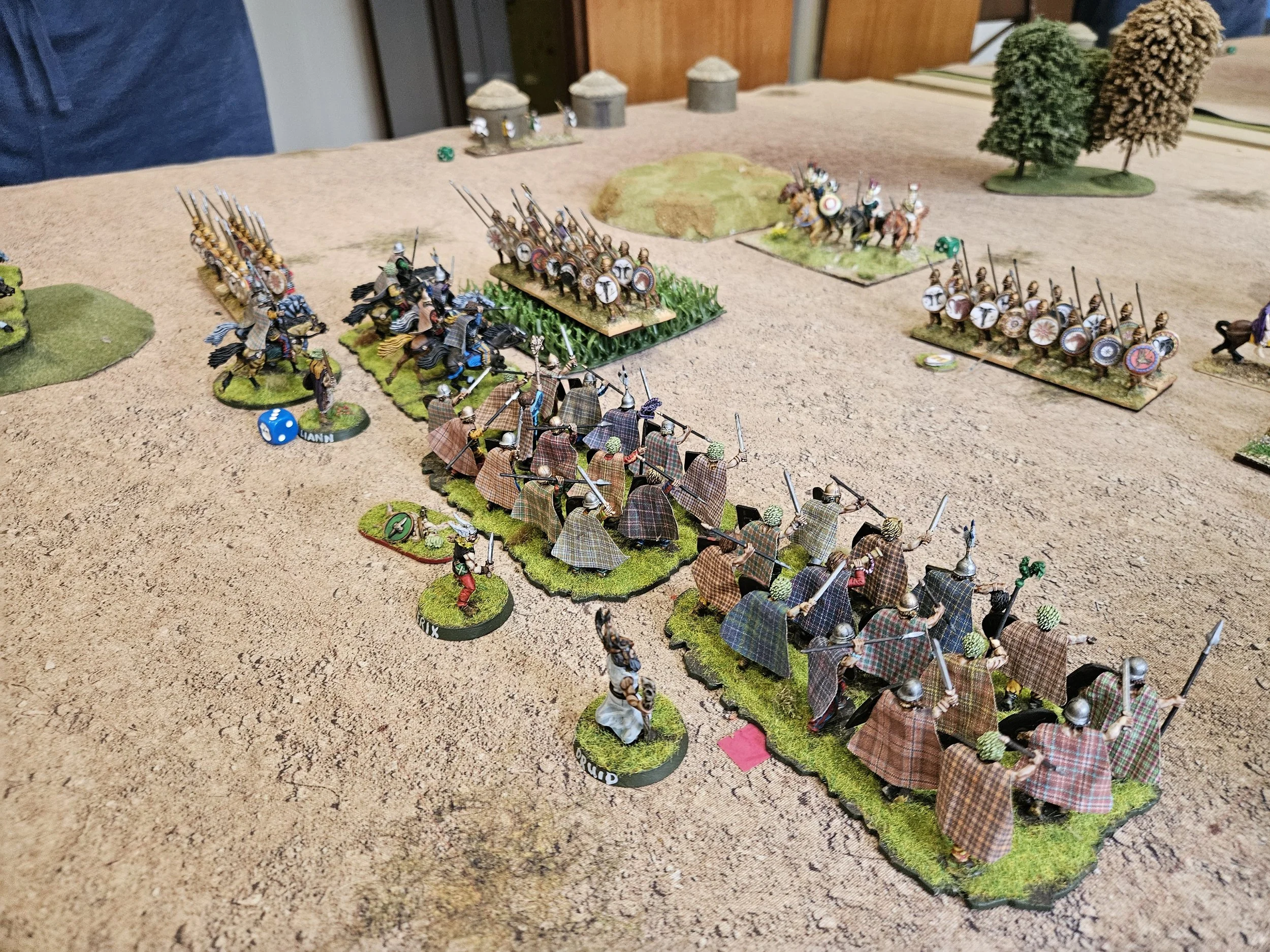
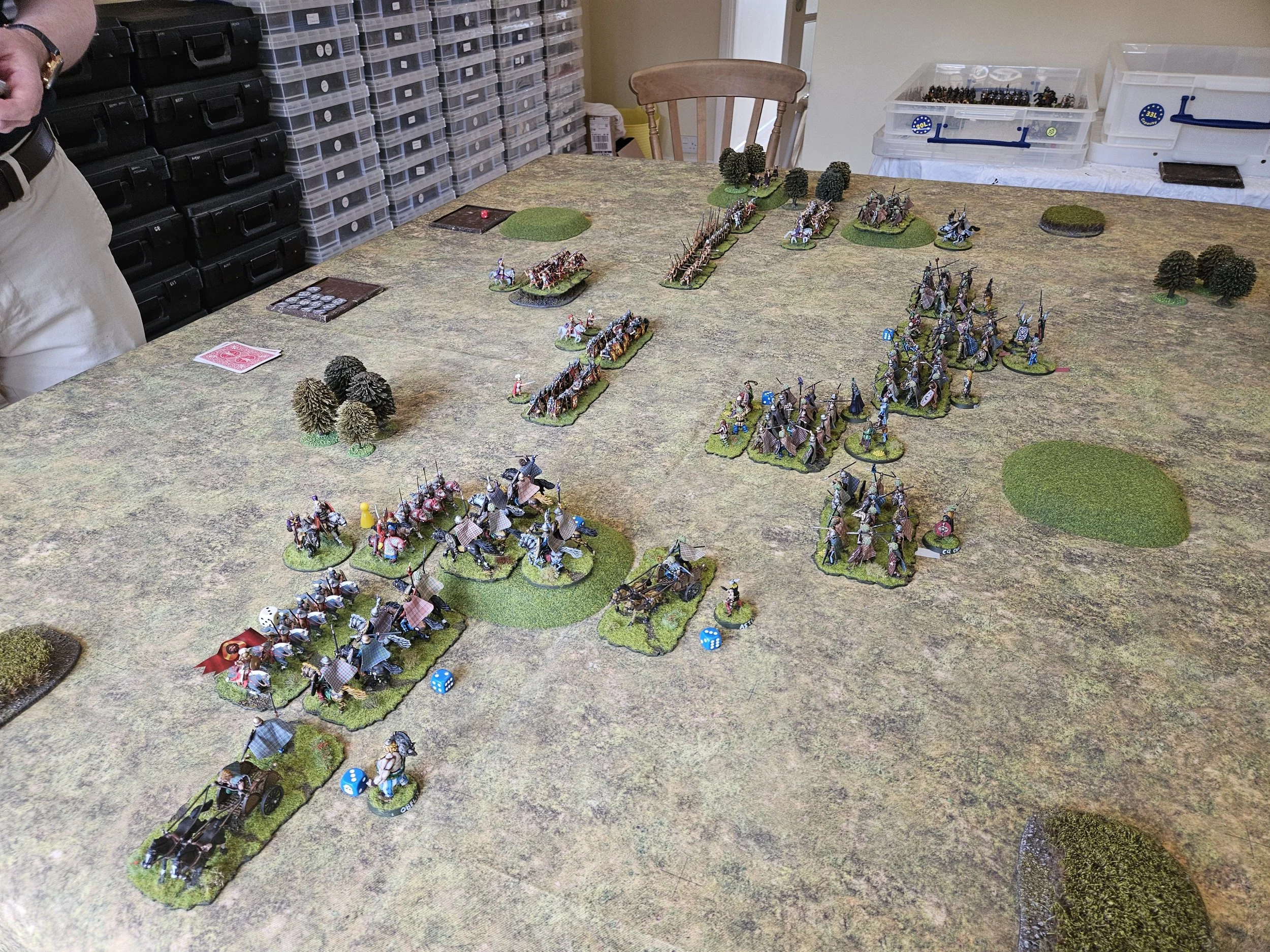
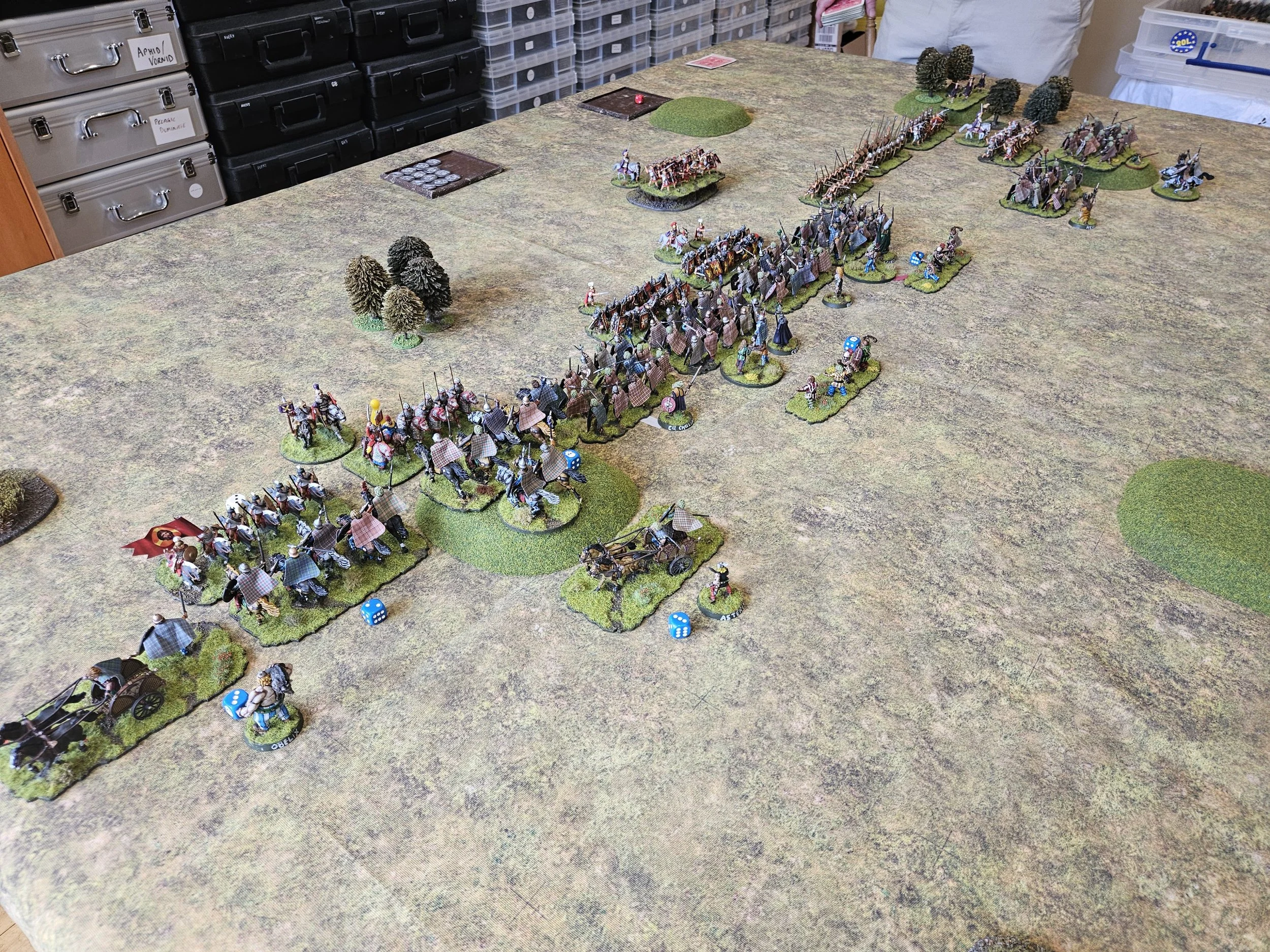
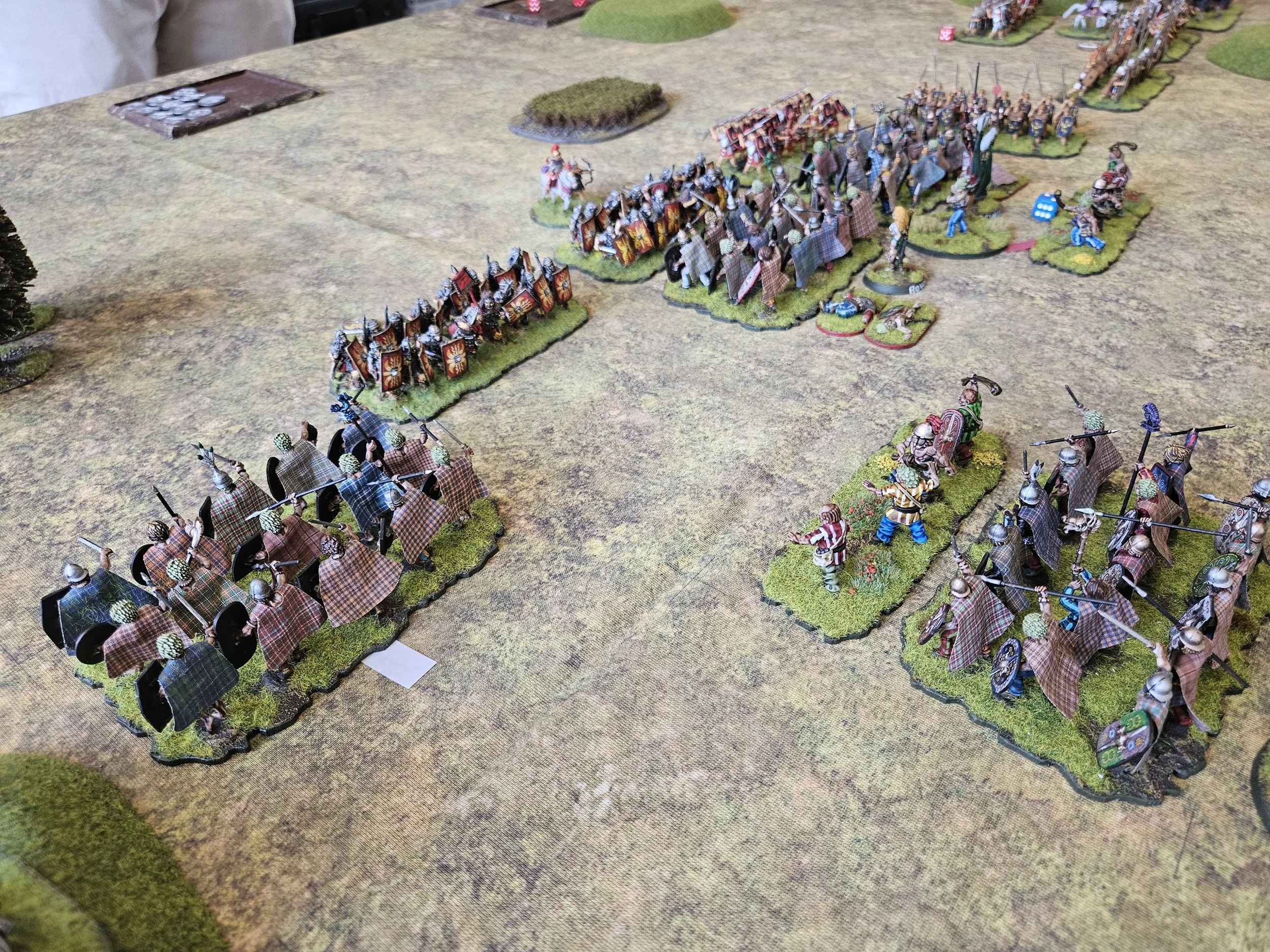
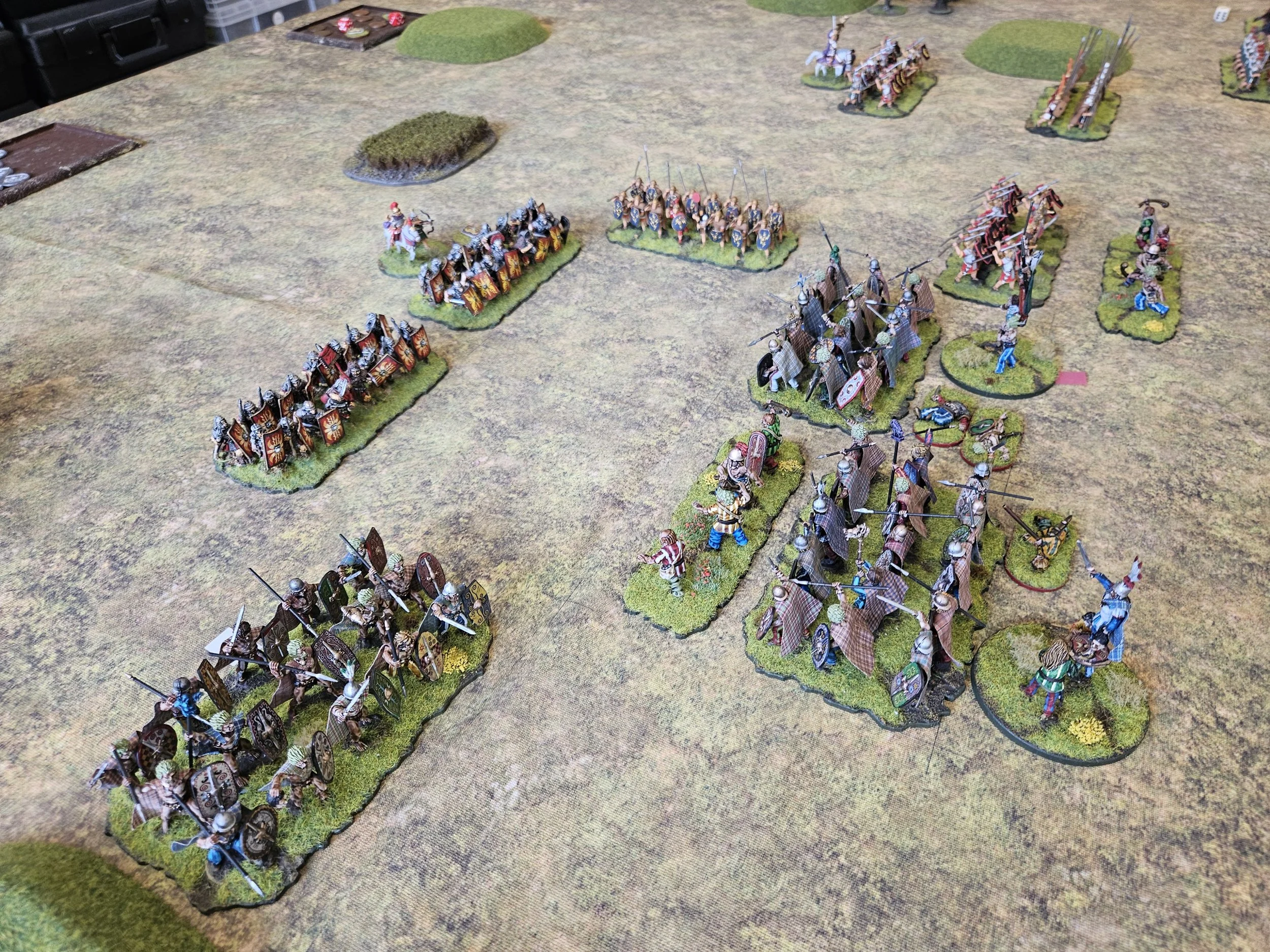
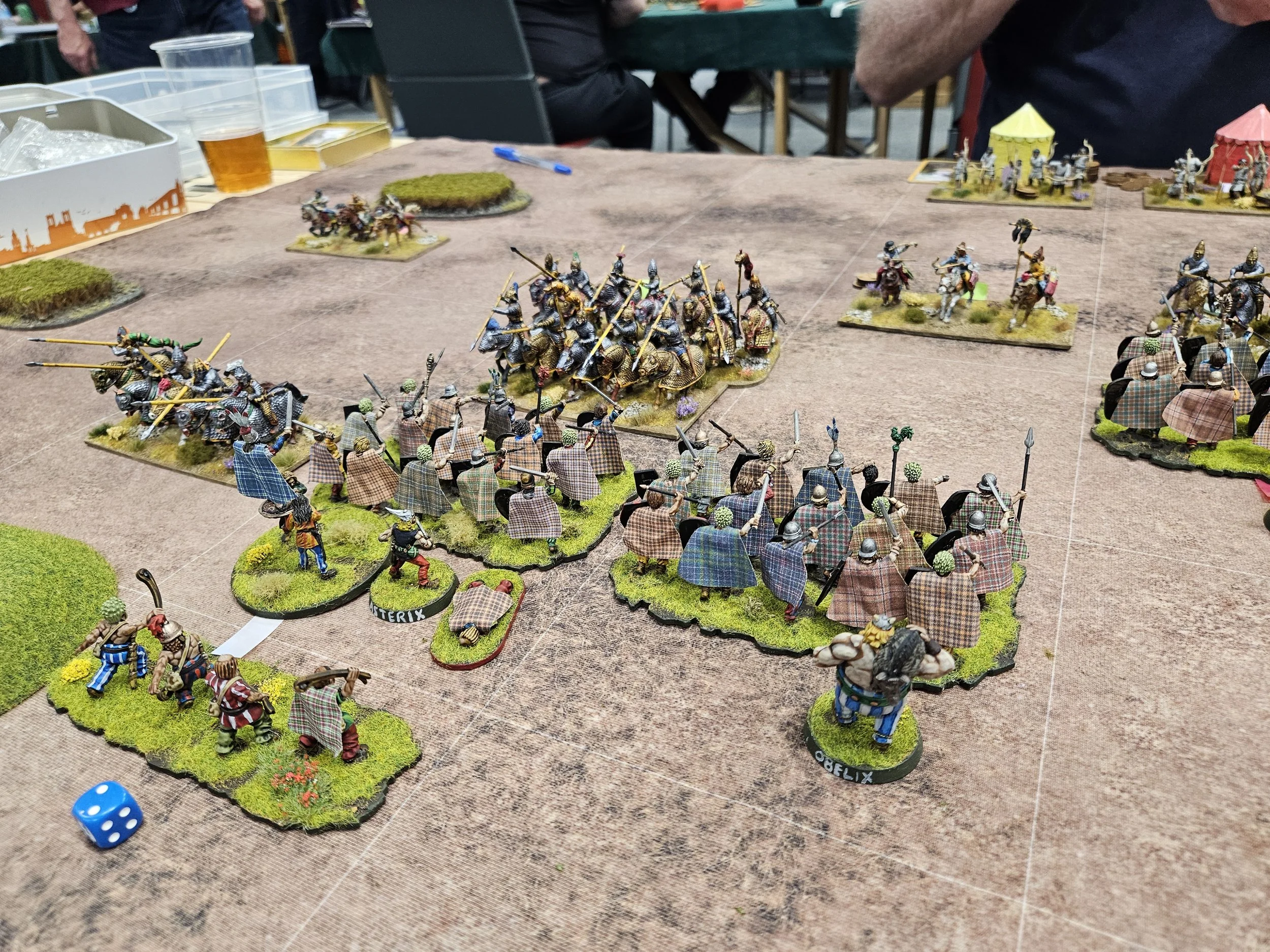
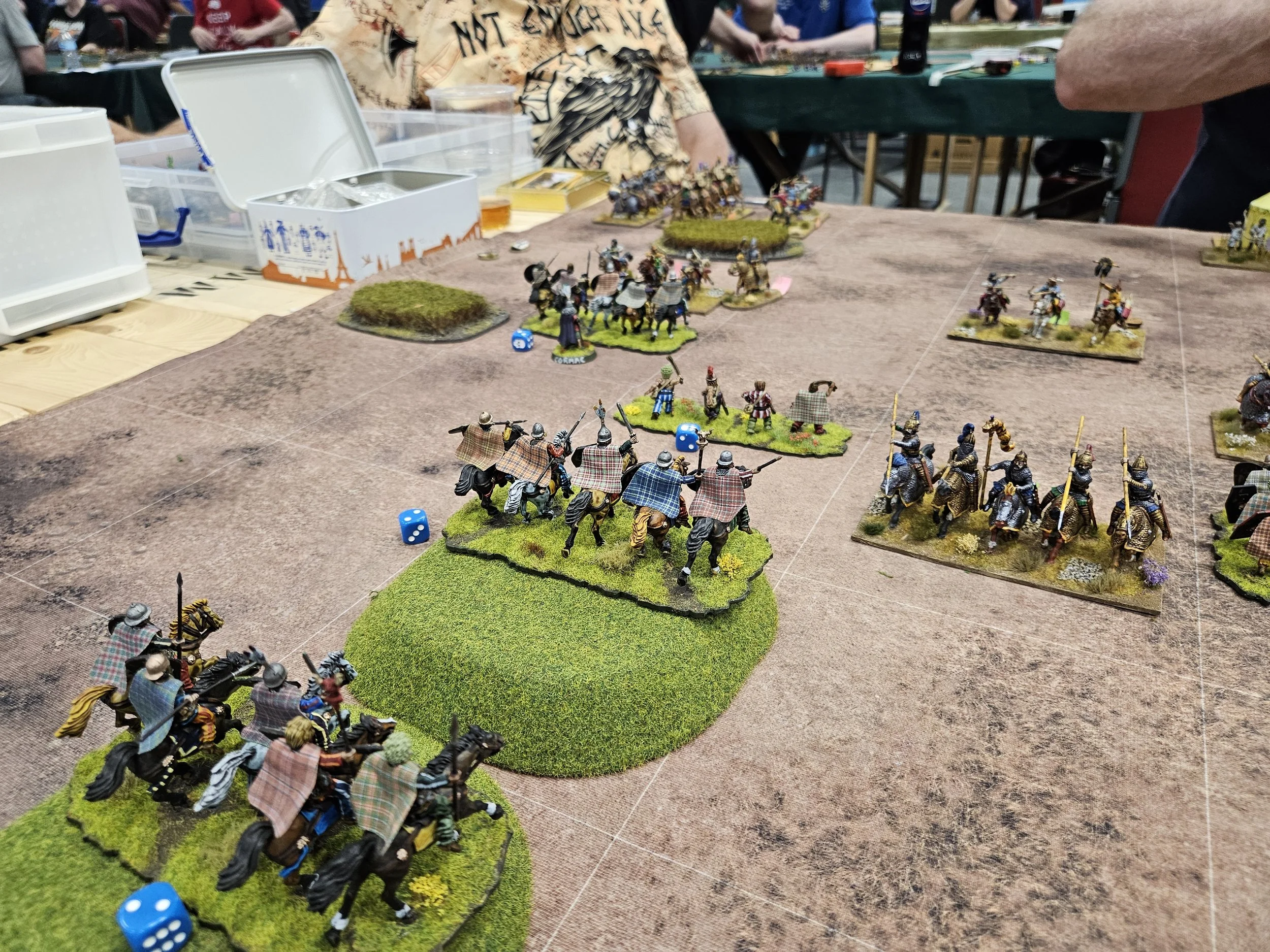
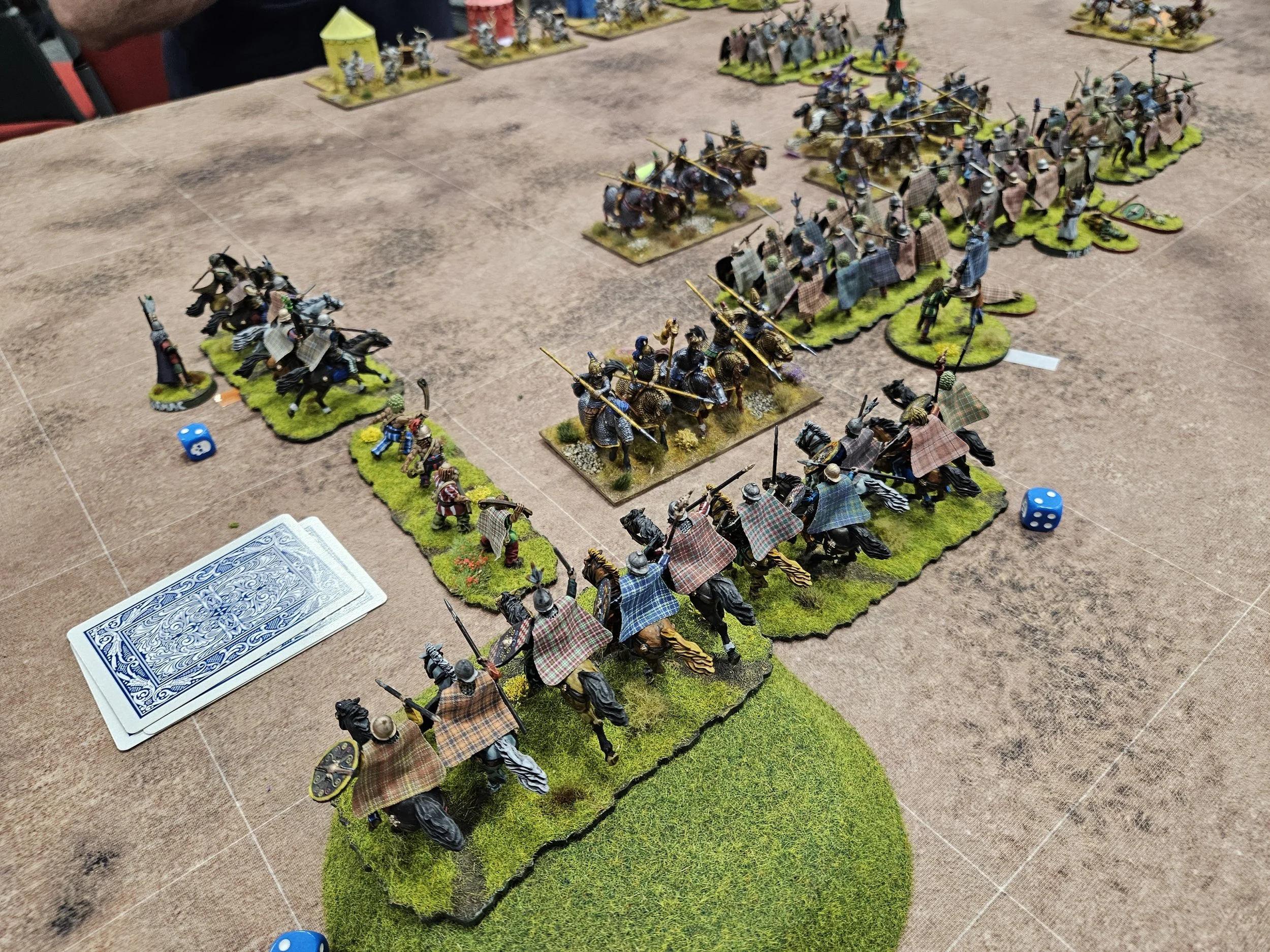
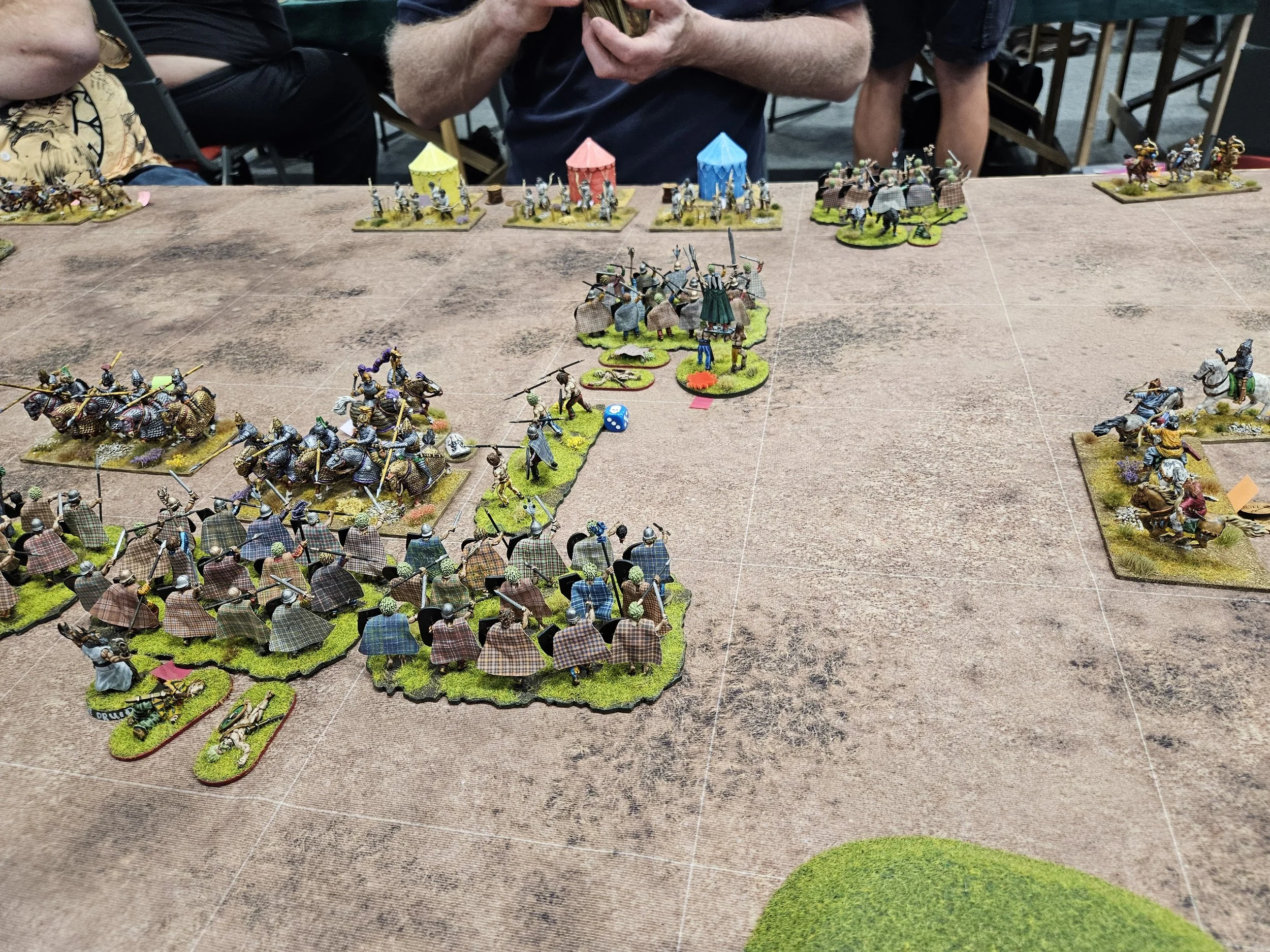
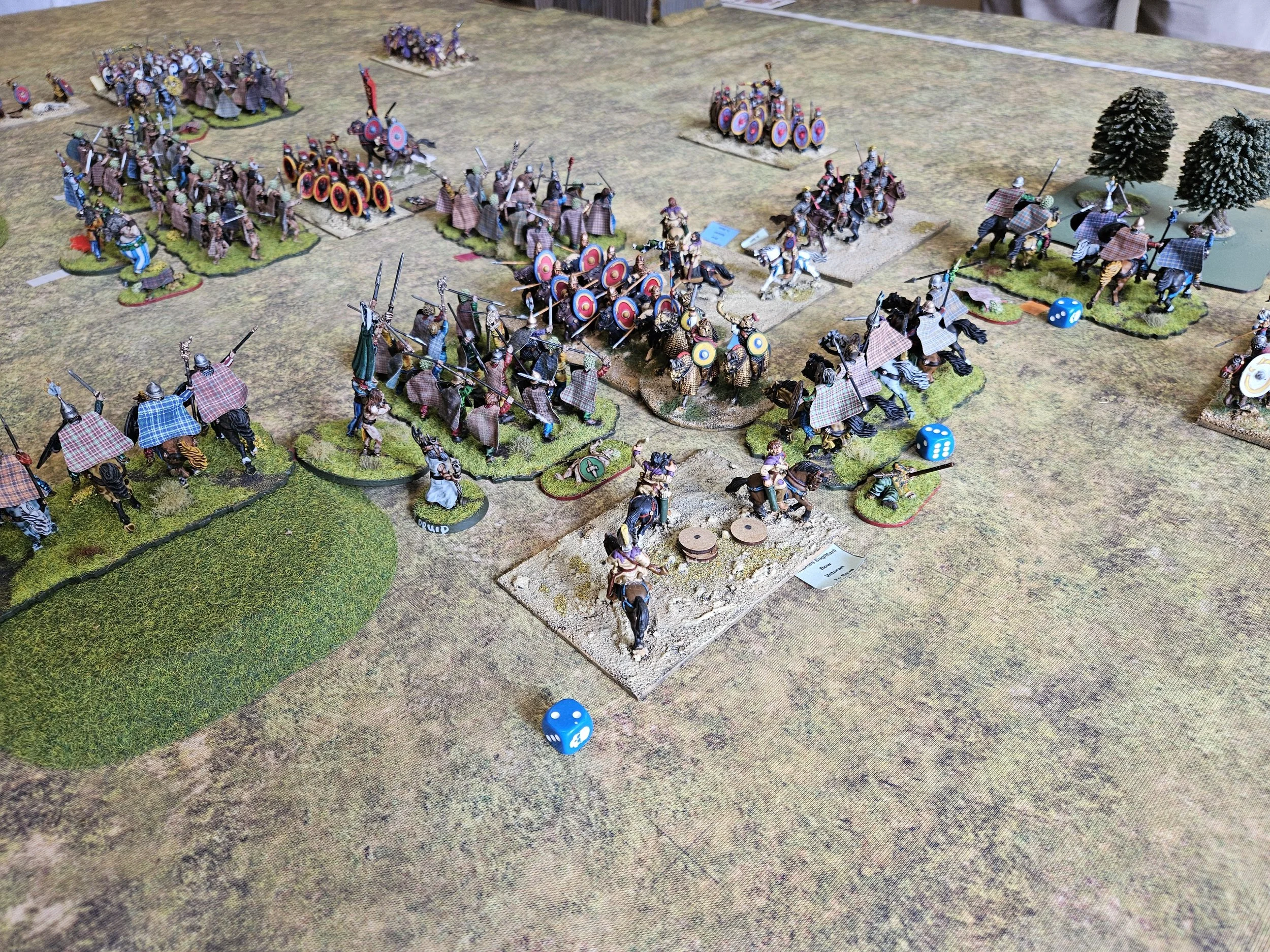
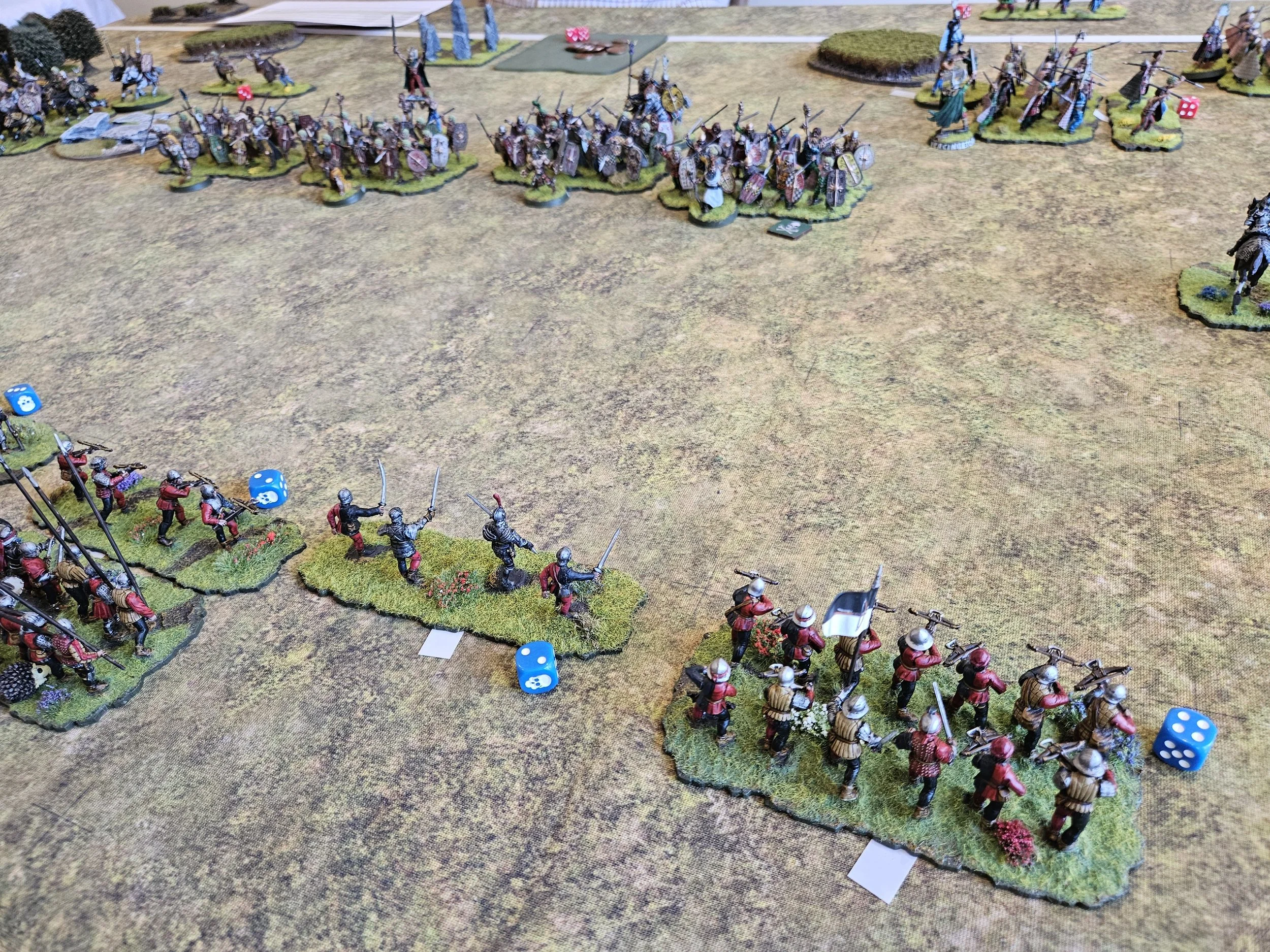
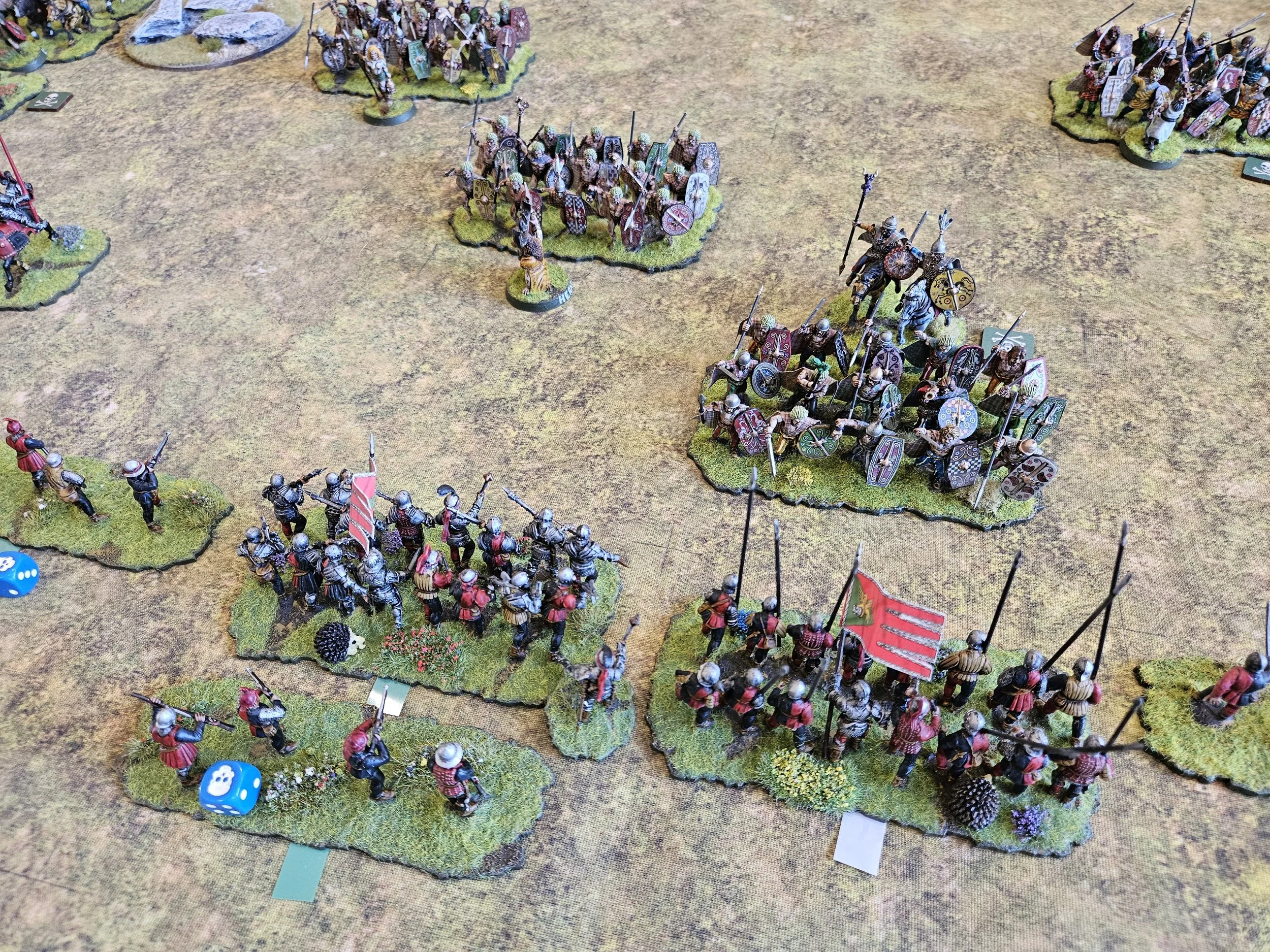
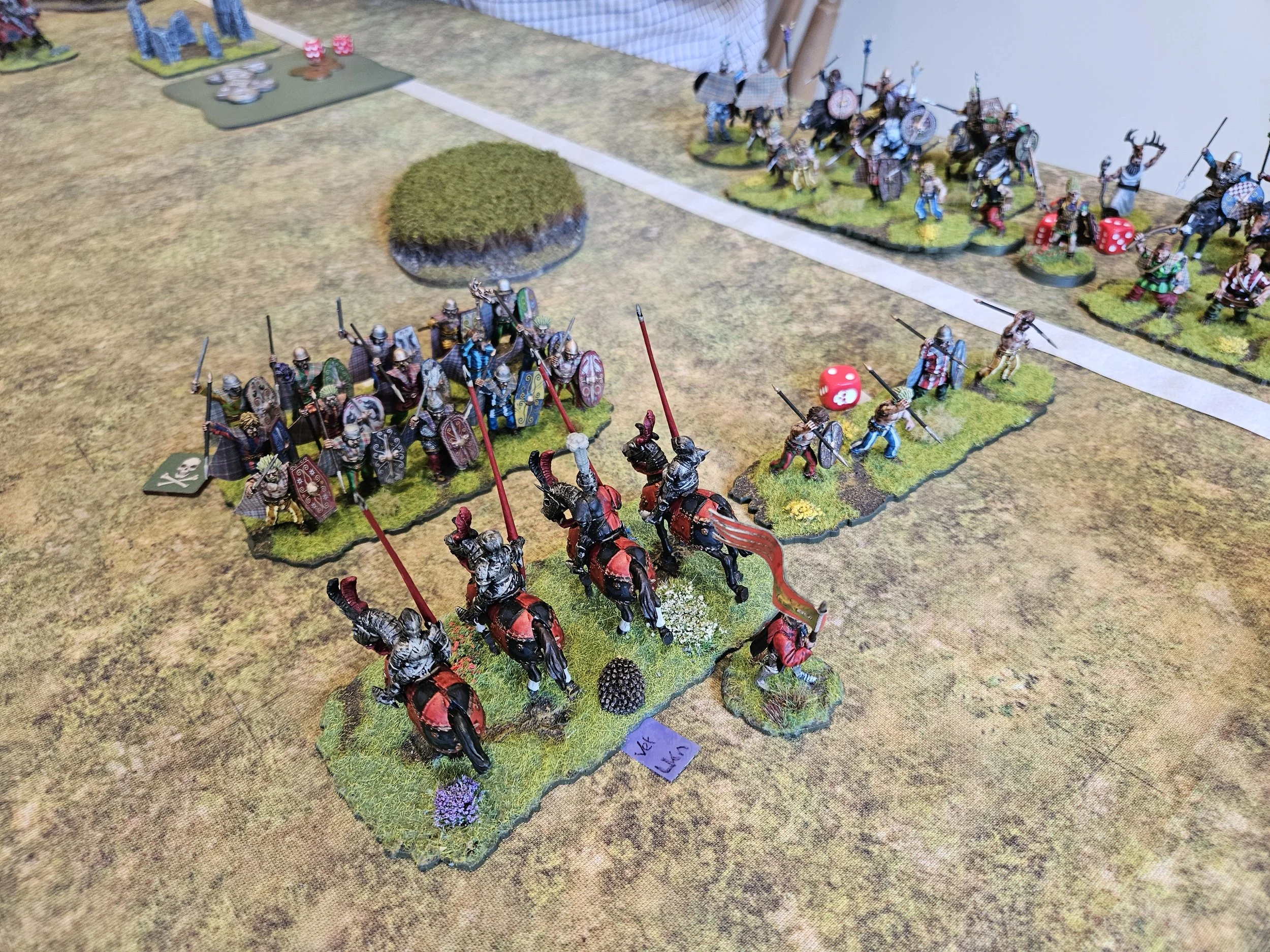
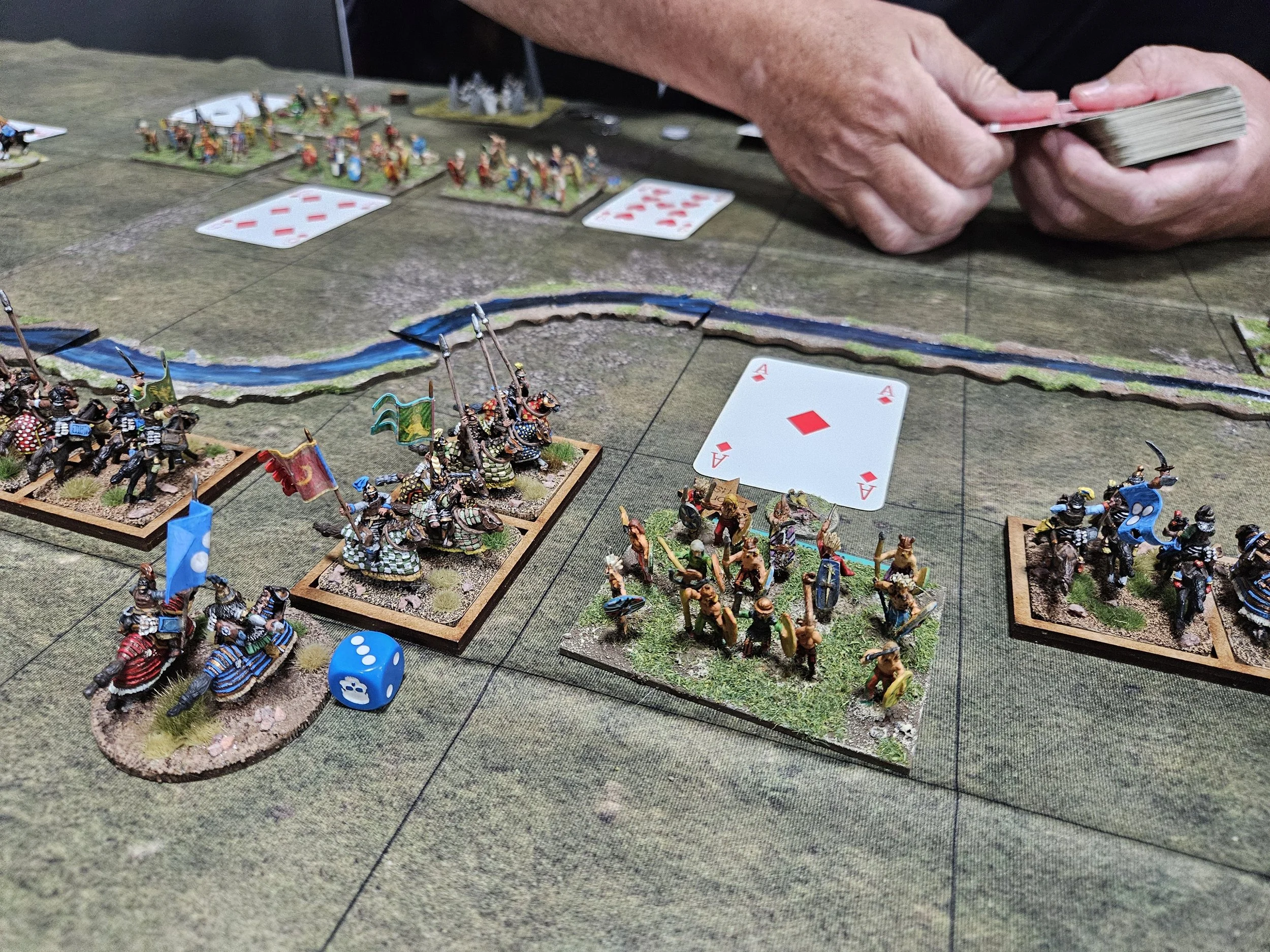
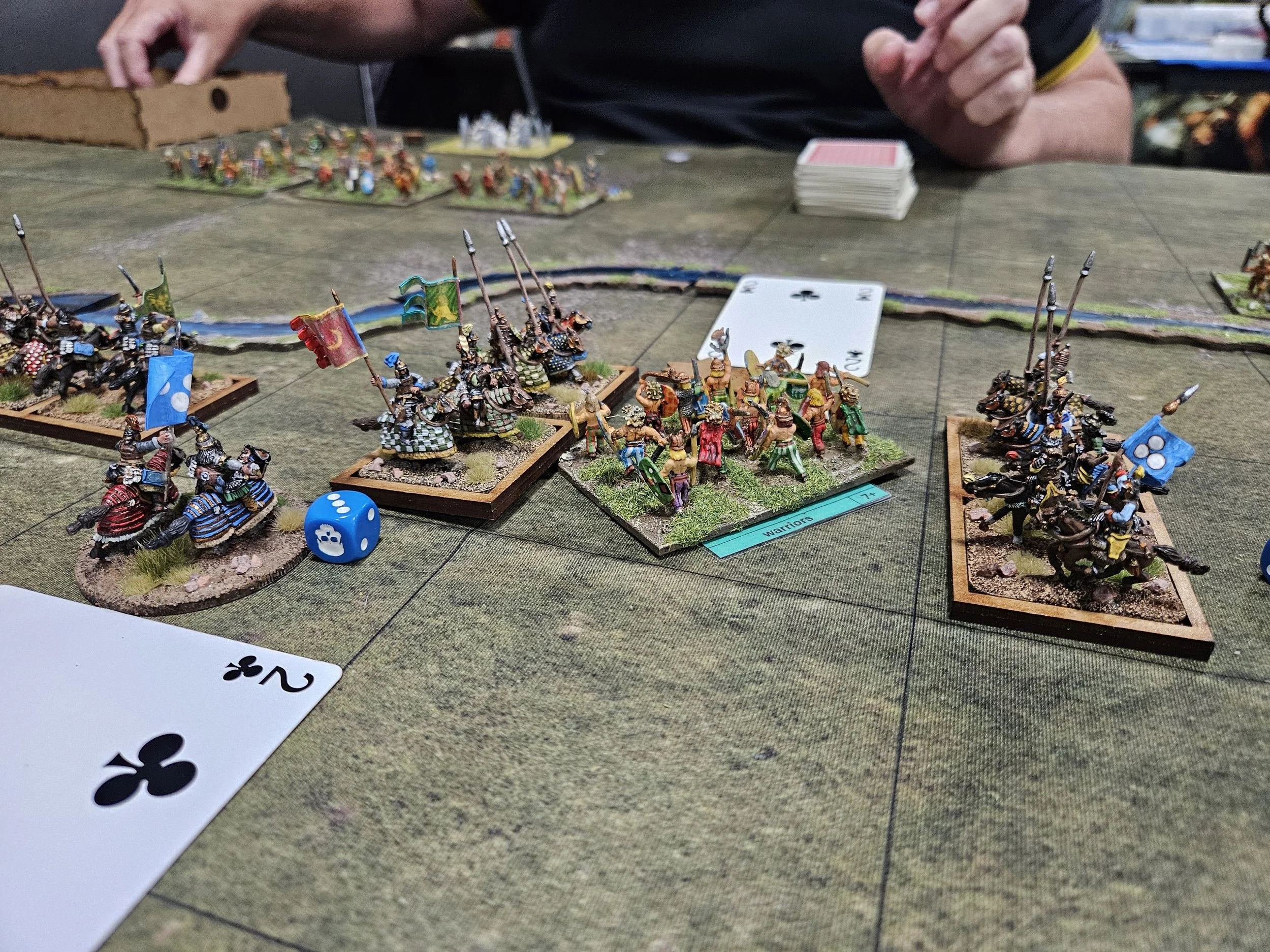
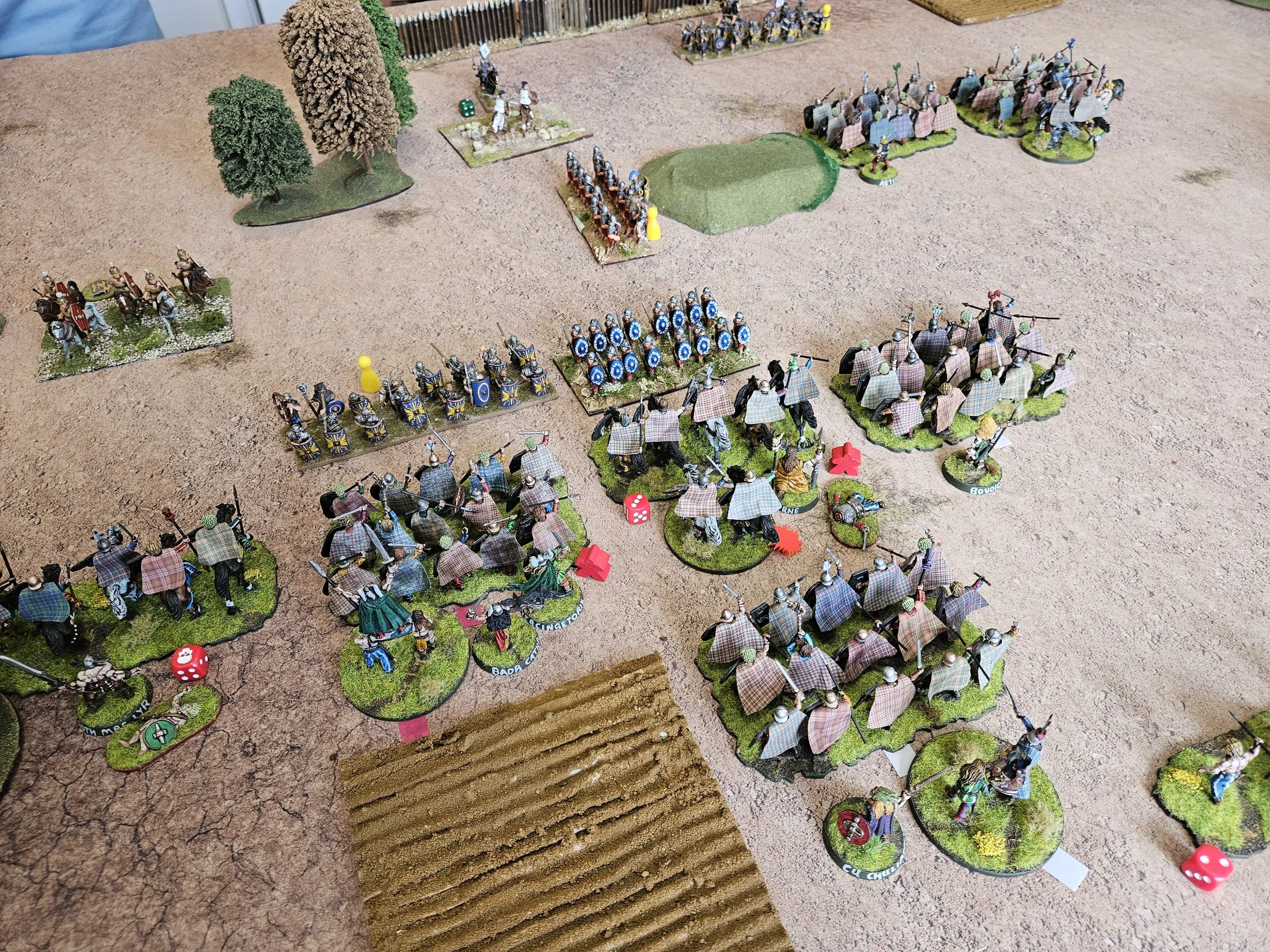
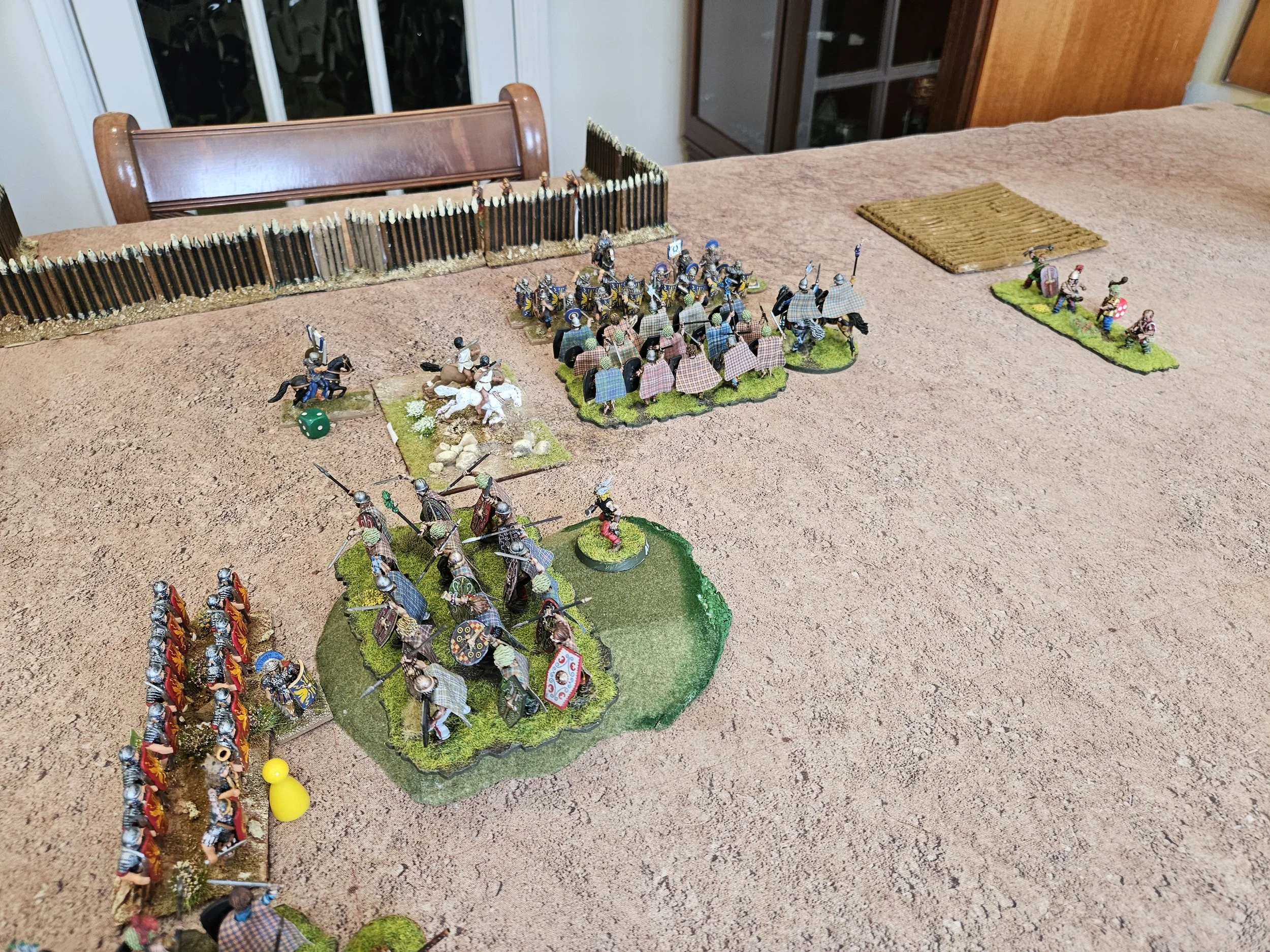
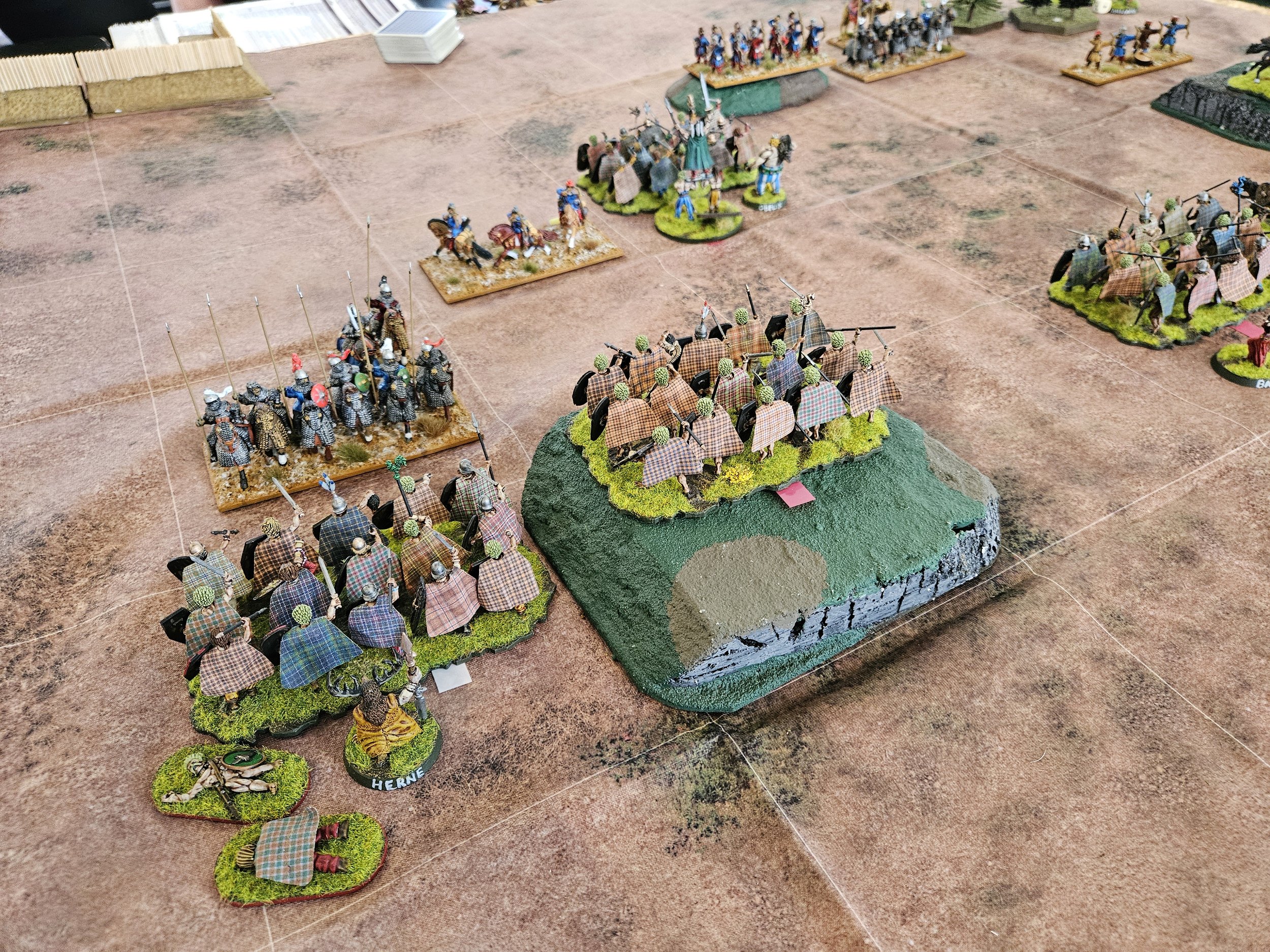
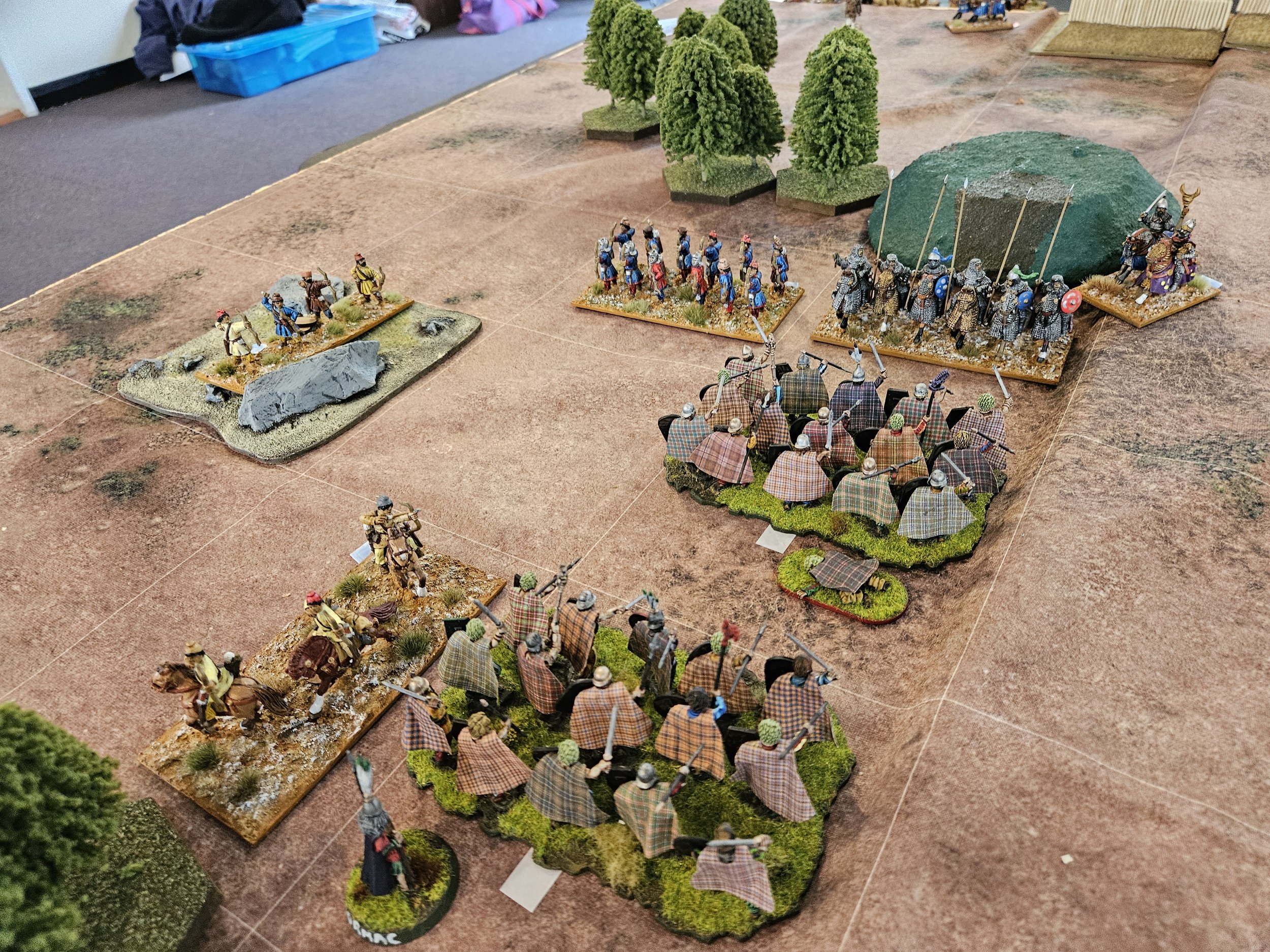
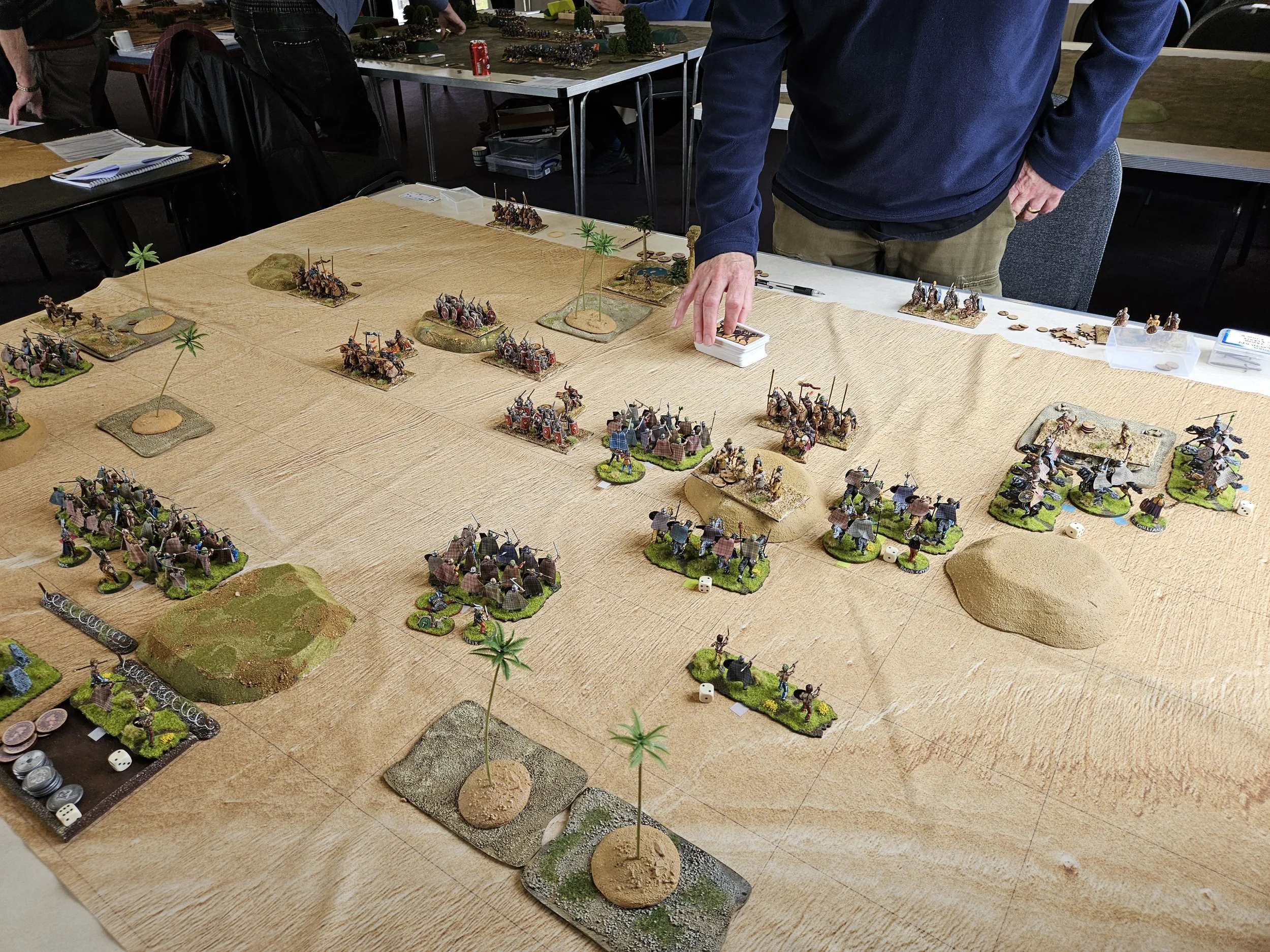
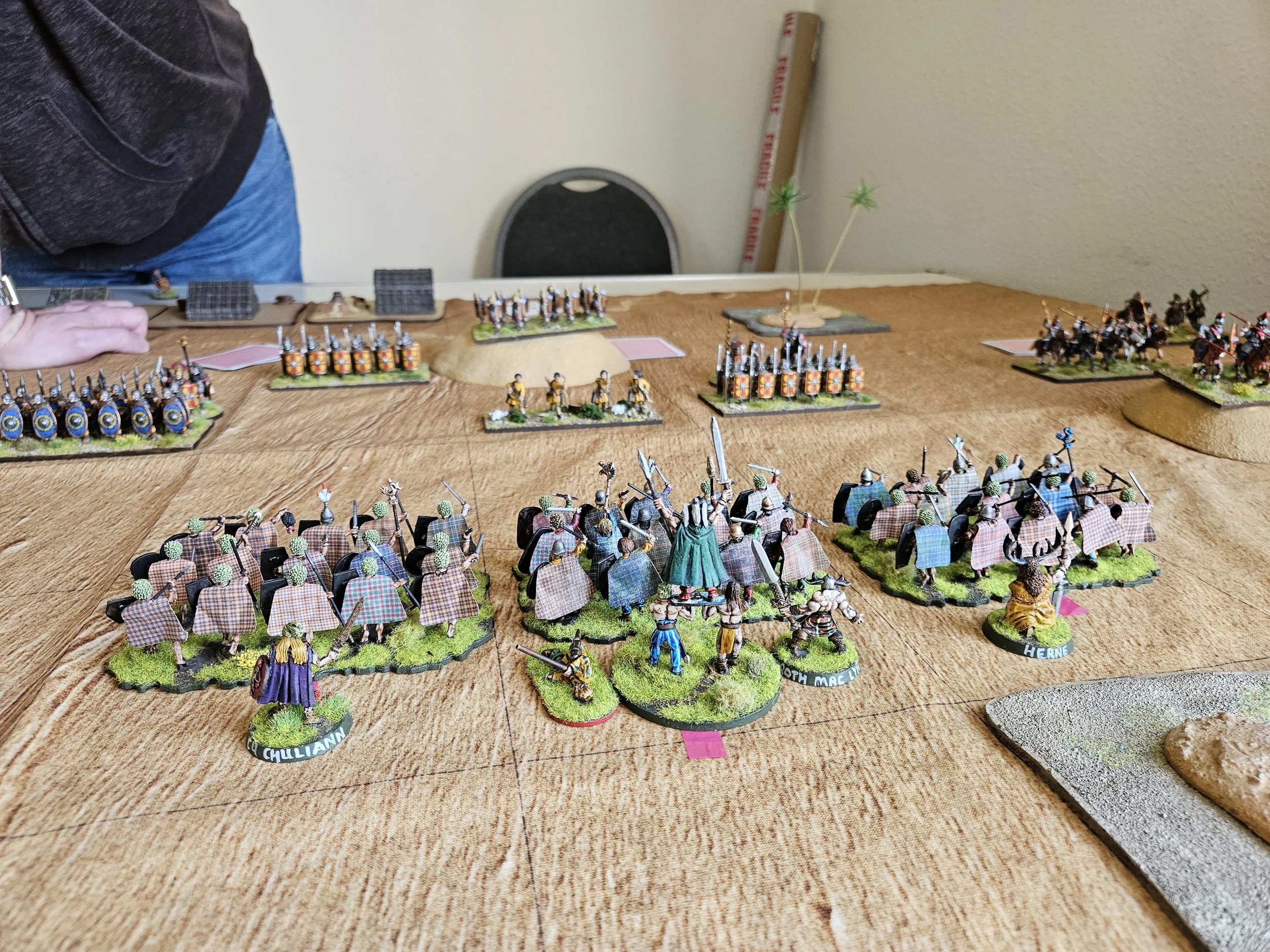
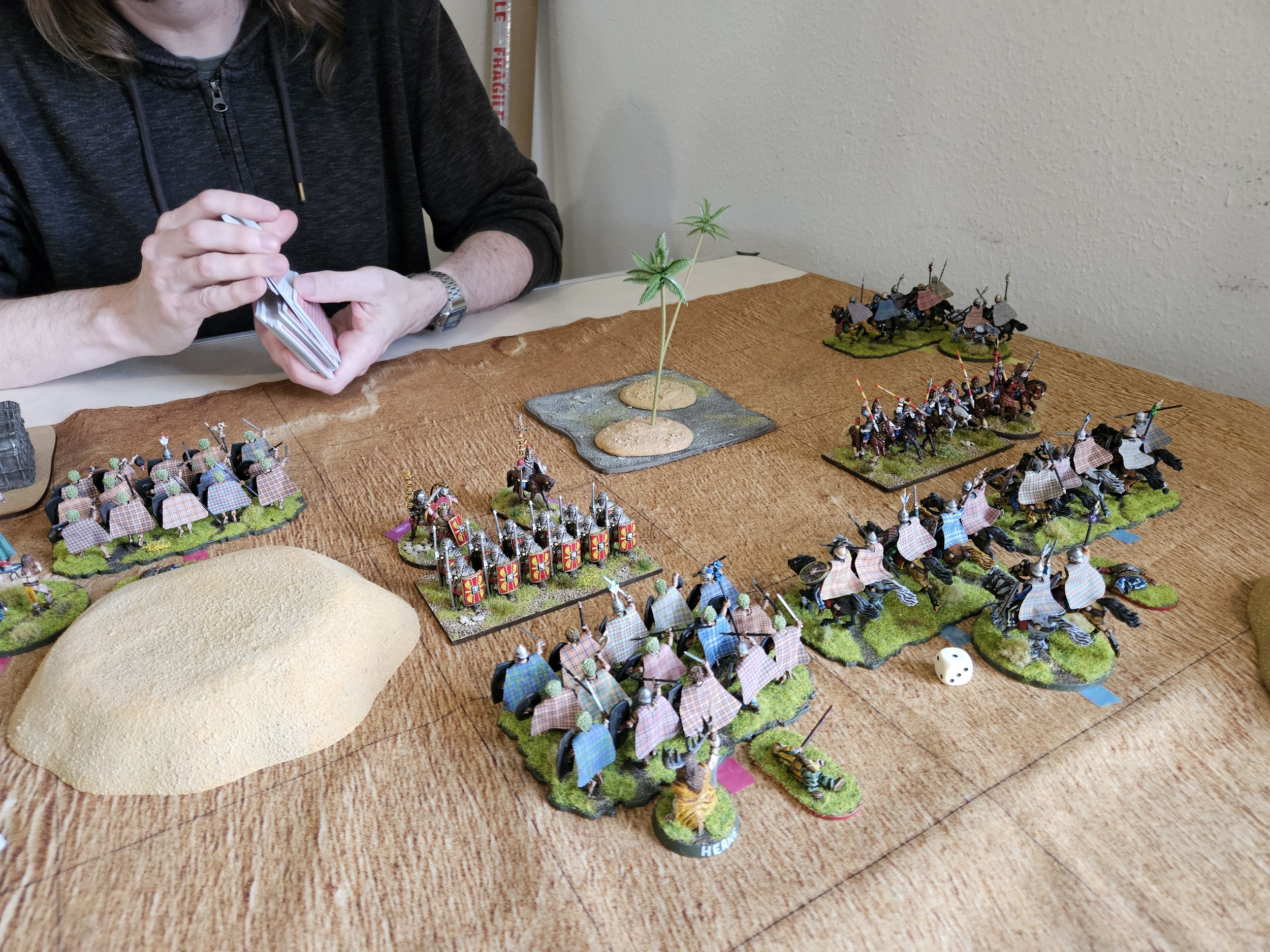
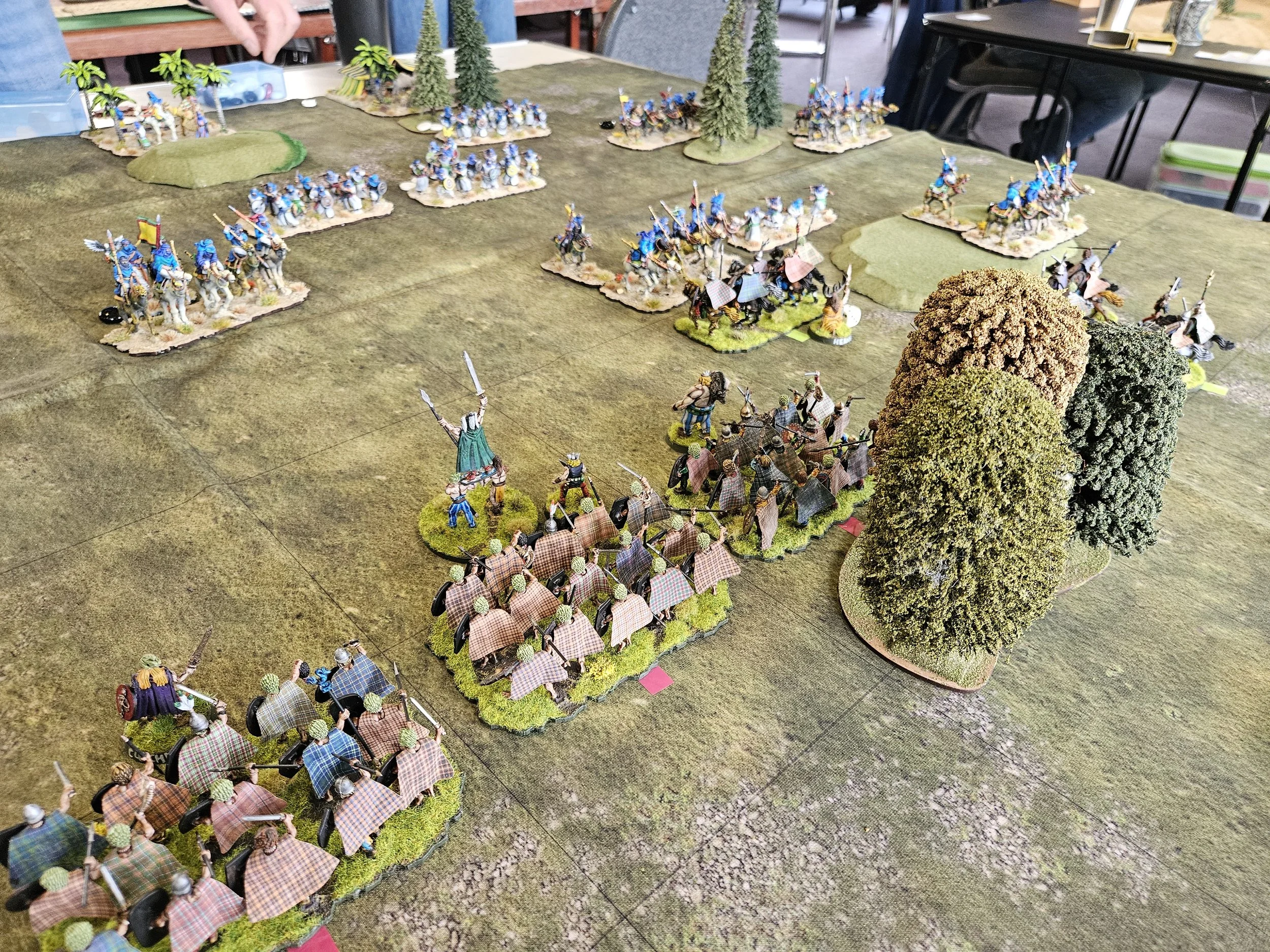
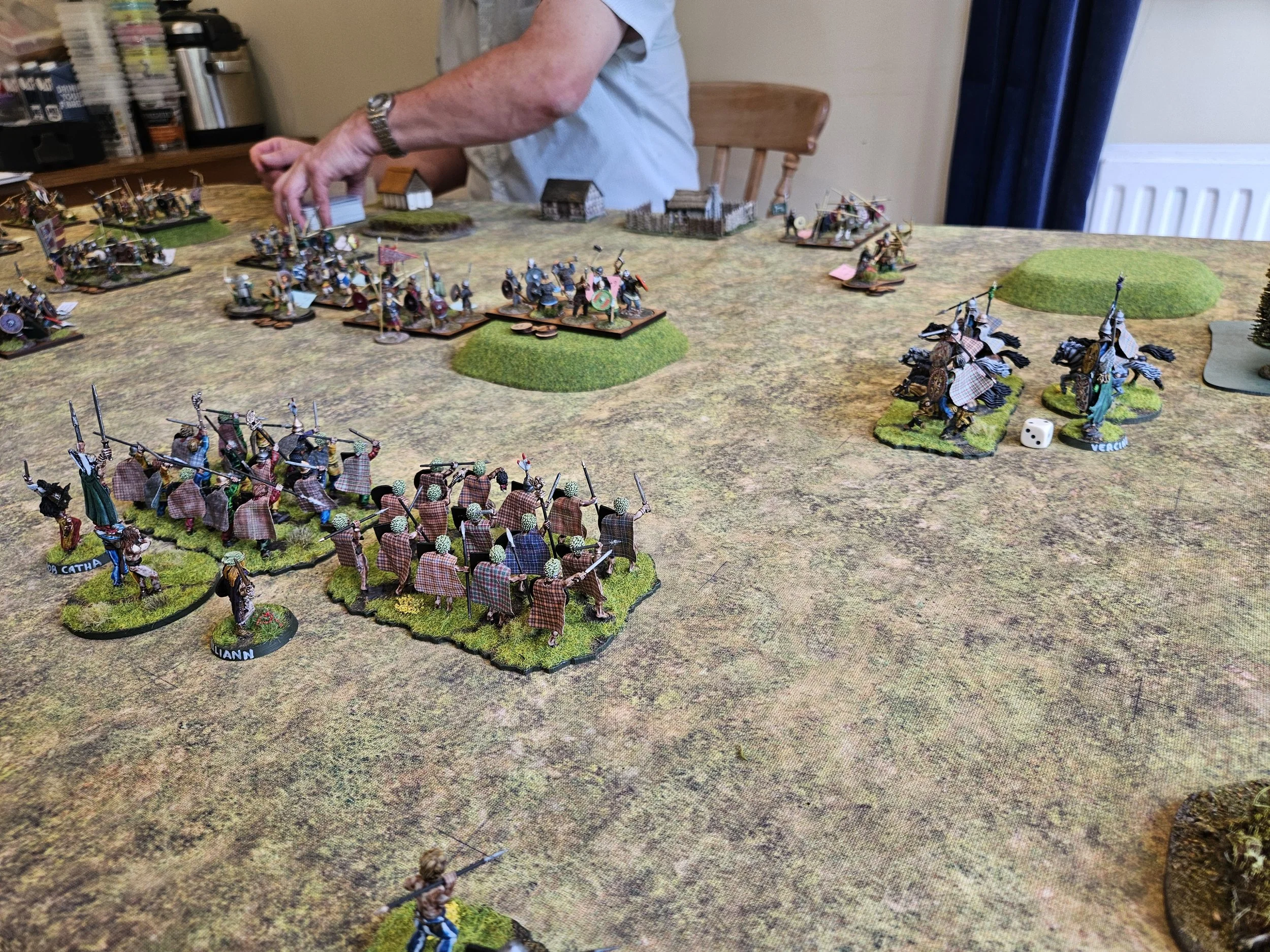
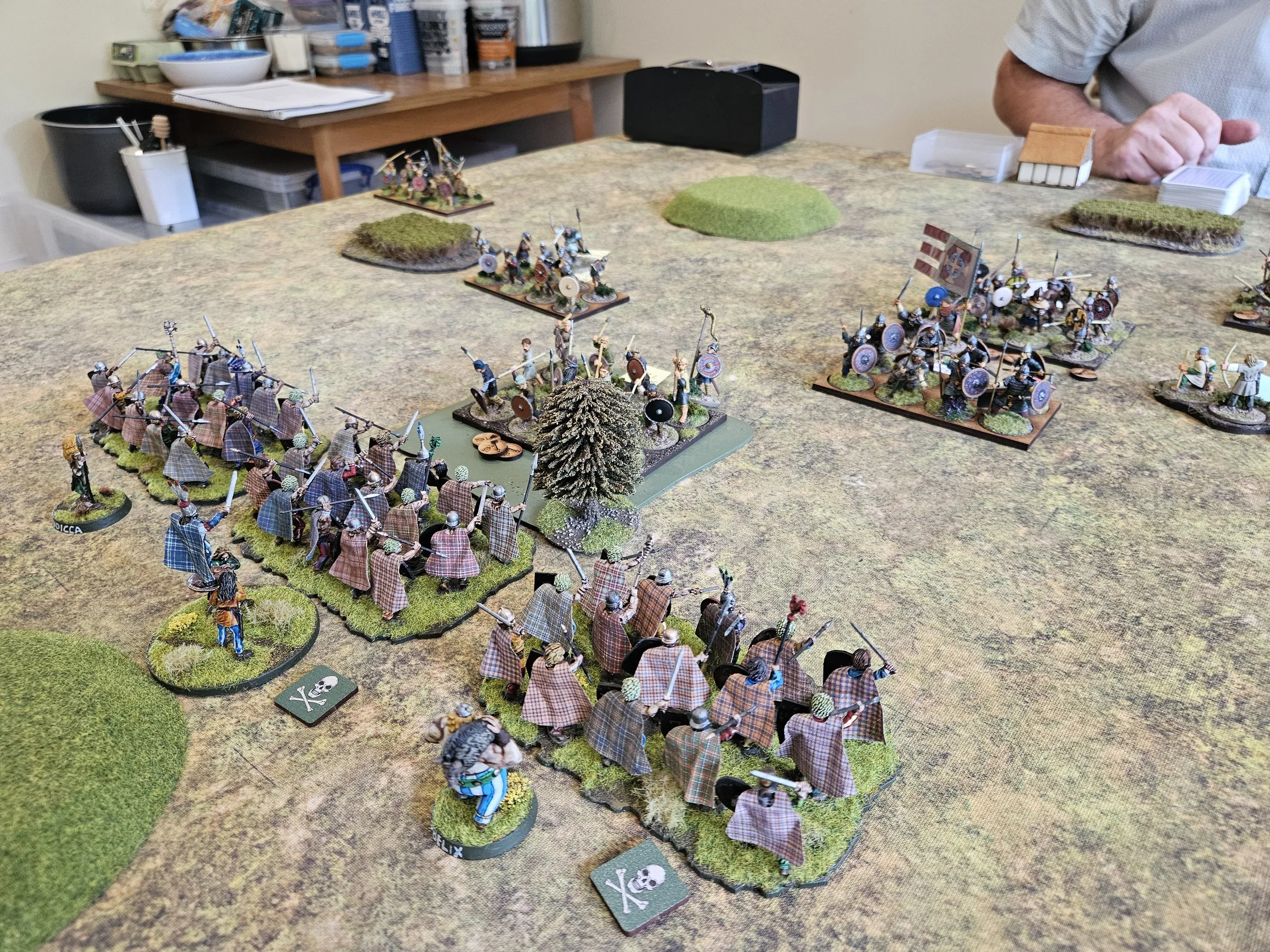
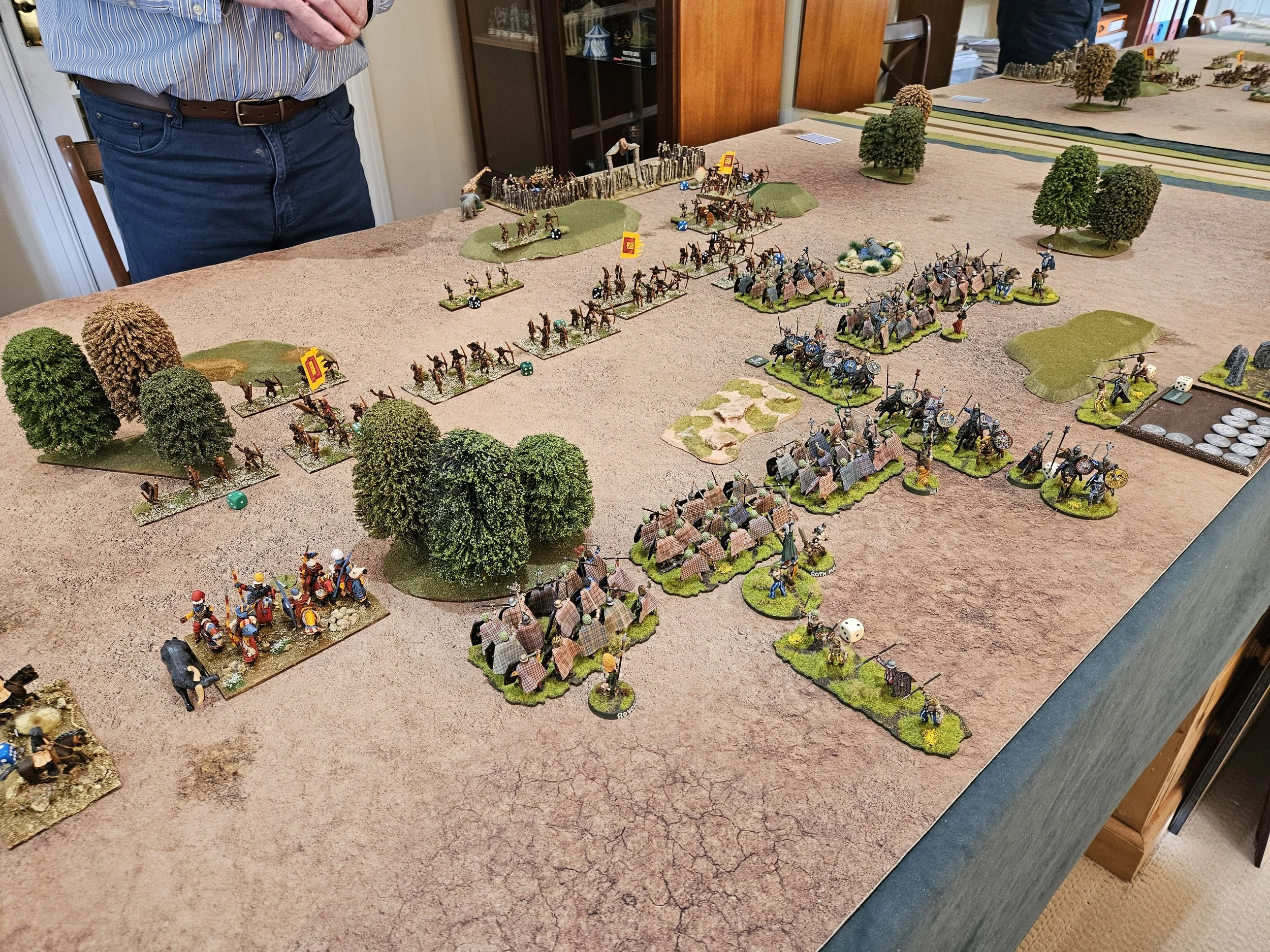
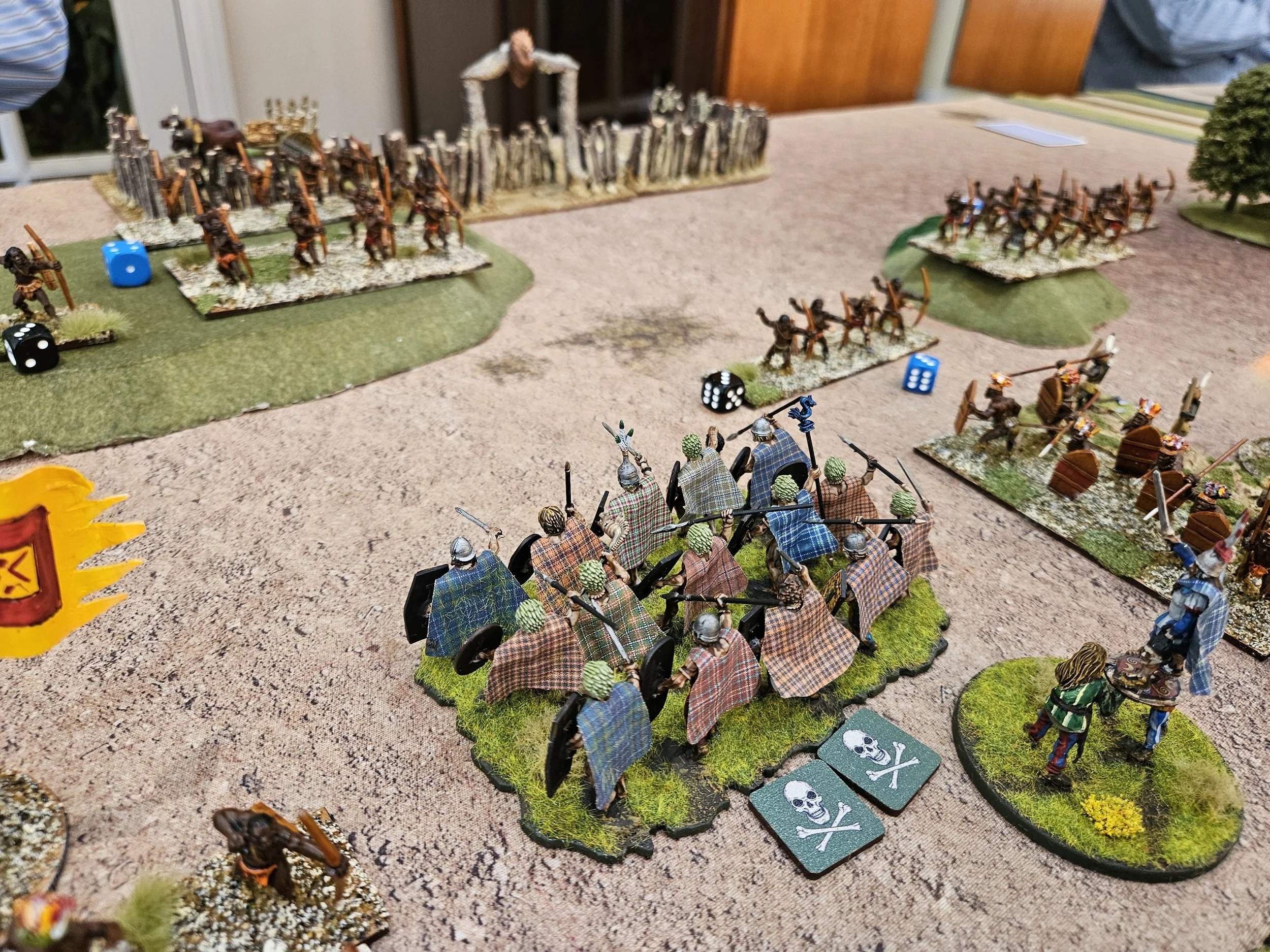
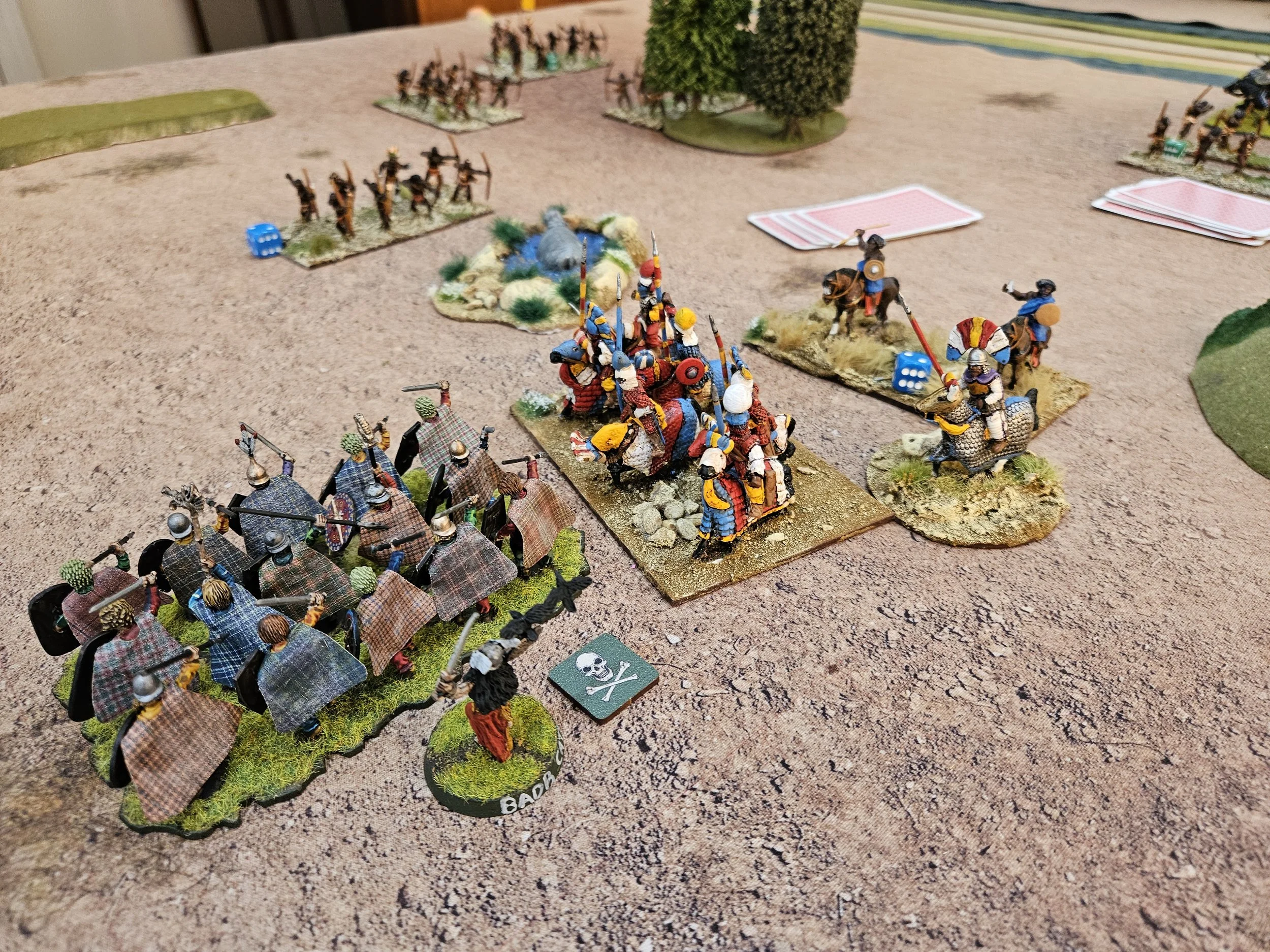
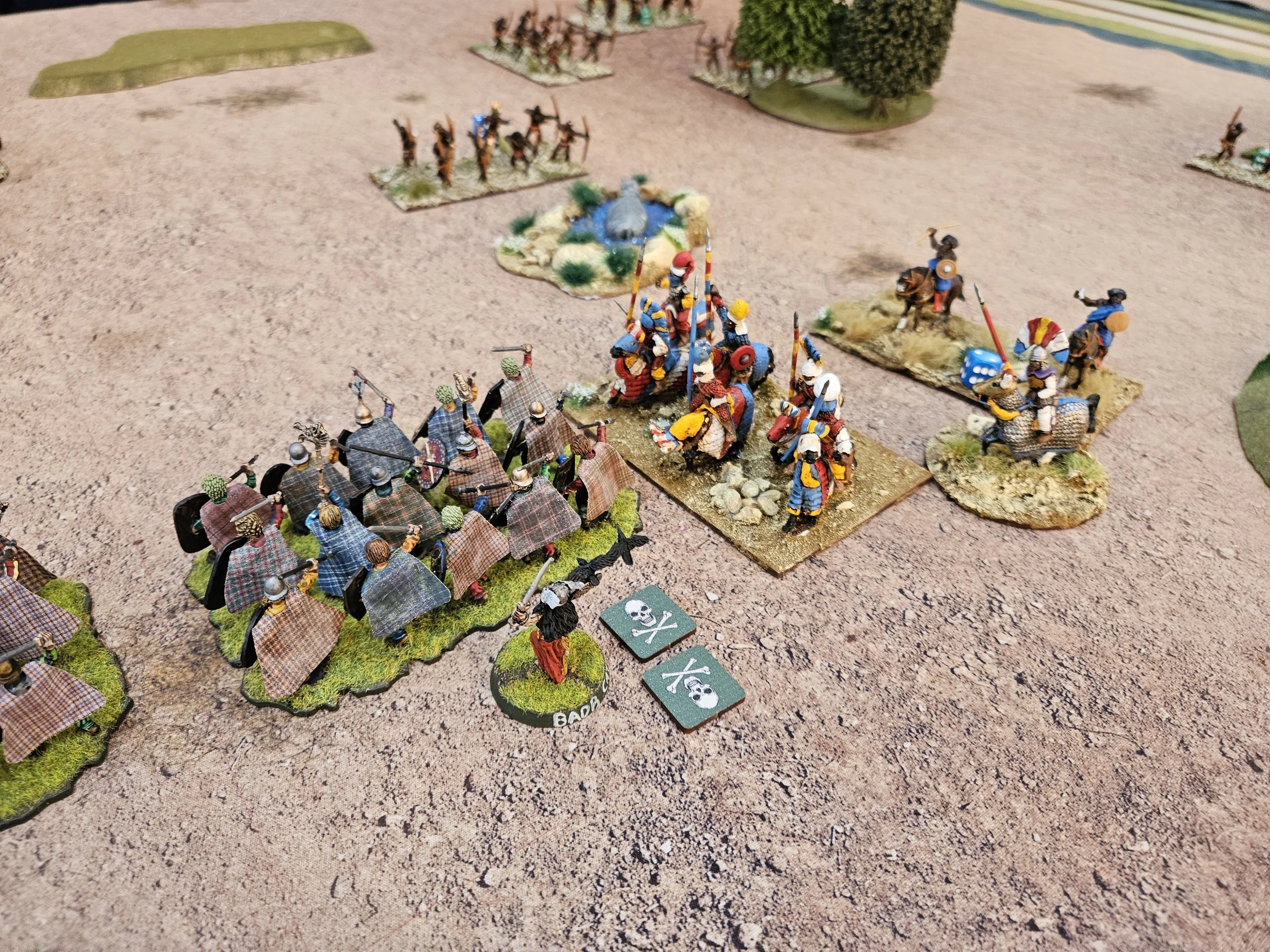
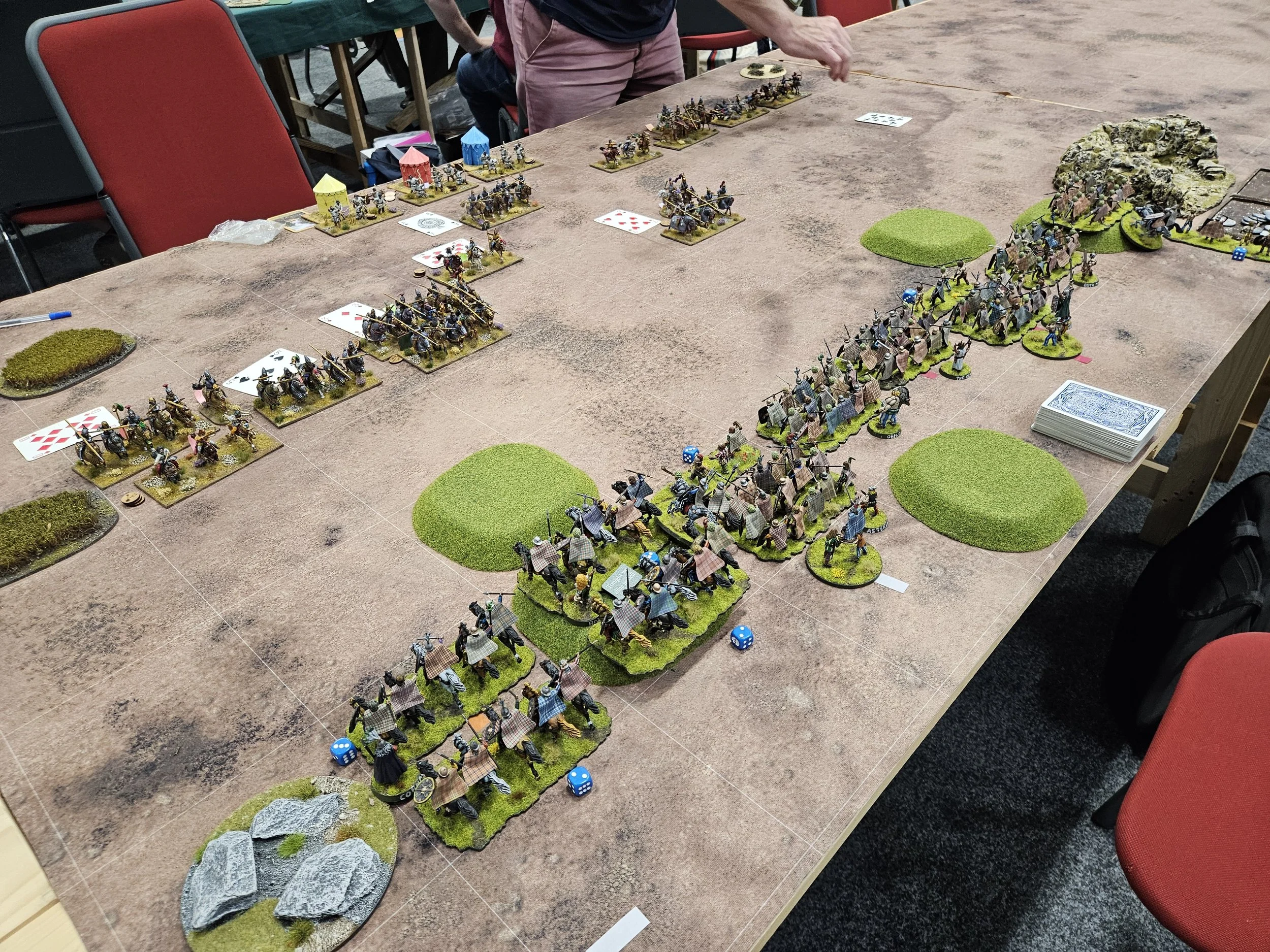
The two sides came together in the centre of the field with an almighty crash.

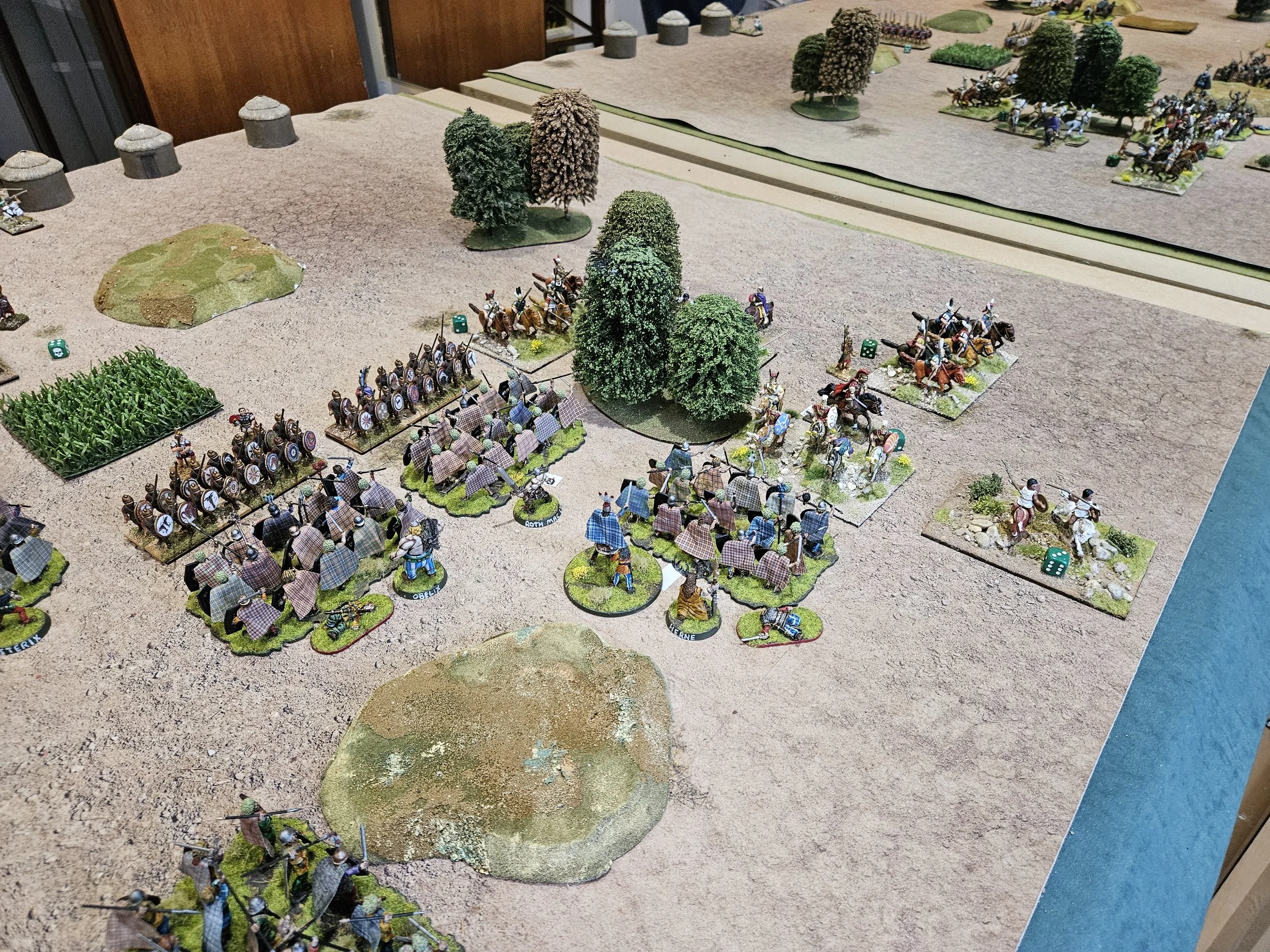
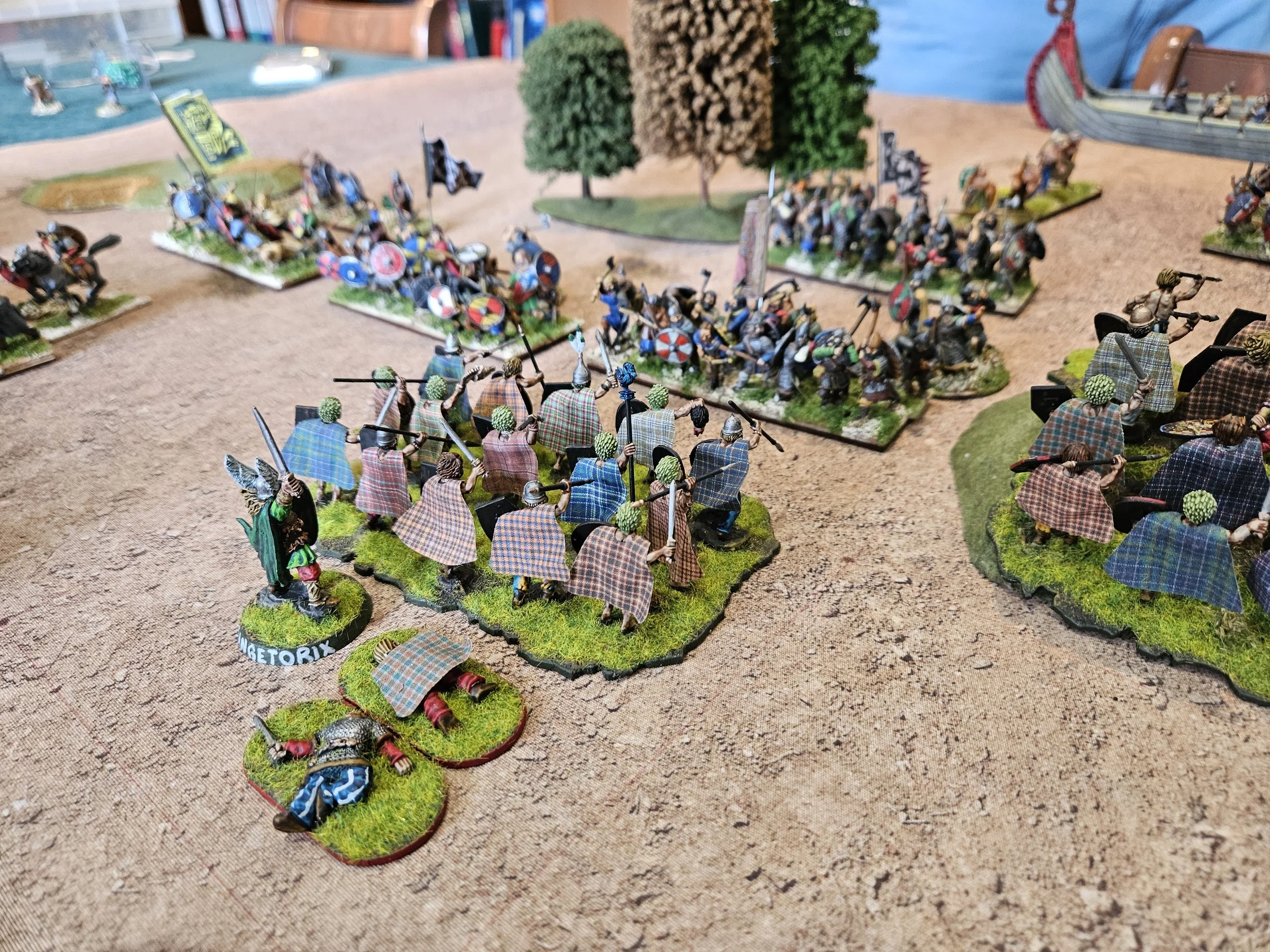
Usually I’d try to manoeuvre to get the first charge in, but that’s difficult to do when you’re foot versus mounted, so I didn’t, and suffered accordingly, taking casualties right across my line.

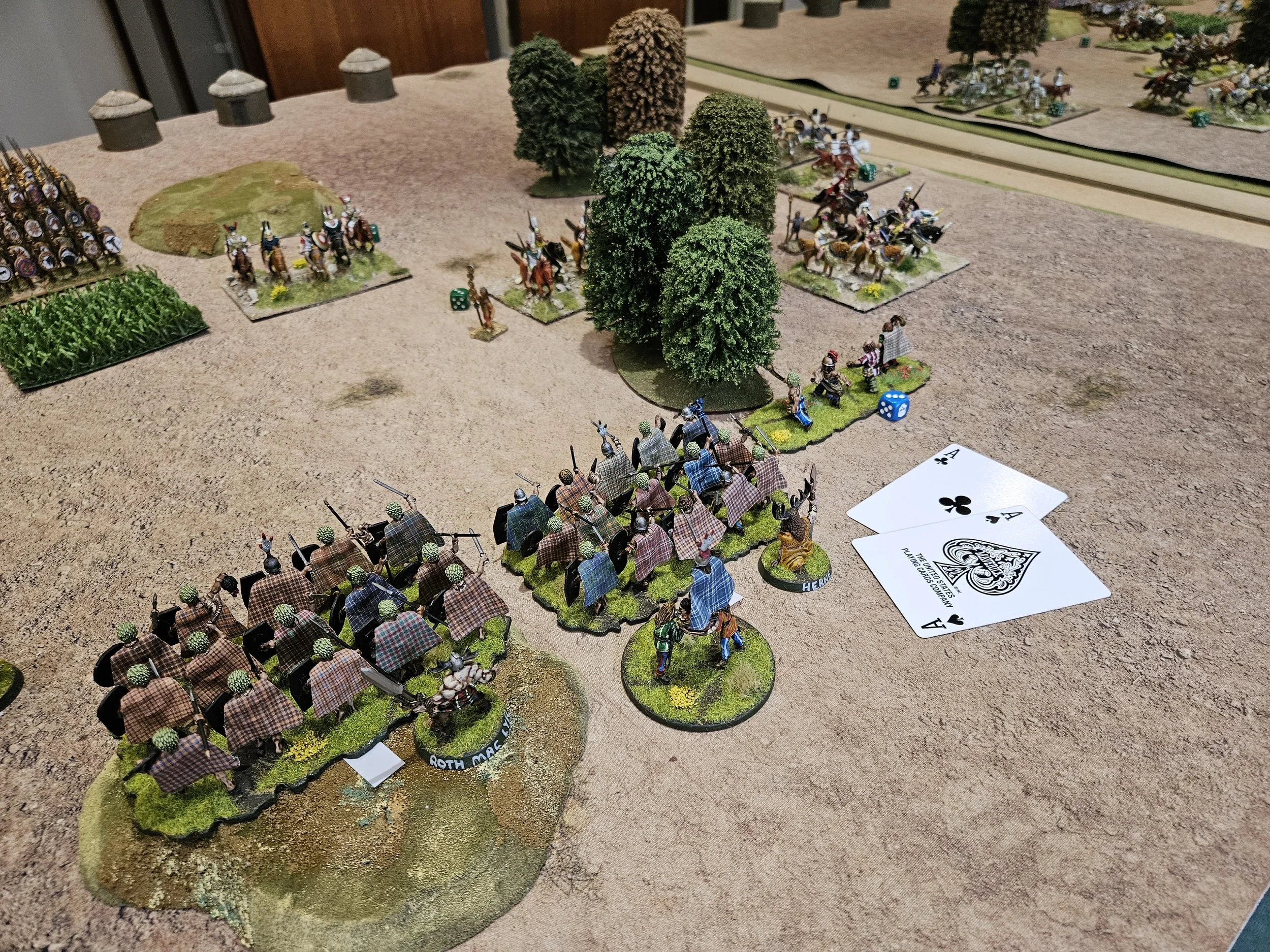
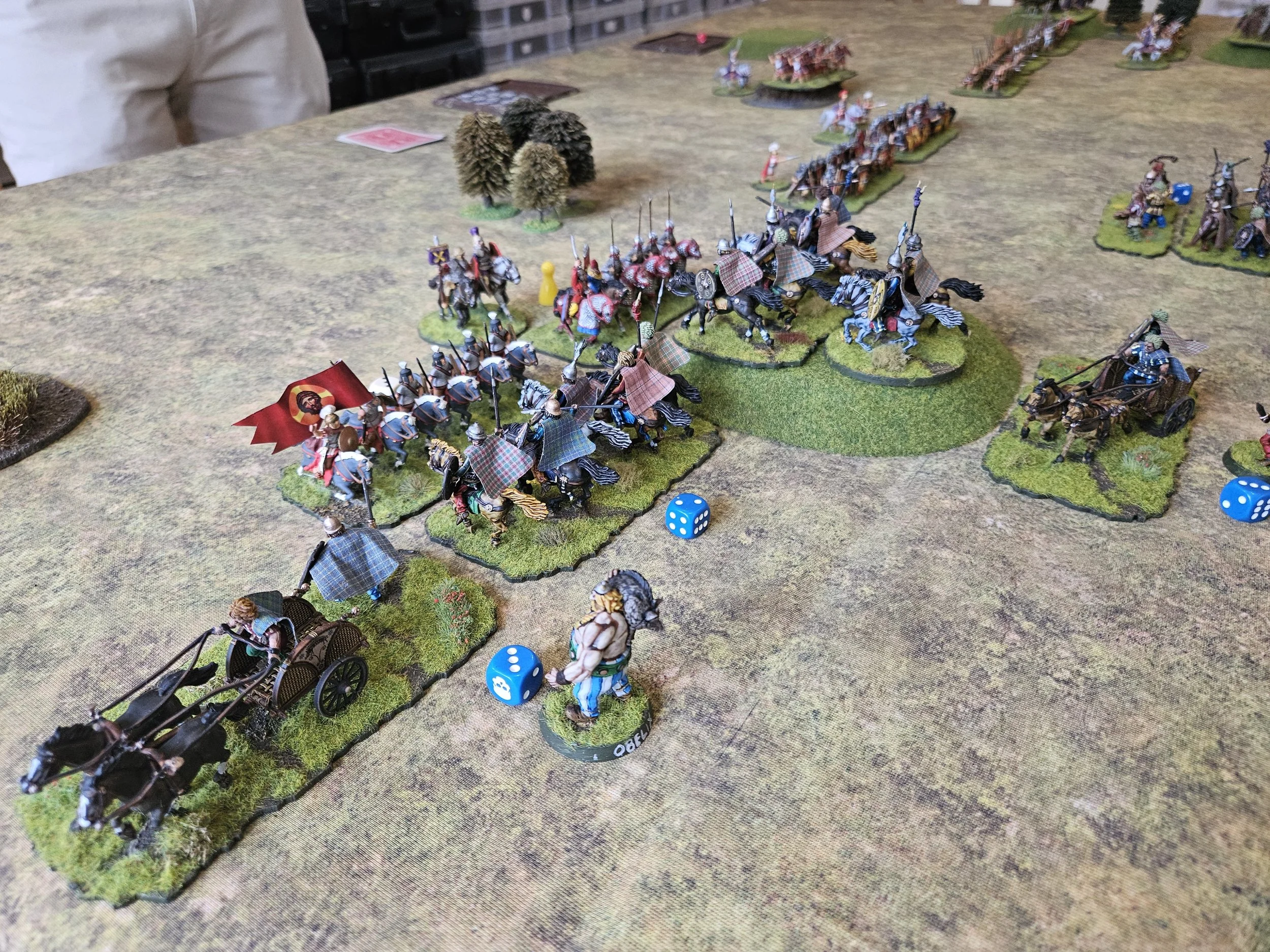
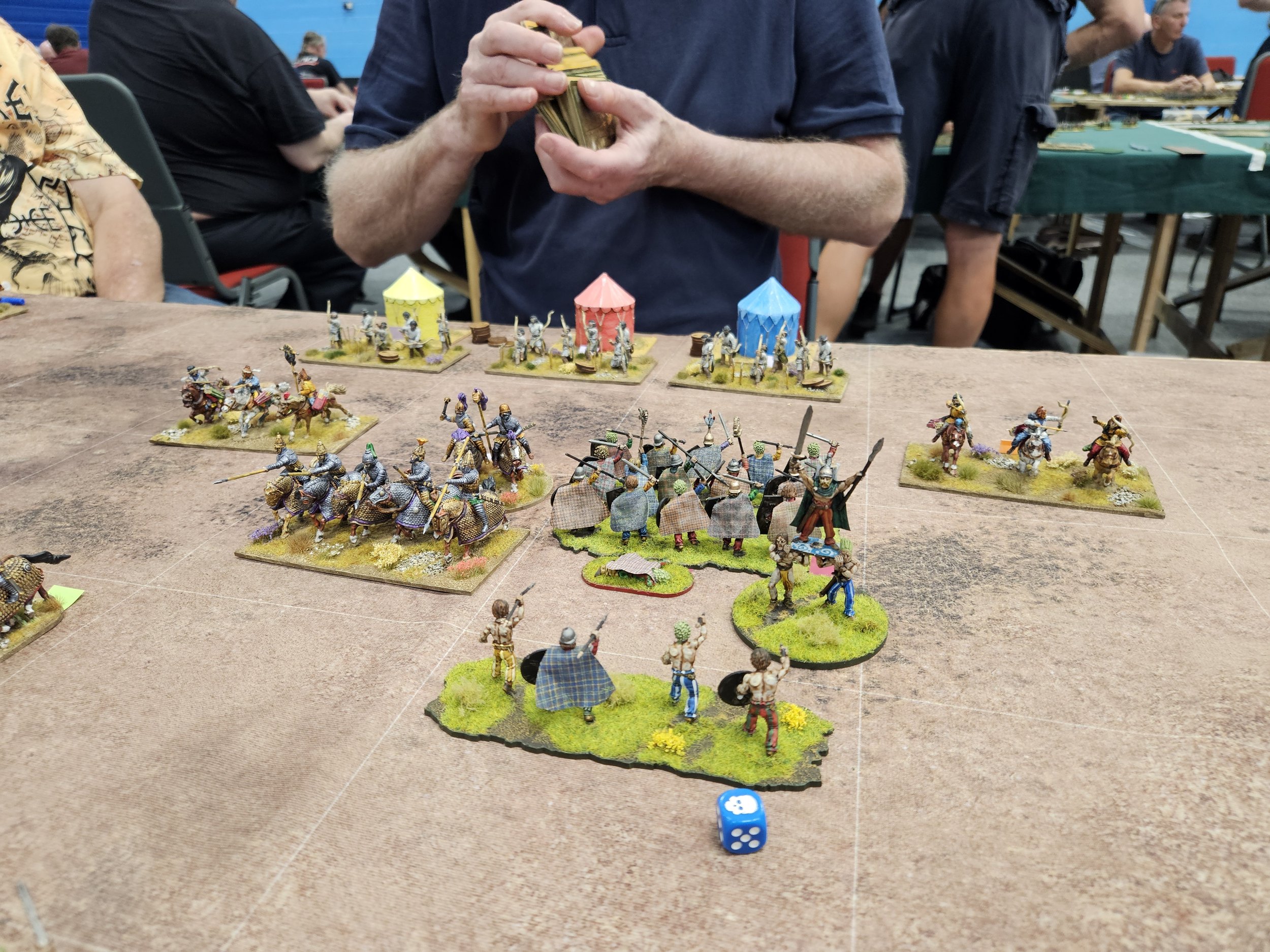
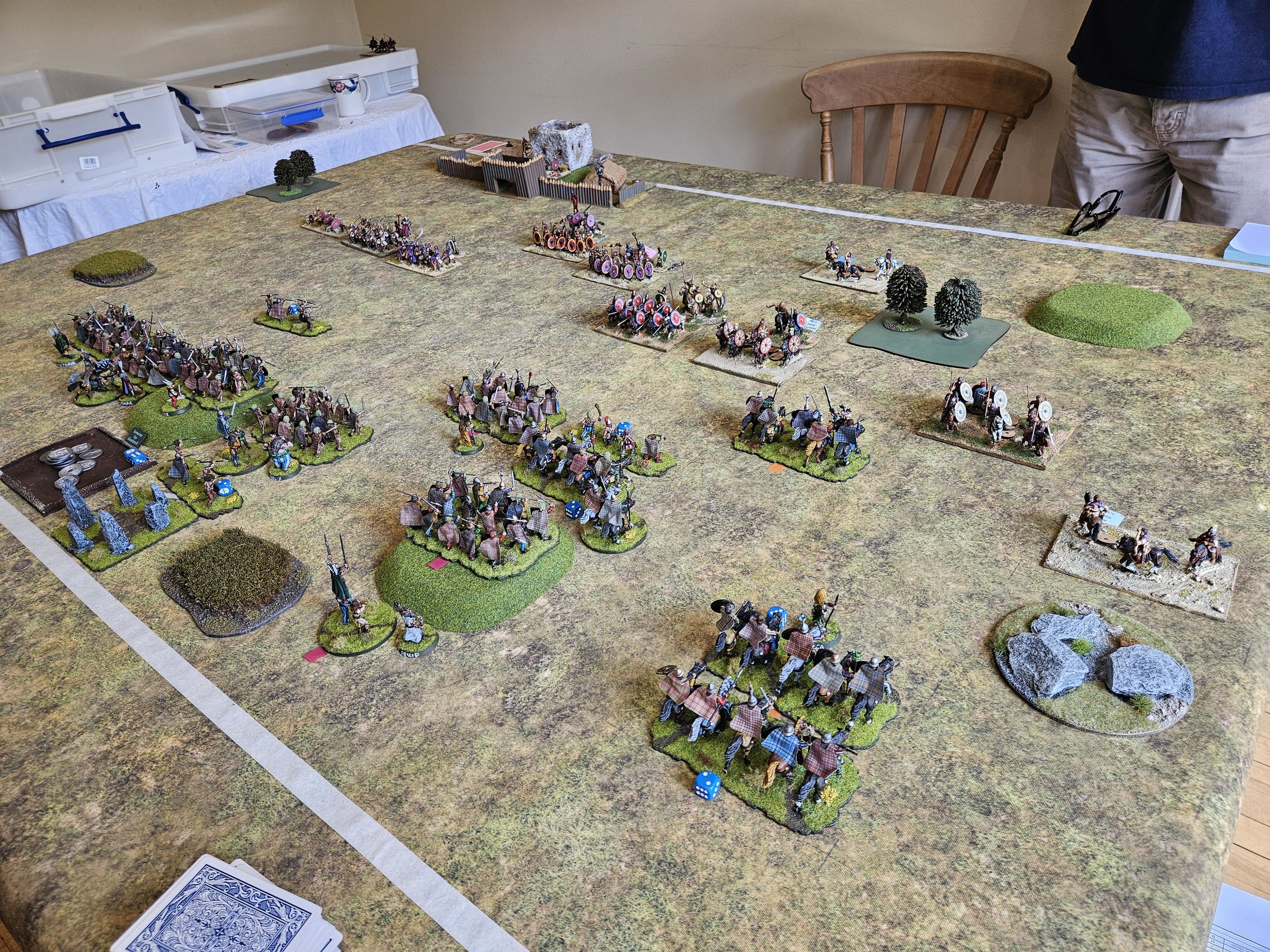
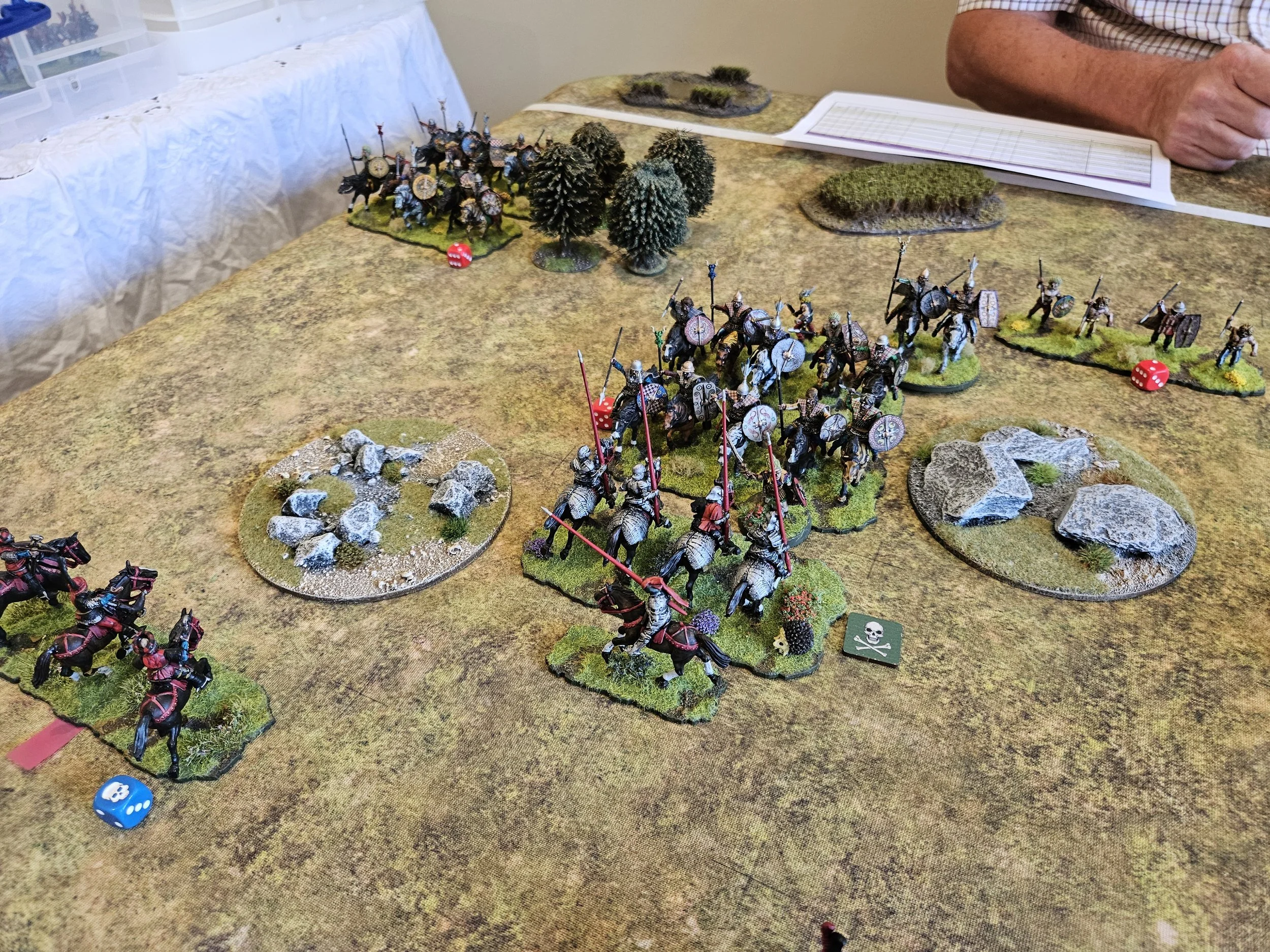
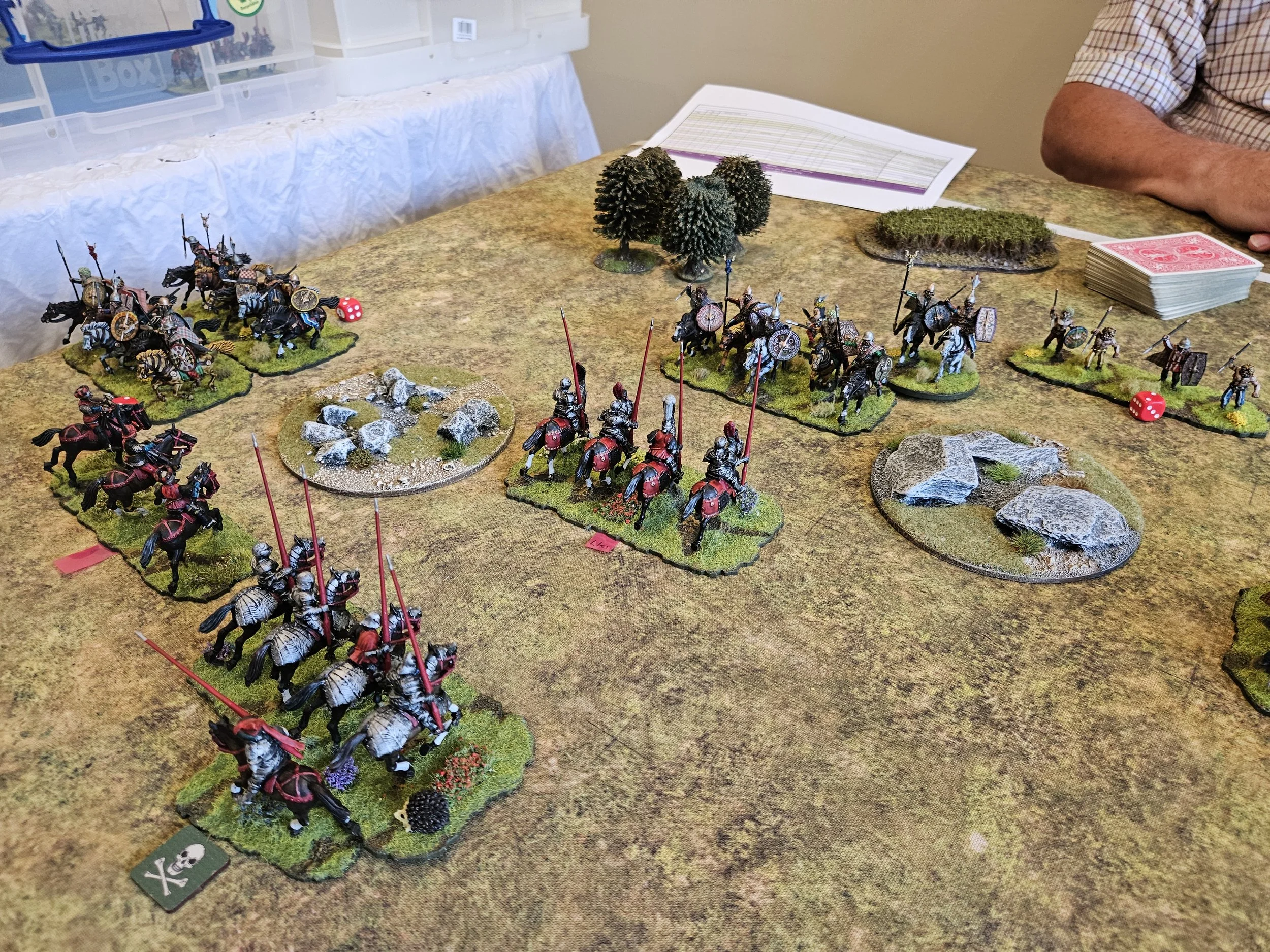
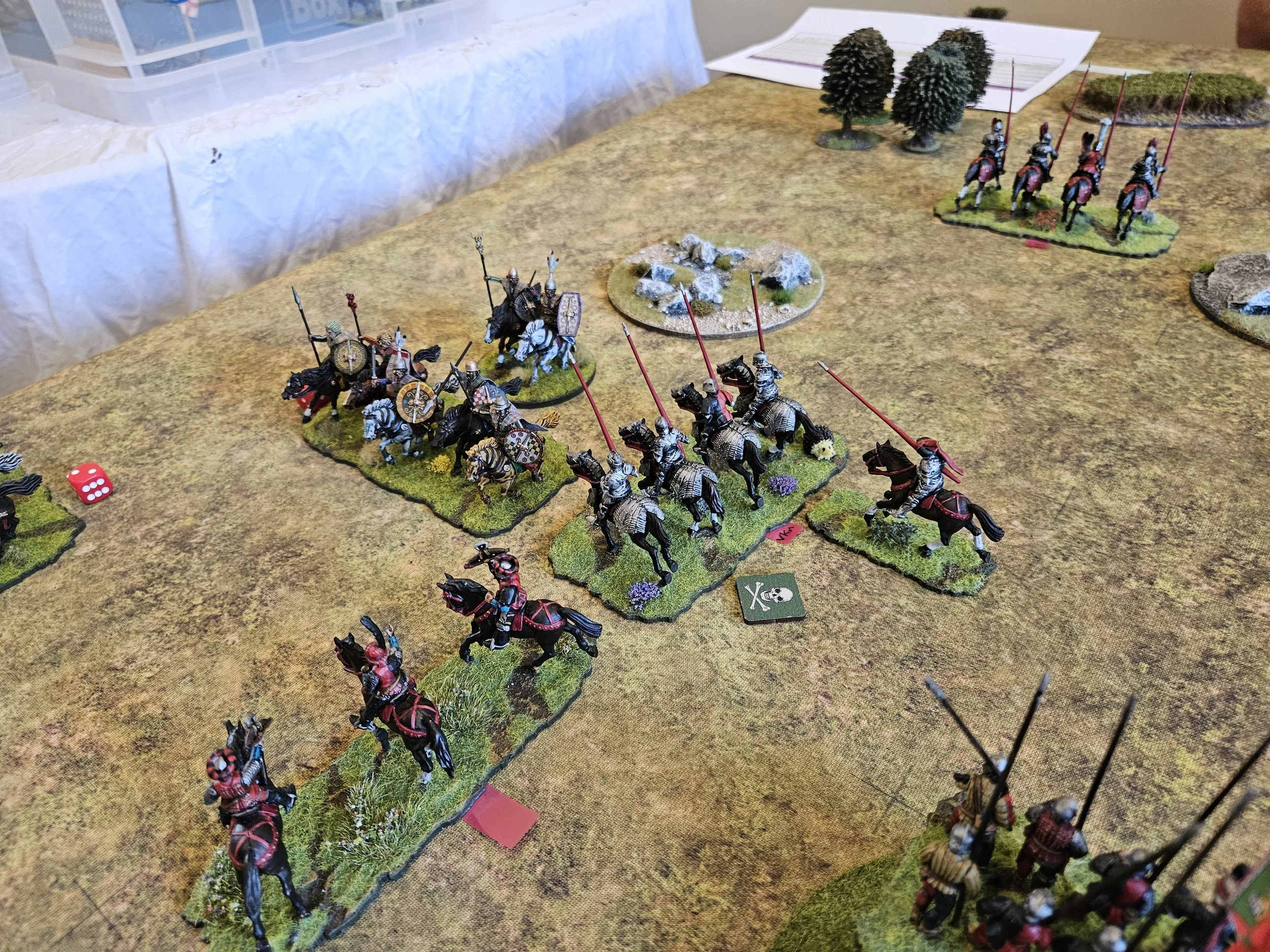
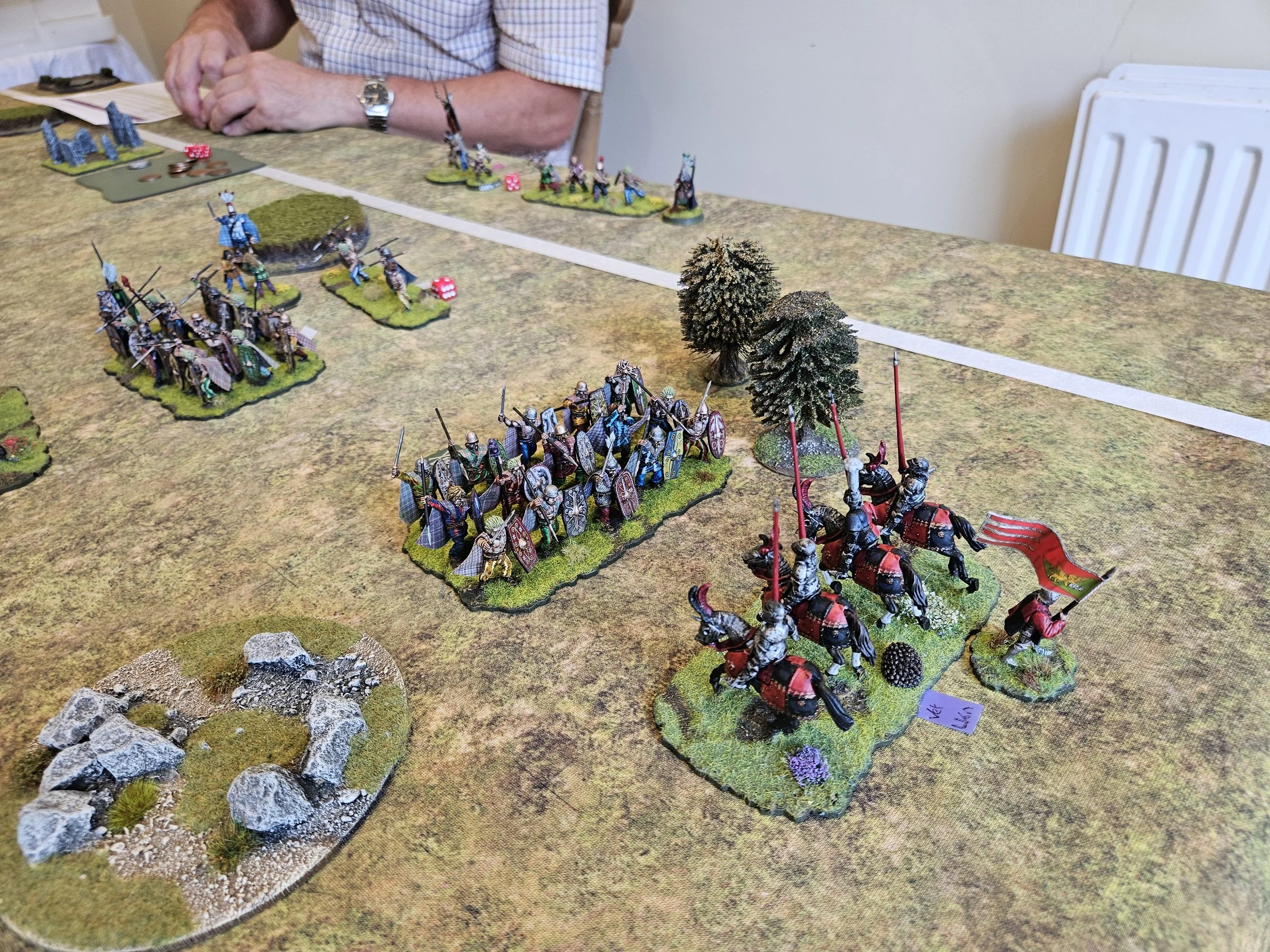
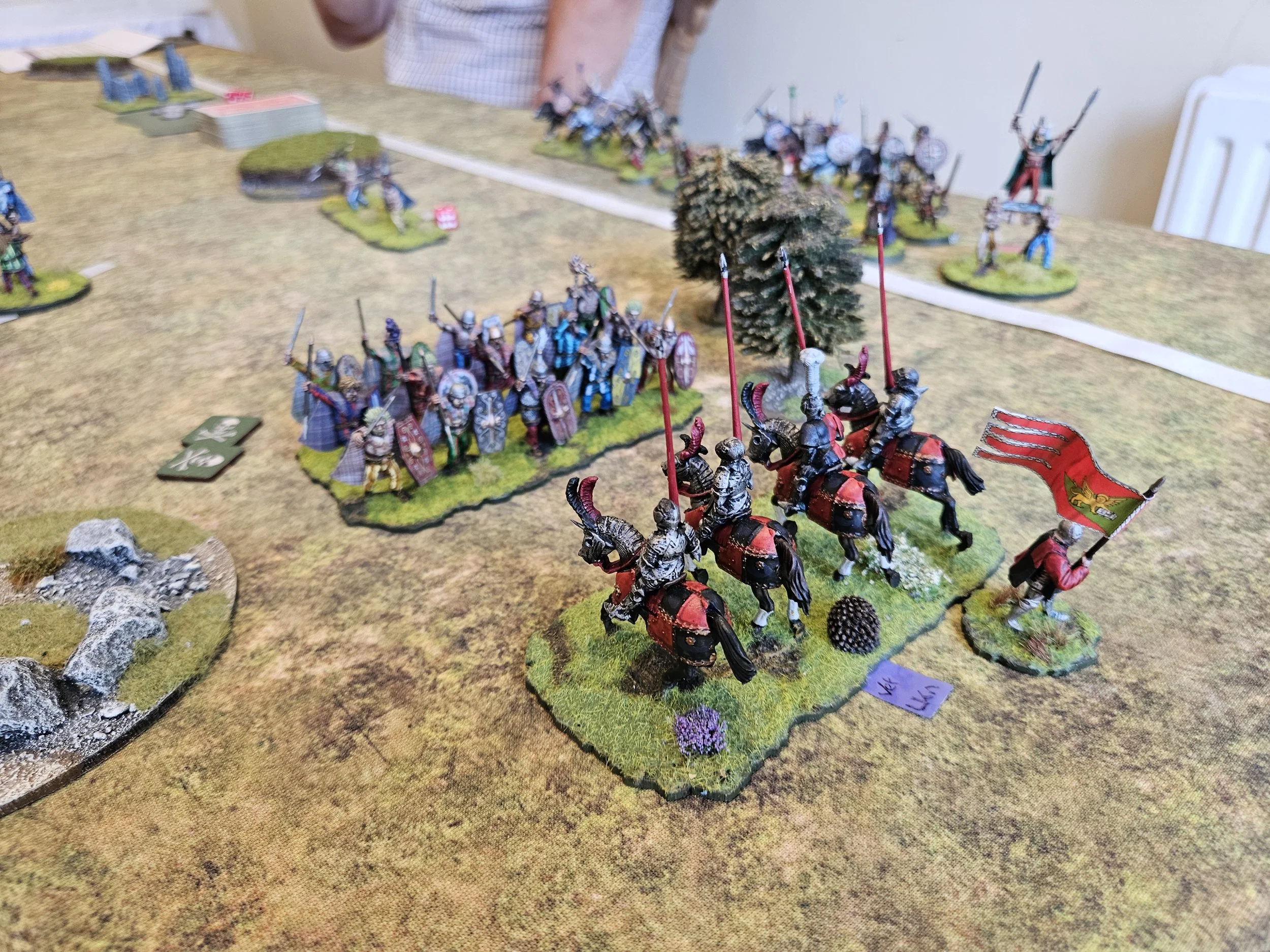
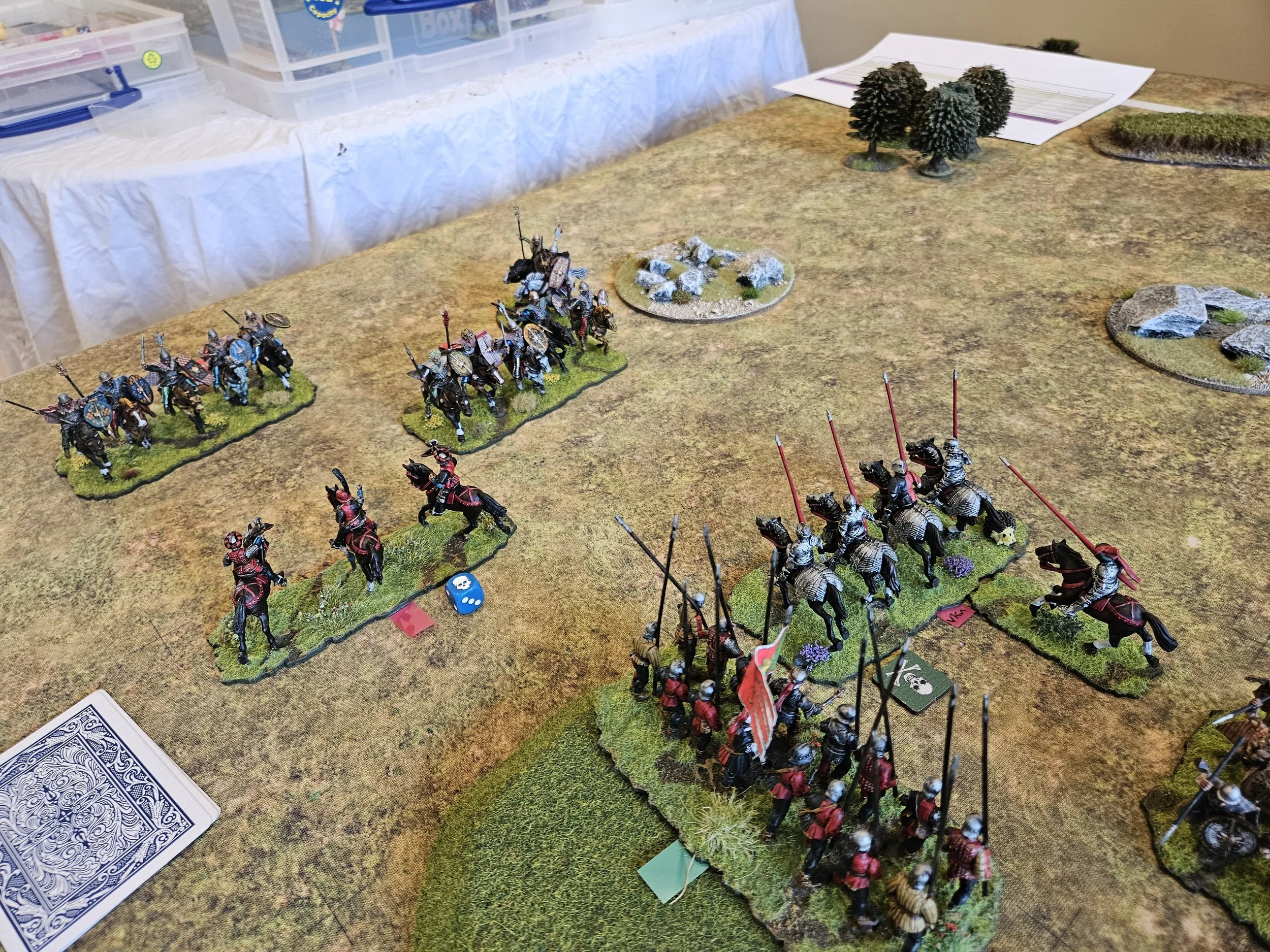
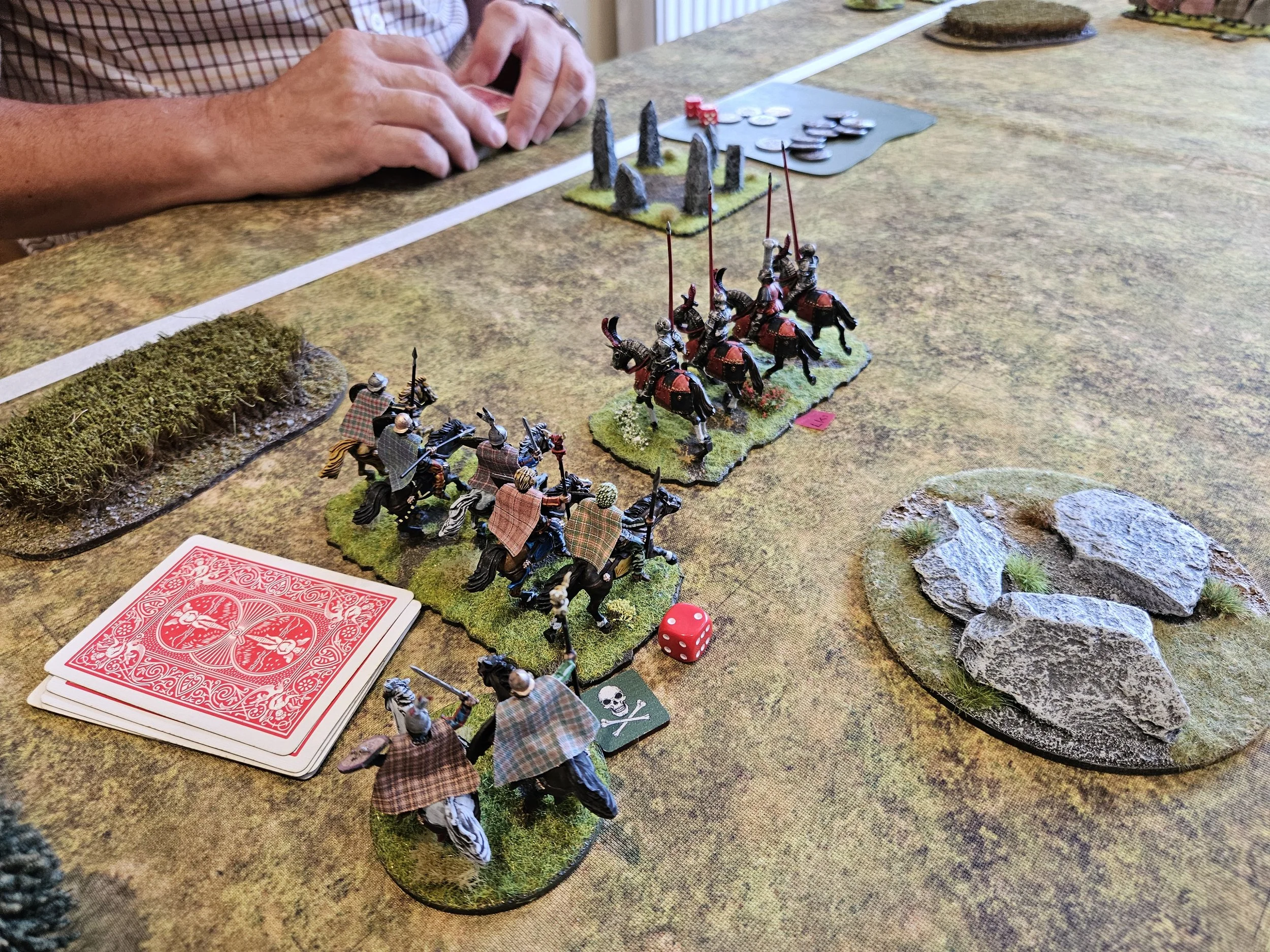
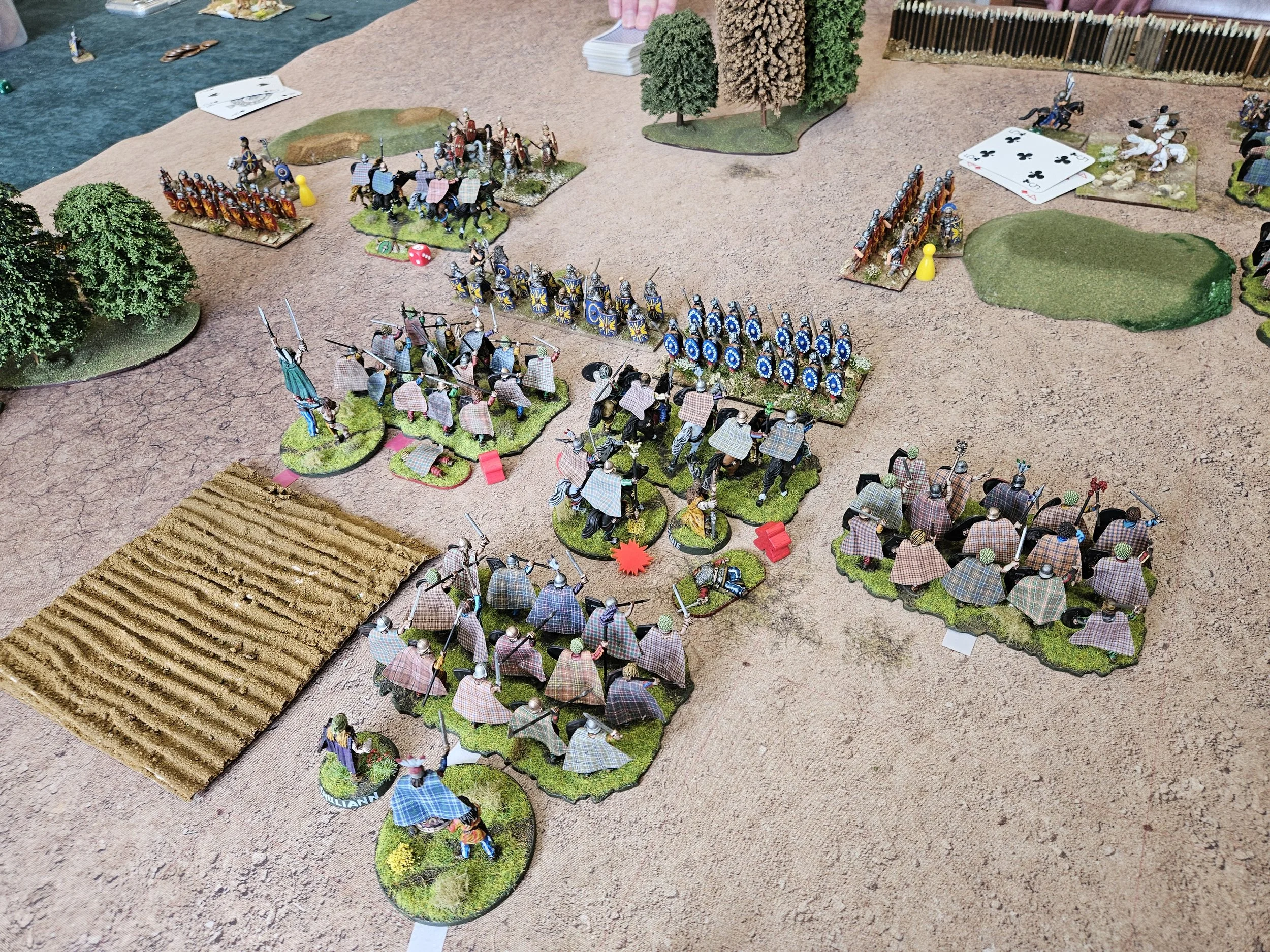
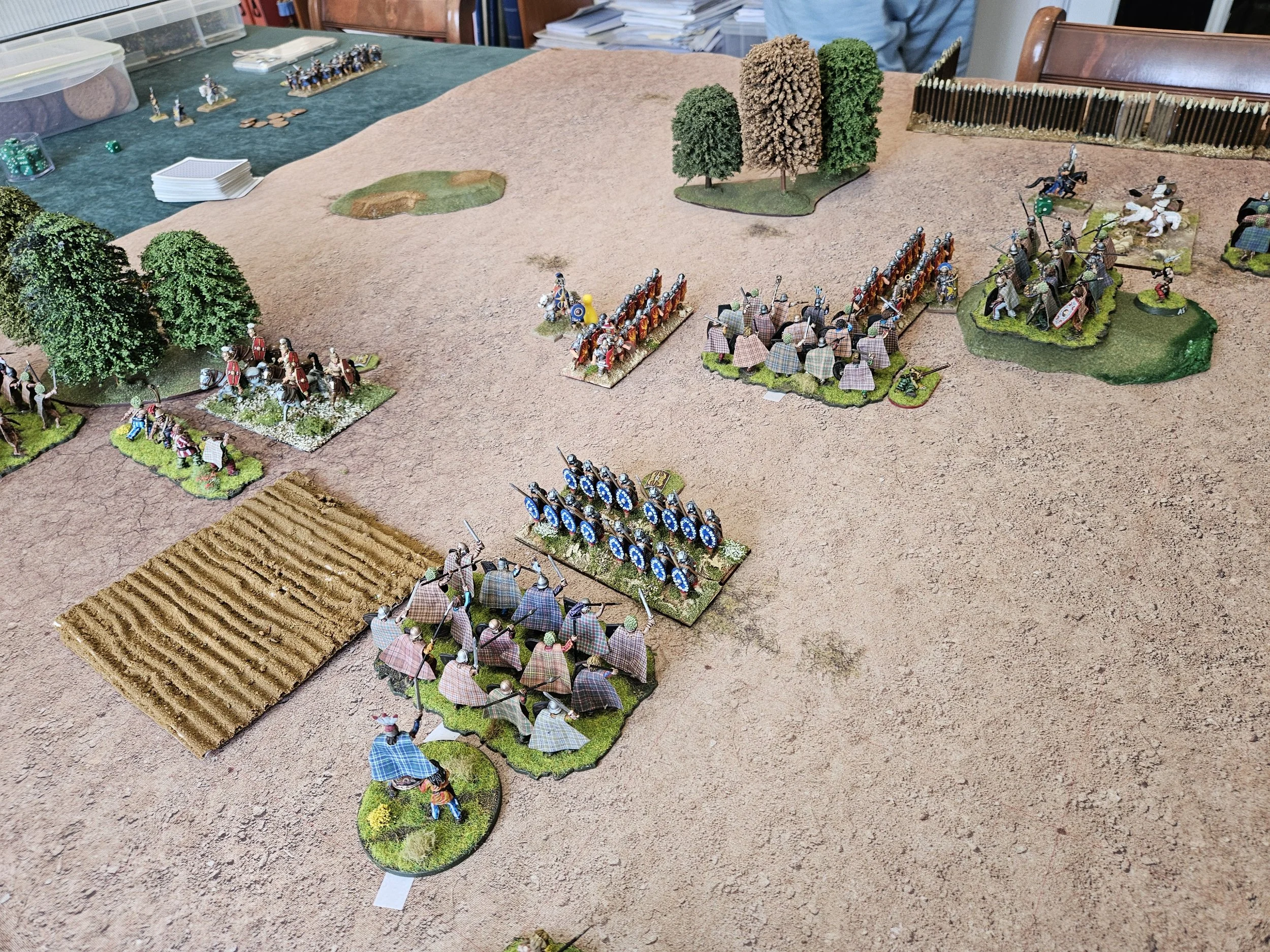
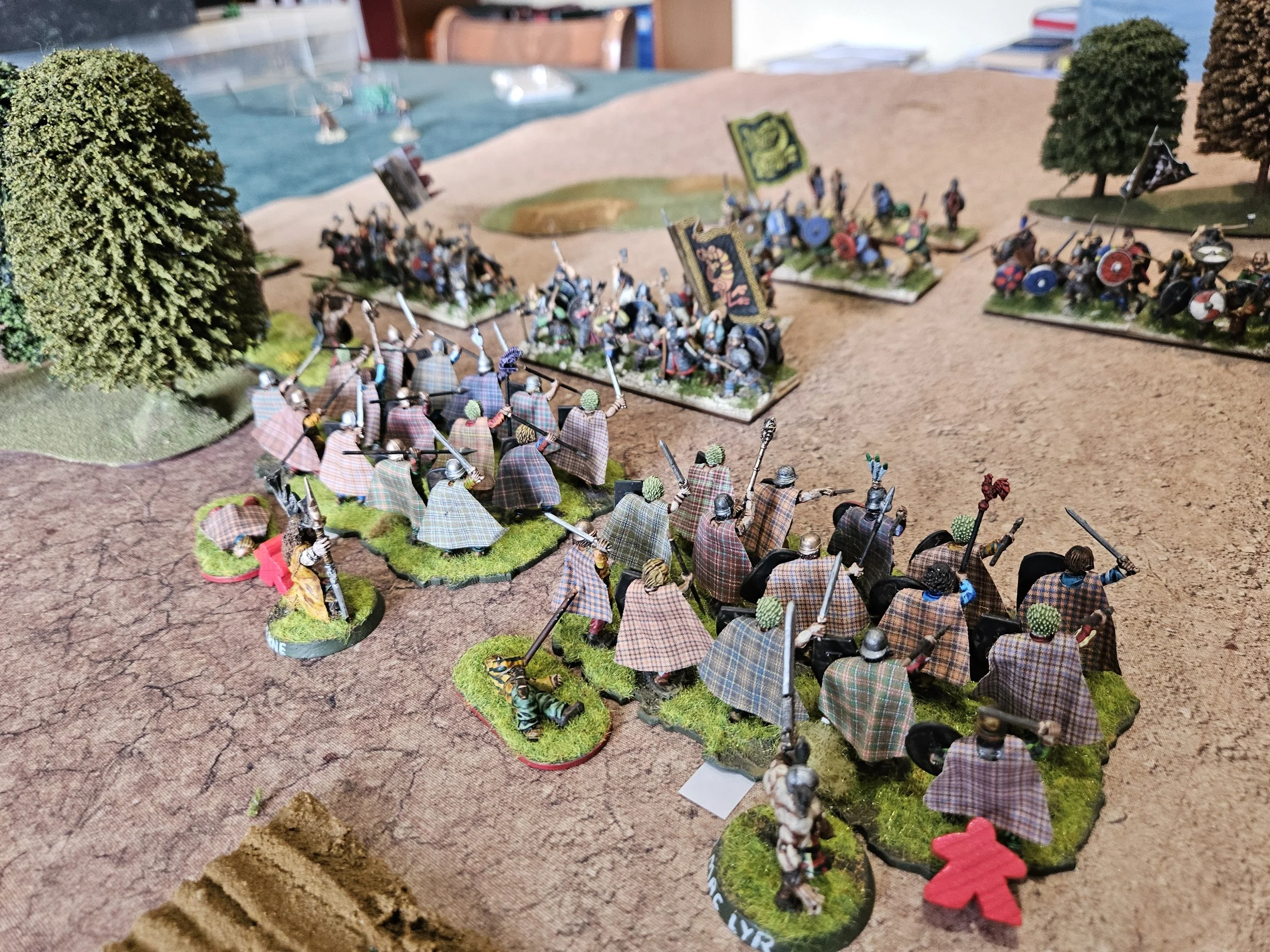
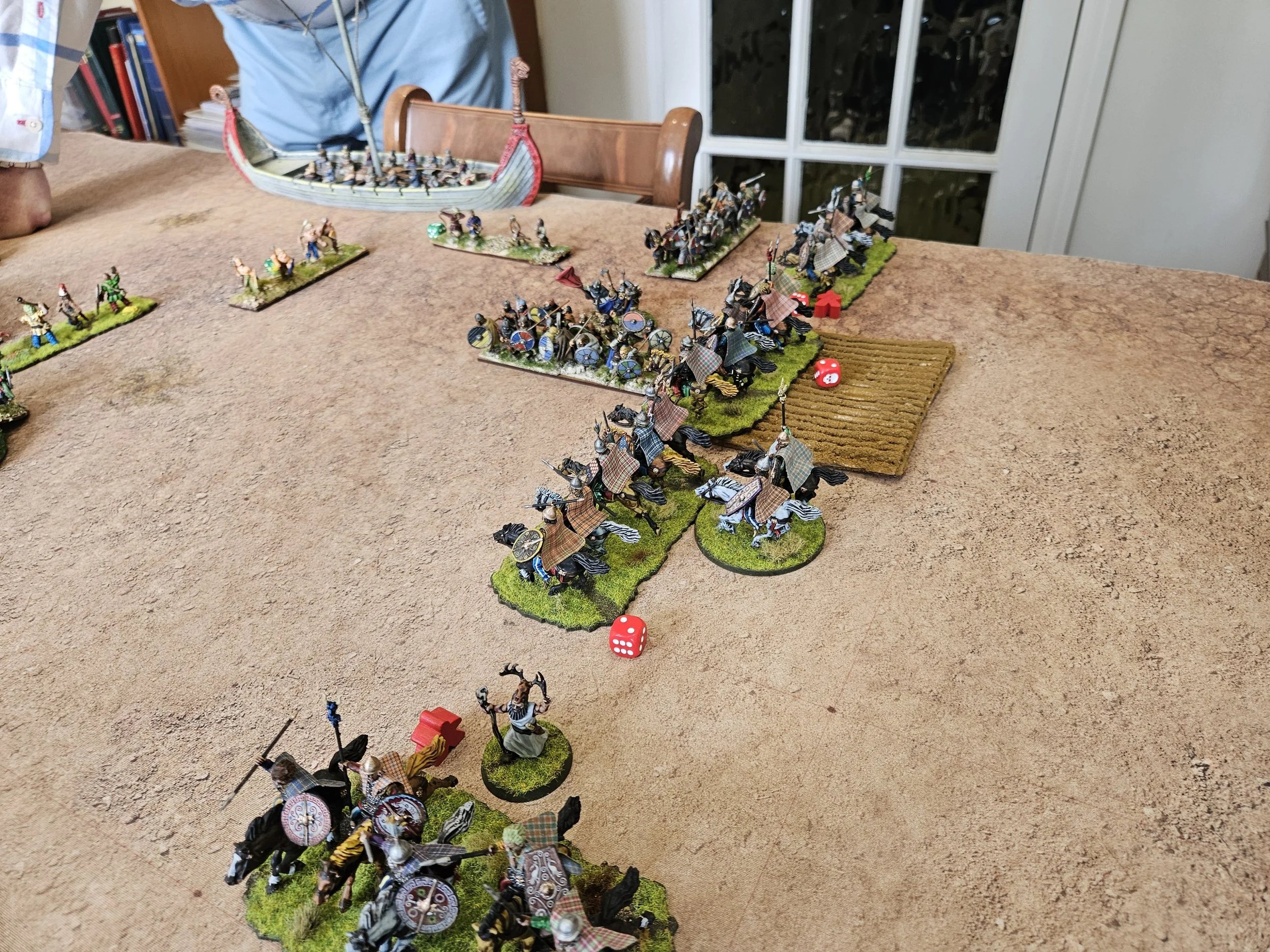
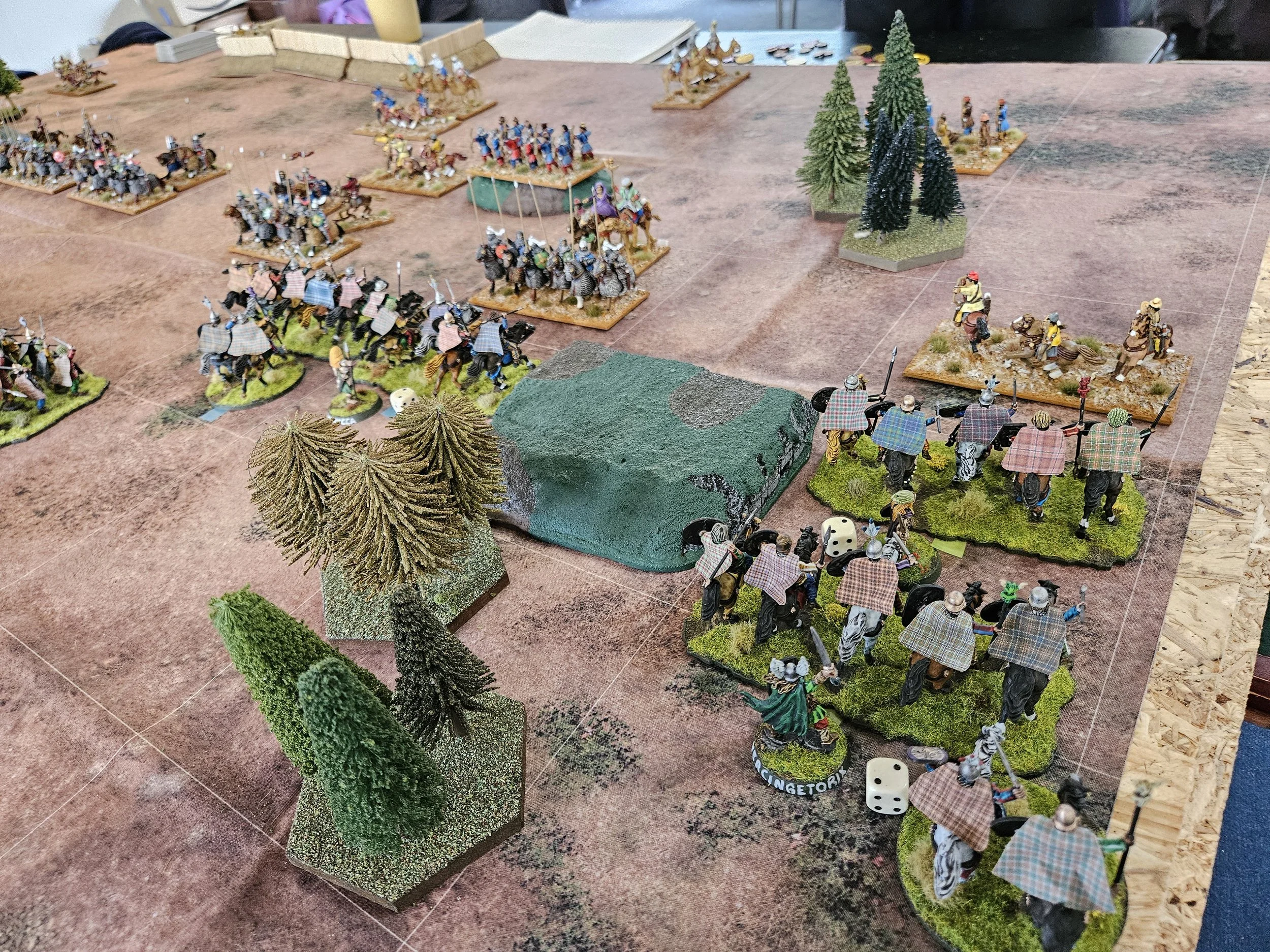
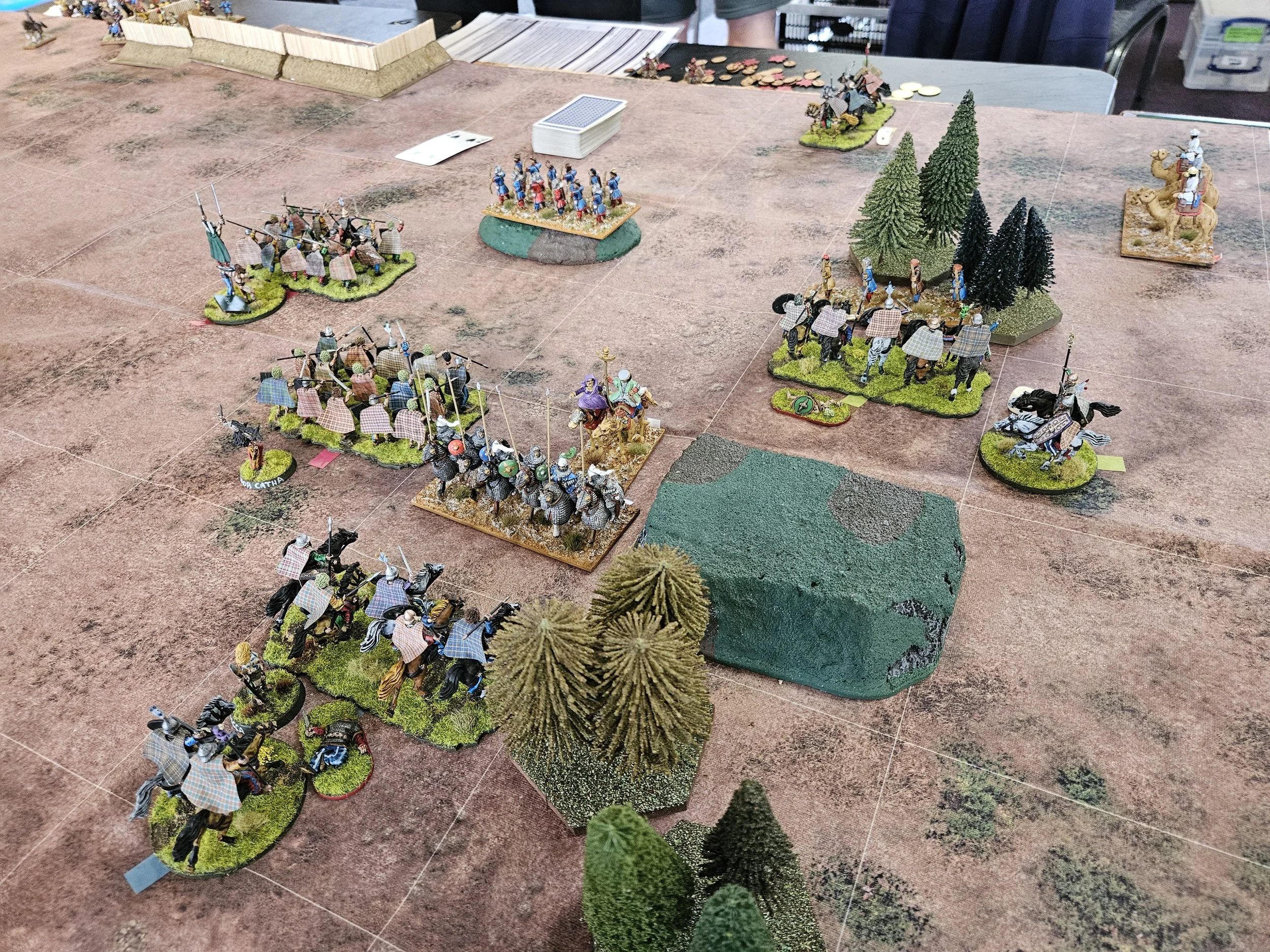
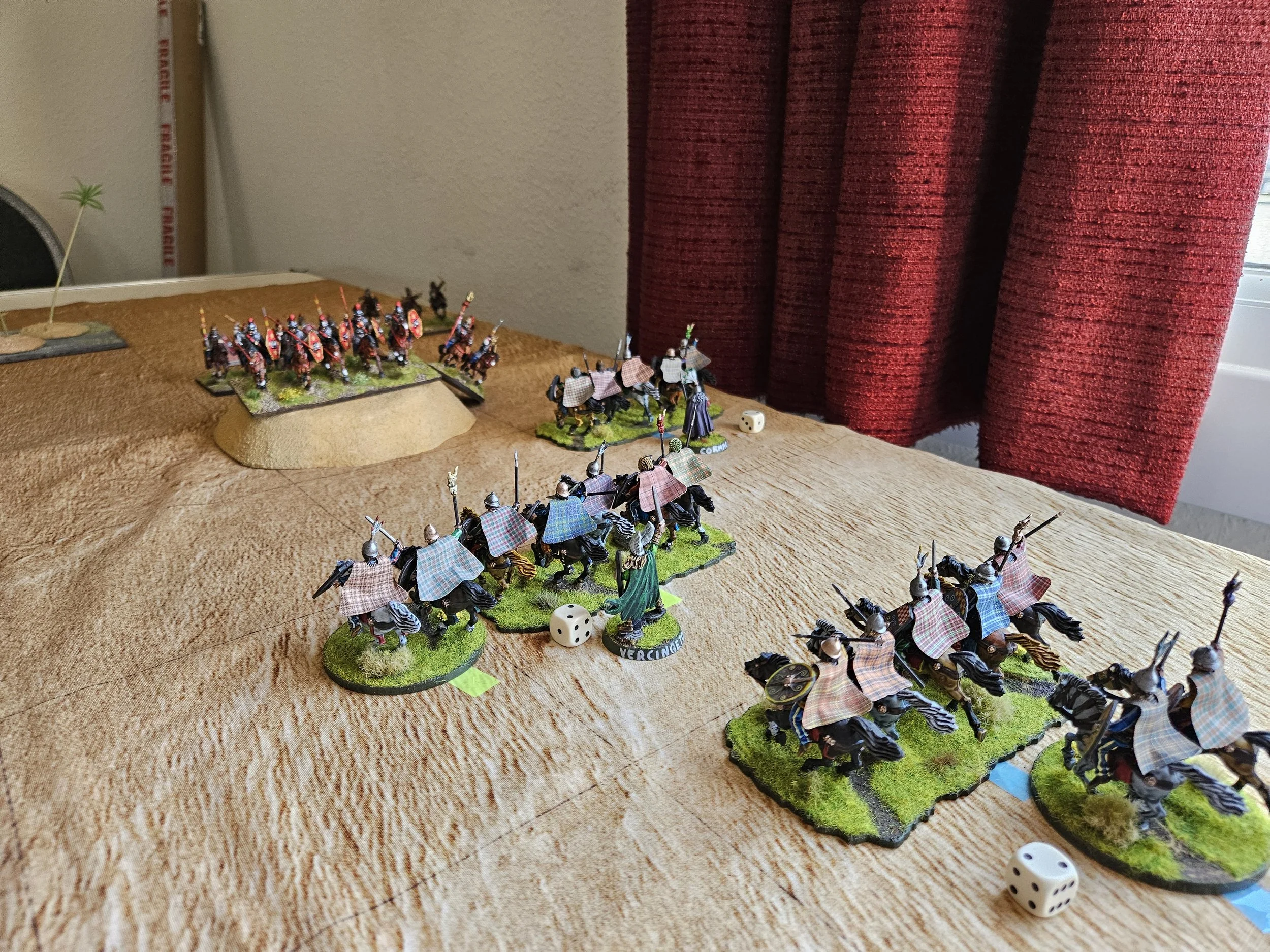
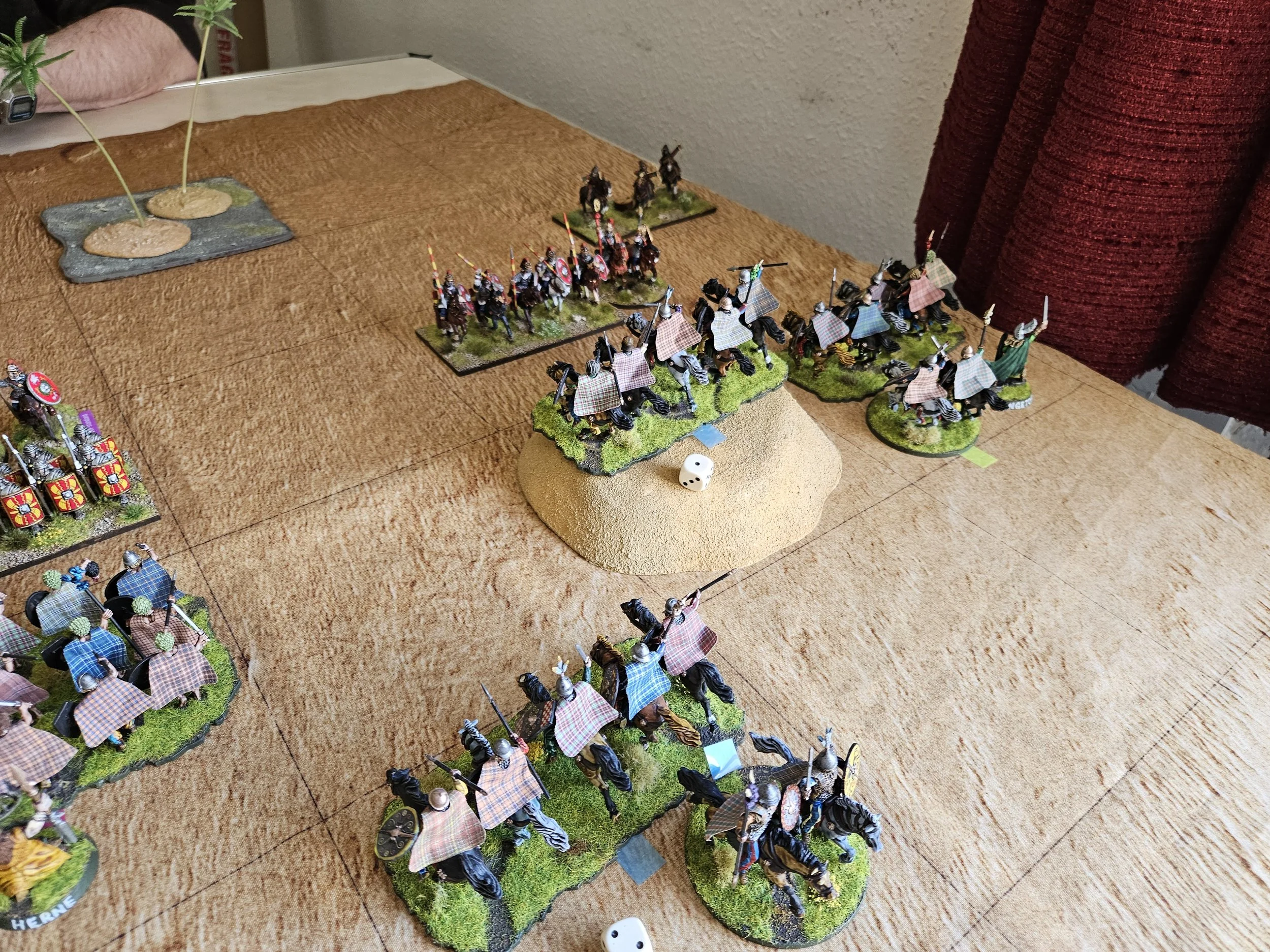
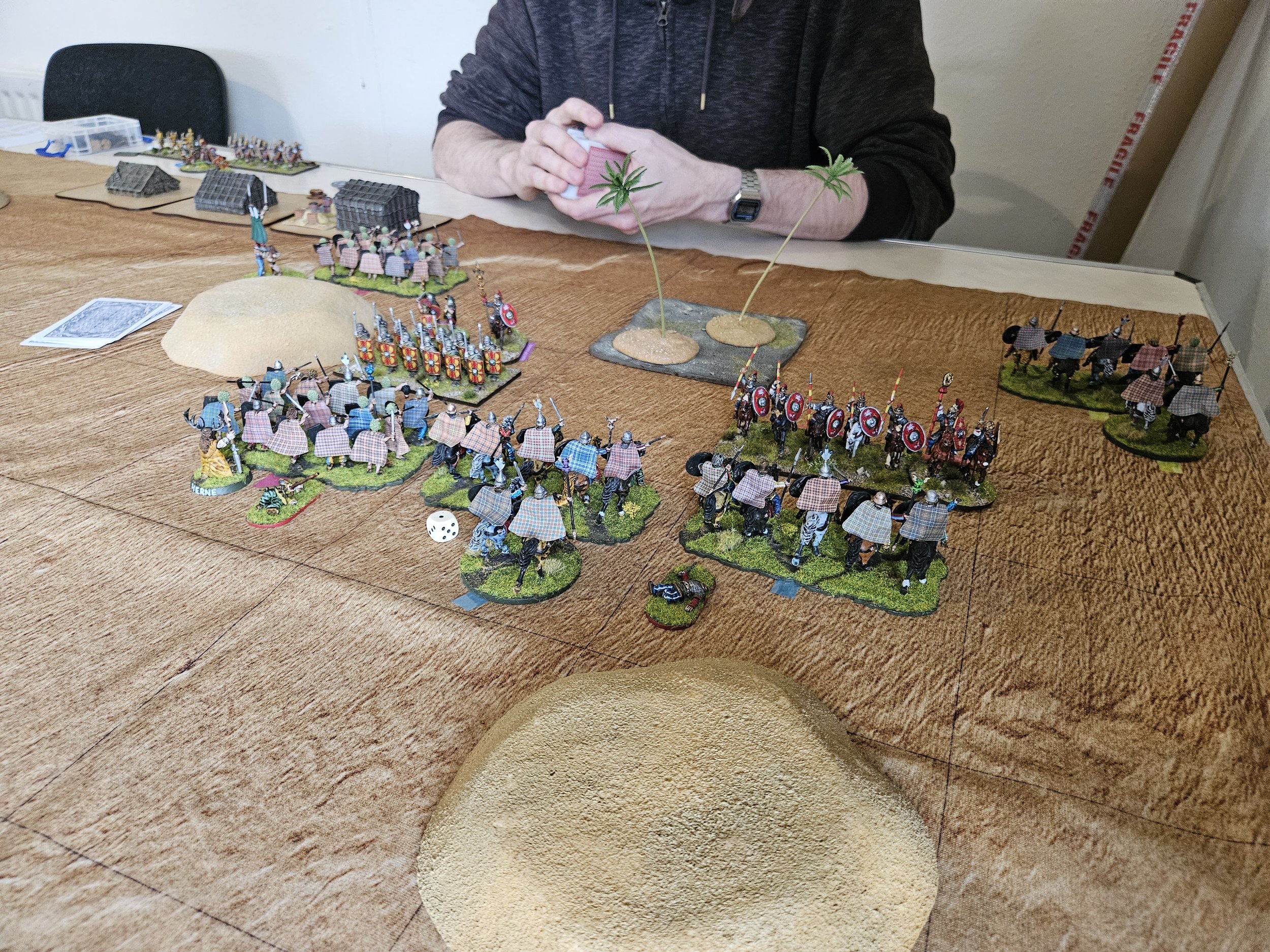
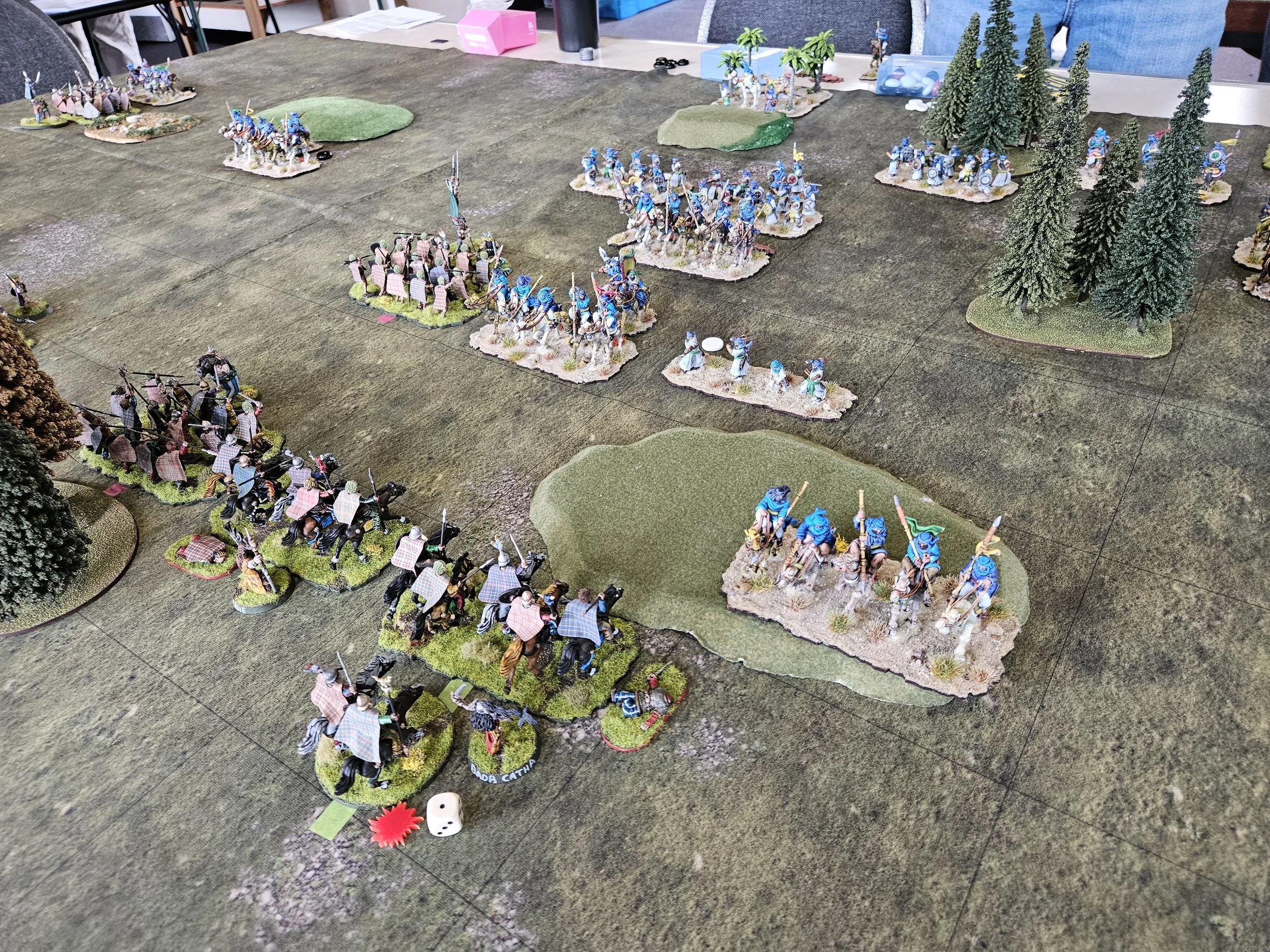
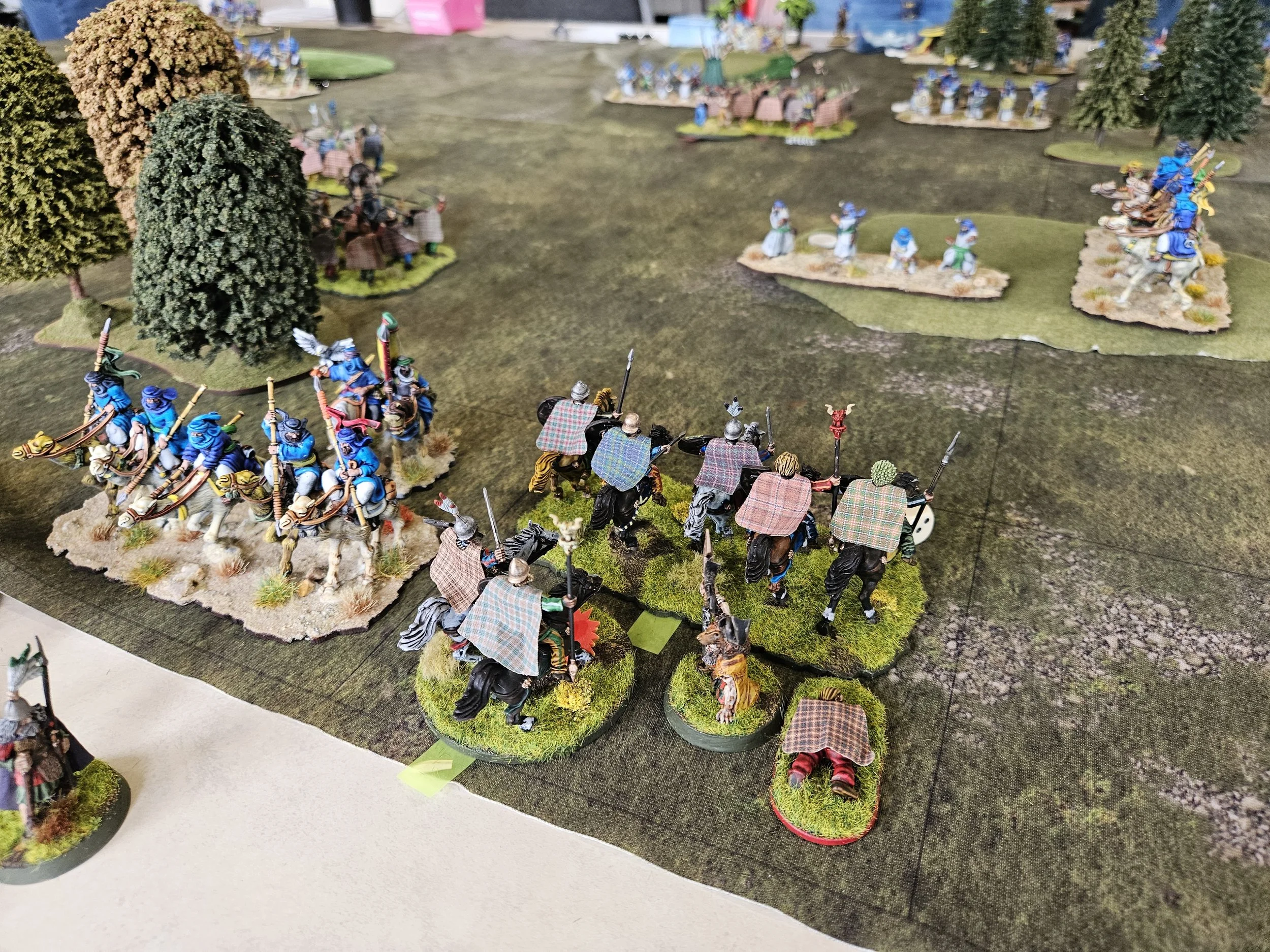
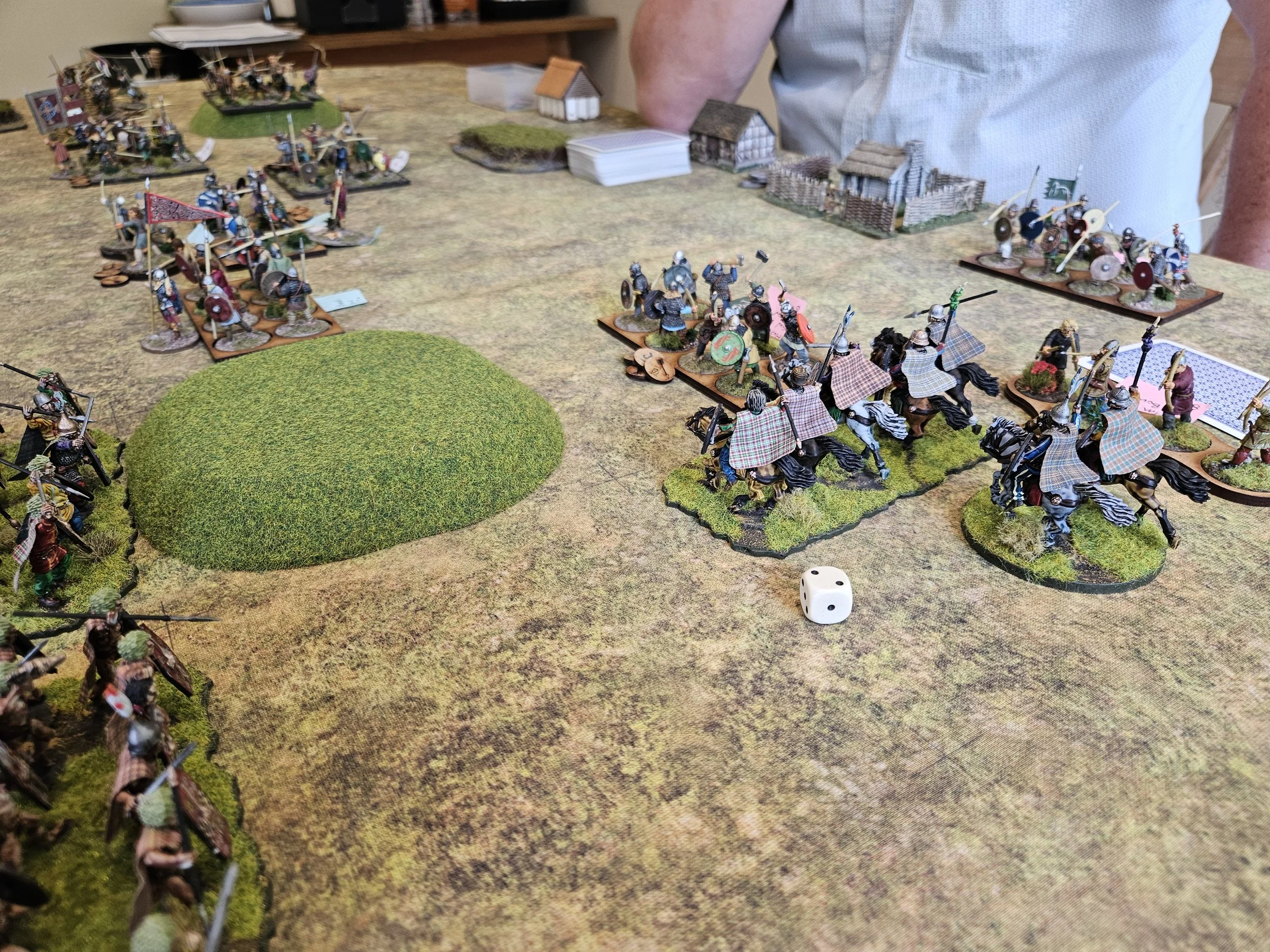
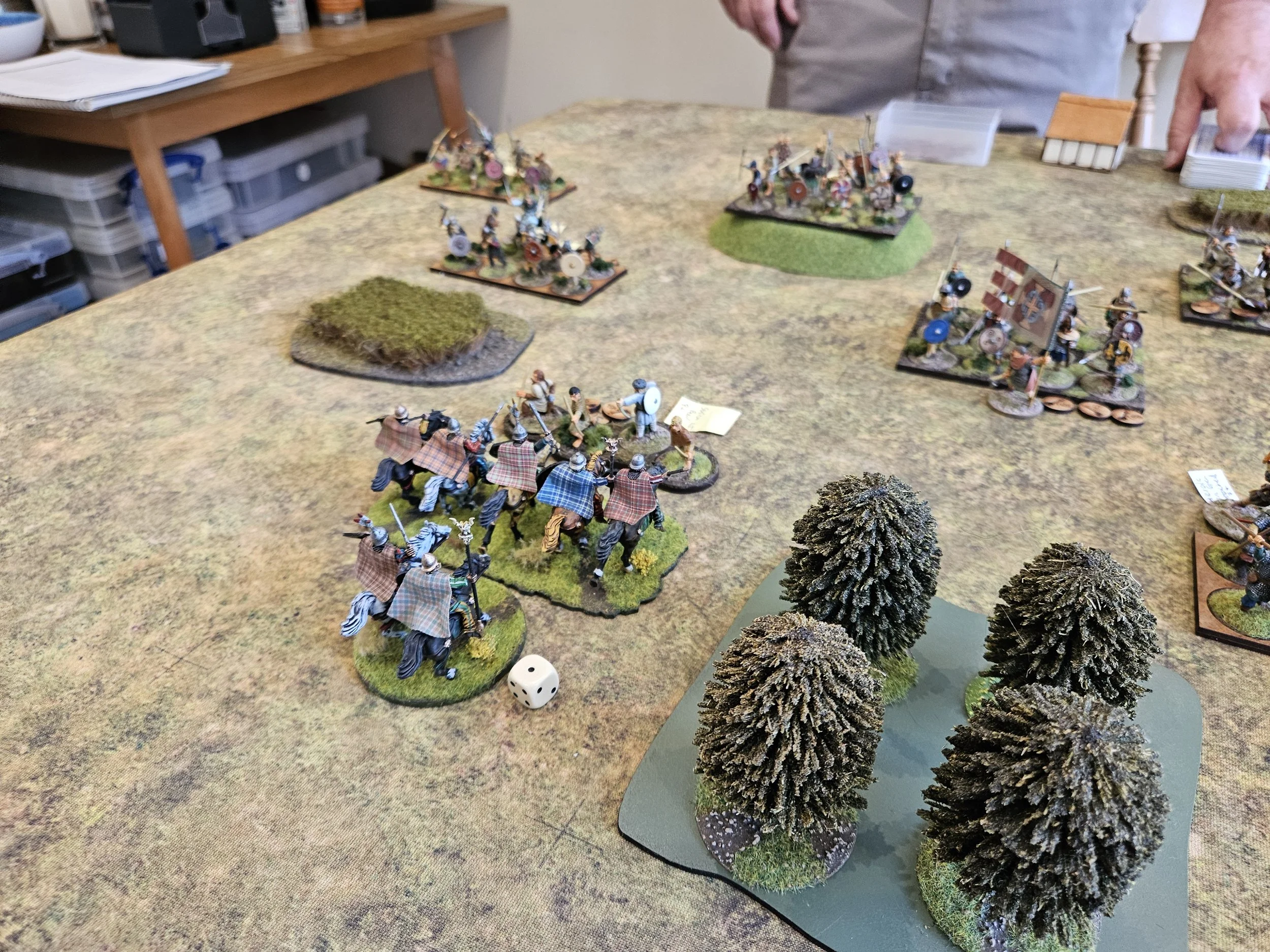
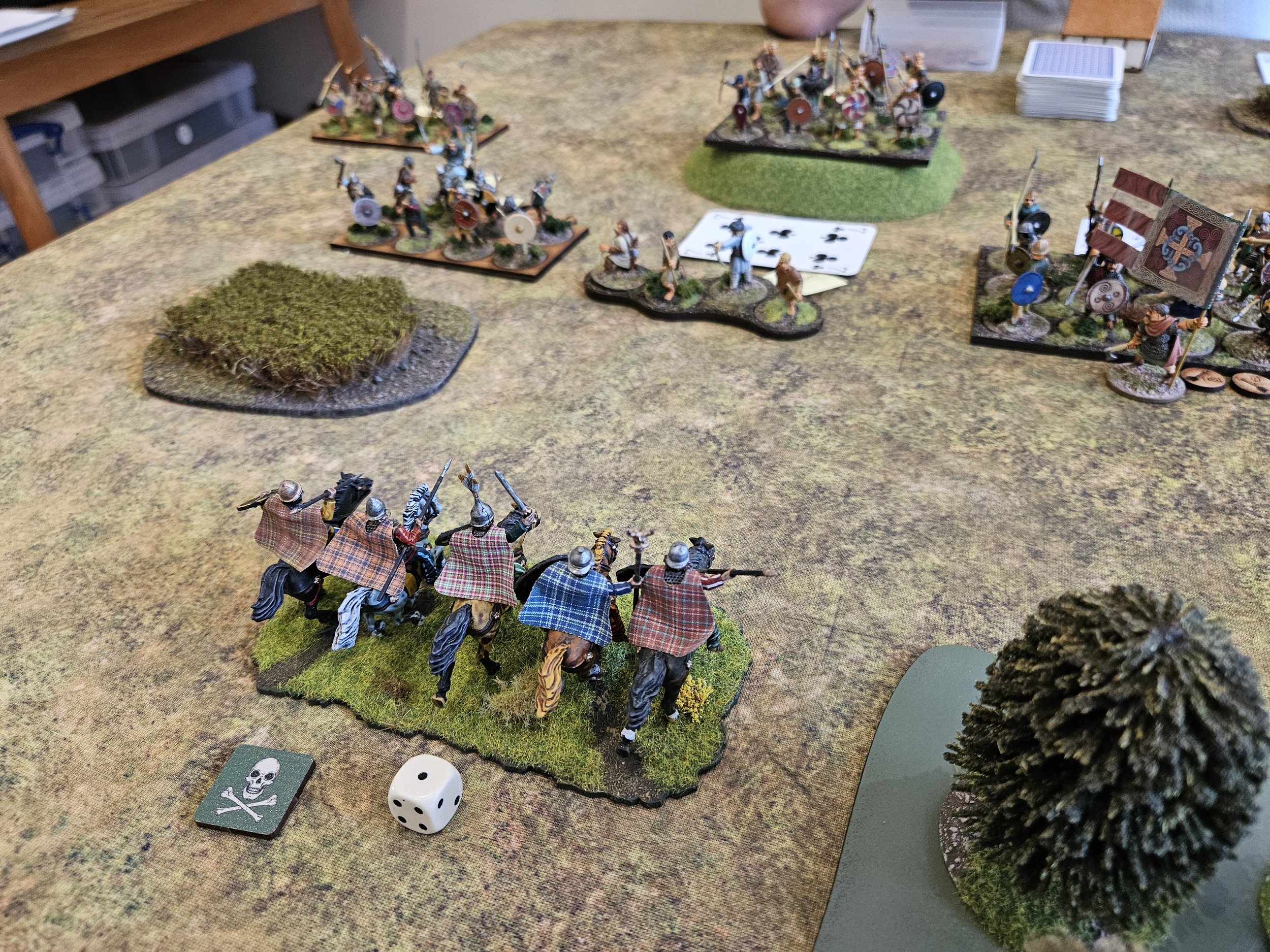
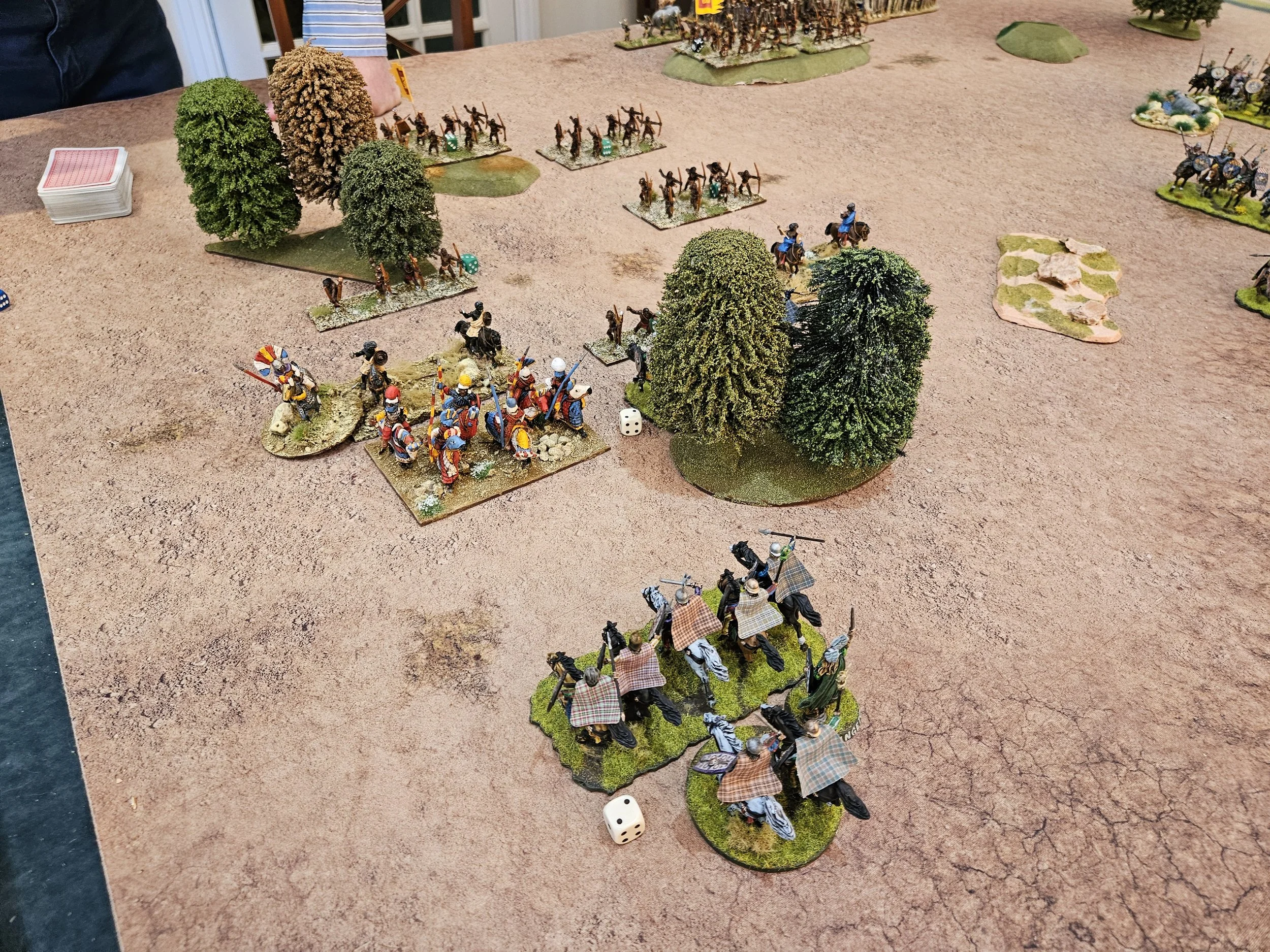
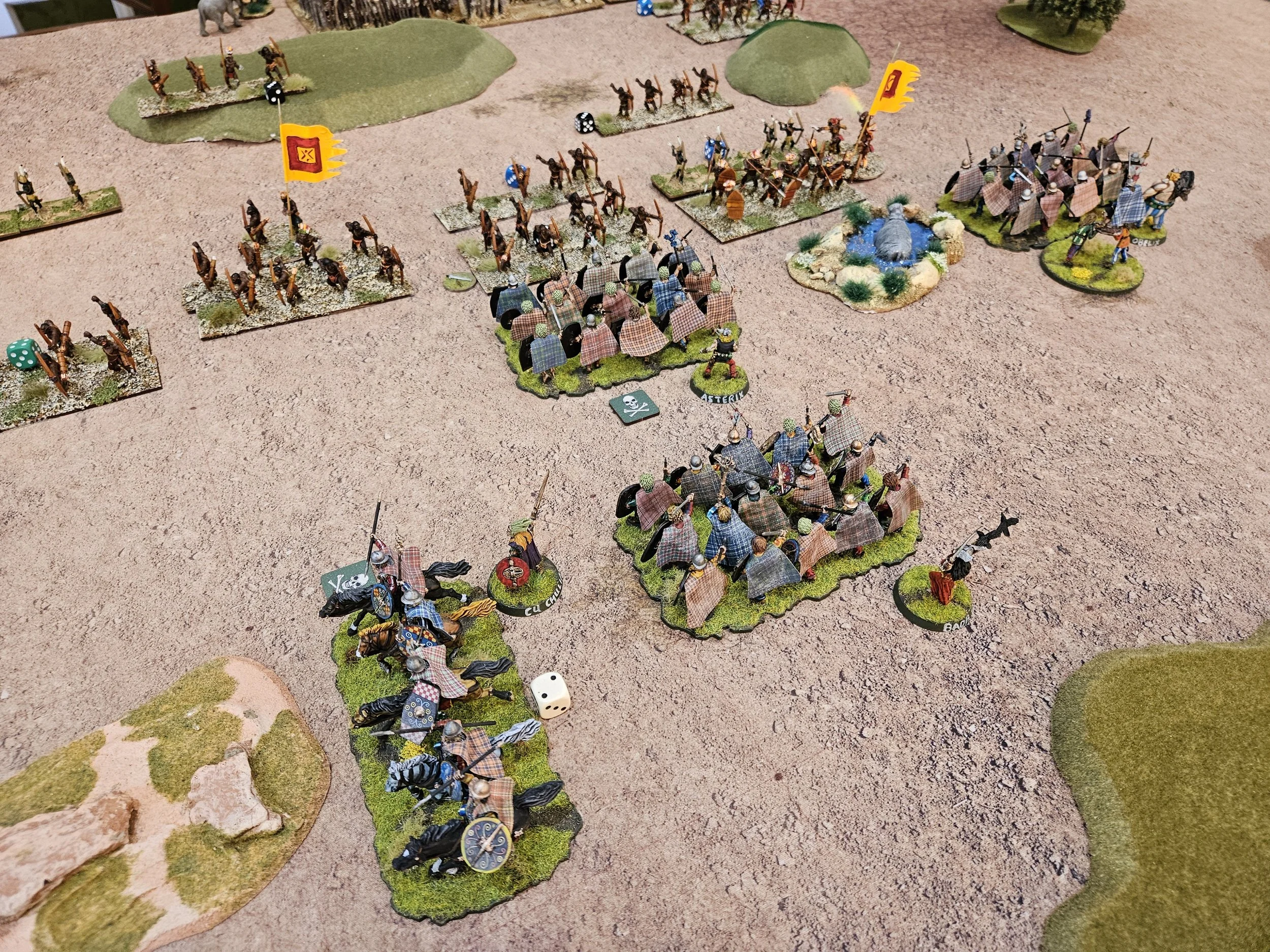
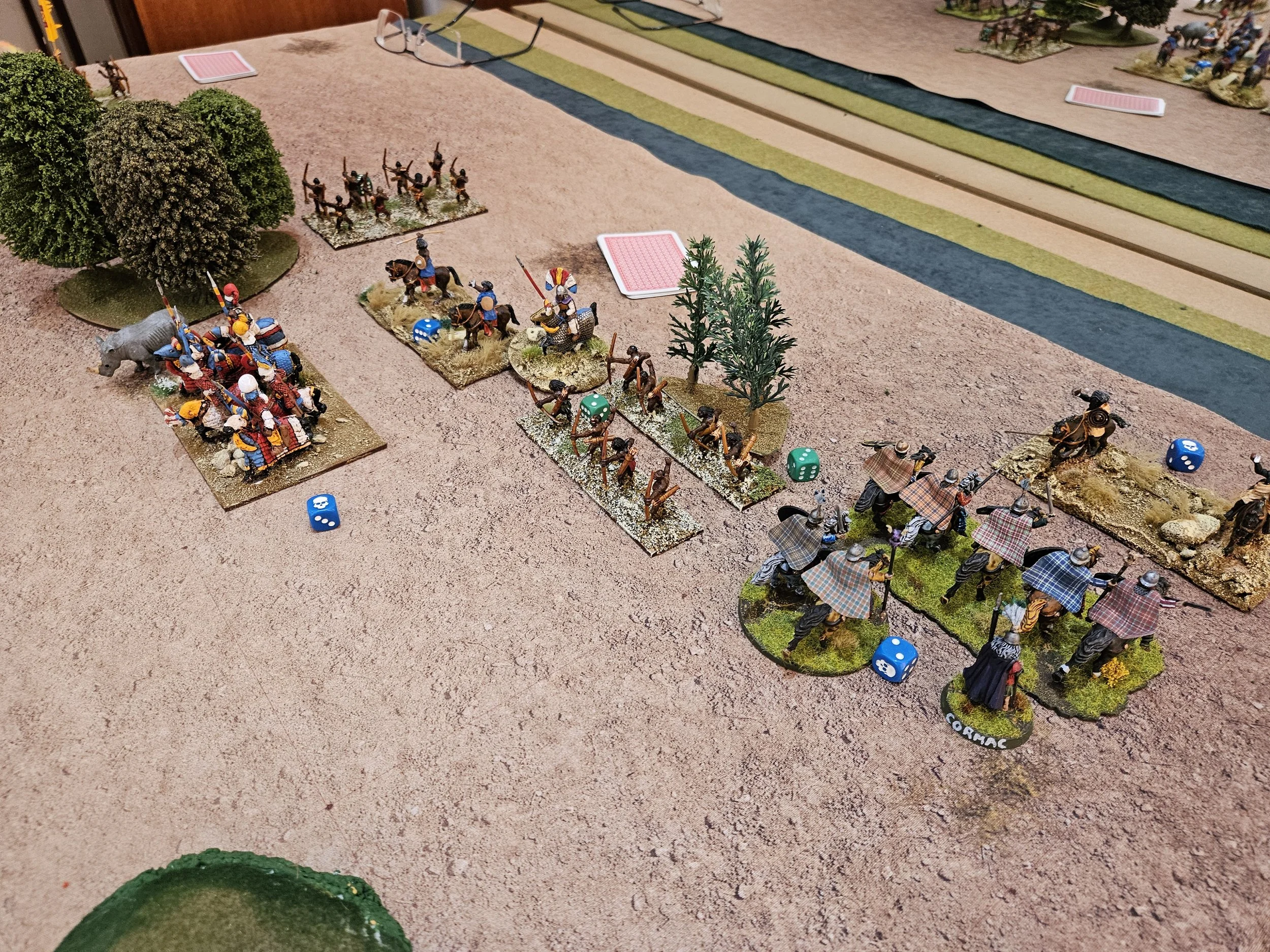
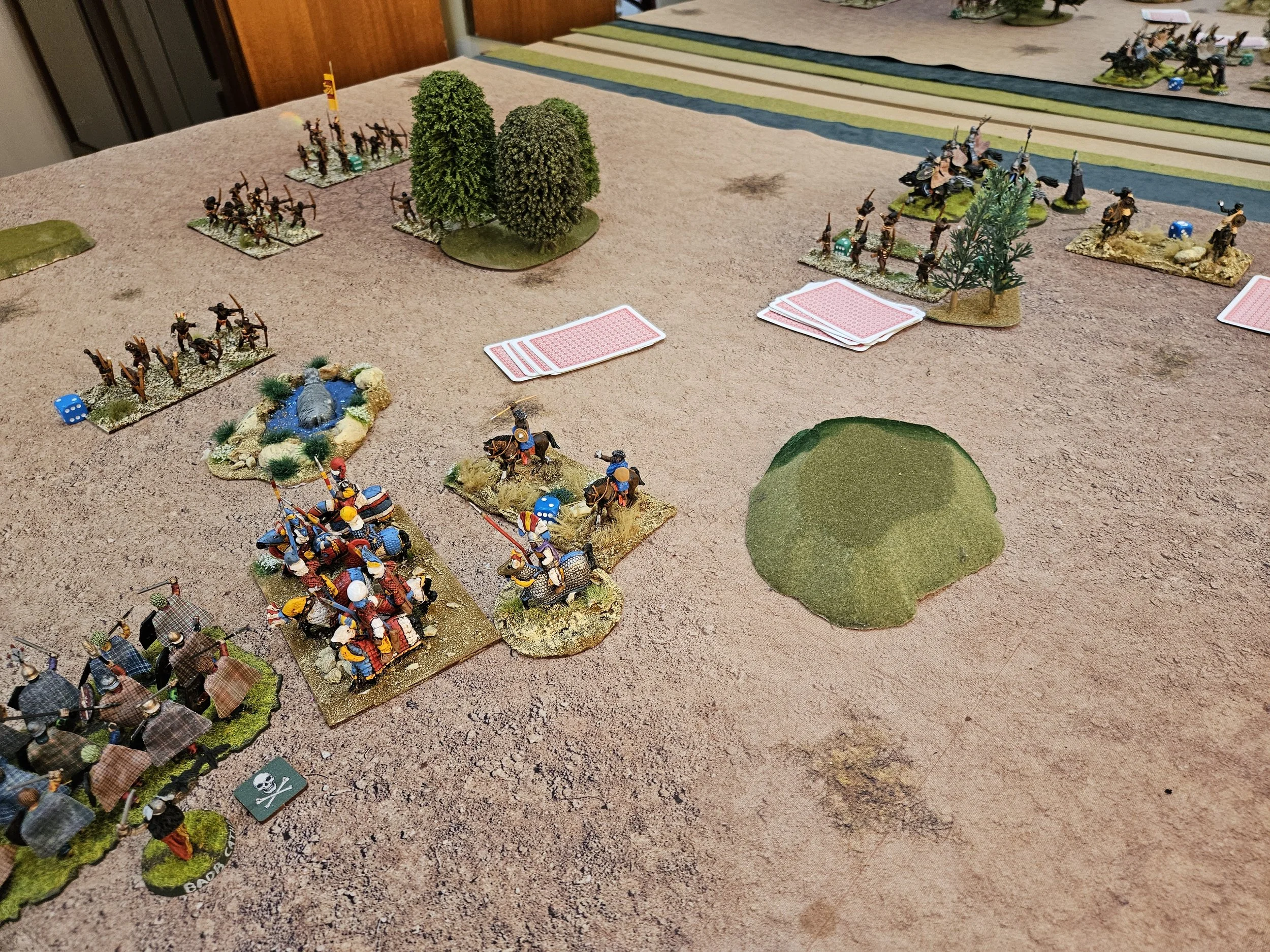
Not on the left, however, where my cavalry were having a particularly good day and effectively broke through the Parthian right flank.

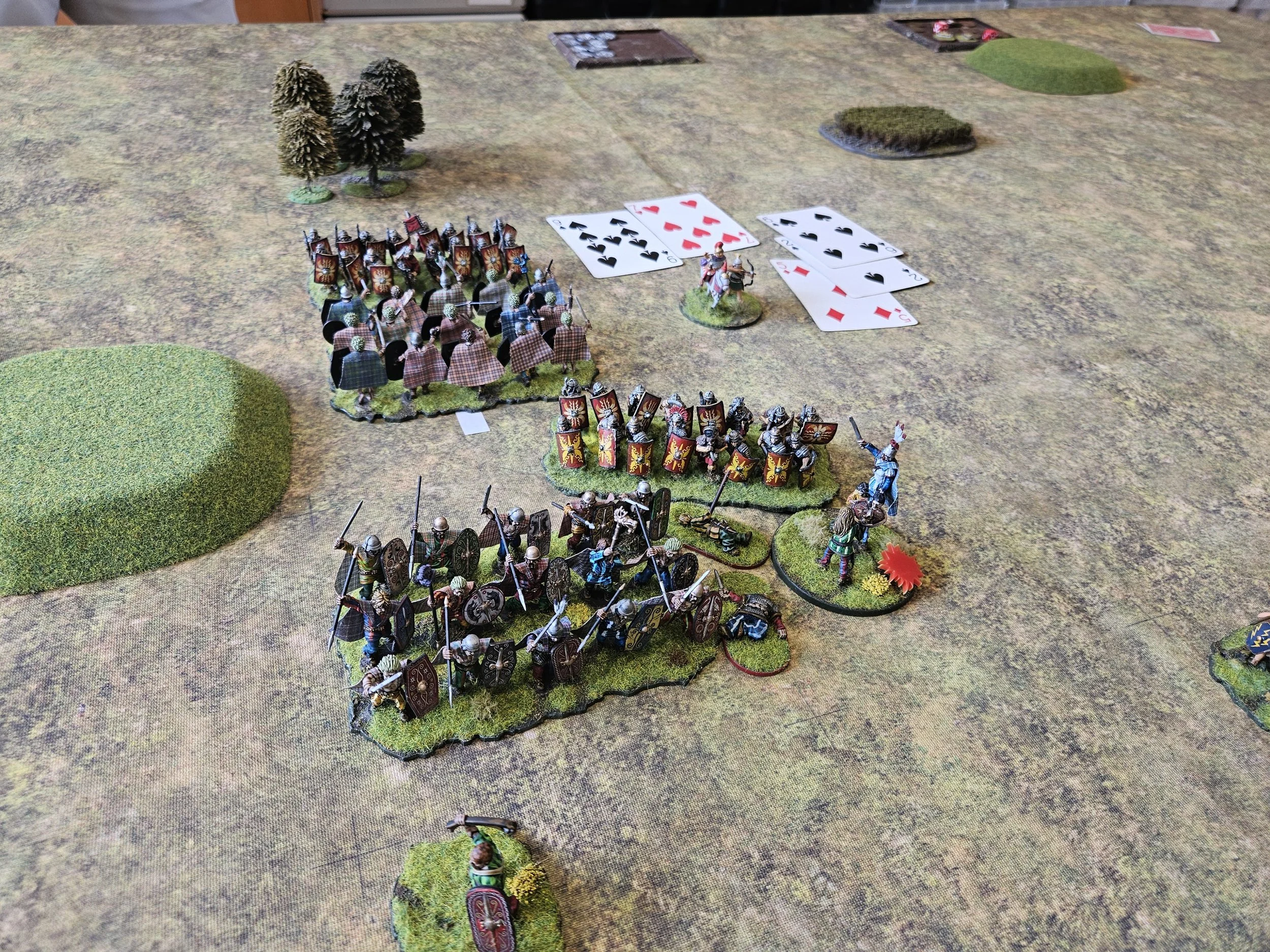
Fortunes were, however, mixed elsewhere, as although some of my warbands pushed forward spectacularly, a fine use of the Someone had Blundered stratagem meant that one set of warriors, already double disordered, accidentally turned to their right and were duly splattered over the battlefield!

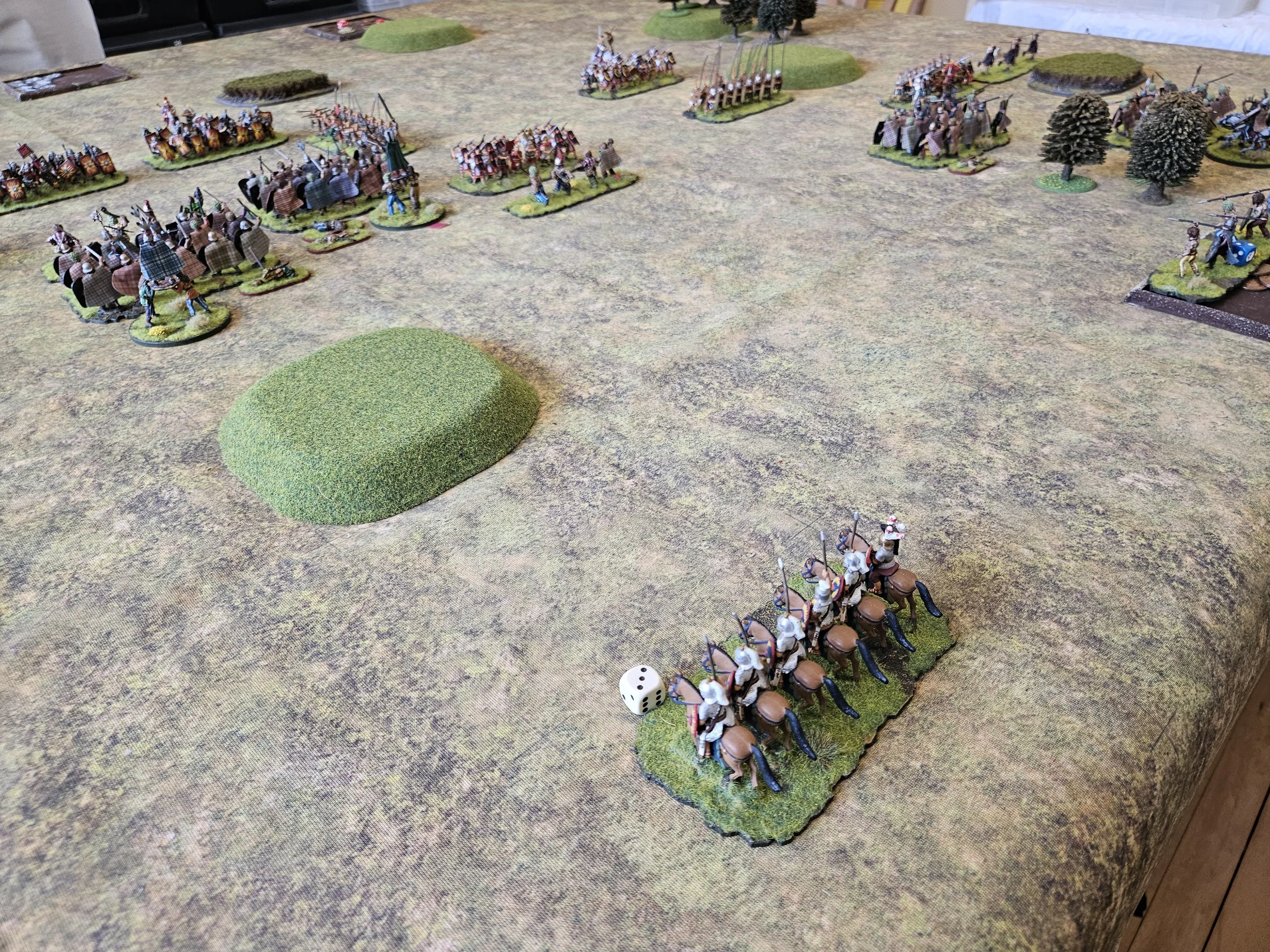
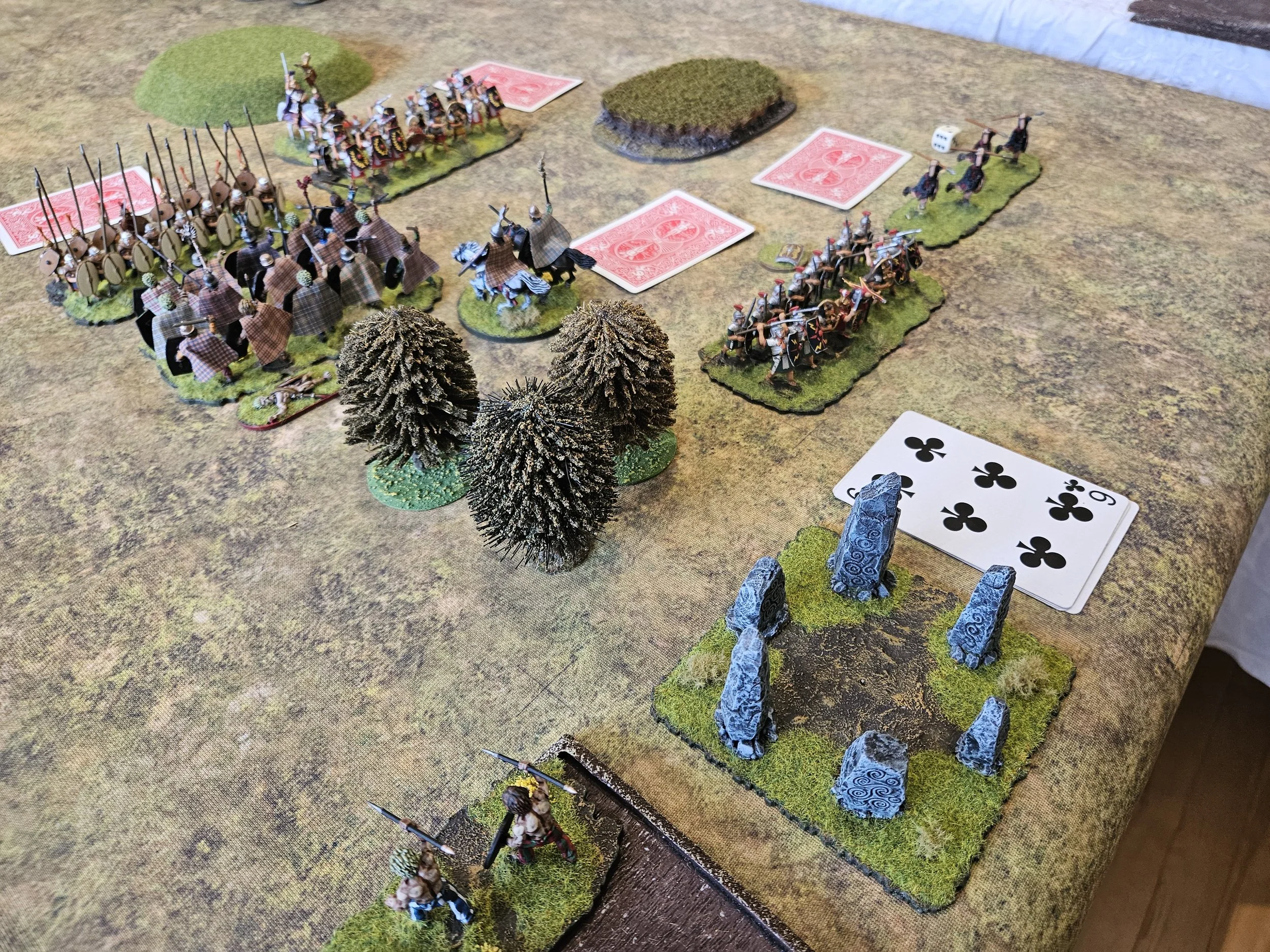
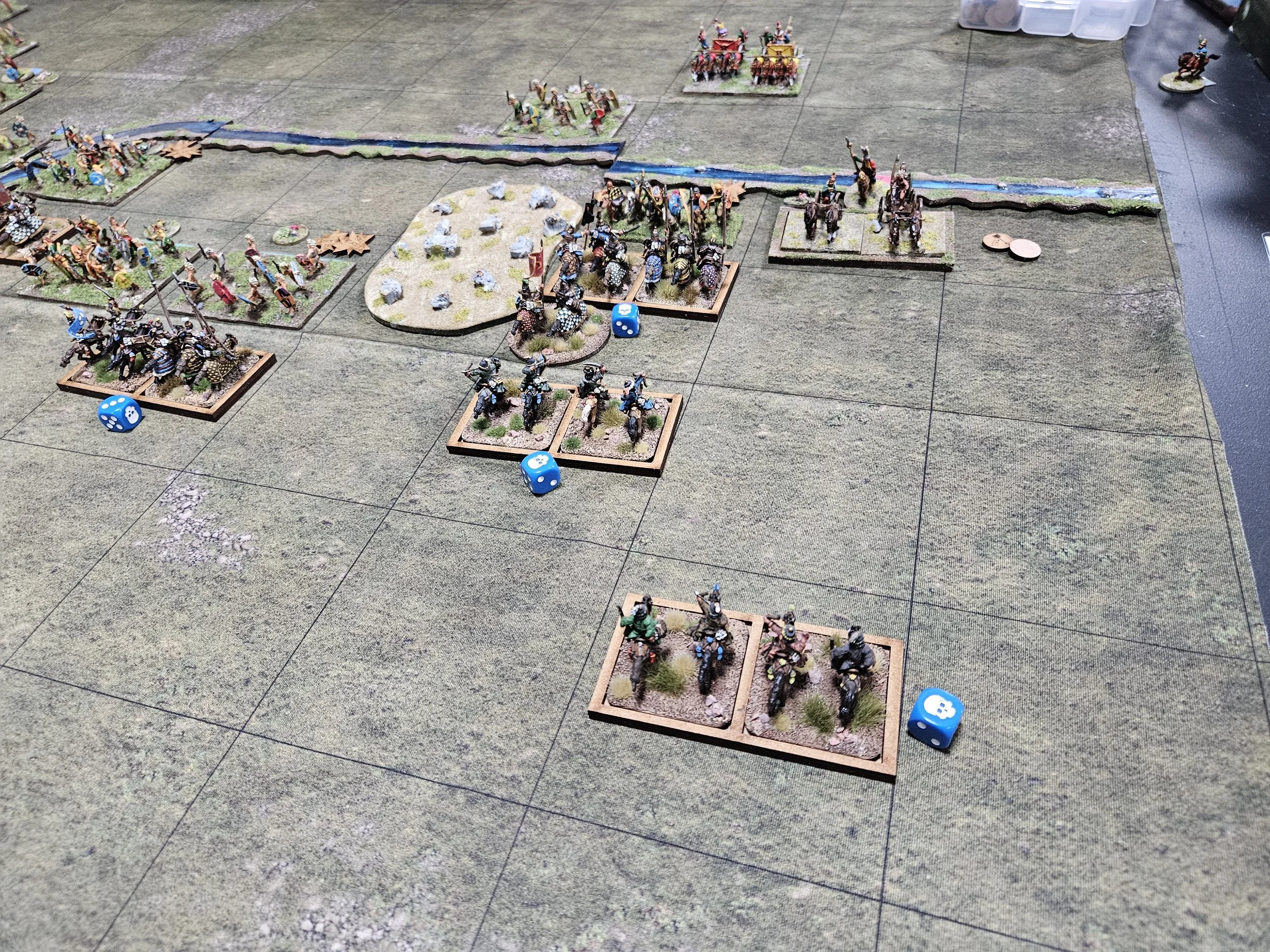
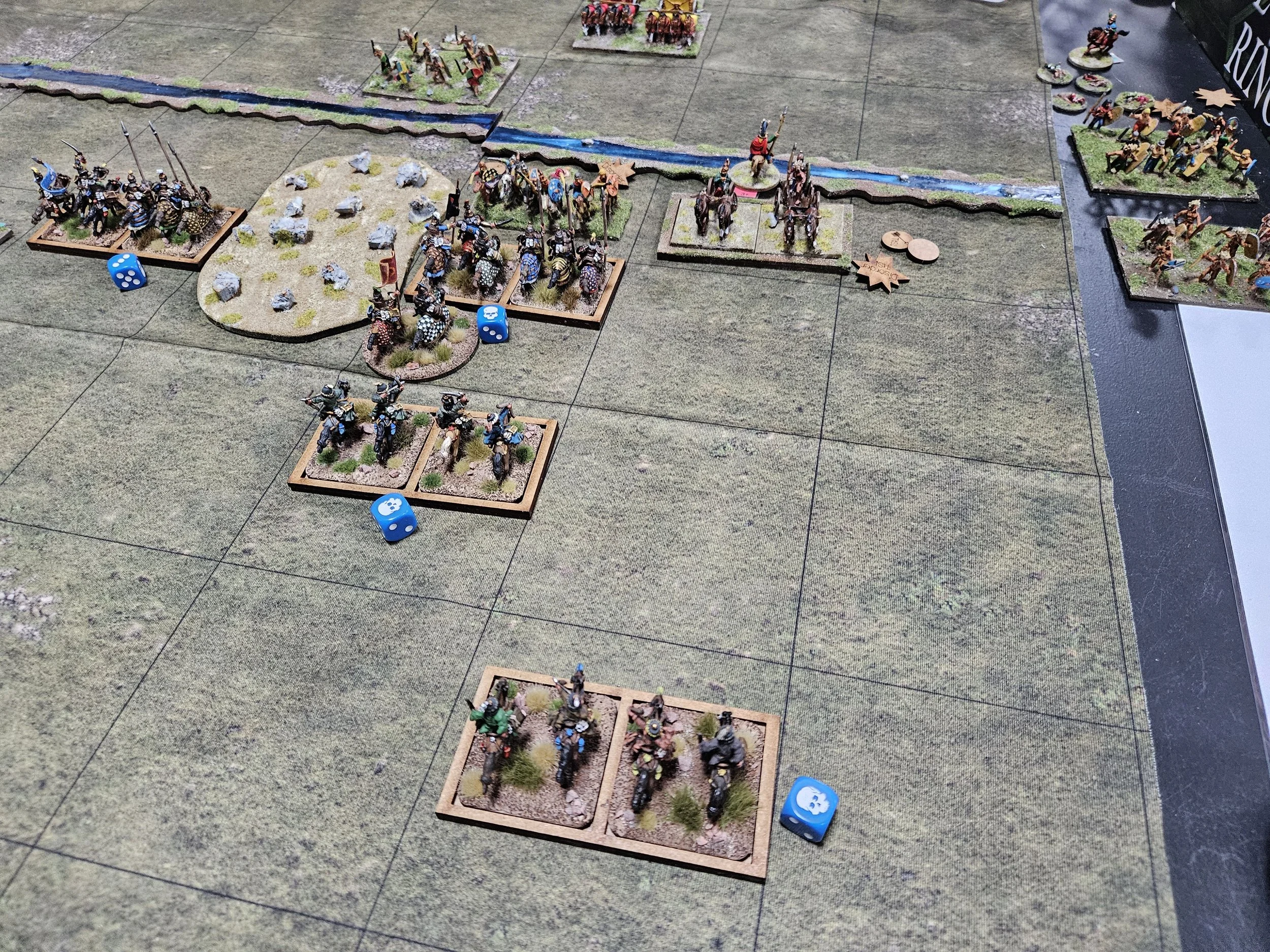
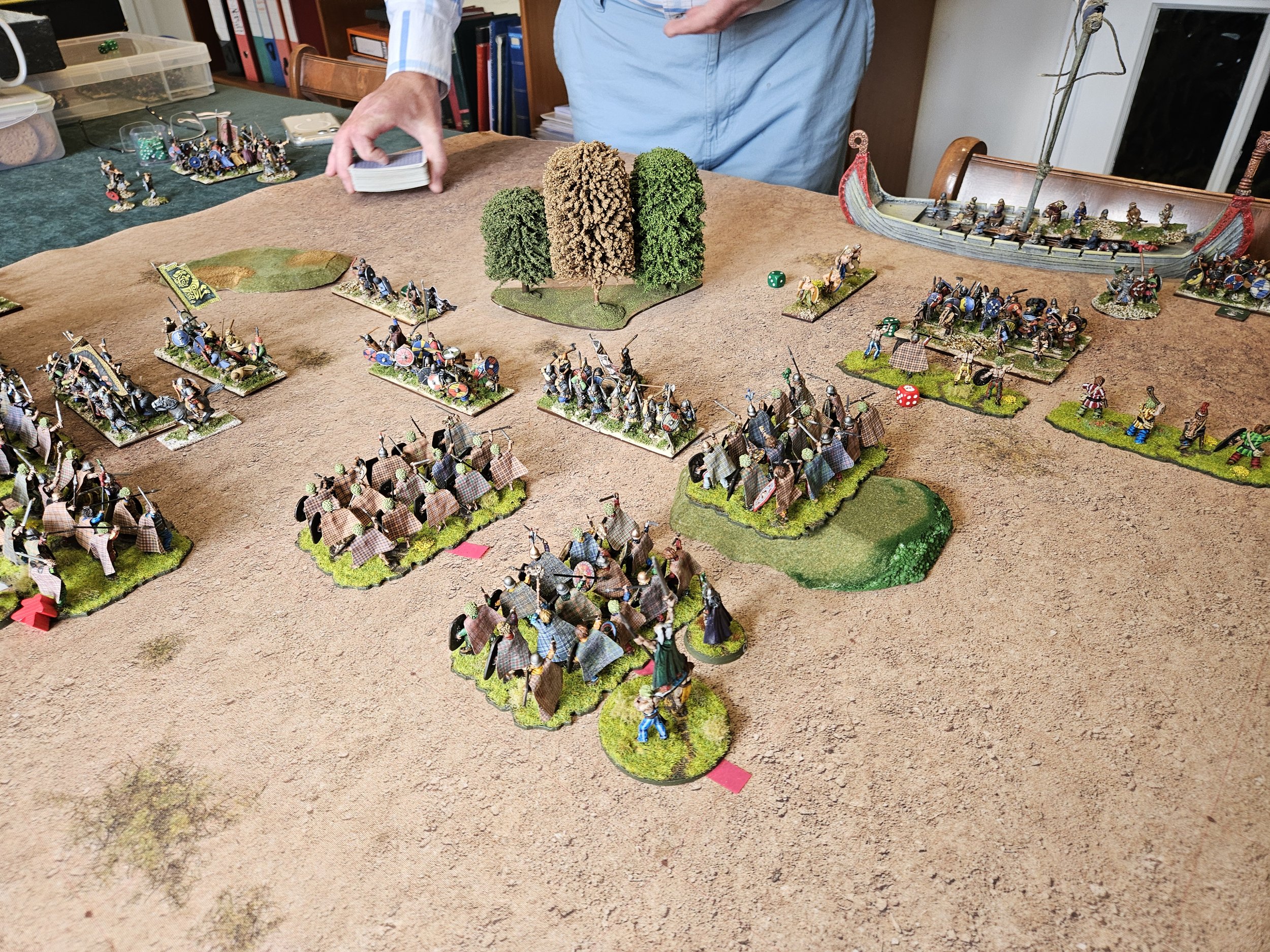
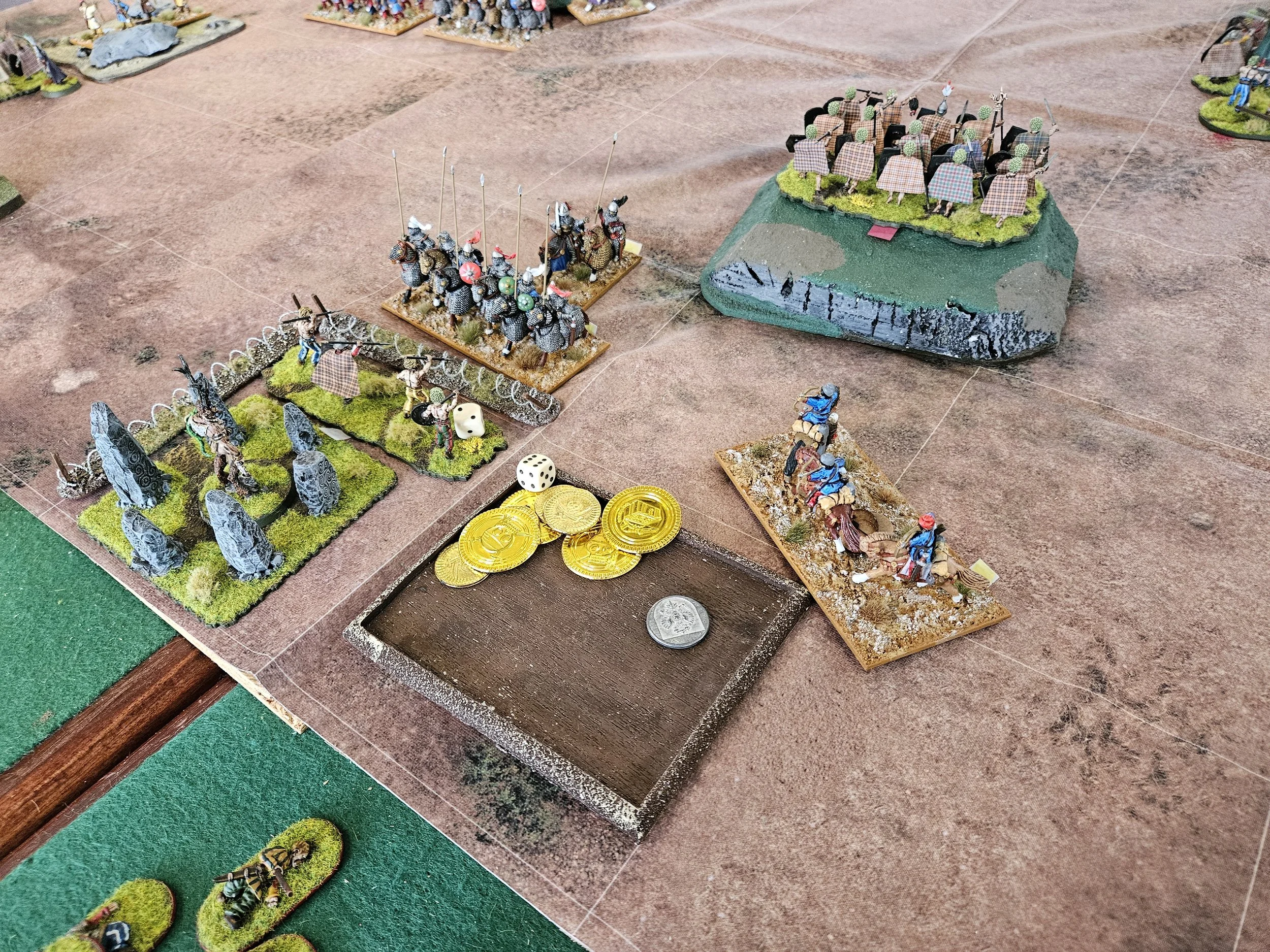
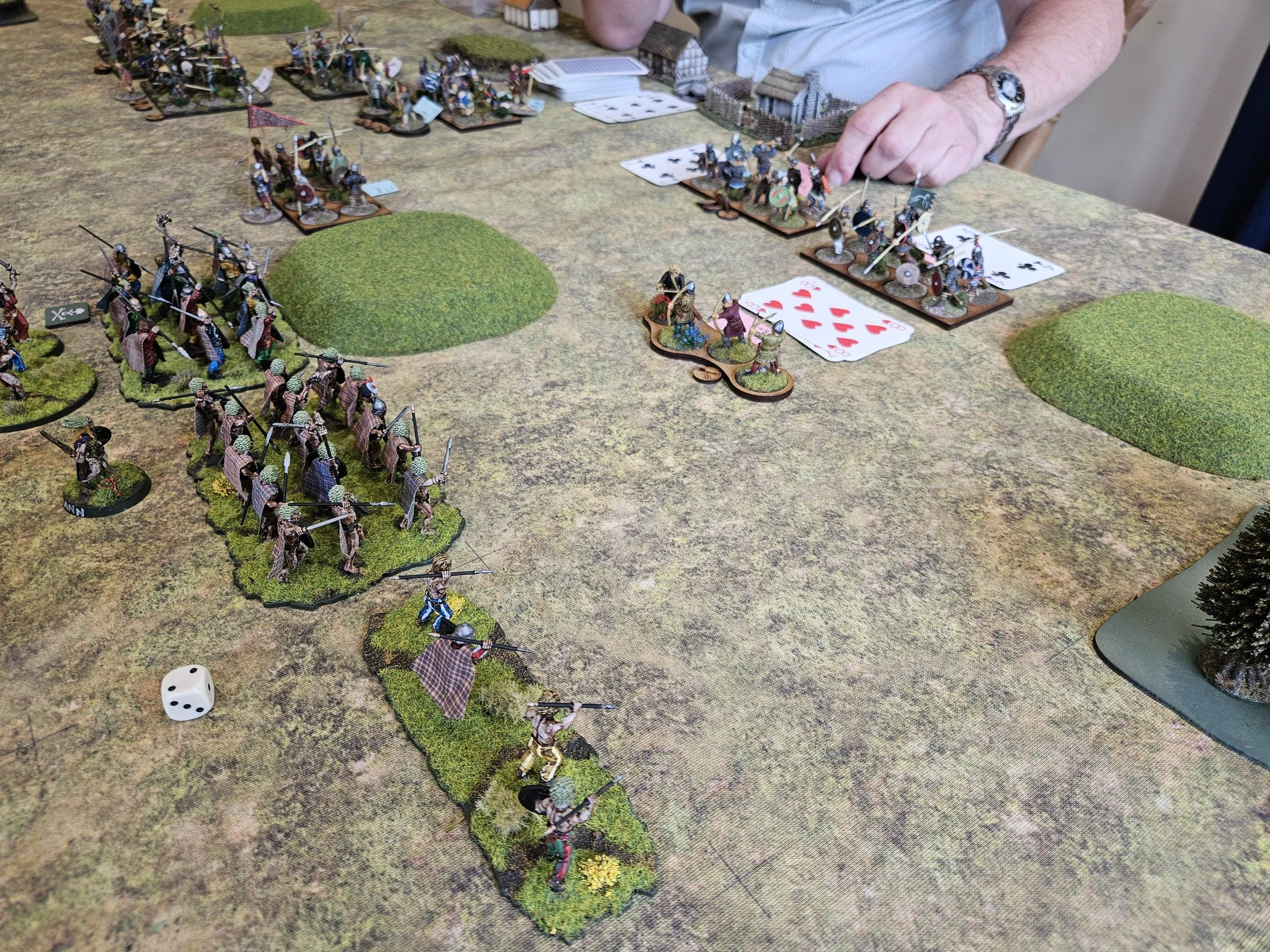
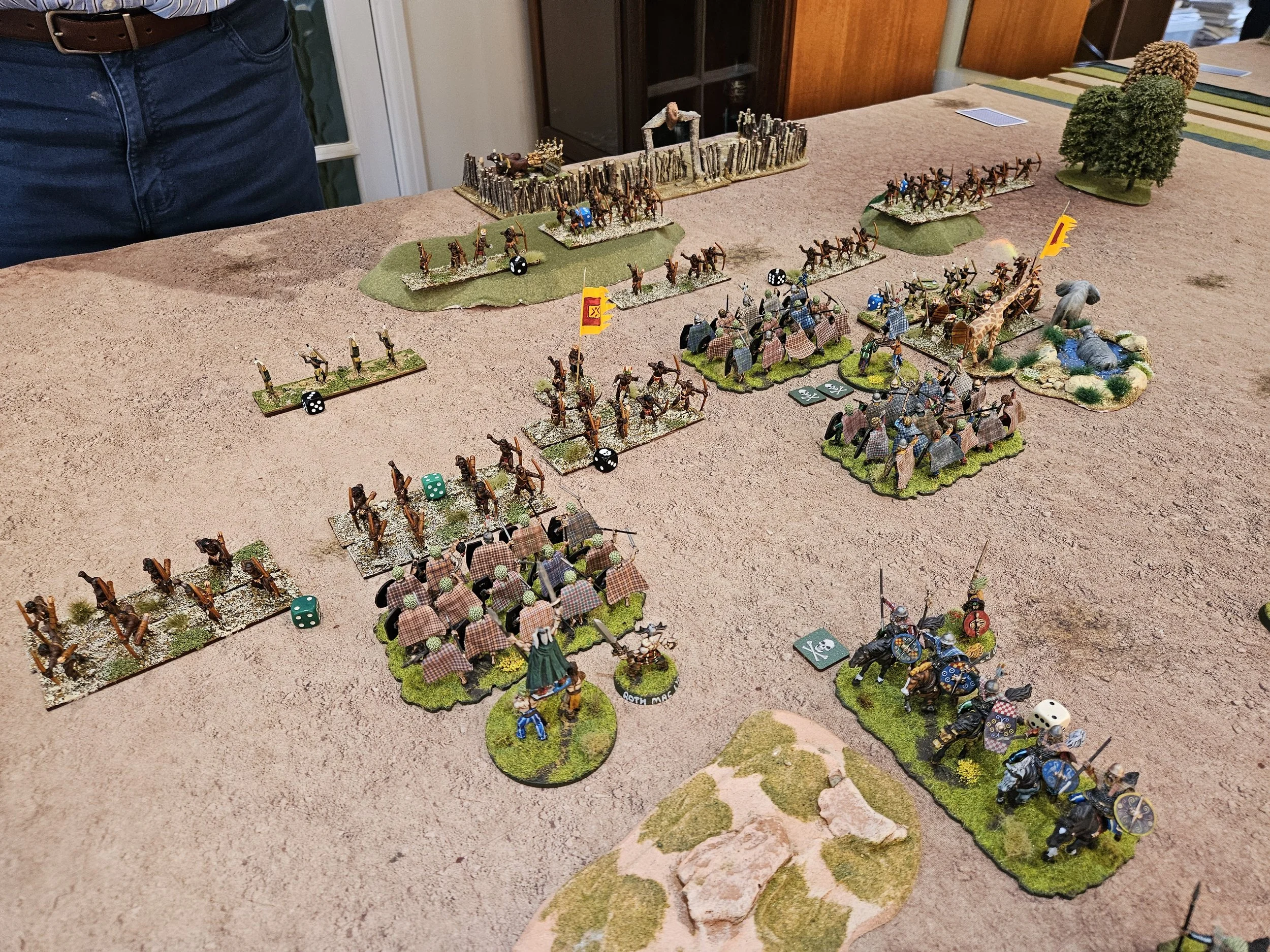
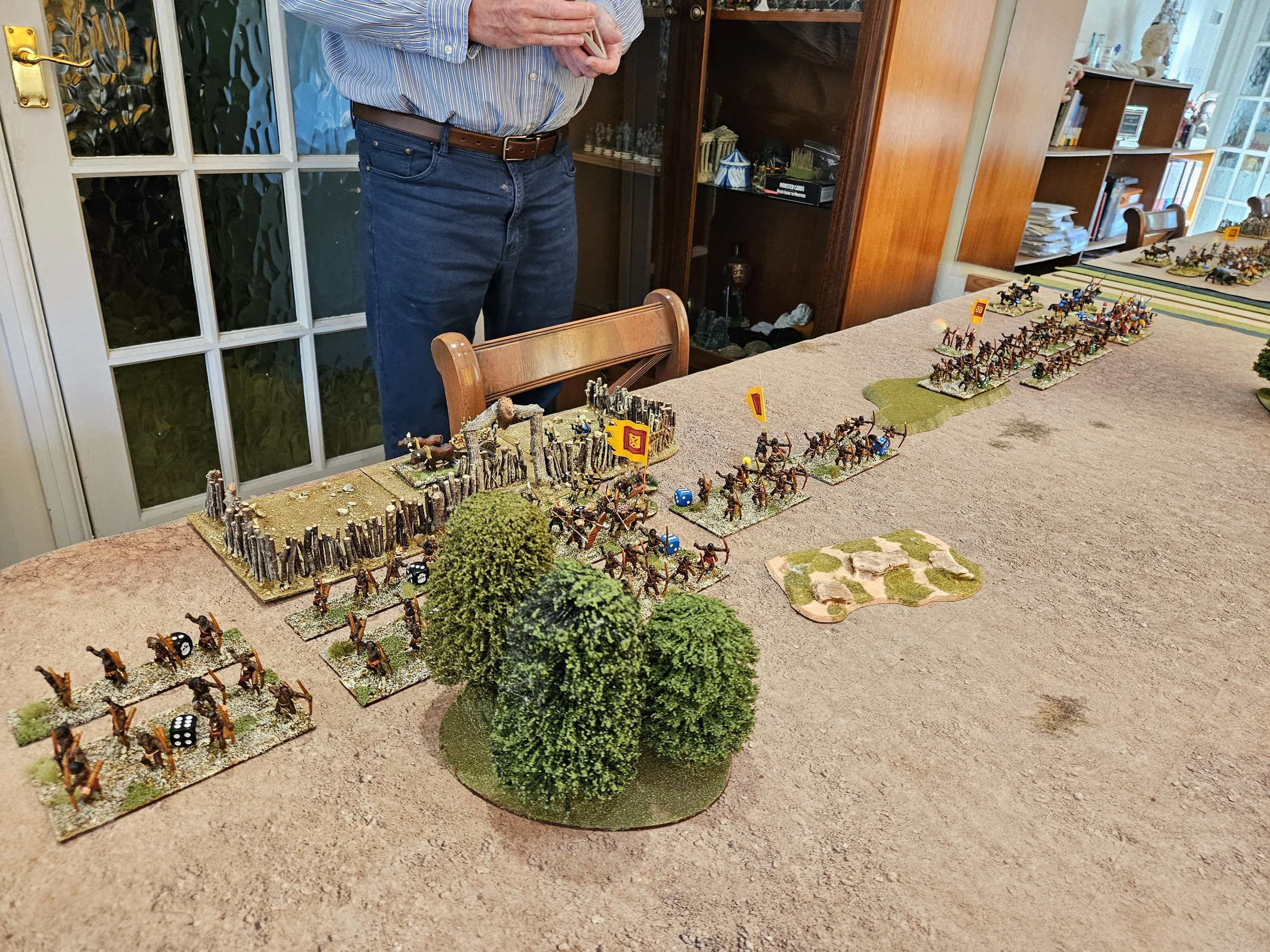
As an interlude, my massive push forward had left my camps vulnerable to marauding horse archers, but the javelinmen I had left behind in defence were able to see them off.

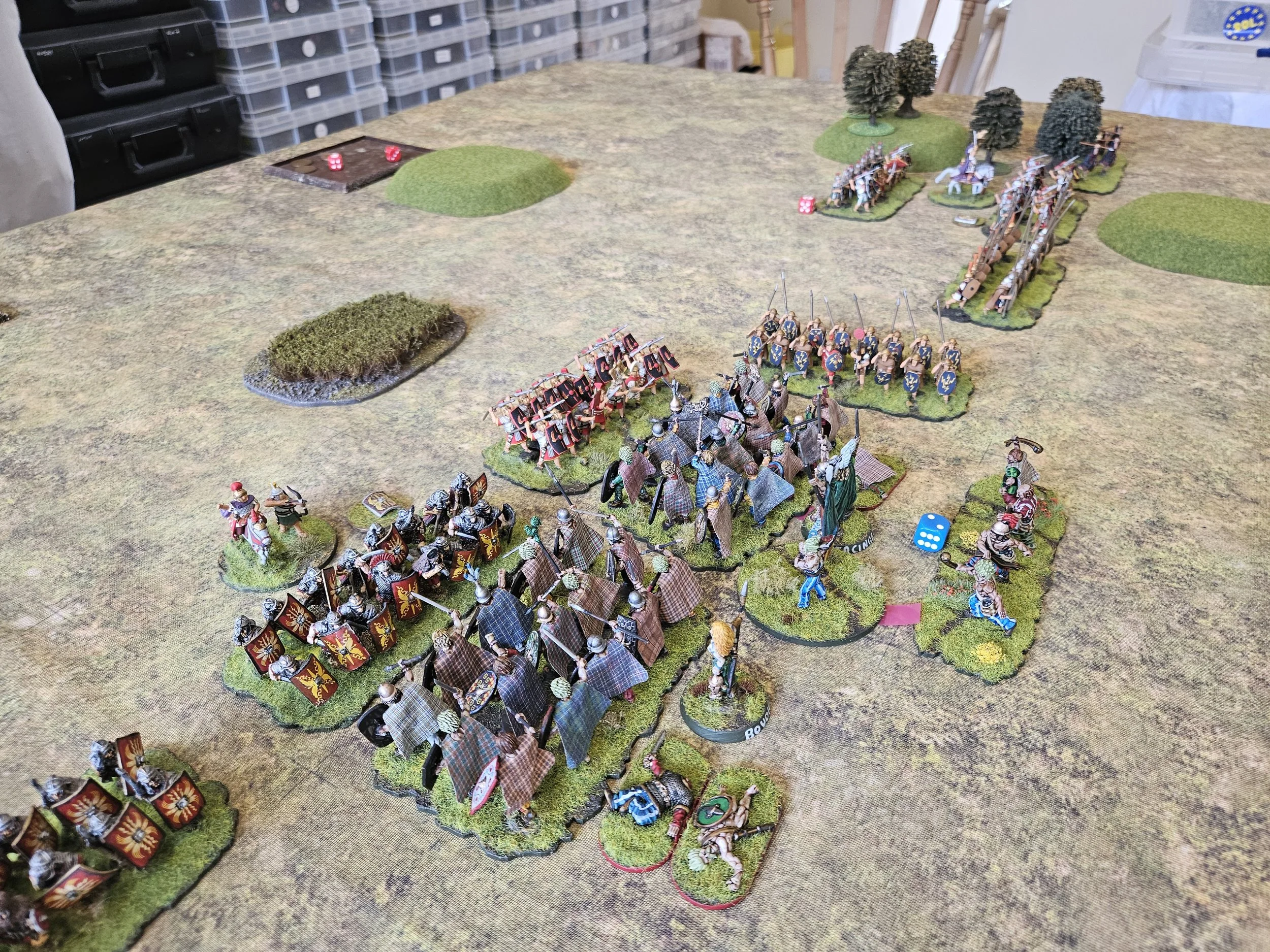
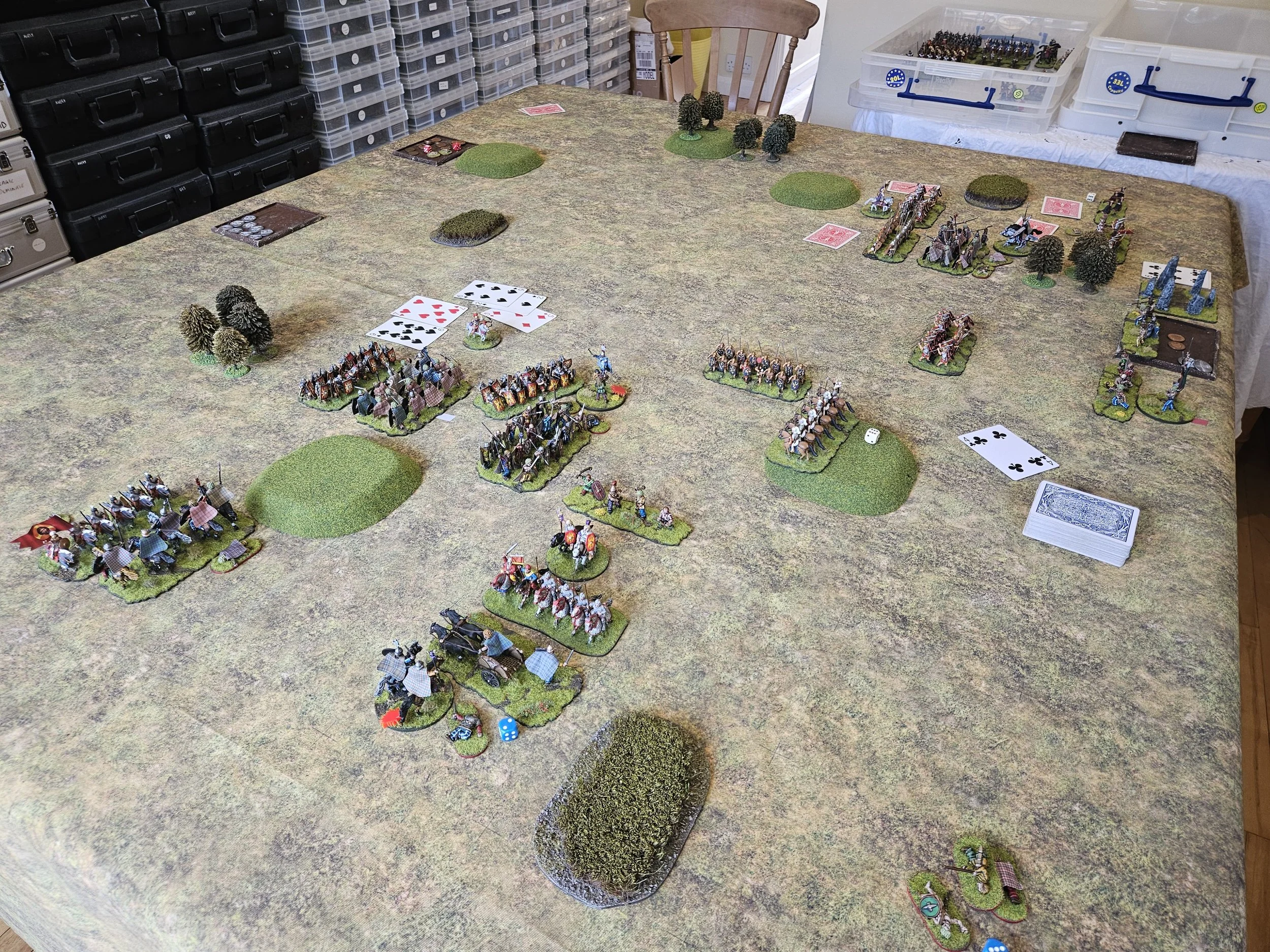
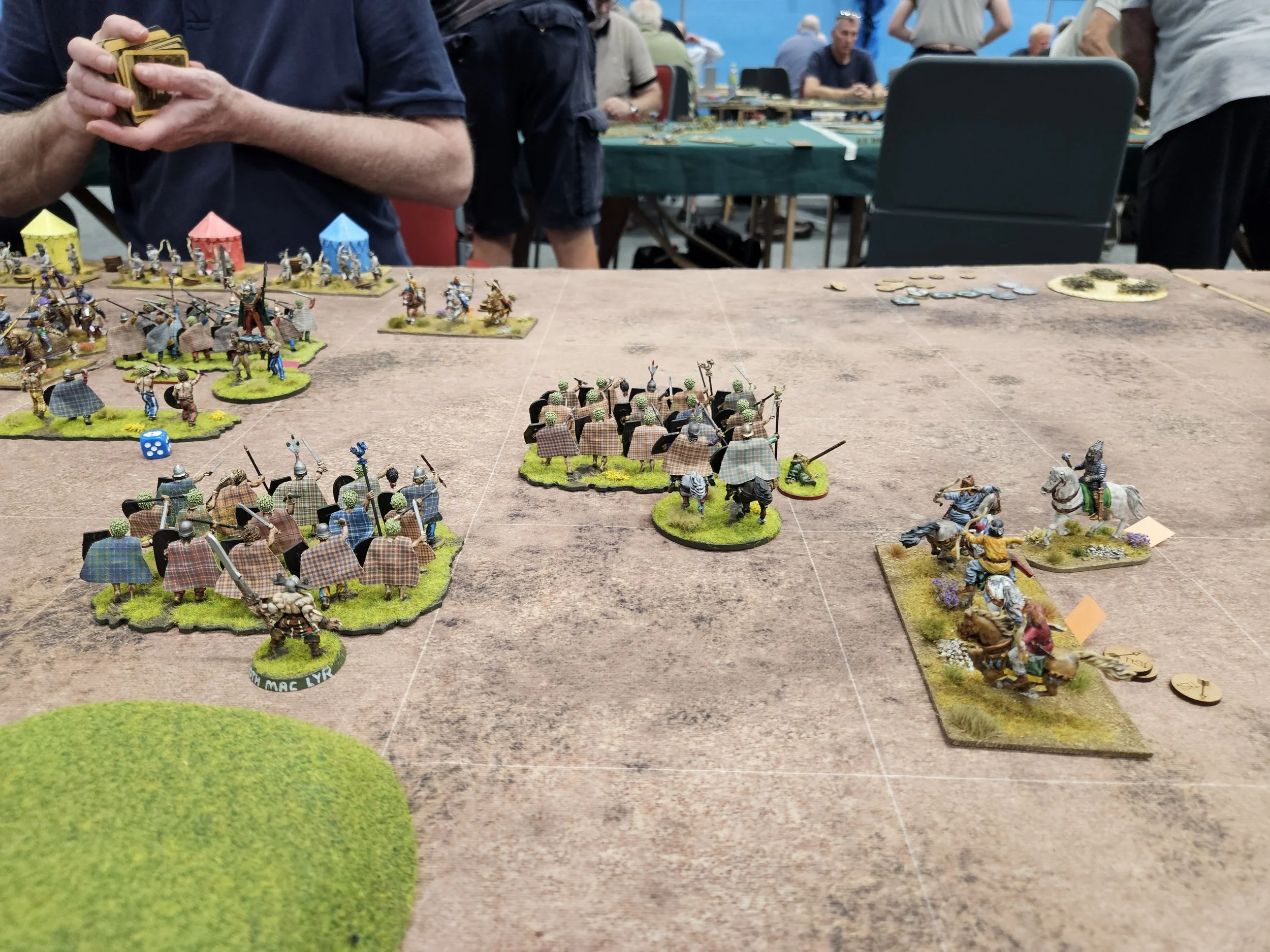
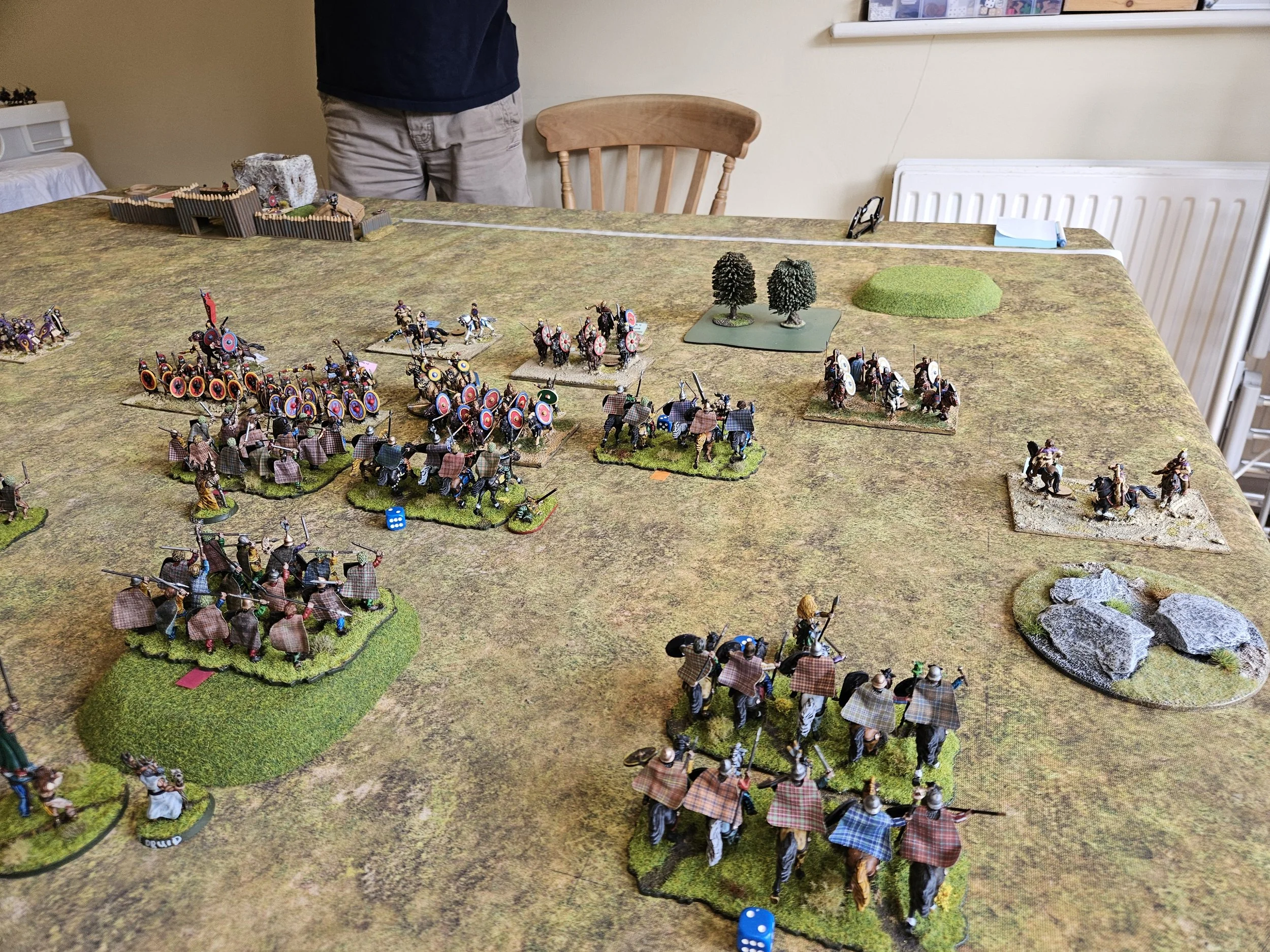
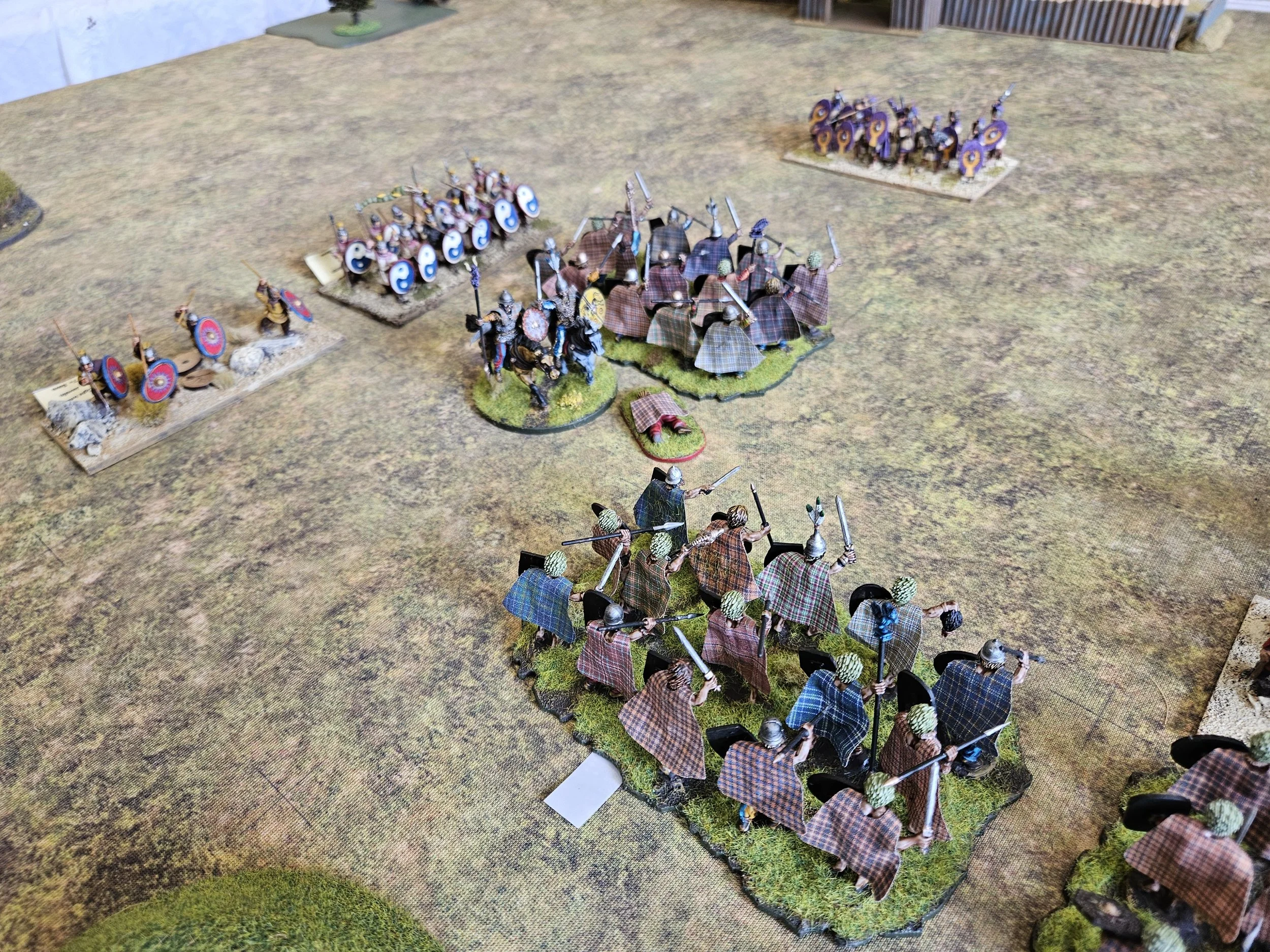
Back to the main action, where I was now desperately trying to get my cavalry properly onto the Parthian right flank or, failing that, capture an enemy camp or flank-kill one of their cavalry units before their cataphracts could slaughter enough of the warbands to break my army’s overall morale.

Unfortunately it was not to be. The cards fell Tim’s way and one of my battered warbands broke and took the rest of the Gallic army with them.

The narrowest 13-14 victory for the Parthians, but a great game nonetheless. It could really have gone either way at the end, and it was really just the cards that decided things.

Thanks to Tim for agreeing to play a second warm-up game: an excellent way to start Britcon even if I did lose!

TTS AAR: Gauls versus Later Romans

Another practice game for this year’s To The Strongest at Britcon tournament: this time my Gauls would face friend Si’s Later Romans.

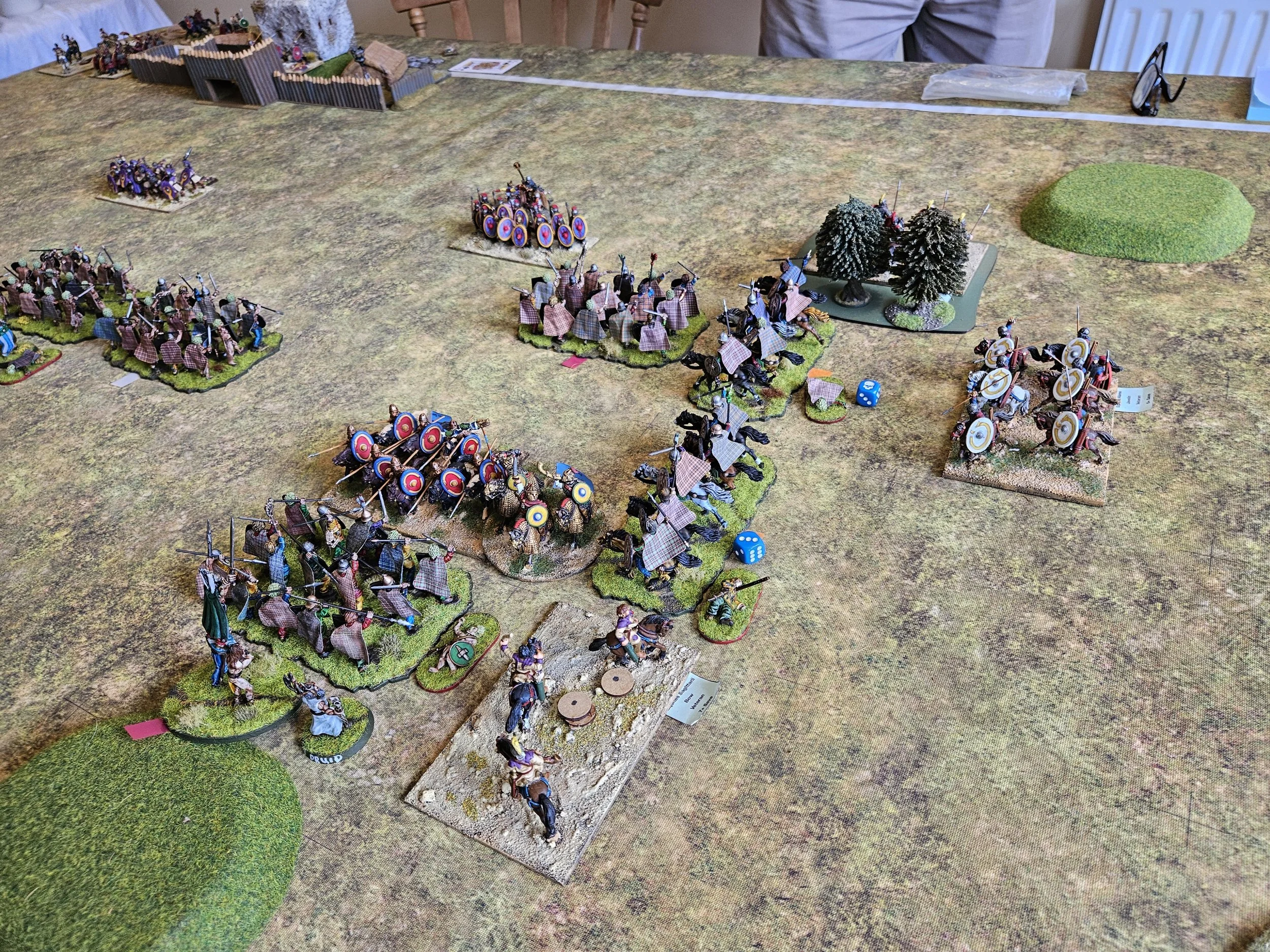
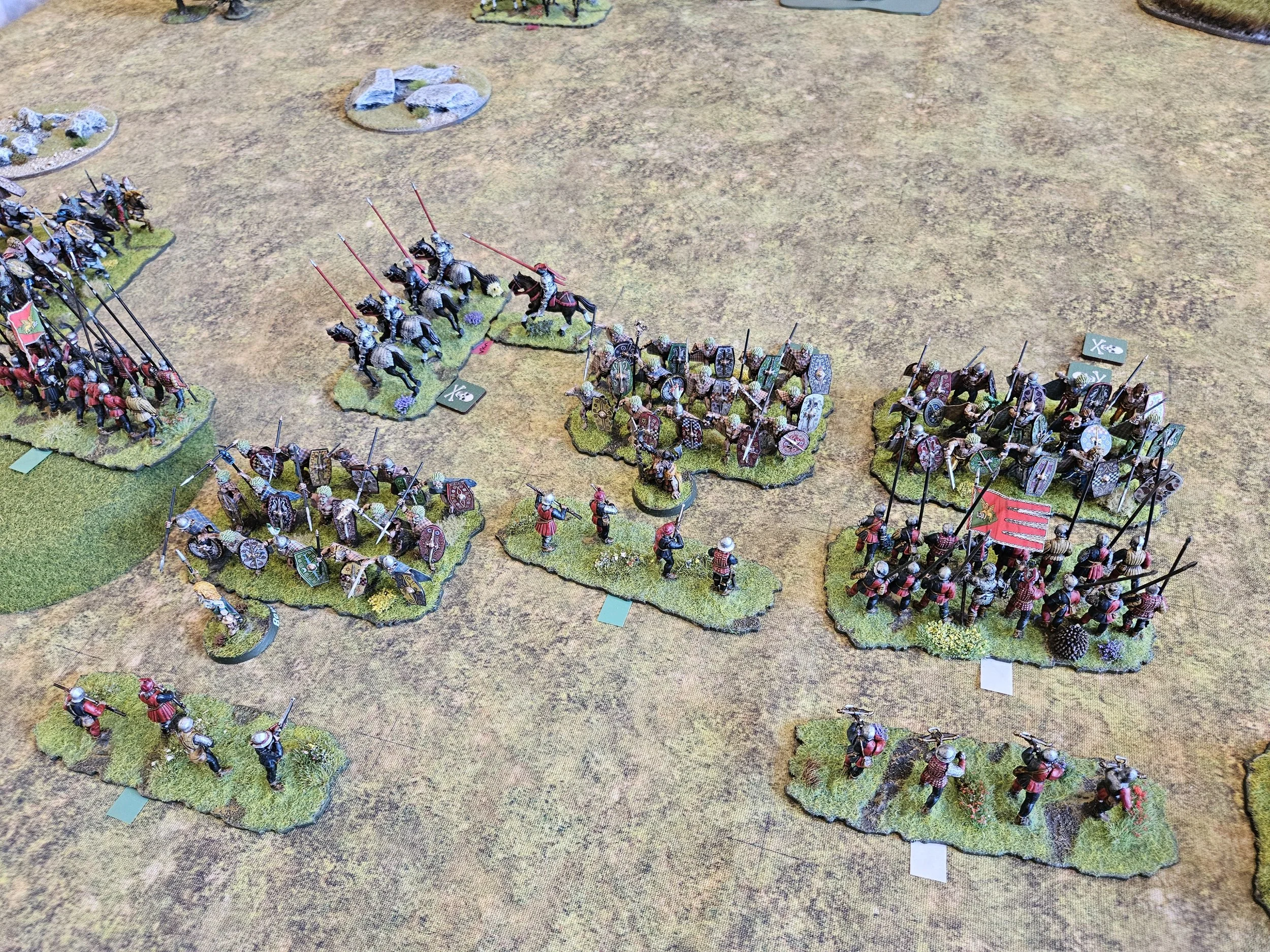
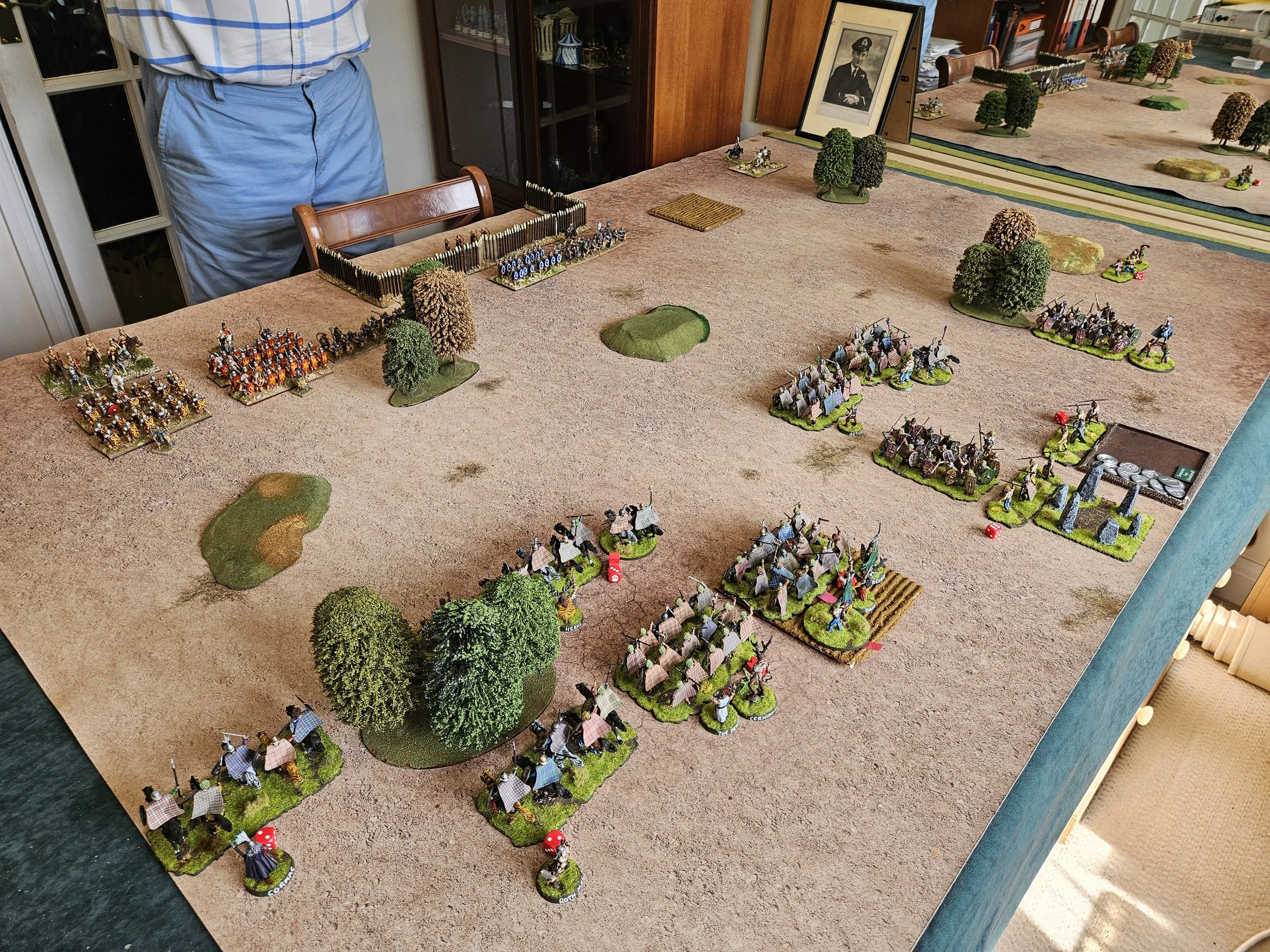
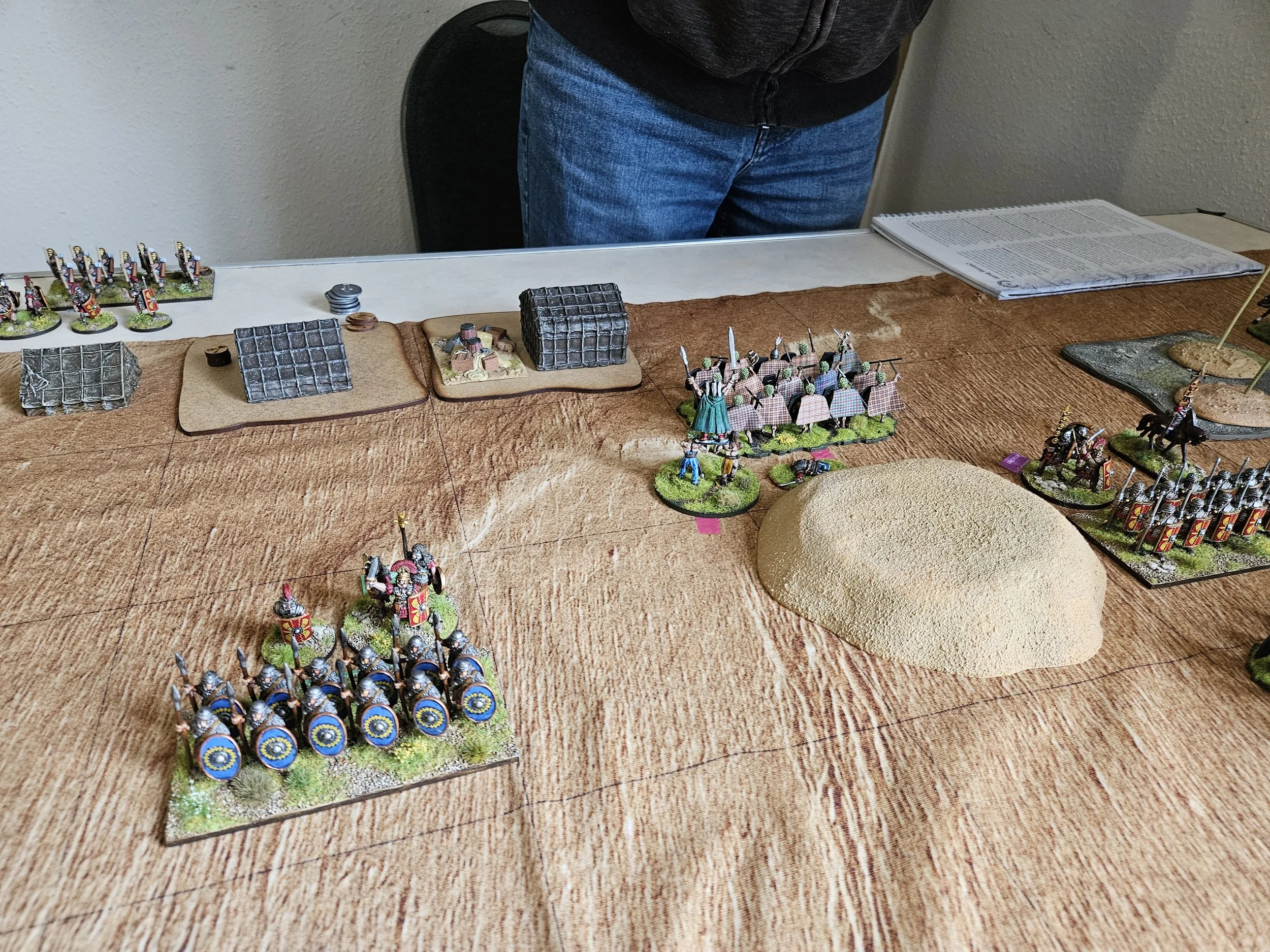
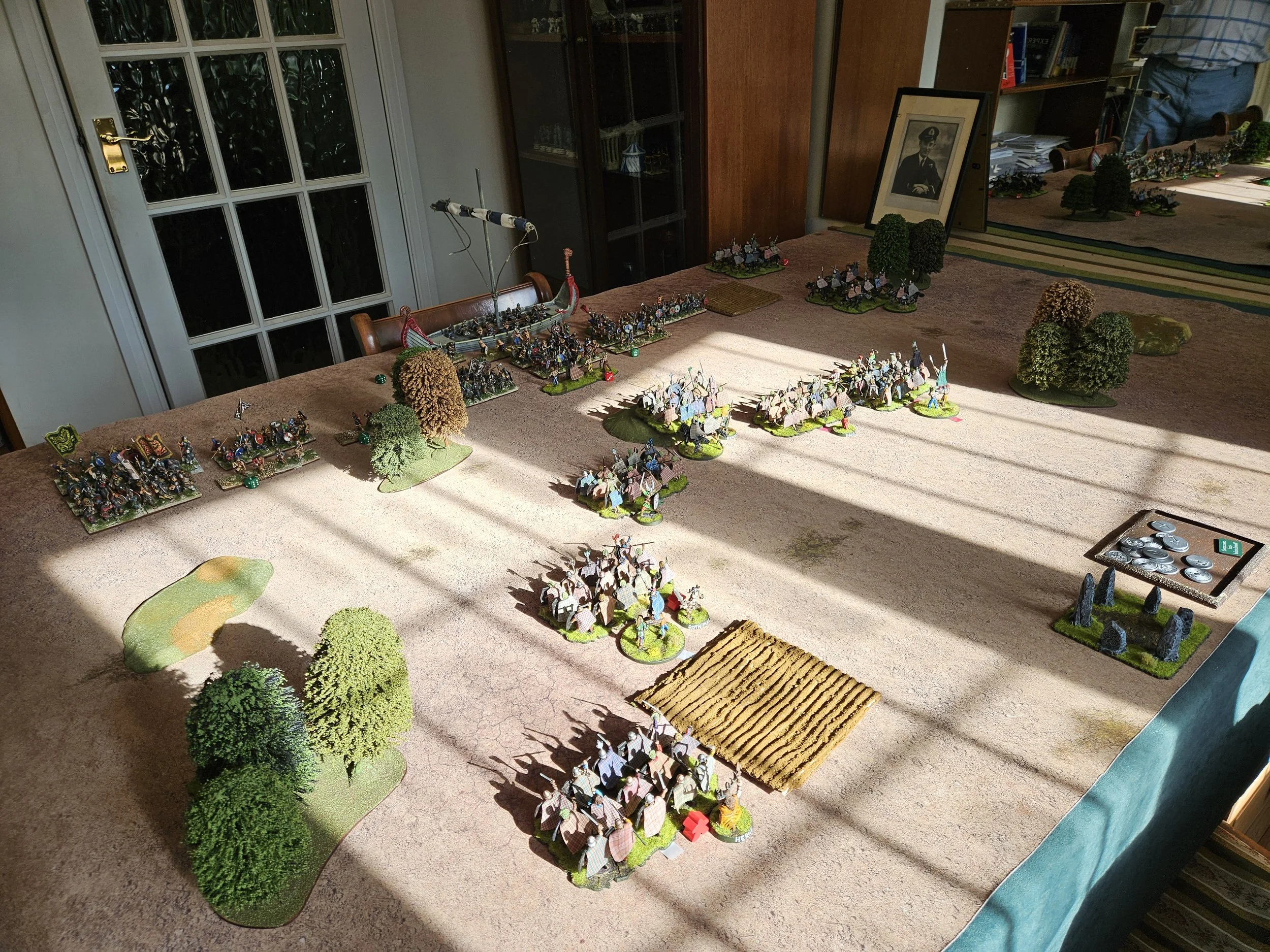
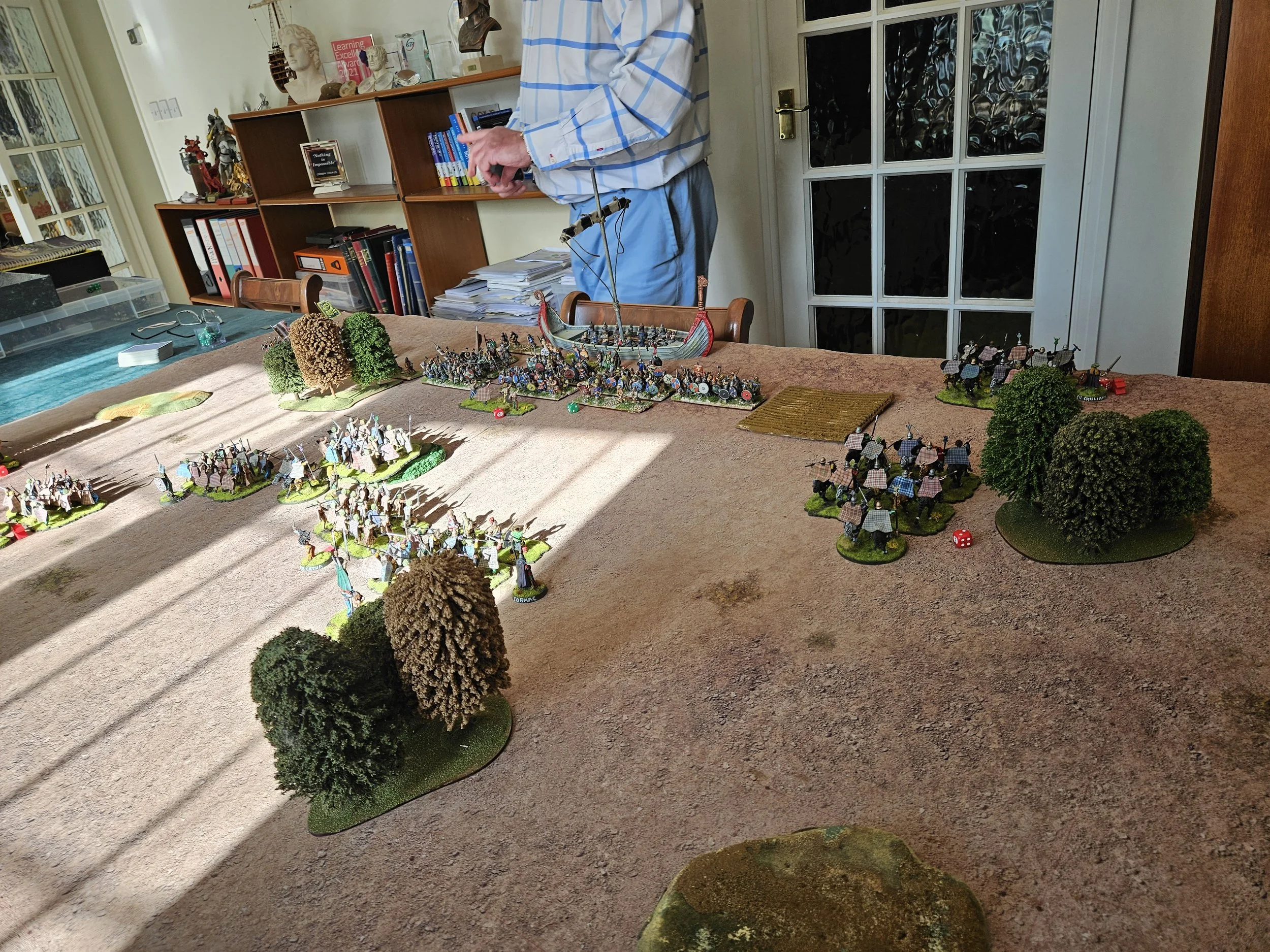
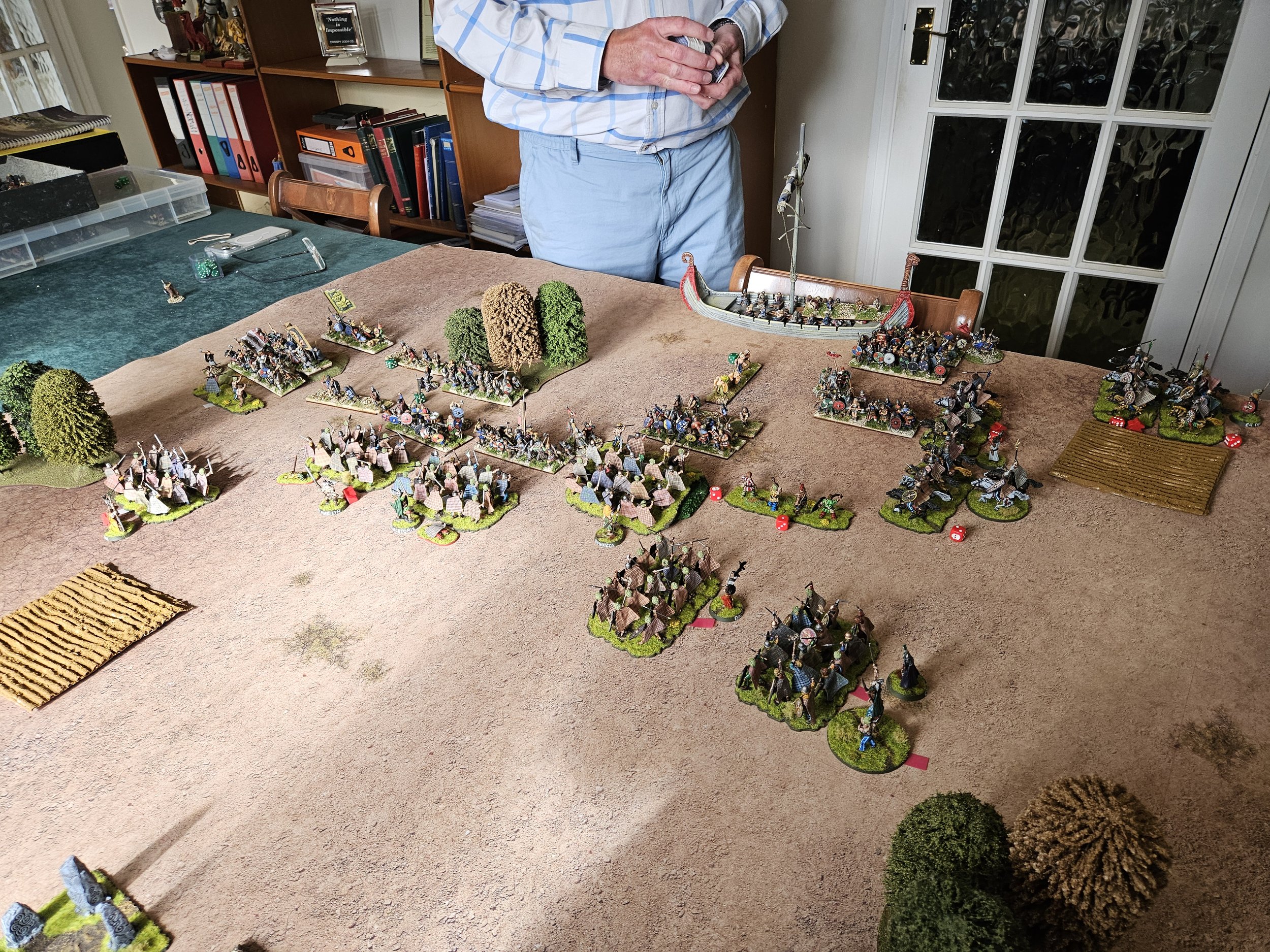
The Gauls lost the scouting phase, so deployed their six warbands, two of them veteran, across the centre of the table, with their cavalry on the right wing. My plan was to defeat any Roman cavalry on that wing and then swing my horsemen into the centre to take the enemy infantry in the flank. You can see the start position and initial moves below.

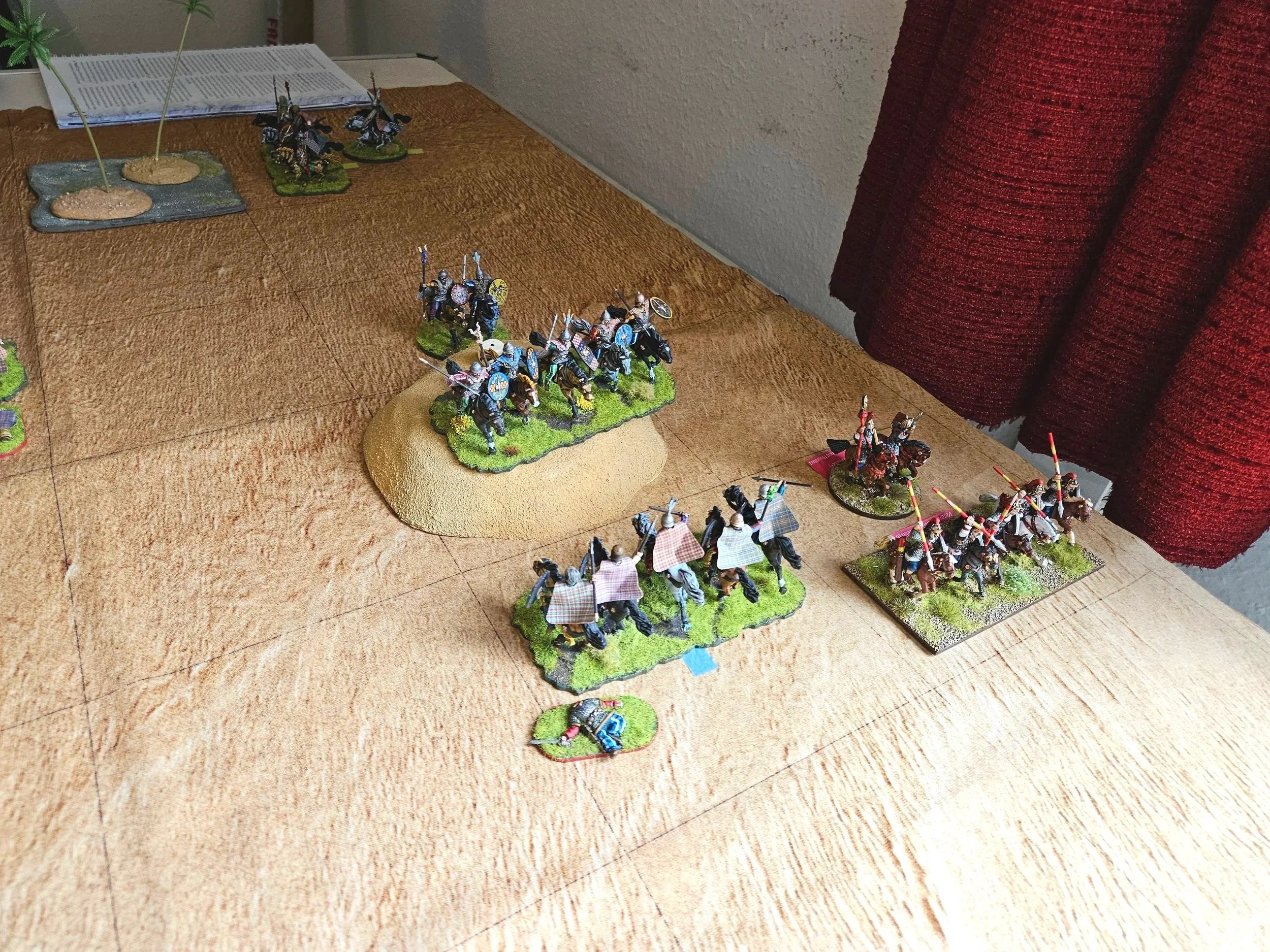
Unfortunately, my cavalry were taking a bit of time to properly get going: one immediately fell victim to the Roman cataphracts, the other three flailing around without actually achieving much.

I then used the Someone Has Blundered stratgem to about-face the cataphracts but didn’t manage to damage them despite sending in multiple attacks from the flank and rear. In the end, I had to use some of the infantry from the centre to prevent one unit of my horsemen from being squished between two lots of Roman cavalry, but things couldn’t be said to be going well!

Meanwhile, things had been going equally badly at the other end of the infantry line i.e. my left flank.

There, the Romans had managed to get some light troops around the end of my line, who then punished me appropriately. The only good news was that my infantry in the centre had managed to kill a unit of Legionaries (taking the Roman Eagle) and that one Roman general had died in the fighting.

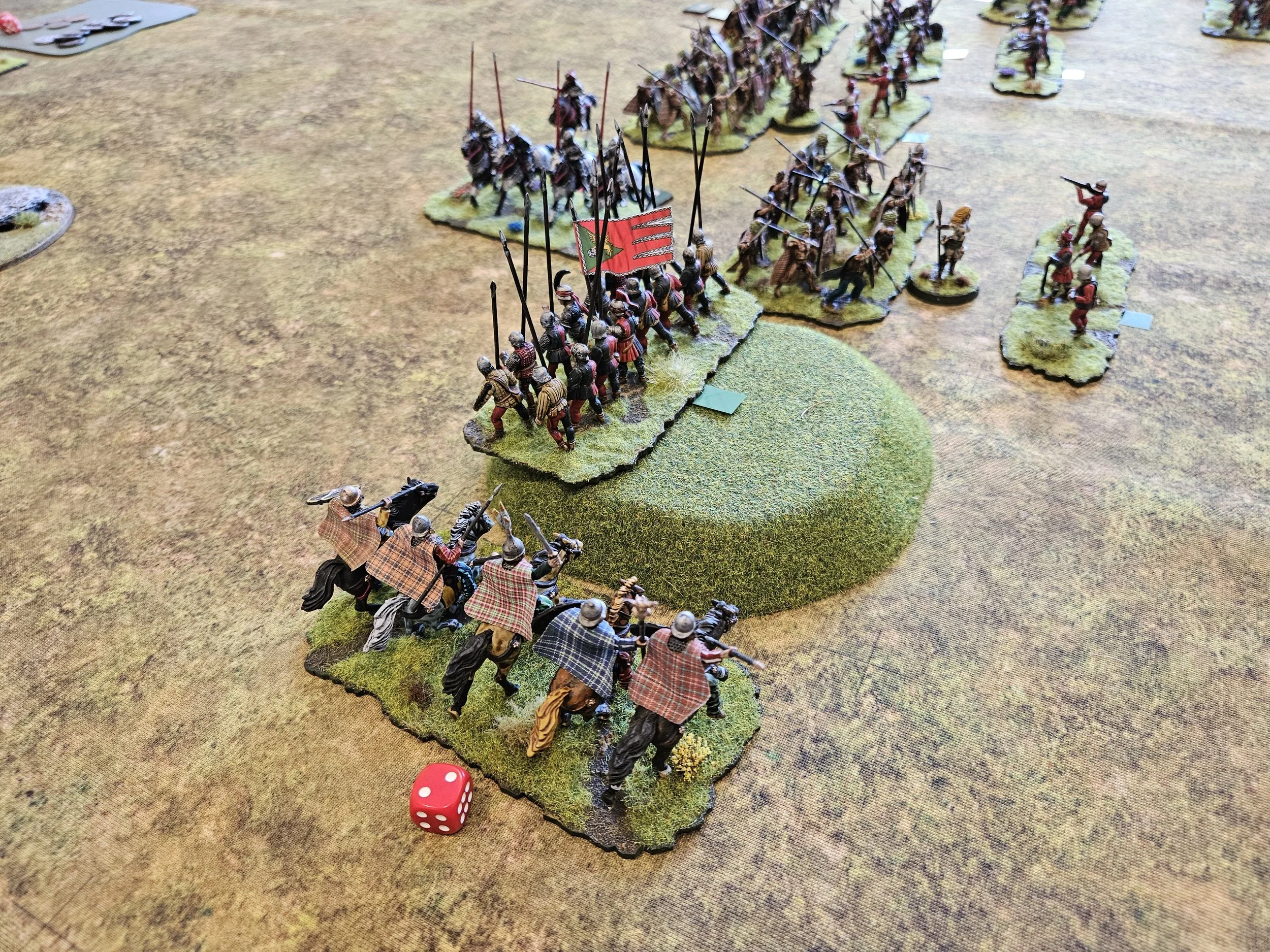
Luckily I was able to bring one unit of Gallic cavalry across the back on the battlefield to reinforce the left of my line, but it arrived too late to save my left-hand warband and, unless a miracle happened elsewhere, I was about to be rolled up and destroyed from both flanks!

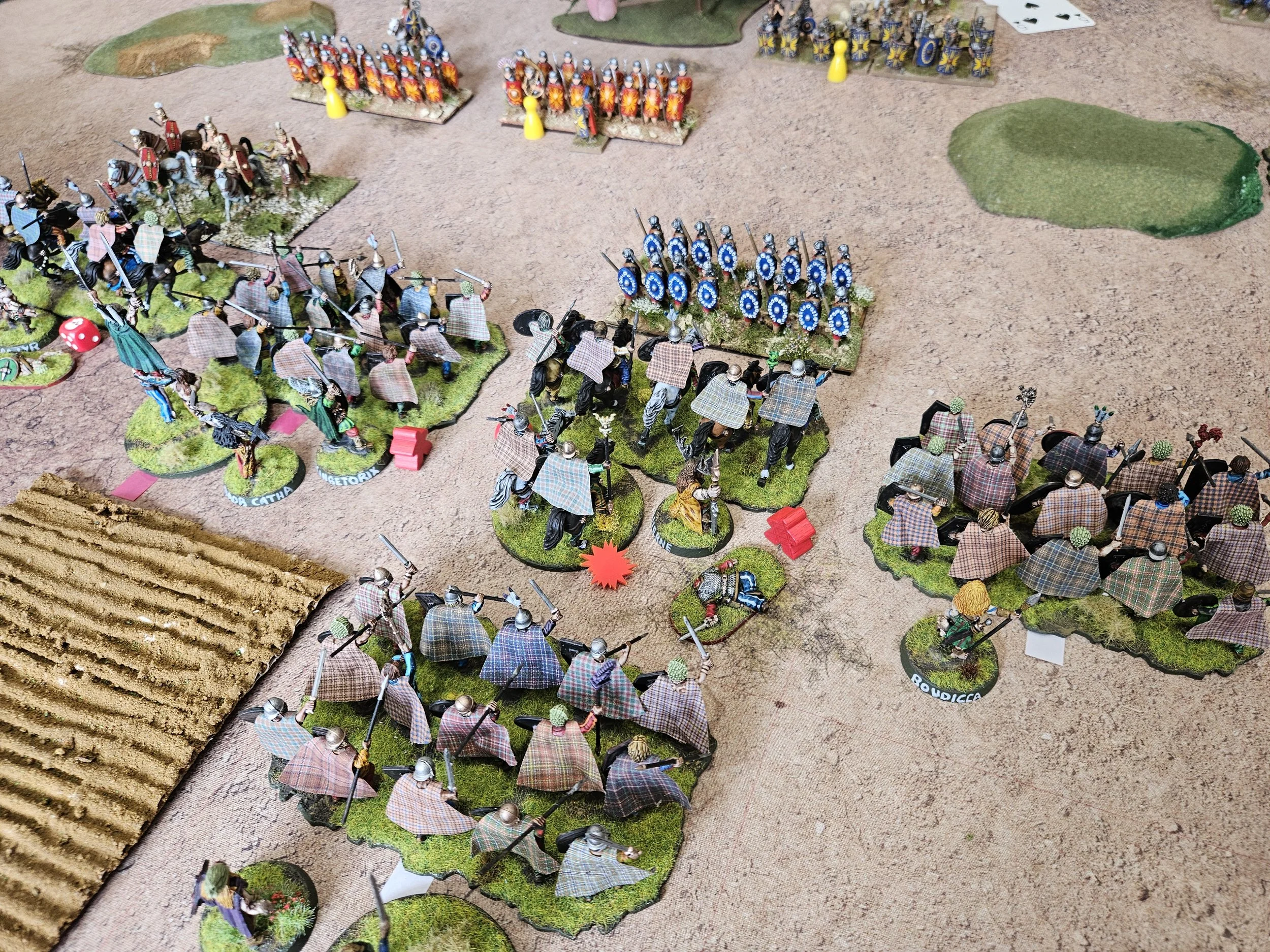
Below are pictures of either end of my line. The right hand picture is a repeat of one shown above, but it shows how the Romans are on the flank of one warband and at the rear of a cavalry unit to give the context for the previous paragraph.

Luckily - and it was pure luck - such a miracle was forthcoming.

The disordered Gallic cavalry unit on the flank of the disordered Roman cataphracts charged home and miracle des miracles scored two hits.

The cataphracts failed to save one of them, so died, taking their general with them as, under the new amendment, he couldn’t get to another friendly unit so went down with his men. That was four coins and the game to me!

Not my finest hour, as I was definitely in a losing position at that point, and it was only luck that stopped Si winning. Mind you, if you want to see a tryly outrageous piece of good fortune on my part, make sure you read the next TTS battle report that appears on this site: that one was even better!

TTS AAR: Venice Abroad versus Gauls

With the 15mm To The Smallest tournament done and dusted, it was time to start thinking about the 28mm Britcon To The Strongest tournament, only two weeks away.

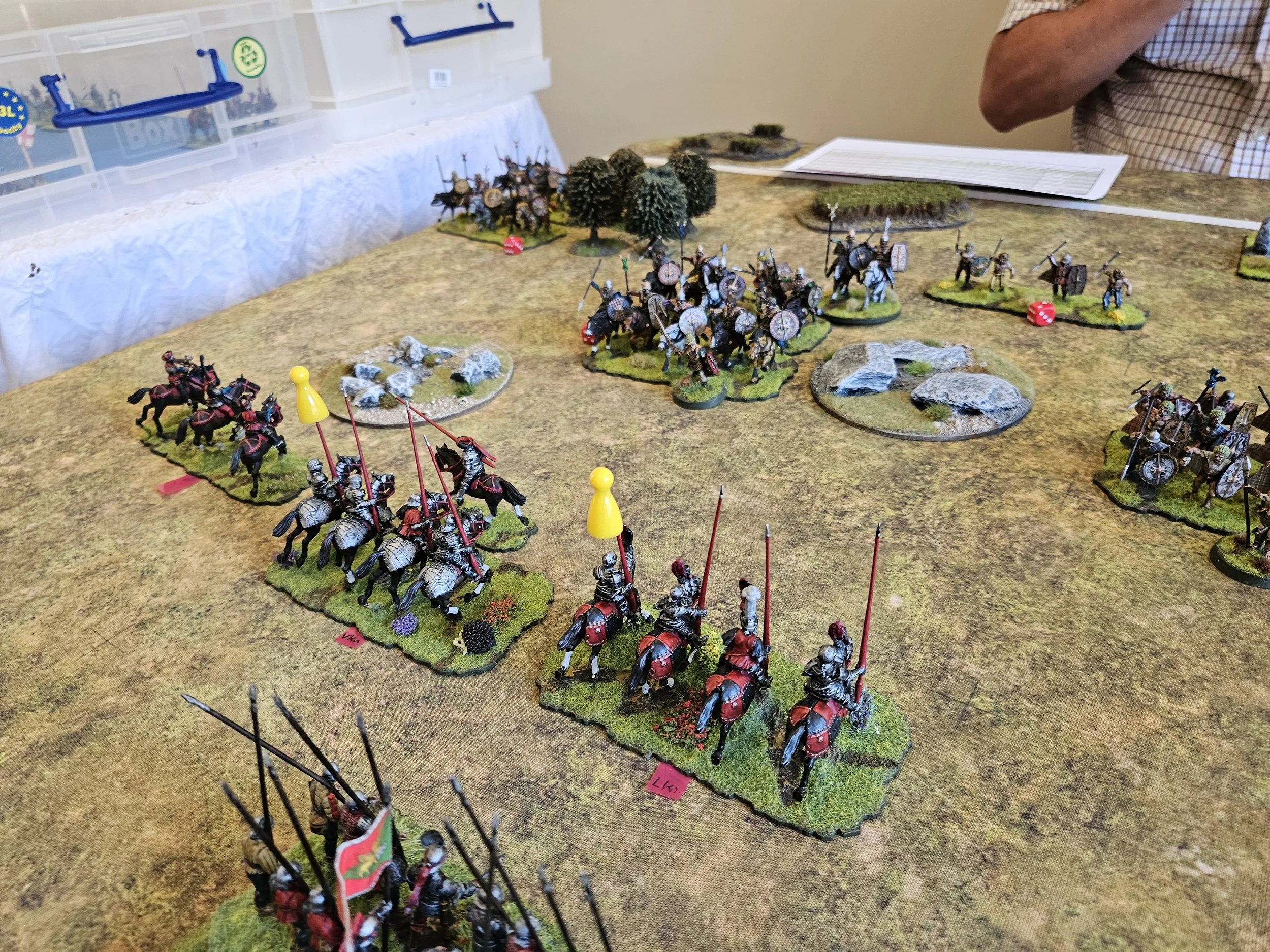
My first practice game was to be with my Venetians against John playing the Gauls. I won the scouting, and was pleased to see the Gauls set up in a tight formation based around their two camps. This let me place my knights on the wings and, as the game began, send the ones on the right flying forward to outflank.

Unfortunately my rapid advance on the right had been so rapid that the two Gallic warbands at that end of the enemy line had time to turn to face my knights, particularly as I hadn’t yet had time to get any troops forward in support.

At the same time as that, my Knights on the left charged forward to engage half the Gallic cavalry, and the two infantry lines moved to within crossbow range, a lucky shot taking out one of the Gallic infantry generals!
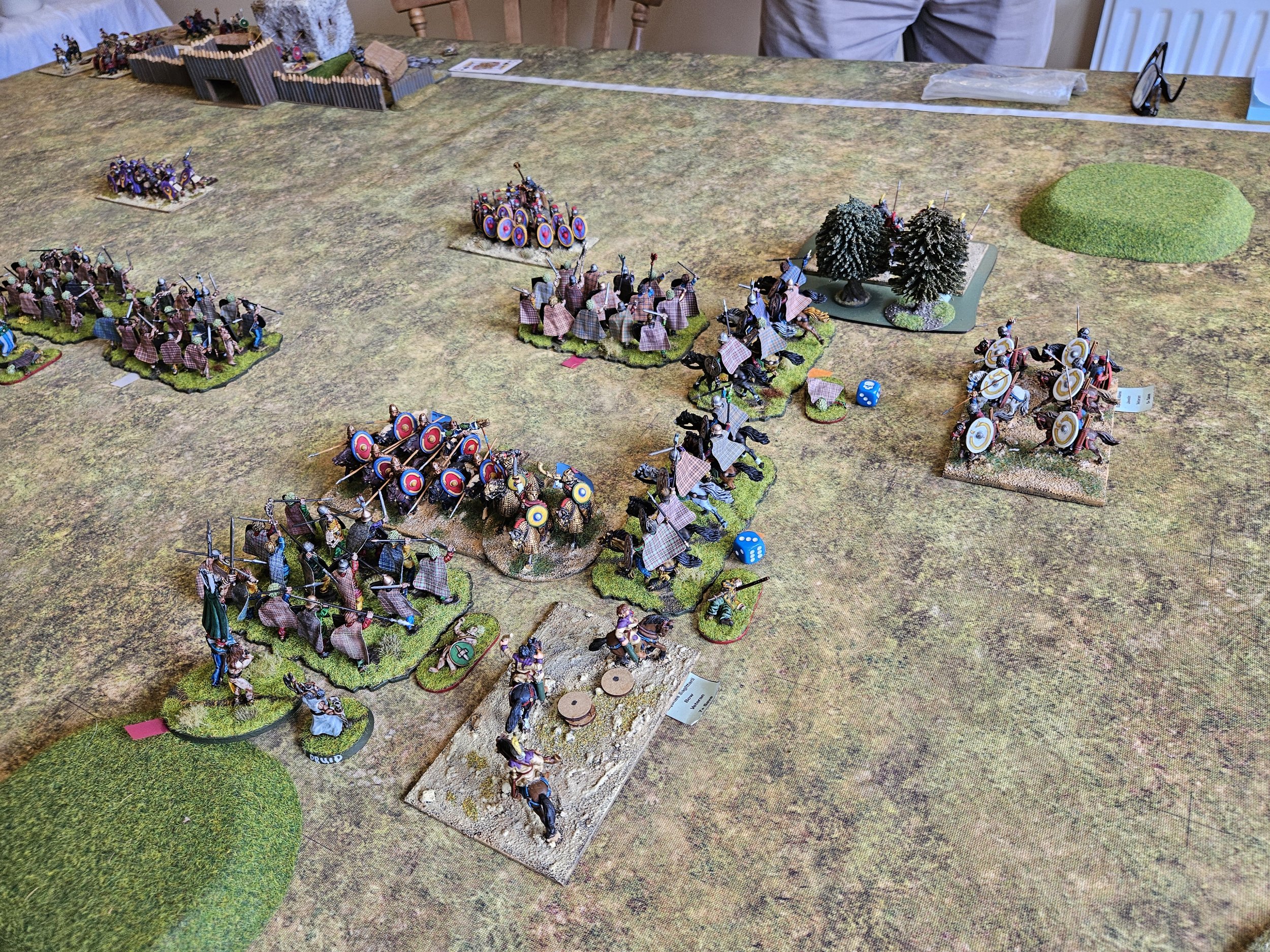
On the left, my knights initially made very heavy weather of the Gallic horse: the first unit to go in, the Veteran Knights, bounced off their Celtic opponents and had to retire to reform. Luckily I had the Later Knights handy to take over, and the other half of the Gallic horse were taking their time about joining in the fun.

The Later Knights were having a good day and dashed both units of Gallic cavalry in front of them off the table, leaving only some somewhat nervous Celtic lights in between them and the Gallic camp.

Meanwhile, the disordered Veteran Knights turned to take the rest of the Gallic cavalry in the flank.

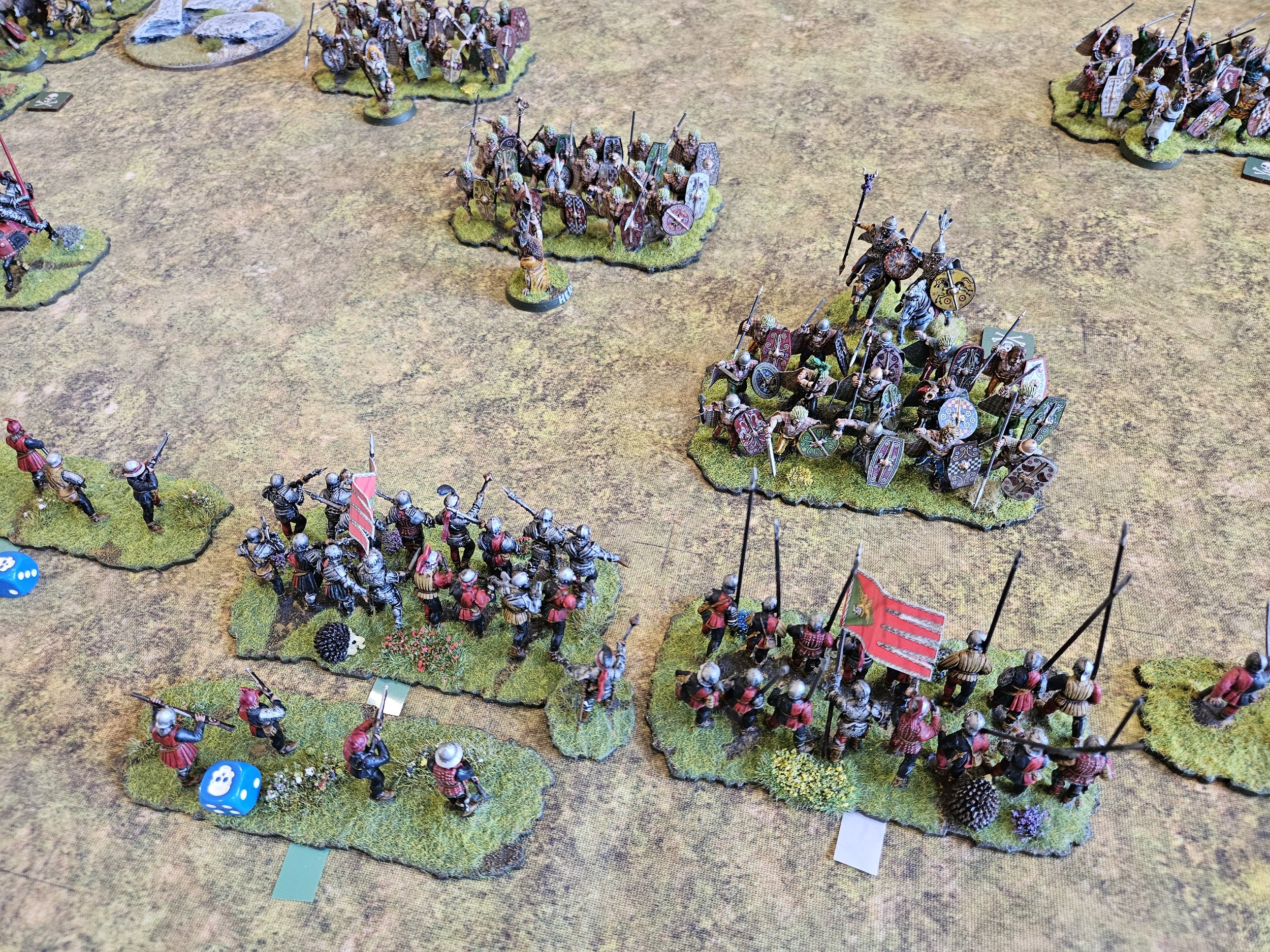
As the cavalry were fighting it out on the wings, the enemy centre came forward against my infantry. A hail of crossbow bolts slowed them down and the initial contact went my way, with the Gallic infantry withdrawing slightly to regroup. I tried my luck by sending the Alabardiers forward to follow up this initial success, but the brave billmen were cut down without effect and soon the two infantry lines paused and just stared at each other across the battlefield.

On the right flank, meanwhile, my Later Knights were still having extreme difficulty in breaking the Gallic warband in front of them. They got to the double disorder stage, but just couldn’t break them, not helped by the cards either!

Back to the left where, with some superb manoeuvring, John had managed to force my Veteran Knights to retreat again and (after initially ignoring them and hoping they would just go away!) to not only thwart my Later Knights in their attempt to take the Gallic camp, but also then get into a position to assault the left hand end of my infantry line.

At the same time, his warbands there came forward again and I was in real trouble!

Meanwhile, the position in the centre of the battlefield was very confused. I lost my Knights on the right, but then my infantry conducted a heroic defence against the main Gallic assault.

Back to the left, where my Veteran Knights took advantage of the fact that the Gallic cavalry that had been all over them had left to harrass my Later Knights theatening the enemy camp, and redeemed themselves by charging the Gallic warbands assaulting that end of the infantry line. At the same time, my Spearmen on this hill anchoring said line managed to hold off the other Gallic horse, and suddenly it was all to play for again.

Casualties had been high on both sides, and John and I each had only two coins left, which meant that the next loss of an ordered unit or general would decide the game.

It was John’s turn and a unit of pesky lights turned and assaulted the rear of the Later Knights who were still trying to finish off the warband on the right. The attack went in…a hit…but that bounced off the Later Knights’ armour…but their accompanying general wasn’t so lucky: he drew an Ace for his save so had been hit. This was bad: a 50% chance that he would die, losing his life and me the game!

The card was turned: a Four!

Phew! A light wound and I was still in the fight.

The Celts tried to go in again, but drew an Ace themselves and the iniative passed back to the Venetians!
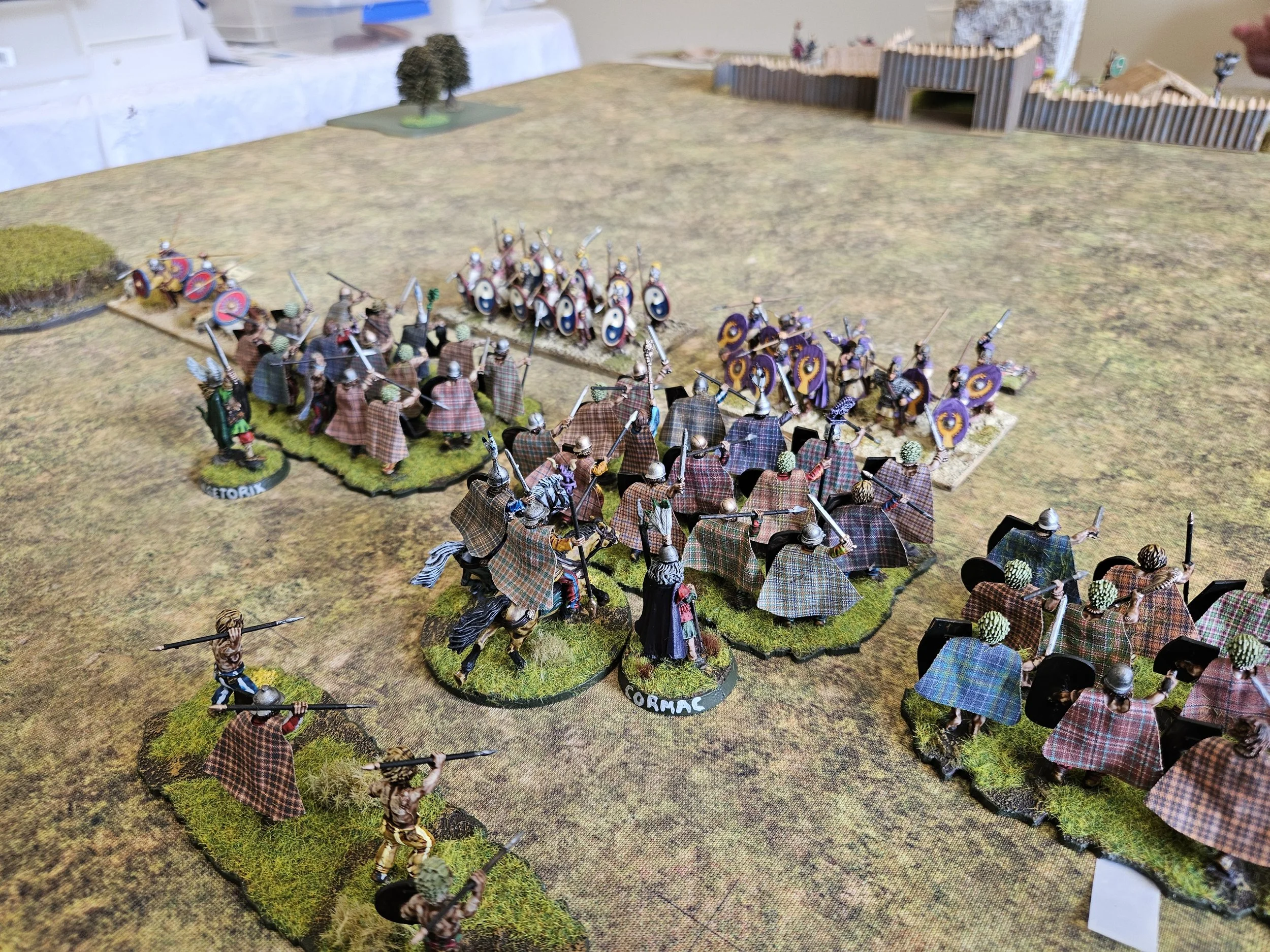
All I needed was one kill…which was delivered by the Later Knights on the other side of the table, who may have been prevented from taking the enemy camp, but then turned and happily rode down their attackers. Victory for Venice!
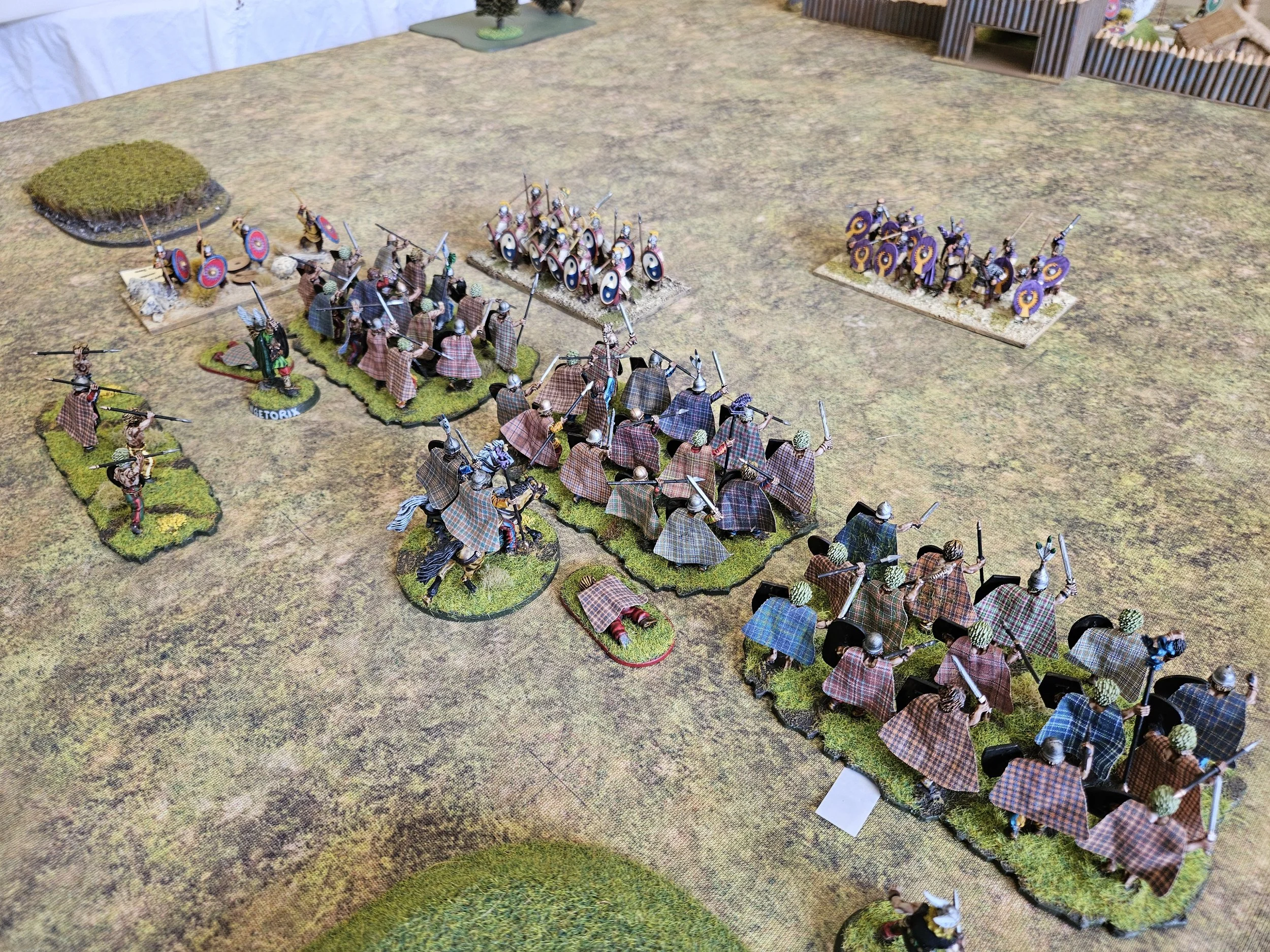
Well that had been a cracking game of To The Strongest, with mayhem, action and fortune swaying wildly over the whole battlefield. It had been the narrowest of wins for the Venetians: definitely a little too close for comfort!

To The Smallest: Game Four: Khurasanians vs Galatians

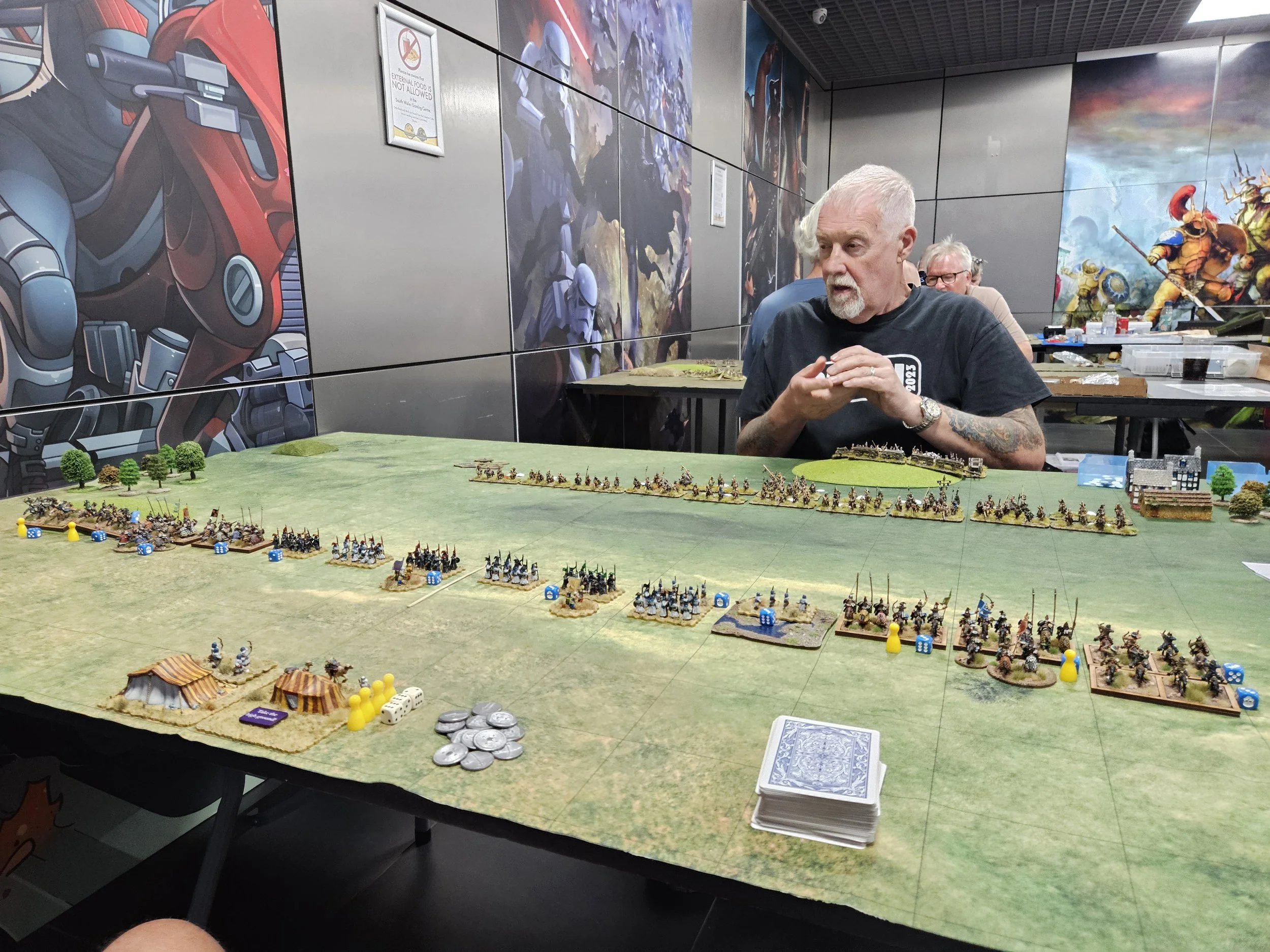
My fourth and final game at this year's To The Smallest 15mm competition in Cardiff was due to be against Simon Miller, the author of the rules, whose Galatians had, presumably, also won their first three games.

Unfortunately Simon was on a time limit and had to leave the competition early to catch a train, but luckily fellow-player Mike was around to substitute in and lead the fanatical Celts into battle. As Mike later said on his blog: But, the laughter stopped for me as Sid called me forward in round four to face the hot favourite, Rob. My opponent was high in the rankings and Mr Miller remembered he had a train to catch. Against an opponent who actually read the scenarios and practised against numerous opponents; it wasn’t going to end well…

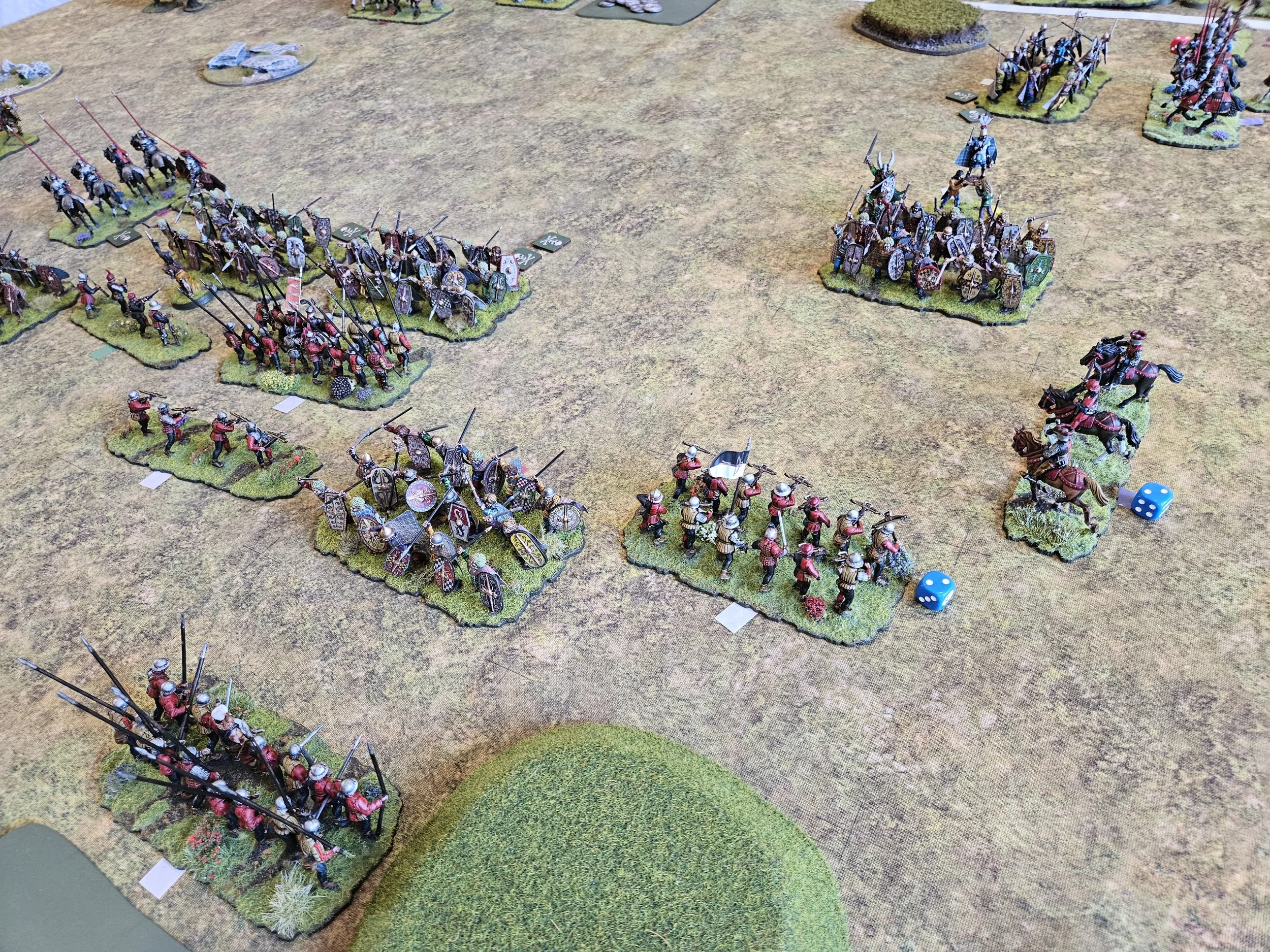
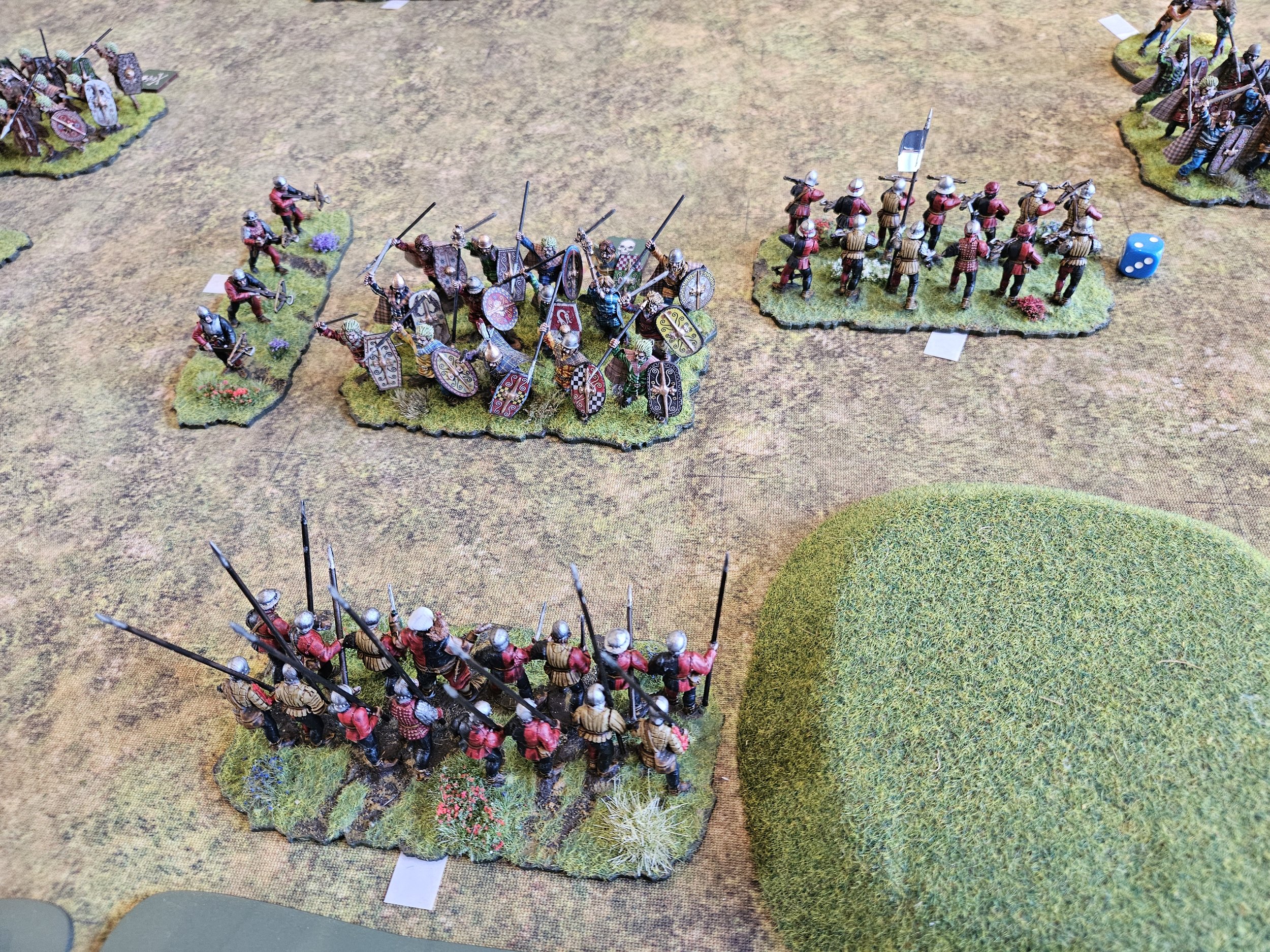
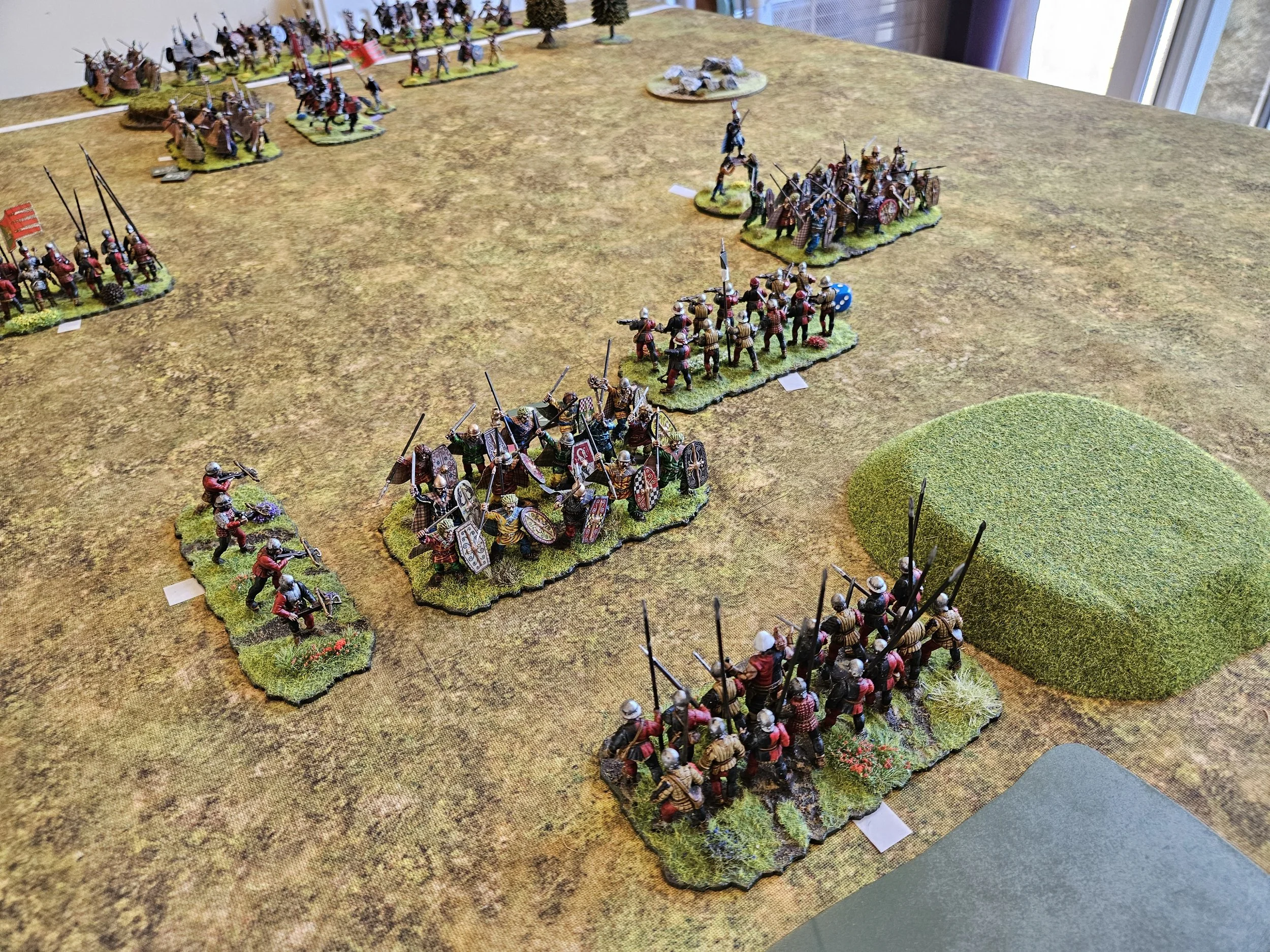
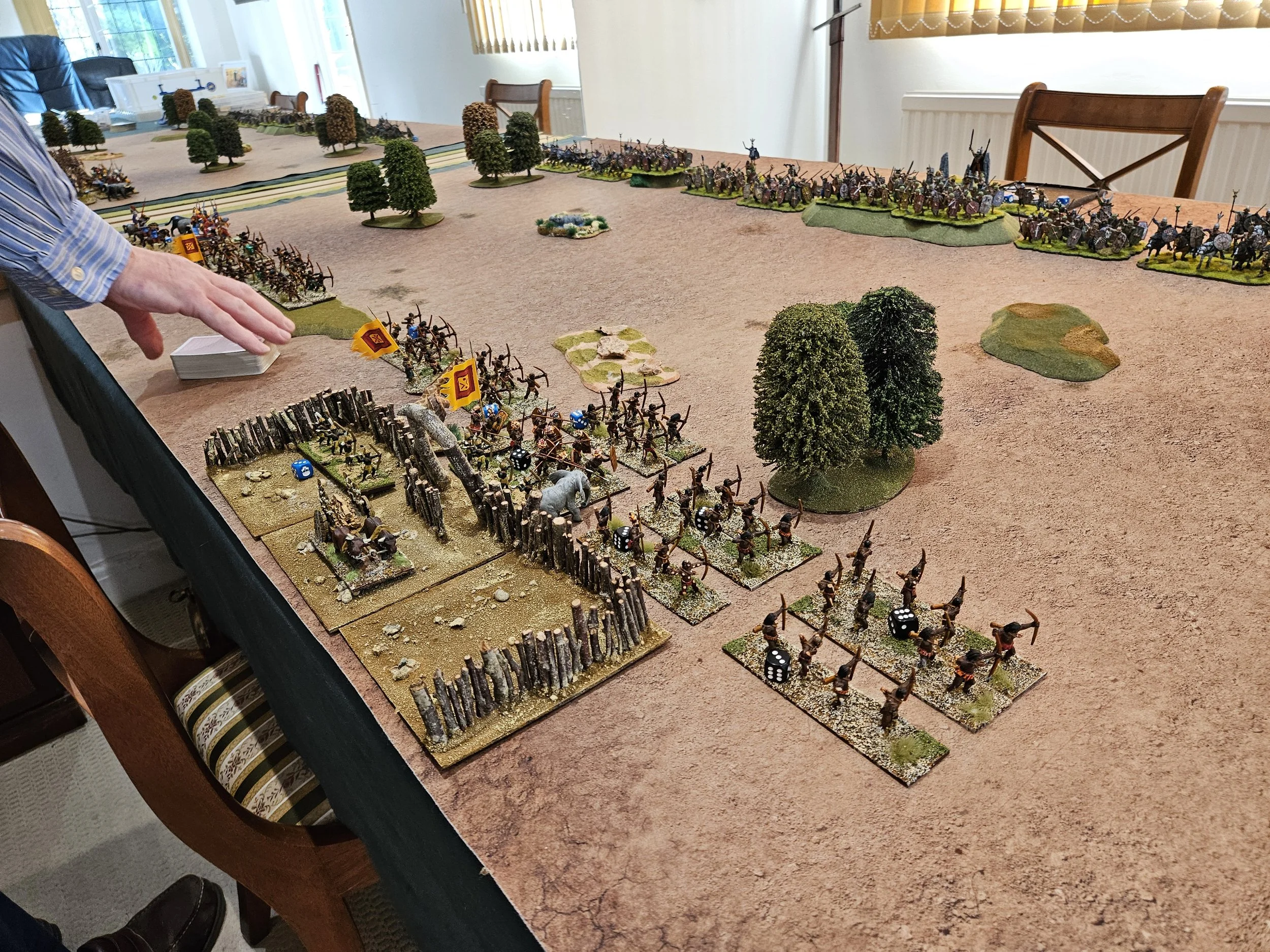
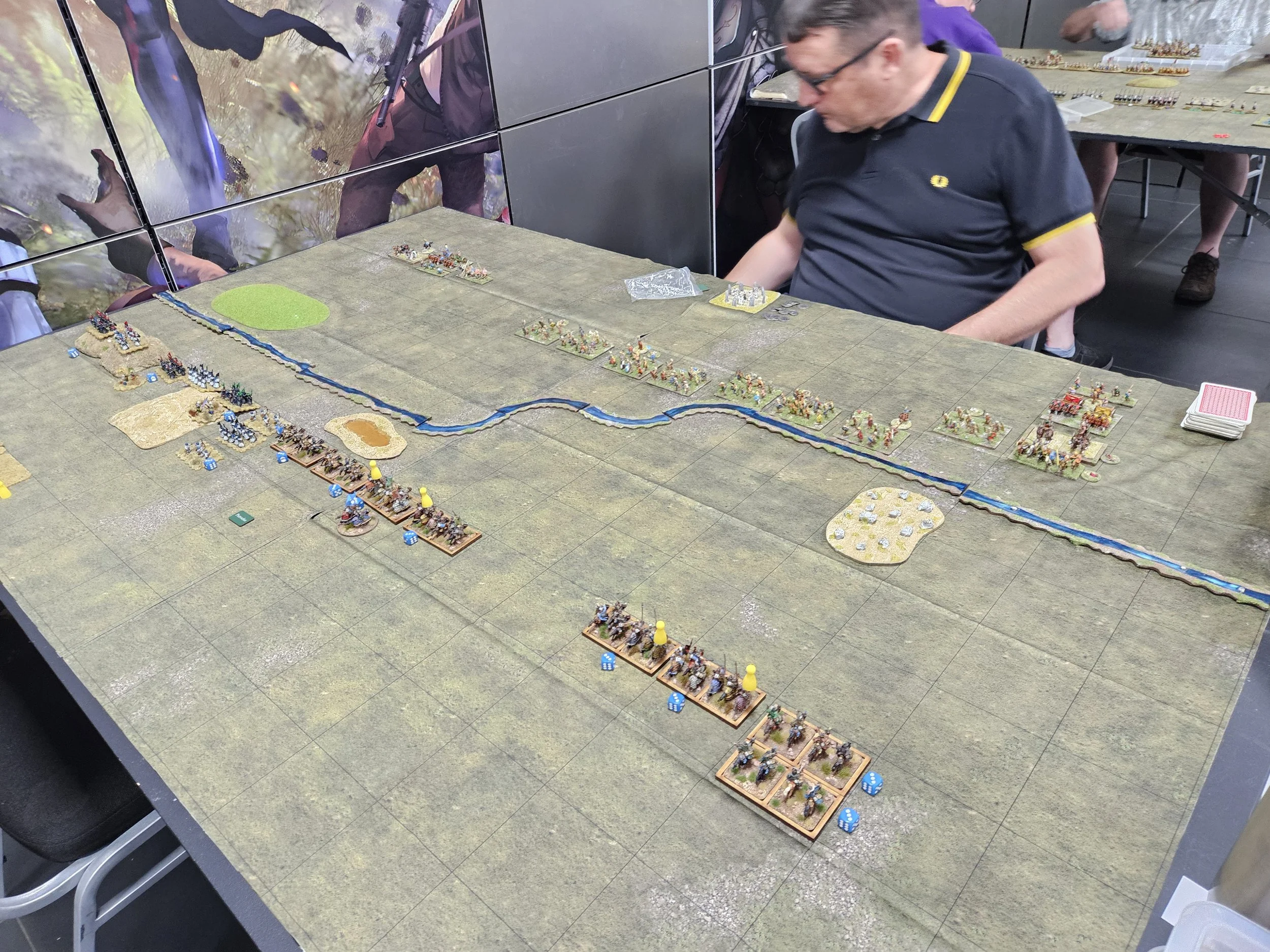
I was a bit concerned about facing Galatians: having played them myself at Ewelme this year, I knew that if they could get their warbands stuck into my troops, infantry or cavalry, it would be all over very quickly. I was therefore very pleased to see that we were going to play on the Issus battlefield i.e. the one with a (fordable) river running right across the middle of it. My plan wrote itself: shoot the Galatians, with their unwieldy deep warbands, full of arrows as they were trying to cross the river, then hit the disordered survivors fast and hard!

The terrain could not have been better for me: open ground with a barrier bisecting the table

The game began with the Galatians advancing to the river line. A group move attempt on my right was stymied by an early Ace and gave the enemy a chance to cross the river with three of their warbands.

This was not in the plan, but still meant that I could focus my attacks on the part of his force that was across the river (i.e. giving me a local advantage in numbers) and still bottle up the troops on Mike’s far left.

My ghilman cavalry duly charged forward and before long I had destroyed two of the Galatian warbands, which put me 40% towards an overall victory.

Meanwhile, on the far right, Galatian cavalry and a chariot had also finally managed to get across the stream. These were also engaged, this time by a combination of my lancers and some Turkoman horse archers, but although the enemy advance was checked, I just couldn’t seem to knock any of his units off the table.

Ed’s note: there is a difference between the two photos, below. In the right hand photo, the Galatian chariots have been disordered by bowfire from the horse-archers.

Meanwhile on the left, my infantry had been girding their loins for an expected Galatian all-out assault. This didn’t happen, so the infantry began to slide sideways towards the centre of the table: eyes open for a sudden Galatian surge forward.

Some of the more central units essayed across the river but soon changed their minds and retreated in the face of enemy aggression., although they did cause a few casualties, including the Galatian cavalry general.

Back to the centre and right hand side of the field. I finally dispatched the enemy horsemen in melee with the lancers, which left me very close to taking all Mike’s coins.

These I finally did acquire when the loan warband in the centre failed to pull back and was caught between two units of ghilman horse and annihilated along with their general.

So a massive 171-7 victory over the Galatians. To be fair to Mike, he was playing an army he’d literally just been given and thrown well and truly into the deep end with an anvil chained to his feet!

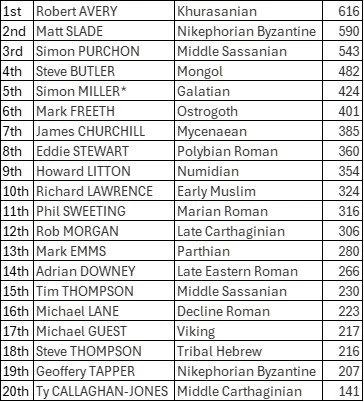
Once all the games had finished, the points were totted up. I was not the only player on four wins out of four - I think there were three of us - so it was a bit of a nerve-wracking wait. In the end, however, I had done enough to win the tournament overall, coming out just ahead of Matt and Si:


It had been a cracking day’s gaming, and not just because I had won. A terrific, well-organised event fought in very good humour by all, in a great venue and with some great people. If you play TTS, I highly recommend you try a competition or two: great fun!

Celtic Chariots from Victrix

With enough figures painted and based to make a 28mm Galatian or Gallic army, it was time for the final conversion work to begin: adding an Ancient British option. This entailed adding chariots and light cavalry to my existing collection. First up were the chariots.

I went for the Victrix plastic chariots firstly as the style would match what I already had, and secondly for cost reasons: although three 3D printed chariots will cost you about the same as the Victrix three-chariot pack (around £30), metal chariots can cost you £18 each!

The Victrix pack also comes with a host of options: yes, you can only build three chariots, but they provide enough parts for 20 individual figures (well, more accurately 6 x Drivers; 8 x Armoured fighting crew; 3 x Boudiceas and 3 x Druids) and all sorts of extra bits you can customise with (severed heads, ribbons etc). You can also buy a set of transfers that give you colourful side panels on the chariots, patterns for the crew shields, horse-chest-straps, main axle and wheel rims. All in all an excellent offering from Victrix.

I was, however, warned (by friends - and Victrix themselves in the instructions) that the chariots were a bit tricky to put together…but let me dispel that myth immediately. Yes, the chariots were more difficult to do than, say, standard Victrix infantry, but they weren’t that hard and I reckon the average modeller, if they follow the instructions carefully, won’t have a problem. Put it this way: if I can make them, then anyone can!

Construction Hints from Me

  1. Follow the instructions exactly except where I say don’t, below.

  2. Before gluing, re-drill all the holes with a pin drill. Not strictly necessary, but makes live easier.

  3. I painted everything before assembly i.e. I painted the following separately: the chariot body with yoke attached, each wheel, the driver, the warrior, the driver’s hands/reins and the mini front reins. Don’t attach the wheels before painting, as it makes it hard to paint the chariot body properly, and hard to use the transfers on the side-of-chariot-panels. Finally, and this is perhaps crucial: paint the mini front reins on the sprue…as you will need to be able to identify them individually (they are numbered on the sprue) in order to fit them properly.

  4. Once everything was painted, and the chariot panel transfers applied, I then stuck the wheels on and stuck the now-wheeled chariot onto a base with the horses. Note that the horses go long horse one side, short horse the other. You now have horses and chariot painted and mounted on a base and are ready for the more difficult bit: the driver and the reins.

  5. For steps 5-7 in the instructions, I found it (much) easier to do it this way. Once you have painted the driver and the driver’s hands/reins, stick the driver’s hands/reins to the driver (before you glue the driver in place) and let dry. Then put a blob of glue into each of the holes for the reins on the yoke, and onto the feet of the driver. The model is so accurately designed that you can now slot all four reins into the holes on the yokes and then put the driver into the chariot wherever he fits best. Much to my surprise, as it looks hard, I had no difficulty with this bit at all on any of the three I built.

  6. For step 11, you need to make sure that the mini front reins go on the correct horse in the correct place. The horses are different lengths (one is at a stretch, one is gathered) and therefore the distance between the yoke and the bit is different lengths, and each mini front rein is made to fit each side of each horse’s head individually. Just look at the diagram given in step 11 and build the chariot to match.

Basing the Chariots

I had to have a bit of a think about how to base the chariots. My 15mm chariots are on bases with a 30mm frontage and 60mm depth i.e. the horses are running straight at the enemy. That works in 15mm and for the models I have, but I really need 3-4 chariots per unit to match the 15cm grid I use for To The Strongest. Even on a 10cm competition grid, I’d need 2-3 chariots per unit…all of which adds up to needing an awful lot of chariots.

In 28mm however, I use a standard TTS base which is about 15cm frontage but, and it’s a crucial but, isn’t deep enough to take a Victrix chariot running straight at the enemy. I could put the chariots at a very slight angle, but that didn’t look right. I therefore took the decision to base my chariots running across the base i.e. with their sides towards the enemy. I justify this by saying that (a) it looks much better and (b) it represents the fast-moving chariots sweeping backwards and forwards across the battlefield as described by Caesar himself.

I also made the decision that the warrior would be in the chariot if he was carrying a javelin and dismounted if carrying a sword…which follows my belief that:

  1. It would be very hard to throw a javelin past the driver if you’re driving straight at the enemy, so you’re more likely to throw your javelin forwards at an angle as you are driven by the enemy. It’s the same principle as battleships fighting better in line abreast!

  2. Using a sword from a chariot, whilst carrying a large shield, would also be difficult. You need to swipe to the sides anyway as you have the driver in the way in front, you can’t grip your mount like a cavalryman so balance is a problem, and you’ve got the wheels to watch out for as well. Far easier to be brought into melee in your chariot, leap down and hack into the individual you’ve fastened your attention on foot, and then either charge the next chap or remount. Great if you’re fighting other Celts, not so good if you’re facing serried ranks of legionaries…which is presumably (along with the rise of the size/strength of horses) why use of the chariot died out: the usual Roman bad practice of refusing to fight man-to-man like a proper warrior!

The chariots do look good based like that but, just as a quick word of caution, in the first game of TTS I played with them, my opponent did say that at one stage he was confused as to which way they were pointing…but it was only a brief confusion early in the game so not enough to make me regret what I’d done.

Painting the Chariots

Everything was painted using Contrast paints, with shield transfers and chariot panels from Little Big Man Studios (available via Victrix) and all with cloaks from Weave of War.

I used Aggaros Dunes for the wickerwork on the chariots, then Gore Grunta Fur for the wood on the chariot body and yoke. The wheels were done using Wyldwood. The reins and other horse furniture were painted in Cygor Brown then highlighted using acyrlic Mournfang Brown. Finally I used an acrylic Bronze to highlight where bronze would have been used.

A Quick Summary

I am loving the three Victrix chariots I now have in my Ancient British army. They are mildly challenging to build, but that challenge is all focused around the reins, so if you follow my suggestions, it should be very much lessened.

There are so many options available in how you build, base and paint your chariots. I’ve chosen a lengthways mounting with dismounted swordsmen, but how you field them is really up to you.

In all, highly recommended.

TTS AAR: Gauls versus Early Imperial Romans

A second battle using my newly finished Gauls: this time against a formidable Early Imperial Roman army consisting of five units of veteran legionaries (red shields) supported by a couple of units of standard legionaries, auxilia and cavalry. History would suggest that this was going to be a big ask of my troops!

Despite winning the scouting, Peter managed to play his usual trick of weighting his men onto one flank (my left) in an attempt to fight only a portion of my army with all of his. Not a problem on this occasion, however, as I used my initiative to start moving warbands left whilst holding back my main line.

After an initial slow start, the Romans got moving pretty rapidly, and it looked as if it was going to be a race between his veterans attacking my left flank and the main body of my troops trying to punch through his centre.

Battle was joined right the way across the left hand side of my line, with my Gauls taking the worst of it in the initial clash but, showing a fine bit of resilience, surviving to start giving as good as they were getting.

A big turning point was Peter replaying a natural “10” only to draw an Ace whilst attempting to turn a legionary unit onto the flank of my cavalry…

…and soon the centre-left was looking decidedly bare of troops with the action in that part of the field now fully focused on the bottom left hand corner of the table. It’s worth noting that at this point Peter had lost two Roman generals and was feeling the pain of that “+1 for out of command” penalty.

The schwerepunkt now switched to the area just in front of the Roman castrum, where units from my central command, backed up by those I’d switched from the right flank, were now threatening hard. Once again, it was a unit of slingers adding their weight of fire at the critical moment that made the difference (pictures top and bottom right in the gallery, below) and I was also being helped by the cards allowing my somewhat unwieldy warbands to manouevre just how I wanted.

Kudos also now to the troops in the bottom left hand corner of the field, where the Gallic cavalry managed to disorder their legionary opponents, with the warband next to them going one better to defeat the Romans in the woods in front of them!

The battle was now reaching its climax, with both sides nearing exhaustion. The Gauls survivied a final push from the Romans…

…and then, with a mighty roar, broke into the enemy camp to take three coins and the win!

(Looks easy, but start with a base 2+, add two for moving diagonally makes 4+, add two for the rough ground of the camp makes 6+, add two for crossing fortifications makes 8+, and I drew an ‘8’. Oh, and you have to ignore the lights defending the parapet right in front of you!)

To show you how close it was, I had lost 11 coins by this stage, so if one more warband had broken, victory would have gone to the Romans.

As it was, a very satisfactory result, with the Gauls proving both manoeuvrable and resilient right the way through the army from the warriors to the cavalry to the lights. Another cracking game!

TTS AAR: Gauls versus Vikings

Time to get the Celts back on the tabletop. Up until now they’ve manifested as Galatians, but I’d now had a chance to paint enough missile-armed light infantry to field them as Gauls…so today’s encounter would be Gauls against Vikings using To The Strongest.

The Gauls outscouted, and I managed to get all my cavalry onto the Vikings’ open wing on the right. The Scandies had, however, put their six units of veteran Huscarls (armed with big choppers) on their right, so I faced them with my two veteran warbands and hoped they could hold out until the cavalry had done its job.

Note that the Viking longship represents a three-square fortified camp: something that would prove highly significant in the battle that followed.

Things began with me advancing forward strongly on the right, with my cavalry aiming to outflank as my infantry pinned the enemy in place. As planned, I kept my left wing back and was lucky in that my opponent, Peter, drew poor cards and couldn’t, initially get his lethal Huscarls moving.

As battle was joined in the centre, my cavalry swept in from the flank…but to little or no effect: Peter had manoeuvred into an echelon formation anchored on his fortified camp which protected the flanks of nearly all his infantry, and those footsoldiers that I could get at stubbornly resisted my attempts to run them down.

Nothing I did with the cavalry seemed to work, and my “brilliant manouevre” looked like being nothing more than an inconvenience for the Vikings, even when the cards did decide to help me out a little. It was only the intervention of some slingers that actually managed to break one of his infantry units, even with my multiple flank attacks.

Meanwhile the infantry melee in the centre had drawn just about everyone else into one big scrap, and my poor Gauls were getting the worst of it.

Fortunately, I now managed to bring the warbands on the right into play: crashing them into the centre anyhow just to take the pressure off the rest of my troops.

Every surviving unit on both sides was now engaged either in the mass melee in the centre or on the right where my cavalry were still trying to win the game for the Gauls. Both sides were hemorrhaging coins, and the result was totally in the balance.

Ultimately, however, it was the Gauls who broke first: one of my veteran warbands (who’d already lost their general) finally giving up the ghost when assailed from front and flank. A victory for the Vikings!

It had been a very close and exciting game. I still can’t quite work out why my cavalry didn’t sweep all before them but, looking through the pictures above, it was probably down to a combination of brilliant manouevring on Peter’s part backed up by some very lucky “save” cards. If the cavalry had been able to break even just one of the Viking units they had spent most of the game attacking from the flank, then I think it would have been the Gauls celebrating rather than the Scandies!

An excellent game of To The Strongest!

Ewelme '26 Game Four: Galatians versus (a different lot of) Palmyrans

With one loss and two wins already under my belt, it was on to the final game at this year’s Ewelme tournament. I’d be fighting Palmyrans again, but this time under Dillon’s able generalship.

As I’d beaten them in the last game by putting all my cavalry on one flank and refusing the other, I decided that that’s what I’d try again. I mean, it had worked last time, so what could possibly go wrong?

As the game began, my horsemen shot forward and immediately engaged the enemy. This worked well, as I routed one unit of Palmyran cataphracts and my cavalry penetrated deep up the right flank, preparing to turn and roll up the enemy line.

Things were not, however, going so well on the left and in the centre. In the last game, the Palmyrans had initially held back a bit, giving me a chance to develop my outflanking manoeuvre on the right. Not so in this game: the enemy shot foward and my warbands were soon under some pressure, particularly on the far left.

No matter: the plan was still viable, and I could now turn my cavalry and drive into the Palmyran left flank.

Well that’s what should have happened, but Lady Luck intervened and decided that my troops deserved a hefty kick in the fork!

Now I know that some people think that I blame the cards for every one of my defeats, but I would maintain that my luck in TTS competitions is, at best, erratic. It’s not always bad (those of you who have been paying attention will remember that in the last game I drew a 4/5/6/7 for consecutive activations giving me three flank attacks against an unwitting enemy unit) but on this occasion it was not just bad…it was the pits, man!

Ready to turn my cavalry and send them into the Palmyran flank, I drew seven cards in a row with none higher than a 2. Let me say that again: seven cards in a row, none higher than a two.

Don’t believe me? Here’s the evidence:

A quick reminder of the stats. That’s a probability of:

P = 16/80 ​× 15/79 ​×14/78 ​× 13/77 x 12/76 ​× 11/75 ​× 10/74​

Which works out to approximately: 0.00000536

So the odds are about:

  • 0.000536%

  • or roughly 1 in 186,000

This pause in the action gave the Palmyrans time to recover from my right flank assault, consolidate, then capitalise on their success against my left and centre, and before long one of my cmaps was taken and I suffered a 69-165 defeat!

So kudos to Dillon for riding out my initial assualt and focusing on what was important: knocking my three-coin warbands and/or camps off the table. A well-taken victory for him.

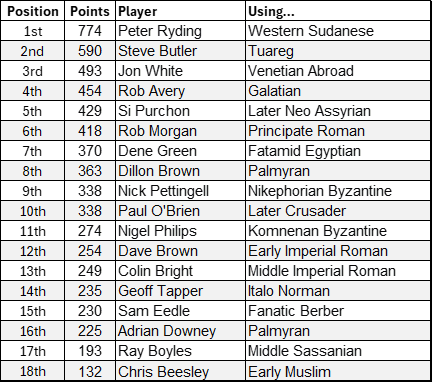
Disappointing, but my two big victories in games two and three still meant that I finished in fourth place overall in the tournament. Here are the full results:


One consolation, though: my army did win the prize for the Best Presented Army, even if I did have to vote for them myself!

Thanks to Peter for organising (and congrats on another big win) and to all my opponents throughout the event. I highly recommend the TTS tournament circuit to everyone: lots of fun games in a competitive but very friendly environment. Here are the rest of the year’s fixtures:

  • To The Smallest (15mm): July, Cardiff

  • British Open at Britcon: August, Leicester

  • TTS at Colours: September, Newbury

  • TTS Open at Warfare: November, Farnborough

  • Two the Strongest (Doubles): December, London (TBC)

Ewelme '26 Game Three: Galatians versus Palmyrans

My third game at this year’s Ewelme To The Strongest tournament was against Adrian’s Palmyrans: legionaries and cataphracts, gulp!

Learning from my previous games and a discussion on tactics from Mr Butler, I massed my cavalry on one wing, intending to blast through any enemy there whilst my warbands held up any advance against my centre and left.

As I’d lost the scouting, the game began with the Palmyrans advancing aggressively. As planned, I sent my horsemen forward on the right flank, and they soon secured an excellent position from which to roll up the enemy’s main battleline.

Adrian had, meanwhile, been a bit unlucky with his activations on the other side of the table: his nasty superheavy cavalry and mincing-machine legionaries not yet in a position to cause me any trouble on the left.

Even better, my warbands in the centre had taken full advantage of the need for the Palmyrans to deal with my cavalry coming in from the right, with one (led by their general) bursting through the main enemy line.

Adrian diverted some of his heavy infantry to deal with this warband, but an amazing run of cards meant that the usually cumbersome deep unit pivoted neatly in place and charged the flank of some Palmyran heavies not once, not twice but three times in the same turn!

More decent cards also saw my cavalry properly curling in from the right to achieve total domination of that sector of the tabletop.

This was too much for the Palmyrans to take: the loss of the heavy infantry being the final nail in their coffin with my Galatians winning a massive 186-21 victory!

So a cracking win due, in part, to the cards…but I’ll take that as I’ve so often been on the other end of Lady Luck’s tender ministrations!

More Celts and the first Chinese

I needed a few bits and pieces to finish off my Celts.

First up were the casualty figures: unfortunately important the way I play! These are 3D prints from 3D Breed’s March or Die range printed by Bunker Miniatures.

These are great figures. I especially like the chaps with the spear sticking up out of them, and the mailed warrior with a sword but without his head! I even managed to use up the last few cloaks I had lying around and, yes, the figure underneath is fully painted.

Next up are some light infantry with slings: a troop type I will need when I field the Celts as Ancient British. I very much like the way the 3D Breed designs have translated into 28mm: very chunky figures, almost cubist in nature. They paint up very easily and are nicely posed. One slight issue: I always thought of the Celtic slingers as Iouantoues (youths) and these are definitely not that…I mean, check out the balding figure in the red and white stripes!

These size reasonably well with the Victrix figures that make up most of my army: only very slightly shorter even if they are quite a bit chunkier.

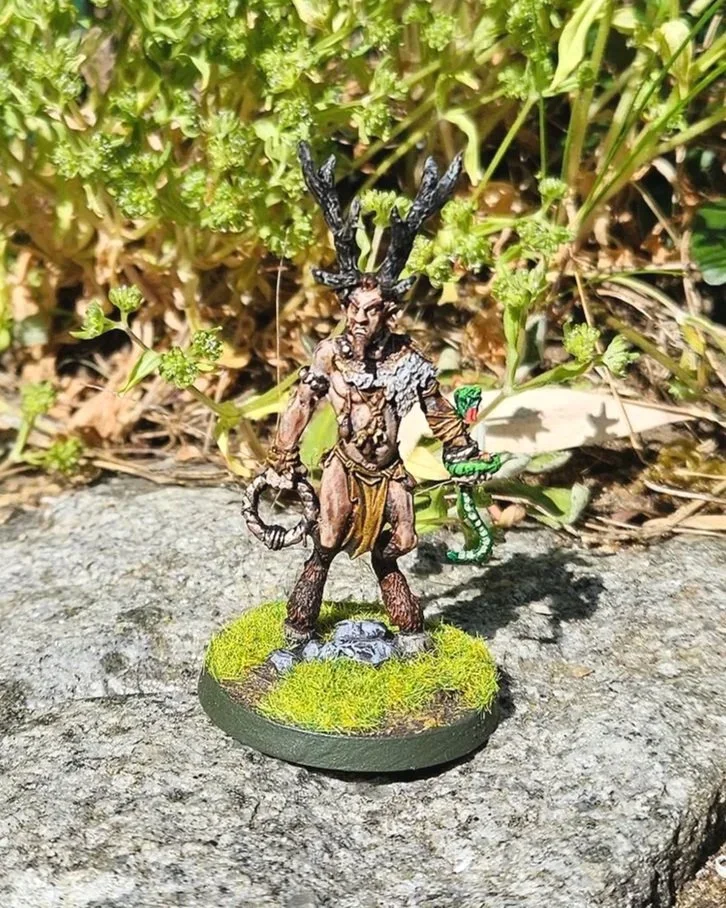
Finally we have one of the 3D Breed’s specials: one of the two druids that they offer. The other is more of a generic holy man with knife figure, so I’ve saved him for another use. The chap below is another antler-wearing ‘Herne the Hatstand’ so fits well with the general theme of my Celts. Lovely figure: paints up easily.

All the above are painted with Contrast paints on a Grey Seer undercoat, with any highlights etc done using standard acrylics. The cloaks are highly recommended and are from Weave of War.


Finally in today’s bulletin, we have the first bits of a 15mm Han Chinese army: three units of Billmen armed with the dagger-axe, and four units of Spearmen armed with, er, spears. These are Lurkio figures from the range now being made available again from Gripping Beast, with the command and standard anachronistically coming from Ten Kingdom’s Song Chinese range via Micks Bits on Etsy.

It was a bit odd painting relatively old school 15mm metal figures again after spending so much time on plastic and 3D printed 28mm figures, but I think they have turned out okay.

I will say that this project very much demonstrated the difference between metal casts and 3D prints: the 3D prints have much more animation in them, looking better overall even if the extra detail sometimes makes them more difficult to paint. I would have gone 3D printed Song all the way, but wanted an earlier Chinese army that can pass for Spring, Warring States, Han, Three Kingdoms etc. Once the Han are finished, I’ll probably eventually end up doing enough Song units to convert the army into a later Chinese army anyway!

Note that these are based ten to a 75mm frontage base (FK&P2 from Big Red Bat), which means I can now field three units of Billmen/Spearmen on a 15cms grid (two bases together) or six units of Billmen/Spearmen on a 10cm grid (one base). The standards are coloured in pairs (green, yellow, blue, red) to make pairing them easy.

Next up are three units of Crossbowmen, so another 60 figures in total. I think I might need some more red paint!

Ewelme '26 Game Two: Galatians versus Principate Romans

Still reeling after my devastating loss to the Tuaregs in game one, my fourth loss in a row with the Galatians, my lads now faced a powerful Principate (Early Imperial) Roman army. I was not looking forward to this: the Roman mincing machine was built to defeat Celts!

The only area where I did enjoy superiority was in terms of cavalry, so I opted to deploy all my horsemen on one wing, hoping to overwhelm their Roman equivalents as fast as possible then turn into the centre.

The battle began with the Roman army moving forward like space invaders.

In reply, to conform to my plan, I hung back on the left, but advanced forward on the right, my cavalry in particular shooting forward in a card-induced raggedy fashion, eager to bring their opponents to battle!

The two cavalry forces met in a thunderous clash. Despite their ragged advance, my men held firm against the initial charge before steadily driving the outnumbered Romans backwards. Yet this was no easy victory; the Roman veterans fought with grim determination and proved exceptionally difficult to break.

Meanwhile, back in the centre, a bit of luck with the cards (well, a bit of unluck for Dave) had seen the Roman line effectively break into two parts, each of which I could hopefully destroy before closing in on the rest.

On the left, where my objective was really only to pin the enemy in place, a brutal grinding melee erupted. Much to my surprise, my warriors initially gained the upper hand, driving back a Roman Cohort and wiping out a unit of Auxilia.

The Romans fought back hard, however, and honours were very much even by the time things were decided elsewhere on the field, although some Sagittarii were now threatening the Lights guarding the camp.

On the right, my superior numbers did indeed start to come into play, with the victorious cavalry then joining the infantry to drive back a mix of Roman Legionaries and Lights.

Again my infantry proved very successful in combat, one warband bursting through the enemy line and heading straight for their camp.

And it was this warband that won the game for the Galatians: taking the enemy camp and the Romans’ last few coins for a 168-79 victory.

So a first victory for the Galatians: a hard-fought affair as you would expect facing such a powerful opponent.

On to game three, where I would need another big win to salvage my hopes of a respectable finish!

Ewelme '26 Game One: Galatians versus Tuareg

The theme for this year’s Ewelme tournament was Africa and the Middle-East. I could have fielded my usual Venetians Abroad, but as I now had just enough of my new Celts to make up a Galatian army, that was what I decided to field. I even finished them in time to have three practice games prior to the event, but as I lost all three battles (and two of them badly!) I wasn’t feeling too confident of success.

My first game was against Steve’s Tuaregs: an army comprised mostly of lance-armed camelry. I lost the scouting, deployed, and watched as the Arabs came forward.

It’s always bad to surrender the initiative to the enemy, and so it proved here as Steve’s first action of the game was to neatly pick off the Galatian cavalry on the far left of my line with a unit of his camels: their bonus in defence against my horsemen being irrelevant as my chaps were immediately blasted off the table without any chance to fight back.

This set an unfortunate pattern for the game as, certainly for the first few turns, Steve couldn’t miss a hit and I couldn’t save a thing!

The Tuaregs also came forward on my other wing, where my other cavalry there were also soon under huge pressure.

There was a glimmer of hope when my flank march arrived shortly after this, but the Tuareg had so many units that they could spare a couple to bottle up my horsemen, and all that happened was that I eventually lost a few more coins, although we were both quite surprised at how long the Galatian horse ended up lasting!

Steve’s tactics were now obvious: avoid my fanatical warbands and win the game by destroying my vulnerable-to-camels cavalry. This worked very well for the Tuareg, especially given the cards we were pulling, and with both commands of Galatian horse defeated and off the table, I was soon down twelve of my fourteen victory medals.

I did have a little success with my infantry, but nothing to write home about, and it wasn’t long before I was handing over my last two medals for a heavy 31-150 defeat!

Well I have to say that that was a brilliantly executed, textbook victory for Steve, with my only consolation being that I had plenty of time to look at the other games being played!

One game down and three to go, and it looked like being dark clouds over Ewelme for the Galatians!

TTS AAR: Galatians versus the Scandanavian Leidang

With the Ewelme tournament coming up fast (Ed’s note: by the time this report gets published, it will have been and gone. Doubtless a trophy is now adorning my mantlepiece…) I needed some more practice with the Galatians I was intending to use, especially as their first two outings had resulting in a couple of stuffings of epic proportions! I therefore persuaded friend John to bring his Scandanavian Leidang types over to my place for a game.

Once deployed, the Galatians still looked very impressive, and I was very much hoping that this goregeousness would translate into military success, especially as it looked as if I could overlap the quasi-Vikings on the right. I duly advanced forward strongly…

The Scandies turned some of their troops towards my flanking force, and I was thinking that I could attack their left from two sides but, somehow, my coordinated assault failed to go in at the right time and I ended up losing my flanking cavalry to, of all things, some Viking light infantry archers! I’m still not sure how I let this opportunity slip through my hands!

My cavalry on the other flank weren’t having a very good time either. I think I’m used to having my Venetians Abroad knights on the wings, and thus being able to largely ignore missile fire, so have suffered bady when trying to use mere cavalry in the same way!

Looking back at the photos, I am also struck by how ragged my line looks compared to the solid mass of the enemy. This is obviously something I will have to watch out for in future!

Back to the action.

On the left, I sorted out my battered battle line, and advanced forward to take the wood that looked to be key to the Leidang position. Unfortunately, three Galatian warbands failed to dislodge the one unit of Huscarls occupying said wood, and that was that opportunity gone as the Vikings reinforced and I failed to make any further progress…

…so it was on the right where the battle would be decided.

Both sides had by now taken large amounts of casualties, and we were rapidly approaching a sudden death situation, where the next side to lose a significant unit would lose the battle. I still had a bit of an advantage, and had the potential to take the enemy camp, but somehow I just couldn’t get the cards I needed and the initiative swung to the Vikings.

Now when my deep units had tried to manoeuvre around the battlefield, I hadn’t managed to pull the cards I needed. Not so John, who neatly pivoted a deep unit of Bondi onto the flank of one of my warbands, hitting twice and polishing them, and my last three medals off!

So another loss for the Galatians: making three in a row! Let’s hope it goes better on the day.

(Ed’s note: I won’t bother to clear a space in the trophy cabinet then…)

Well they looked good advancing forward!

Fanatics ≠ Archers - Again

With our first game taking not very long at all, Peter and I had plenty of time for a second. I’ll let him tell the story again:

Peter writes…

In our second Galatian vs Western Sudanese battle, Rob deployed his camp slightly off centre to my left and surrounded it with his scary hairy warbands. He then deployed one cavalry command to my left of that and the other way off on my right.

So I again used my camp as a hardpoint on my left flank garrisoned by an entire command of archers to counter any possible attack by his cavalry on that flank.

I then deployed another command of archers centrally to create an interlocking field of fire in the middle. On my right I deployed my only cavalry command supported by a full infantry command to face his single cavalry command.

The Battle Begins

On that right flank I quickly marched forward with my 8 units and 22 arrows facing 2 units and 4 javelins. The numbers quickly showed and Rob’s command was quickly disordered and surrounded.

In the centre I advanced my massed bows to create interlocking fields of fire directly in front of his warbands. This deterred them from advancing.

Just as they were deciding they were fanatical enough to charge forward, Rob attempted to drag his cavalry on my left, that were facing my well garrisoned camp, into the centre enroute to supporting his outnumbered cavalry command on my right.

However this blocked the advance if his warbands and the combination of rough terrain, hesitant unwieldy warbands and intimidating fields of fire quickly turned into a log-jam with the cavalry baulking at entering rough terrain, and his unwieldy warbands both getting in the way and still reluctant to advance into the interlocking fields of fire.

The Battle Continues

On my right, Robs outnumbered, outflanked and unsupported cavalry quickly caved in allowing me to threaten the flanks of his central warbands.

At this stage I advanced my camp garrison out into the main battle area and started to shoot into the flanks of his bogged down cavalry and the still reluctant warbands.

Before long the constant rain of arrows in the middle and the cavalry attacks into his flank was enough to conclude the battle.

Conclusion

Every battle with Rob is always enjoyable and good fun, especially when we are both trying out new armies. In this case Rob’s conclusion was that Galatians don't like being shot at and so my Nigerian army almost exclusively of archers was his worst nightmare.

It does show that sometimes massed archery can work although like me, most TtS players have experienced disappointing and unreliable volleys from massed bowmen. And I know from my personal experience at the World’s that sometimes it's the enemy’s raw LI/javelin that throws its one javelin and kills off both your wounded verteran cataphract and its heroic senior general!

That’s all part of the joy of TtS and means that whatever situation you are ever in, never give up, because your opponent might just fail the save and give you a last minute victory!

My Comments

Well that didn’t work out very well, did it!

I still need to find a way to get my fanatics into combat without being shot to pieces by massed archers; and need to remember how difficult it is (on a competition-size table) to switch a command from one side of the field to the other: the table-size is designed to get a result not allow for anything other than micro-tactical manoeuvers.

That’s two games in a row without a win for my Galatians!

Fanatics ≠ Archers

With enough Celts now painted to have a game, I was keen to get them onto the tabletop. Perhaps unwisely, my first opponent was Peter, winner of almost every To The Strongest competition he enters.

The first incarnation I tried was the Celts as fanatical Galatians: an army comprised of six units of deep fanatics and some cavalry. I’ll let Peter tell you what happened…

Peter writes:

I love experimenting with new armies, new troop type combinations and new tactics and seeing how well they perform, either as an official tournament army or with slight variations to stress test their full potential.

I’ve been inspired by a Nigerian CEO mentoring client who told me about the fascinating medieval history of his nation including Mansa Musa who is, relatively speaking, the richest man who has ever lived, far outpacing the likes of Gates, and Musk through his extraordinary gold mines. Although beware any email from his 20 times great grand son who claims to have found his inheritance down a mine!

Anyway…

So I created a Western Sudanese Nigerian army and fought two battles against my good friend Rob, who wanted to test out his brand new Galatian hordes with gorgeous tartan cloaks.

Essentially an army of archers fighting against hordes of hairies.

In our first battle Rob deployed his hordes in the middle with cavalry protecting each flank. I deployed my archers centrally with my small cavalry command on my left and my camp as a hard point protecting my right flank.

The Plan

My plan had 3 components …

  1. To have a melee free stand off in the middle whilst peppering him with arrows.

  2. To draw Rob’s cavalry command on my right forward into a killing zone surrounded by archers in my camp and nearby woods.

  3. To win the whole battle on my left with a combined arms attack of cavalry and massed archery, around two woods that would constrain and frustrate both his cavalry and his deep warbands.

The Battle Starts

On my left I pushed forward with all my cavalry supported by several bow units. This sucked his cavalry and three warbands forward, with a bloodlust to crush my impertinent bowman.

I then manoeuvred my three mounted units against just one of Robs and moved four archer units just into range to pour arrows into his other cavalry unit and three deep warbands that were struggling to manaouvre around the two woods. The deep hairies were also attempting to swerve right to avoid the interlocking field of fire of yet more of my formed bowmen on top of a central defensive hill. This led them into a very constricted area between the two woods where their lack of manoeuvrability bogged them down into in-action and created a traffic jam. In an attempt unblock this cloggage one unit of fanatics chased some annoying archers into a wood getting delightfully entangled in the vegetation. Not ideal for a deep unit.

Meanwhile in the middle I selectively advanced more bowmen into range to annoy his central wall of warriors who chose to stand and take it, presumably scared that their naked private parts may get skewered by my arrows if they charged me. This stand off suited me as I had 14 points of bowmen holding up 44 points of warbands. Inevitably this meant I had superiority elsewhere on the battlefield.

On my right I advanced and then retreated my apparently helpless archers to tempt Rob’s cavalry forwards into my killing zone. Sure enough one cavalry unit fell for the trap whilst the other, luckily helped by poor cards, decided discretion was the batter part of valor and held back - abandoning their mates to a porcupine death.

The Plan Unfolds

Back on my left I had outflanked one of his cavalry units but despite multiple frontal and flank attacks it survived against the odds. So using the 3rd “P” of my 7 “P” wargaming principles – “Pranking and Surprise”, I unexpectedly pivoted and manoeuvred two of my mounted units to charge Robs exposed and very surprised warband flanks. The bulky naked Galatians stuck between the woods couldn’t react in time and quickly collapsed.

This left the lone warband that had now extracted itself out of the “fire pan” of the wood into the “fire” of being surround by 3 formed bow units, one in front, one on the flank and one behind. With a likely 10 attack cards every turn the outcome was surely inevitable?

Back on my far right, the interlocking fields of fire easily took out the lone cavalry unit that had got too excited and isolated without any cover or support.

The End Is Nigh!

Eventually in the middle the four big Galatian warbands decided at last to risk their surprisingly small private parts by advancing towards my bowmen - who instantly started to edge backwards. But it was too late. On my left the surrounded warband succumbed to repeated double volleys from behind (to get the -1 save), and being charged from the flank. As both Galatian flanks collapsed they gave up enough medals for my plucky (did you see what I did there?) Nigerian archers to win an almost casualty free outright victory in just over 60 minutes.

Lessons Learned

  1. Massed bowmen CAN be deadly even in TtS - provided you keep them out of melee against superior melee troops.

  2. The 3rd “P” - Pranking and Surprising your opponent with unanticipated tactics can be deadly!

  3. Overlapping fields of fire in an Agincourt style killing zone, can be devastating especially when focussed on foolhardy individual targets and can also scare off even superior yet hesitant enemies.

  4. When you have inferiority - slowly back away. When you have superiority use it or lose it!

  5. Experimenting with unusual armies is fun and can unearth some real gold!

  6. The Western Sudanese Nigerian army is the first Sub Saharan army I have ever seen used in TtS and is well worth an experiment or two!

  7. Plans don’t always work, but it’s better to have one than not.

Anyway, that was the first battle of two.

My Comments

Although I might quibble with some of the above, it was indeed a masterful demonstration of how to use mass archers against fanatics. Indeed, I’ve done something similar with crossbows against Ikko-Ikki in the past.

Peter’s mounted units did do a lot of damage but, to be fair and as you’ll see in the pictures below, this was as much to do with the fact that the first two cards my horsemen drew for the first two turns were Aces. My fault for not following Trevor’s Rule - always move the general first!

I certainly found the combination of deep units and an 8+ save a challenge: but one I will work on for the future! Here are my pictures of the game:

Final Batch of Celts

Here is the final batch of figures that I need to actually field either a Galatian or a Gallic army (the Ancient Brits will have to wait for chariots, slingers and light cavalry).

First up are the command figures:

Then there are three more bases of warriors. These are all Victrix figures:

Always important, here are two bases of light infantry with javelins:

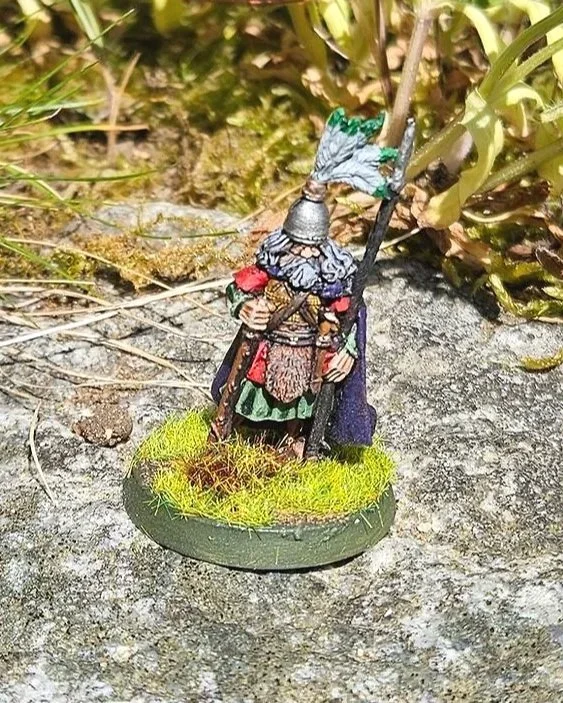
For a warband-bases army, you need a lot of heroes. I decided early on to use Celtic character figures for my heroes, collected from a variety of ranges:

I’ll actually use Cernunnos, who stands about 9cms high, as the army standard!

Finally, I built a nice camp of standing stones using Alternative Armies’ new Standing Stones.

Even More Celts

My Celtic army is coming along nicely: I’ve now finished three more units of heavy horse, and started to add some heroes as well.

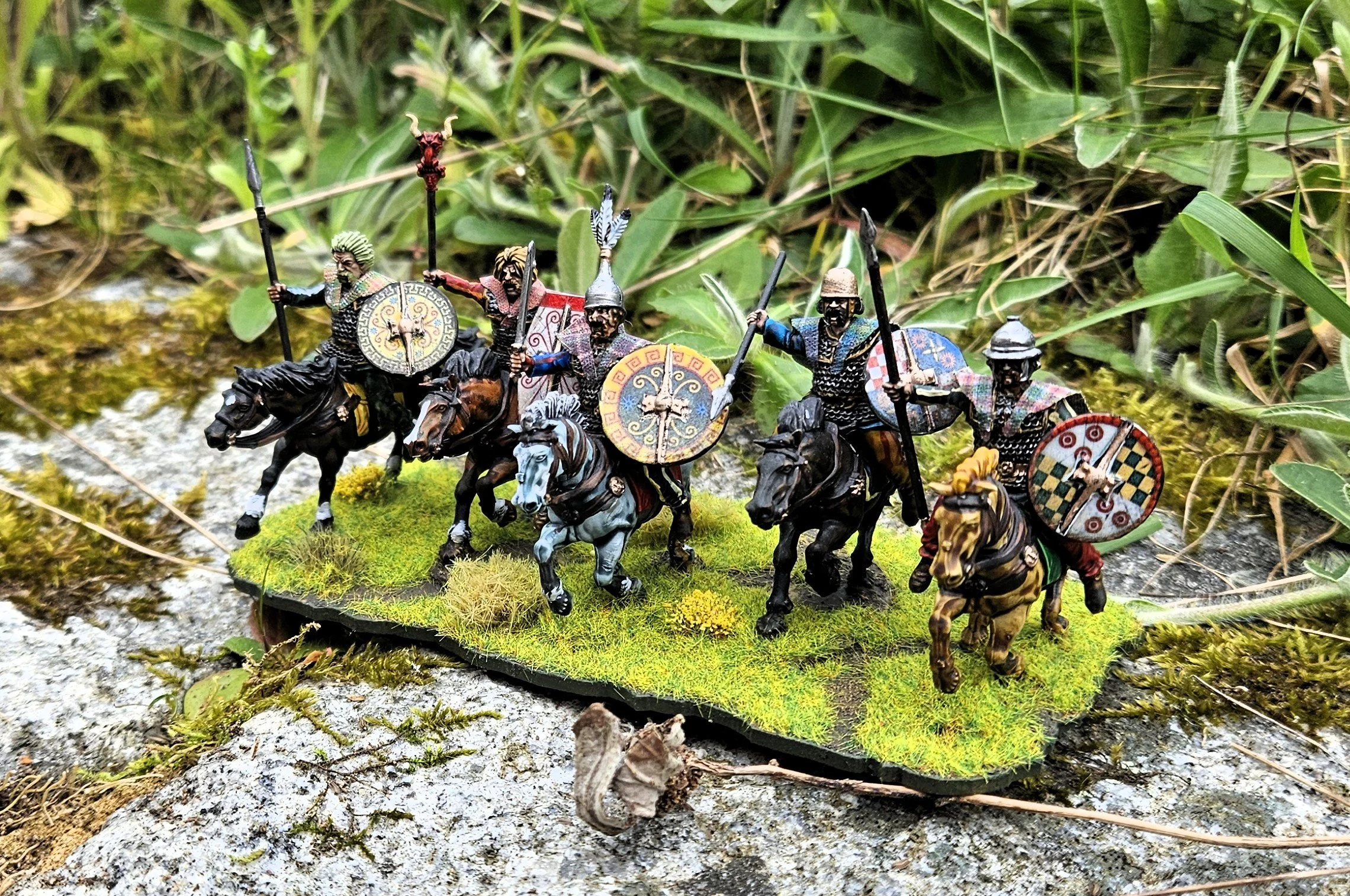
Here are the three new units of horse. All are Victrix figures painted using Contrast paints, and with shield transfers from Little Big Man Studios (available via Victrix) and all with cloaks from Weave of War.

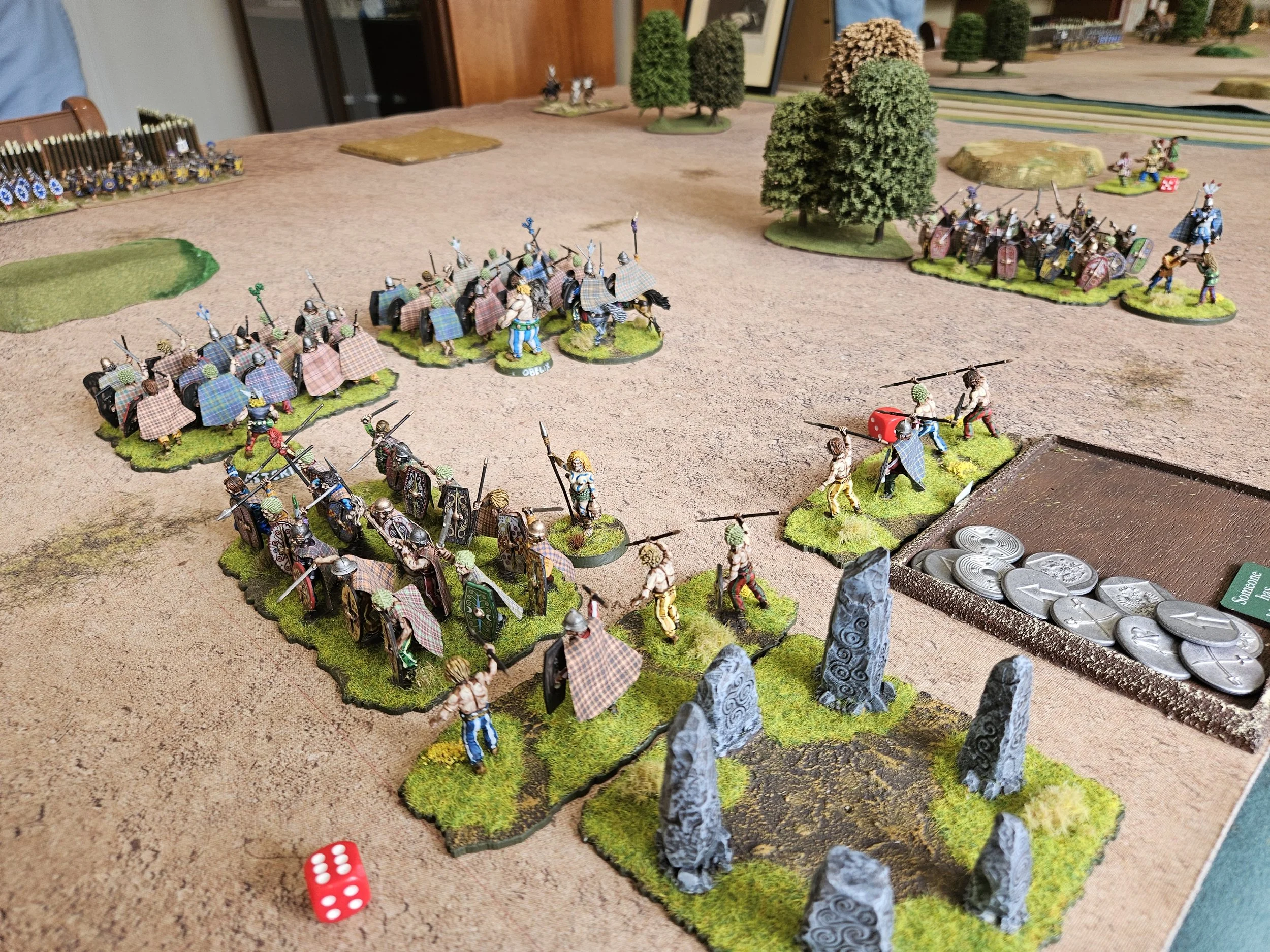
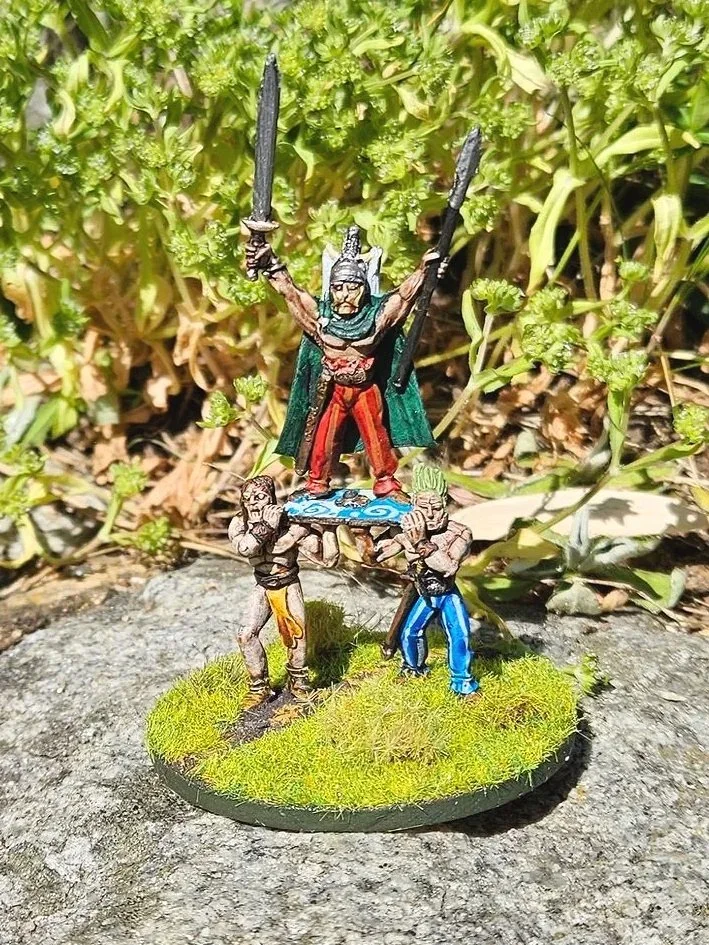
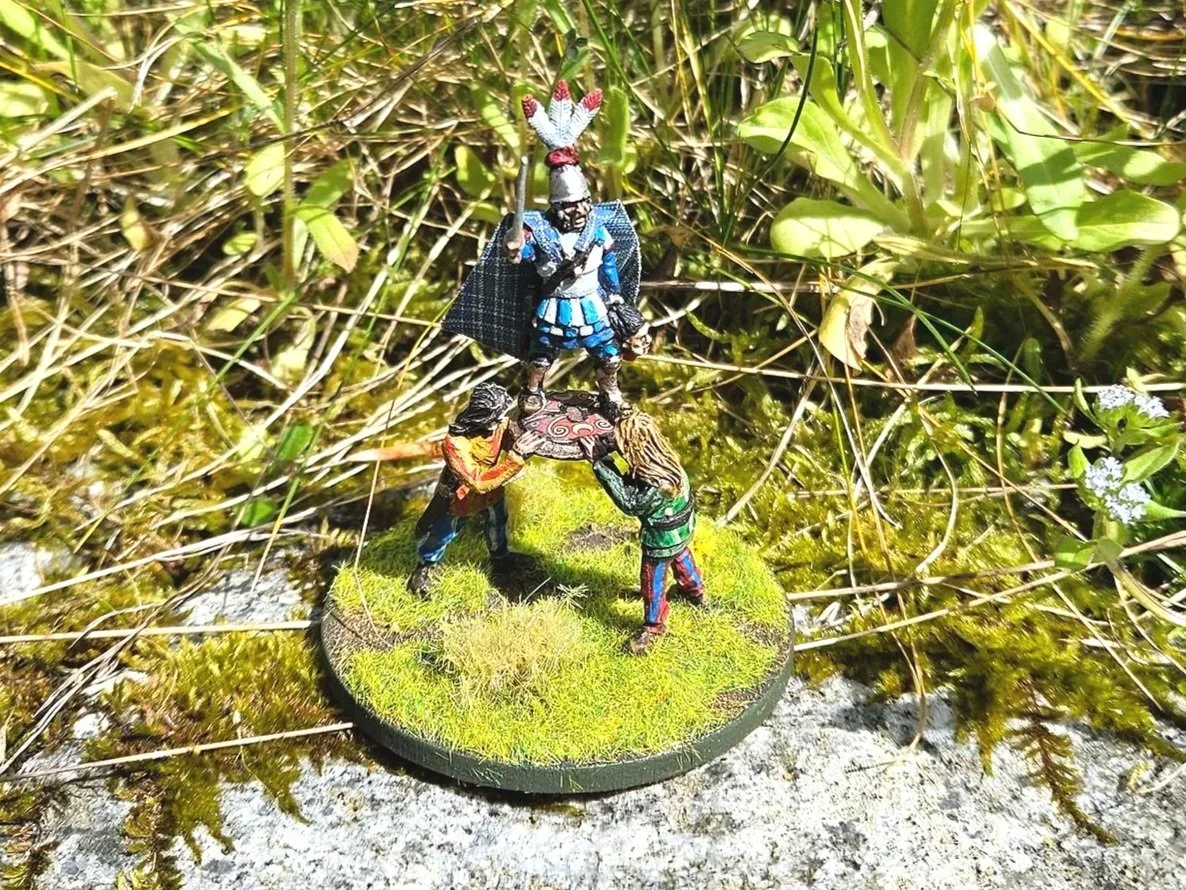
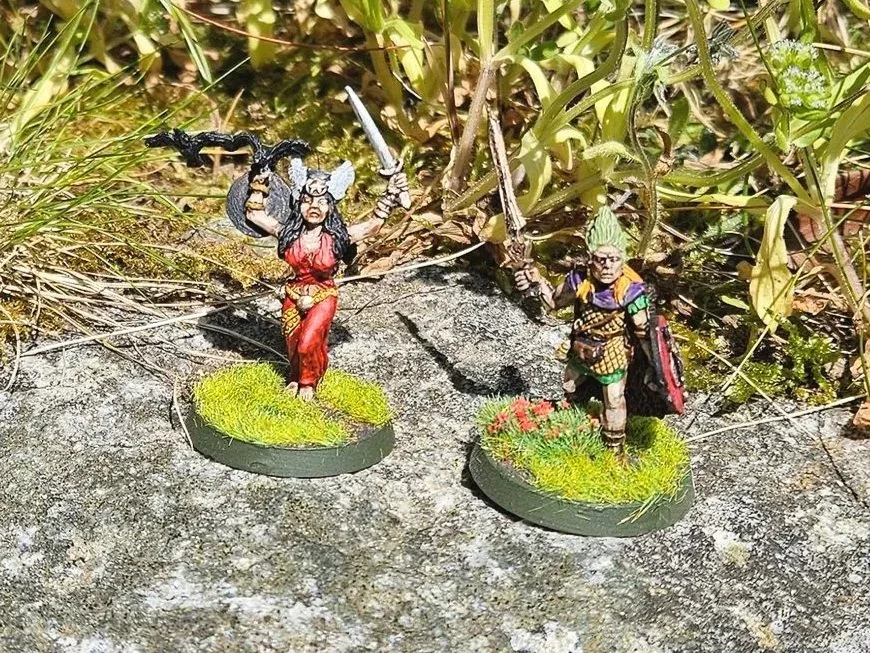
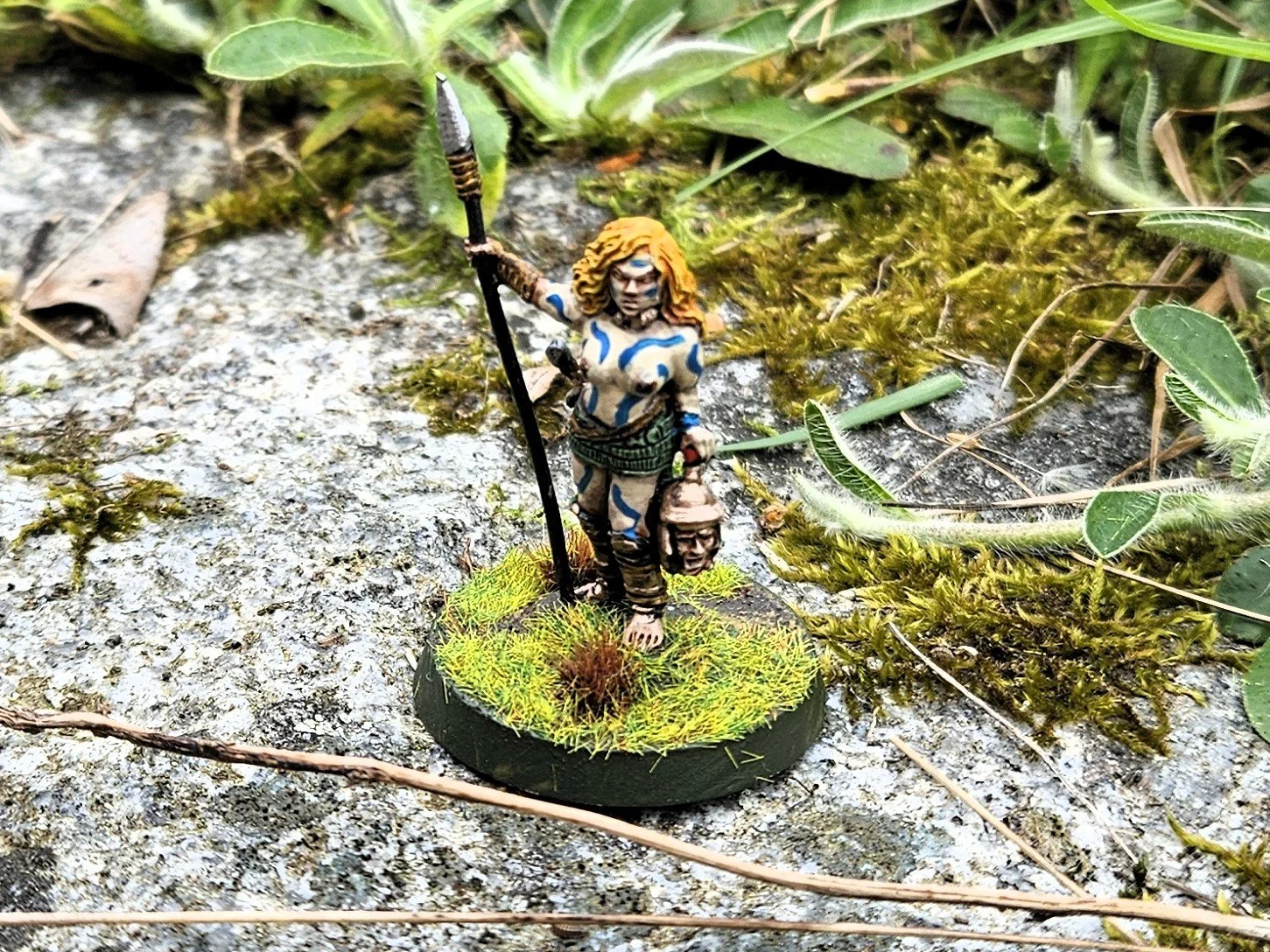
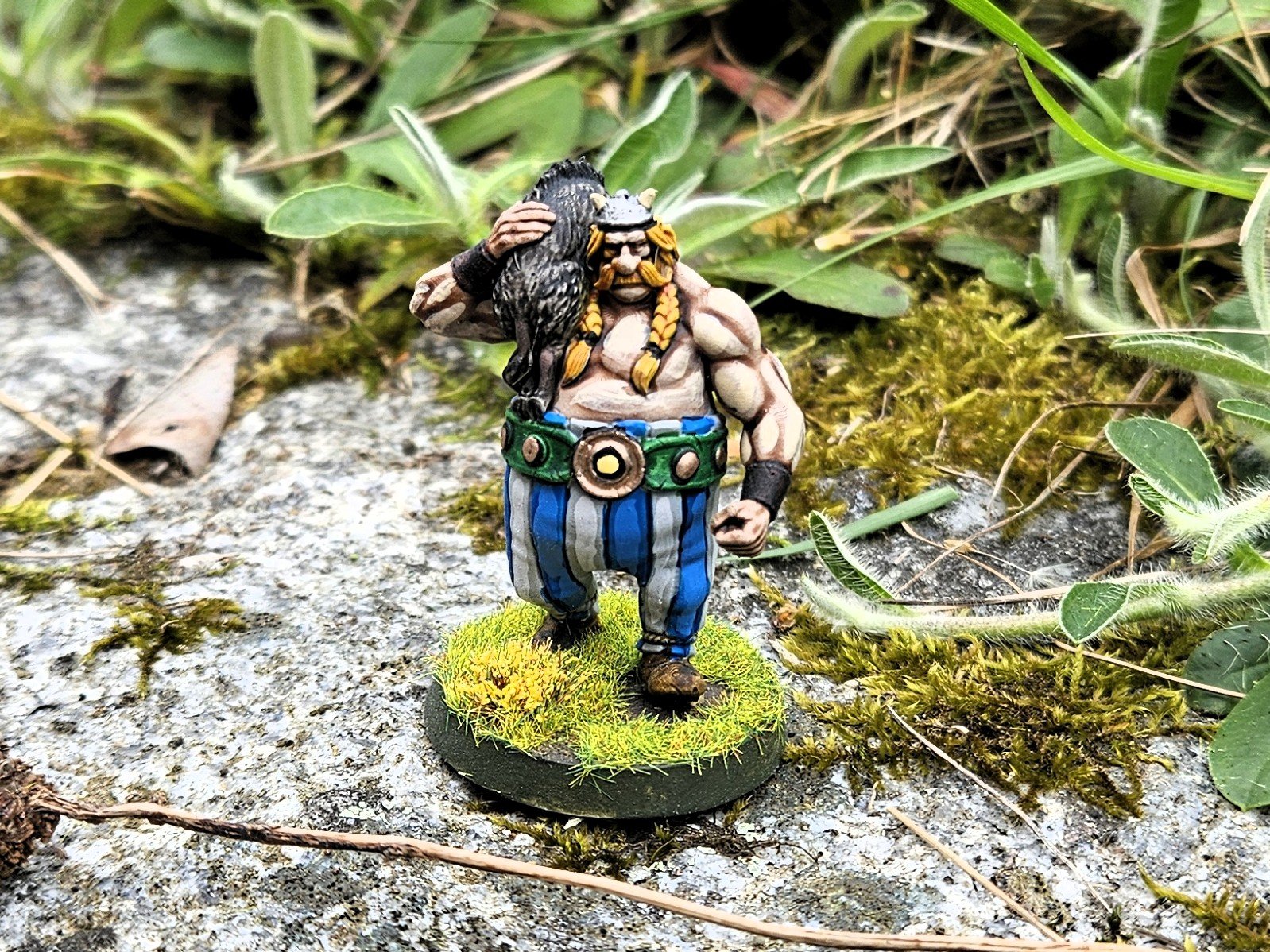
I’m going to need a lot of heroes for any Celtic army: six for the warbands and then another three to five as standard. I’ve decided to try andget as many Celtic personaities into the heroes mix as possible, which means trawling the Internet for interesting one-off figures. Here’s the first two I’ve completed: Boudicca and Obelix.

Boudicca is a metal casting from Belt Fed Gaming available from the Colonel Bills website. She is also painted with Contrast paints, but I have attempted to glaze her skin tone.

Obelix is, quite rightly, a giant of a figure. He is one of the Aquila Empire: Gaul Heroes set of two resin prints from Anima Games UK available via Etsy. The other is Asterix, who will appear in due course.

More Celts

With the decision made to create a core Celtic force, it was now just a question of following up on the first warband by creating the other two warbands that could be fashioned out of a single bag of Victrix figures.

These actually took a lot less time to complete than the original warband: mainly, I think, because I sort of knew what I was doing now!

I used the same combination of Victrix plastics for the figures, LittleBigManStudios (now part of Victrix) for the shield transfers, and Weave of War for the cloaks. Full details can be found in the original post about my first warband: https://www.vislardica.com/blog/2026/3/4/first-of-the-celts

The only pain was the command figures: technically the 48-figure Victrix pack contains enough for two units and I was producing three, but I managed to bodge together a suitable leader, standard bearer and musician for each of the second two even if one of the two leaders isn’t wearing armour, one of the musicians has a horn not a carnyx, and one of the standard bearers has a shoulder built out of green stuff and an extra hand on the bottom of his pole!

So that was one bag of figures done…and I almost went straight into the second…but then I thought “well, I’ve got the Celtic infantry I need for a Carthaginian army: why I don’t I paint the Celtic cavalry I need for both a Celtic army and a Carthaginian army…and that way I don’t need to absolutely commit to one or the other for another four units”.

And that’s what I did. Here’s the first unit of Celtic horse:

I’m really pleased that the Weave of War cloaks fit nicely onto the cavalrymen as well as the infantrymen, although I think that for the next unit I’ll have the cloaks streaming out behind…like the horses’ tails!
TTS AAR: Aghlabids versus Gauls

Time for some more To The Strongest, and a clash between my Aghlabids and friend John’s Gauls: not exactly an historical match-up, but would hopefully give a good game!

As the Gallic horde was quite infantry heavy, my plan was to use my superior numbers of mounted troops on the right to smash the enemy horse from the table before turning and rolling the Celts up from that flank. This was helped by the Take the High Ground stratagem that I had drawn.

A good opening card saw my troops get into the perfect position to charge, but then the Card Gods punished me for hubris and my attack stopped dead. This gave the initiative to the Gauls, but it seemed that John had earned the CG’s wrath as well, as he forgot Trevor’s Law - “Always start with the General” - and also failed to charge home.

With my move on the right stymied, I tried the same thing on the left, with almost exactly the same result!

With the flanks getting nowhere, I move my infantry up to try and weaken the Gallic warbands with bowfire.

Back to the right flank, where my Arab cavalry finally charged home. An initial success was followed by multiple turns of frustration as the disordered Gallic horse in front of me just wouldn’t break, John saving time and time again.

Here’s an overview of the position so far:

Things continued to go wrong for me on the flanks. On the right, the Gallic chariots managed to send my other unit of Arab cavalry flying from the field…leaving me with a tactical advantage but not the crushingly dominant position I had hoped for!

And on the left I lost my Arab lancers and would spend the rest of the game with my two units of lights dancing around trying not to be killed as they harried the flanks of more Gallic cavalry and chariots!
The Gallic infantry warbands now started to move forward in the centre. I sent volley after volley of bowfire into them from my infantry, but John was saving and/or rallying like a demon, and although I did earn four coins from the Gauls drawing even cards for the latter, the writing was now firmly on the wall for the Arabs.

A last attempt on the right to save the day failed to deliver:

And although the Gallic chariots failed to take my camp, left unguarded courtesy of another Ace…

…the relentless wave of Gallic warriors (half veterans, half fanatics, all big and scary!) eventually smashed enough of my infantry from the field to capture my last few coins.

Despite the loss, this was a brilliant game of To The Strongest, full of action and Aces!
John played the Gauls masterfully: absorbing my early cavalry attacks and then advancing his warbands inexorably up the field to drive my infantry back and then off. Good fun and, hopefully, this will have used up all my Aces prior to the Worlds next weekend!

First of the Celts

I’m a 15mm gamer who plays To The Strongest competitions in 28mm…so although I have some 17 different Ancients/Medieval armies in 15mm, I only have two in 28mm: my 40-year-old, Minifigs Early Imperial Romans, and my two-year-old, Perry-medieval-plastic Venetians.

I’ve used the Romans a lot, and the Venetians even more, so have been thinking for some time that it’s now the moment to add another army to the roster…but which one?

It’s a big investment of both time and money, so it’s got to be an army that means something. There’s a tale behind the Romans (I won’t repeat it now as many of you know it already) and the Venetians began from a box-set I won at the Doubles a couple of years ago…so what was going to spark my interest for number three.

Well, my very first army ever was an Airfix Ancient Briton army that I used at school and university (when the lessons were taught in the original Latin!), and a couple of units of Celtic foot could be the starting point for any number of Gallic-style armies (Galatian, Gallic, Ancient British) or form a command for even more (e.g. Carthaginian or any other army in which the Celts served as mercenaries).

One problem: I didn’t fancy painting six deep units of warriors wearing checks, tartans or stripes, and whose shields were too intricate to be hand-painted and would thus require a whole load of transfers to have the bit for the bosses cut out with a ‘sharp craft knife’. Fortunately, Victrix have come to the rescue on that last one - now producing pre-punched transfers that make using them so much easier - and Weave of War, my new favourite wargames supplier, sell miniature, real-cloth cloaks that can be glued to the back of a figure and obviate the need for 360° painting: it’s always the join between the back and front of a stripey or chequered figure that cause the issues.

So Ancient British/generic Celts it was. Here’s the first unit, both a front and back view:

Victrix

The Victrix figures are absolutely lovely: highly, highly recommended. Yes, you have to build them, and that can be a bit fiddly, but once you get the knack of it, they go together very easily. I am a heathen and use superglue to fix, with either water or PVA applied just before pressing the two surfaces together to activate the glue (when I say water, I dip the surface to be glued into a small dish of the stuff; ditto with PVA).

Note that I didn’t bother to add any additional paraphernalia to the figures - no scabbards for example (confess, you didn’t notice, did you!) - as that’s just extra work for things that will be totally overshadowed by the shields and cloaks. I also made the decision to build the first unit from fully-clothed figures: I’ll save the topless and naked versions for veteran and fanatic units respectively.

They paint up beautifully, with the sculpts doing all the work of bringing out my rudimentary skills. I used Contrast paints for the base coats, and standard GQ acrylics for the highlights. I block painted the figures, then carefully drew stripes on their fronts and sides with a thin brush (with the cloaks, there was no need to do the stripes etc on the sides).

No need for too much accuracy on the stripes etc: there is so much going on with the figures in the unit (figure, cloak, shield) that just the impression of the stripes etc is enough. I didn’t both with stripes etc on the trousers for the same reason, although I will stripe the trousers on the topless lot when I come to do them.

LittleBigMan/Victrix Transfers

Shields ready for the transfers to be applied

The shields were painted and had the transfers attached before being attached to the figures. The method used was to cut the plastic sprues they came on so you can prepare the shields on the sprue; spray them white; paint the boss black and then bronze; touch up with white; apply the transfer; paint any non-transfer areas (the rim, the back) a wood colour. Very simple.

As for the transfers themselves, just follow the instructions that come in the packet. Now that they are pre-punched, the only annoying bit is having to carefully cut out each transfer…but this is ten thousand million times easier than doing the boss hole!

Weave of War Cloaks

Now available from Deadanddread Miniatures, the Weave of War cloaks are fantastic. They literally are little cut-out fabric cloaks that come all ready for attaching to your painted figures.

The cloaks come in three different sizes - in order, smallest to largest: battle, campaign, command - and there’s also a rolled up version as well. Loads of different colours, and can bought either in packets of eight in single designs (for that one-clan look) or mixed designs (what I used).

There are videos demonstrating how to attach the cloaks but, really, all you do is put a bit of glue on the straps that go over the shoulders, a blob of glue on the inside back just under the collar; leave to get tacky (do this: I found life a lot easier once I’d curbed my impatience and let the glue get properly tacky); and then pop the cloak on the figure, fold the straps over and done!

Once the glue is dry, you can then scrunch the cloak to get a bit of shaping, knowing that when you varnish the figure (I used a matt spray) the cloak will harden to being pleasingly stiff: like paper or cloth flags that have been covered in PVA, shaped and then left to dry.

One thing to note: when varnishing the unit, above, I got very careless and over-varnished the rear view. Nothing to do with the cloaks themselves, it was all me getting the spray can too close and for too long. It was dark, I was tired, Officer!

This left a clouded residue on the cloaks that I thought had ruined them, but then I remembered the advice I’d been given when a can of GW varnish (never buying GW varnish again: never) did the same thing even though I’d used it correctly: vinegar.

“Vinegar? Are you George Bernard?” you might exclaim but, yes, the cloaks in back rank of the picture above were cloudy to the point of being opaque until brushed with vinegar from the kitchen cupboard (expensive Apple Cider Vinegar, according to the wife, rather than the cheap stuff for chips but, I mean, “because you’re worth it” and all that!) which neatly brought the colours back out again. Phew!

In Conclusion…

I’m very happy with this unit and am actually looking forward to painting more. The products detailed above (the Victrix figures, Contract paints, LBMS transfers, the Weave of War cloaks) really do all the heavy lifting. I am not an artist, only an average painter, but can follow a set of instructions!

All highly recommended.