WW2 Belgian Armour in 15mm: the Berliet VUDB
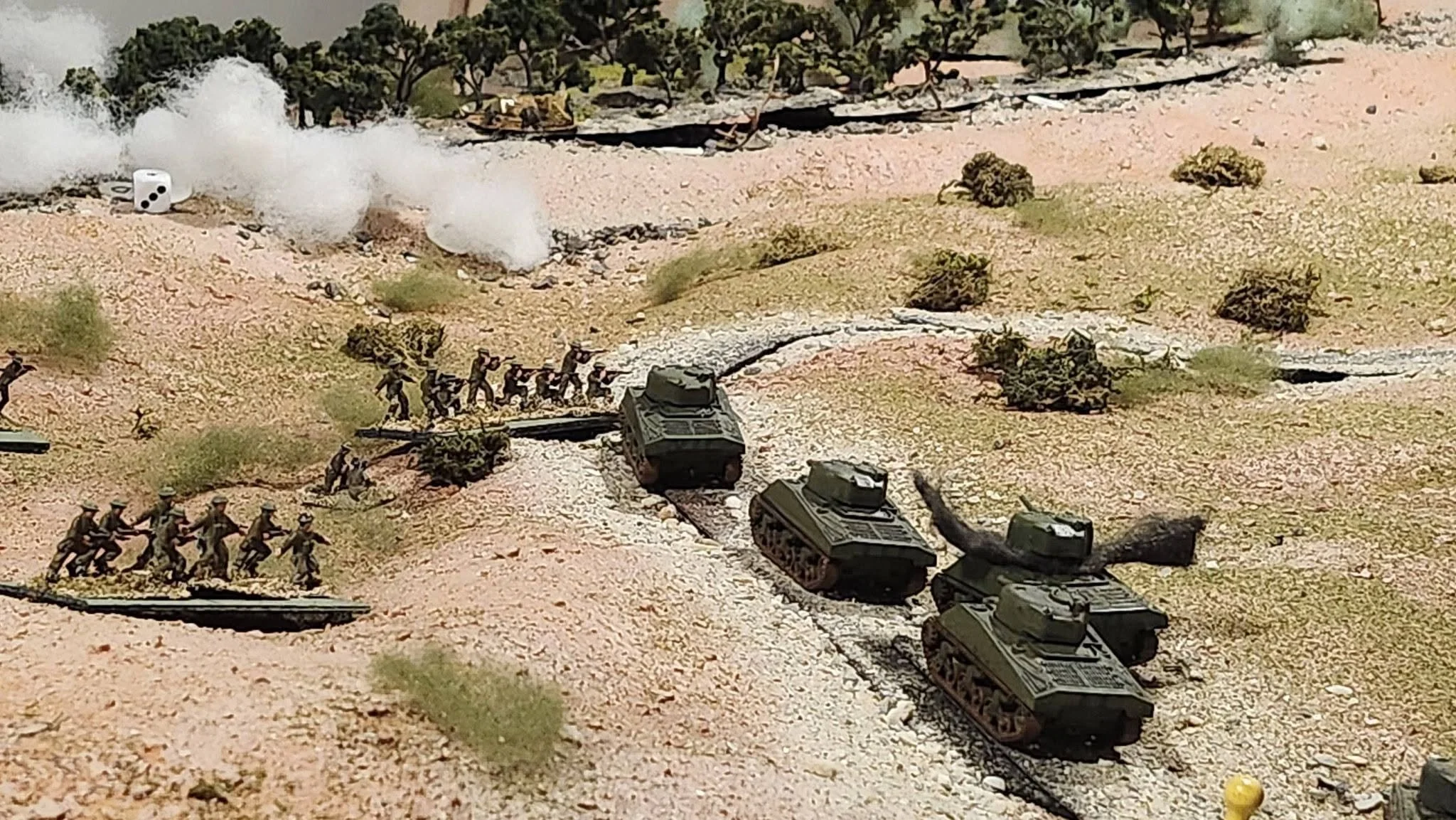
/More models from the excellent bayonetsandbrushes.co.uk range of 3D printed 15mm WW2 Belgian armour: this time the Berliet VUDB armoured cars. From their website:
The Berliet VUDB (Véhicule Utilitaire de Dépôt Blindé) was an armoured personnel carrier of French design, adapted from a pre-war colonial troop transport. Developed in the early 1930s by Berliet of Lyon, this peculiar machine featured a fully enclosed body mounted atop a 4×2 commercial truck chassis. Armour thickness was modest at best—around 9mm at its thickest, enough to protect against small arms and the occasional Gaulish kipper slap—but not much else. It had a petrol engine producing roughly 55 horsepower, making it about as zippy as a hungover snail on cobblestones. Top speed was approximately 45 km/h on roads—though “road” is a generously enthusiastic term for Belgium in May 1940.
These were painted by a sprayed undercoat of Vallejo English Uniform, washed with GW Agrax Earthshade, then drybrushed and highlighted with Vallejo Khaki Grey.
When the German invasion began in May 1940, the Belgians had about twelve VUDBs, but they were never concentrated into one unit: most of them served in small detachments with the Gendarmerie and ad-hoc army reconnaissance groups.
Here’s what ChapGPT and I have managed to piece together:
Frontier screening around Liège (10–11 May)
A small group of VUDBs attached to frontier security forces operated east of Liège on the first day of the invasion. They carried out reconnaissance along the Meuse crossings and road axes toward Verviers and Tongeren. One vehicle was reported as damaged and abandoned after an encounter with German advance scouts supported by light anti-tank fire.
Albert Canal – Diest / Aarschot line (12–13 May)
As Belgian forces pulled back from the Albert Canal, at least one VUDB section covered the retreat near Diest and Aarschot. These cars acted as mobile machine-gun posts, delaying German reconnaissance units attempting to seize bridges intact. Belgian accounts describe one vehicle knocked out by a 3.7 cm anti-tank gun, and another scuttled by its crew after being immobilised.
Leuven road network and Dyle position (13–14 May)
During the Allied deployment on the Dyle line, a few VUDBs were used as liaison and traffic-control vehicles around Leuven. When German pressure increased and the line began to give way, they were drawn into short firefights with German motorcycle troops and armoured cars. At least one VUDB was left behind intact in a roadside ditch after an air attack, later falling into German hands.
Rearguard fighting west of Brussels (15–16 May)
There were now very few VUDBs still available, and these were used as rearguard escorts for retreating columns moving west of Brussels toward the Scheldt. Belgian reports mention armoured cars covering demolitions and roadblocks, sometimes engaging German advance parties at close range. Several were destroyed or burned by their crews when they ran out of fuel during these withdrawals.
Final actions toward Ghent–Scheldt sector (17–18 May)
The last operational VUDBs appear in scattered references during the withdrawal toward Ghent and the Scheldt defensive line. They were used mainly for column protection and anti-parachutist/security patrols, with some lost in minor skirmishes with German infantry and others were abandoned intact due to breakdown or encirclement.