SYW AAR: Refighting Lobositz - Again

As our group would be demo-ing the Lobositz game at Vanquish 2026, we needed to play through it a few times in order to make sure that everything ran smoothly on the day.

My first playthrough was as the Prussians: an encounter that I had won mainly through a super-aggressive advance straight at the town of Lobositz, our objective. This time I would play the Austrians: aiming to keep what seemed to me to be vast numbers of Prussians out of the town!
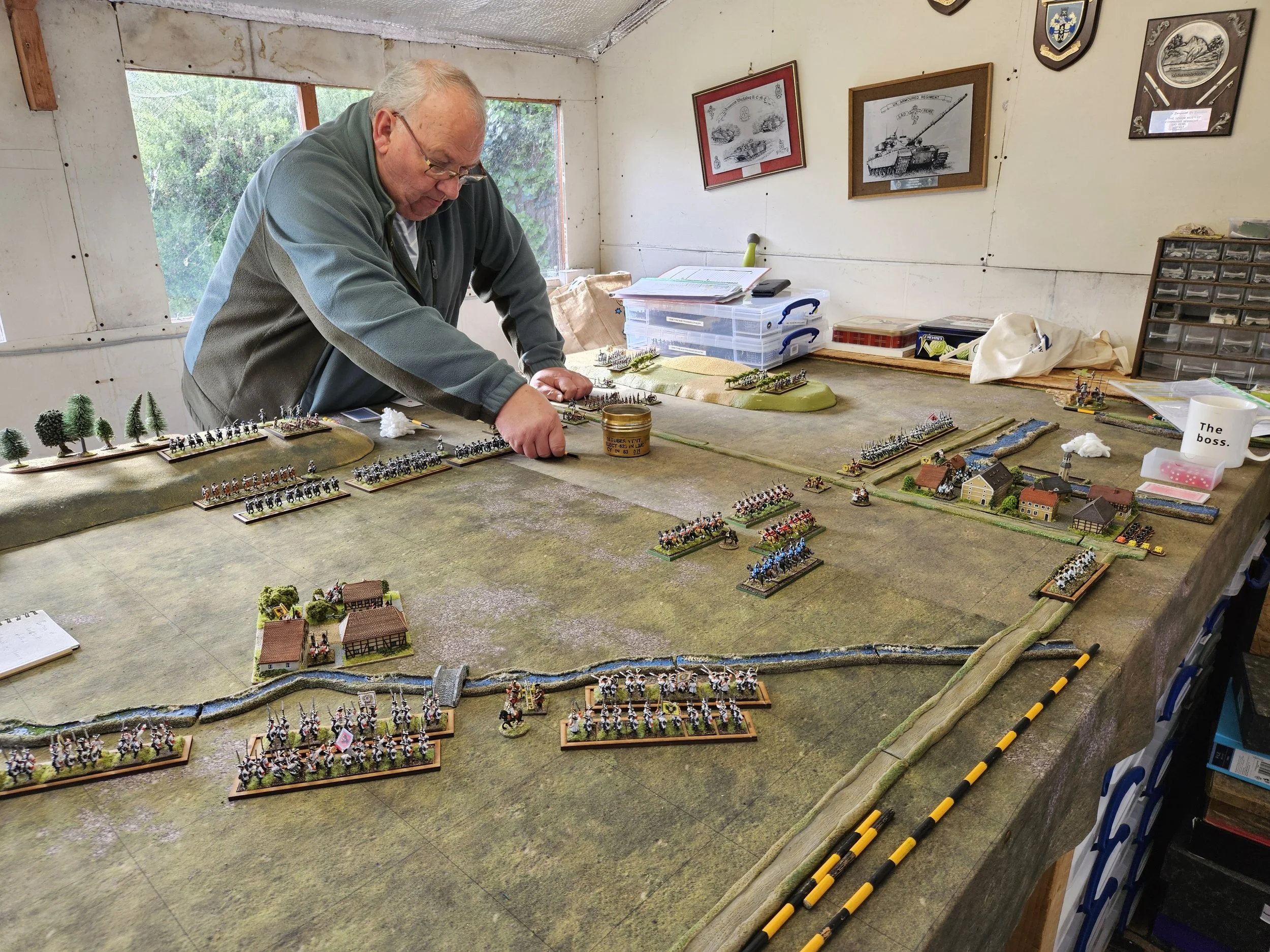
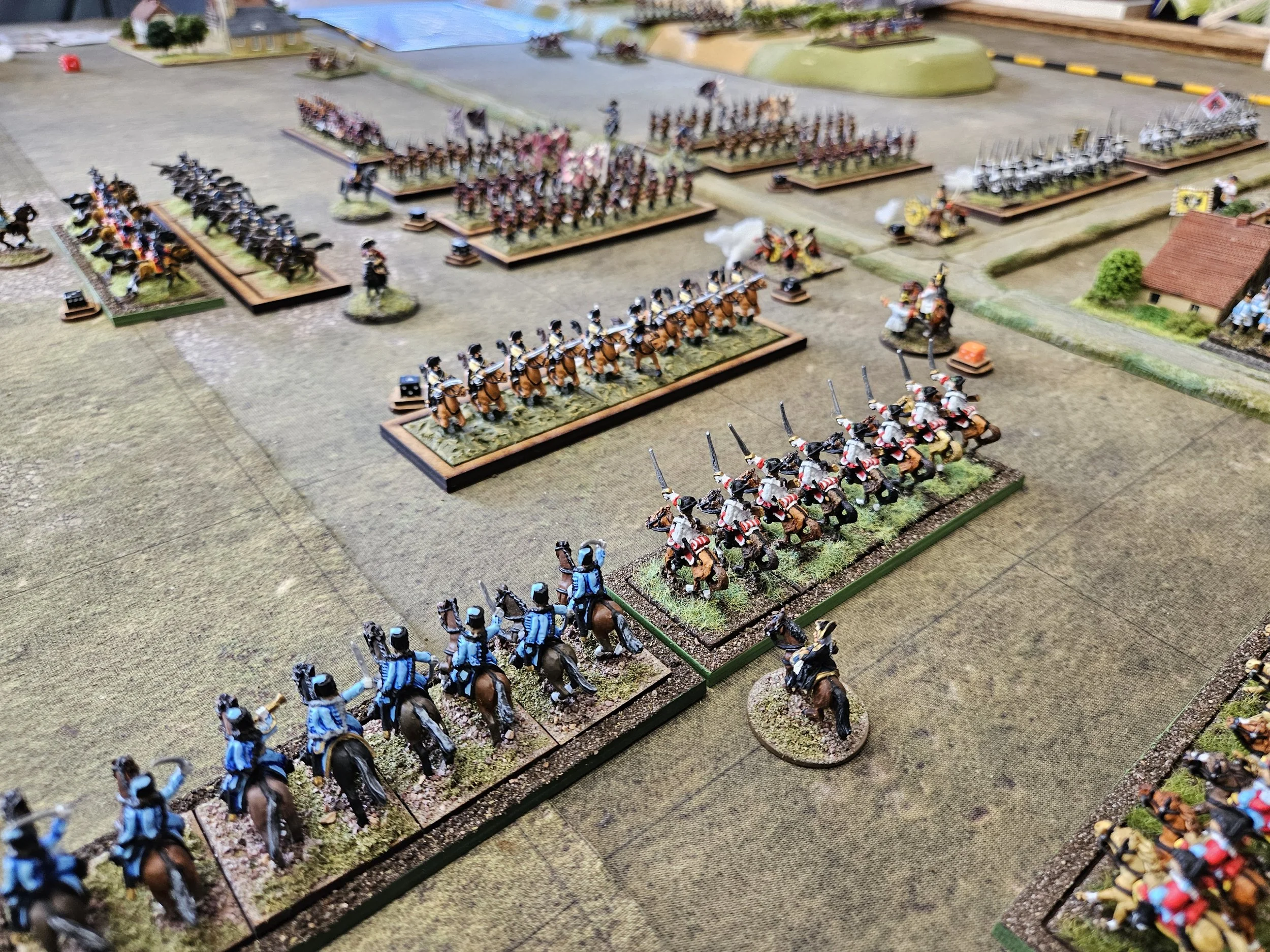
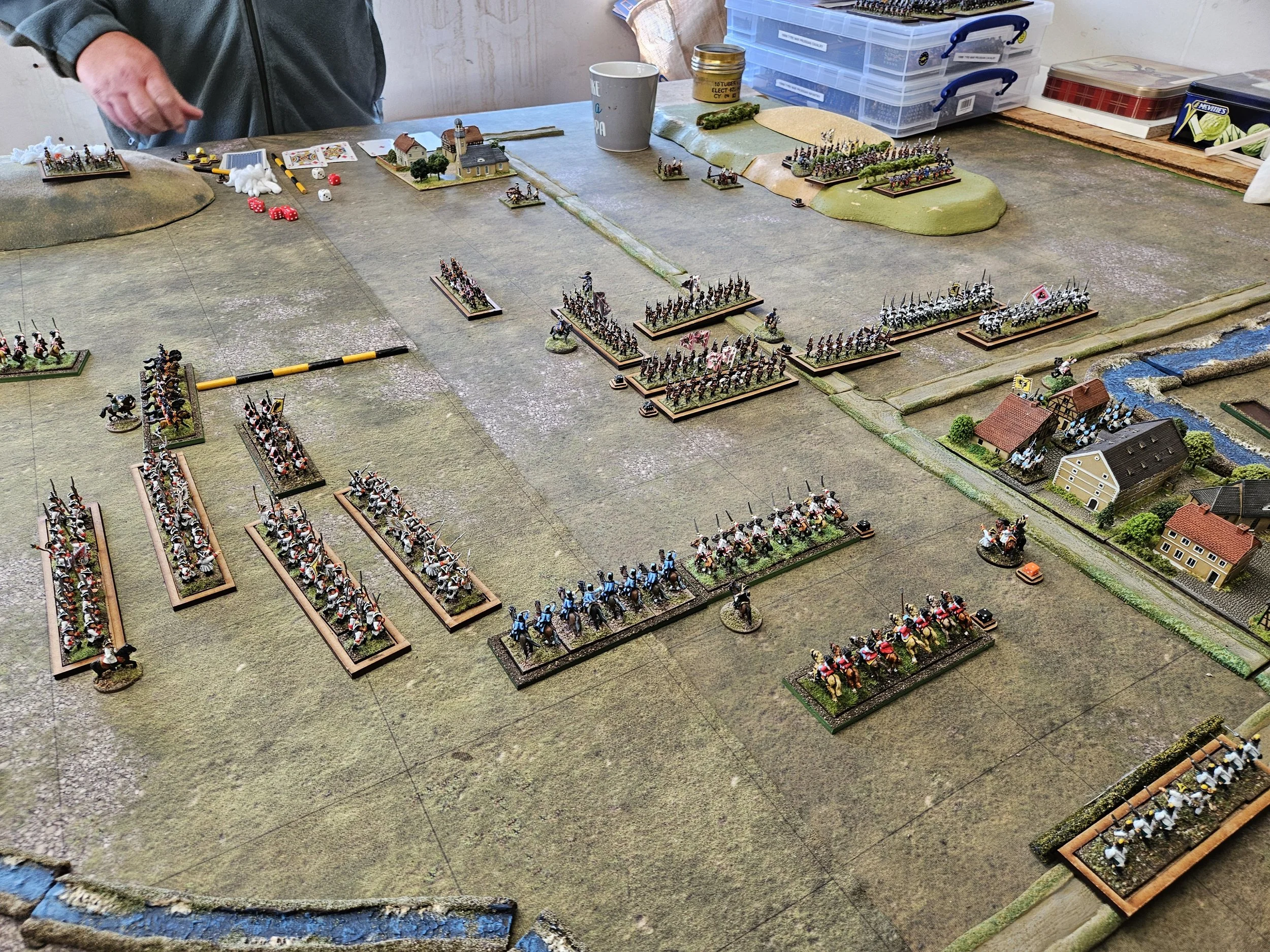
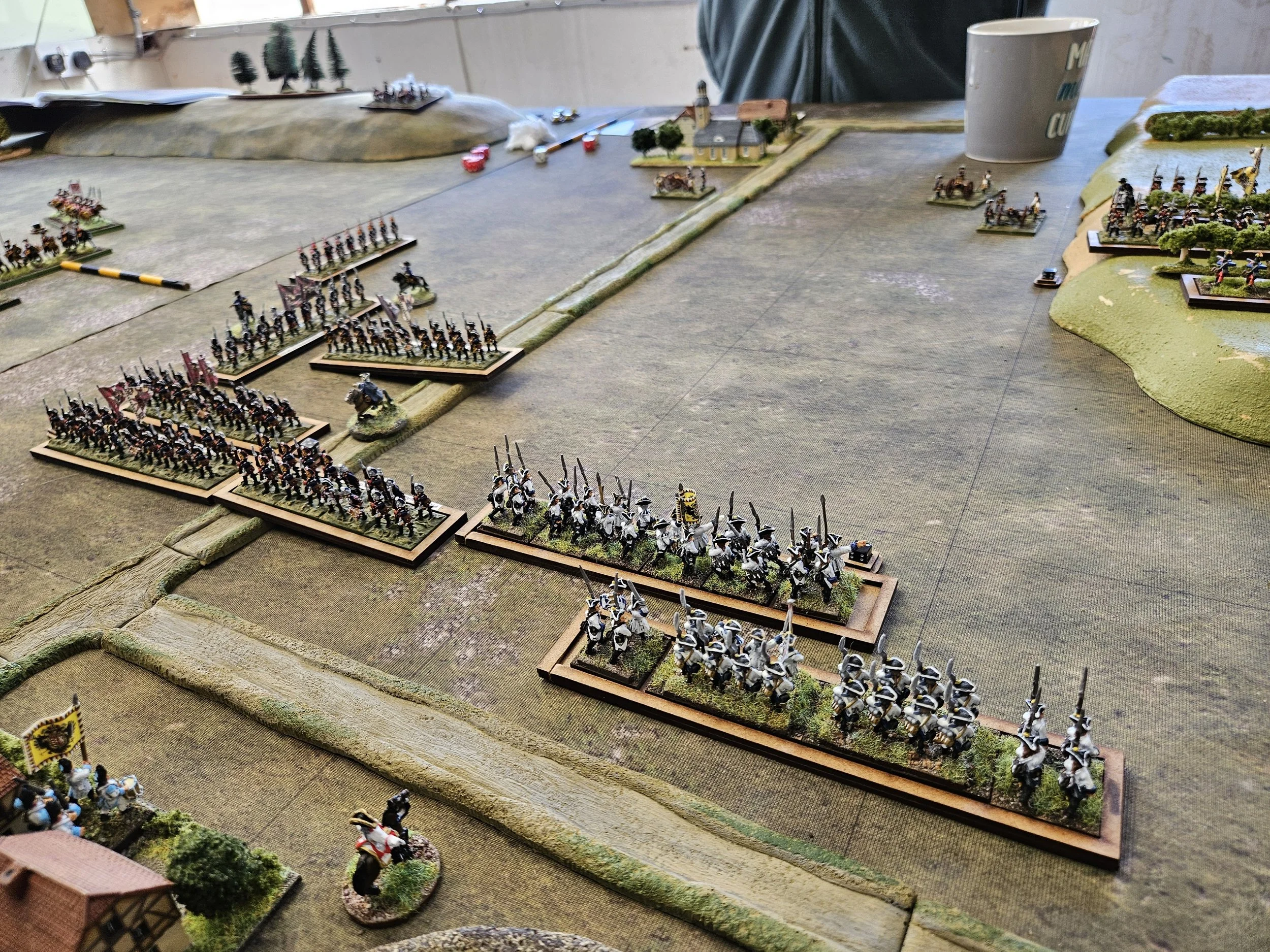
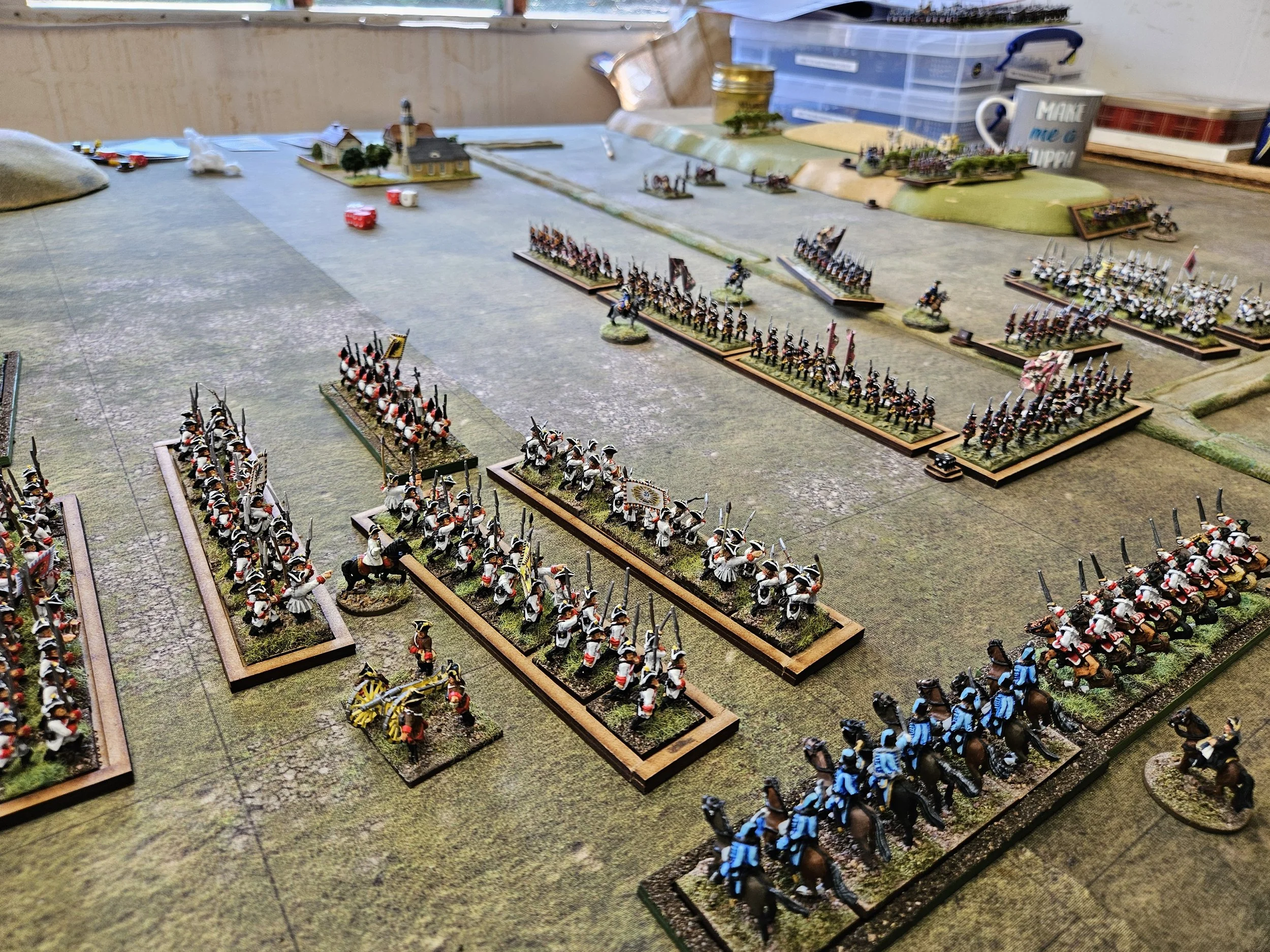
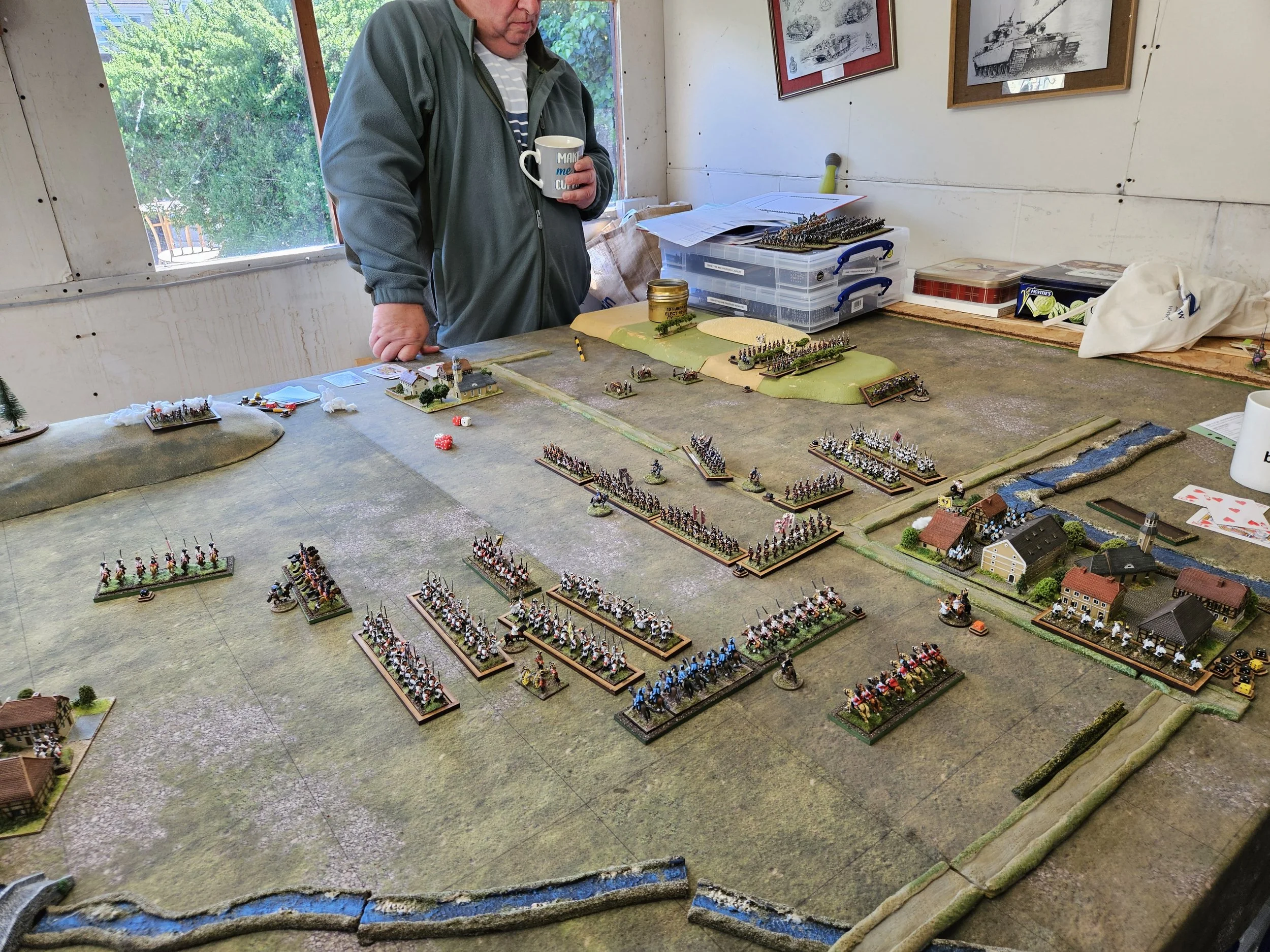
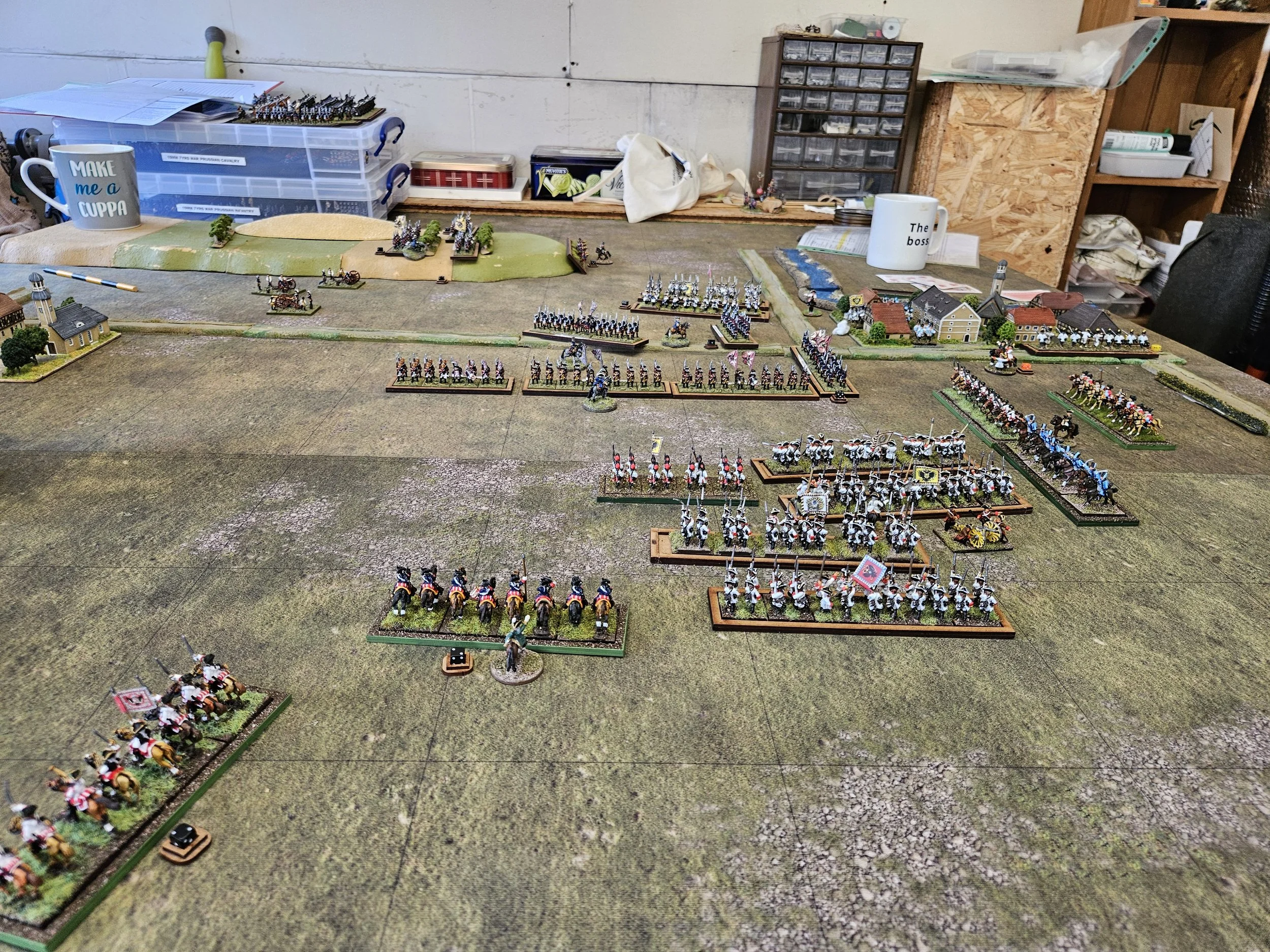
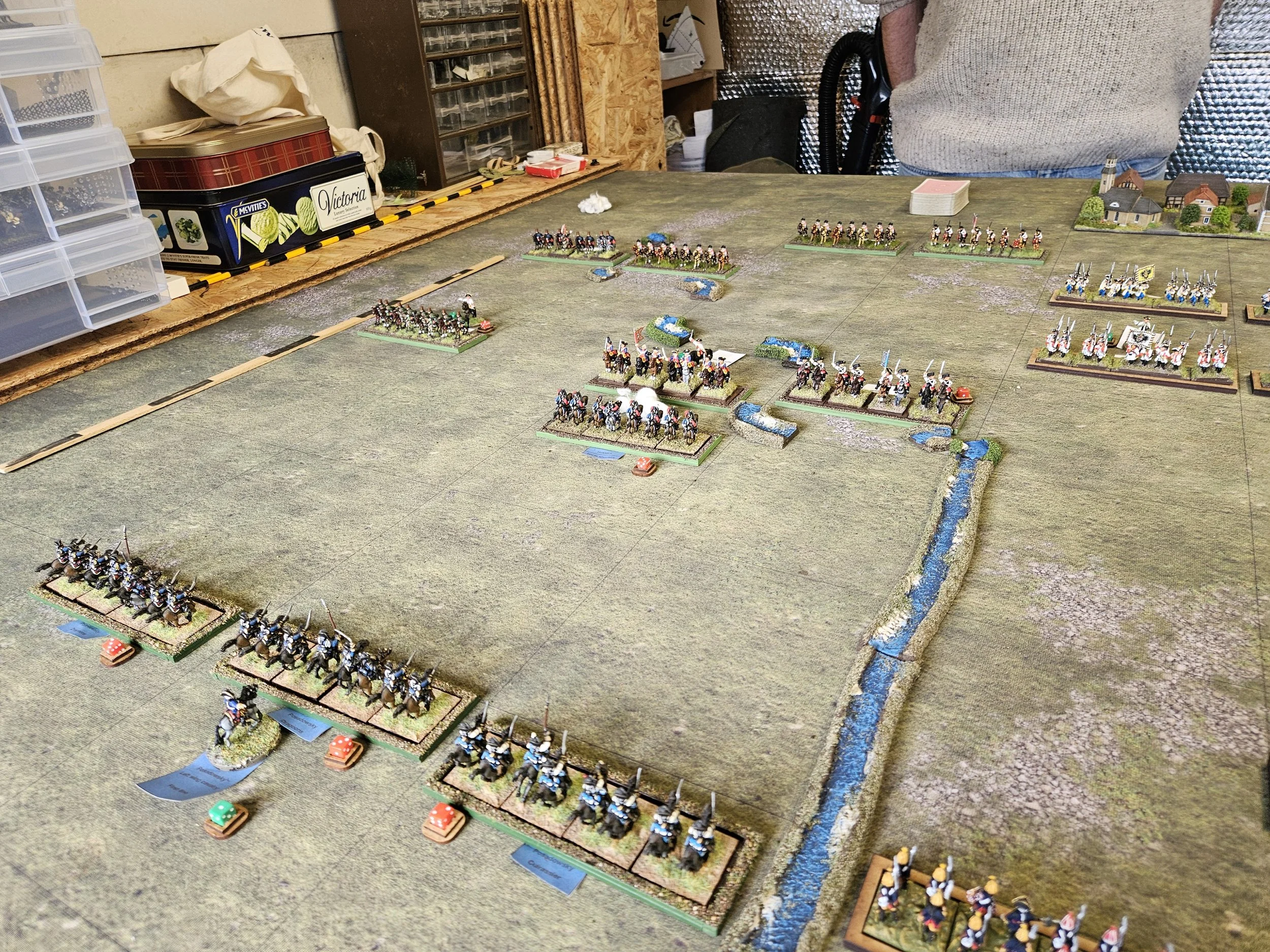
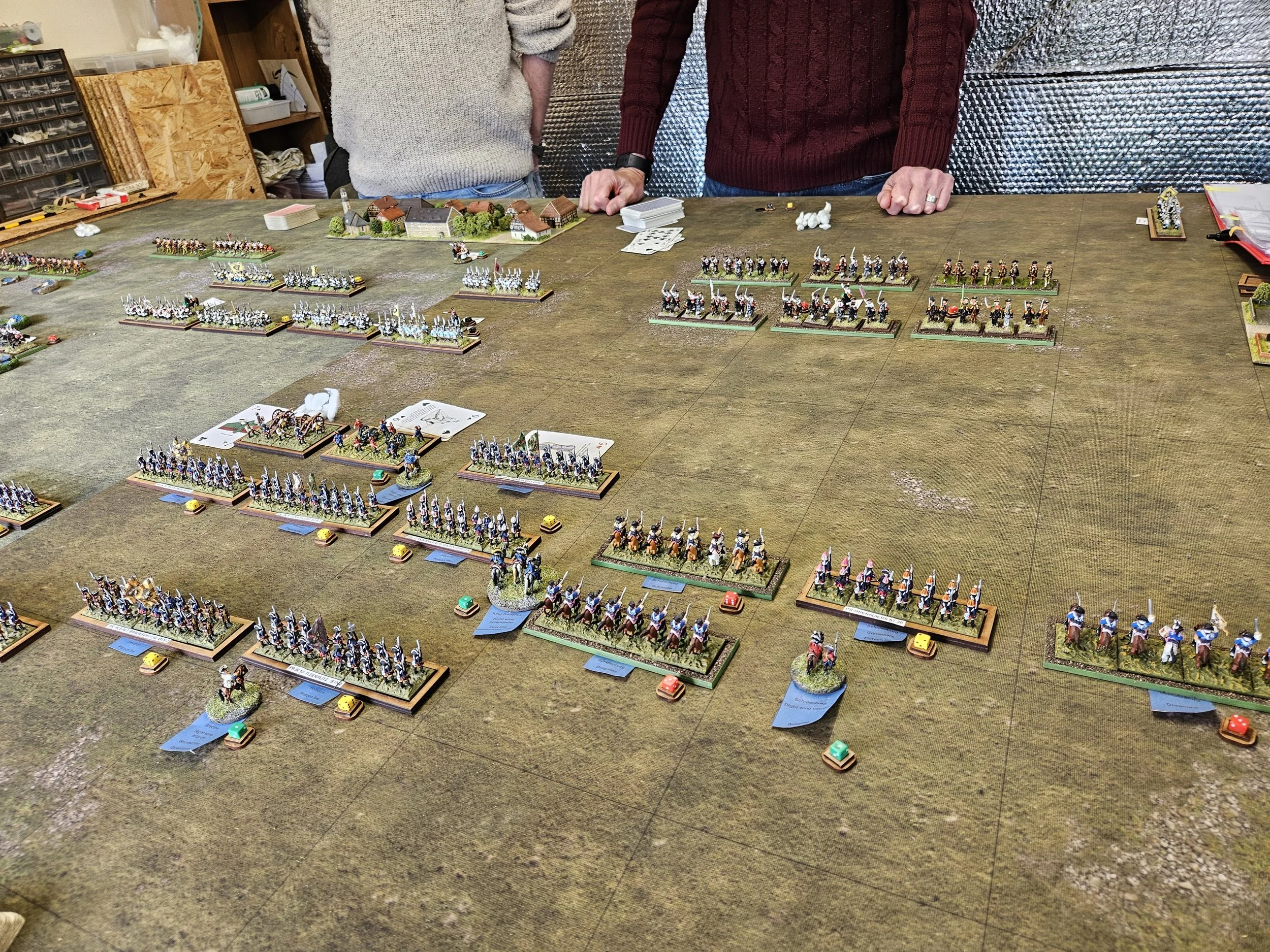
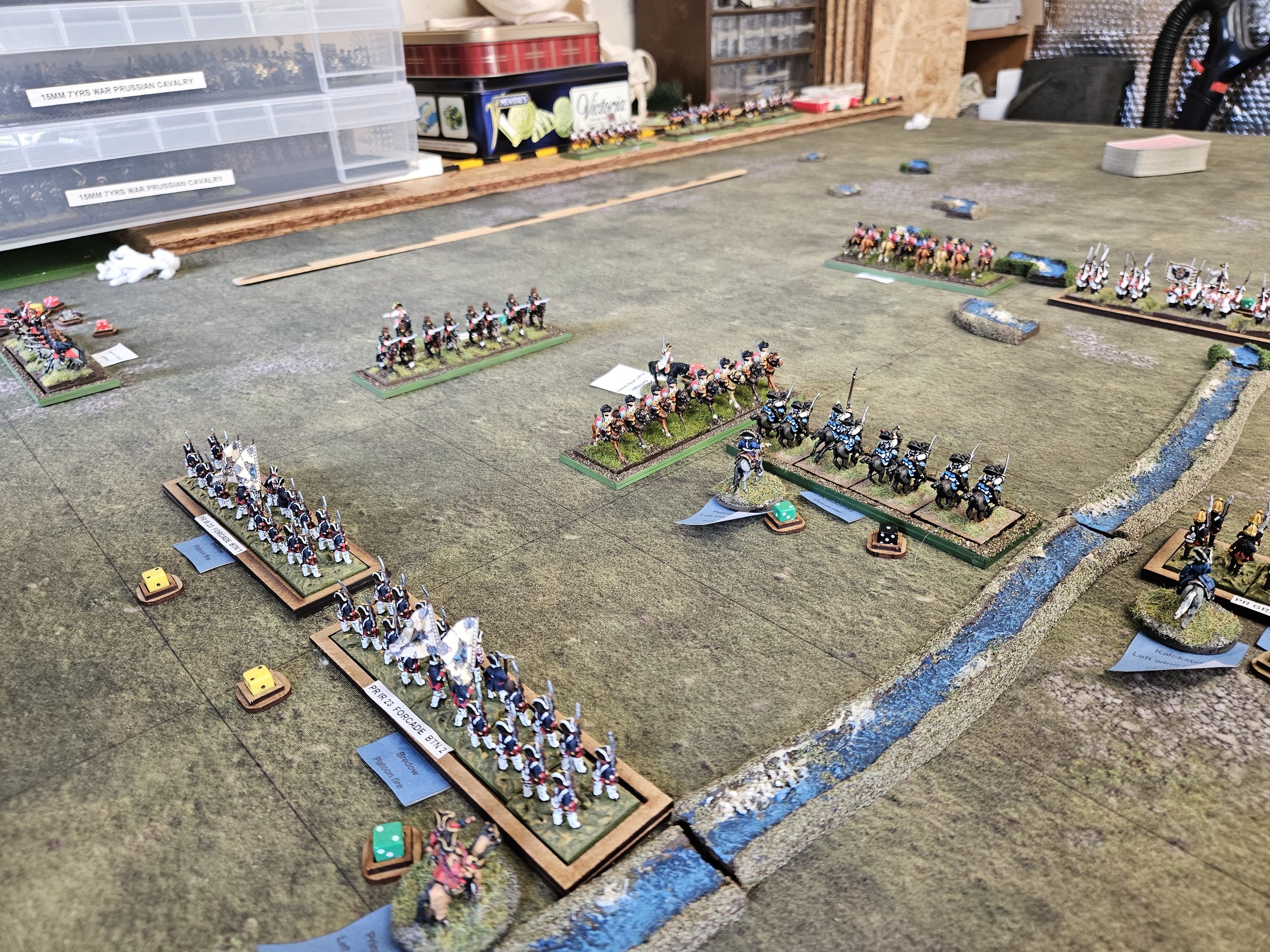
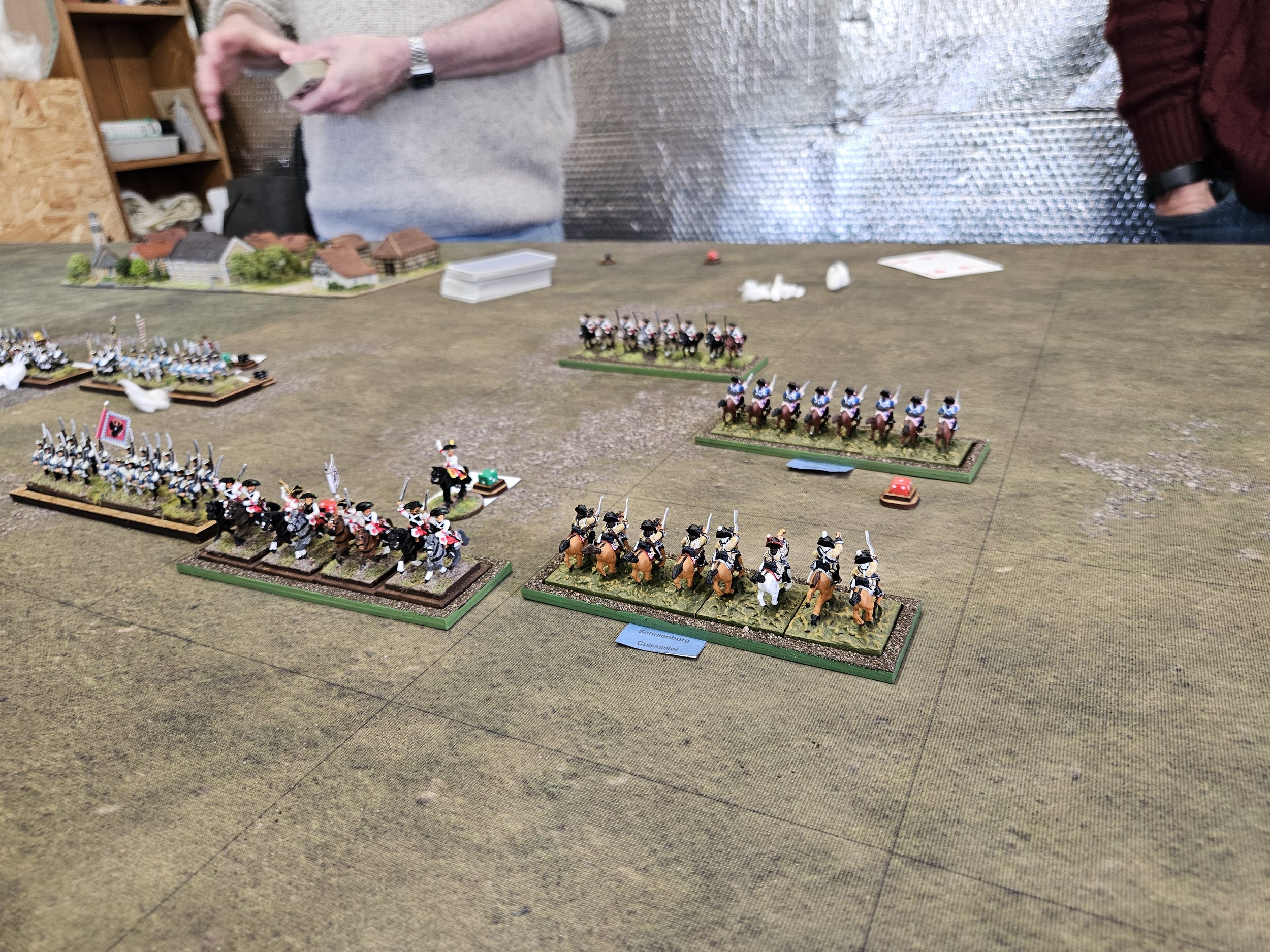
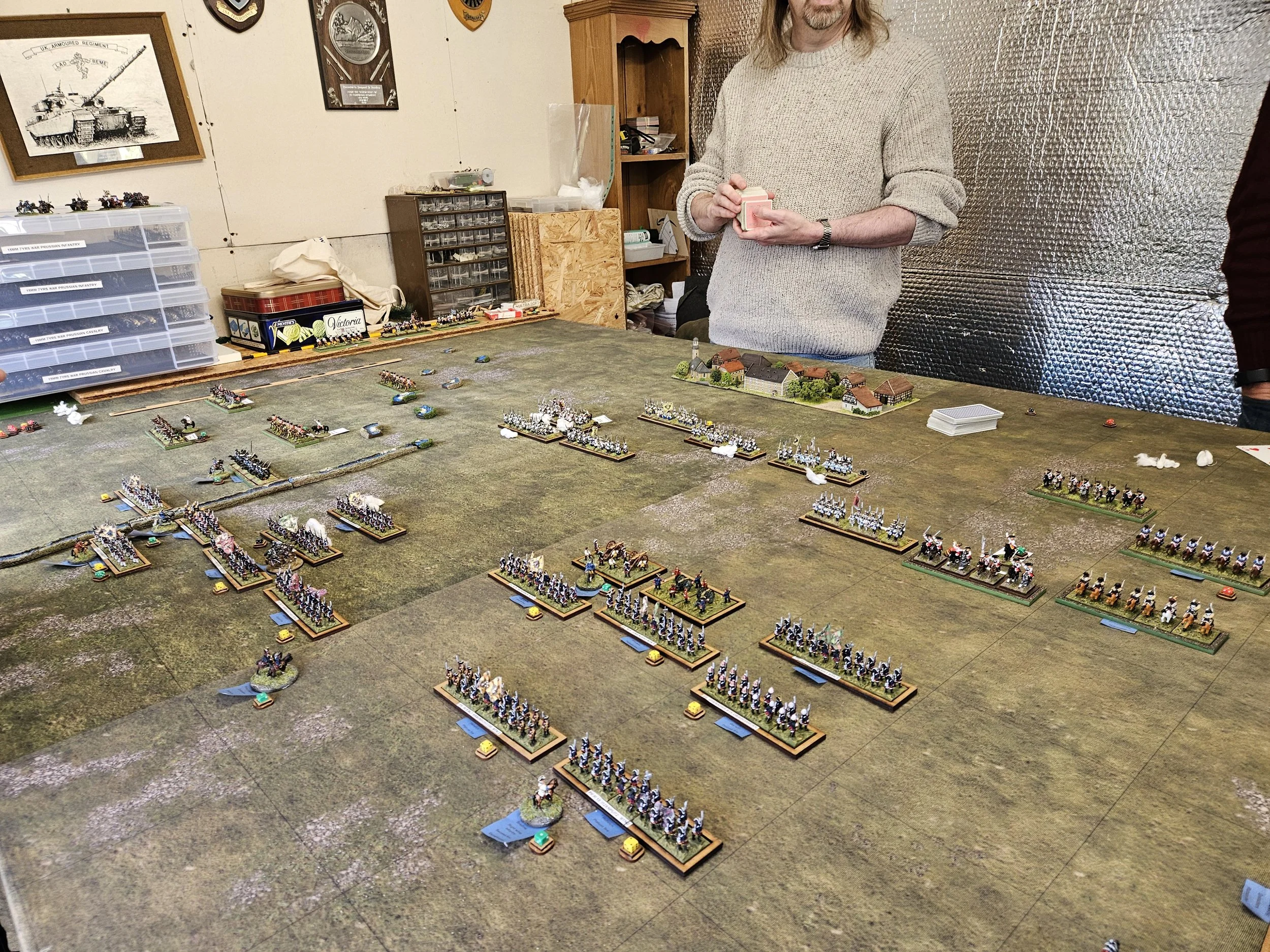
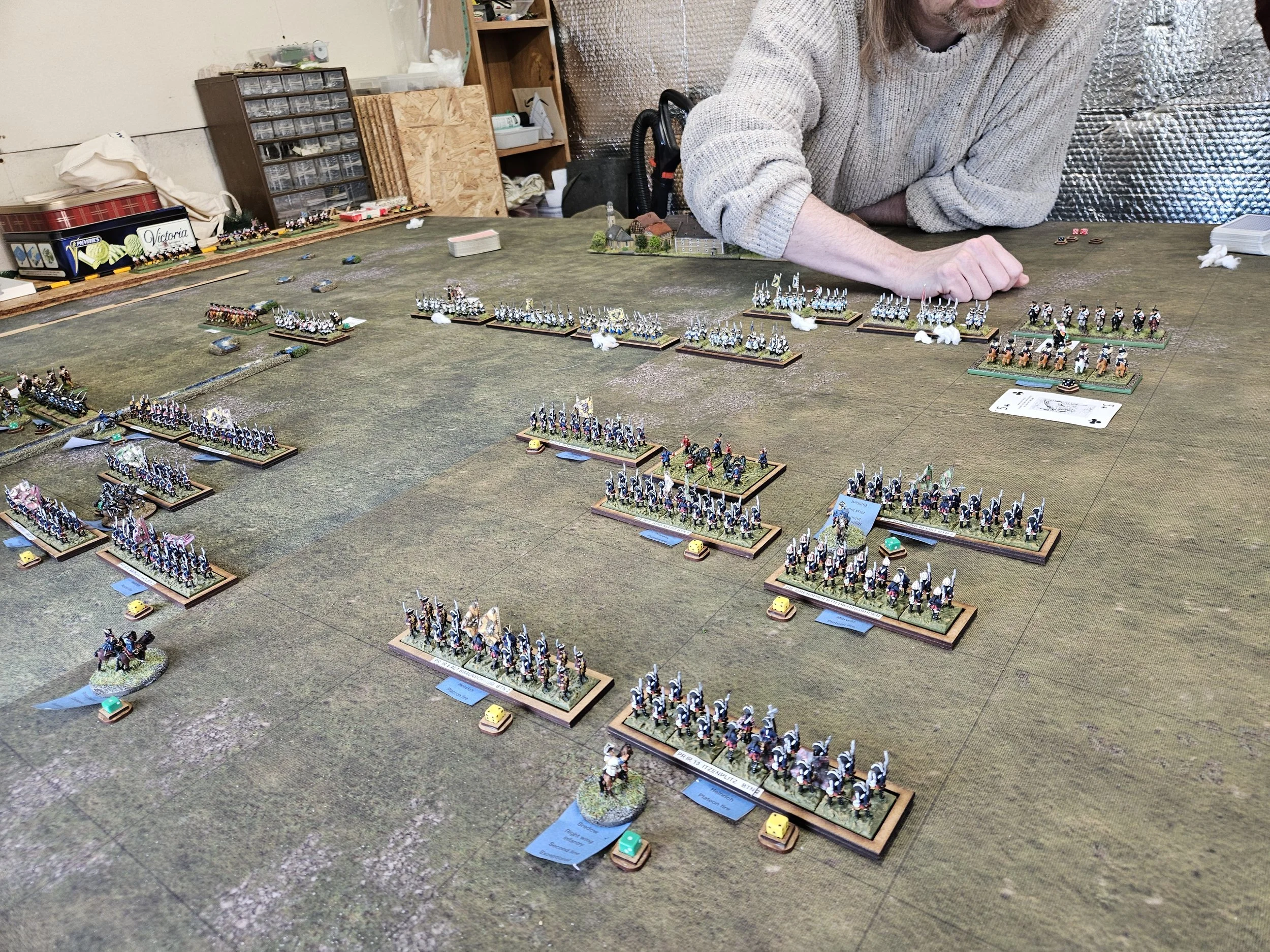
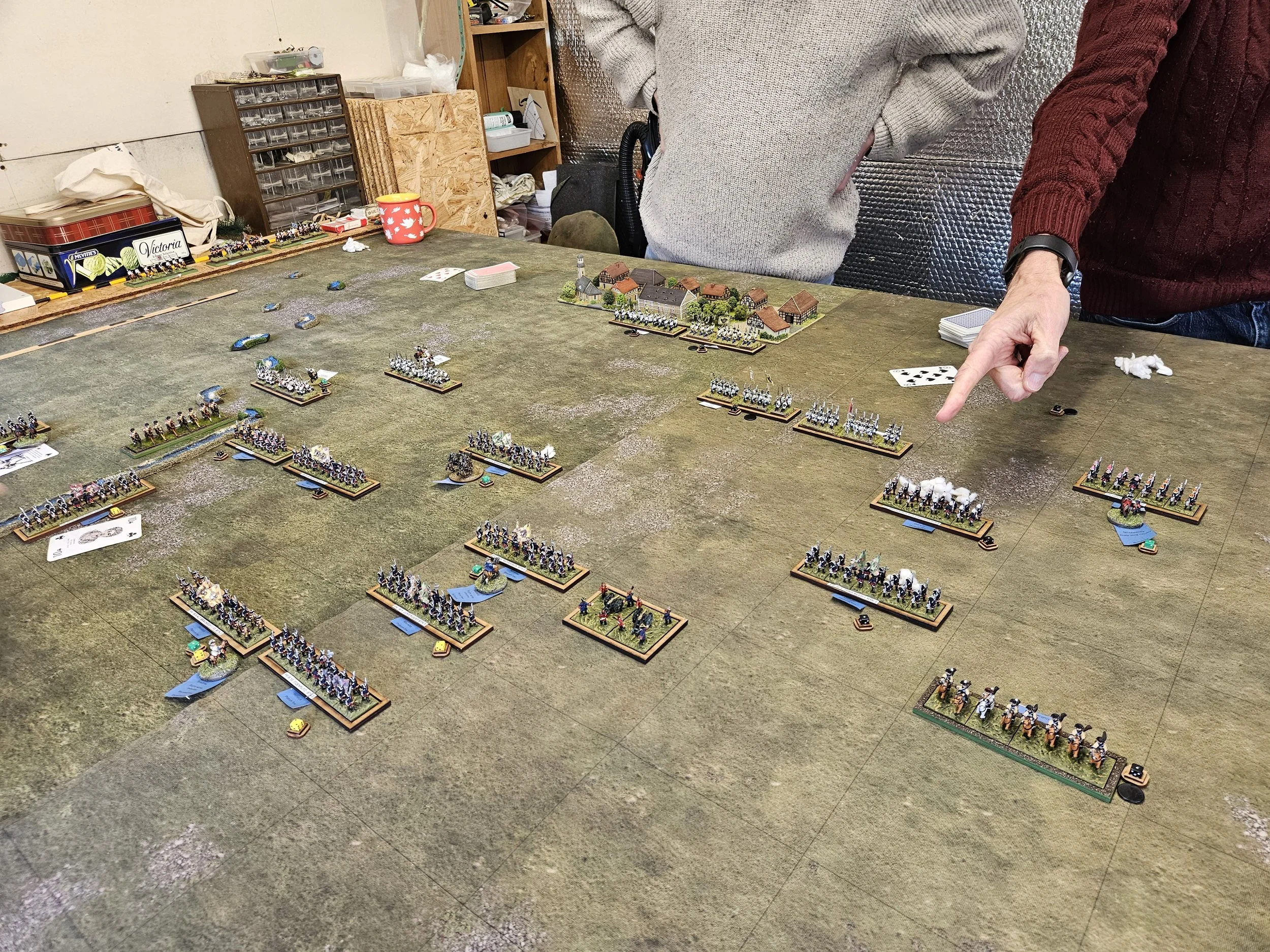
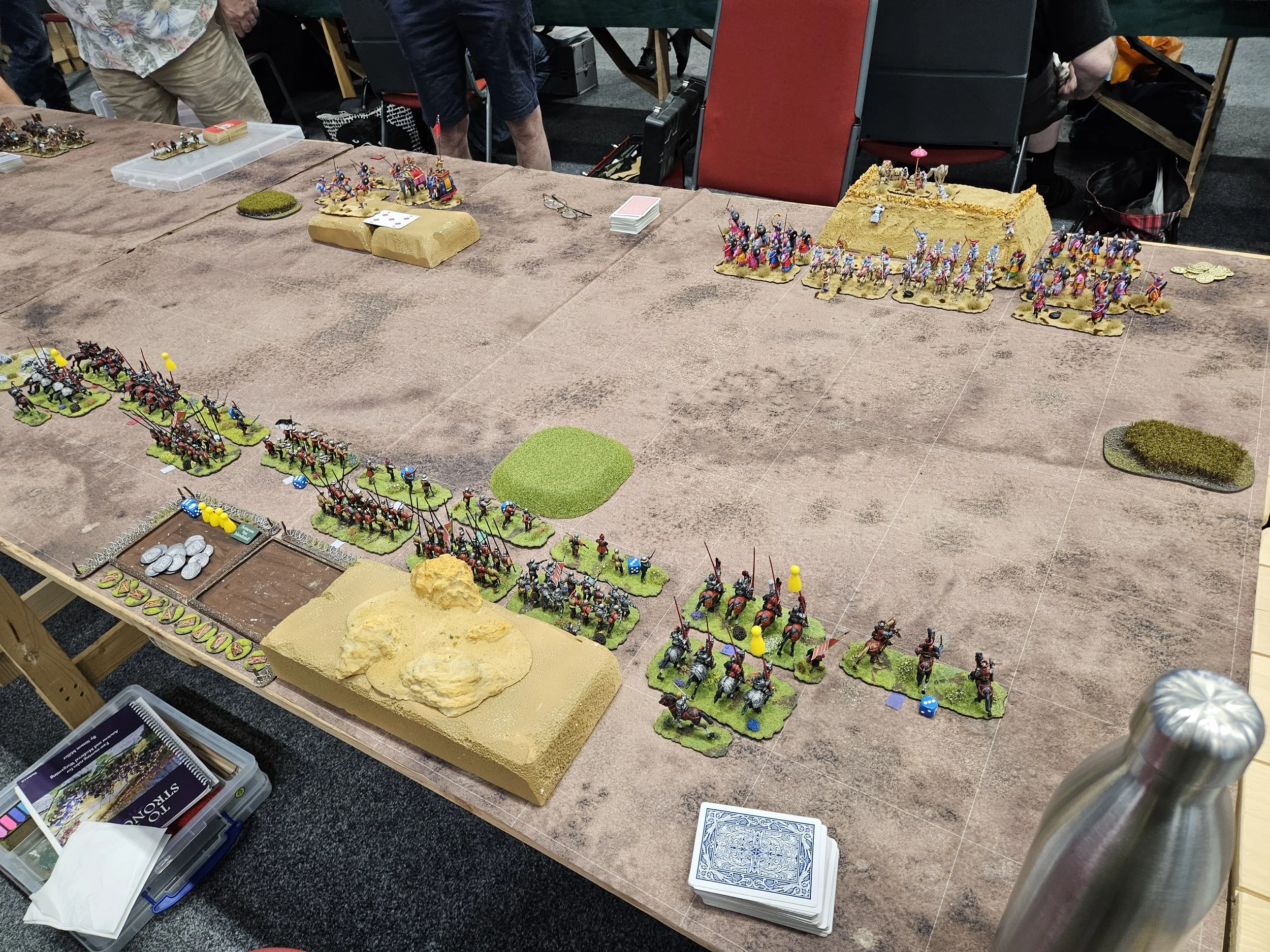
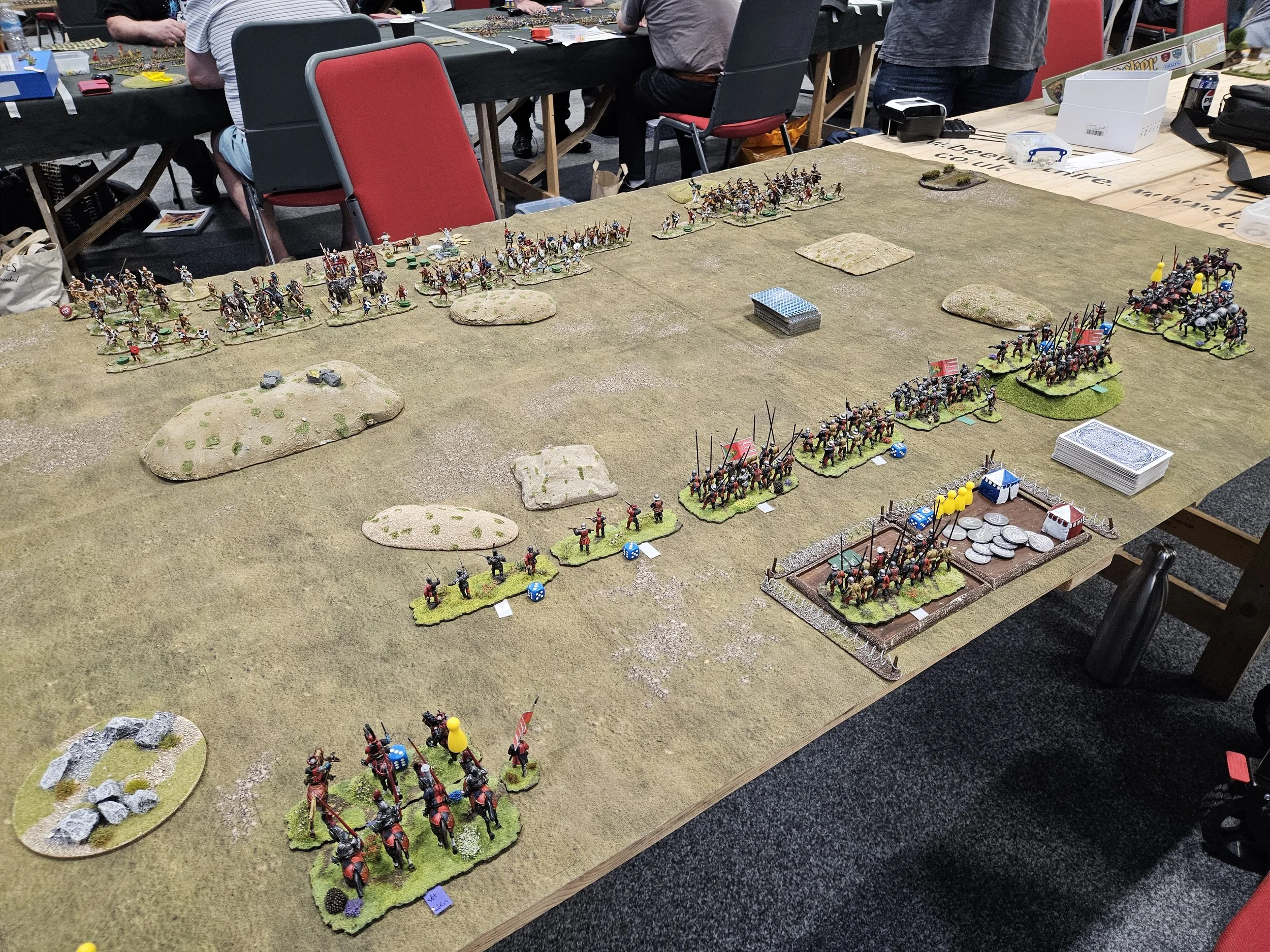
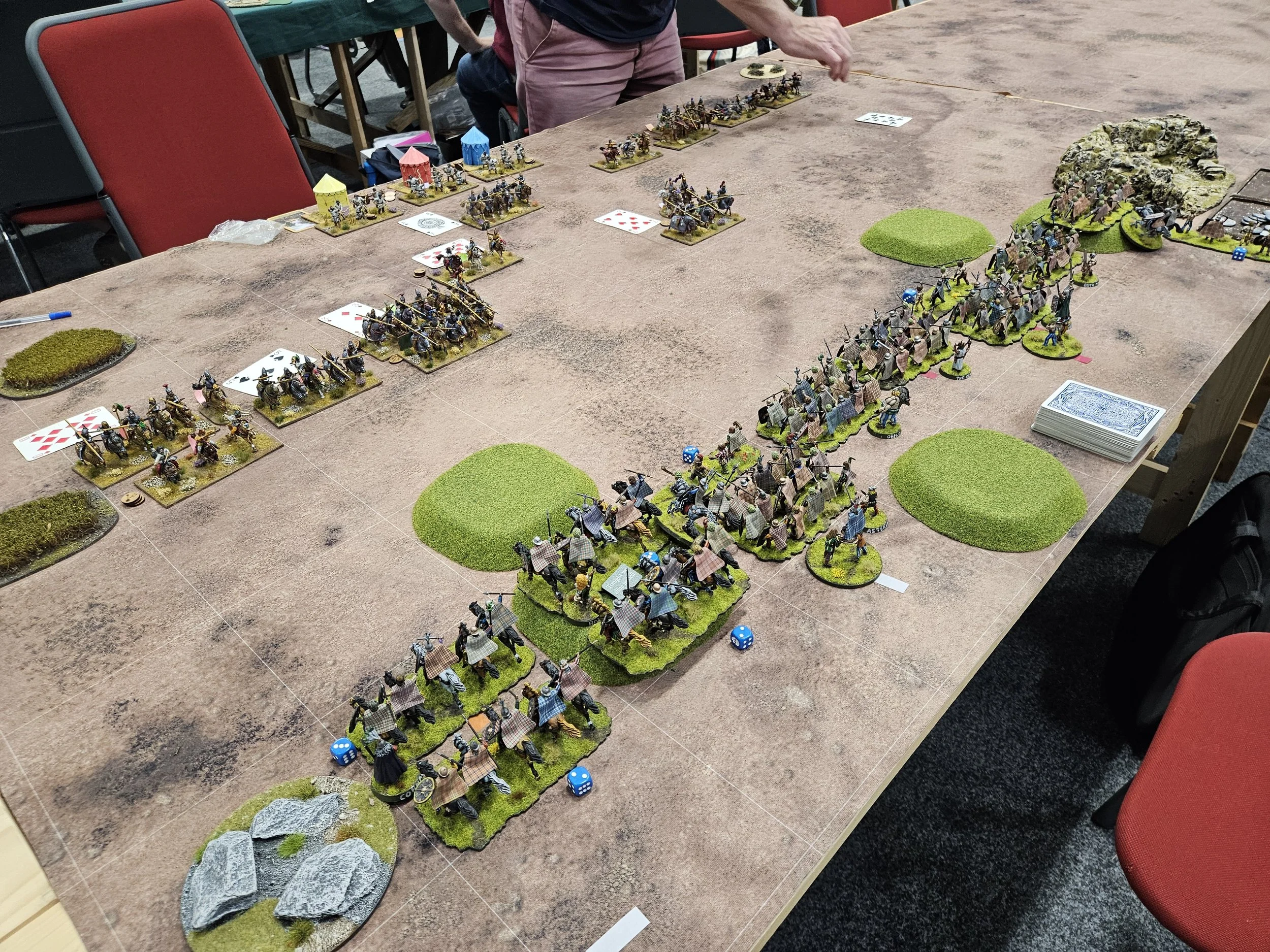
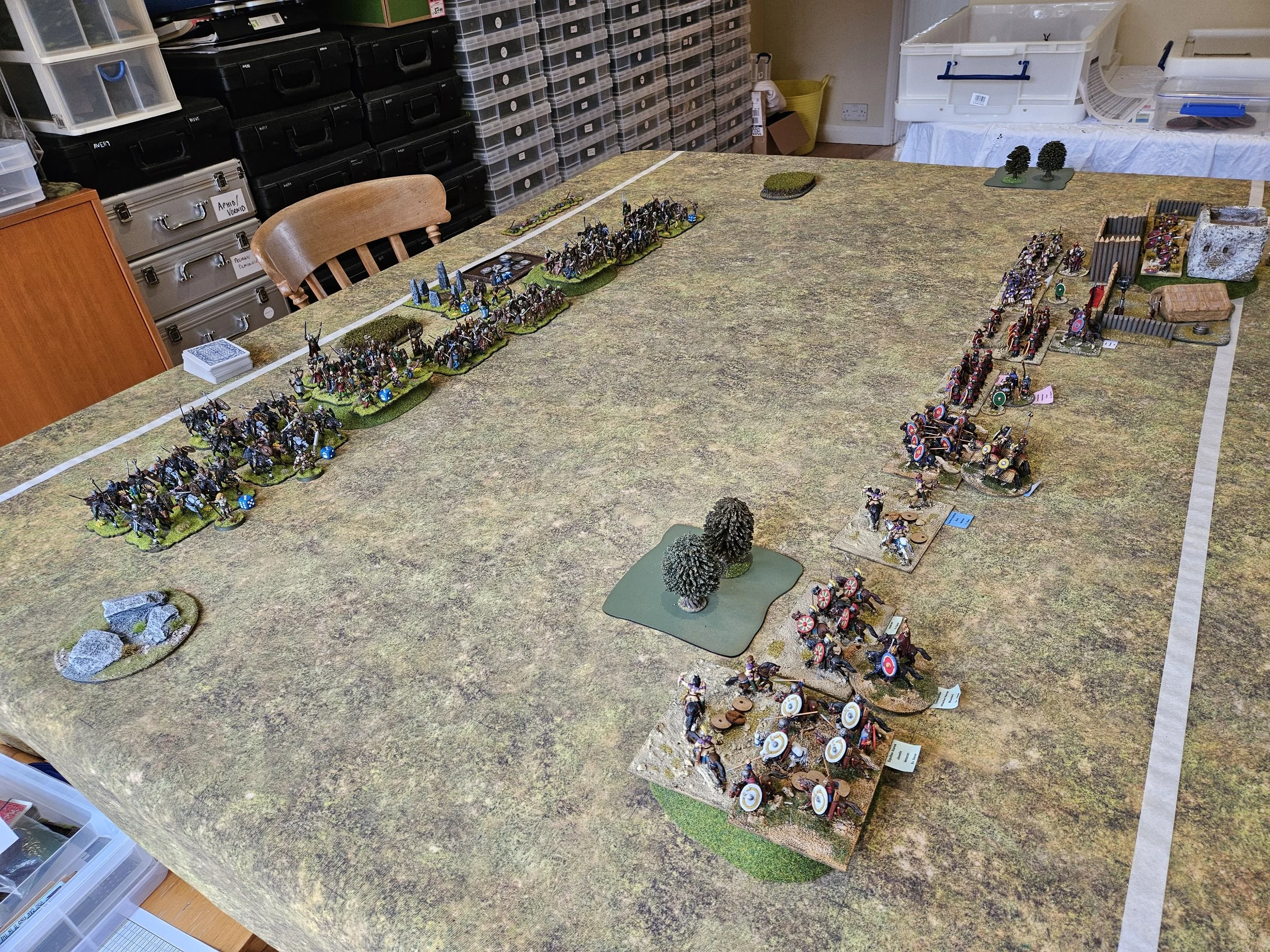
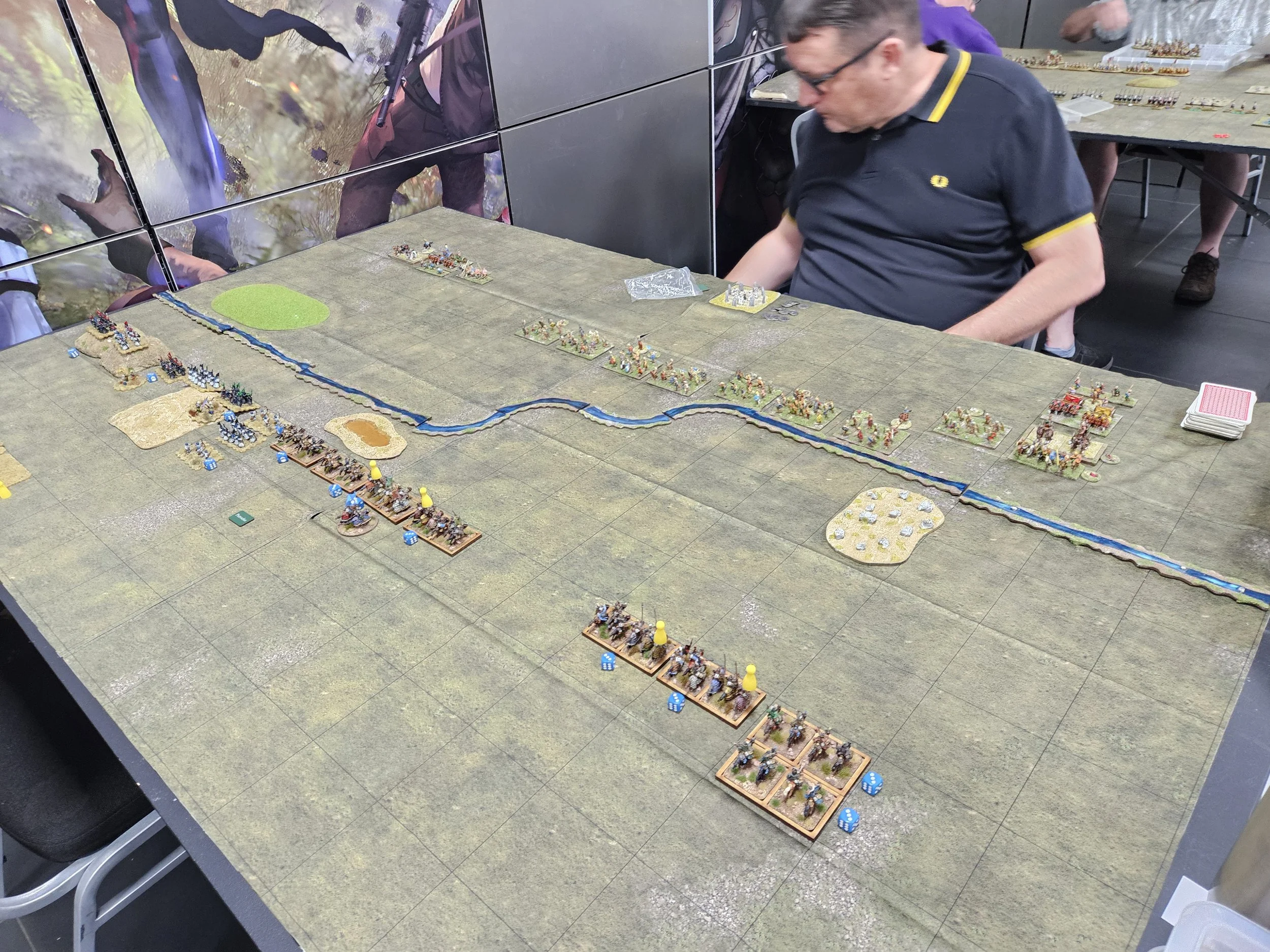
View from behind the Austrian lines: Lobositz is top right, near the mug

The massed Austrian infantry you can see at the bottom of the picture, above, played no part in our last game, as I had taken Lobositz before they had a chance to get stuck in. I was determined not to let that happen this time round, so rather than advance either my cavalry (centre) or other infantry (top right) forward, I waited for the Prussians to come to me.

I was then very lucky, as Mark (my opponent) twice failed to activate his main infantry body (it’s that mist again!) meaning that rather than face a combined arms onslaught, only his cavalry came forward in the initial phase of the game.

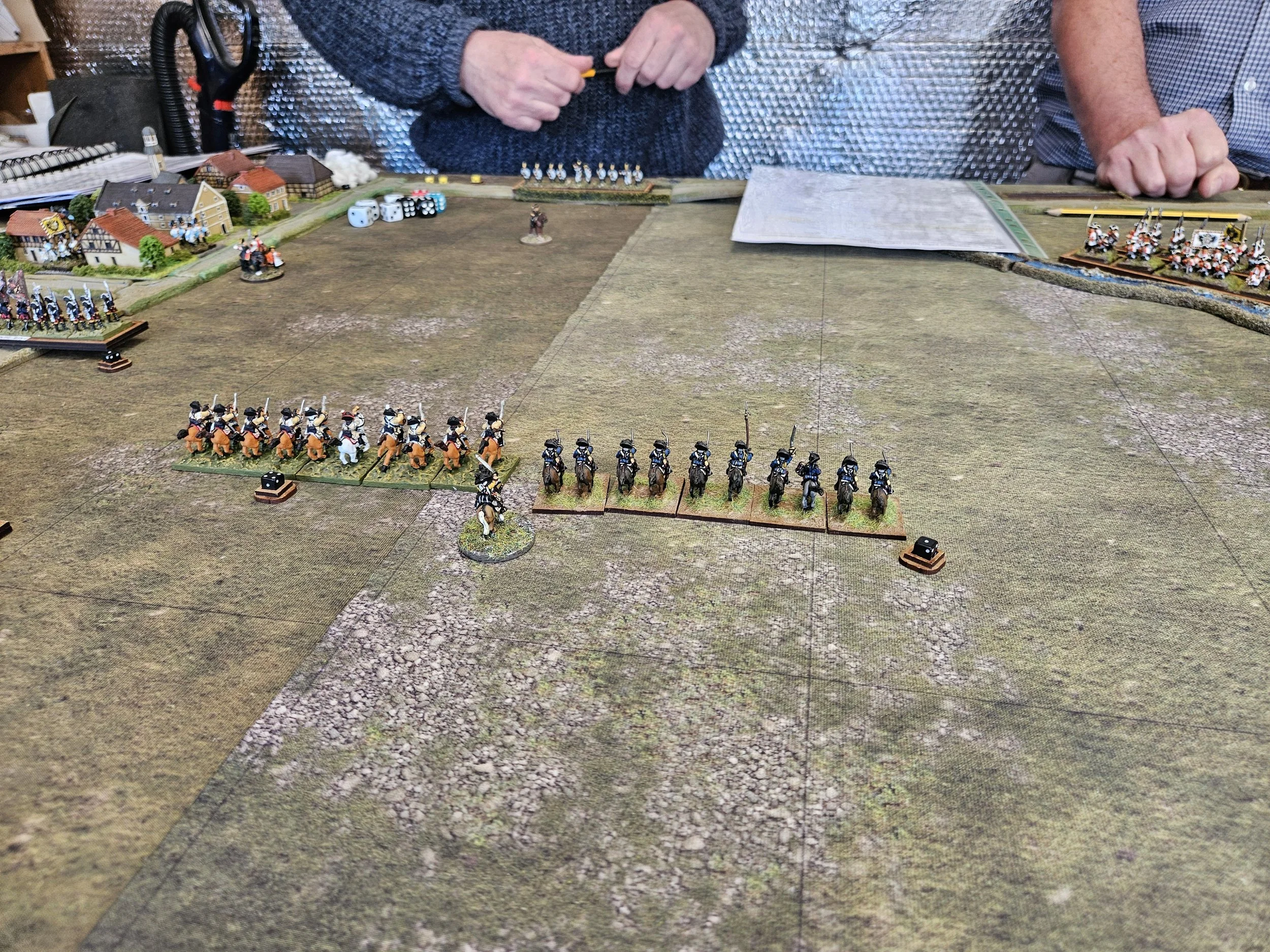
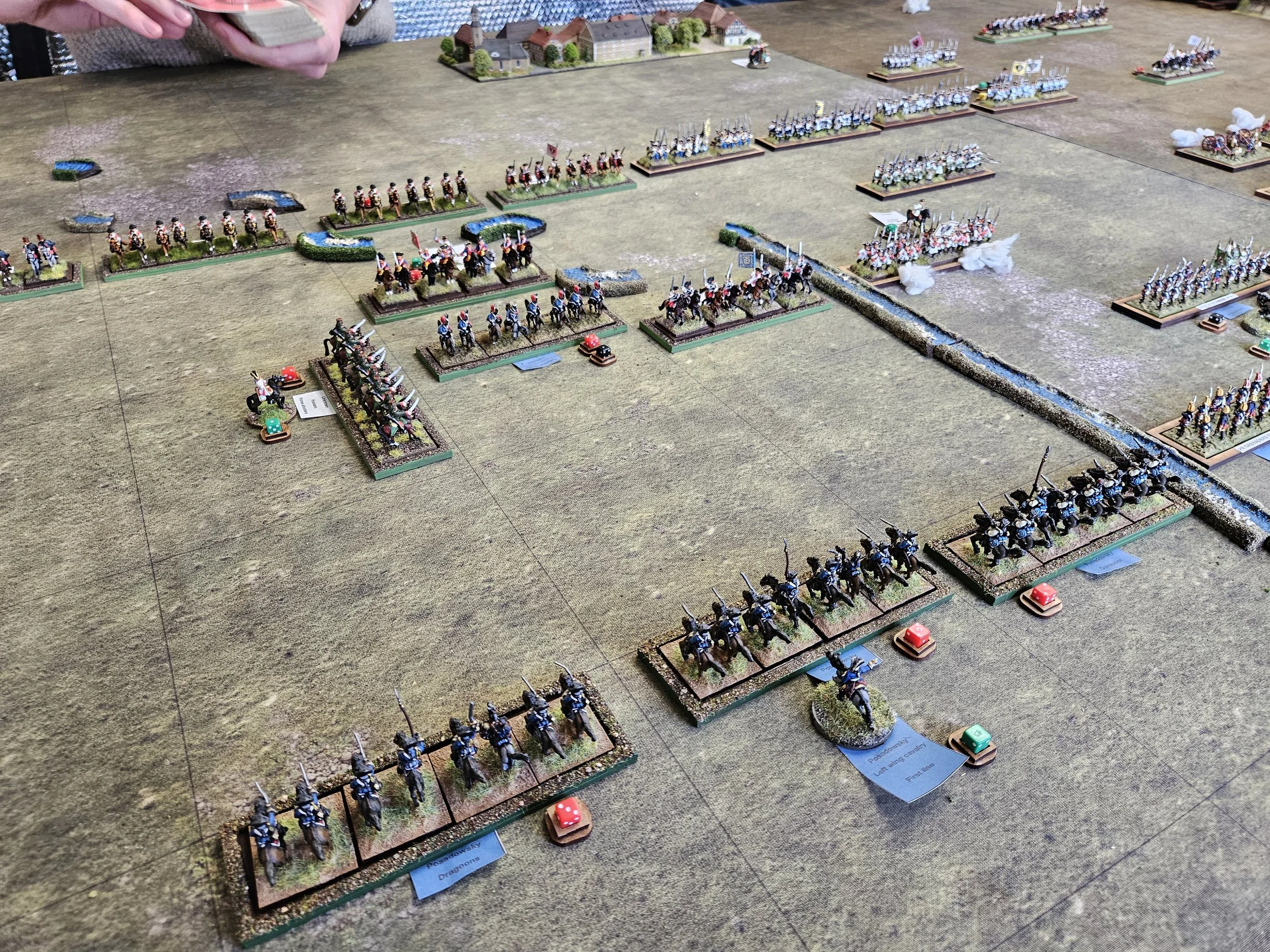
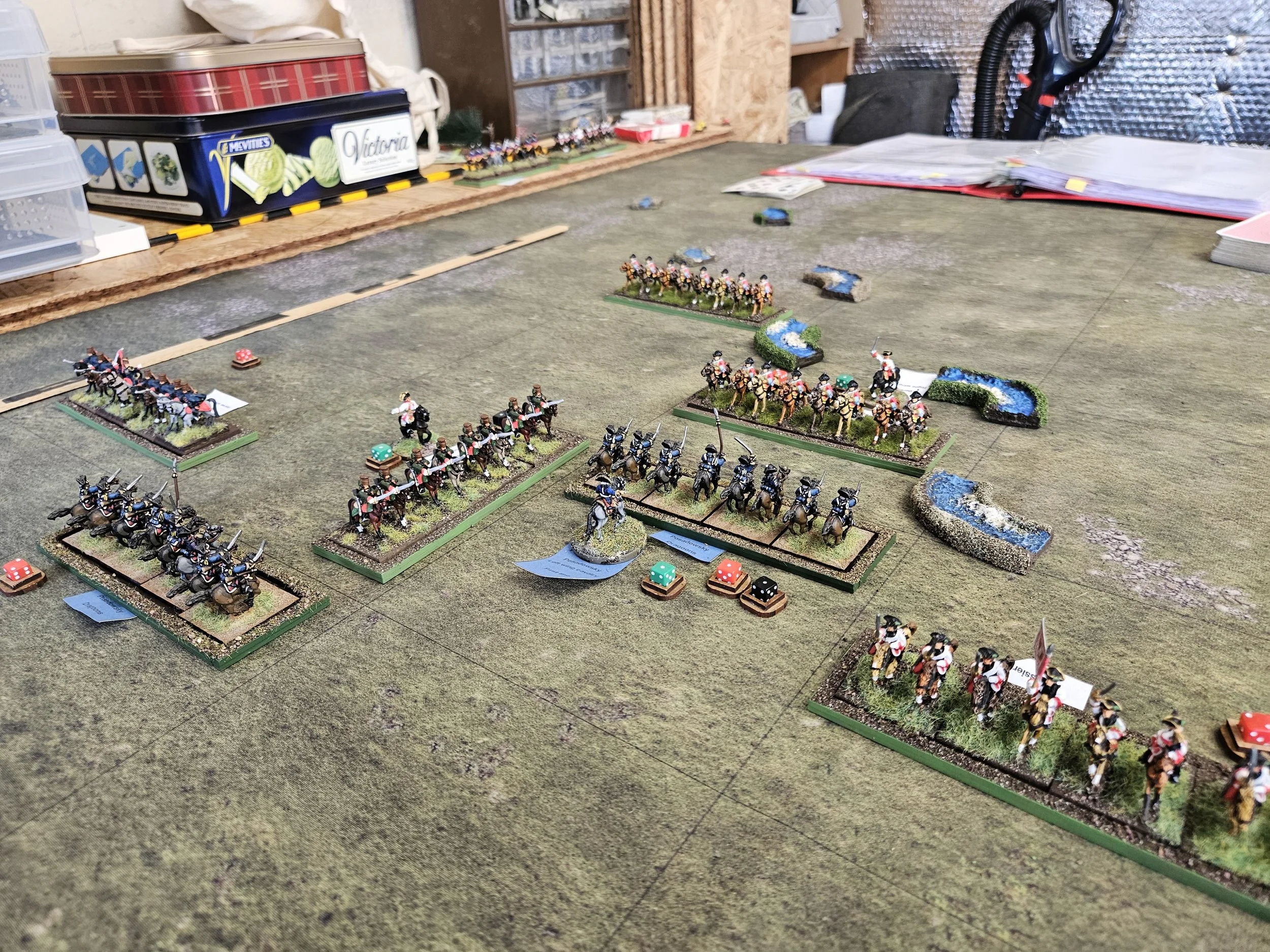
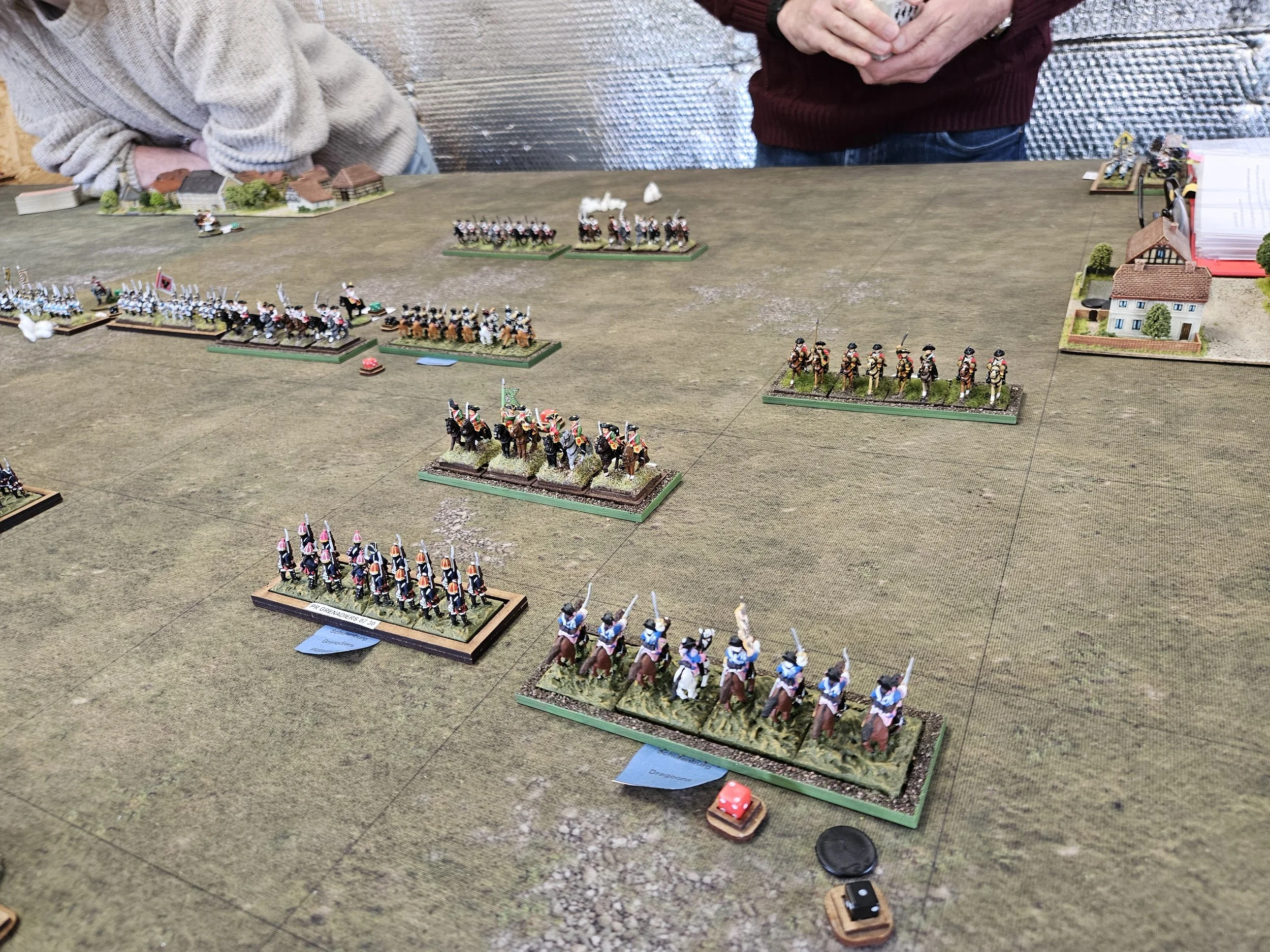
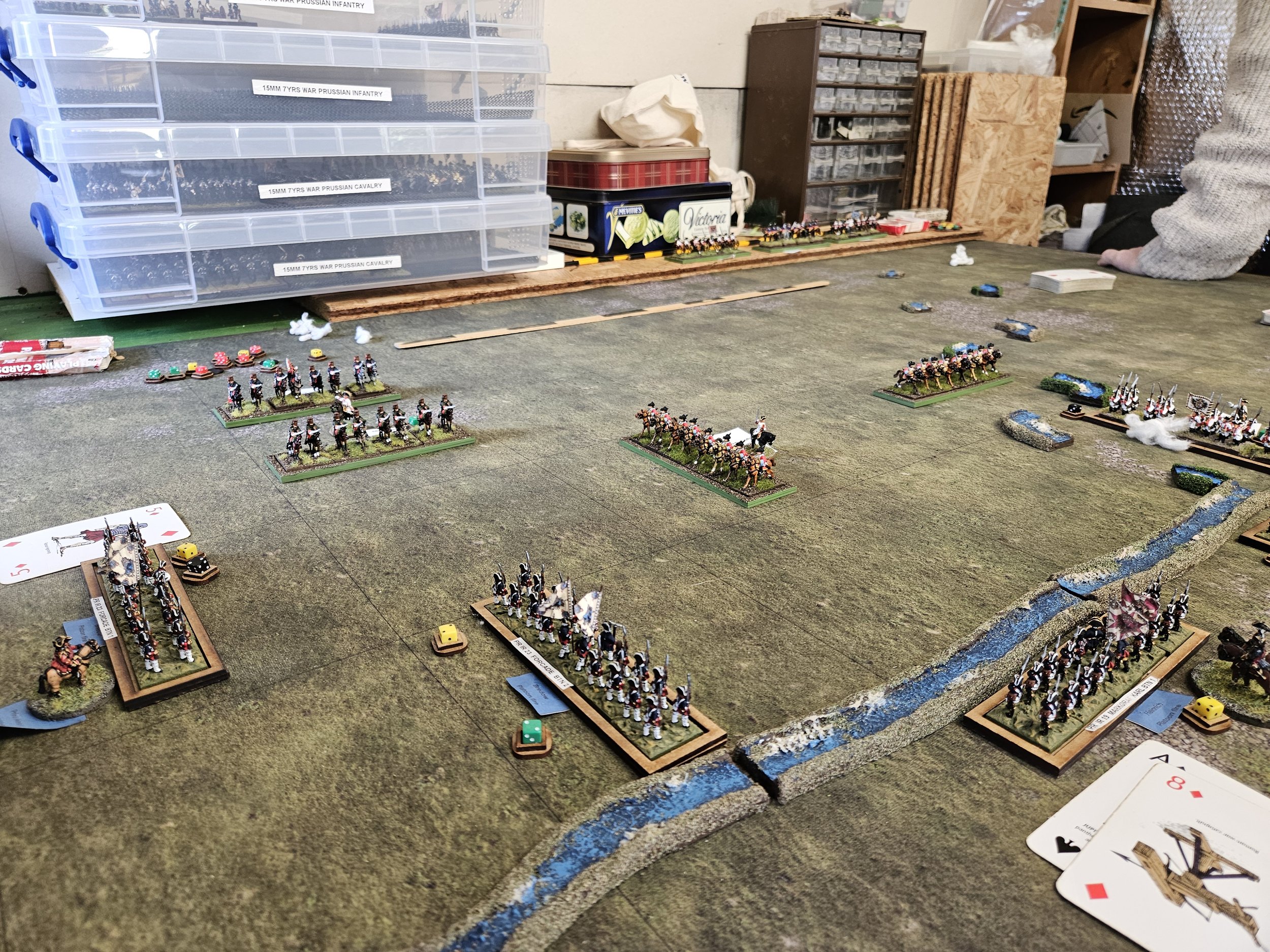
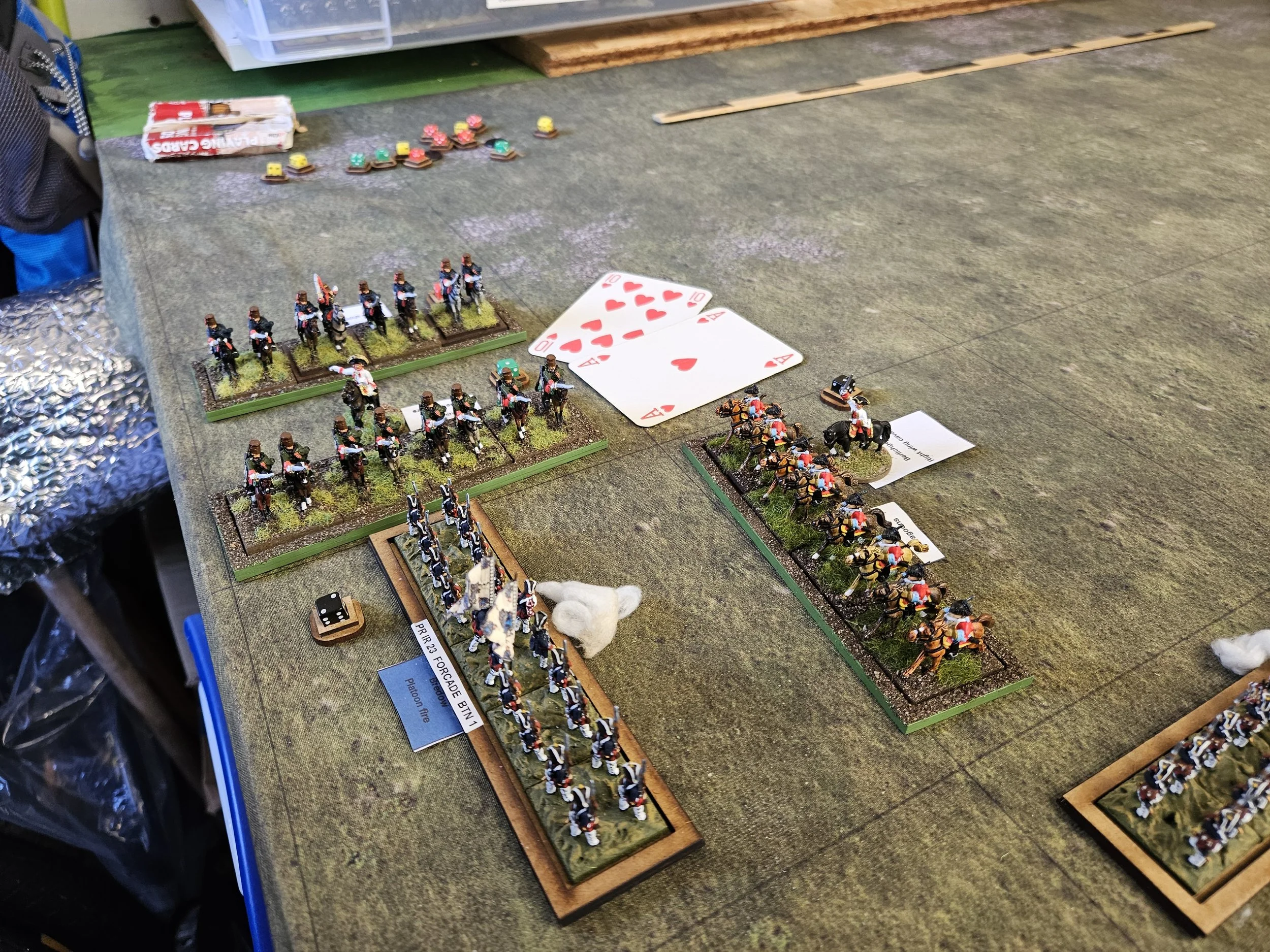
My own cavalry waited until the perfect moment to charge the Prussian horse, with my first line of horsemen (supported by artillery from the left) soundly defeating the Prussian first row.

Normally, I would have followed up by charging blindly into the rest of the Prussians and watching my men be overwhelmed by a fresh enemy. But, mindful of my overall strategy of letting them come to us, I instead pulled my victorious but battered men back to regroup, forcing the remaining Prussian cavalry to advance even closer to my waiting infantry.
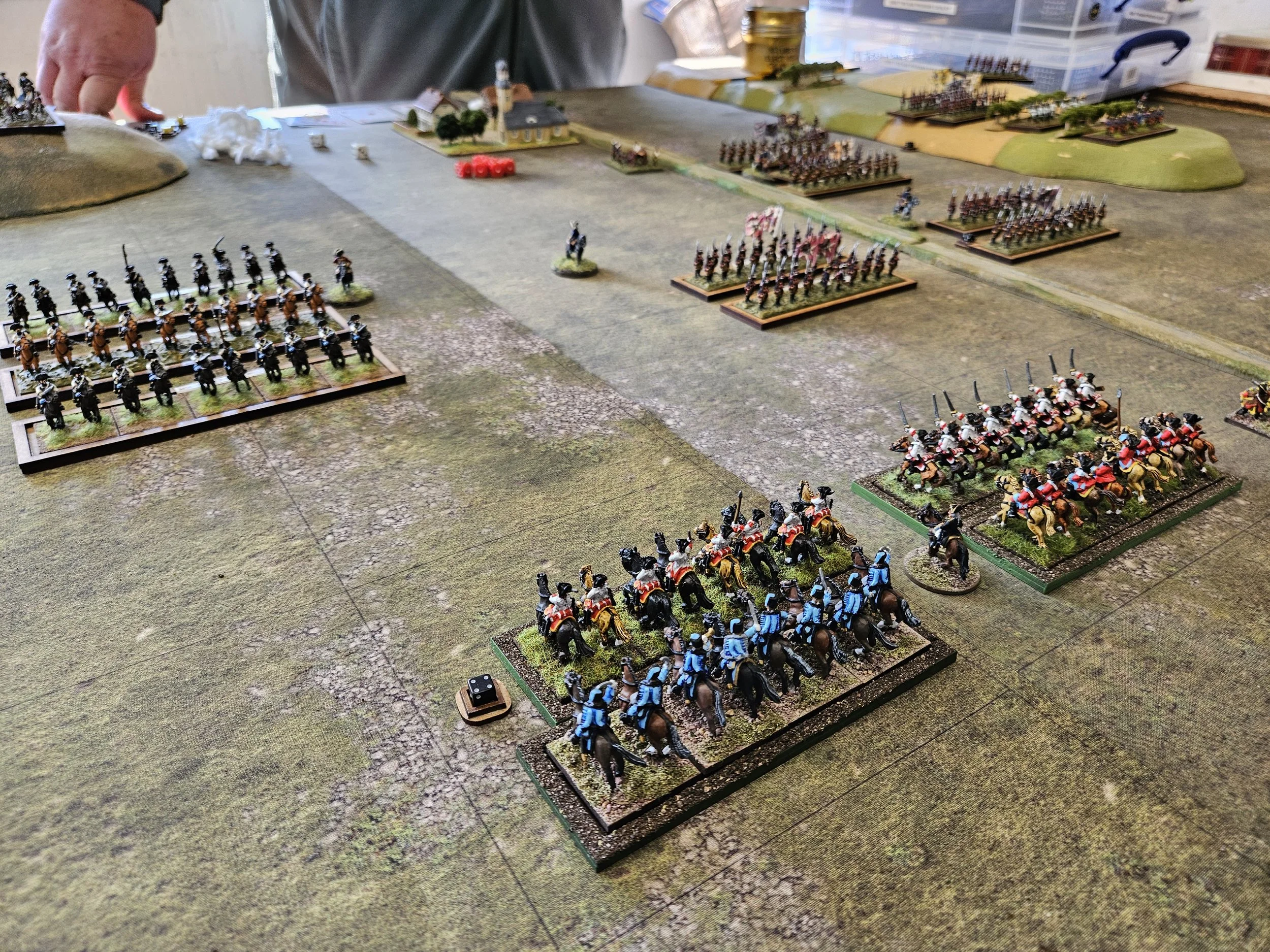
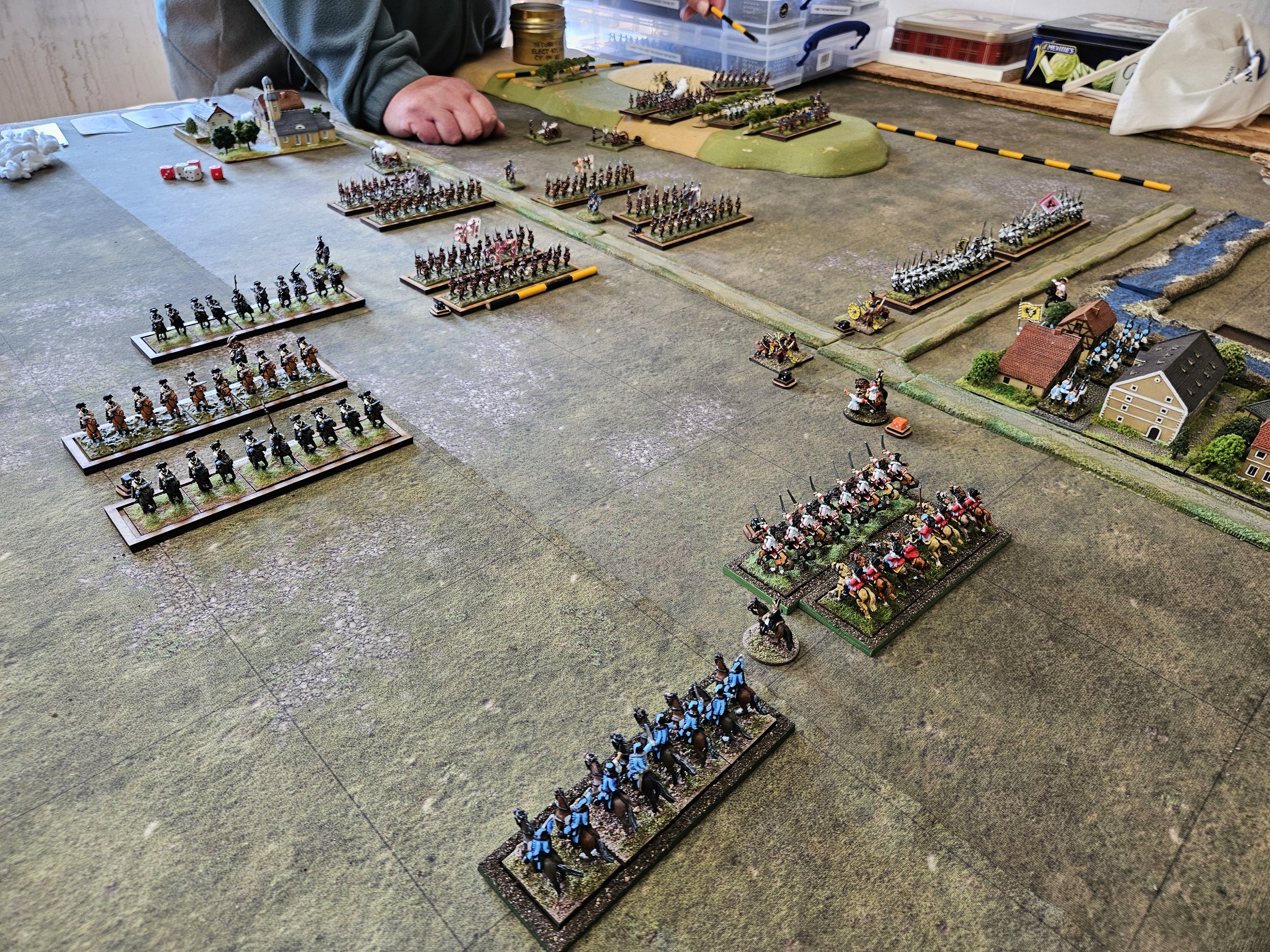
This meant that rather than losing all my cavalry (with the resultant risk of army collapse) it was actually the Prussians that found themselves down on points as their infantry approached contact with my “thin white streak” in front of the town.

Even better, it also meant that my infantry on the left had time to get themselves moving, cross the brook in front of them, and threaten the Prussian right flank just as the climax of the battle began.
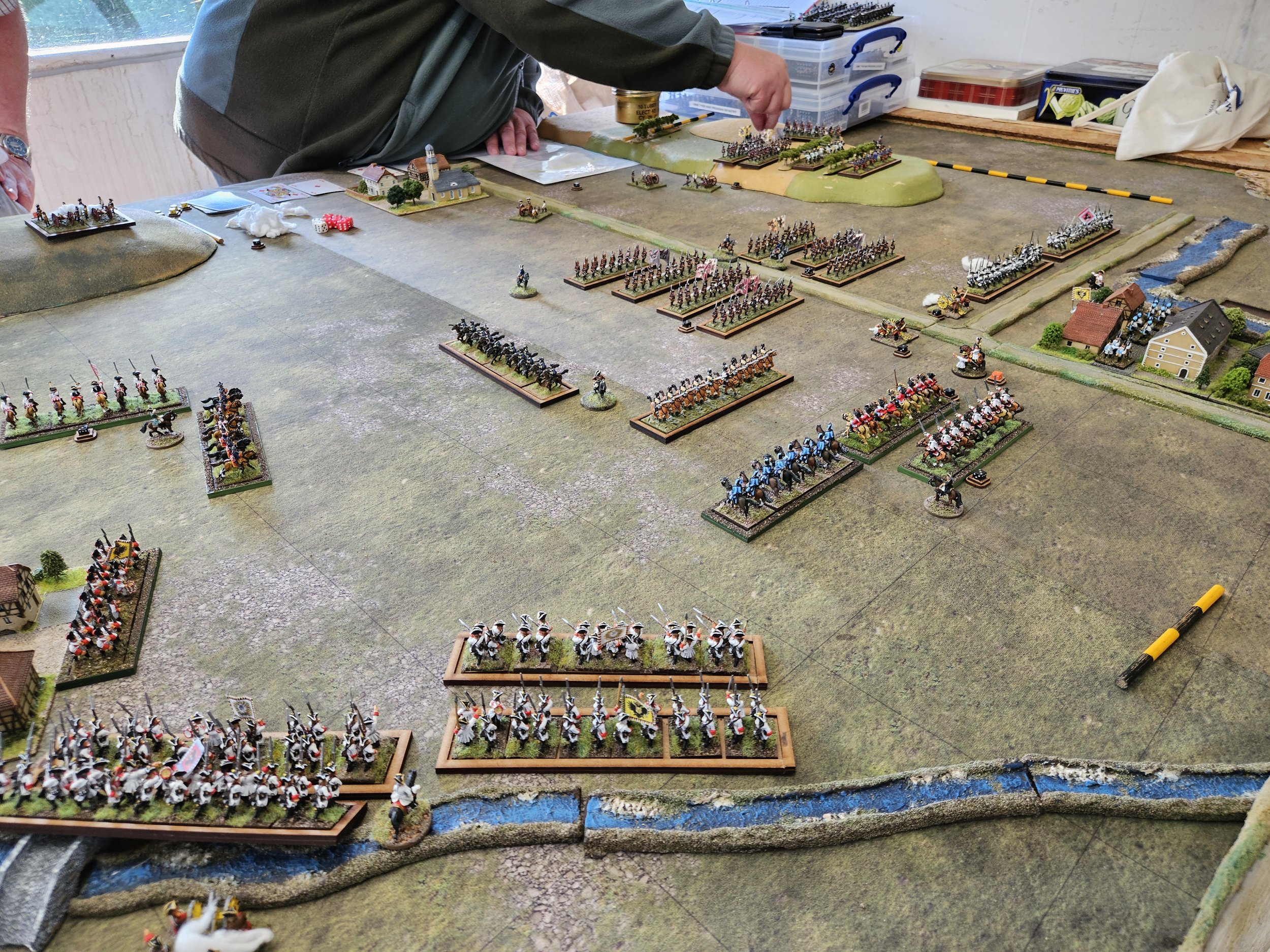
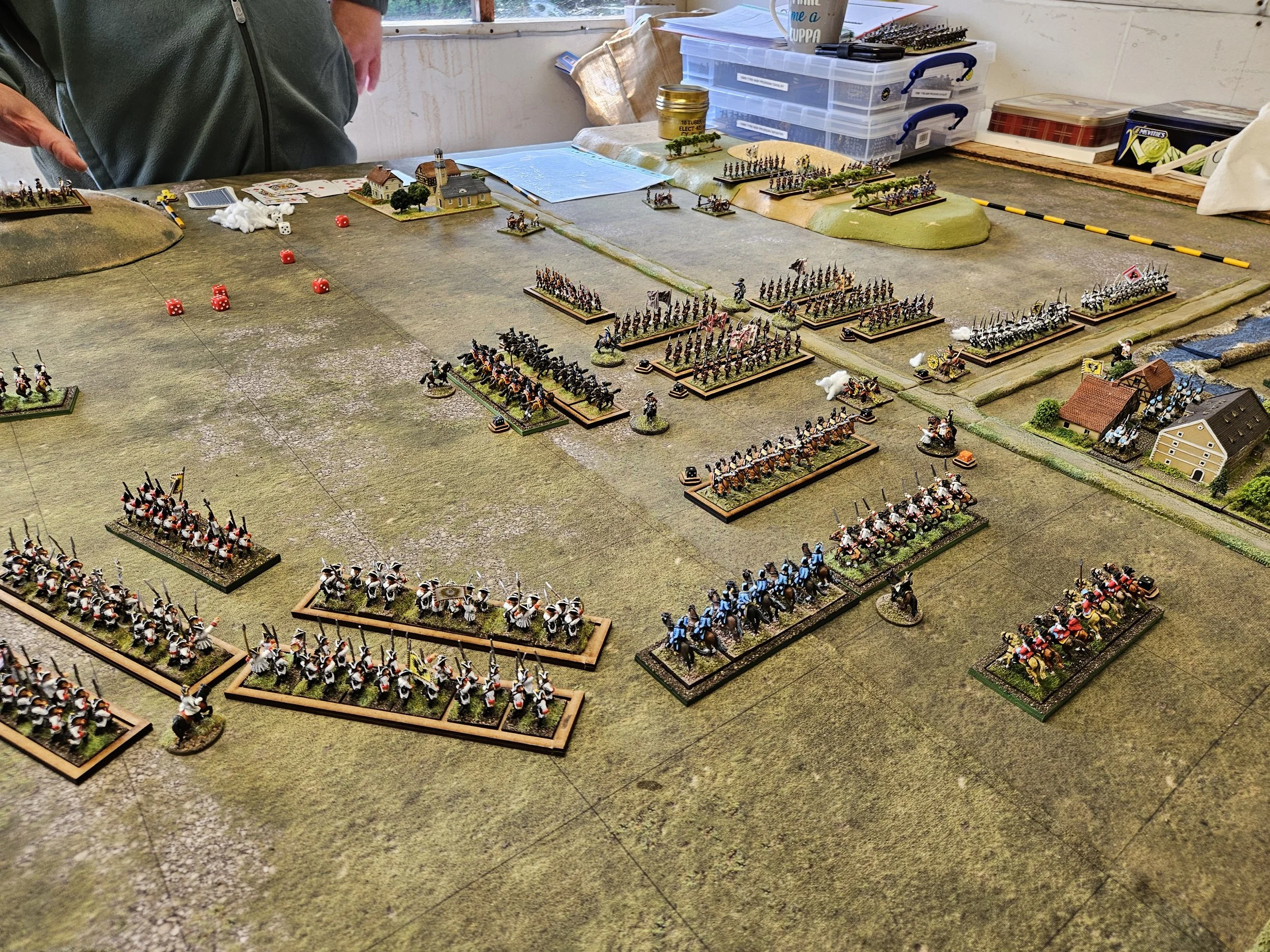
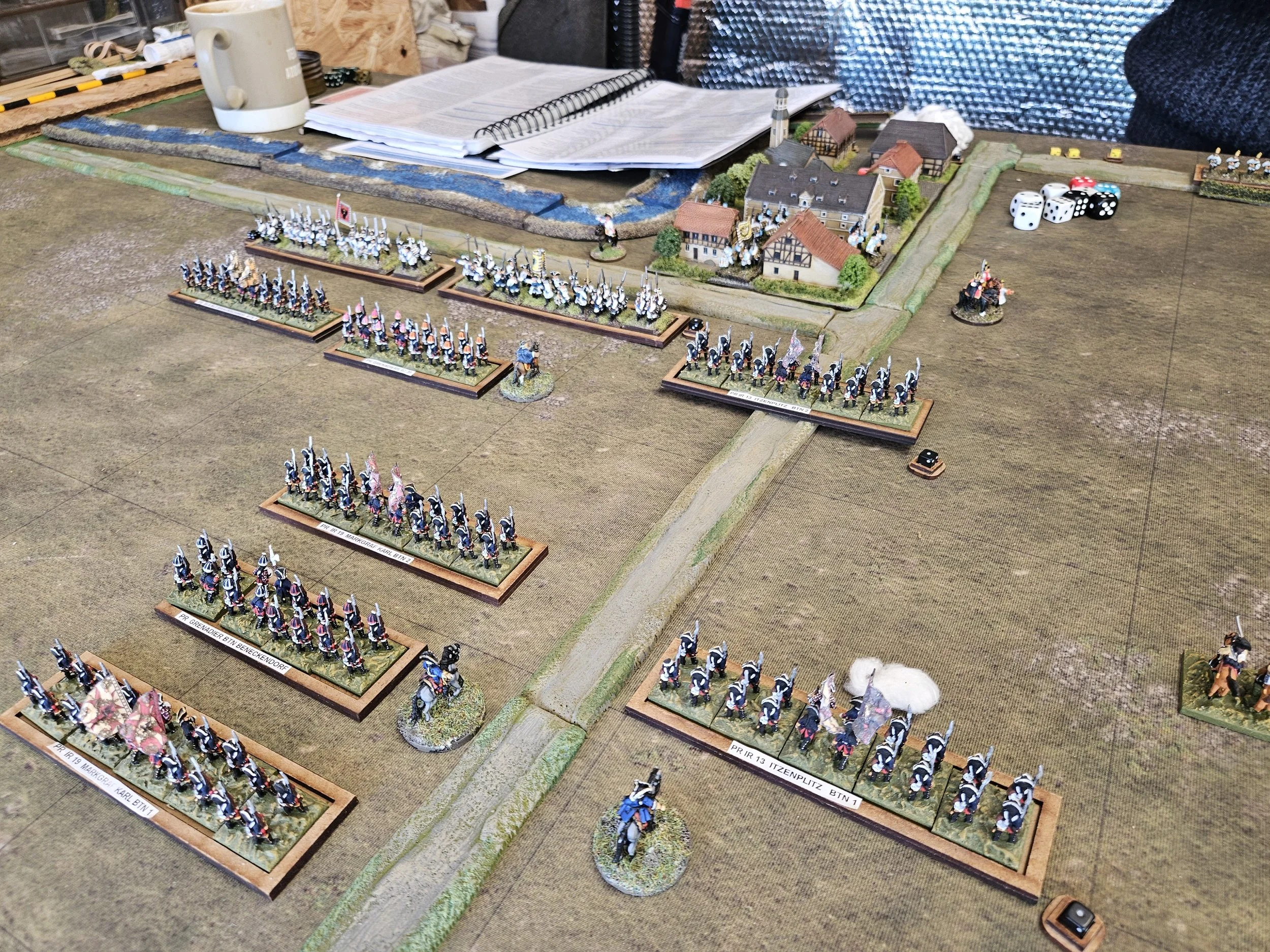
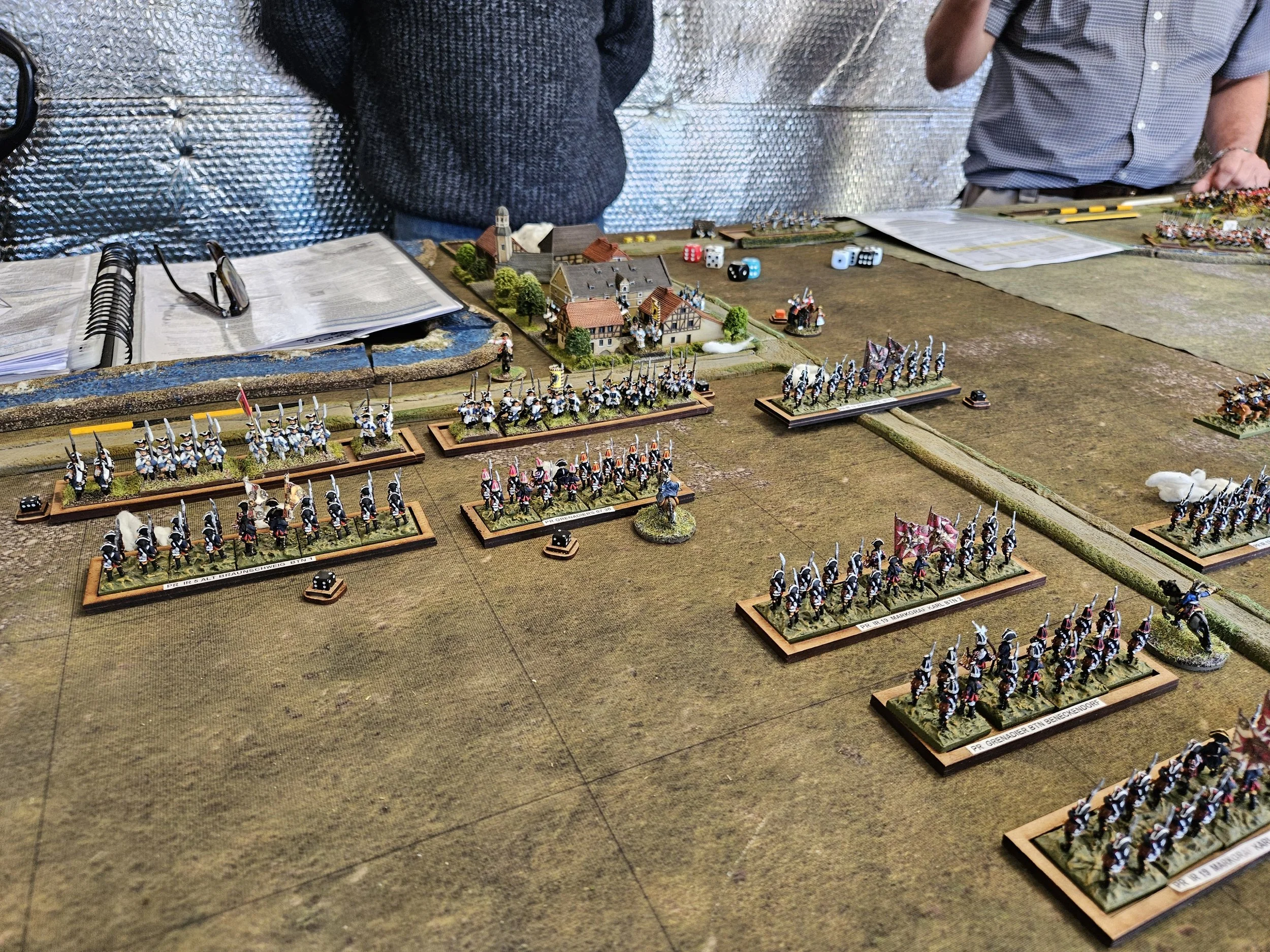
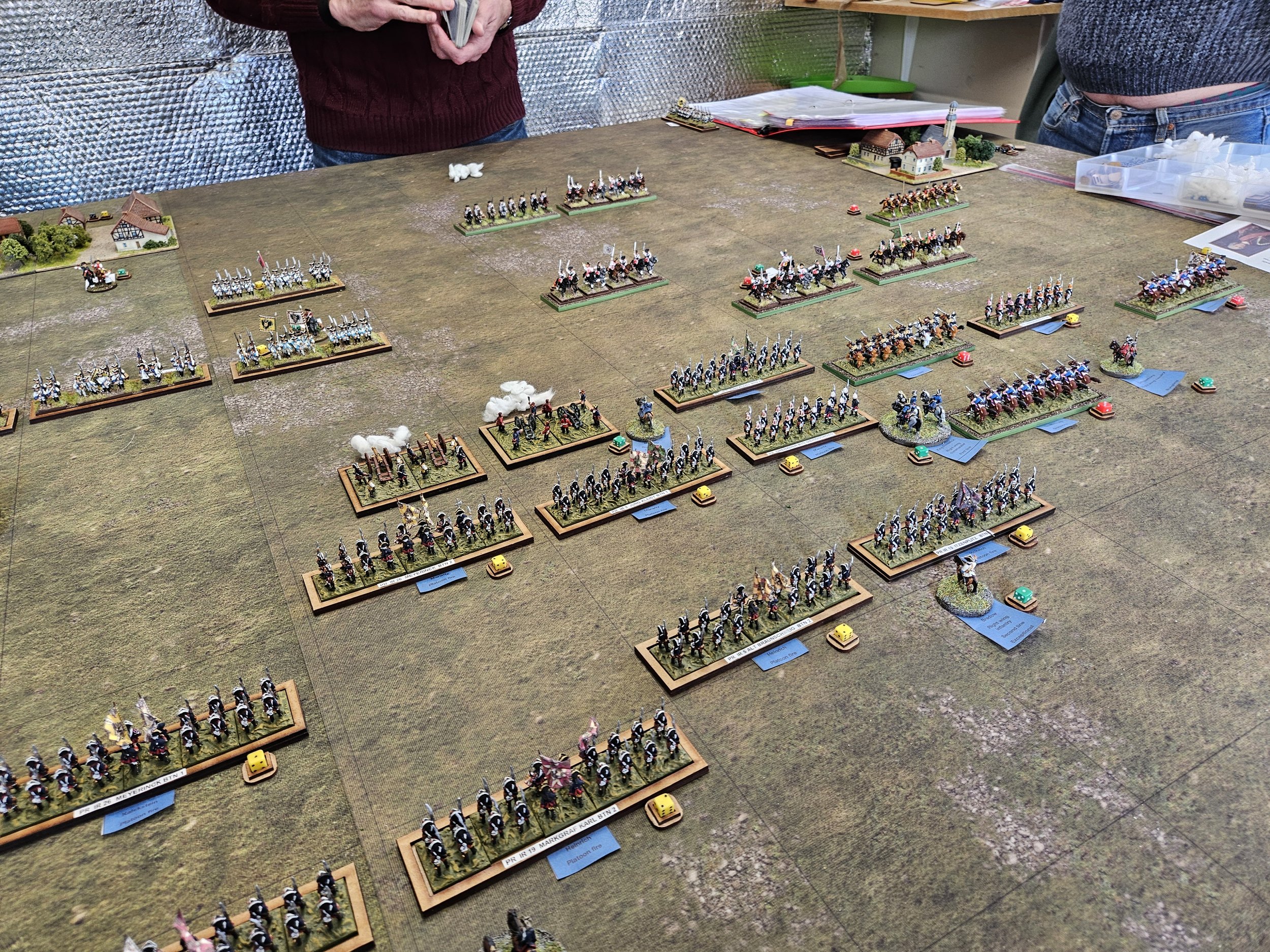
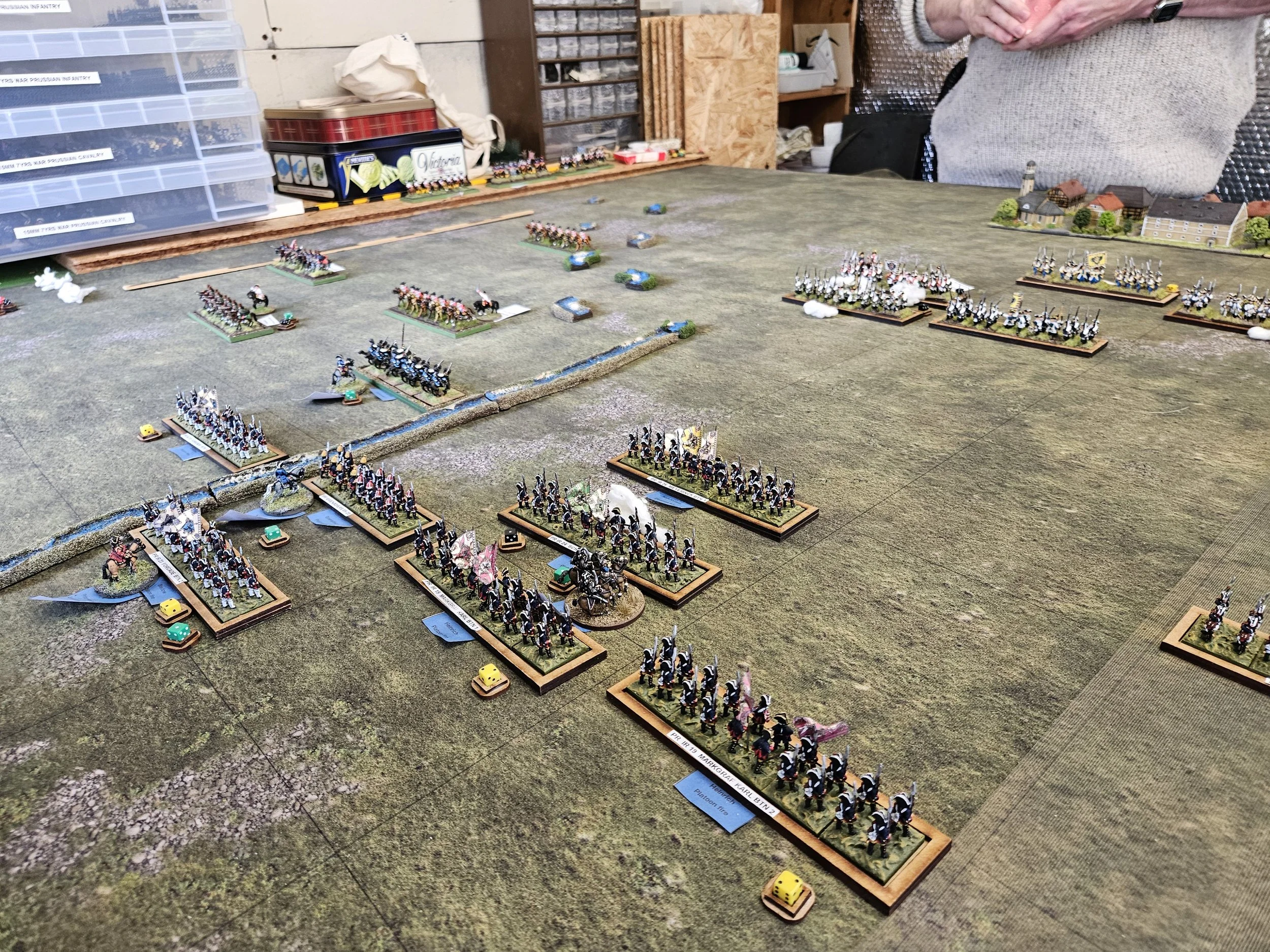
And that moment was now upon us, as two Prussian infantry brigades approached the two battalions of foot I had in front of Lobositz.

Usually this would be a foregone conclusion: a couple of rounds of musketry from the disciplined Prussian infantry, a quick charge in with grenadiers, and my men would have melted away like ice cream in hot sunshine - but not today!

Worried about their right flank, the Prussian paused to reorganise before advancing to contact: something that gave me more time to pour cannister and musketry into their close-packed ranks.

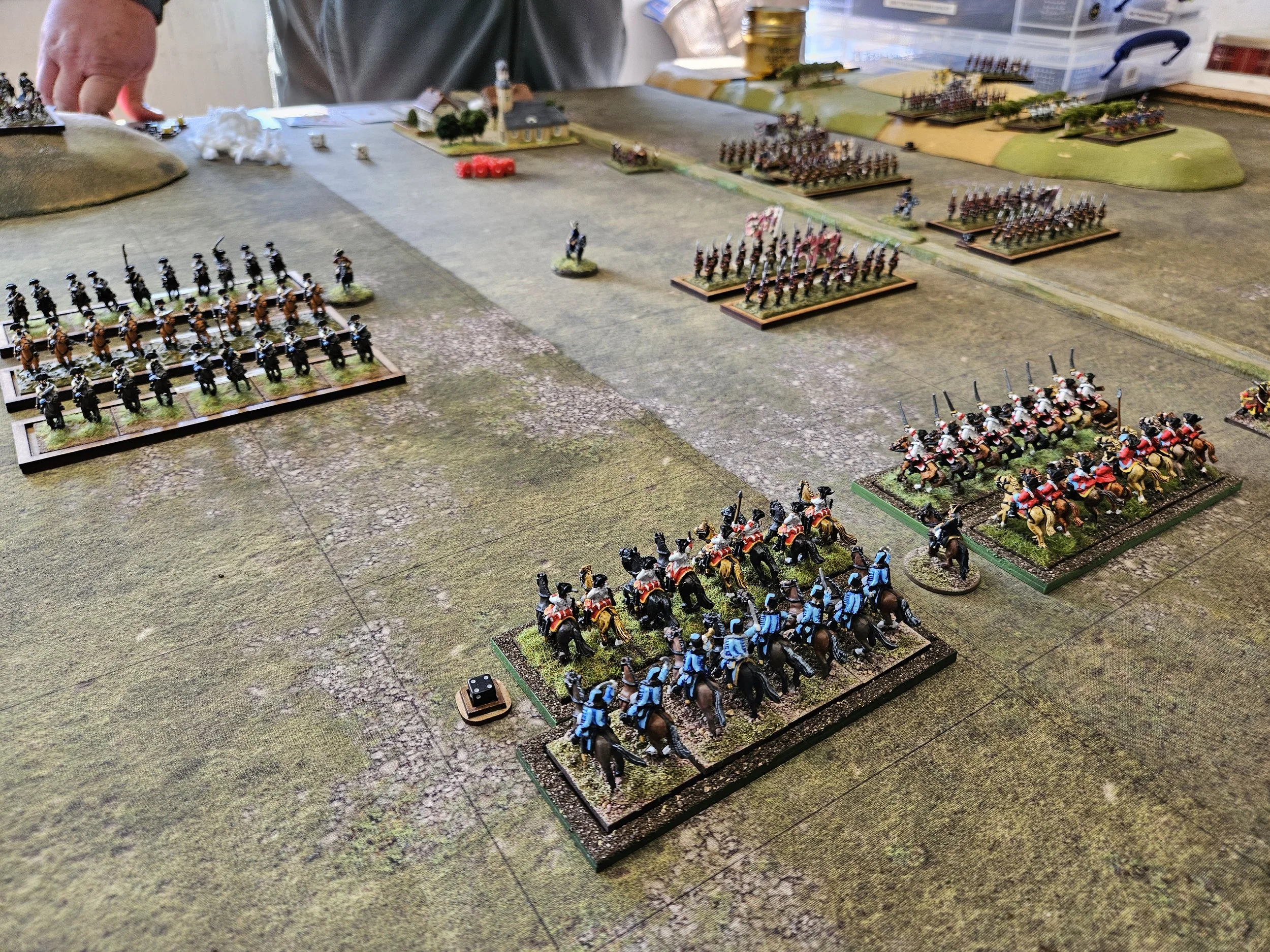
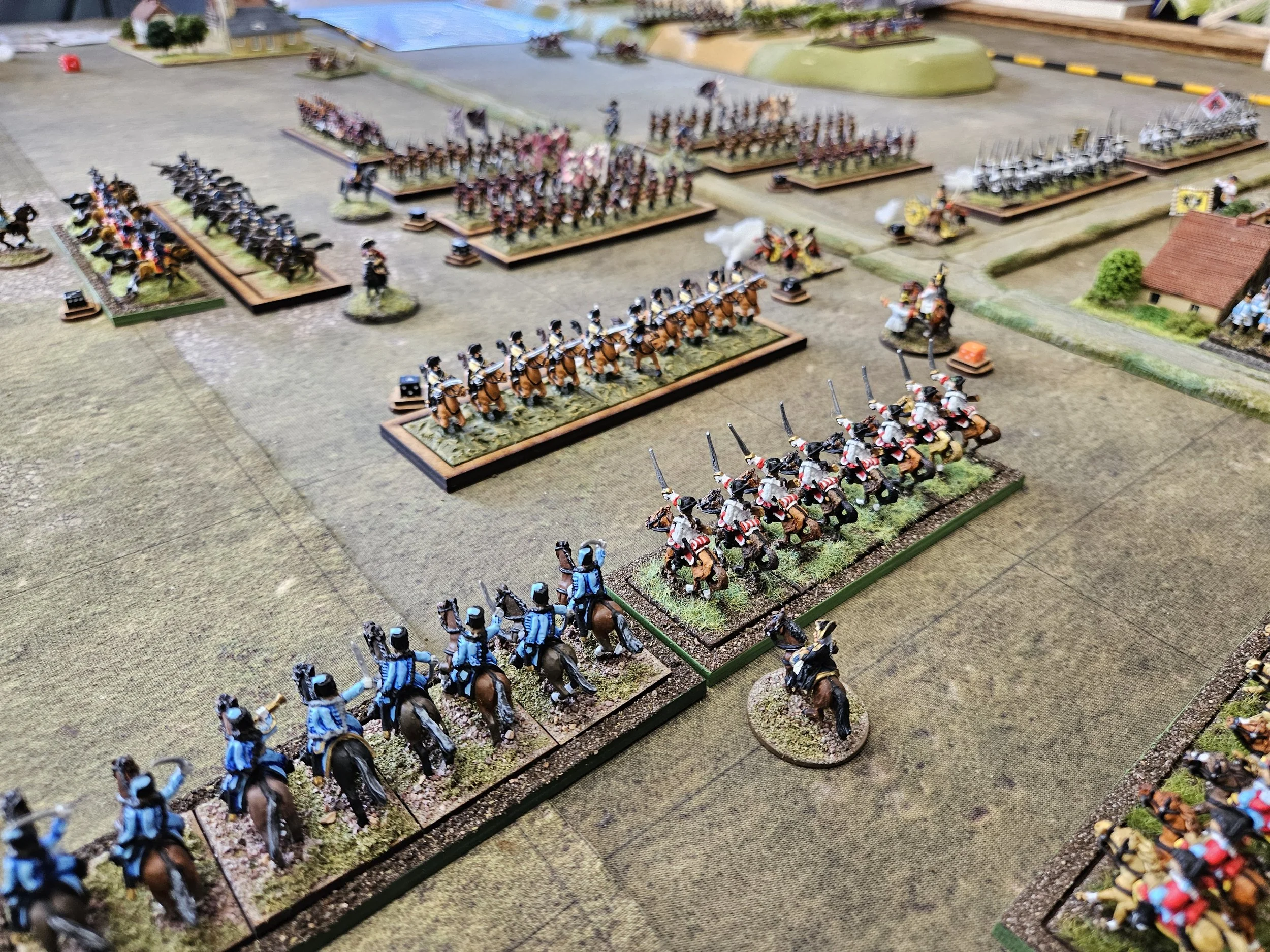
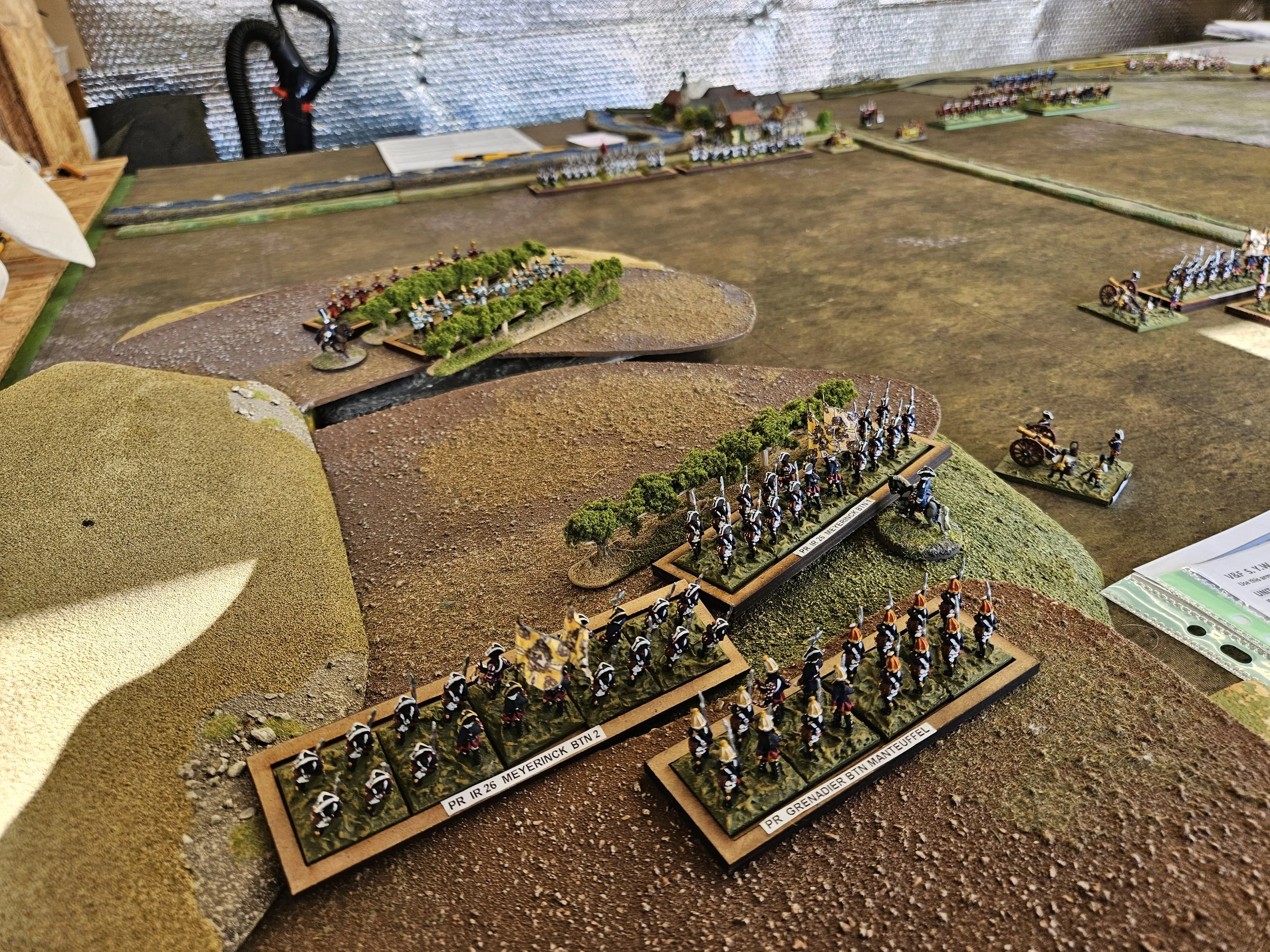
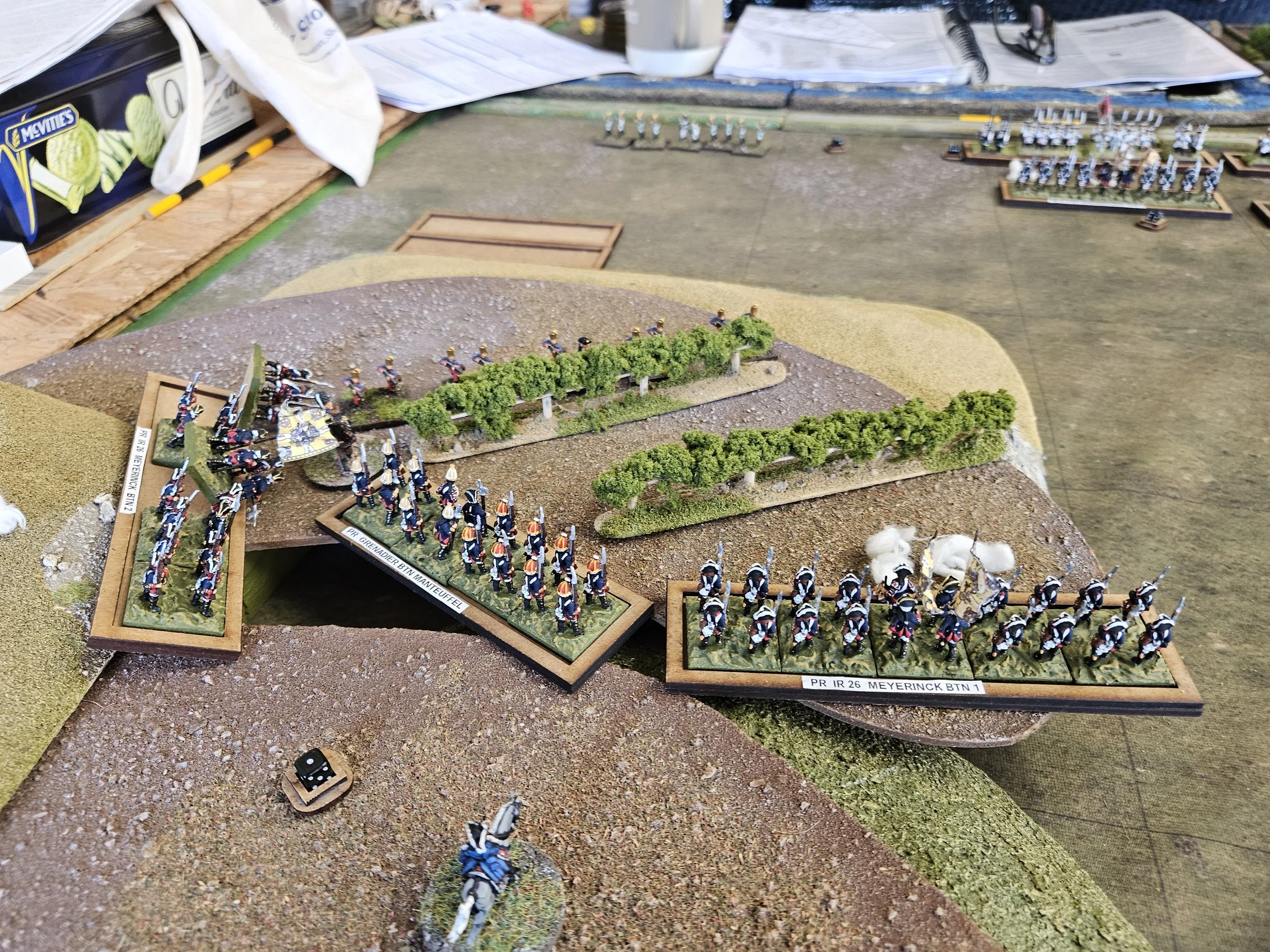
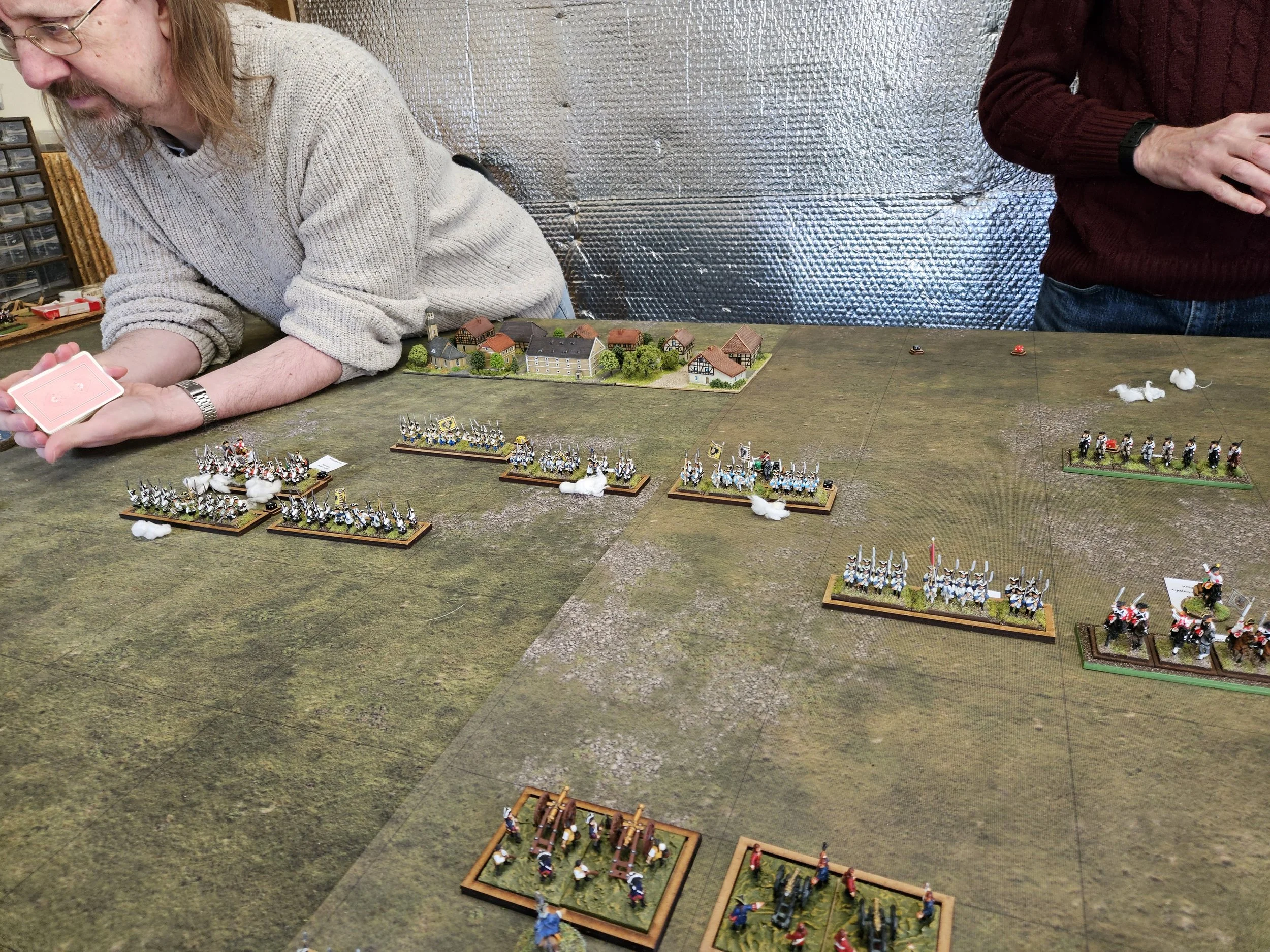
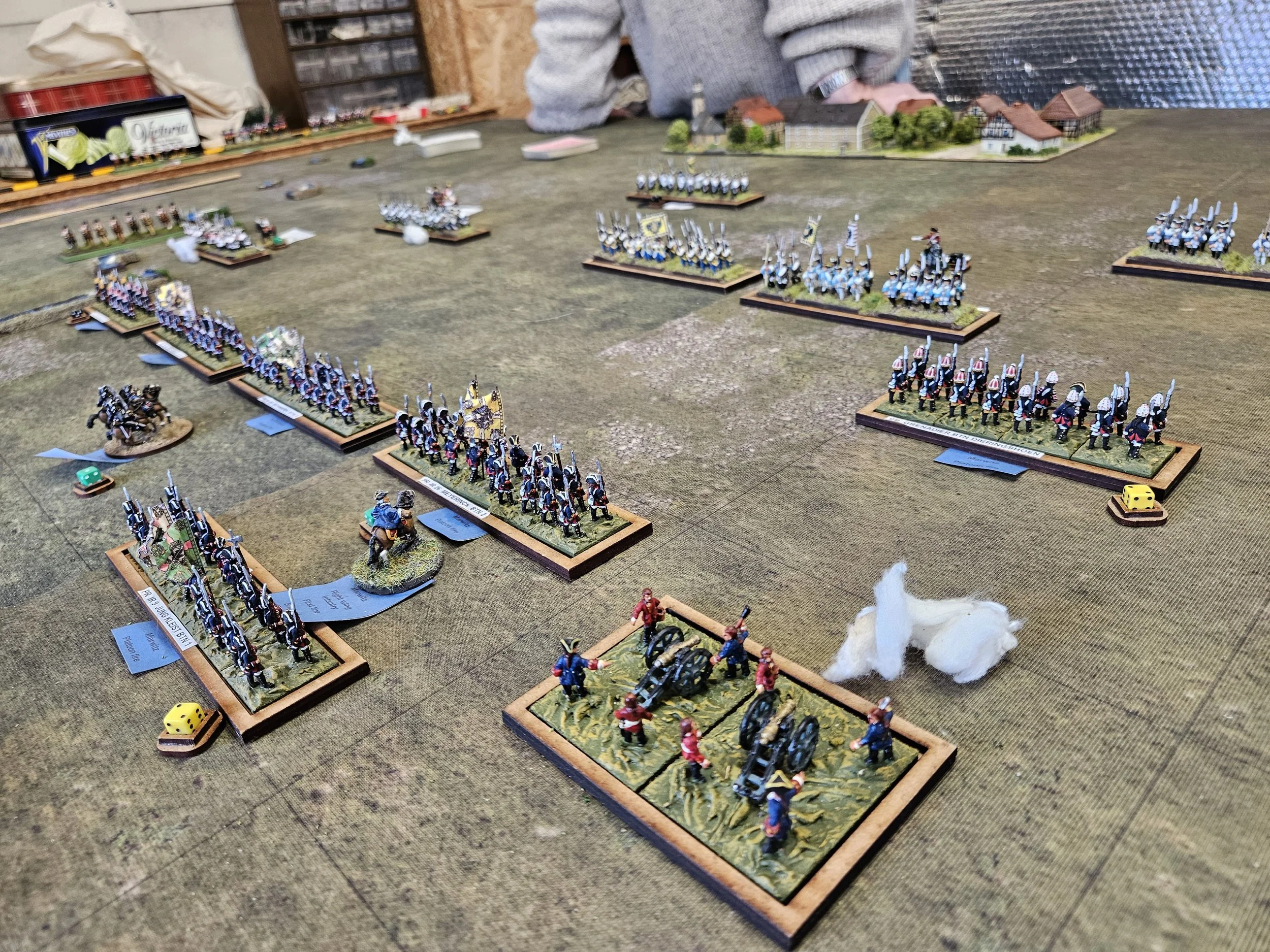
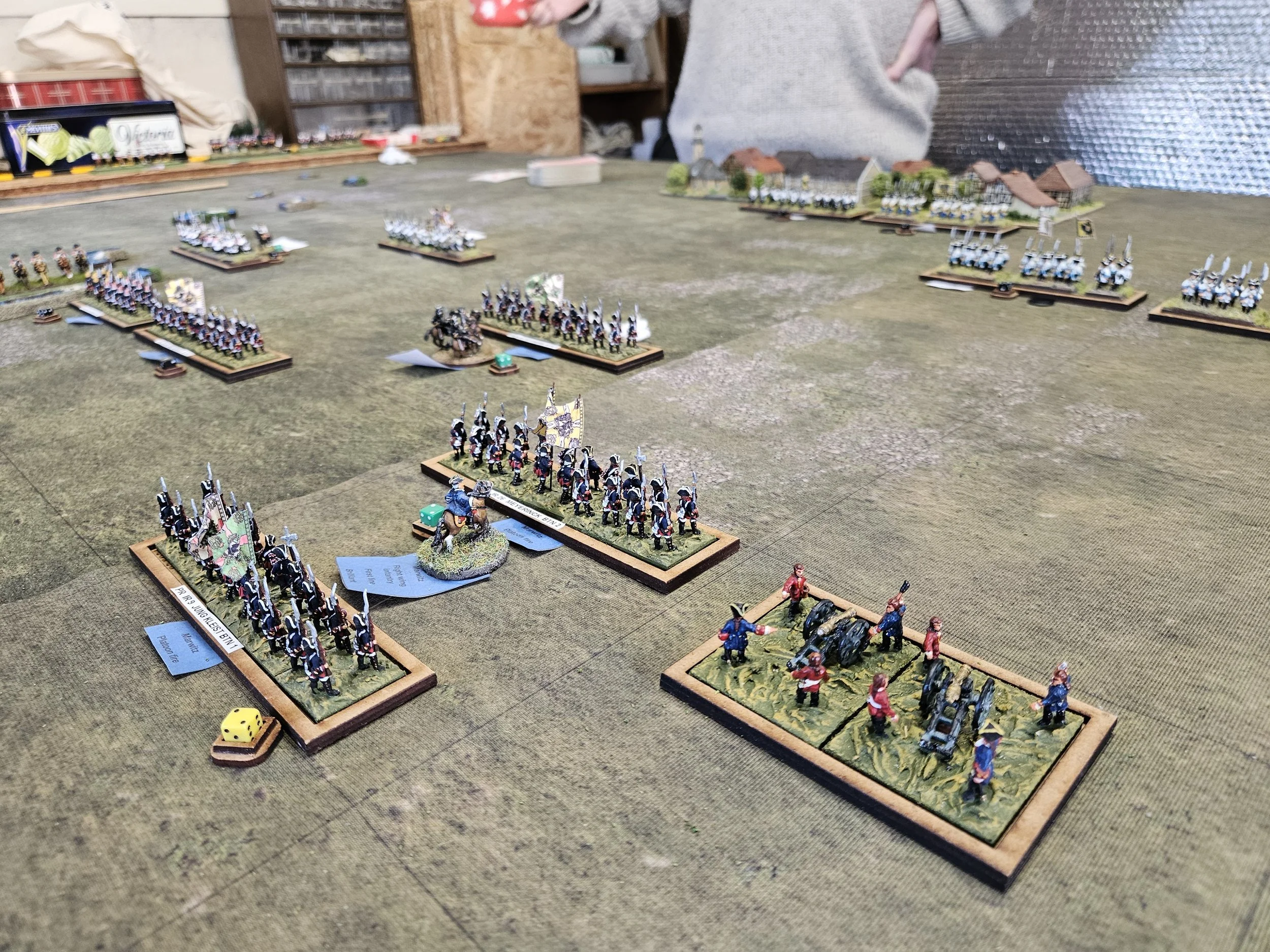
The high tide of the Prussian attack came with the capture of the two guns visible in the picture above. But the arrival of my infantry from the left, supported by my newly rallied cavalry, combined with my original infantry wheeling around to strike the enemy from the right, left the Prussians with no choice but to retreat or face annihilation.
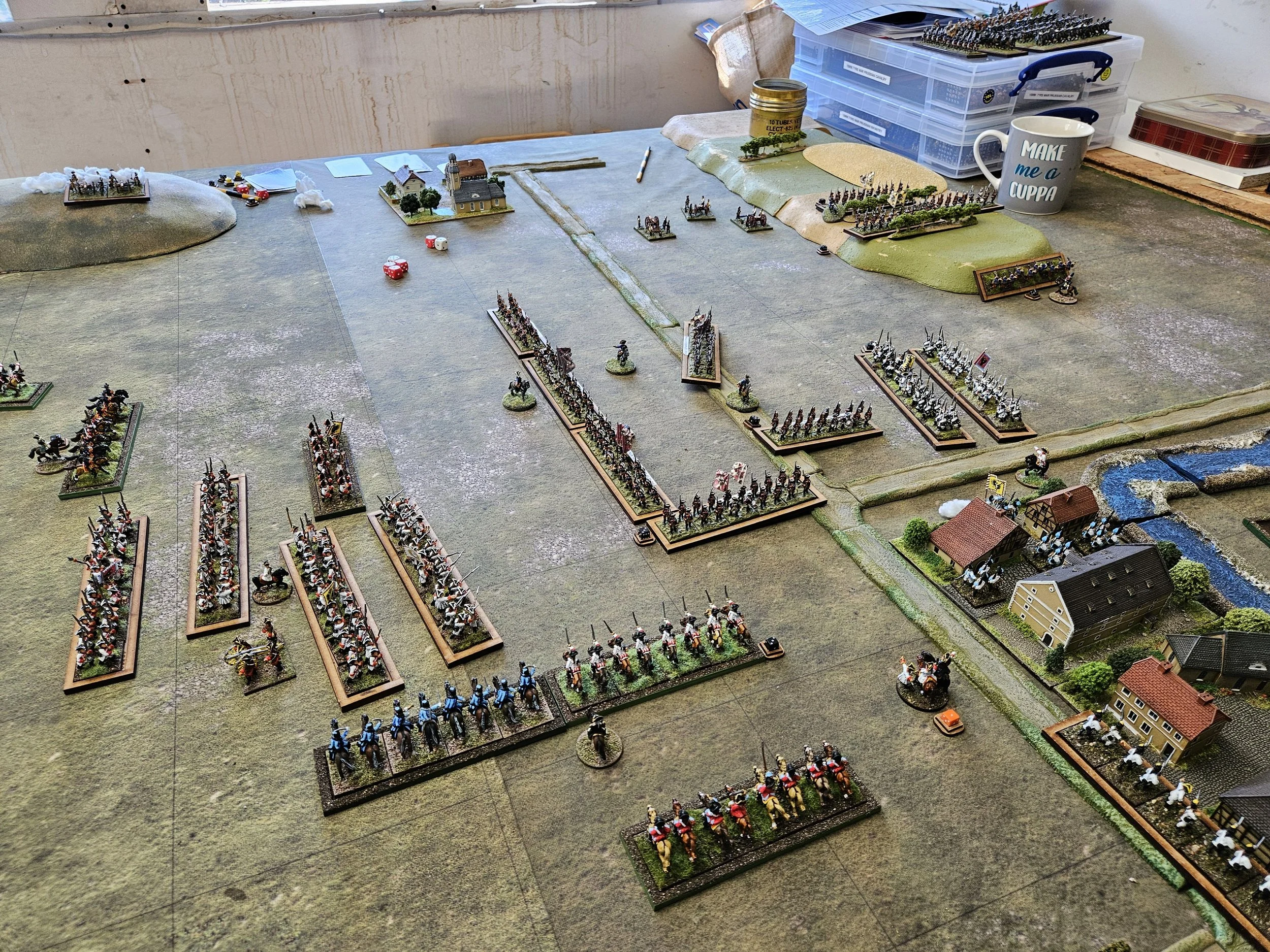
So a victory for the Austrians helped, it must be said by the dice, who were definitely with me and against Mark all day. Highlights have to be rolling three sixes on three dice for rallying my Cuirassiers that allowed them to hold their positions against the second line of Prussian cavalry; and my initial close-range fire into the Prussian infantry just before they charged my line in front of Lobositz: seven hits out of seven shots!

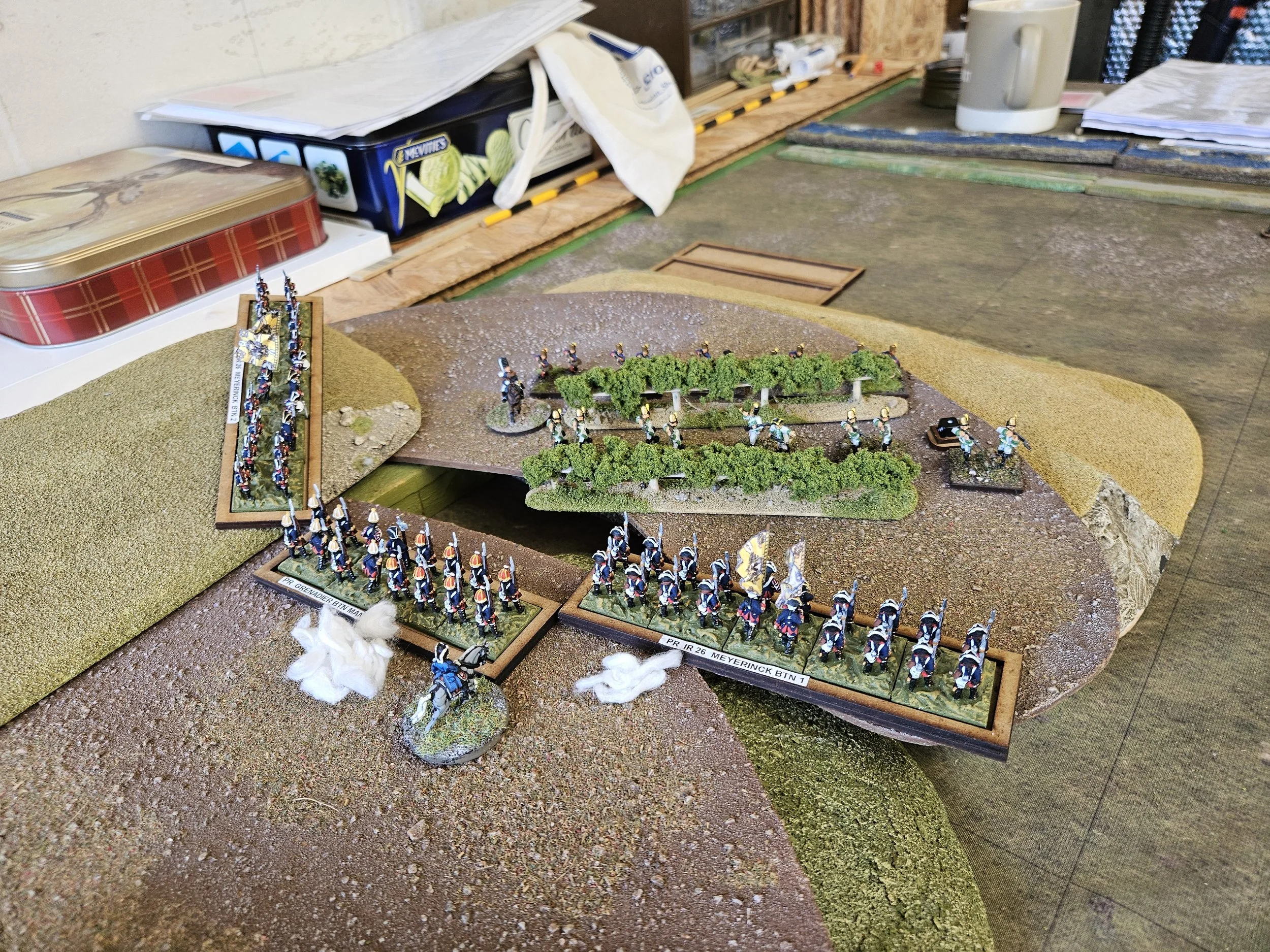
Honorable mention must also be made of the Austrian light troops on the hill to the front-right of Lobositz: they held up a Prussian brigade there, inflicting significant casualties, before beign forced to retreat.
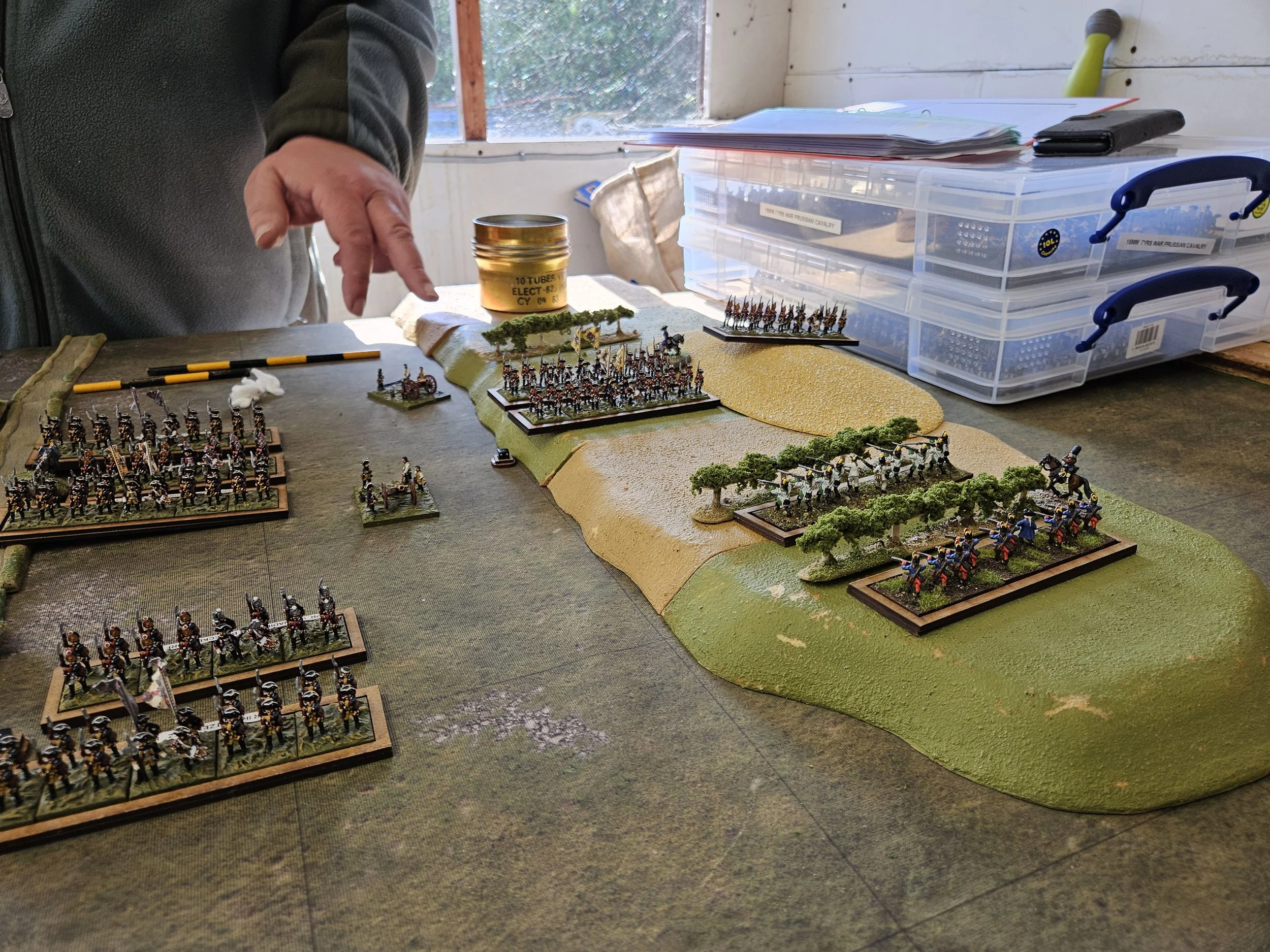
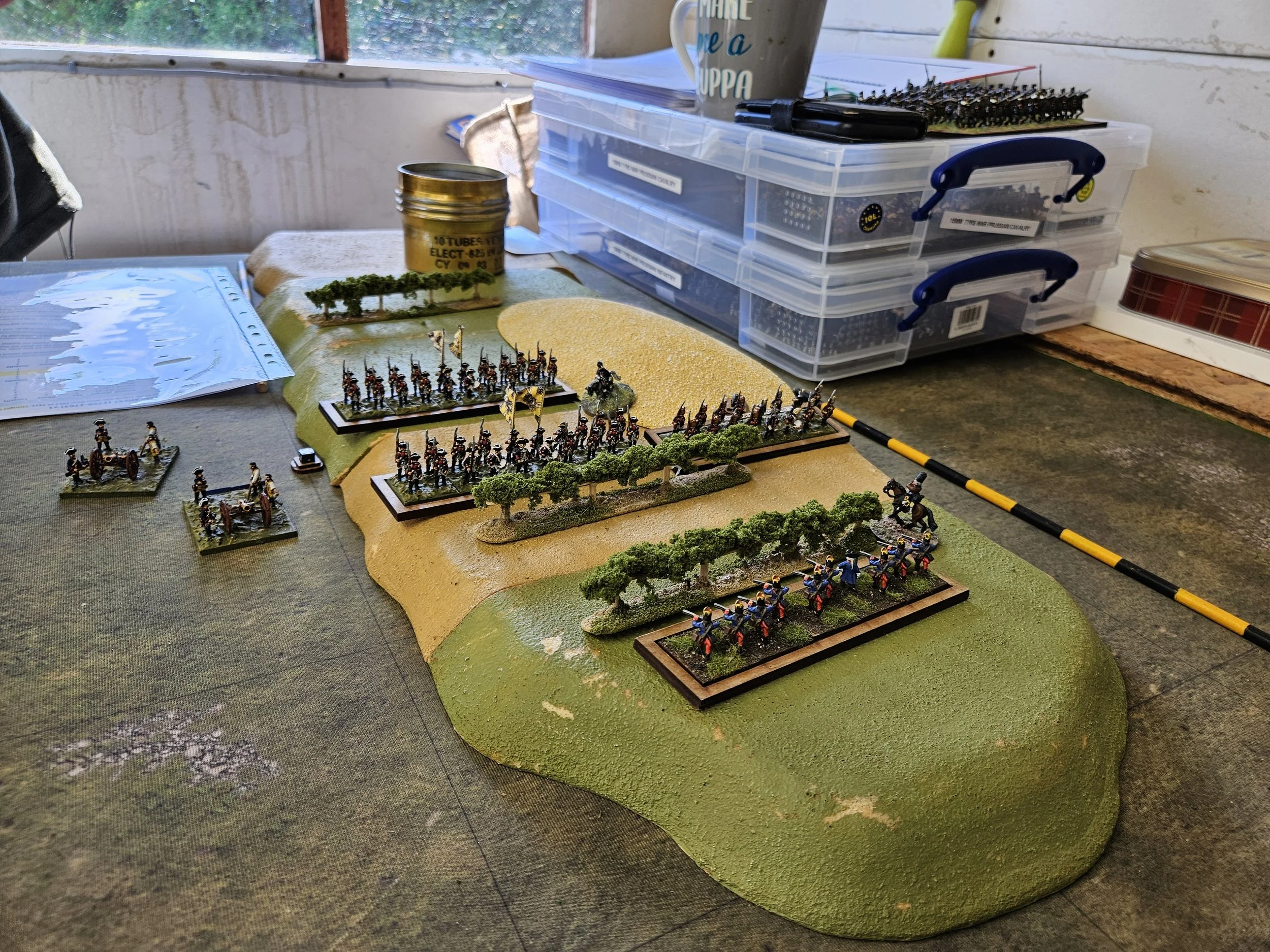
I also made enough fortitude saves (a 50% chance of success) to make even Rosencrantz and Guildenstern raise an eyebrow!

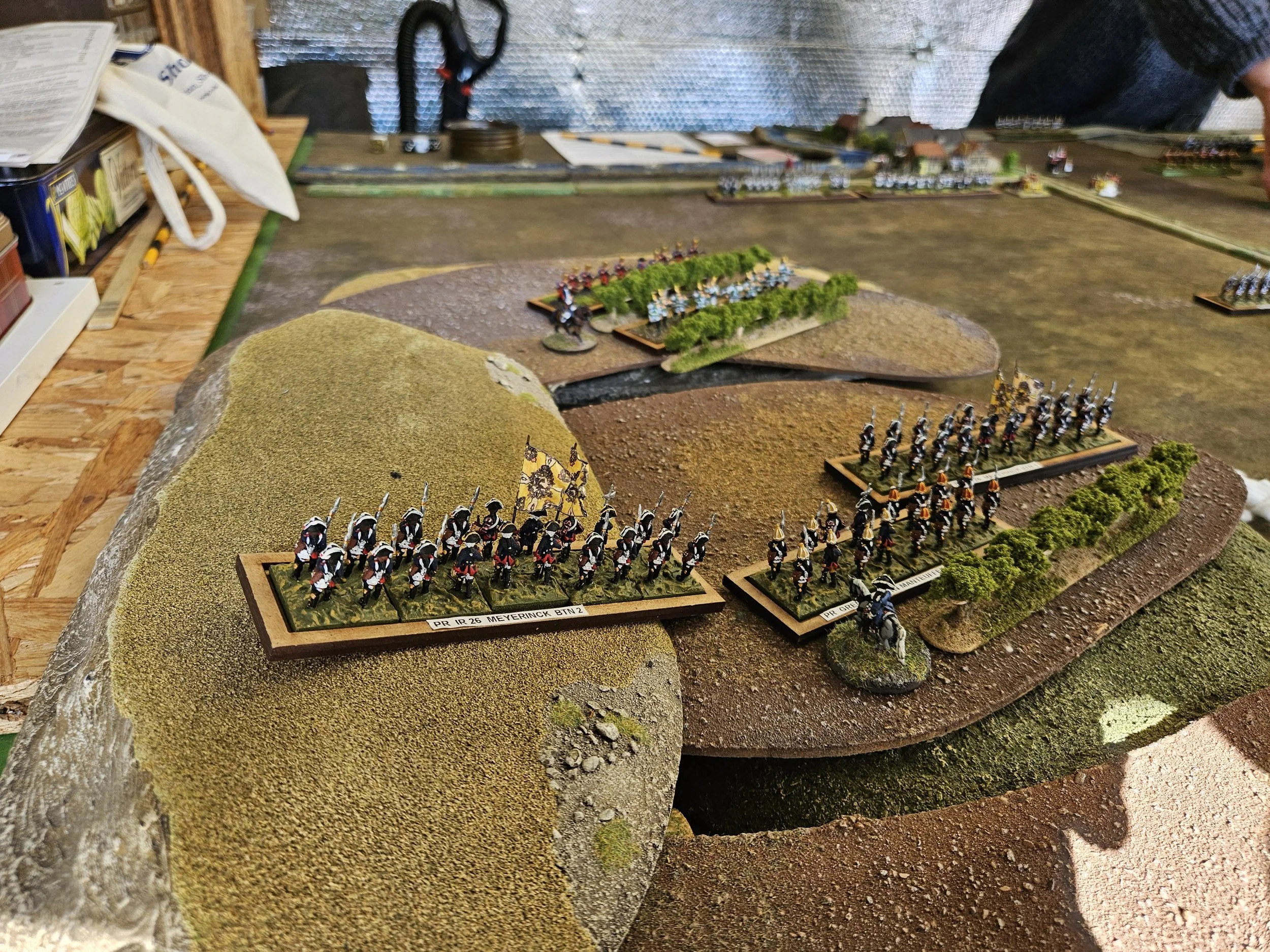
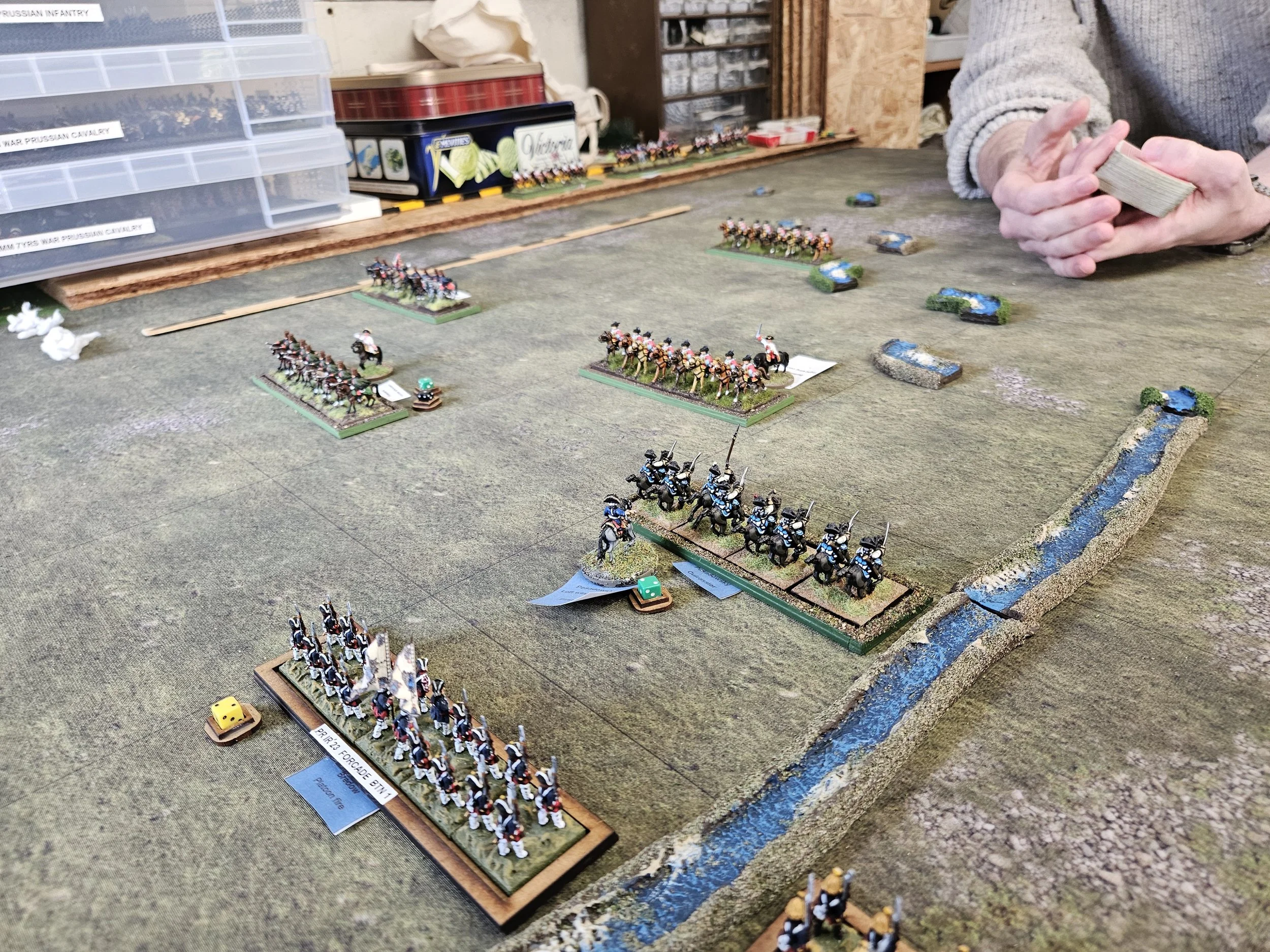
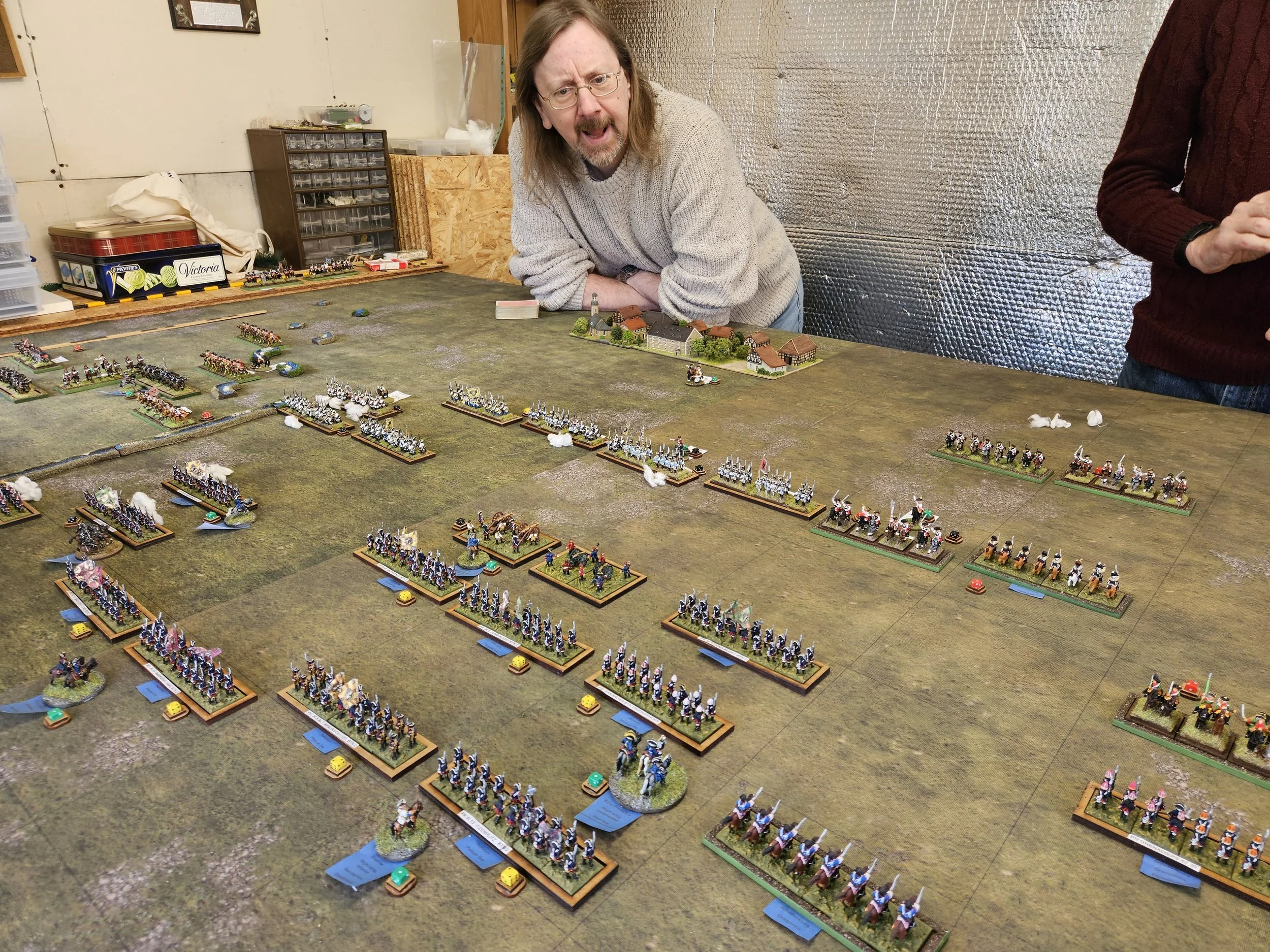
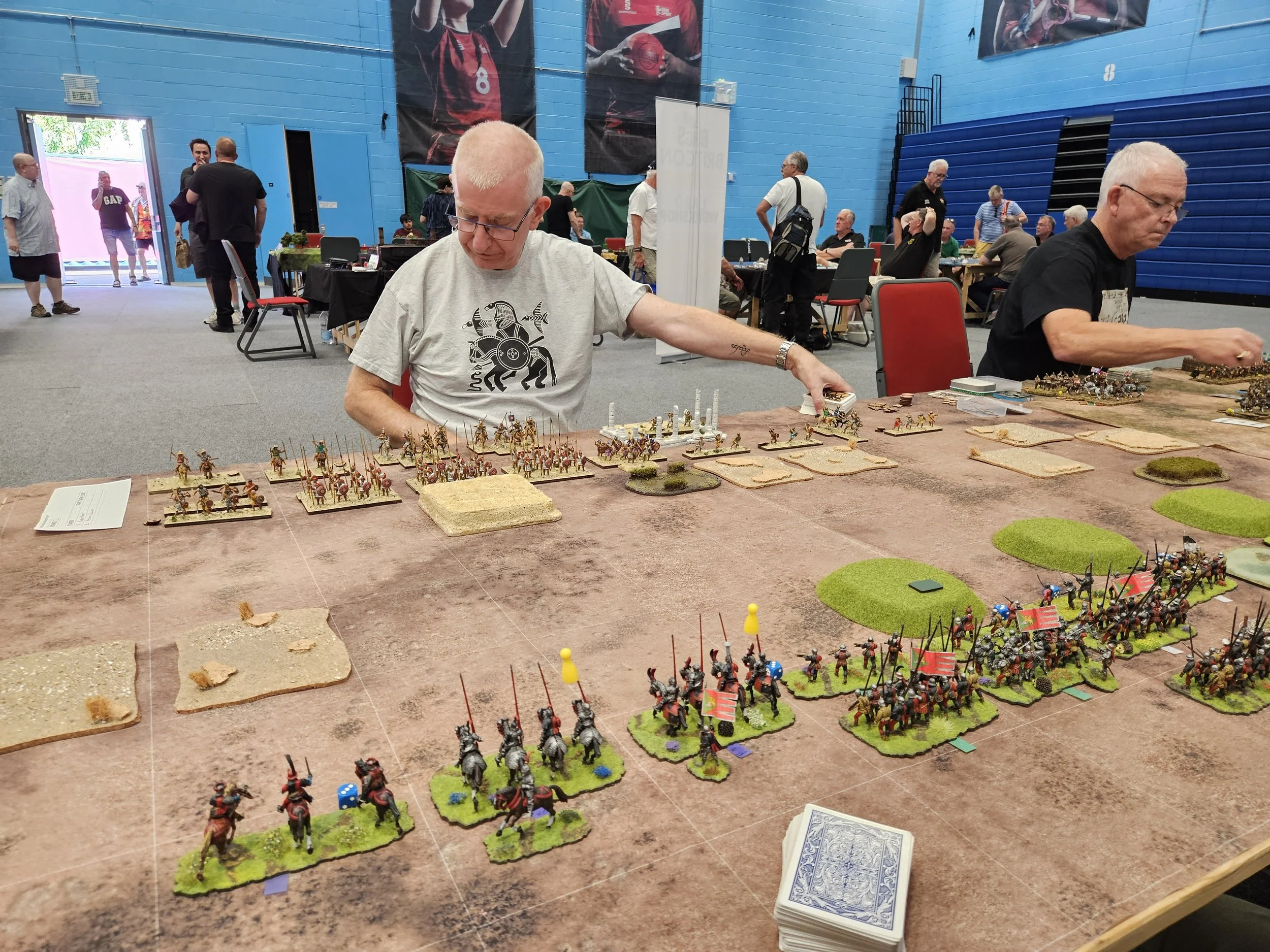
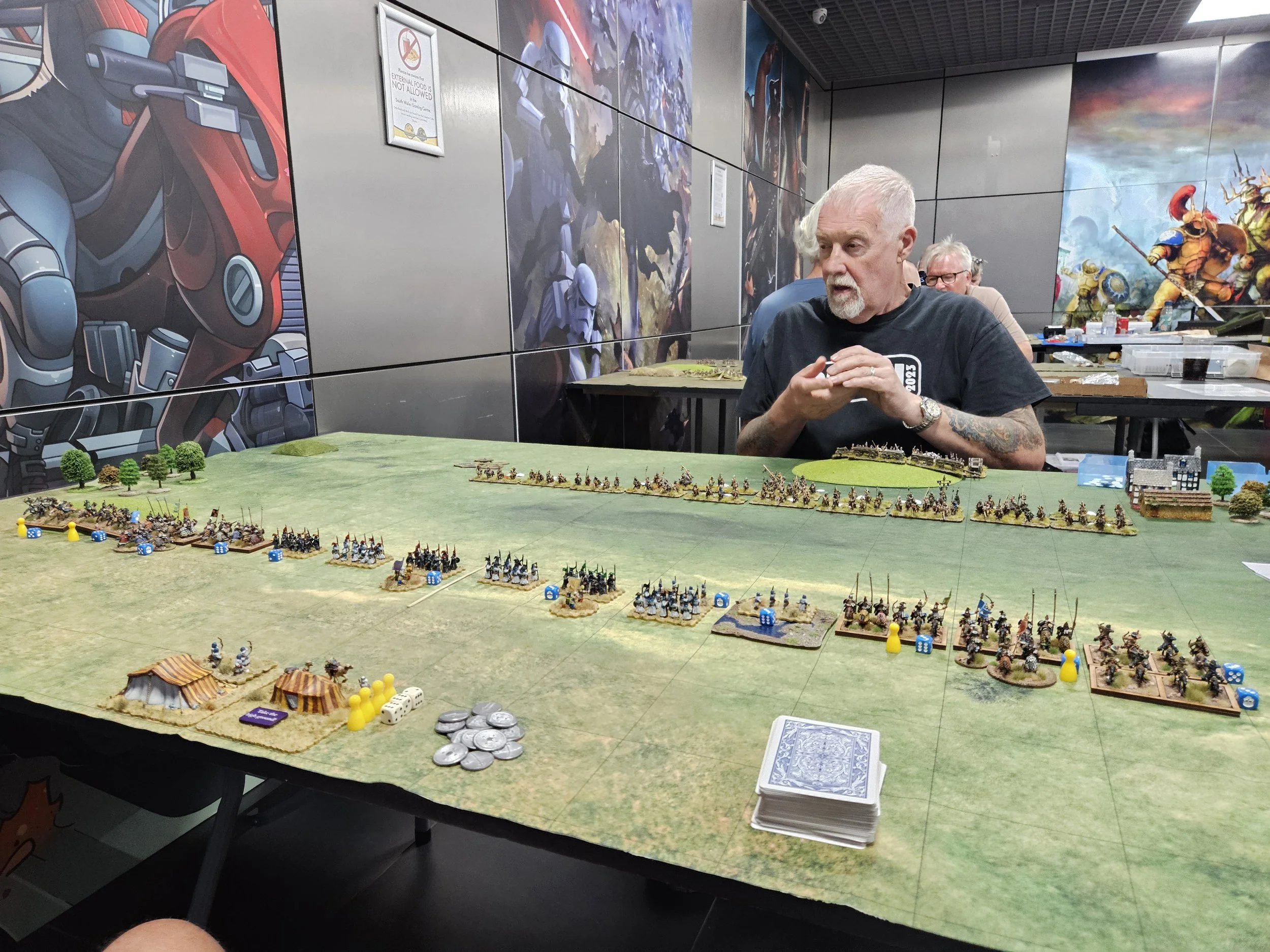
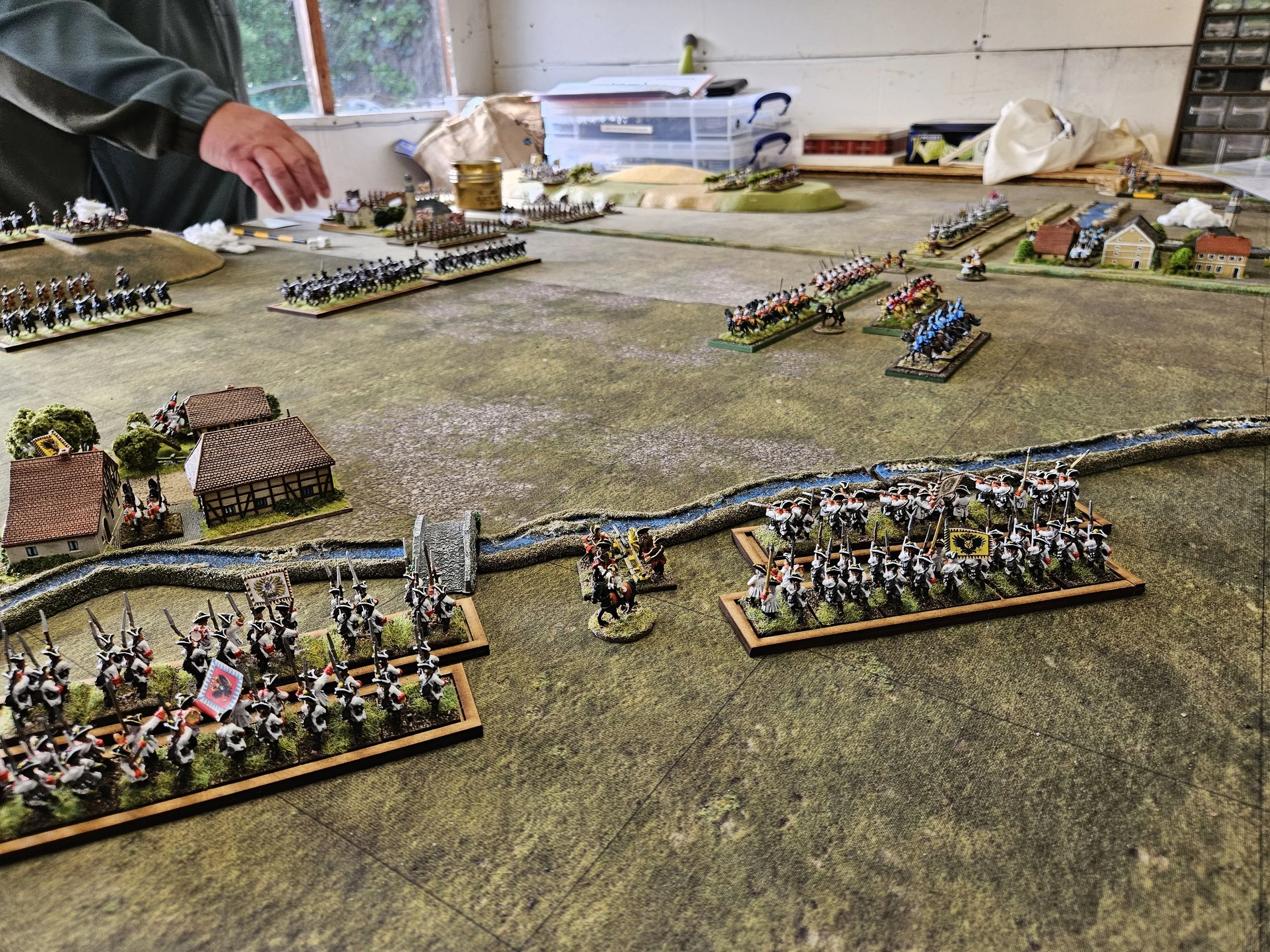
Here are some more pictures of the game:
SYW AAR: Refighting Lobositz
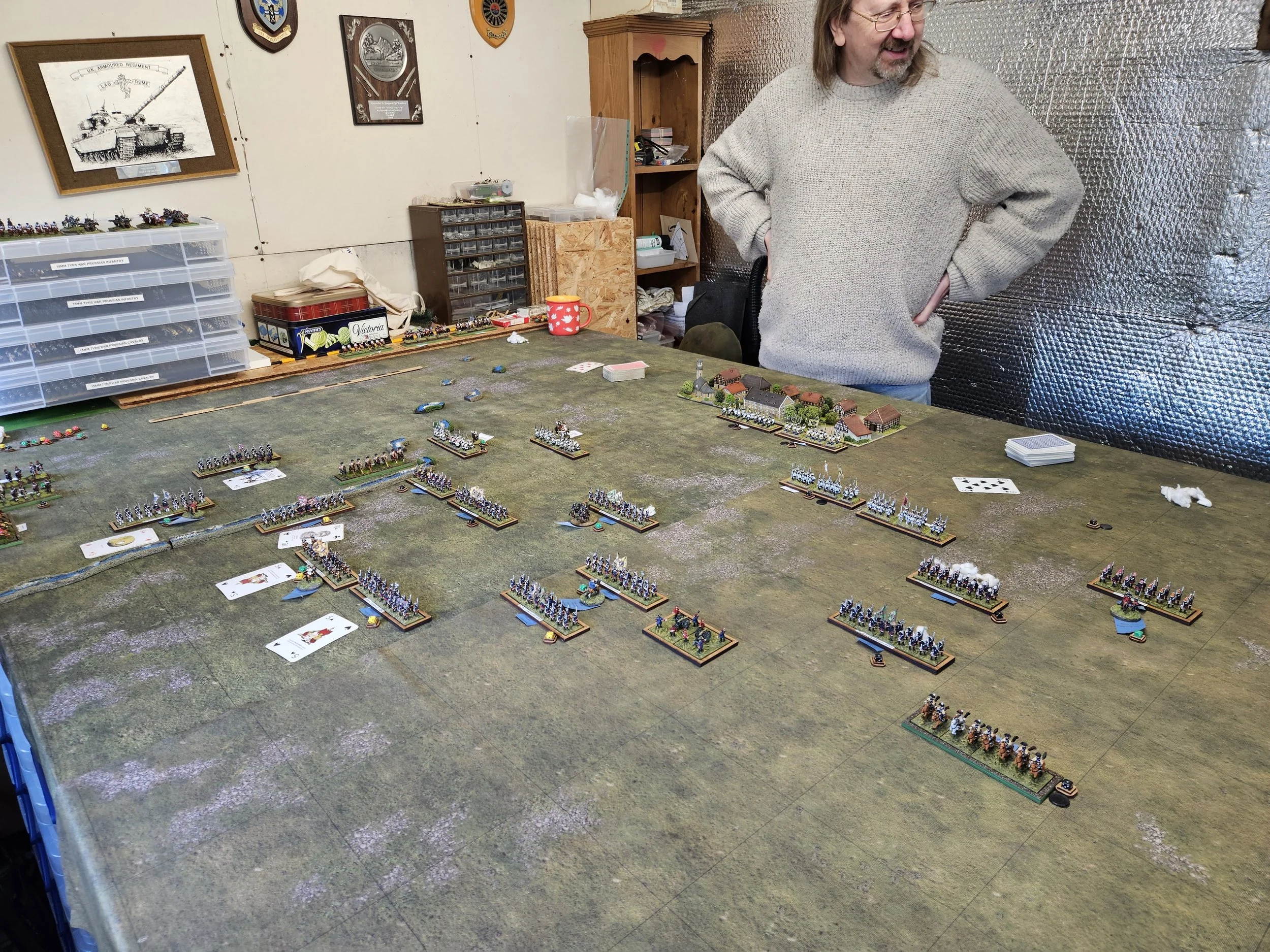
This week’s Thursday game was a re-fight of the battle of Lobositz from the Seven Years War using Valour & Fortitude rules.

As a reminder:

The Battle of Lobositz, fought on 1 October 1756, marked the first major engagement of the Seven Years' War in Europe. It took place in Bohemia (modern-day Czech Republic) between Prussian forces led by Frederick the Great and an Austrian army under Maximilian Ulysses von Browne. The battle unfolded in difficult terrain shrouded by morning fog, leading to confusion and intense fighting, particularly around the Lobosch hill and the village of Lobositz. Although Frederick initially underestimated the Austrian resistance, Prussian discipline and artillery eventually forced the Austrians to withdraw. While tactically a Prussian victory, the battle demonstrated that Austria remained a formidable opponent, setting the tone for a long and hard-fought war.

I would command the Prussian against a motley crew in charge of the Austrians.

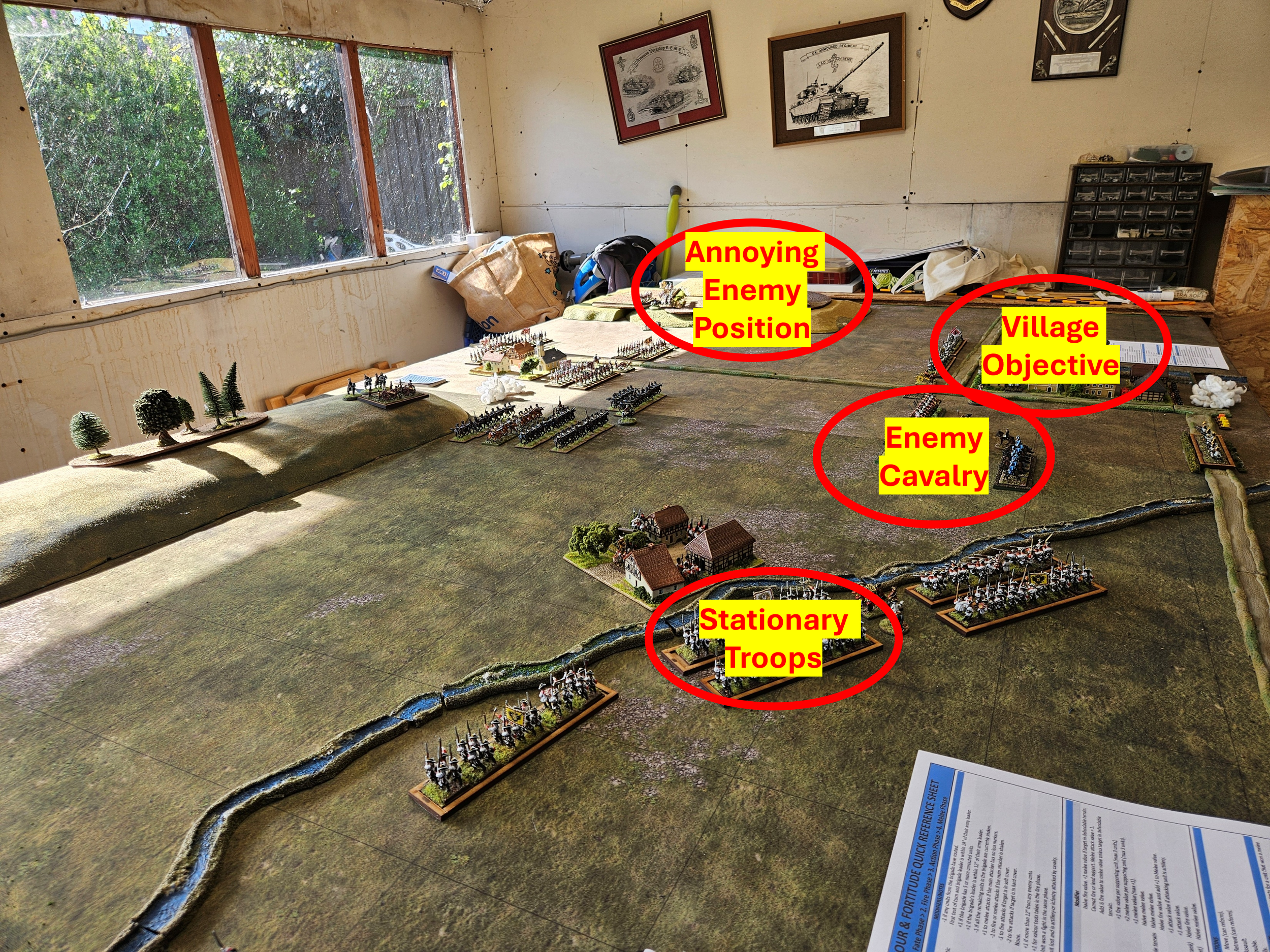
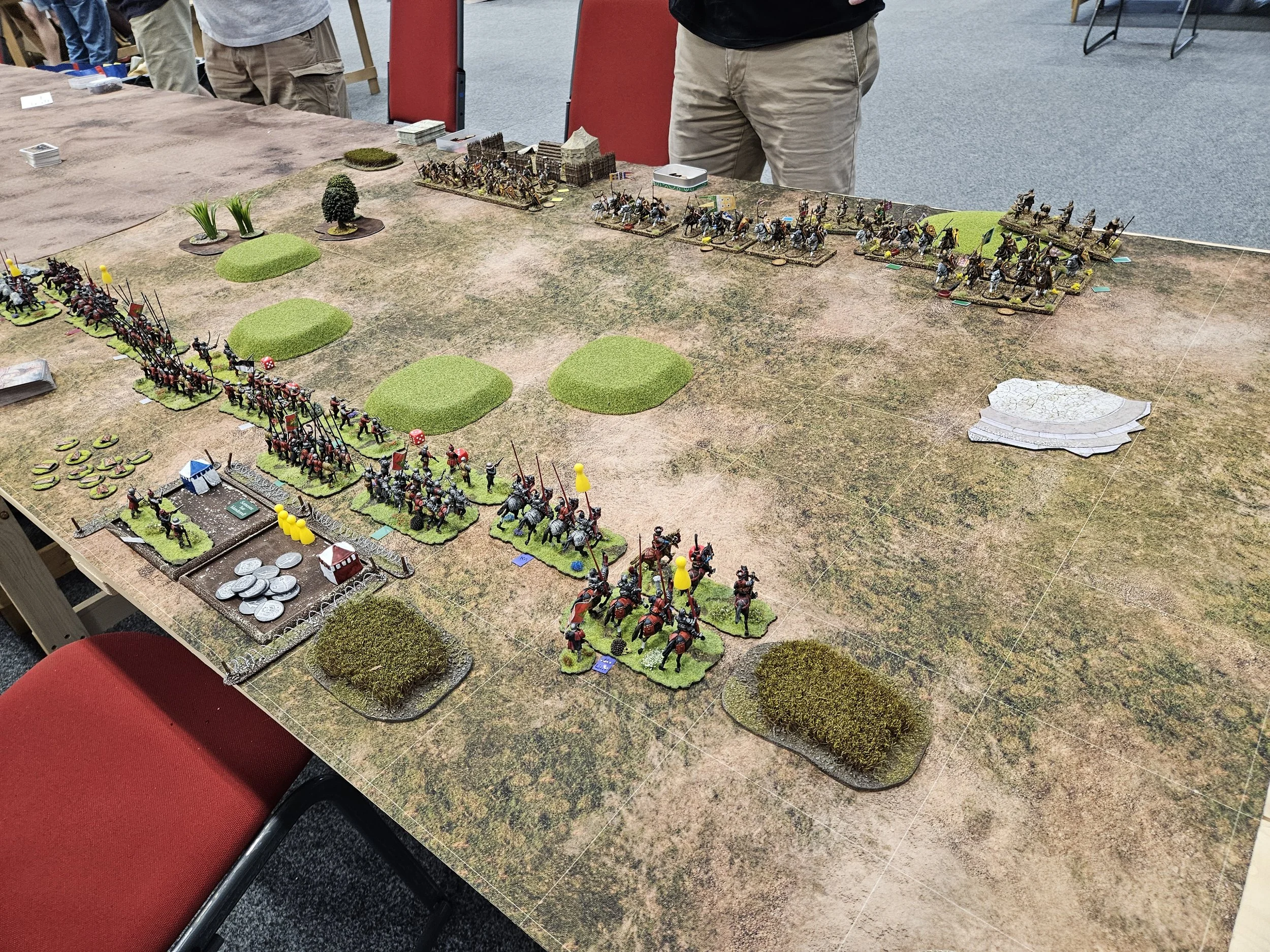
The view from behind the Austrian lines

Despite the lovely sunshine in the photo above, game-time dictated that we started very early in the morning with the battlefield shrouded in mist. That meant that long range observation and fire was very patchy.

My main objective was the village by the river, which was protected by a strong force of infantry and guns.

To the left, there was an annoying enemy position: several battalions of enemy light troops skulking in vineyards atop the Lobosch hill.

In front of me were large numbers of enemy cavalry blocking my cavalry from sweeping forward.

Finally, I did have one advantage over Frederick as I “knew” that one of the main body of Austrian infantry wouldn’t be moving for a few turns as, historically, that’s what happened.

Dealing with the Annoying Enemy Position

First thing on the agenda was to deal with the annoying enemy positions to the left. Historically these proved very difficult to shift, so I decided to take a bit of time to work a battalion over the steep hill/rough ground around the enemy’s flank, then give them a volley to weaken them before charging in with the Grenadiers.

This all worked very nicely, and although it would take me the whole battle to deal with the situation, it would give me me a decent number of victory points to build on.

Dealing with the Enemy Cavalry

Next on the list was the enemy cavalry: they had to be neutralised in order to avoid them sweeping into my right flank as my infantry advanced towards their objective.

In this period, I tend to find that without one side having overwhelming numbers, big cavalry clashes in a battle tend to lead to both sides losing all their horsemen: either to combat or the pursuit that usually follows. I was happy to work towards a result like that: as I said, all I wanted to do was to protect my infantry’s advance.

Both sides’ cavalry streamed forward and a typically-brutal Valour & Fortitude melee followed. I suffered some initial reverses, but fortunately could support my horse with heavy artillery firing from the hill behind, who wreaked all sorts of damage on the enemy’s first line, and with my right hand infantry battalion, who shot enough enemy horse to pieces to give my remaining cavalry the advantage they needed.

Job done, and I even had two squadrons of cavalry left over to shield my right flank when the stationary enemy infantry and some more of their cavalry on the far right did eventually get moving.

Taking the Village

Everything seemed to be going okay so far, so it was now time to move up my main infantry body and try and take the village of Lobositz: my objective for the day.

Forward went my infantry, rapidly closing with the enemy line. It looked like being a tough scrap as advancing into a line of enemy muskets is never fun, especially when they have cannon supporting them on one flank.

I did, however, have an Ace up my sleeve…or rather a Nine. Valour & Fortitude allows certain special moves dictated by cards that you can draw, and I had drawn a Nine or Surprise Attack. That gives you an extra move followed by an assault.

As my infantry approached the Austrian line, my right hand battalion ‘played this card’ and suddenly shot forward and to the right, charging both batteries of very some surprised Austrian gunners who had previously been looking forward to remaining well out of hand-to-hand combat as they fired cannister at my advancing infantry safe from their position just to the right of their infantry comrades.

Caught off guard, the Austrian gunners turned and fled, leaving the main Austrian infantry line unsupported and outnumbered.

Along with the victory points gained from dealing with the Austrian lights in the vineyard and the victory in the cavalry melee, it was now only a matter of time before I took the final few I needed for an overall victory…espcecially as I had plenty more infantry about to arrive at the schwerepunkt.

So a quick and decisive win for the Prussians, and a great game all round!


SOGS will be demo-ing the above game at the Vanquish wargames show in Bourne End this Sunday.

See you there!

Re-Fighting Mollwitz with Lust!

Time for another playtest of Lust for Glory. Last time we played, our game was set in the mid-1600s, the lower limit of the period covered by the rules. This time, we’d go to the other limit and re-fight the Battle of Mollwitz, one of the first major conflicts of the War of the Austrian Succession.

The History

Fought on 10 April 1741 in Silesia (modern-day Poland), Prussian forces under Frederick the Great clashed with an Austrian army led by Wilhelm Reinhard von Neipperg. The battle opened in heavy snow, which hampered movement and reduced visibility. Austrian cavalry quickly gained the upper hand, routing the Prussian horse on the right flank and in the centre. Believing the battle lost, Frederick fled the field early.

Despite this, the Prussian infantry maintained remarkable discipline. Under the direction of Kurt Christoph von Schwerin, they held their lines and delivered controlled, effective musket fire that steadily drove back the Austrian forces. What began as a near-defeat ultimately turned into a decisive Prussian victory.

Our Game

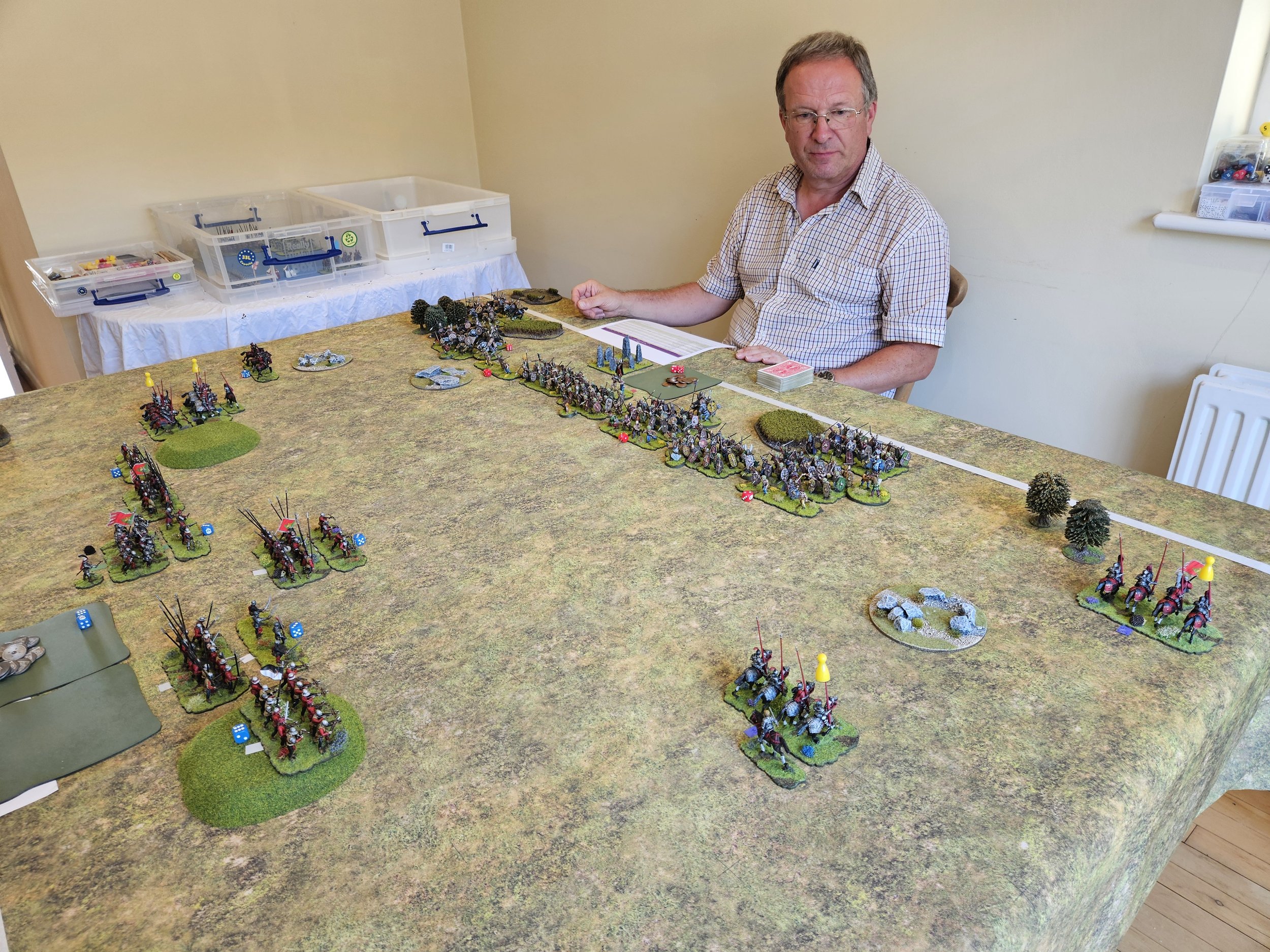
Rather than the snow enjoyed by the original participants, our game began with sunlight streaming onto the table from behind the Prussian positions.

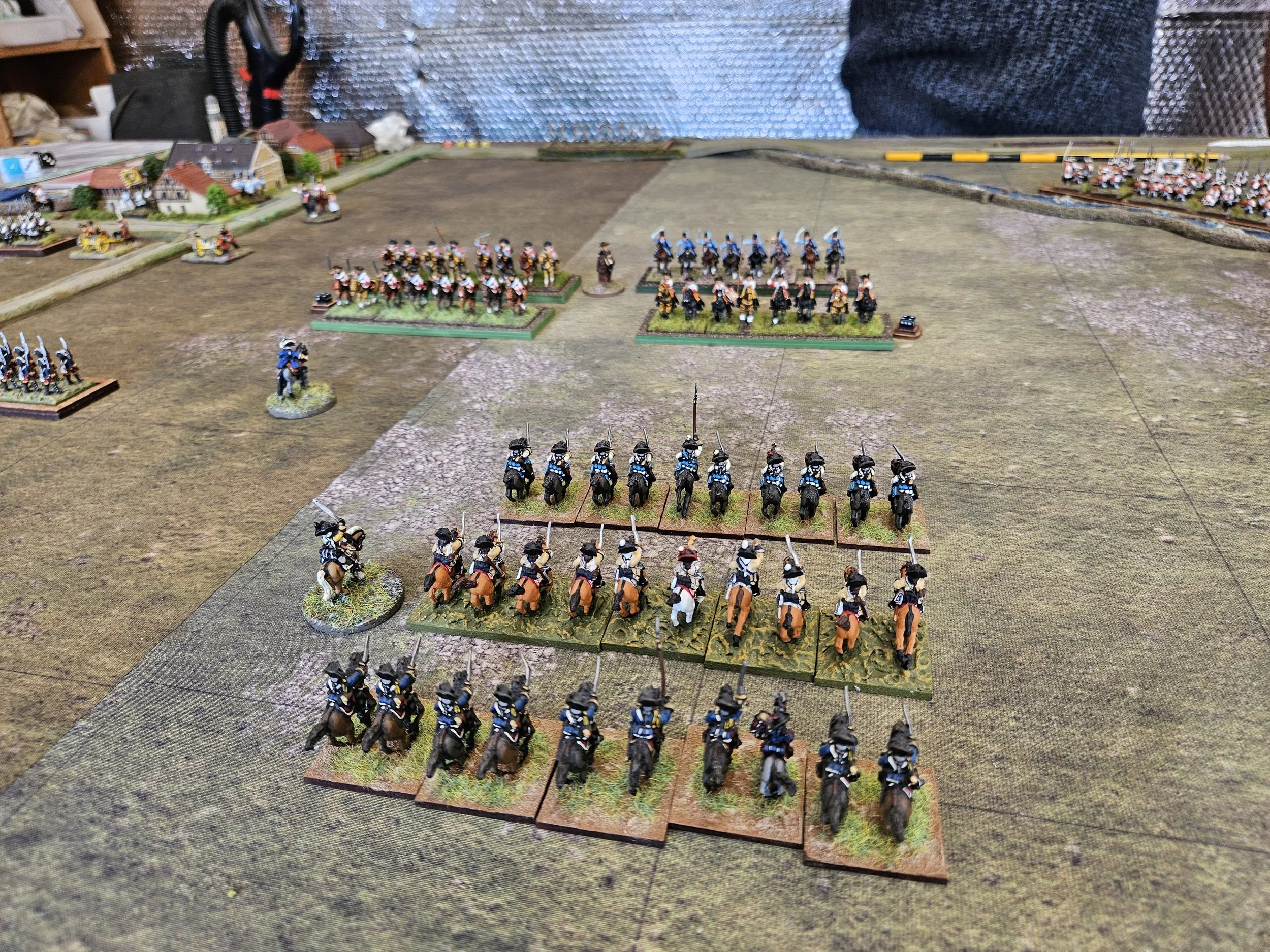
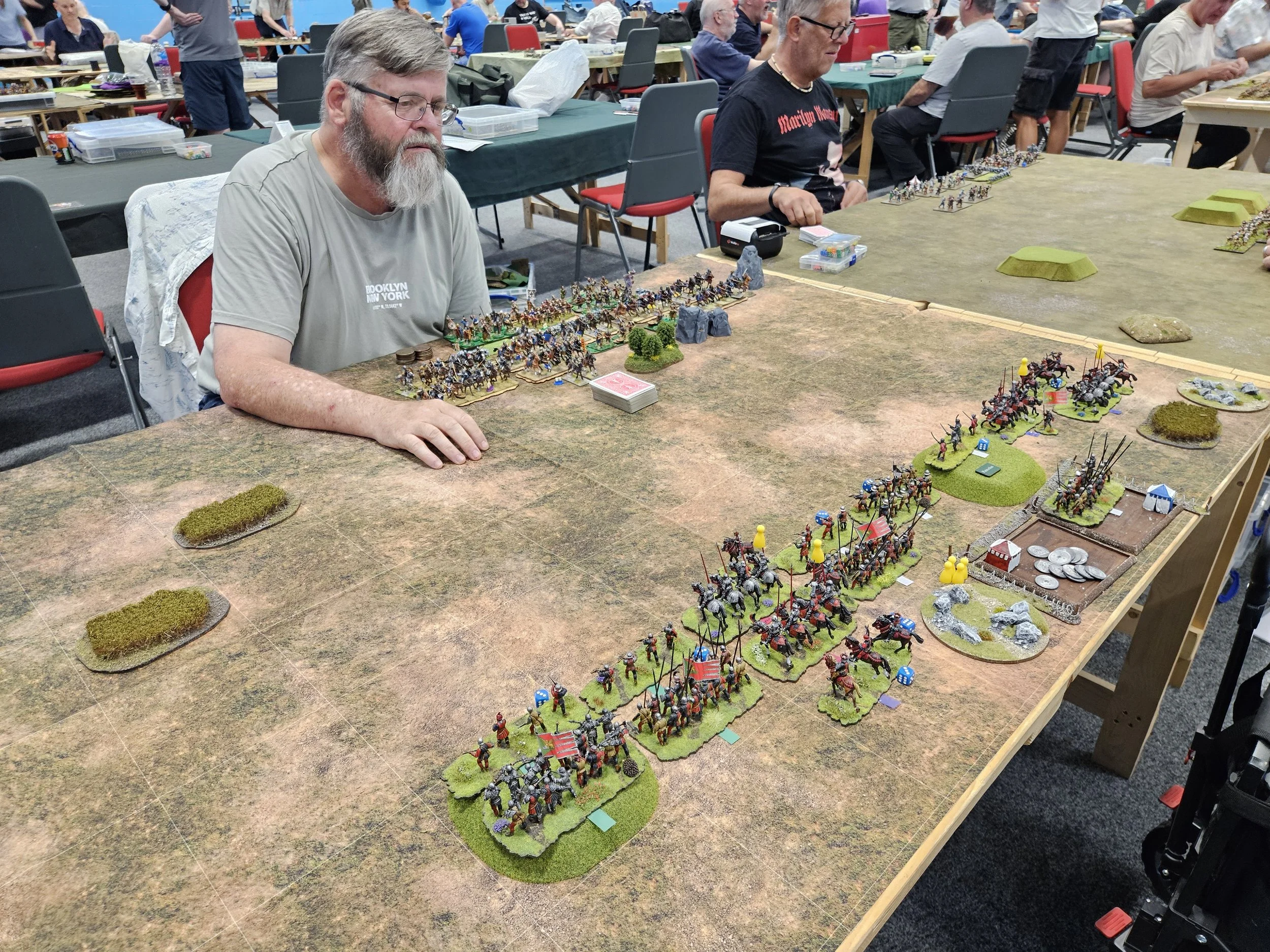
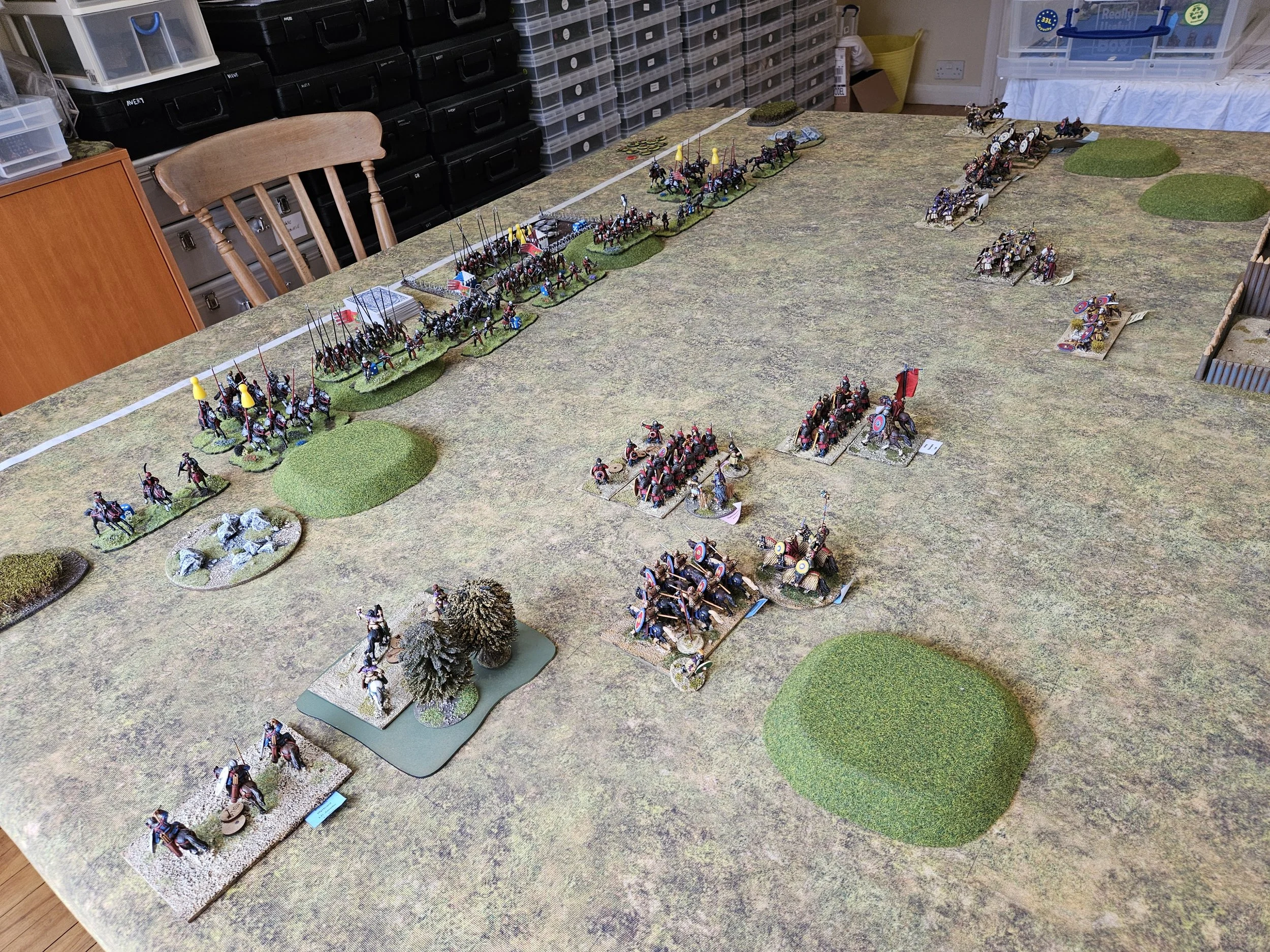
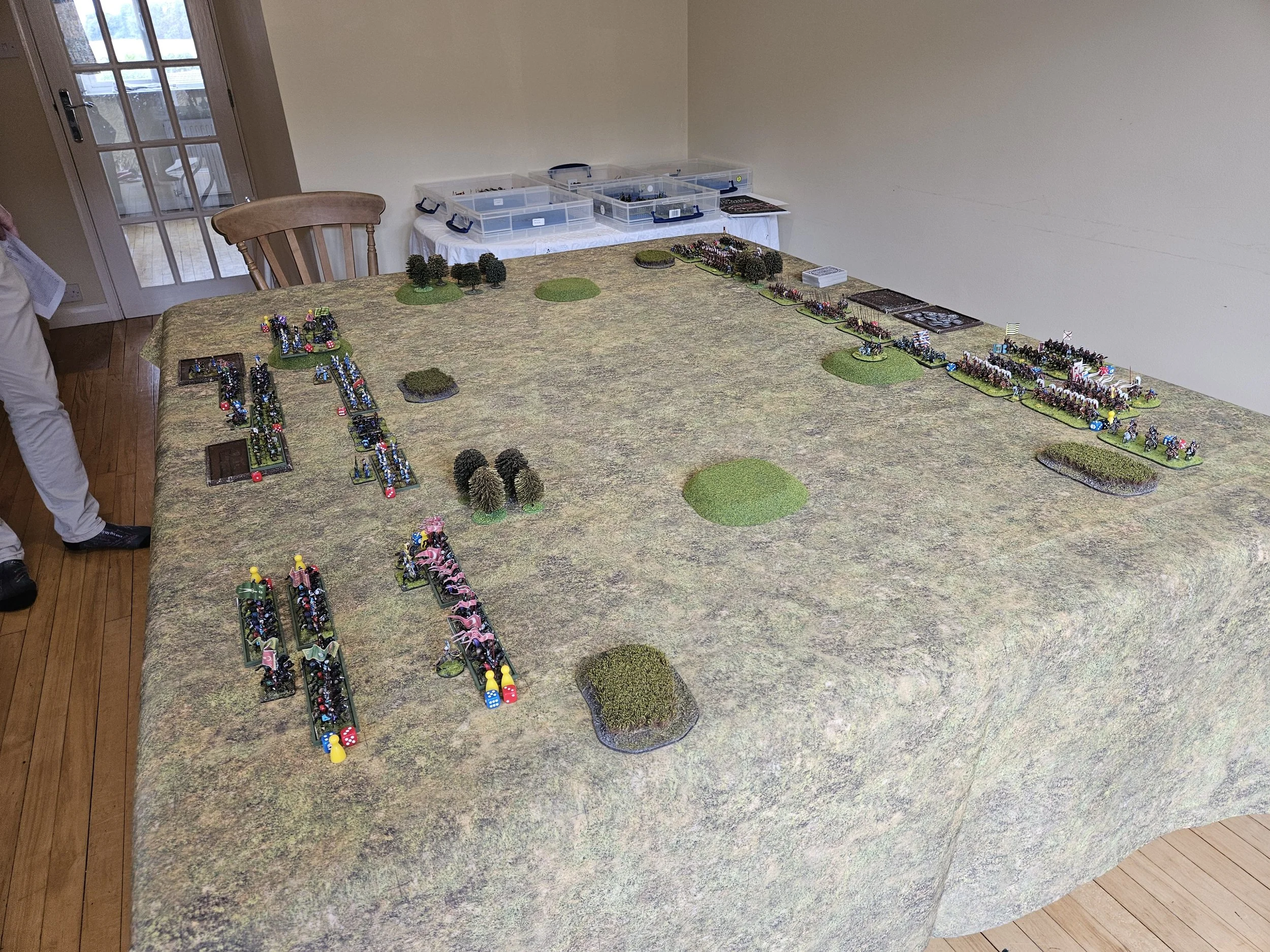
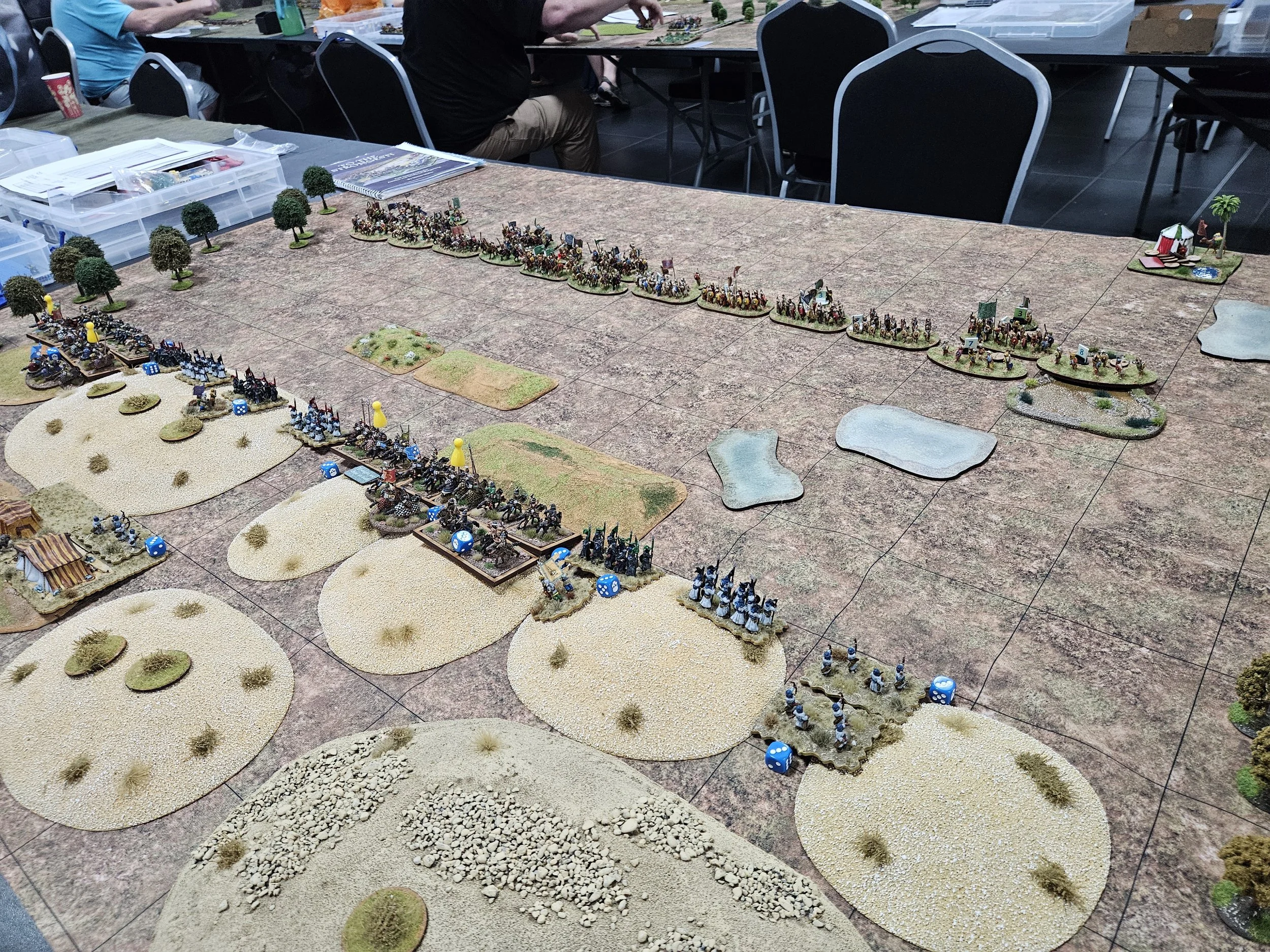
Taken from just behind the Austrian line. Note the massed Austrian cavalry in the foreground.

As one of the Prussian commanders, I was obviously very concerned about the superior Austrian cavalry, particularly as, in command of the right wing and first line of infantry, I was facing them!

The battle, however, began on the left wing, where the Prussian cavalry there was fairly quickly overwhelmed by more Austrian horsemen. This necessitated moving some of our infantry from the second line across the cover that flank, leaving me wondering how we were going survive once we lost our first line to the main body of enemy cavalry!

I needn’t have worried, however, as the main body of Austrian cavalry were having a bad day - a very bad day - getting thoroughly trounced by the combination of Prussian infantry and cavalry that faced them.

While the Prussians were still digesting the fact that they hadn’t been overrun on the right, the Austrian left-centre forces launched an attack to support their success on the Prussian left, and the next phase of the battle really consisted of dealing with that and sorting out the traffic jam of Prussian units now eager to get forward and into action on the right and right-centre.

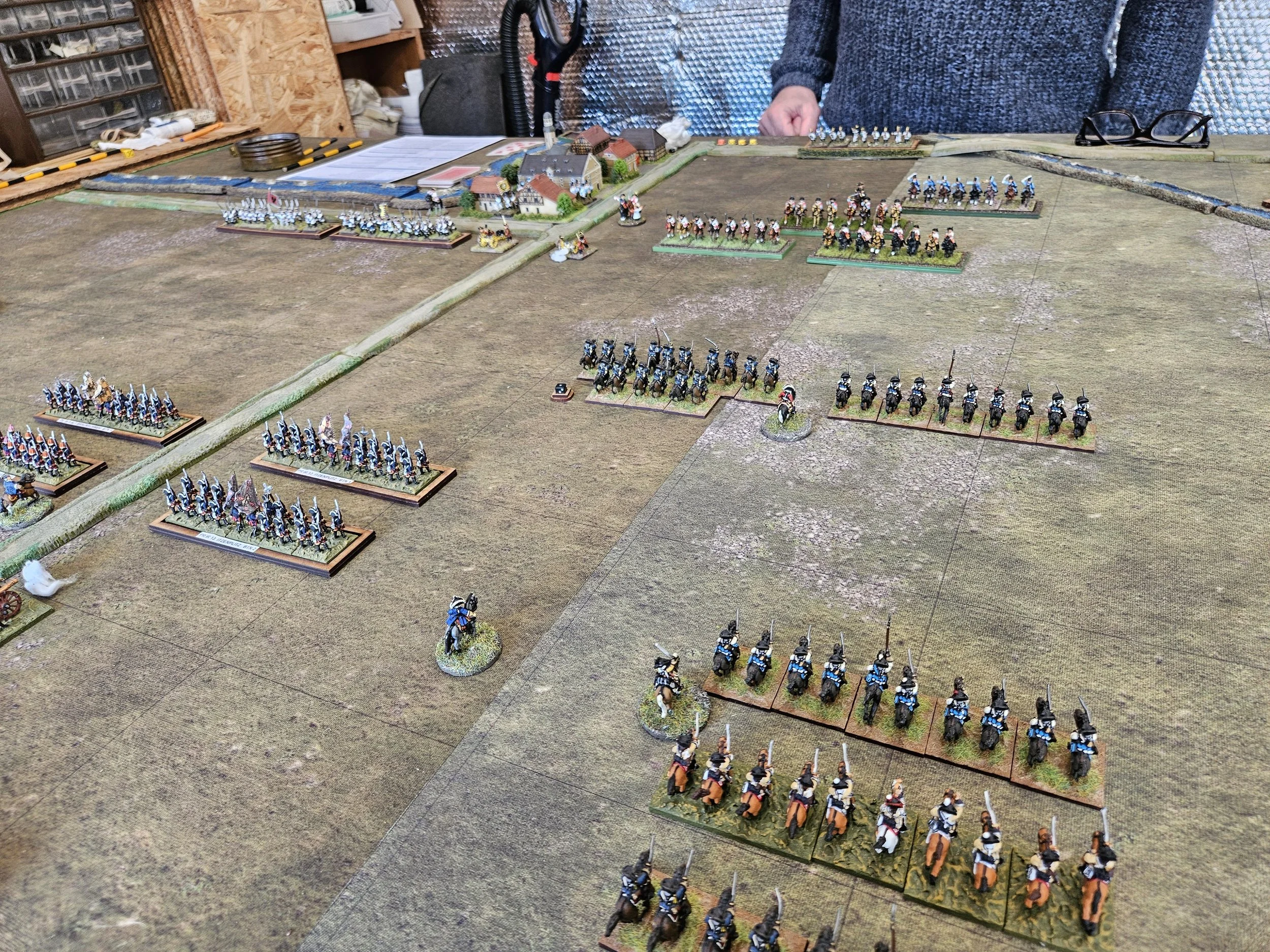
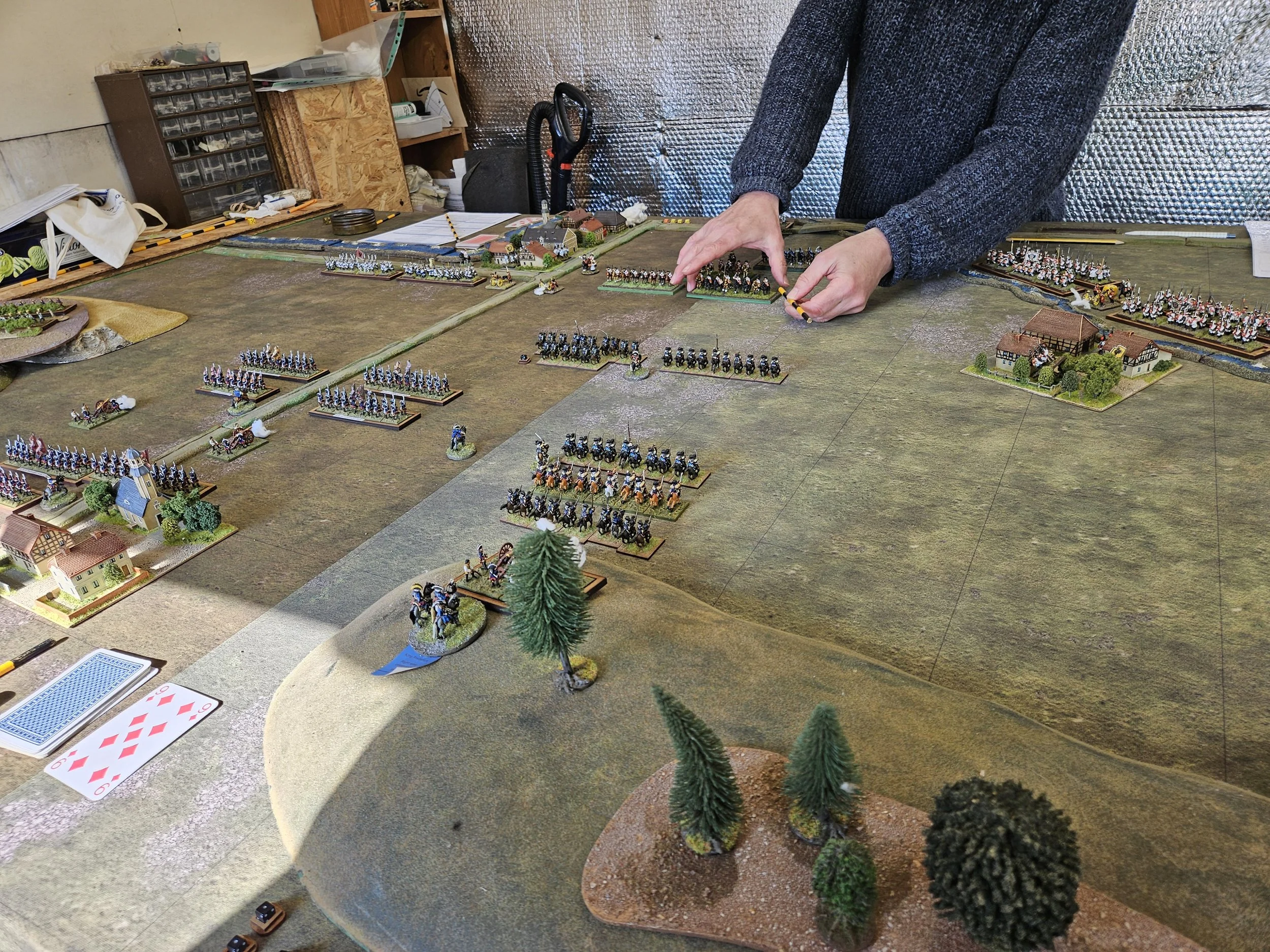
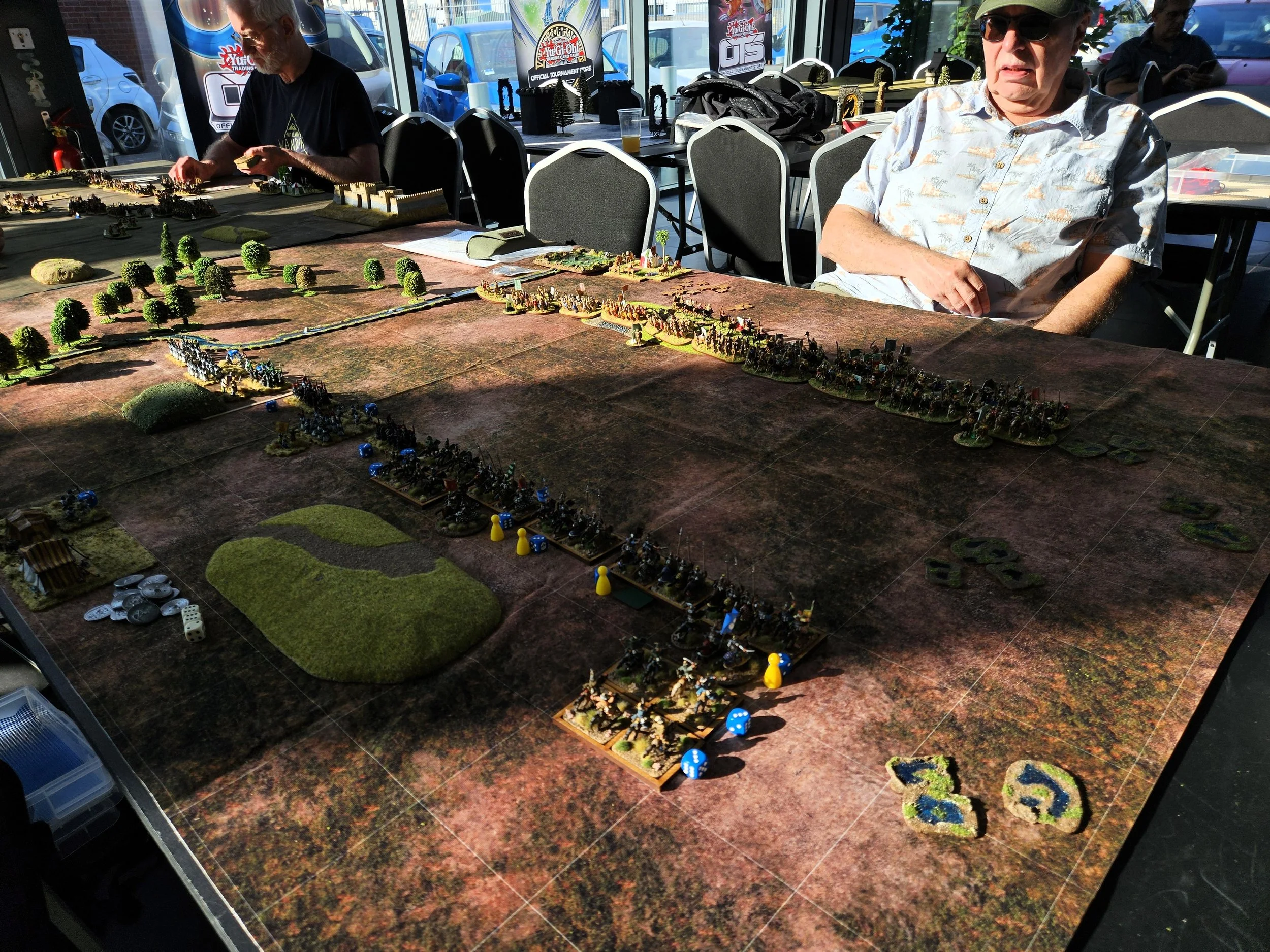
That left the situation overall as shown in the pictures below. The Prussian left was still under some pressure (Mark was having a very bad day) but the centre and right were steady, re-organised and ready to steamroller the remaining Austrians.

We called the battle at this point: a decisive Prussian victory as although the left flank was currently still looking a bit shaky, there were reserves that could block that off, and the centre and right were now just about a foregone conclusion.

A great game, with the rules really starting to flow. Mark’s beautifully painted figures looked amazing and all in all it was a great morning’s gaming. I can’t wait for the final version of the rules to be published.