Roll Call '26 Game One: Venetians Abroad versus Medieval Irish with Feudal Scots Allies
/My first game at this year’s Roll Call ‘Medievals-Only’ tournament was against Adrian’s Medieval Scots-Irish army.
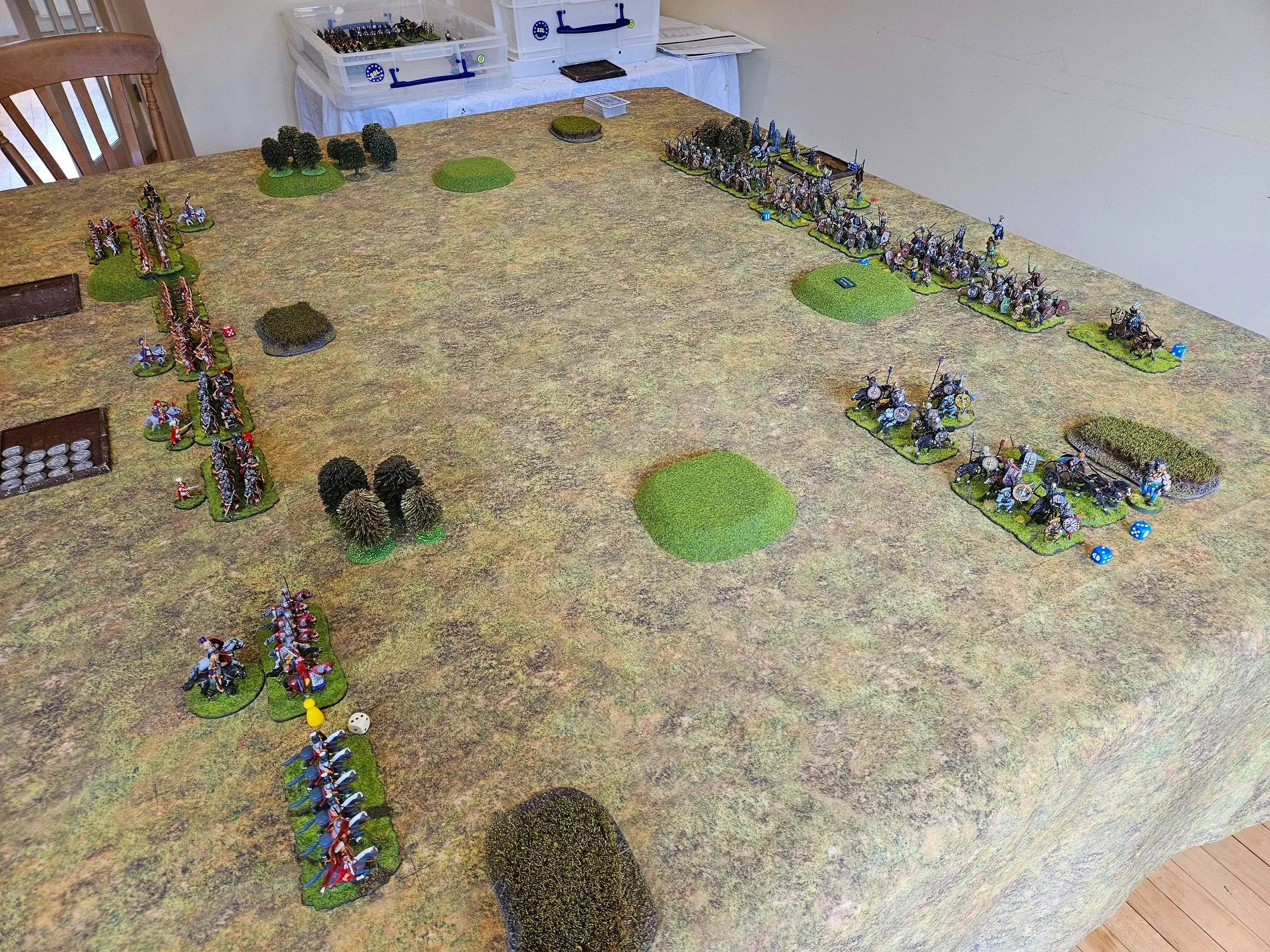
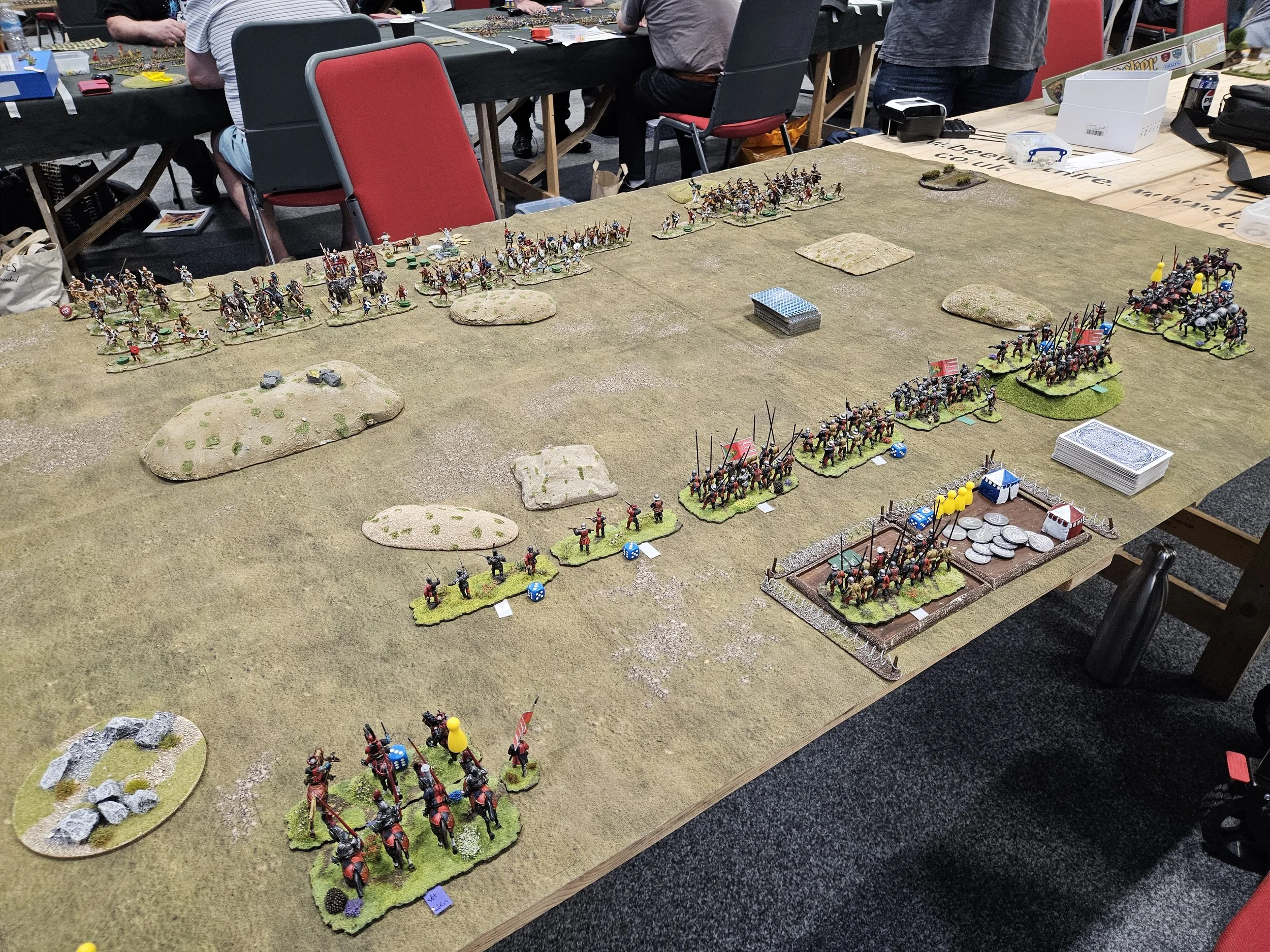
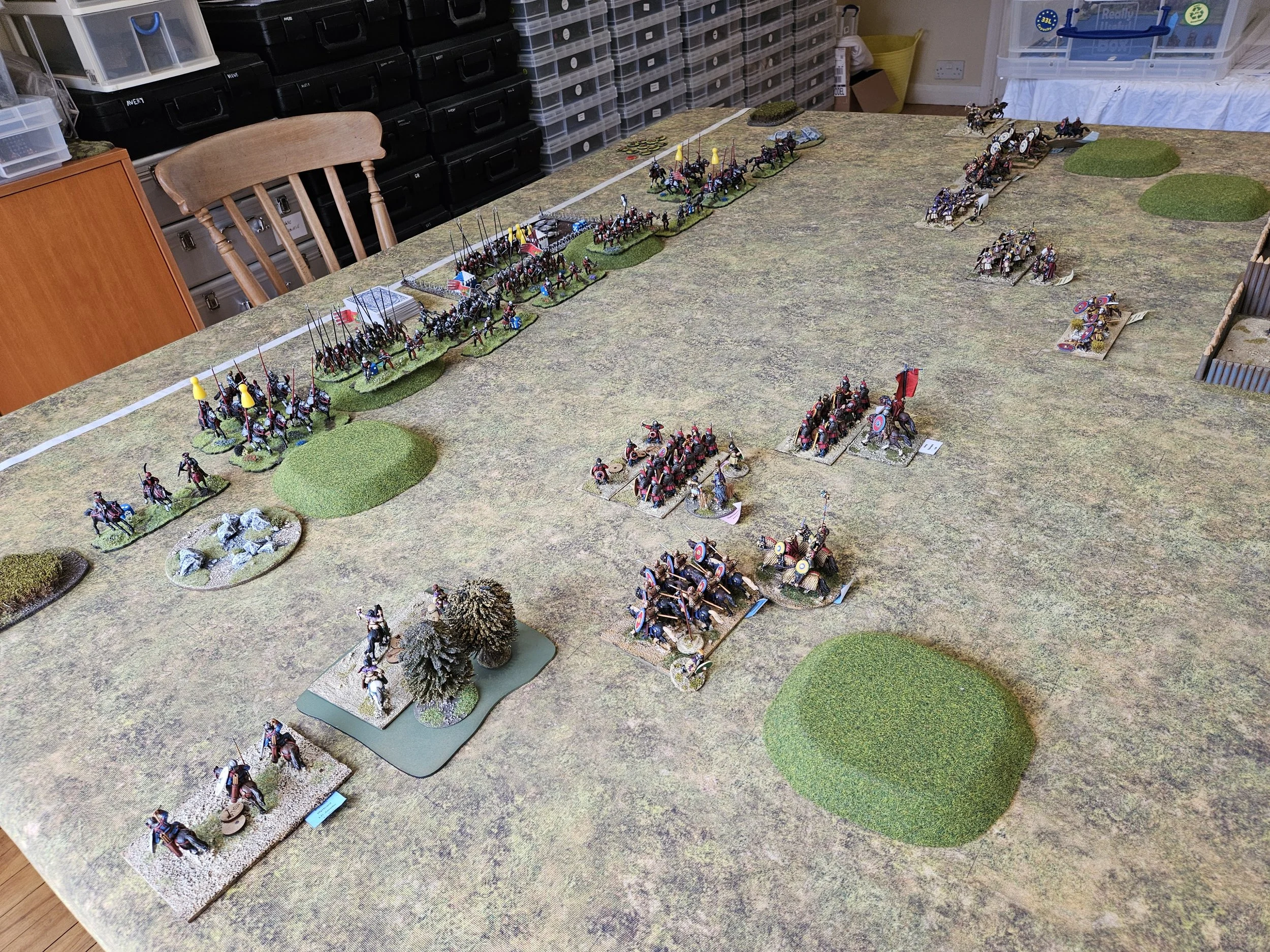
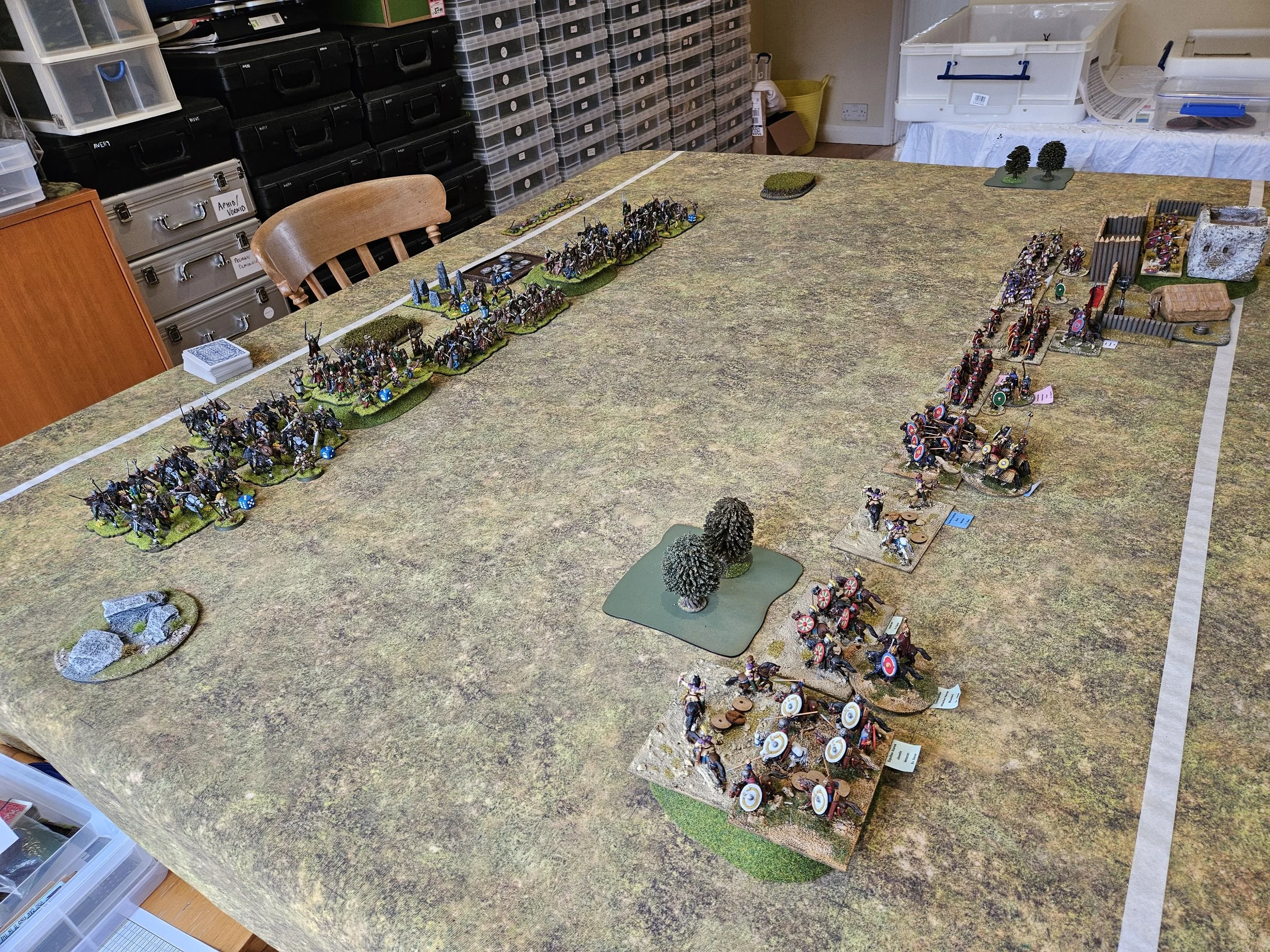
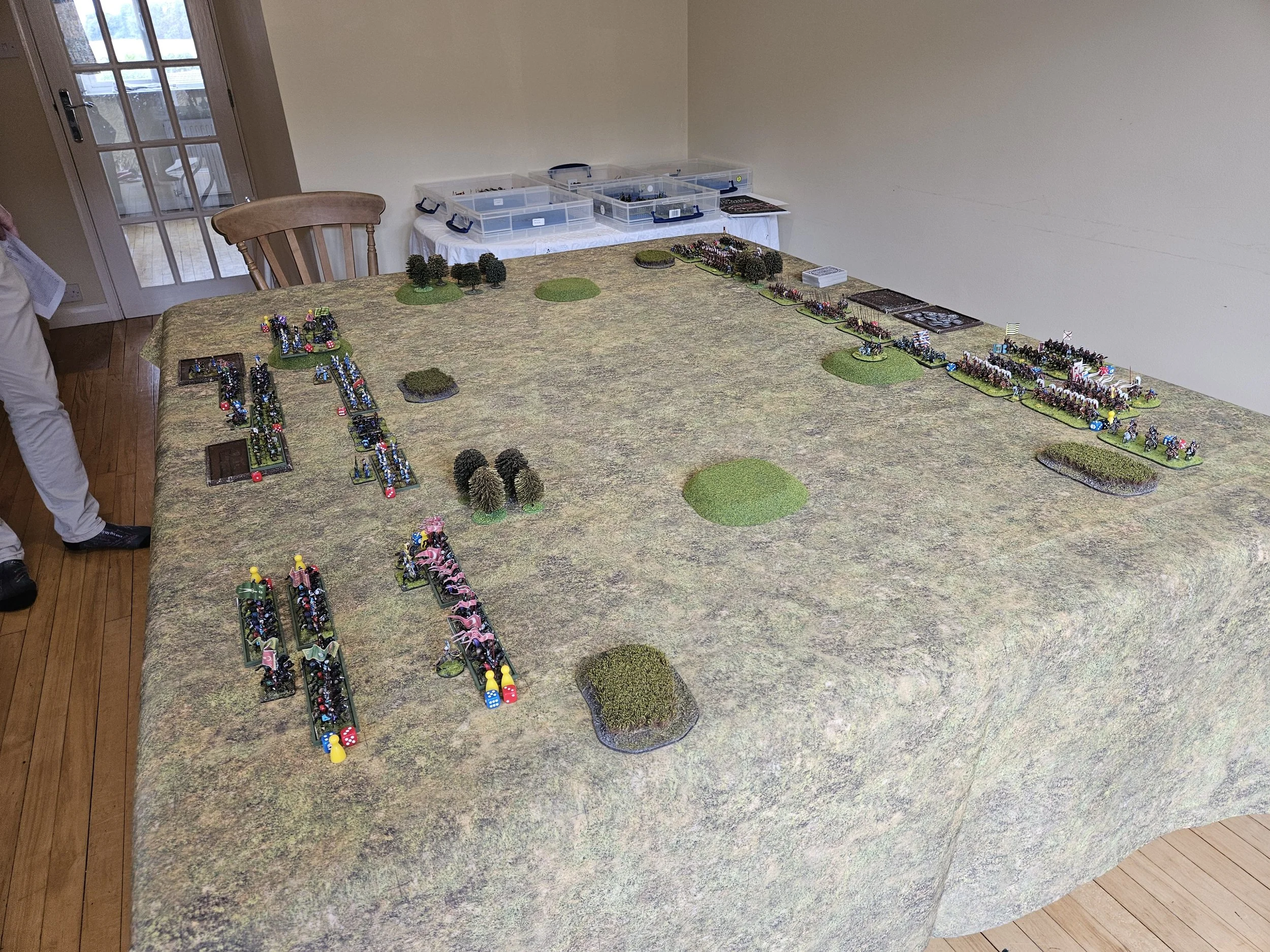
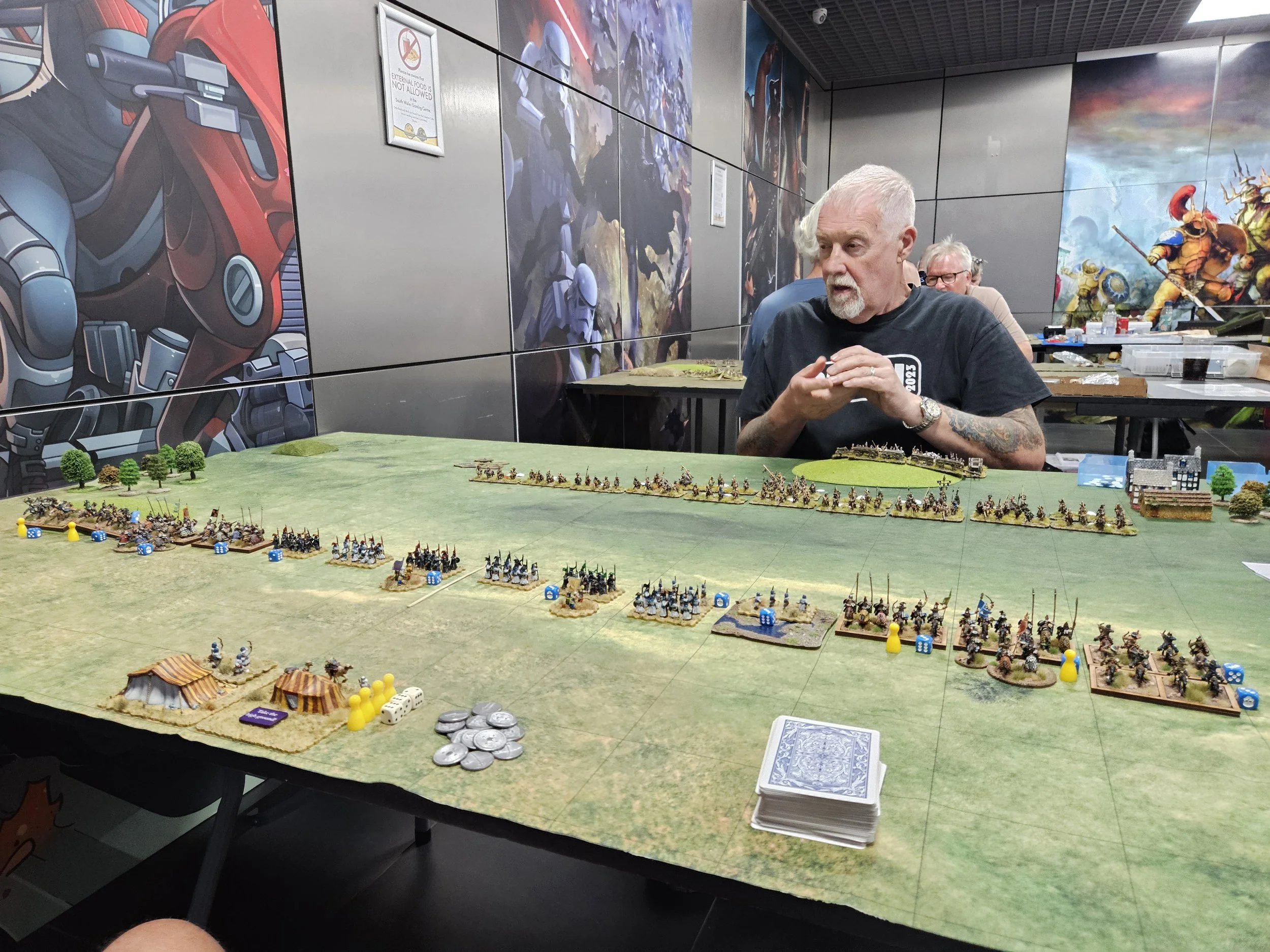
The Venetians were outscouted, so deployed in a traditional “infantry in the centre, cavalry on the wings” formation. The woods on the right hand side of the battlefield looked ideal terrain for the enemy, so my plan was to hang back on the right, advance on the left and, quite frankly, see what opportunities presented themselves!
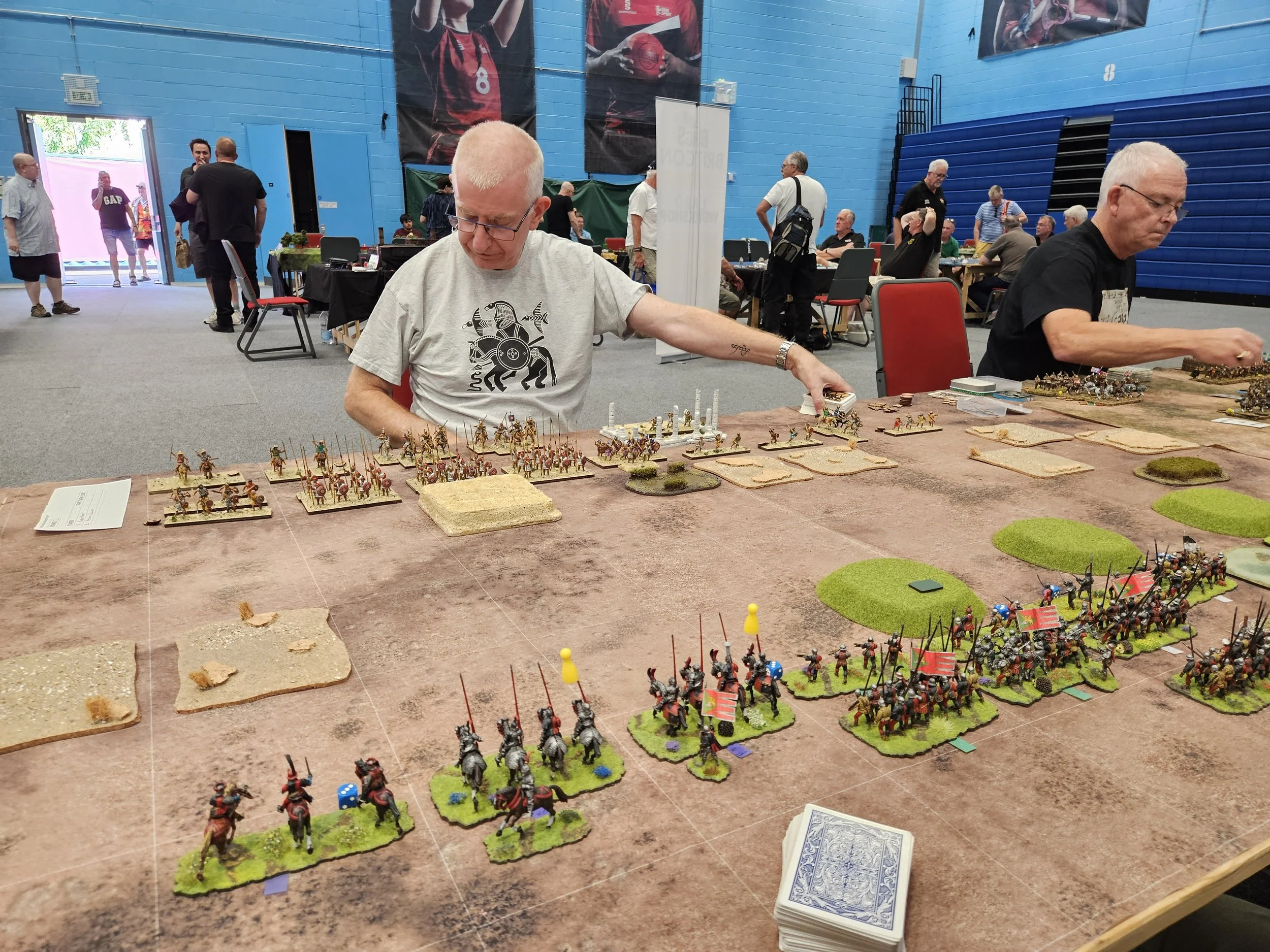
First up, however, was a general advance forward one square to give the Venetians some fighting room, making sure to keep the integrity of the line intact. Note the large numbers of Irish light troops trying to get around my right flank.
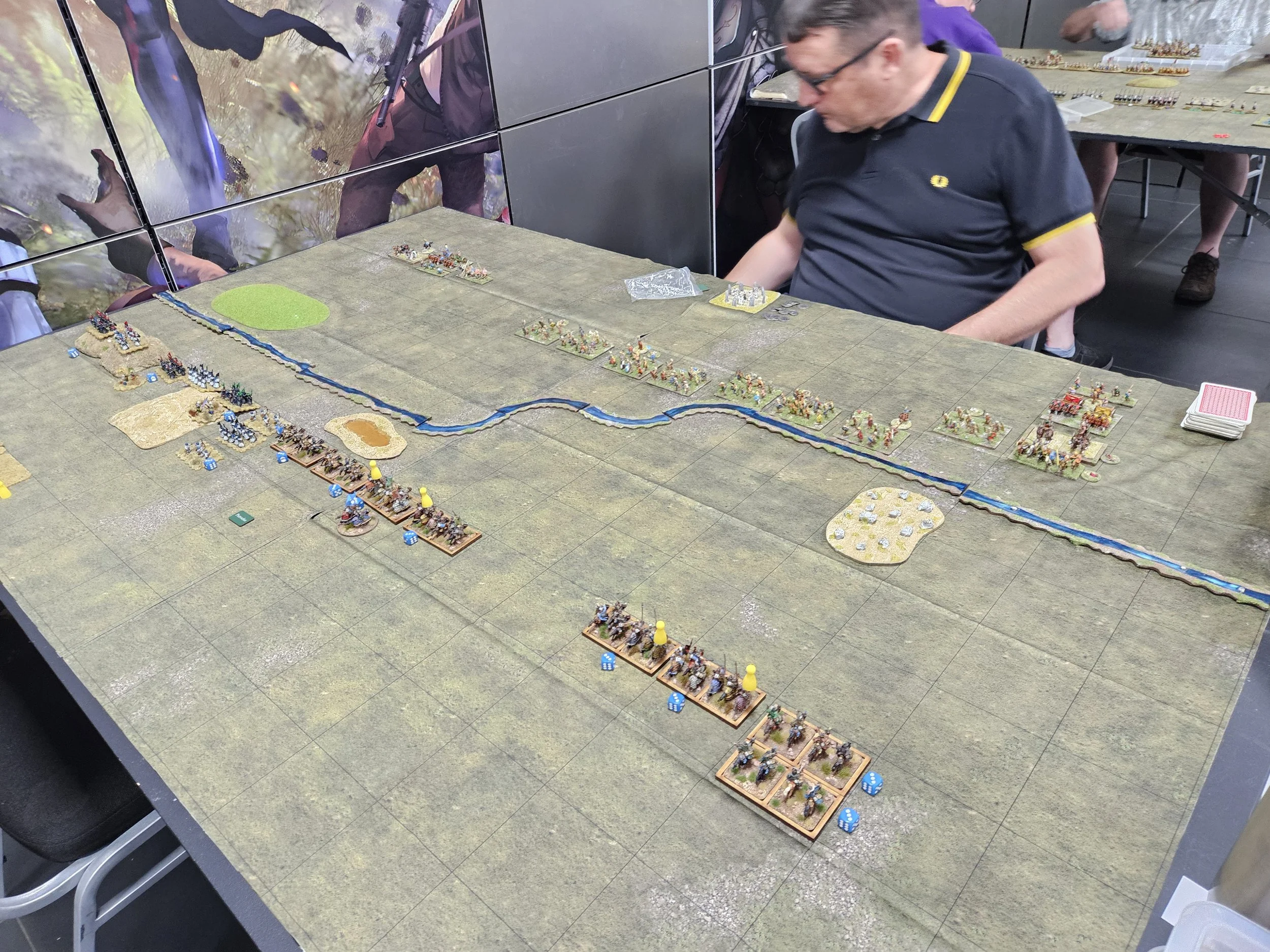
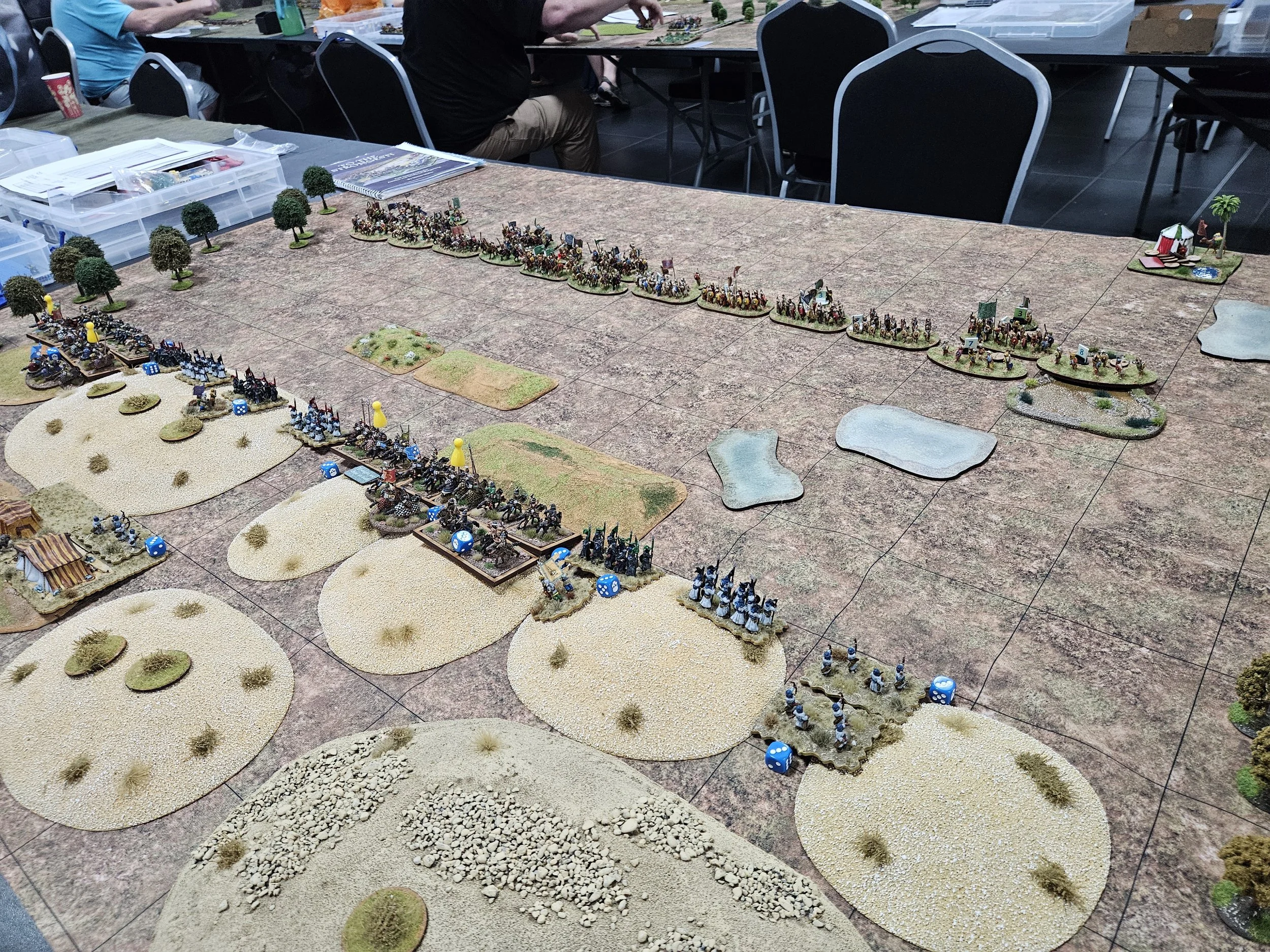
And it was on the right that the first threat emerged: those advancing enemy lights being joined by a unit that had started the game lost off table to pose a potentially tricky situation that required a bit of careful manoeuvring to deal with.

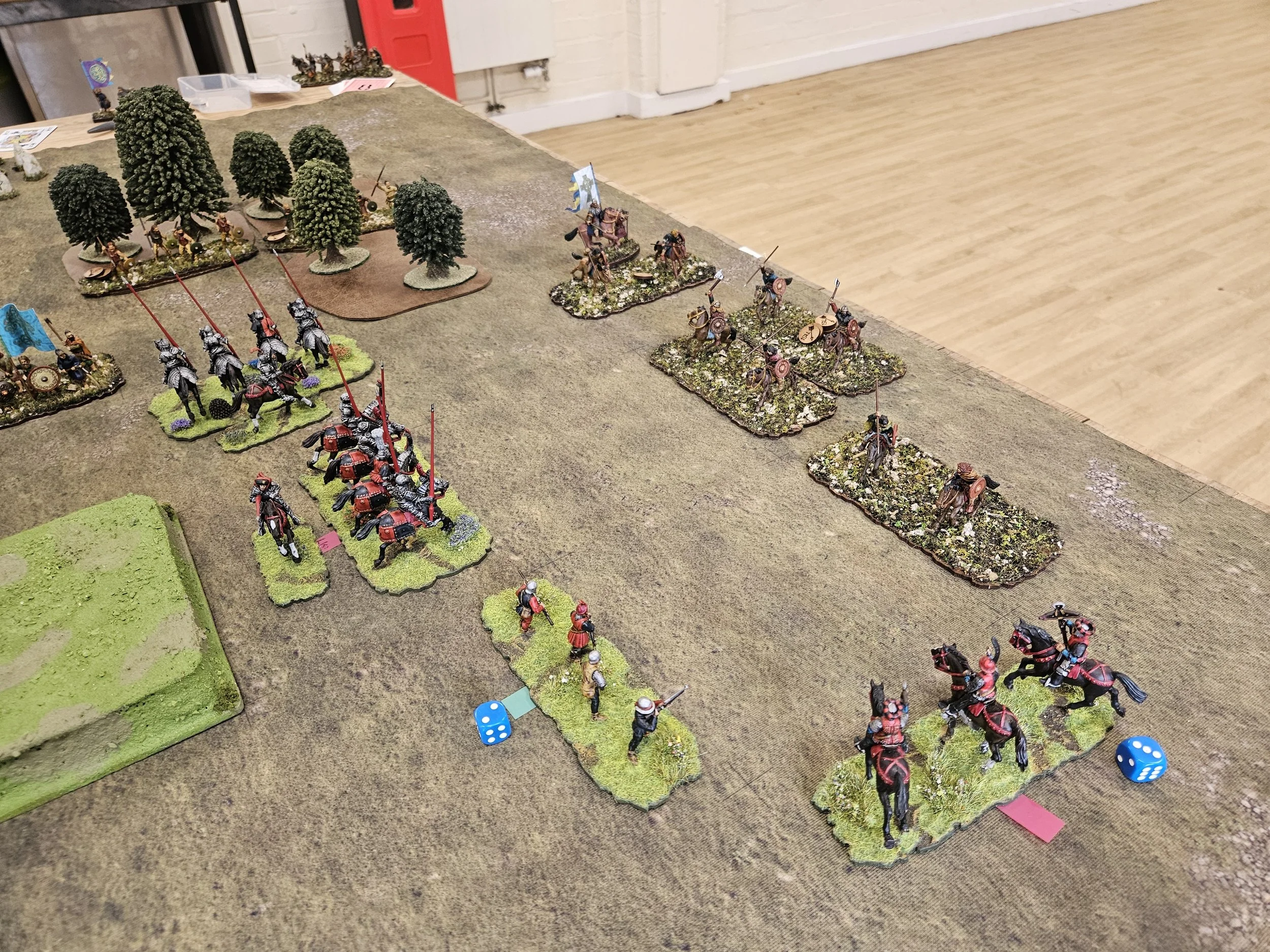
But in one of those coincidences that makes life interesting, I too had had one of my units lost off table: a squadron of light mounted crossbowmen appearing directly behind the Scots-Irish.
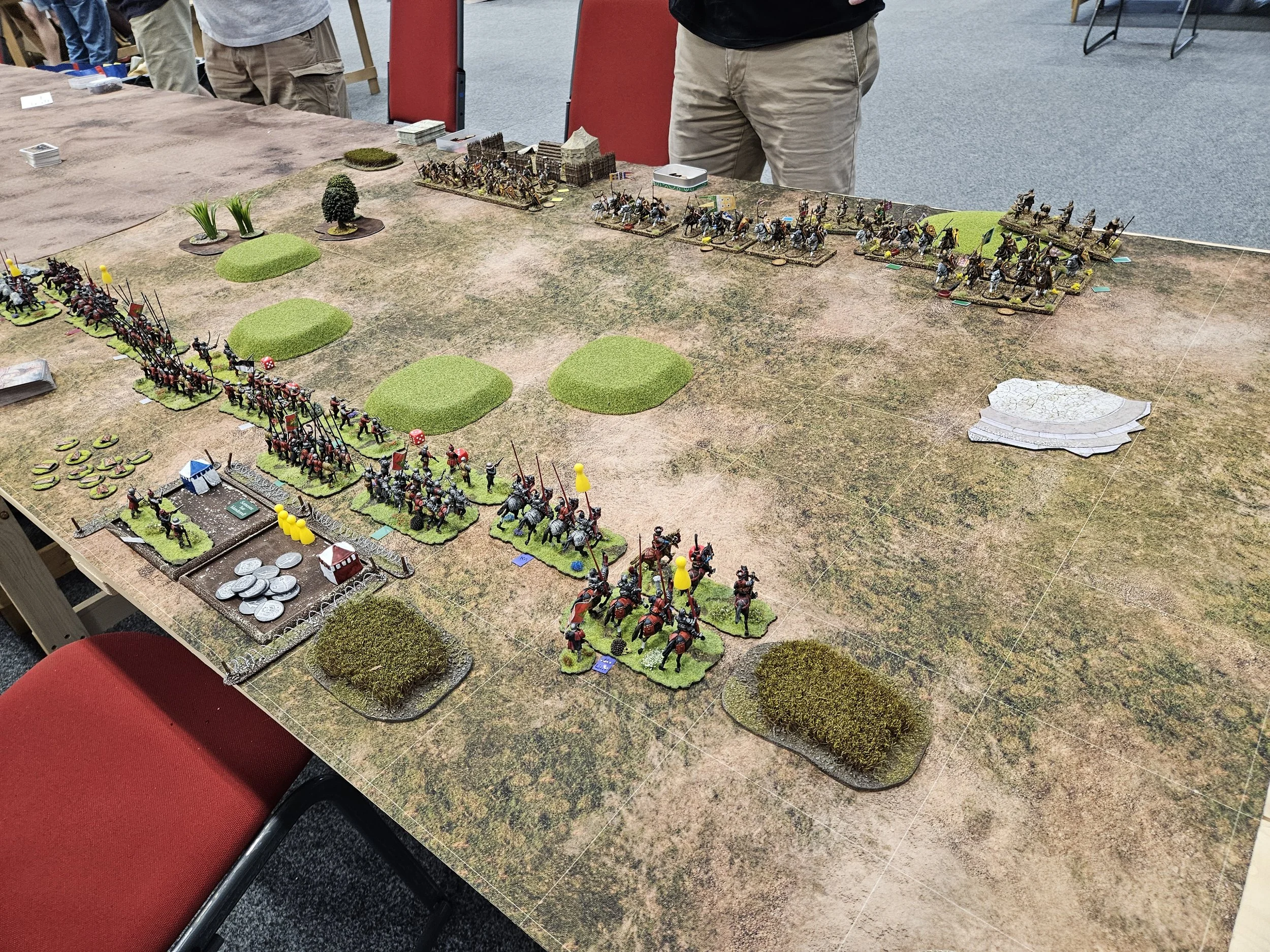
This disrupted Adrian’s plans as neatly as the appearance of his lights on the right had disrupted mine. He turned his longbowmen, safely ensconsed behind stakes on the central hill, to deal with the threat, only to see the flank of the archers charged by some of my knights coming in from the left.
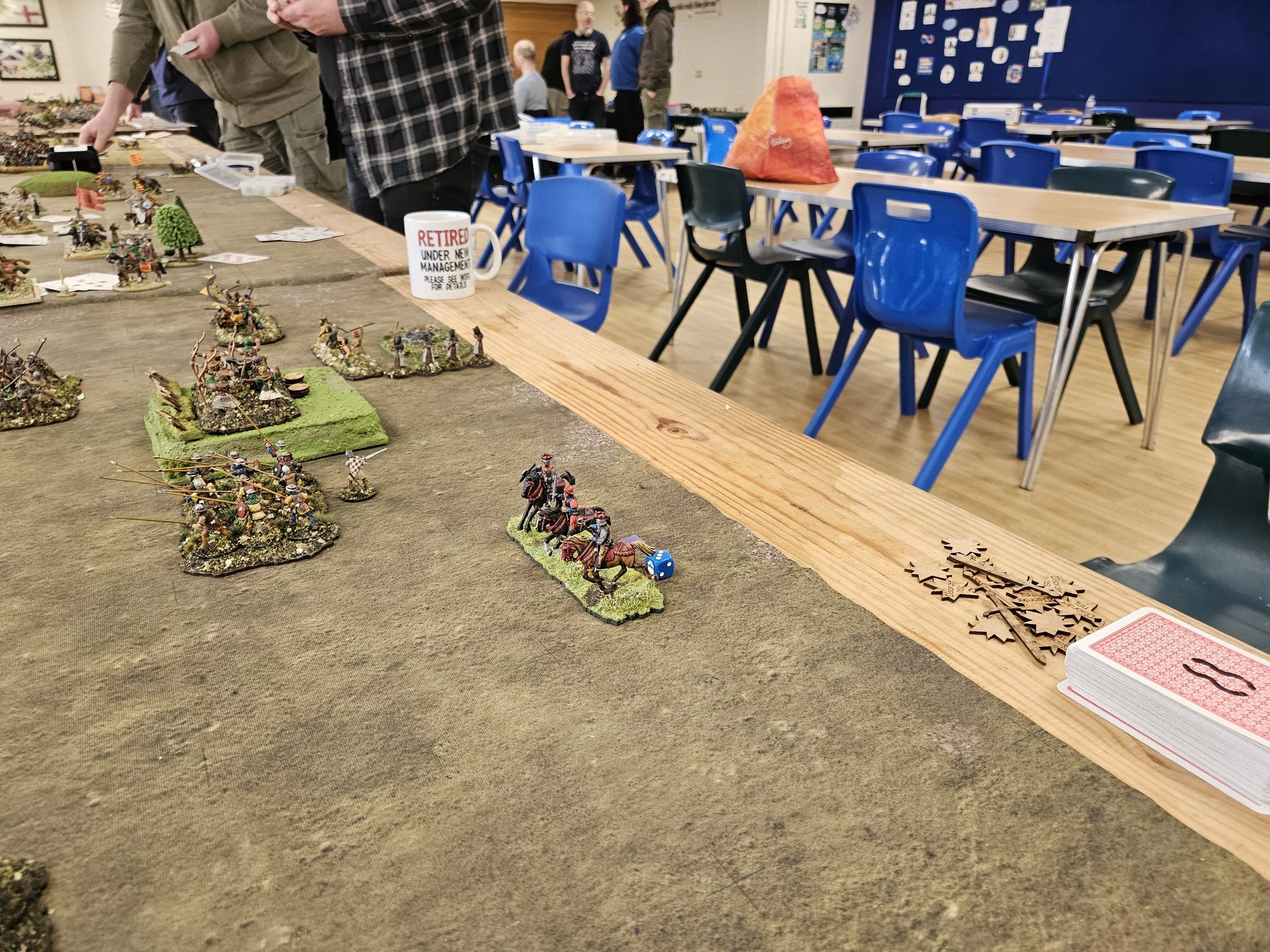
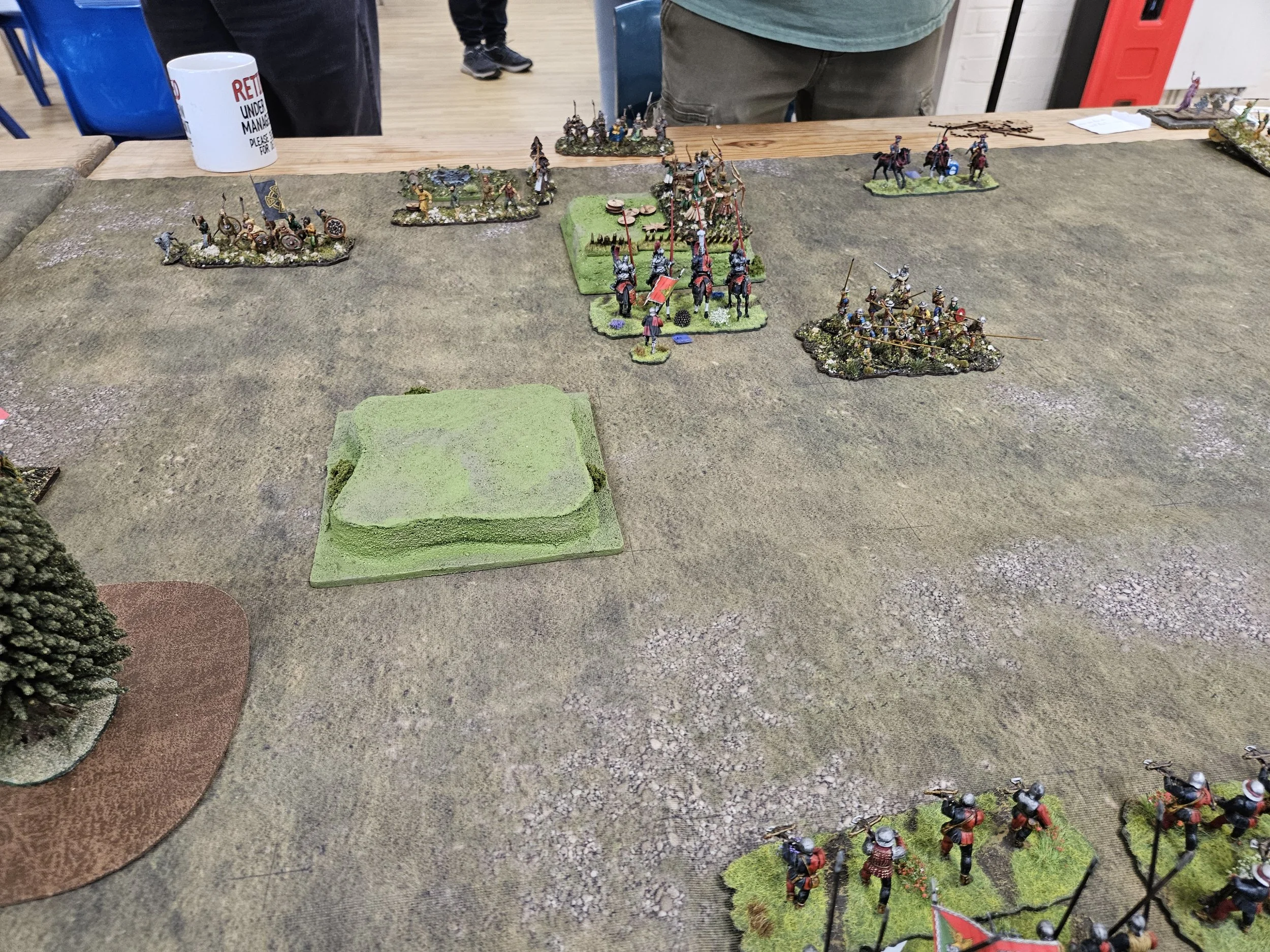
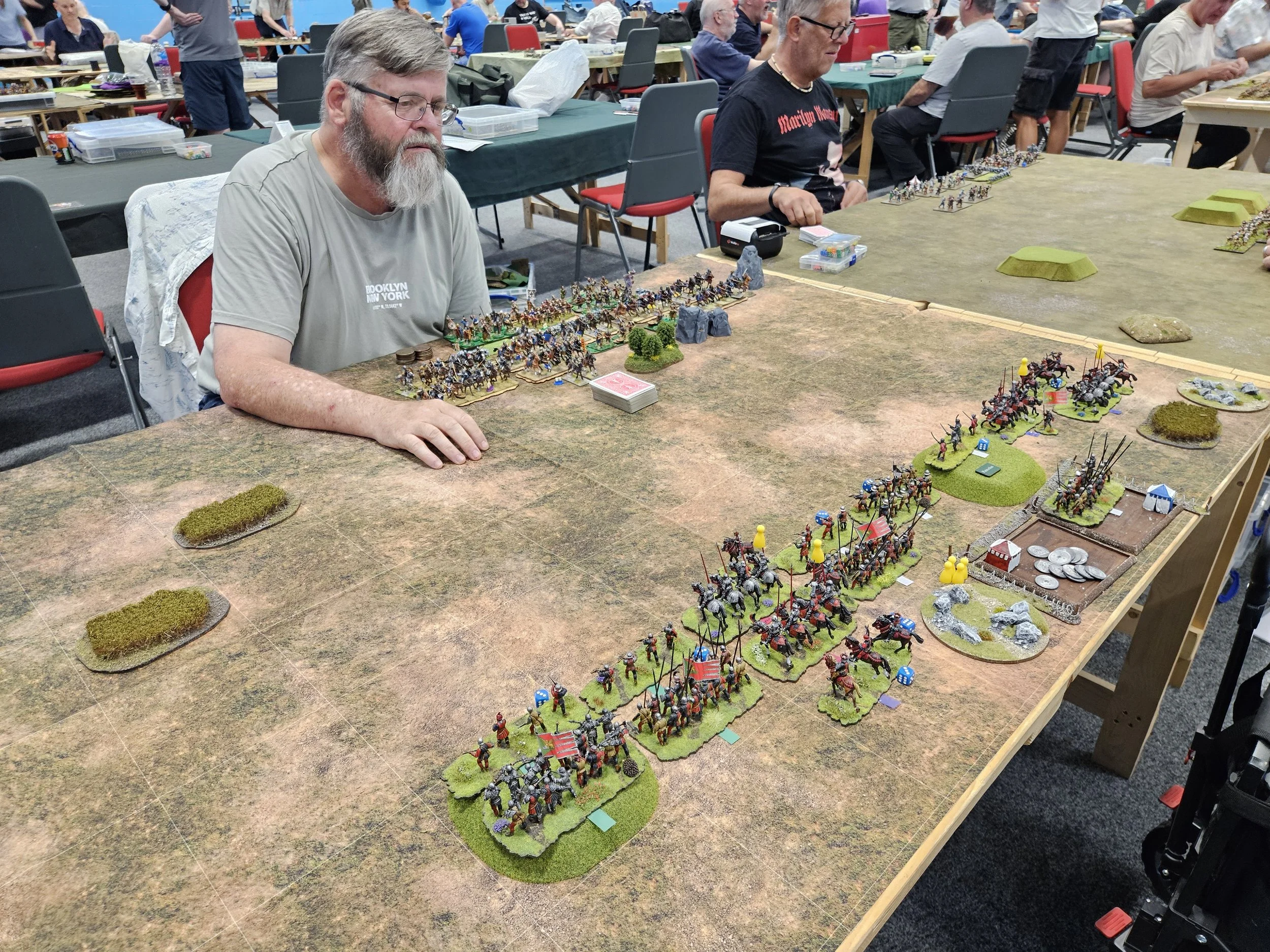
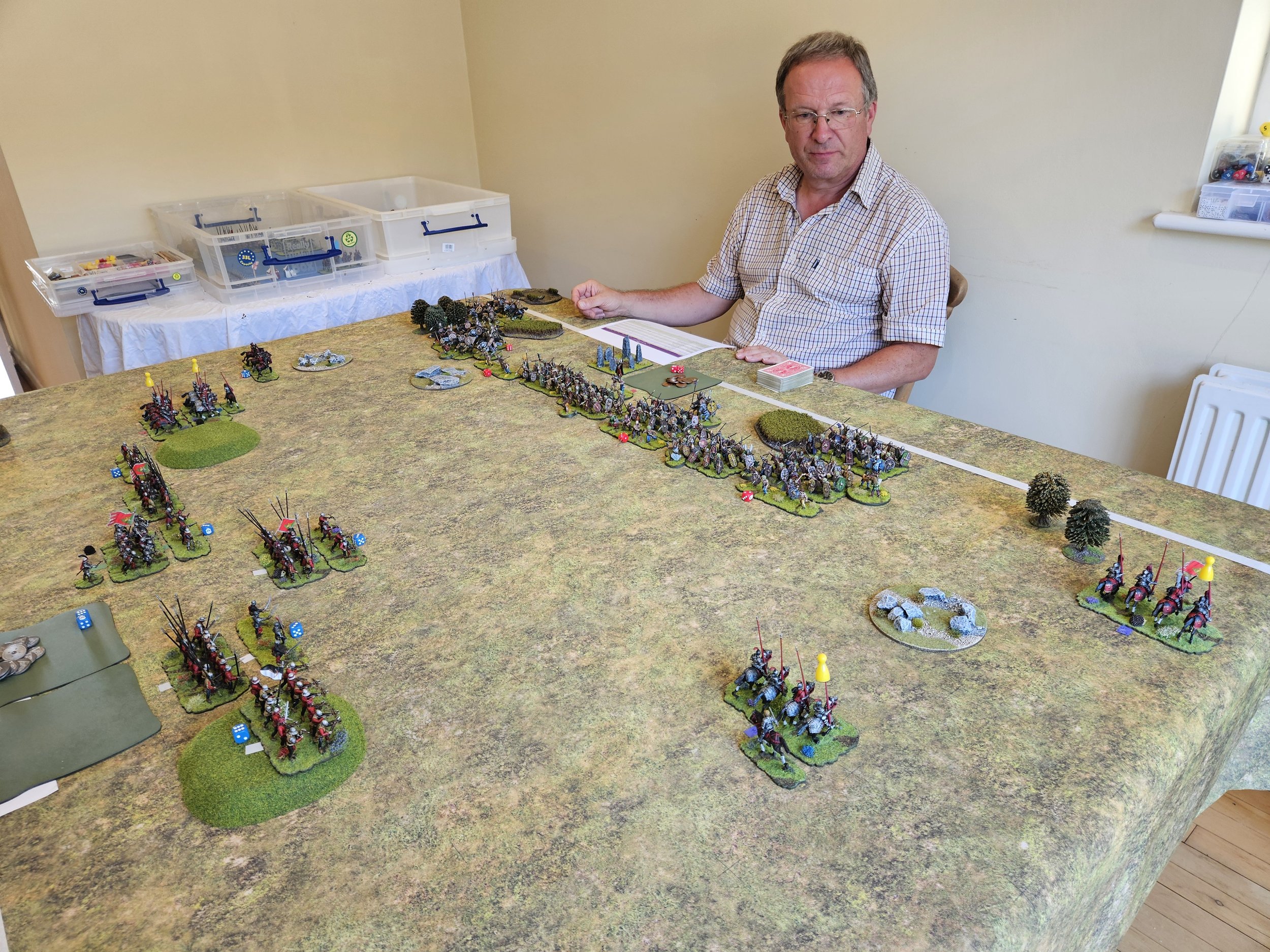
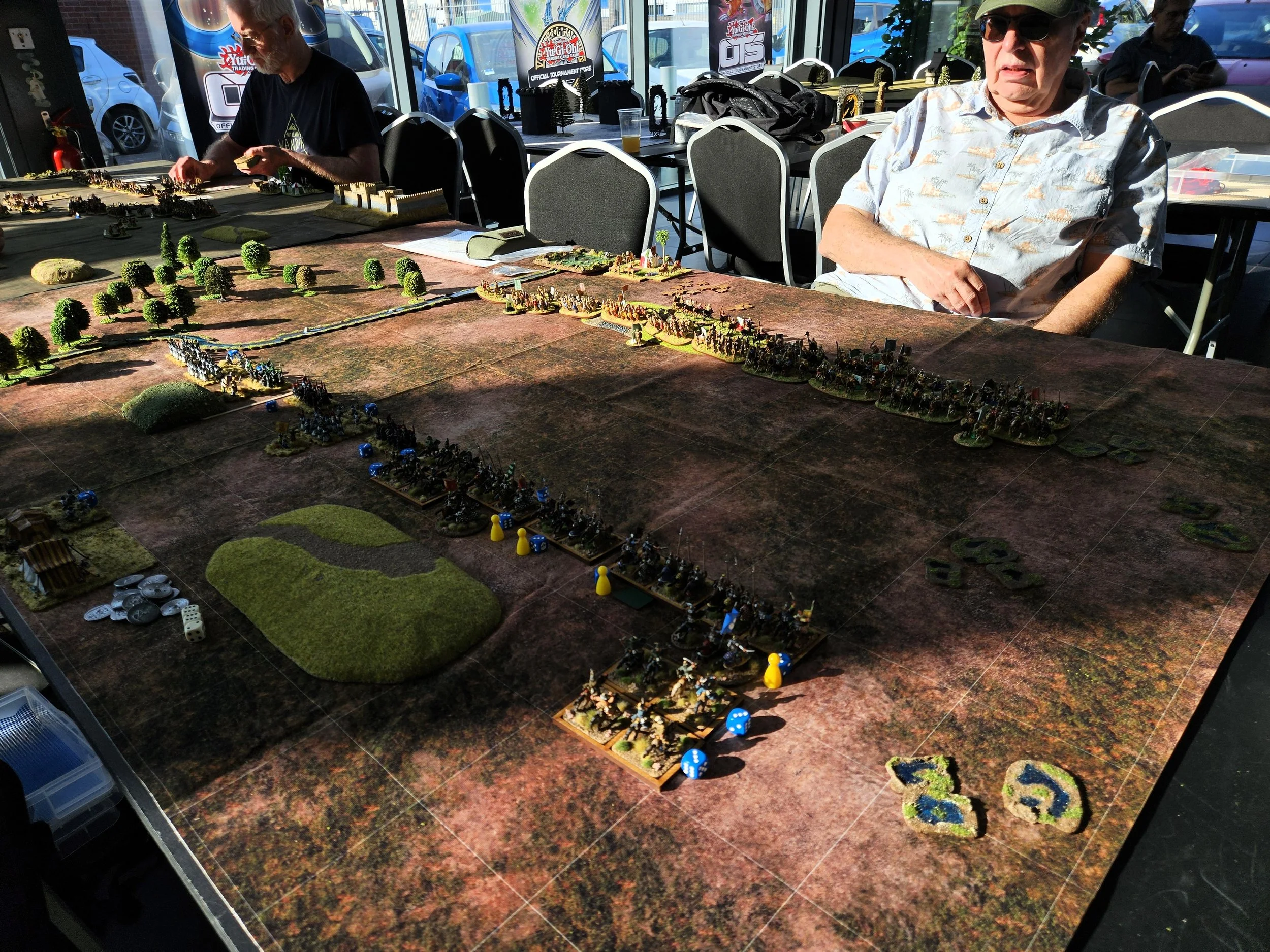
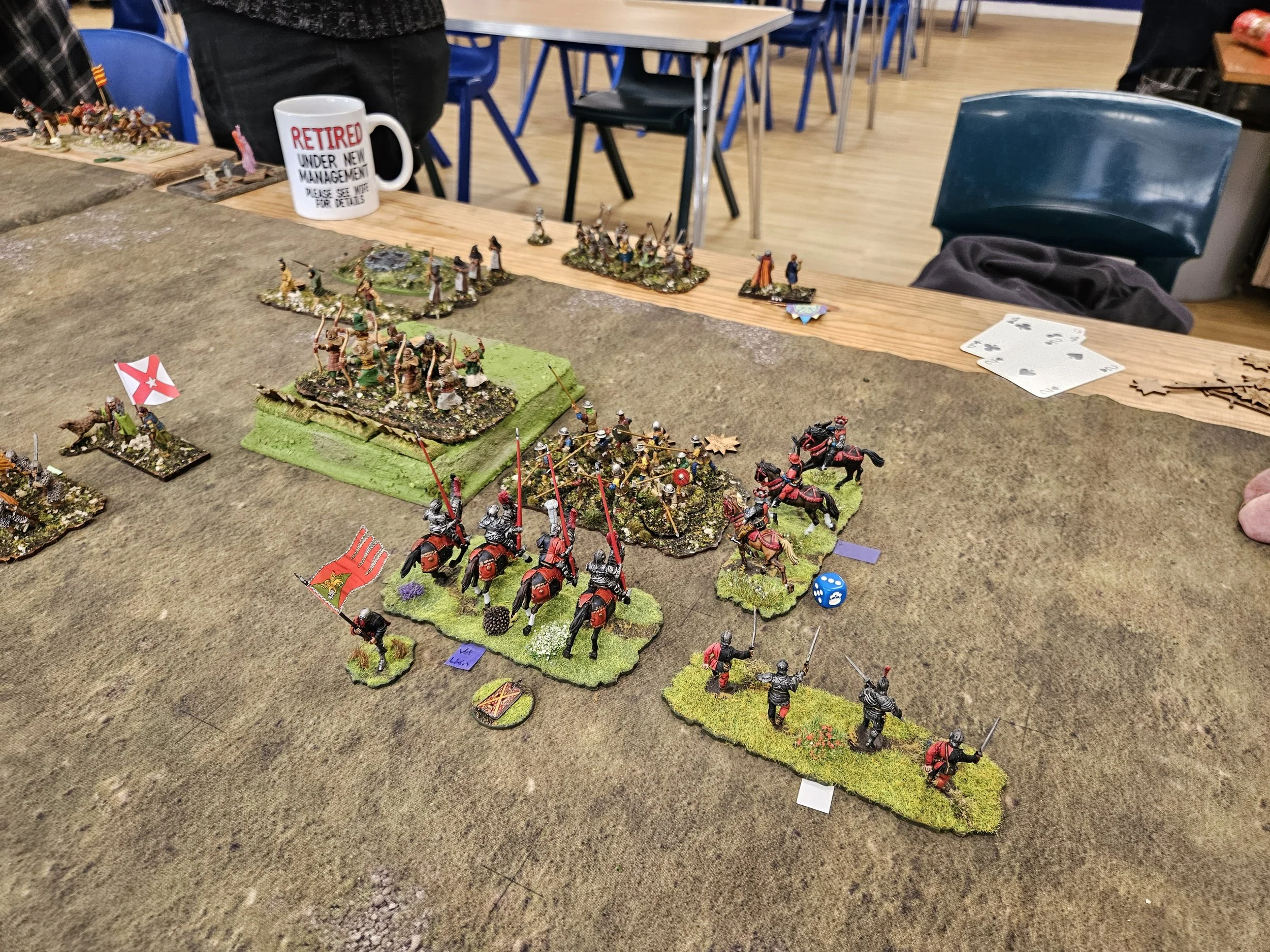
Charging uphill against infantry behind stakes rarely goes well, even when from the flank: the knights failed to budge the enemy archers, leaving the situation as shown in the photo below:
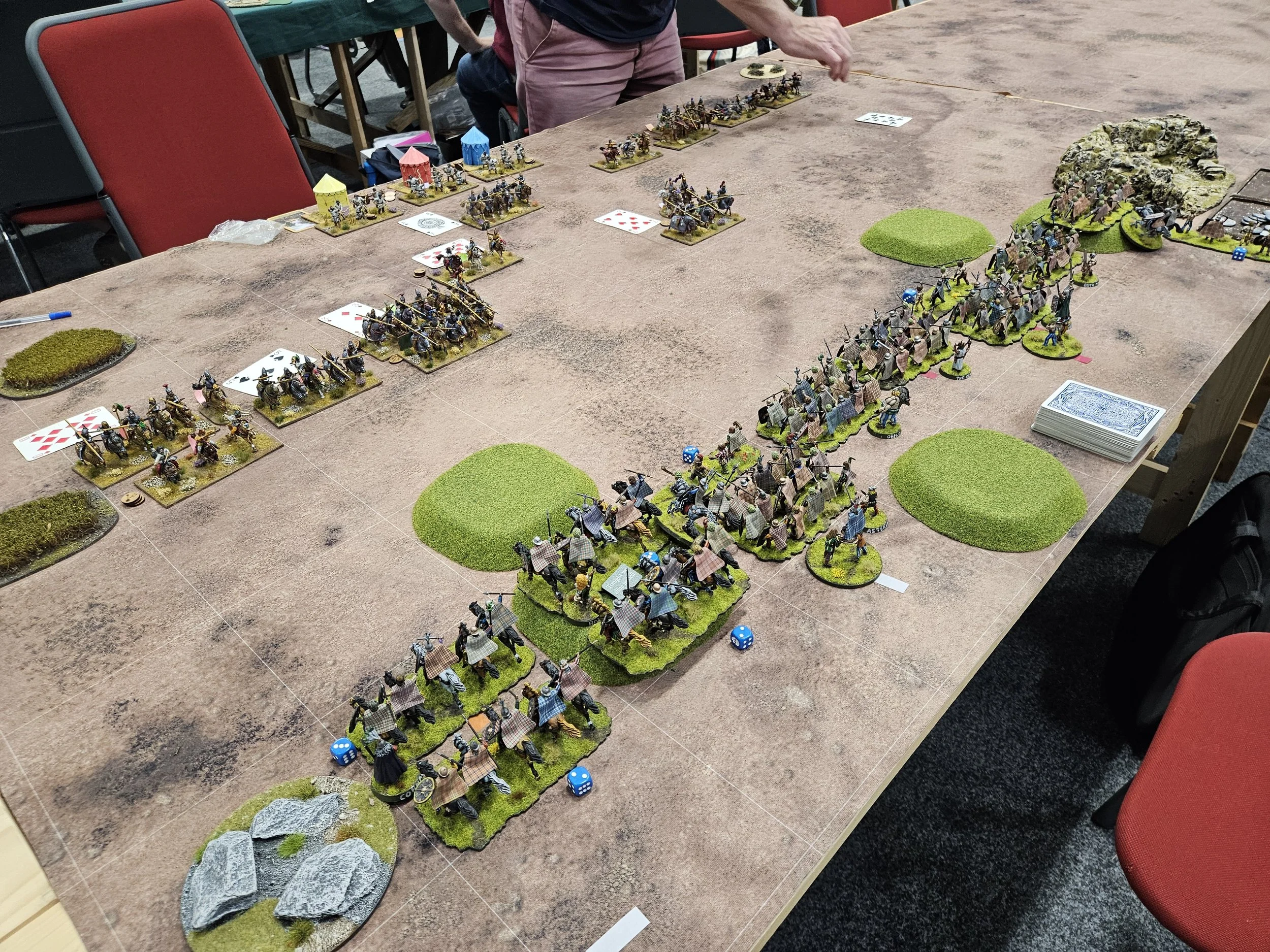
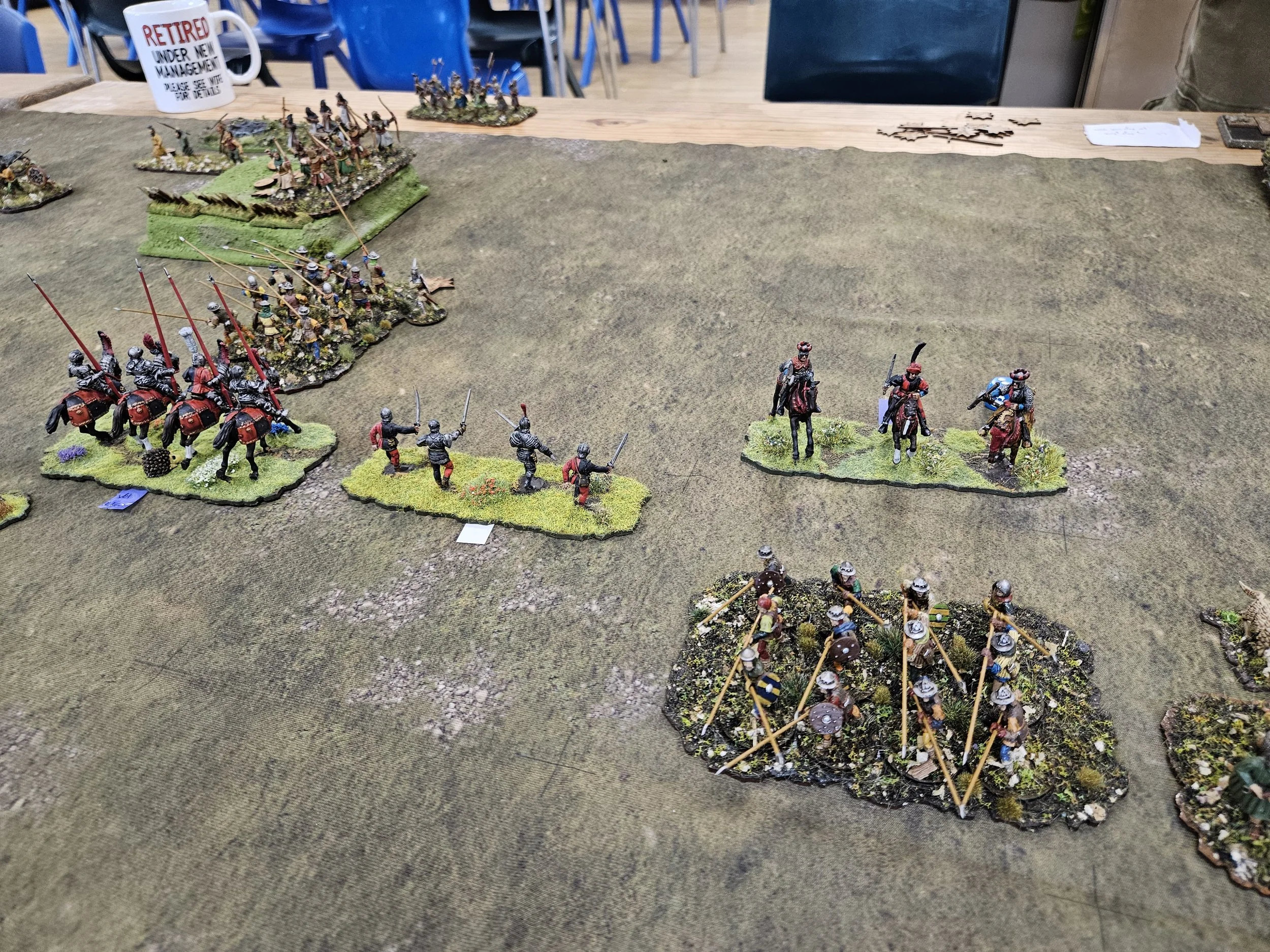
Adrian (who was not having much luck in this game) turned some Scots spearmen to threaten the knights, only to see my horsemen retreat backwards two squares and then charge the same spearmen in the flank (whilst they still could, as ES14 has stopped this cheesy manoeuvre happening), whilst the Ballesteri Montati (mounted light crossbowmen) charged the rear of another bunch of Scots.
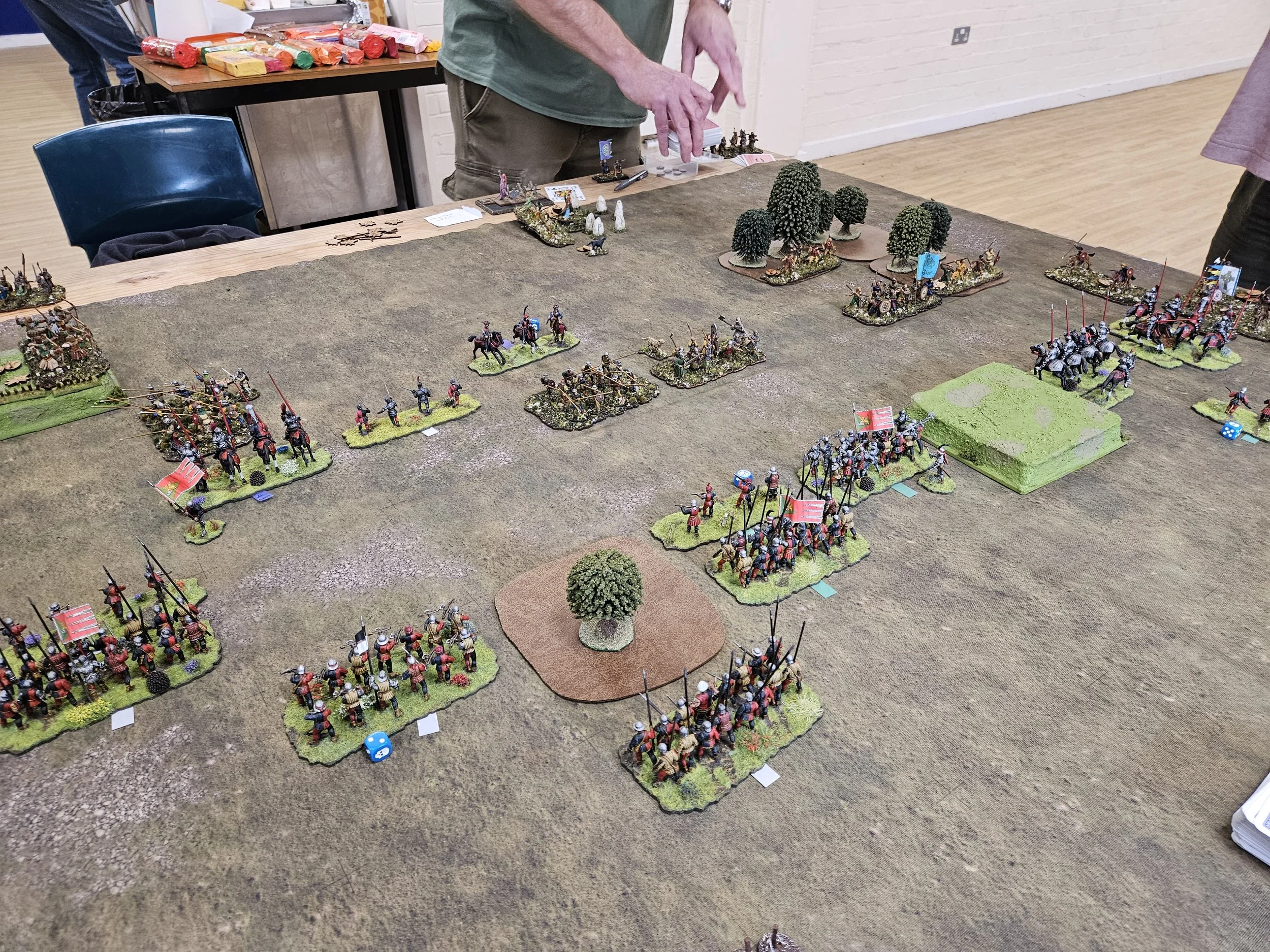
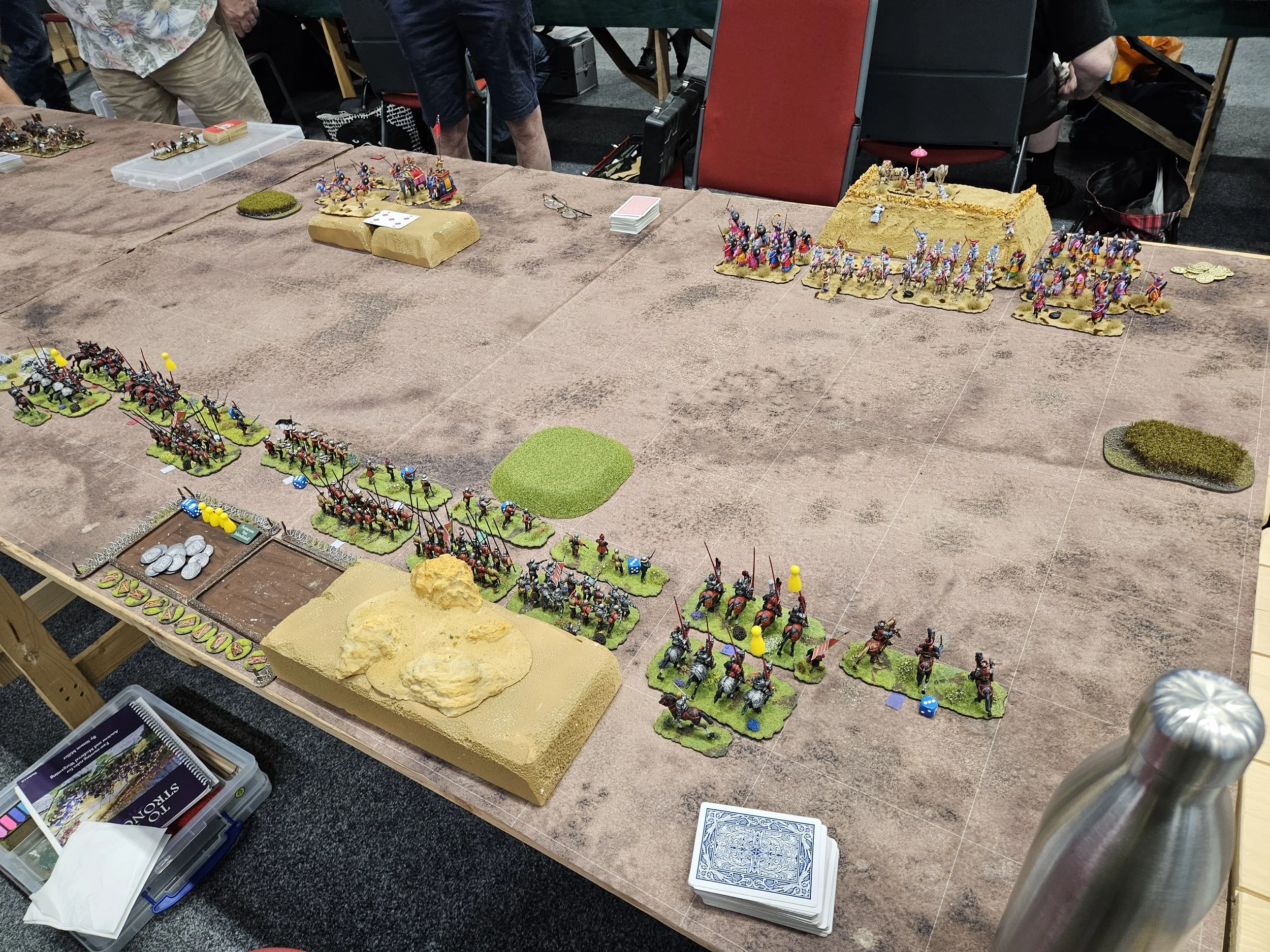
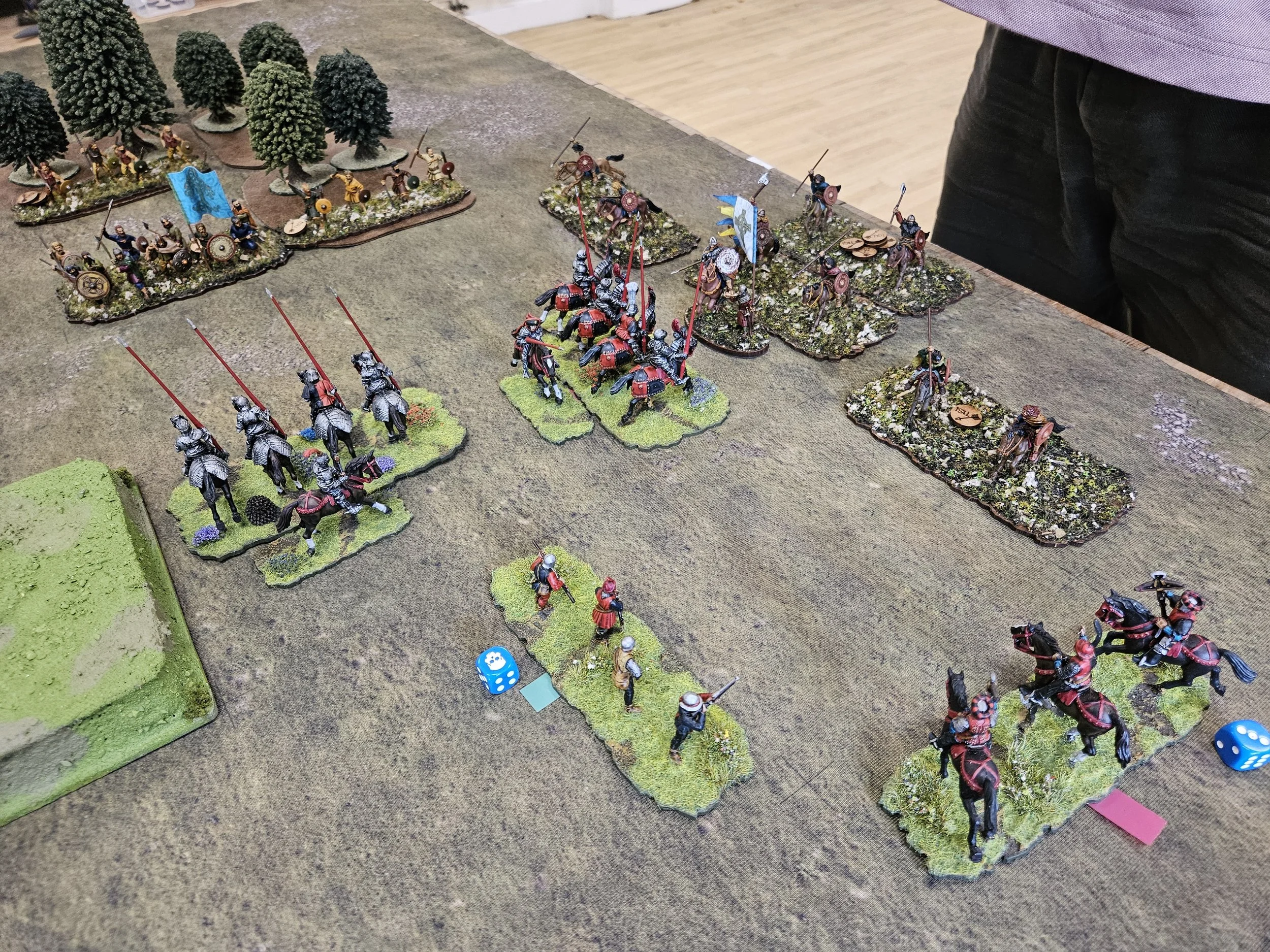
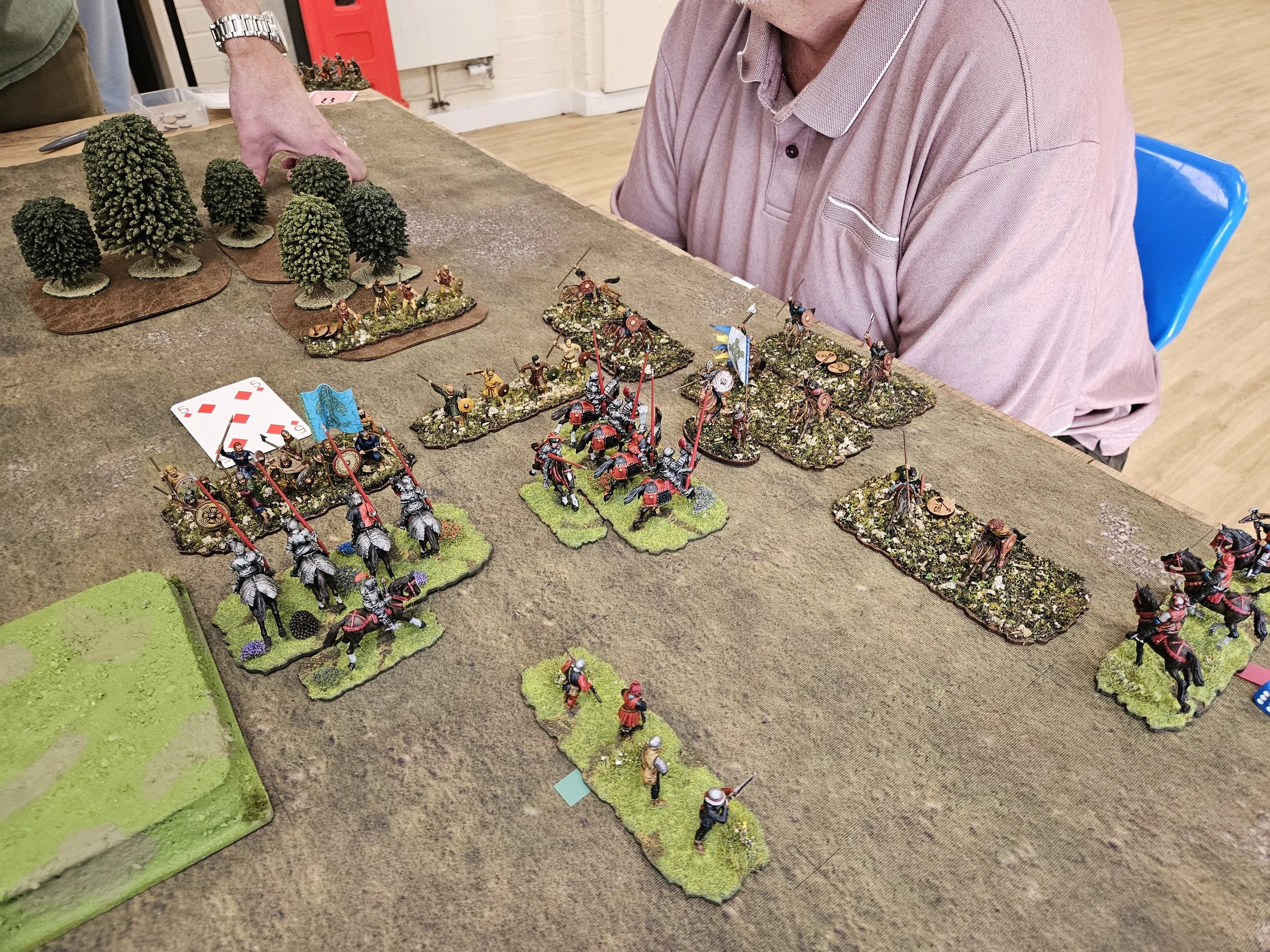
Meanwhile, the fighting on the right hand side of the field had intensified, with the superior armour of my knights there countered by the larger numbers of troops they were facing. Neither side seemed able to make much progress.
Back to the centre, where the Scots spearmen in the centre had crumbled under the loving attentions of the Venetian Alabardiers. The Scots spearmen near the hill, however, although disordered and attacked on the flanks, were still putting up a brave fight.
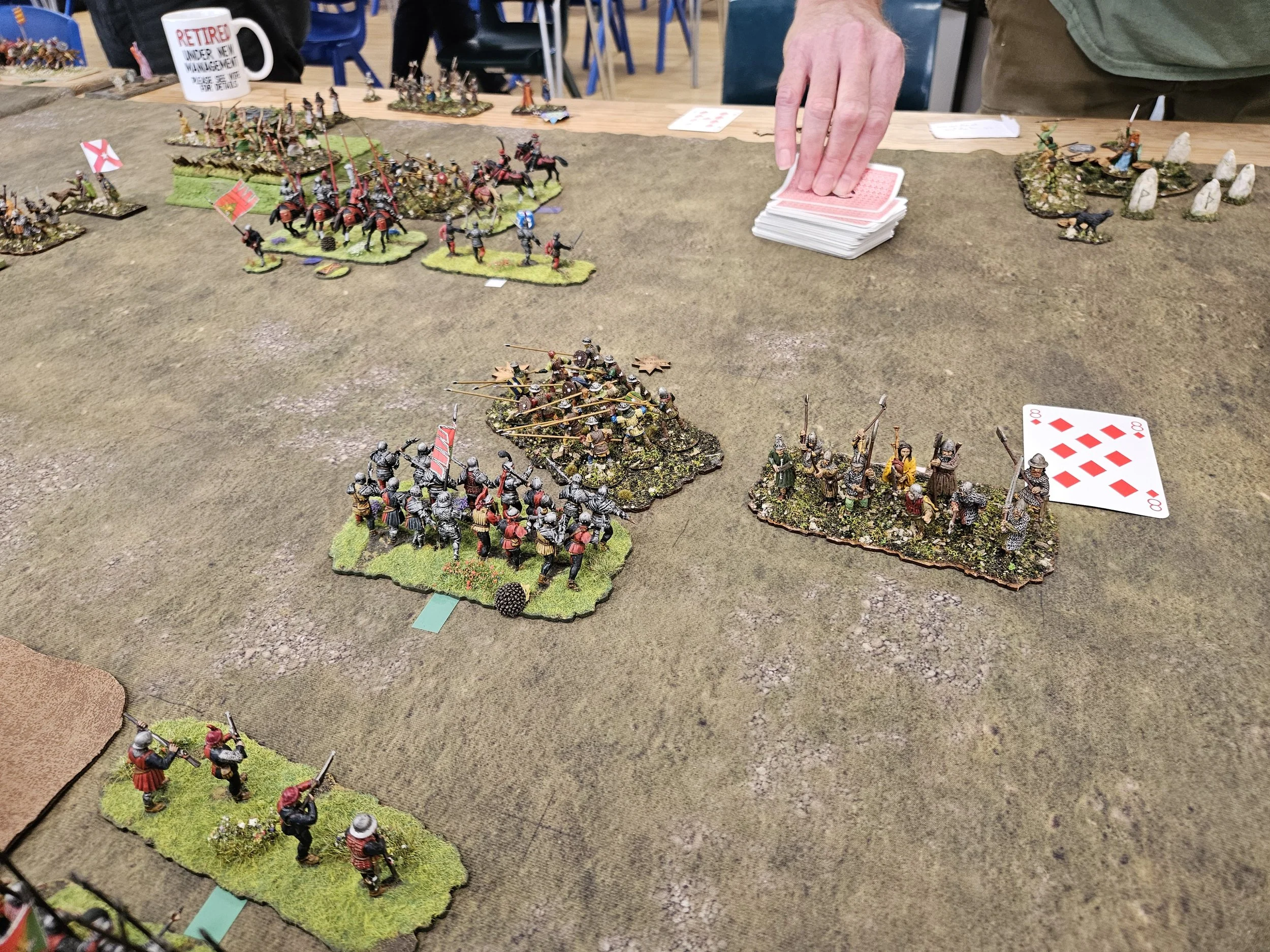
This stabilised Adrian’s centre, but I now had fresh knights, still with their lances, coming in from the left…but then a unit of veteran Irish javelinmen were thereatening the rear of my line.
Adrian had, however, gradually been losing coins throughout the game: in particular losing light infantry to crossbow fire and one, or perhaps it was two, generals in combat: as I said, he was having a particularly unlucky day.
The three coins lost when the spear in the centre routed took him close to the edge, and a final charge from my Knights into disordered Irish javelinmen on the right broke his army as a whole, although it took a Venetian hero to do so.
So a big 14-1 victory for the Venetians to open proceedings…although I was glad that the battle ended then as too many of my units had fallen into disorder and, of course. that Lady Luck had shunned my opponent throughout!