WW2 Belgian Armour in 15mm: the Vickers T-15 and Carden-Lloyd Mk. VI
/More Belgian armour 3D printed by the excellent bayonetsandbrushes.co.uk
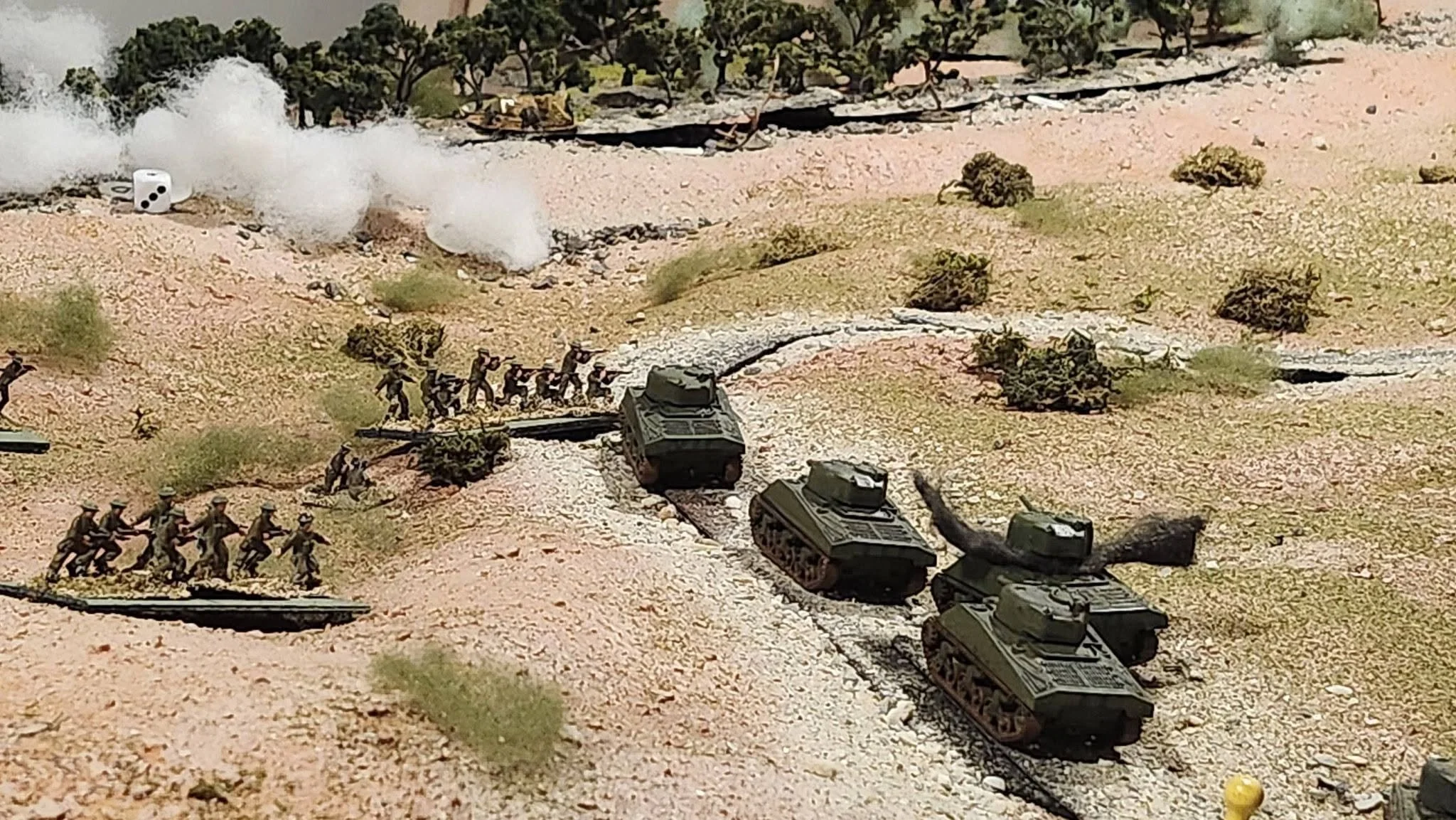
First up is the Vickers T-15 light tank.
These are teeny-tiny two-man tanks armed only with a Hotchkiss 13.2mm machine gun and with only 7-9mm of armour. It’s only advantage was its speed - it could reach 40mph - but lack of anything remotely ressembling a stabilisation system meant that that didn’t mean much anyway, and it was very prone to breakdown.
Only 42 T-15s were built and issued, and these were used mainly by cavalry divisions and the Chasseurs Ardennais: roughly 16 per cavalry division, plus small detachments (3 each) to several Ardennes Chasseur regiments, and one for training.
The T-15s entered combat almost immediately after the German invasion began, serving through the critical opening days of 10–13 May. Belgian cavalry formations employed them for reconnaissance and screening duties, probing advancing German columns and conducting delaying actions to slow the enemy’s momentum.
A notable engagement occurred on 12 May 1940 near Hannut, where a mixed Belgian cavalry detachment—equipped with both T-15 light tanks and T-13 tank destroyers—clashed with German armoured forces. Although the Belgians lost two of their own vehicles, they succeeded in knocking out two German tanks.
In late May 1940, a Belgian counterattack using T-13 and T-15 vehicles temporarily retook Knesselare, capturing about 150 German prisoners, but were then forced to withdraw when threatened by encirclement.
Next up is one of my favourite “wacky” vehicles of the early war period: the Carden-Lloyd Mk VI tankette with an FRC 47mm L30 Mod. 1931 anti-tank gun mounted on top.
These were experimental vehicles that quite frankly didn’t work. The recoil was too much for the chassis; the crew had very little protection; and adding the gun removed all the tankette’s already obsolete mobility!
Six of these were built before the design was abandonned, originally serving with the Chasseurs Ardennais then ending up with the Border Guards and actually firing at the Germans on the Meuse on 10th May 1040.
I only bought two of them, and am determined to get them onto the tabletop in the very near future!
Both sets of models were painted by a sprayed undercoat of Vallejo English Uniform, washed with GW Agrax Earthshade, then drybrushed and highlighted with Vallejo Khaki Grey.